
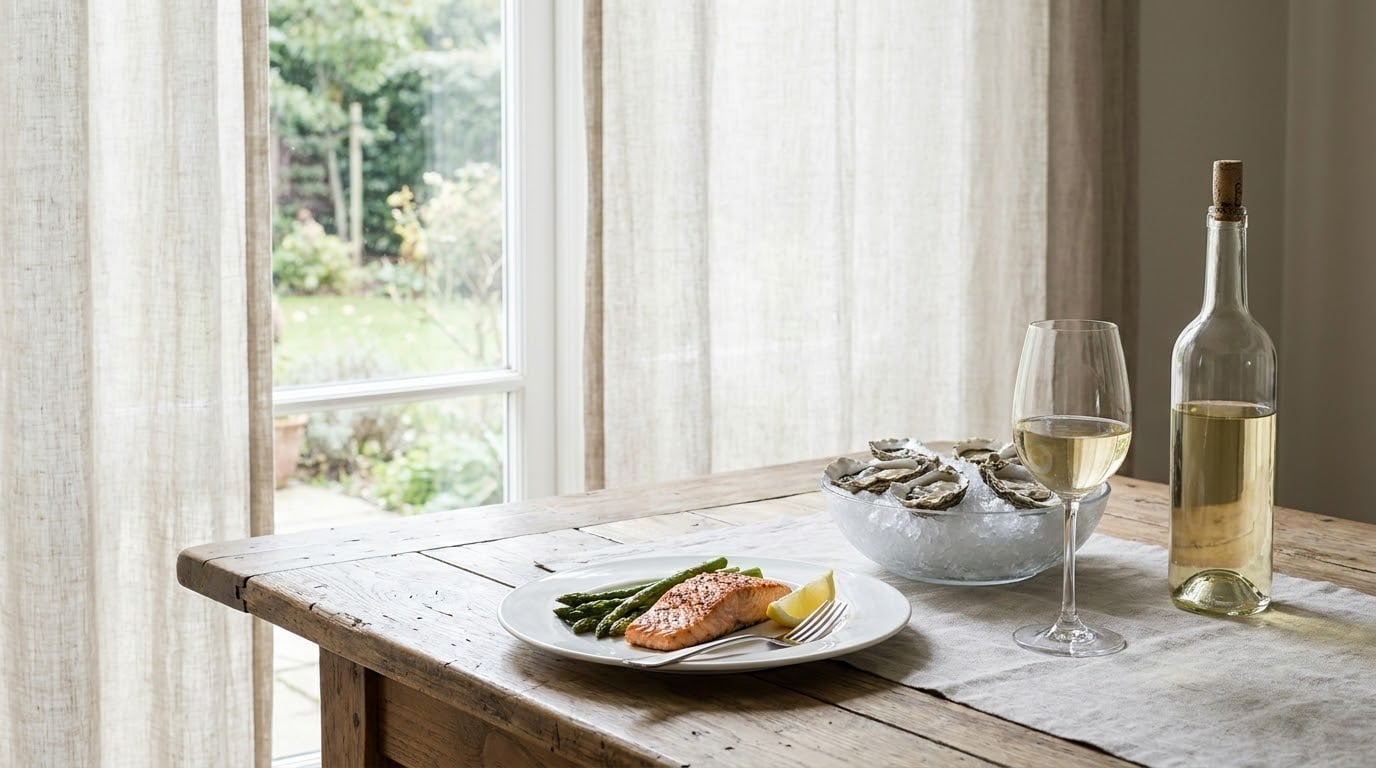
Match the weight and intensity of the fish to the body and acidity of the wine. That single rule does most of the work: light, dry, crisp whites for delicate fish and briny shellfish, fuller whites for buttery or char-heavy dishes, and light reds when the fish is oily or heavily spiced.
The rest is adjustment. Once you know which family your seafood belongs to, you can pick a bottle at the shop or a glass off a restaurant list in about thirty seconds without tasting anything first. If you have never felt confident choosing a wine on your own, our White Wine Pairing Basics for Home Cooks: A Simple Guide covers the fundamentals, and How to Taste Wine Like You Know What You Are Doing shows you how to actually check whether a wine is dry, crisp, or heavy.
Beginners usually get seafood pairing wrong in one of two ways. Either they assume every white wine works with fish, which is why an oaked Chardonnay next to oysters feels flat and dull, or they follow the old rule that red never touches seafood, which is why they skip the Pinot Noir that would be excellent with grilled salmon. Both mistakes come from pairing by wine name instead of by texture and preparation.
Here is the process I use, and it works whether you are cooking at home, hosting six people, or reading a menu you have never seen before.
What You Need
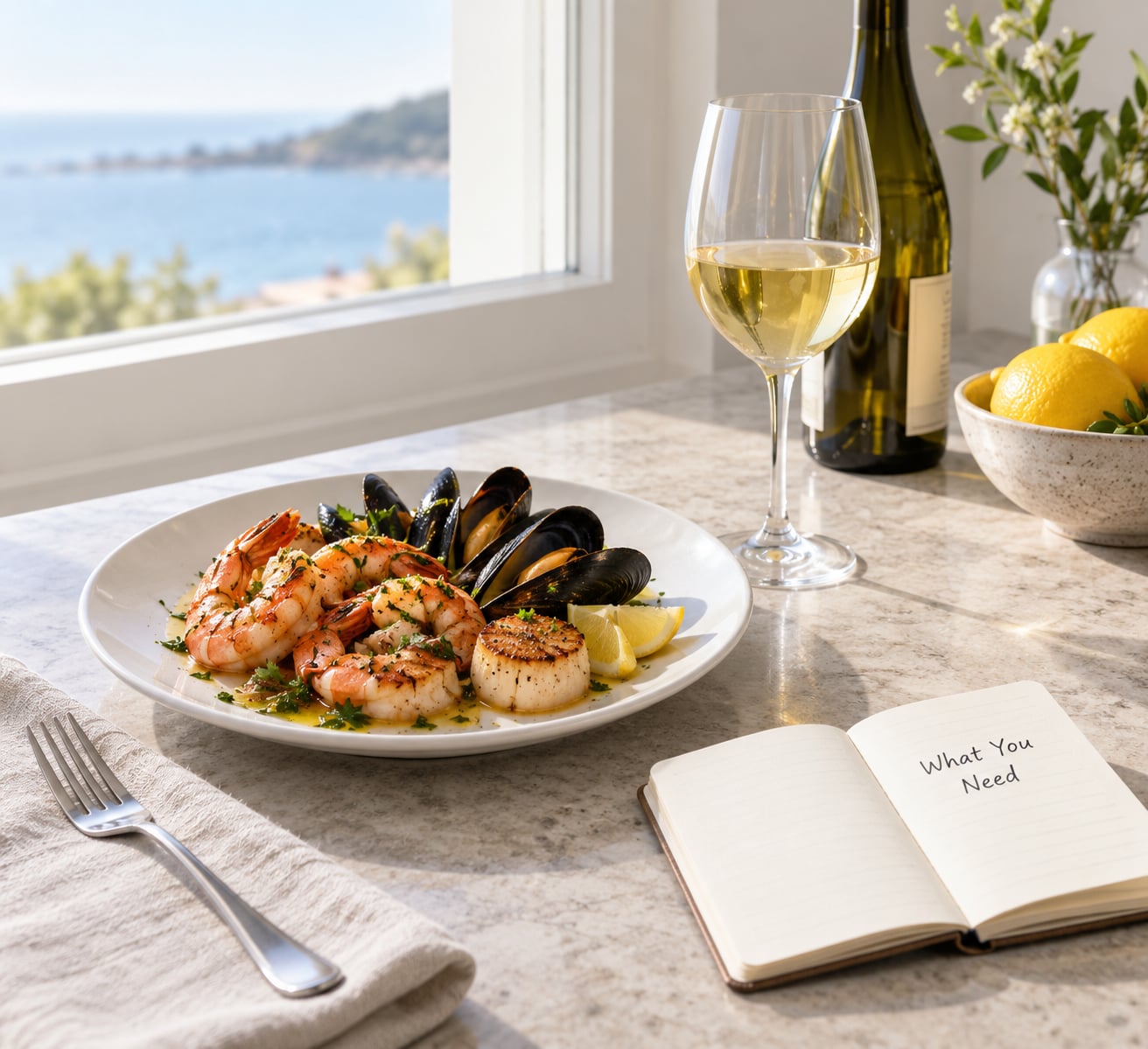
Not much. The whole method runs on four things, and you probably own all of them already.
The seafood, and how it is cooked. The species matters, but the preparation changes the answer more. A raw scallop and a fried scallop ask for different wines. Before anything else, decide whether the dish is raw, steamed, grilled, roasted, battered, cured, or covered in a heavy sauce.
One wine in hand. A single bottle is enough. If you want to compare options, most shops will let you taste a couple of pours, and many will open a bottle for a small taste rather than make you commit. You do not need a full tasting setup to apply this method.
A way to taste quickly. Swirl, smell, sip, then eat a bite of the seafood and sip again. That last step is the part people skip. A wine that seems fine on its own often changes once food is involved, and the change tells you whether the pairing works.
Something to write on. A phone note is fine. Recording the seafood, the wine, and what you noticed while it was still fresh is how you build a personal list instead of guessing again next month. If grape names and regions look like a foreign language on the bottle, How to Read a Wine Label: A Beginner’s Guide clears that up in a few minutes.
Step-by-Step: How to Pair Wine with Seafood
Start With the Seafood and Its Preparation
Sort your seafood into three groups before you look at any wine. Delicate lean fish such as cod, sole, halibut, pollock, and tilapia has almost no fat and a soft texture. Oily fish such as salmon, tuna, mackerel, and swordfish carries fat and a firmer, meatier bite. Shellfish and mollusks fall somewhere between, with a briny, mineral character that no amount of butter fully hides.
Then add the cooking method, because it overrides the species more often than you would expect. Grilling and roasting add char, smoke, and caramelised sugars, which give the dish weight and let a fuller wine in. Steaming keeps things clean and bright, which suits the lightest whites. Frying in batter adds fat and starch that dull a delicate wine, so you want more acid to cut through it. Curing and smoking concentrate salt and smoke, and both of those push you toward higher alcohol or a little residual sweetness.
Raw and cured seafood deserves its own note. Sushi and sashimi are the easiest pairing in the whole category because nothing has been cooked off, and the wine only needs to be clean and cold. Smoked salmon is a different job, since the smoke wants body behind it.
Match the Wine’s Body to the Seafood’s Texture
Body is weight in the mouth. Light-bodied wines are thin, watery, and quick, like a simple injection of water. Fuller wines have more substance and linger. The rule is straightforward: the more delicate and lean the seafood, the lighter the wine; the more fat, char, or sauce, the more the wine can carry.
Delicate white fish pairs best with light, crisp whites. Sole, cod, halibut, and tilapia go with Sauvignon Blanc, Albariño, Vermentino, Pinot Grigio, Muscadet, or dry Chablis. The Sauvignon Blanc example is my default for beginners because its grapefruit and green-apple character reads as fresh squeezed lemon, which is exactly what is on the fish anyway.
Shellfish and grilled preparations can handle more texture. A richer Albariño, a lightly oaked Chardonnay with some lees character, or a Sémillon with grip handles scallops, oysters, or a lobster roll without drowning the sweet shellfish flavor.
Oily fish opens the door to red. Grilled salmon with Pinot Noir is the classic example that surprises people who thought red was off the table. The tannin is soft enough to avoid grabbing the fish, and the red fruit and earthiness echo the char. Seared tuna with Gamay, and swordfish with a light Sangiovese, work the same way: reds with low tannin, moderate body, and enough acidity to stay fresh.
Balance Acidity, Sweetness, Richness, and Spice
Acidity is the variable that matters most with seafood, and it does two jobs. It refreshes your palate between bites, and it makes a piece of fish taste more like itself rather than less. A wine that is rich but not acidic will make lean fish taste thin and washed out, which is the most common complaint about heavy whites with shellfish.
Sweetness is the easiest thing to overdo. The rule that works is that the wine should never be sweeter than the dish. A dry or lightly off-dry wine pairs with everything except a dessert-style white, and a dessert wine with briny shellfish tastes cloying and strange. There are exceptions. A dry sparkling wine, or a slightly off-dry Riesling, is a lovely match with spicy curries, sweet and sour sauces, and Thai dishes because heat and sweetness both raise your tolerance for sugar.
Seasoning is where this method earns its keep. Lemon, capers, and herbs call for high acidity. Butter and cream ask for a wine with some body so the butter does not taste flat. Chili, ginger, garlic, and cumin want more alcohol or a touch of sweetness to stand up to the heat. Smoke asks for body. A very hot sauce can genuinely justify a red, since tannin is what makes red wine feel long and cooling next to chili.
If the wine seems fine but the bite is disappointing, the fix is almost always more acid, less oak, or less sugar. Not a different bottle of red.
Make the Final Wine Choice
Once you have sorted the seafood and noted the preparation, these beginner matches hold up in almost any kitchen. Use the table as a starting point, then adjust for sauce and seasoning.
| Seafood | Best wine style | Why it works |
|---|---|---|
| Cod, sole, halibut, pollock | Sauvignon Blanc, Muscadet, dry Chablis | High acidity cuts through the lean flesh and mimics lemon |
| Tilapia, catfish, freshwater fish | Pinot Grigio, Albariño, unoaked Chardonnay | Neutral, dry, and clean with no oak to fight the mild flavor |
| Grilled salmon | Pinot Noir, dry rosé, Chardonnay | Fat takes the edge off tannin, and red fruit echoes the char |
| Seared tuna, swordfish | Gamay, Sangiovese, light Grenache | Low-tannin reds with enough body for meaty flesh |
| Raw oysters | Brut sparkling, Muscadet, Chablis | Bubbles and brine scrub the palate; very dry styles keep it clean |
| Shrimp and prawns | Sauvignon Blanc, dry Riesling, sparkling | Sweet shellfish flavor meets bright acid, and ginger and chili welcome a little sweetness |
| Scallops | Chardonnay, Chablis, Sancerre | Subtle body mirrors the scallop’s sweetness without covering it |
| Mussels and clams | Muscadet, Albariño, Vermentino | Saline, mineral whites echo the iodine in the shells |
| Lobster and crab | Chardonnay, Chablis, dry rosé | Butter needs body, and the briny sweetness needs clean acidity |
| Lobster thermidor | Oaked Chardonnay or sparkling | Rich cheese and butter take a fuller, creamy style |
| Fish and chips | Sparkling wine, dry Riesling, Chablis | Bubbles cut the fry, and high acid keeps the beer-like finish clean |
| Sushi and sashimi | Dry sparkling, Junmai daiginjo sake, unoaked Chardonnay | Nothing is cooked, so the wine only needs to be clean and cold |
| Seafood curry or chili prawns | Off-dry Riesling, Viognier, light red | Heat and sweet sauce raise tolerance for a little residual sugar |
| Grilled whole fish with herb sauce | Grilled Verdelho, Viognier, Chasselas | Floral whites match herbs, and enough body carries the char |
If the dish is heavily seasoned, shift toward a wine with more alcohol, a little sweetness, or a red with soft tannin. If the sauce is lemon and butter, stay with an acidic white and skip anything heavily oaked. And if you want a backup that works before you even know what is in the pan, keep a bottle of brut sparkling in the fridge. It handles raw, steamed, and fried seafood, and it never embarrasses you at a dinner where the fish arrived late.
Wine is not the only answer. A dry cider echoes both the acidity and the briny character, a lager or pilsner behaves like a crisp white, and sake has more amino acids than white wine, which is why it pairs so cleanly with seafood and never brings out a fishy note. Non-alcoholic sparkling water with lemon works because it does exactly what a crisp wine does: refreshes without adding anything.
Common Mistakes
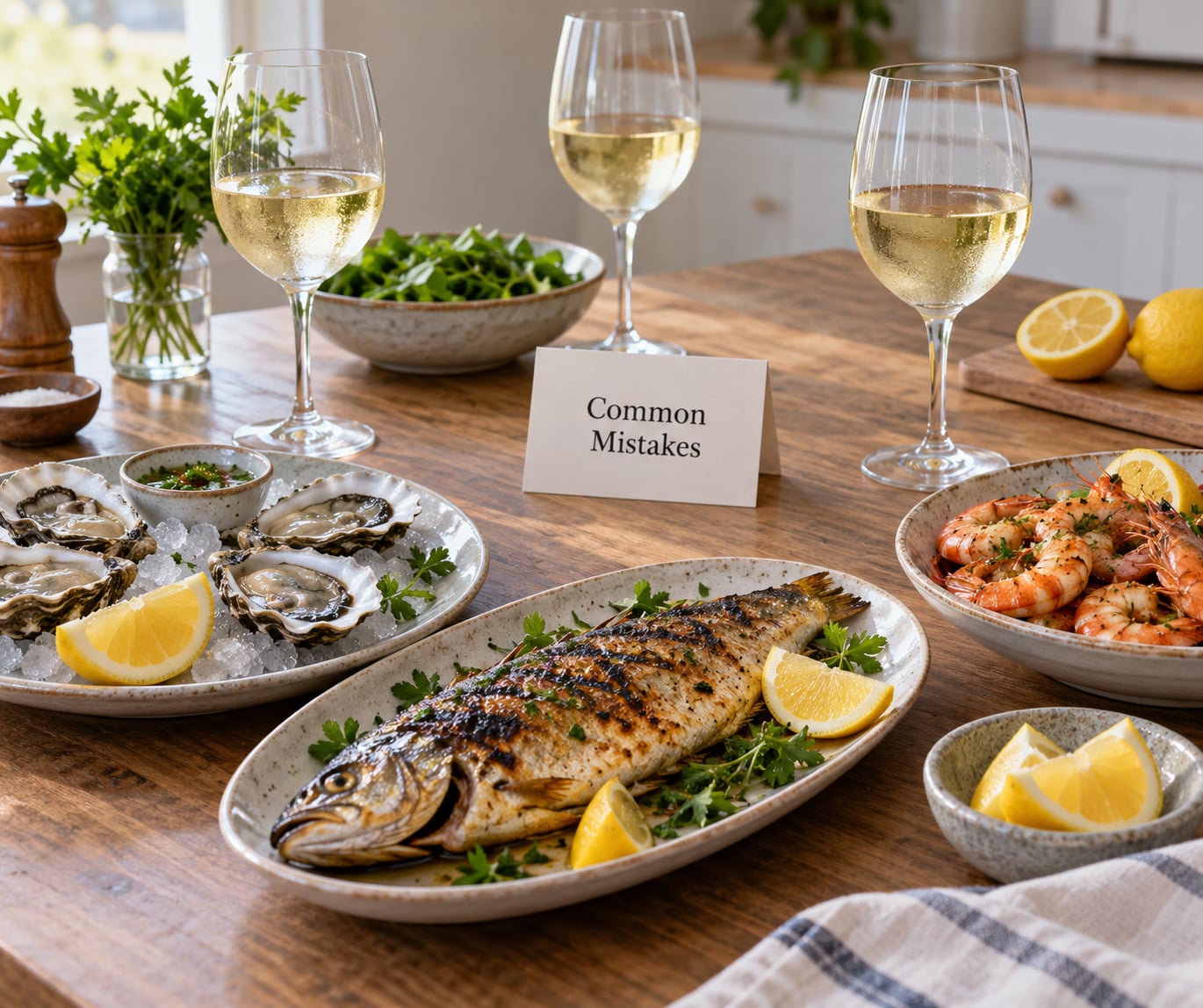
Pairing by the fish name alone. Shrimp grilled with lemon and shrimp poached in a sweet chili sauce need completely different wines. Fix: name the preparation before you name the wine. It is the fastest useful question you can ask yourself.
Assuming all Chardonnay is the same. A heavy, oaked, buttery Chardonnay next to raw oysters will taste flat, because oak and strong buttery flavors bury the briny sweetness underneath. Fix: with shellfish and oysters, pick unoaked Chardonnay, Chablis, or anything from Muscadet, and save the buttery barrel-fermented style for a rich sauce or a roast.
Serving a sweet wine with briny shellfish. A dessert-style white with oysters is cloying, because the wine is sweeter than the dish and the brine only sharpens the sugar. Fix: the wine should never be sweeter than the food. Reach for a small amount of sweetness only when heat or a sweet sauce is on the plate.
Pairing delicate fish with a powerful red. Tannin grabs protein, and the result with a light fillet is a metallic, drying finish rather than a savory one. Fix: if you want red, choose a low-tannin style such as Pinot Noir or Gamay and serve it slightly cool, around 55°F, instead of warm. The old rule that red never touches seafood is wrong; the rule that tannic, high-alcohol reds rarely suit delicate fish is right.
Ignoring temperature. Warm white wine tastes flat and flabby, and ice-cold wine suppresses the aromas that tell you what it is. Fix: serve light whites around 50 to 55°F, fuller whites around 58 to 60°F, sparkling at 38 to 45°F, and light reds cool rather than cellar temperature. Let a bottle pulled from the fridge sit out for fifteen minutes before guests arrive.
Forgetting that salt and smoke both need body. A very light, highly acidic wine next to a heavily salted or charred dish will taste thin. Fix: move up one step in body, or pick something with a little residual sugar to round out the salt.
At a restaurant, none of this requires asking for a sommelier. Say what the fish is, how it is prepared, and that you want something crisp and dry, and any server can point you at the right bottle. Read our guide to white wine pairing basics once beforehand and you will know more than most of the table.
Frequently Asked Questions
What wine is best for a mixed seafood platter?
For a platter with a mix of raw oysters, shrimp, grilled fish, and something sauced, a brut sparkling wine is the safest single bottle. Its high acidity and fine bubbles refresh the palate between different seafood, and its dryness never clashes with shellfish. A dry Albariño or Muscadet works as well, as long as the platter has nothing heavily sauced on it. Avoid anything sweet, and skip heavy oaked Chardonnay, which flattens briny flavors.
Can I pair red wine with seafood?
Yes, and light reds are often the better match for oily fish. Tannin reacts with protein and fat, which is why salmon, tuna, swordfish, and mackerel soften a red rather than fighting it. Pinot Noir with grilled salmon, Gamay with seared tuna, and Sangiovese with swordfish are reliable choices. Skip heavy, high-tannin, high-alcohol reds with delicate lean fish like sole or cod, and serve the red cool rather than warm.
What wine goes best with shrimp and shellfish?
A dry, high-acid white with medium body is the safest answer: Sauvignon Blanc, Albariño, Vermentino, Muscadet, or Chablis. Their acidity mirrors the sweetness of shrimp and scallops and scrubs the brine from oysters and clams without leaving a heavy finish. Brut sparkling is excellent with raw oysters. With chili garlic prawns or a curry, choose something slightly off-dry like Riesling, because heat and sweet sauce make dry wine taste thin.
Does sweet wine pair well with seafood?
Only in specific cases. The guiding rule is that the wine should never be sweeter than the dish, which rules out dessert wines with briny shellfish and with plain grilled fish. Small amounts of residual sugar work well when the food is spicy or served with a sweet and sour sauce, so a lightly off-dry Riesling pairs nicely with Thai seafood curry. Sweet wine also suits cured meats and blue cheese, but seafood rarely wants more than a hint.
What temperature should I serve wine with seafood?
Serve light, crisp whites around 50 to 55°F, fuller or lightly oaked whites around 58 to 60°F, sparkling between 38 and 45°F, and light reds slightly cool at about 55°F. Too warm and a white wine tastes flabby; too cold and it mutes the aromas you relied on to pick it. A bottle taken from the fridge usually needs fifteen minutes on the table before serving, which is long enough to take the edge off without losing freshness.
How do I choose a wine when the seafood has a strong sauce?
Read the sauce first, then match it. Lemon, capers, and herbs call for high acidity, so a Sauvignon Blanc or Chablis. Butter and cream need more body, so an unoaked or lightly oaked Chardonnay. Chili, ginger, and cumin want alcohol and a little sweetness, so an off-dry Riesling or Viognier. A hot chili sauce can justify a soft red such as Pinot Noir or Gamay. When you cannot decode the sauce, sparkling wine and dry cider both handle strong seasoning well.
Conclusion: Start With the Simplest Match
Learning how to pair wine with seafood takes one habit: name the preparation, then match weight to weight. Delicate lean fish gets a light crisp white, briny shellfish gets an acidic white or brut sparkling, and oily or char-heavy fish can take a fuller white or a soft red like Pinot Noir.
Start where I would start. Keep a bottle of brut sparkling or a dry Albariño in the fridge, because it covers most of what a home cook will ever serve. After that, adjust for butter, for heat, and for smoke, and write down what worked. Six dinners from now you will not need this guide at all.