
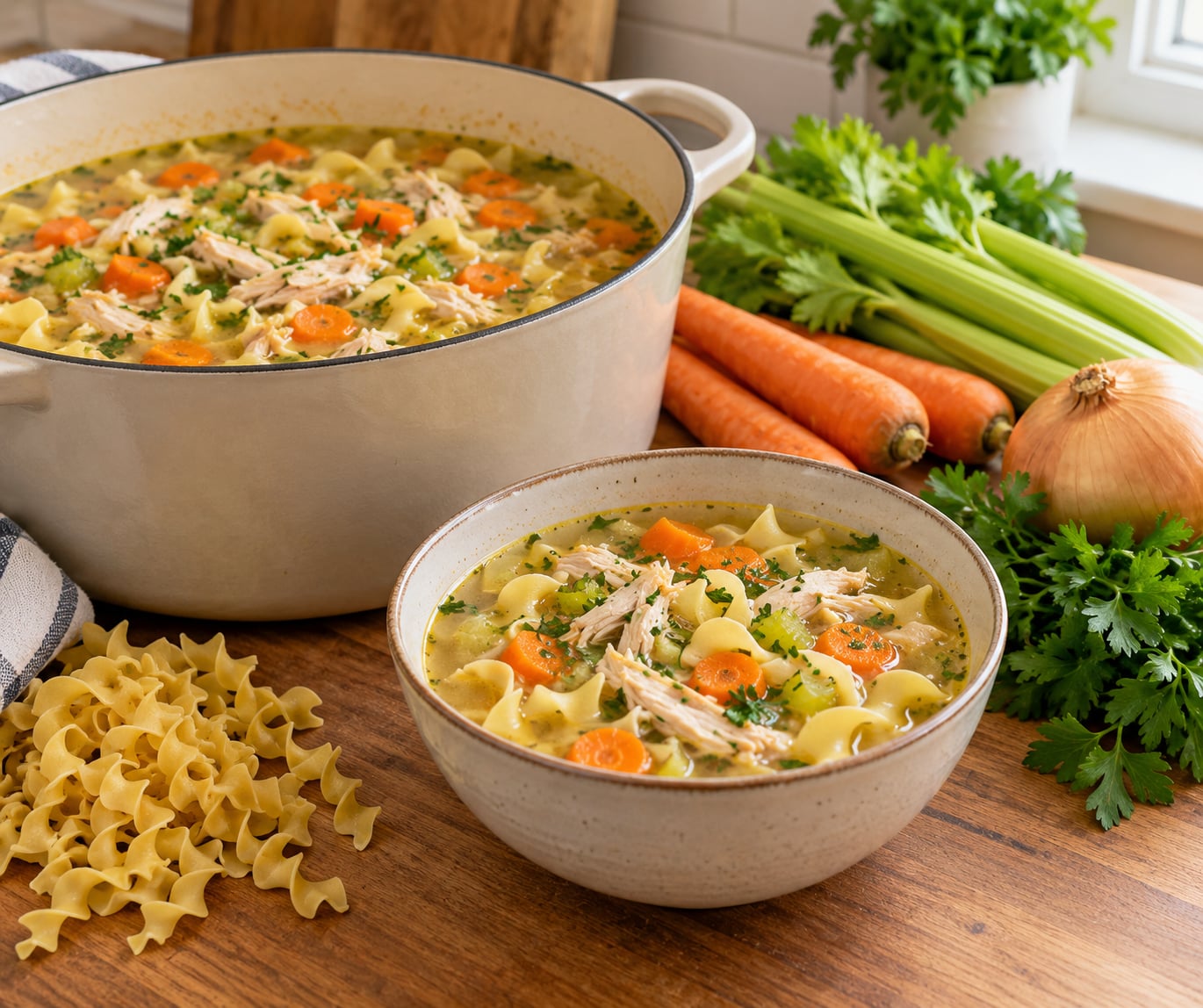
To make chicken noodle soup from scratch, you simmer bone-in chicken with onion, carrot, celery and herbs in water or a mix of water and broth, shred the meat back into the pot, and add egg noodles for the last five to ten minutes so they stay tender instead of turning to paste. One pot, about an hour of active time, no canned soup anywhere.
The version below starts from raw chicken and whole vegetables, so it takes a little longer than the carton version but tastes nothing like it. Updated for 2026.
Table of Contents
- What You Need
- Step-by-Step: How to Make Chicken Noodle Soup From Scratch
- Common Mistakes
- Frequently Asked Questions
- Can I make chicken noodle soup from scratch using chicken breasts?
- What kind of noodles work best in homemade chicken noodle soup?
- Do I need to make the broth separately before adding the noodles?
- How long does chicken noodle soup take to make from scratch?
- How should I store and reheat chicken noodle soup?
- Can I freeze chicken noodle soup with the noodles already cooked?
What You Need
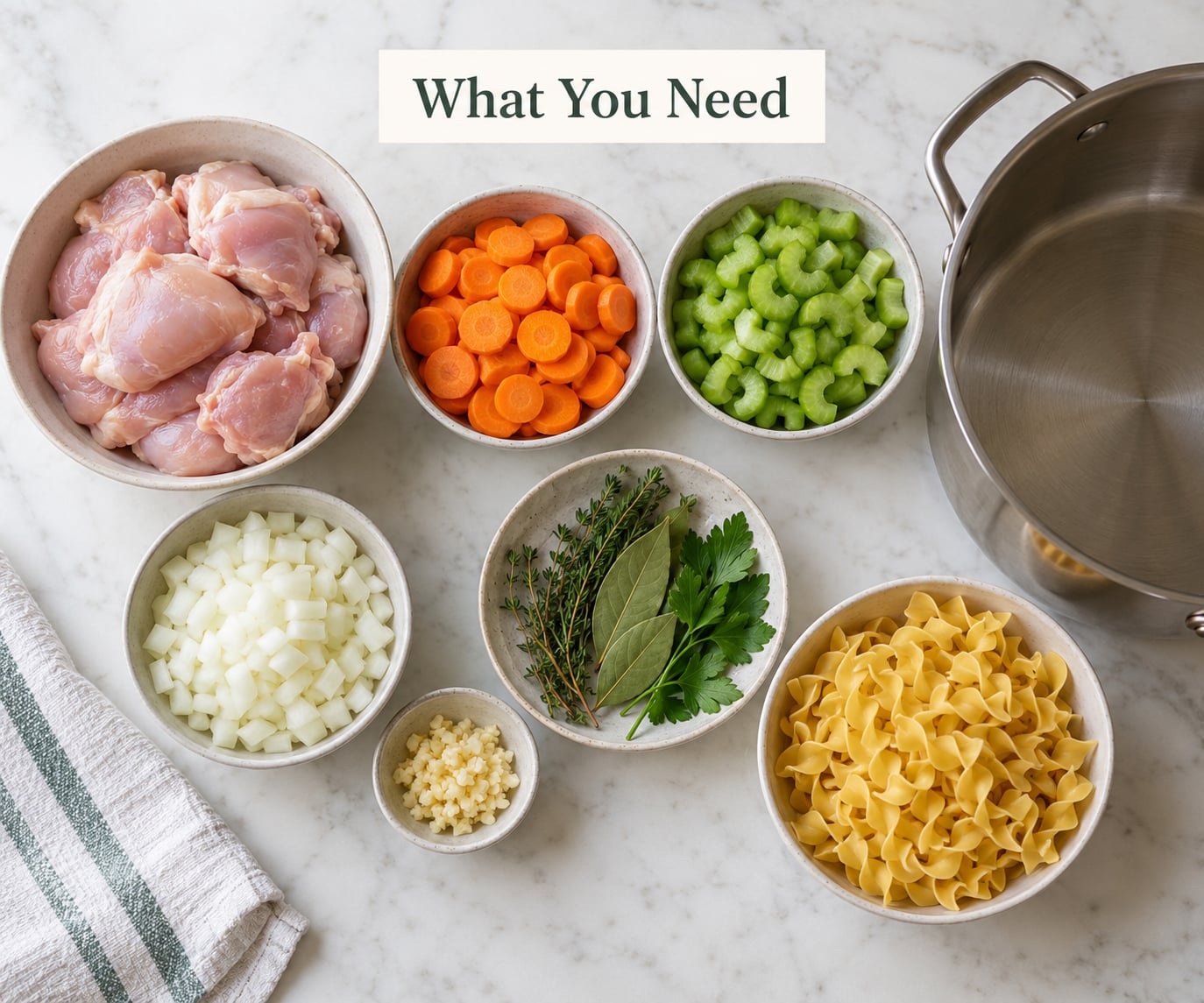
Everything lands in one pot, which is why the ingredient list is short. Grouped the way the method uses them:
Chicken
- 1.5 to 2 pounds chicken thighs, bone-in, or a whole cut-up bird, or 3 bone-in breasts (about 1.5 pounds / 680 g)
- 1 to 2 pounds boneless skinless chicken breasts, if that is what you have
Thighs are the forgiving choice. They stay moist through a long simmer, which matters if you are working without a thermometer.
Vegetables
- 2 medium carrots, peeled and sliced into coins (2 cups)
- 2 celery stalks, sliced (1 cup)
- 1 yellow onion, quartered or diced
- 2 to 3 garlic cloves, smashed
- Optional: 1 small potato diced small for body, 1 cup shredded cabbage, 1 cup frozen peas
Cut the mirepoix, which is just the French cook’s word for carrot, celery and onion together, into even pieces. Even pieces cook at the same rate, and that is most of what separates good soup from soup with a mushy bottom.
Aromatics and Herbs
- 1 bay leaf
- 1 teaspoon dried thyme, or a few fresh thyme sprigs
- 1/2 teaspoon dried oregano
- 1/3 cup fresh parsley, chopped, plus more for garnish
Broth and Fat
- 2 tablespoons olive oil or unsalted butter
- 8 to 10 cups water, or half water and half low-sodium chicken broth
- 1 chicken bouillon cube, optional, for a savory back note
Water plus bones and aromatics gives you the cleanest homemade flavor. Broth gives you a rounder one. Mixing the two is the shortcut most cooks land on permanently.
Noodles
- 8 ounces wide dried egg noodles (about 3 cups), or 1 pound fresh hand-cut noodles
Seasoning
- 1 to 2 teaspoons kosher salt, more to taste at the end
- 1/2 teaspoon freshly ground black pepper
Swaps that work: rotisserie chicken plus your own broth, leftover Thanksgiving turkey instead of chicken, frozen mixed vegetables for the mirepoix, or rice noodles in place of egg noodles. For the broth itself, our guide to chicken stock from bones covers the long-simmer version in detail.
Step-by-Step: How to Make Chicken Noodle Soup From Scratch

Prep takes 15 minutes. The pot takes 35 to 40 minutes. The noodles take less than ten and want your full attention.
Step 1: Build the Flavor Base
Heat the olive oil in a heavy pot over medium heat. Add the onion, carrot, celery and garlic and cook 6 to 8 minutes, stirring, until the onion is soft and translucent with a few golden spots at the edges.
Before liquid goes in, the mixture should look moist and slightly translucent rather than watery, and it should smell sweet rather than sharp. That browning is where most of the finished flavor comes from. To go deeper, roast the bones and carrot ends at 425°F / 220°C for 25 minutes first; it adds about forty minutes of work and one very savory note.
Step 2: Simmer the Broth
Add the chicken, bay leaf, thyme and oregano. Pour in 8 to 10 cups of liquid, enough to cover the meat by an inch. Season lightly, then bring it to a bare boil and immediately turn it down.
You want a gentle simmer, the kind where a bubble breaks the surface every second or two, not a rolling boil. A hard boil keeps the broth cloudy and makes breast meat turn grainy. Skim the gray foam that rises in the first ten minutes; it is pure protein residue and it has no business in your bowl.
Cover and simmer 25 to 30 minutes. Beginning cooks across Reddit cooking threads say the temperature cue, not the timer, is what finally made this click: check a thick part with a thermometer and pull at 165°F / 74°C.
Step 3: Add the Vegetables
If the potato is in, add it now with the mirepoix. Cover and simmer another 8 to 10 minutes until a carrot slice bends without snapping.
Delicate things wait. Cabbage goes in for the last 5 minutes, frozen peas for the last 2, and a handful of fresh parsley off the heat. Add any noodles at the very end, which is the next step, because they are the only ingredient with a hard deadline.
Step 4: Shred the Chicken and Season
Pull the chicken out with tongs onto a plate and let it cool for 3 to 5 minutes, just enough to handle. Shred with two forks, or dice the breasts into bite-size pieces so each spoonful has some.
Taste the broth before the chicken goes back in. It has concentrated during the simmer and it is usually short on salt, which is exactly the problem people hit when the soup tastes flat at the table. Add salt in small increments, a pinch of sugar if it tastes hollow, and more black pepper than feels reasonable. Return the chicken to the pot.
Step 5: Cook the Noodles
Break the dried noodles into a rough nest rather than a brick, and stir once as they go in so nothing welds itself to the bottom. Fresh noodles go in straight from the floured board, dusted well with flour so they do not clump.
Wide dried egg noodles need 8 to 10 minutes, fresh hand-cut noodles 3 to 4, rice noodles 4 to 6, frozen peas and cabbage about 3 more. Keep stirring every minute or so. The noodles are done when they still have a firm core in the middle, which is what al dente means, and when the broth looks slightly thickened from the starch they released.
How to make chicken noodle soup from scratch with noodles that hold their shape comes down to one rule: keep the noodles out of the pot for as long as possible. Boil them in a separate pan, then fold them into each bowl as you serve. That costs you an extra pot and buys you soup that is still good the next day.
Step 6: Finish and Serve
Turn off the heat and let the pot sit, uncovered, for 5 minutes. Skim any fat that pooled on top if you want a lighter bowl. Ladle into warm bowls with more parsley and a hard grind of pepper.
Serve it with saltines, crusty bread, or over mashed potatoes, which is a real tradition in a few Midwestern families rather than a novelty. If you want a thicker, creamier soup without cream, the technique in our creamy soup without heavy cream guide works here too.
For storage, cool the soup in shallow containers within two hours and refrigerate it up to three to four days. Reheat only what you are eating, covered, until it steams hot throughout. Noodles drink the broth while a soup sits, so add a splash of water or stock before reheating.
Common Mistakes
Why is my chicken noodle soup watery?
Usually the pot is covered too tightly and the liquid never reduces, or the broth was salted too early. Simmer uncovered for the last ten minutes if you want a slightly thicker bowl, and skip the lid during that stretch. Another cause is adding a full pot of water to ingredients that were crowding each other; give the chicken and vegetables room to sit in the liquid.
Why does my soup taste bland?
Three reasons show up over and over. You seasoned at the start and never tasted at the end. You used dried herbs that have been sitting in the cabinet since the Carter administration. Or you skipped the browning in Step 1 and went straight to liquid. Fresh parsley added off the heat fixes the first two, and eight minutes of patience in the skillet fixes the third.
Why is my chicken dry and stringy?
Breast meat that simmers at a rolling boil for 45 minutes turns into something you would rather not chew. Simmer gently, check at 12 minutes, and pull the moment a thermometer reads 165°F / 74°C. The old fix for stringy chicken is salting it in brine ahead of time, which seasons the meat all the way through rather than just the surface.
Why do my noodles turn to mush?
They were in the pot too long, and the starch the noodles shed keeps thickening the broth around them. Cook them separately and fold them in at serving, which is the fix that solves the problem for good. Also stir during the first minute, when the strands are most likely to bond into clumps.
Why are my vegetables mushy but the chicken is fine?
The vegetables went in too early and got a second simmer they did not need. Cut them a touch smaller than feels right and add them with about ten minutes left. If you want more body from the broth itself, note that a browning step, similar to the one in our tomato soup restaurant-style guide, is where soup gets its depth.
Frequently Asked Questions
Can I make chicken noodle soup from scratch using chicken breasts?
Yes, and it is the most common cut. Use 1.5 to 2 pounds of boneless breasts and simmer them gently for 12 to 15 minutes, no longer, since they turn dry past that point. Pull at 165°F / 74°C with a thermometer, rest a few minutes, then shred with two forks and return them to the pot. Bone-in thighs forgive sloppy timing far better if you are cooking without a thermometer.
What kind of noodles work best in homemade chicken noodle soup?
Wide dried egg noodles are the classic choice and hold their shape well in a rich broth. Fresh hand-cut noodles cook in 3 to 4 minutes, dried ones in 8 to 10, and rice noodles in 4 to 6. Add any of them only in the final 5 to 10 minutes, or cook them in a separate pot and fold them in per bowl. Noodles added early is the biggest single cause of mushy soup.
Do I need to make the broth separately before adding the noodles?
No, one pot works fine. Simmer chicken and aromatics in 8 to 10 cups of water or a mix of water and store-bought broth, then build the soup in that same pot. Cooking broth for hours ahead buys depth of flavor, not technique. Many experienced cooks pair homemade broth with a store-bought rotisserie chicken, which is the best speed-to-flavor ratio going.
How long does chicken noodle soup take to make from scratch?
About an hour for the one-pot version: 15 minutes of prep, 30 to 35 minutes of simmering the chicken with the vegetables, and 5 to 10 minutes for the noodles. Building broth from bones and aromatics is a separate project of 4 to 6 hours at a bare simmer, and it can be done a day ahead. Doubling the broth makes your next batch faster.
How should I store and reheat chicken noodle soup?
Move it into shallow containers within two hours and refrigerate for up to three to four days. Reheat only the amount you plan to eat, covered, over medium heat or in the microwave for 1 to 2 minutes, stirring once, until steaming hot throughout. Noodles keep drinking broth as soup sits, so add a splash of water or stock before reheating and cook it to 165°F / 74°C.
Can I freeze chicken noodle soup with the noodles already cooked?
You can, but the noodles turn soft and swollen once thawed. Freeze broth, chicken and vegetables together, leave them out, and cook a fresh handful of noodles after thawing. Flatten the container so it freezes quickly, seal it well, and use it within three months. Thaw overnight in the fridge instead of on the counter, then heat to 165°F / 74°C.
Start with the skillet: brown your onion, carrot and celery for a full eight minutes, and the rest of the pot takes care of itself from there. Once you have made chicken noodle soup from scratch with real bones and real time in the pot, the carton version will not make it back into your kitchen.