
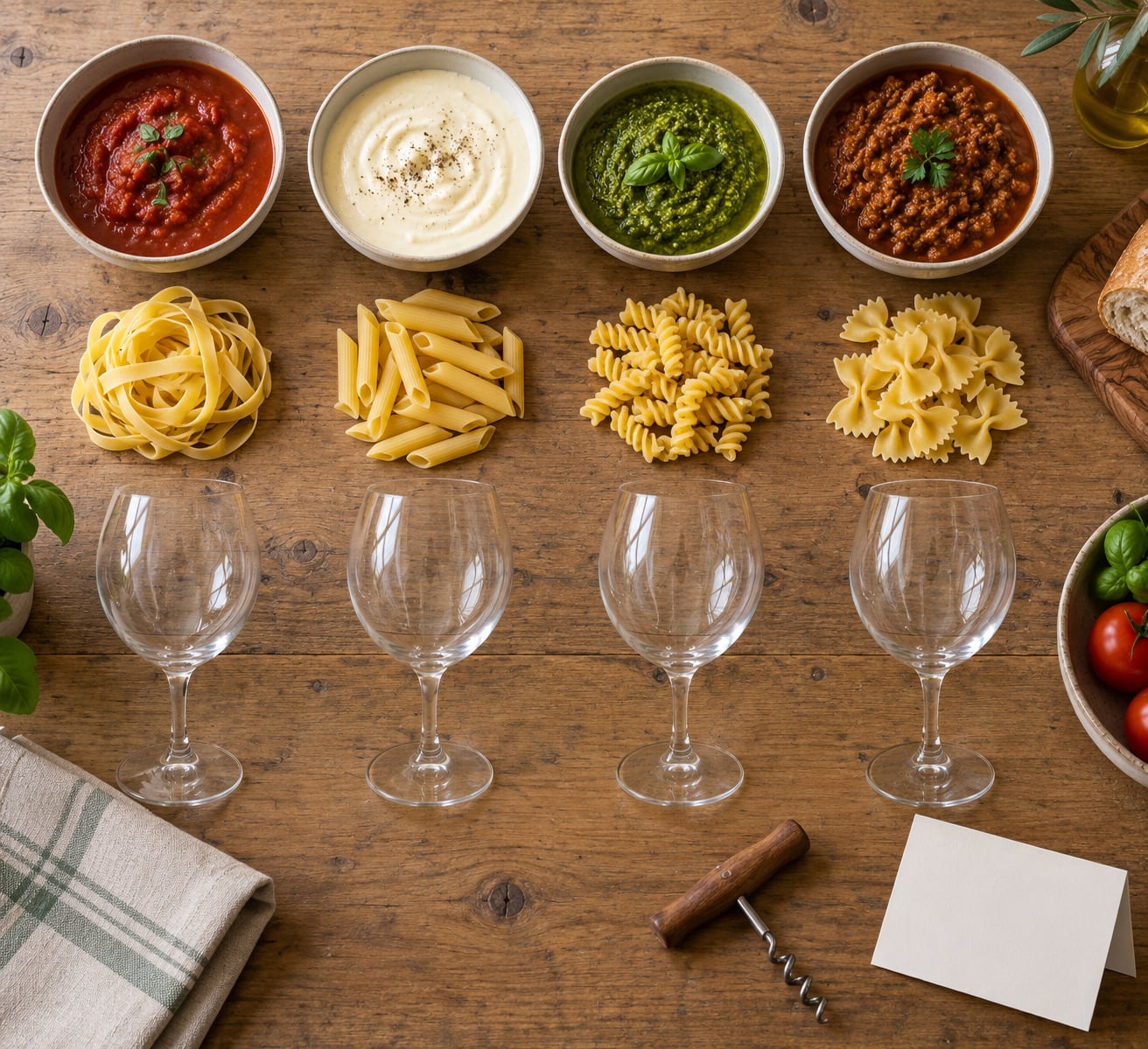
How to pair wine with pasta dishes? Match the wine to the sauce first, then check that the pasta shape works with it. Acidic tomato sauce wants a bright, high-acid wine, creamy and cheesy sauces want one with enough body to sit alongside the fat, and delicate seafood pasta wants something crisp rather than heavy. There is no rulebook you have to memorise — just a handful of things to look at on the plate before you pull a bottle.
I cook pasta most weeknights and used to overthink the wine, standing in the kitchen aisle with a bottle of red because it seemed like the adult option. A few years of putting mismatched bottles next to the right food fixed it faster than any book did. What follows is the method I actually use.
What You Need
You need five details from the dish, and none of them require any training to read:
- Acidity. Is the sauce sharp and tangy, like a fresh tomato and basil combination, or mellow and slow-cooked?
- Body and fat. Cream, butter, cheese and olive oil all make a dish heavier. Heavier food needs a wine with more weight behind it.
- Intensity. Garlic, chili, anchovy, spice and char add concentration. A delicate wine disappears next to them.
- Aromatics. Basil, pesto, shellfish and mushrooms carry strong smells that can either harmonise with the wine or clash with it.
- Cheese. Hard aged cheese is a separate case from Parmesan-style topping, because salt and tannin react badly together.
Add serving temperature to that list, because a cold red tastes muted and flat next to a hot bowl of pasta. That one detail fixes more disappointing pairings than any bottle choice.
Step-by-Step: Match the Wine to the Sauce and Pasta
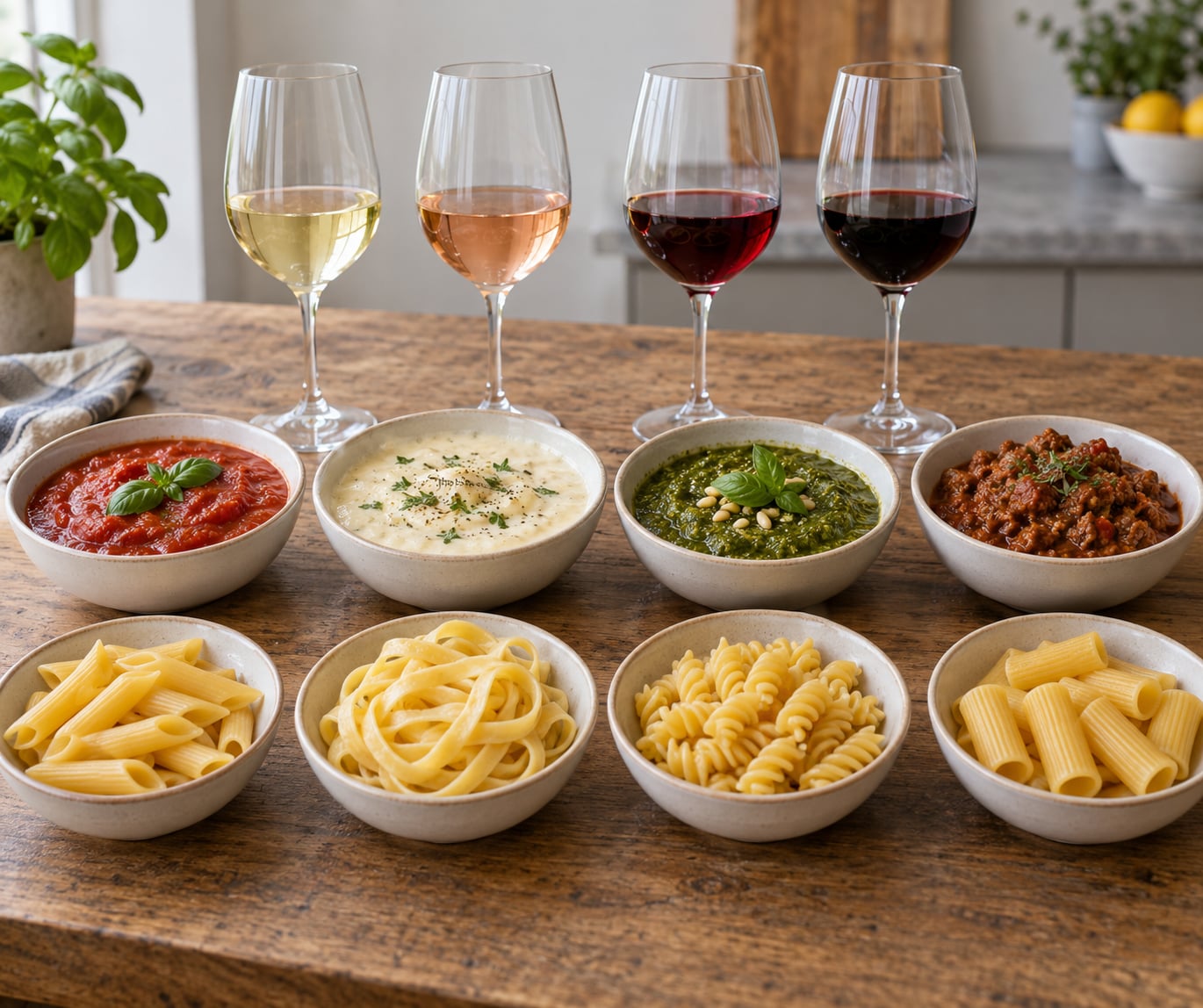
The process takes four moves. Read the sauce, match its weight, check the acidity, then adjust for cheese and temperature. Do it in that order and you will rarely go wrong.
Move one: describe the sauce in one sentence. Say it out loud — “bright tomato, heavy on garlic, finished with basil” or “cream, parmesan and black pepper.” The sentence describes flavour intensity and weight better than the dish name does.
Move two: match body to weight. A wine lighter than the sauce tastes thin and disappears. A wine much heavier than the sauce flattens everything and makes the pasta taste fatter than it is. Aim for the same weight on both sides of the plate. If the shelf is unfamiliar, how to read a wine label takes about five minutes and tells you more than the price does.
Move three: check acidity. Acidity is the workhorse of wine pairing. It cuts through fat, refreshes the palate between bites and stops a rich dish from sitting heavily. Bright, acidic sauces need an equally bright wine; mellow sauces tolerate a softer, rounder one.
Move four: adjust for cheese, spice and temperature. A little Parmesan is fine. A heavy blanket of aged cheese or pecorino wants a wine with no tannin at all. Serve reds cool rather than warm, around 60 to 65°F, and whites cool, around 50 to 55°F.
How to pair wine with pasta dishes by pasta shape
Shape matters less than most guides admit, but it changes how much sauce reaches your mouth, and that does affect the pairing.
Long strands such as spaghetti, linguine and bucatini trap sauce in their twists, so each bite carries more of it. That means the sauce intensity you taste is higher than a plated glance suggests, and a heavier, more substantial red works better than a light one.
Tubes and curves — penne, rigatoni, cavatelli, orecchiette, fusilli — hold sauce inside the hollow or in the ridges, delivering a concentrated bite in each piece. These are the shapes where a medium-bodied red with bright acidity has the most room to work.
Flat sheets like pappardelle, lasagna and ravioli are usually sauced in layers, so the sauce-to-pasta ratio drops and a lighter wine stays in balance. Baked ziti and lasagna also cool down fast in the dish, so pick a red with enough fruit to survive a lukewarm first bite.
Small shapes such as orecchiette, ditalini and acini di pepe spread a little sauce across the plate, which makes the dish taste brighter overall. Light reds, rosé and sparkling wine all work here because nothing is concentrated.
How to pair wine with tomato-based pasta dishes
Tomato is acidic, which is why tomato pasta makes an easy pairing: a wine with real acidity stands up to it instead of collapsing.
For a bright marinara, puttanesca or arrabbiata made with fresh or canned tomatoes, garlic and herbs, choose a dry, high-acid red with light tannin. Chianti, Barbera or Montepulciano d’Abruzzo all fit. A dry rosé or a light white such as Pinot Grigio or Grenache Blanc also works, especially if the sauce carries olive oil rather than meat.
A slow-cooked ragù changes the calculation. Long simmering softens the tomato’s sharpness and adds body, fat and depth, so the wine should have body too. Chianti Classico with its acidity and herbal lean, or a fuller Merlot or Cabernet Sauvignon, handle a heavy bolognese well. Sangiovese-based reds remain the classic choice, and their savoury edge mirrors the slow-cooked meat. The same logic carries over to other slow-cooked proteins, so how to pair wine with steak for beginners is worth a read before you buy.
Sweet, high-alcohol reds clash with tomato’s acid, so leave off anything jammy or heavily oaked. Rosé is the safe middle option for a plate that mixes light and rich dishes, which is common at a family table where several pasta bowls share the table.
How to pair wine with creamy, pesto, and seafood pasta
Cream and cheese make a dish rich and soft in the mouth. What balances that is acidity, so dry, crisp whites are the standard answer: Pinot Grigio, Sauvignon Blanc, unoaked Chardonnay, Grüner Veltliner or Verdicchio. A Gamay or other lighter red also works if you prefer red with a creamy dish, which is a reasonable preference rather than a mistake. White wine pairing basics for home cooks covers why acidity does the heavy lifting.
Pesto is the interesting case because basil and olive oil are aromatic enough to swamp a plain white. A crisp white still handles it, and a Sauvignon Blanc or Vermentino cuts the oil and echoes the herbal notes. Kale or walnut pesto pushes further into bitterness and earth, and a more mineral white or a light-bodied red without much tannin keeps it from turning muddy.
Vodka sauce is cream reduced with vodka and tomato, so it sits between the two camps. It takes a medium-bodied red with bright acidity — Barbera or Montepulciano work well — or a dry white with enough fruit to stand up to the tomato.
Seafood pasta wants freshness over weight. Clam, shrimp, scallop and lobster all bring iodine and salinity, so skip heavy, tannic reds. Dry whites such as Pinot Grigio, Albariño or Grüner Veltliner, a dry rosé, or a light sparkling wine all clean up nicely after shellfish. If you cook the seafood in the dish, take it off the heat once it reaches 145°F and let it rest, so it stays tender and sweet rather than rubbery.
Common Mistakes
Matching by pasta colour. White pasta gets treated as a “white food” and white pasta with a rich red ragù gets the wrong wine. Sauce decides, not colour. A penne in a heavy meat sauce wants the same red as spaghetti in the same sauce.
Picking a wine that is too heavy. A full-bodied red next to a bright tomato-and-basil dish tastes like two separate meals, with the wine sitting on top of the pasta. Go lighter or switch to rosé, and the dish tightens up.
Ignoring the cheese. Hard aged cheese, pecorino and very salty Parmesan make tannic reds taste harsh and metallic. Pick a low-tannin red or a crisp white when the bowl is heavily cheesed. More cheese needs more wine with body behind it, so add a splash of water to the sauce if it turns gluey.
Confusing cooking wine with pairing wine. Wine you add to a pan cooks away and reduces to nothing but acidity, so pick something cheap and dry for cooking. Keep your better bottle for the table, and never pour a cooking wine into a glass.
Serving at the wrong temperature. Warm reds taste flat and alcoholic; ice-cold whites taste closed and harsh. Reds go cool in a bucket for 20 minutes, whites come out of the fridge about 15 minutes before serving.
Overthinking a rule until you stop enjoying dinner. Plenty of good home cooks drink whatever they like with pasta, and no pairing is so wrong that dinner is ruined. Match intensity, keep the wine cold enough, and stop worrying about the rest. Many roads lead to the same table.
Frequently Asked Questions
What is the 20 minute wine rule?
It means any bottle opened around 20 minutes before dinner is served has time to breathe and reach its best aroma and flavour, without sitting long enough to lose freshness. Most reds benefit from 20 to 30 minutes, and whites need about 5 to 10. Older or more delicate wines can need longer, so open the red first while you finish cooking.
What are the big three Italian wines?
The big three of Italian red wine are generally Barolo, Brunello di Montalcino and Amarone della Valpolicella, made from the Nebbiolo, Sangiovese and Corvina grapes. All are full-bodied and tannic, and all pair well with slow-cooked meat sauces and braises. For lighter pasta dishes, wines made from the same grapes in a simpler style suit the dish better.
What wines pair well with penne alla vodka?
Penne alla vodka is a cream and tomato sauce, so it sits between the white and red camps. A medium-bodied red with bright acidity, such as Barbera or Montepulciano d’Abruzzo, works nicely. Dry whites with enough fruit to hold up against the tomato also work, including Pinot Grigio, Sauvignon Blanc or an unoaked Chardonnay.
What does white wine do in a pasta dish?
White wine added while cooking does two jobs. It adds acidity to a rich sauce, which makes cream and butter feel lighter, and it lifts savoury flavours such as garlic, shallot and shellfish. Some of its character cooks off in a long simmer, so the flavour comes through more in fast-cooking sauces like aglio e olio, clams or vodka sauce than in a slow ragù.
Red or white wine with pasta – which should I choose?
Read the sauce. Bright tomato, herbs and seafood lean white, rosé or sparkling, while slow-cooked meat sauces lean red. Cream and cheese sauces take either, and a crisp white usually wins because its acidity cuts the fat. If the table has mixed dishes, a dry rosé is the compromise that keeps everyone happy.
What wine goes with Parmesan-heavy pasta?
A heavy Parmesan or pecorino finish calls for a wine with low tannin and good acidity, because tannin and aged cheese both make the mouth feel dry and chalky. Dry whites such as Pinot Grigio or Sauvignon Blanc are the safest choice. A light, low-tannin red like Gamay also works, and a splash of water in the sauce softens both the cheese and the finish.
Conclusion
Start with the sauce, not the pasta box. Describe it in a sentence, weigh it against a wine of similar body, and lean on acidity to cut through fat. Then check the cheese, and serve the bottle cooler than you think you should.
Once you get how to pair wine with pasta dishes down to those few moves, the bottle stops being a decision and turns into whatever is open on the counter. That is how you learn which wines you actually like with food.