
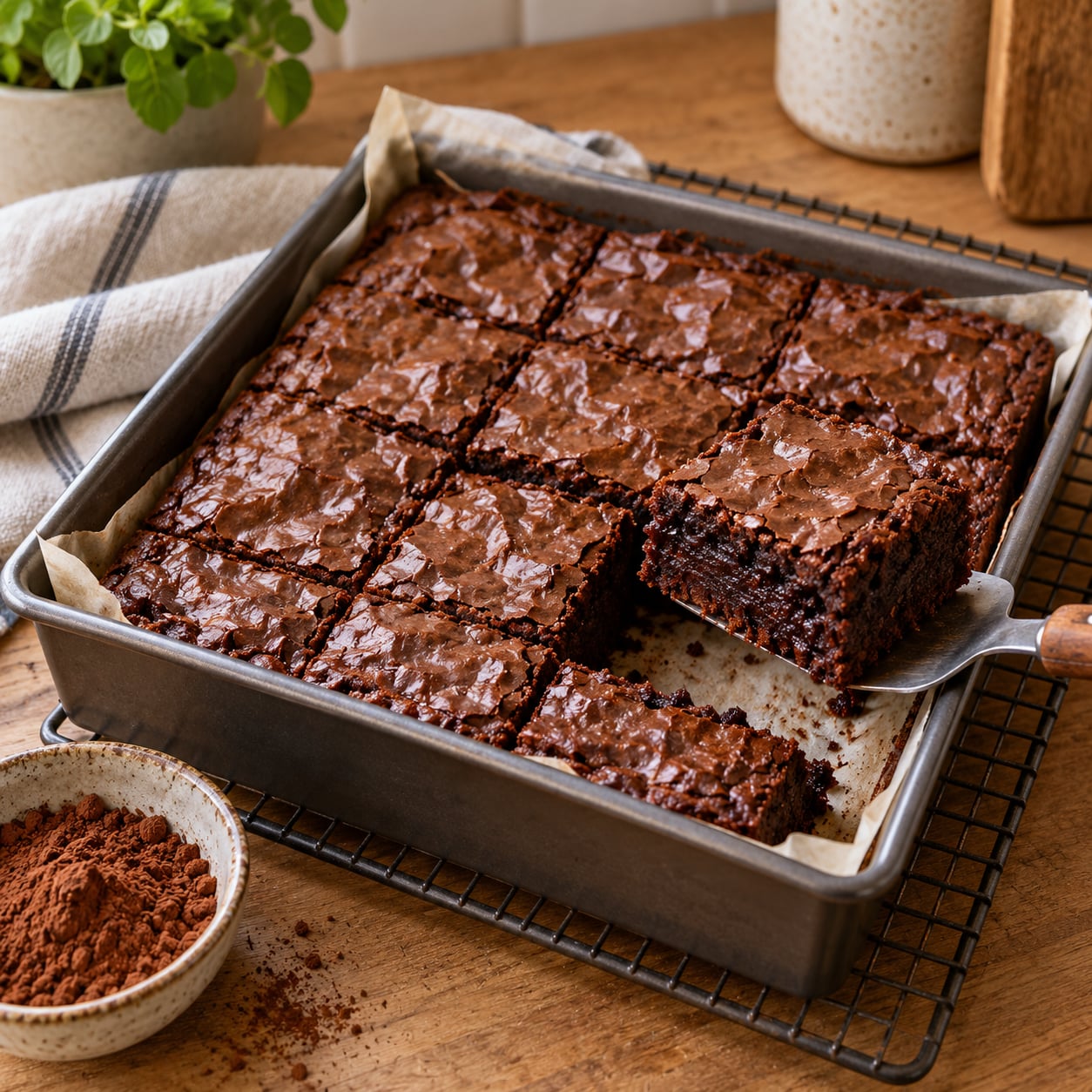
What makes brownies fudgy instead of cakey is a fat-to-flour ratio near 2:1 by weight, melted rather than creamed butter, no baking powder or baking soda, minimal mixing, and a short bake. Push the flour up or the leavening in and you get a cakelike crumb. Pull the bake early and the center stays dense and gooey. About 40 minutes of work, plus cooling.
Nearly every cakelike batch comes down to one of three levers: too much flour relative to fat, air beaten into the batter, or extra time in the oven. Once you can see which one you pulled, fixing it takes minutes rather than a new recipe.
Fudgy is a dial, not a category. Every adjustment below can be reversed, so the same base method gives you a fudgy square on Monday and a chewy-middled one on Saturday.
Table of Contents
What You Need
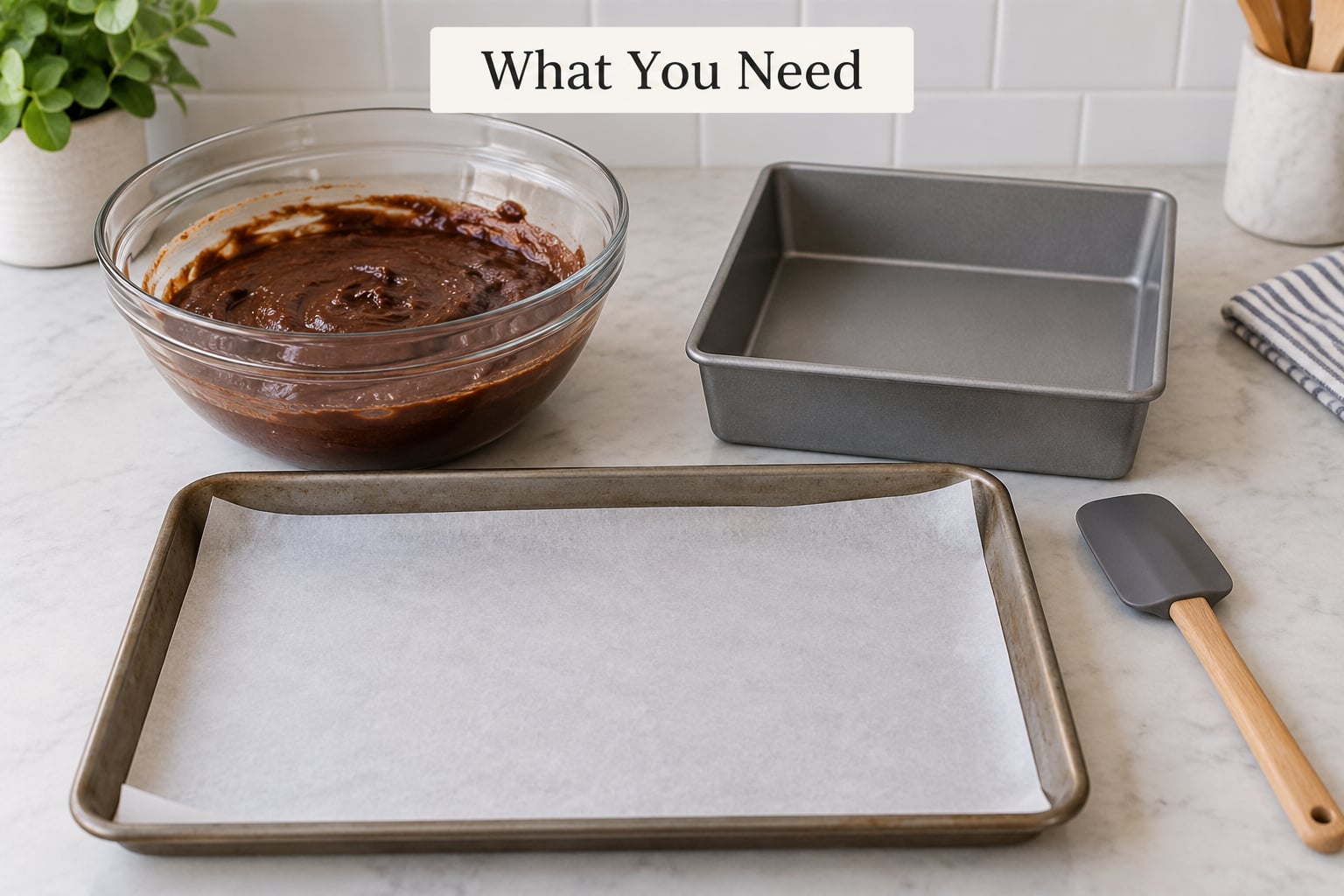
For an 8-inch square pan, the fudgy setup is short: fat, chocolate, sugar, eggs, a little flour, and a pan that holds heat evenly.
- Fat: 170g unsalted butter, melted and cooled slightly, or 170g melted dark chocolate plus 60g butter. Coconut oil and nut butter also work, but butter gives the most chocolate flavor.
- Chocolate: 170g melted dark chocolate, or 55g unsweetened cocoa powder. Melted chocolate carries cocoa butter, which counts toward your fat total even though it feels like a chocolate ingredient.
- Sugar: 200g granulated sugar, or 180g plus a spoon of light brown sugar for more moisture.
- Eggs: 2 whole eggs plus 1 extra yolk. The yolk adds fat and emulsifies without adding lift.
- Flour: 85g all-purpose flour, weighed on a scale. That is roughly two-thirds of a cup.
- Flavor: 1 teaspoon vanilla extract and a pinch of espresso powder or fine salt. Both sharpen chocolate without changing texture.
- No leavening at all: no baking powder, no baking soda.
- Equipment: a digital kitchen scale, an 8-inch square metal pan, parchment paper, and a skewer.
Weighing the flour matters more than it sounds. A cup of spooned and leveled flour lands near 120g, while the same cup scooped straight from the bag is closer to 140g. That 20g swing is a real texture change in a batter this small.
Use a metal pan where you can. Glass holds heat longer and drives moisture out of the edges, and if glass is all you have, drop the oven by 10C (about 20F) and start checking early.
Step-by-Step
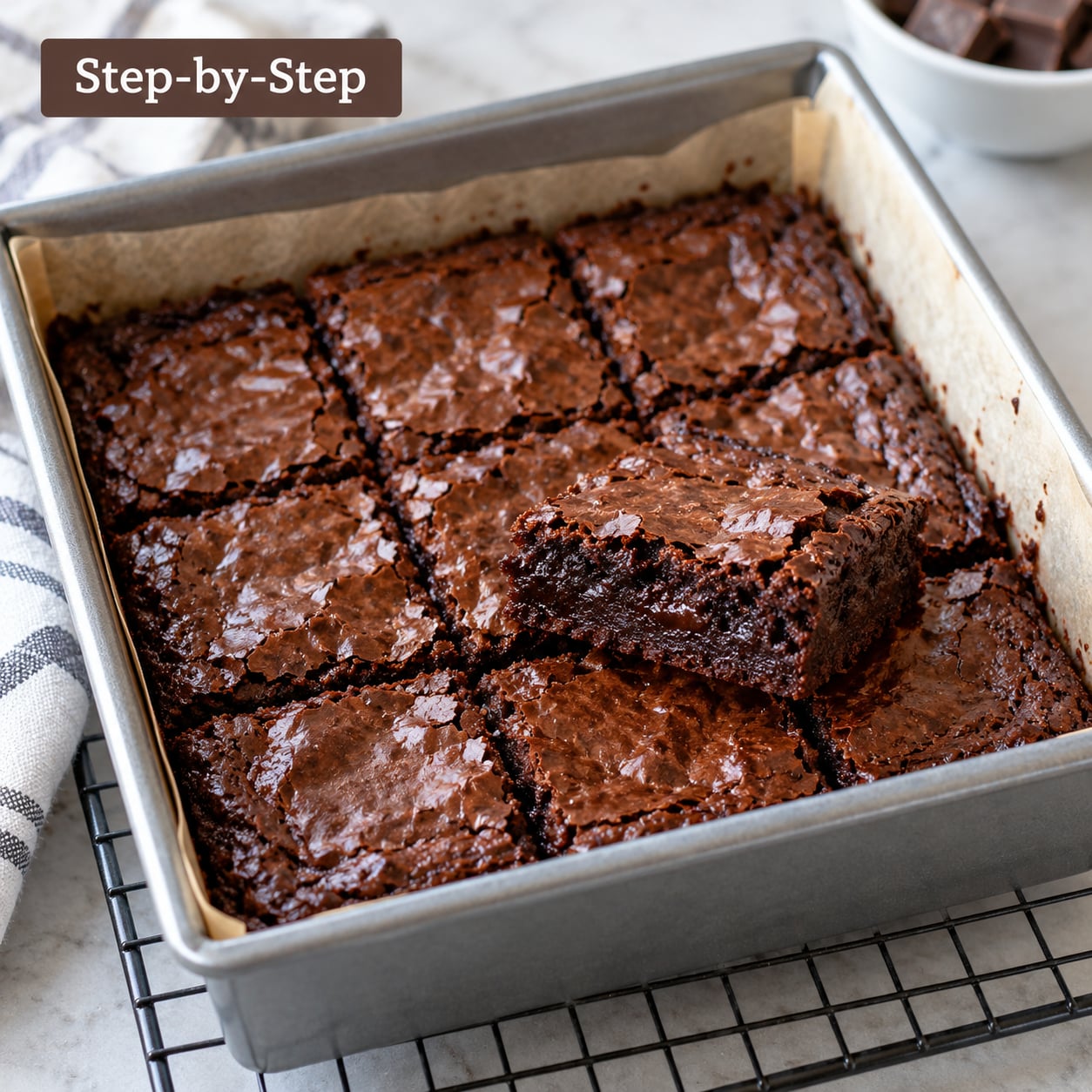
Line the pan, heat the oven to 175C (350F), and get everything measured before the butter melts. This method is one bowl and about fifteen minutes of work.
- Melt the fat and chocolate. Melt 170g butter over low heat or in short microwave bursts, then stir in 170g finely chopped chocolate if you are using it. Let it cool a few minutes. You do not want it hot enough to scramble the eggs.
- Whisk the sugar into the eggs. Beat 2 eggs plus the extra yolk with 200g sugar for 2 full minutes, until pale, thick and slightly ribboning off the whisk. This is the one place where air is good, and it is what later rises into that glossy crackled top.
- Pour in the fat. Stream the warm butter or chocolate in while stirring. Add the vanilla, espresso powder and salt. Stir until the mixture is uniformly glossy.
- Fold in the flour and stop. Add 85g flour and fold with a spatula until the last streak of white disappears. Ten to fifteen strokes. Every extra stir develops gluten, and developed gluten is exactly what turns a fudgy brownie tough and bouncy.
- Bake 22 to 26 minutes. Start checking at 22. A skewer inserted in the center should come out with thick, moist crumbs clinging to it, not clean. Wet batter on the skewer means you went too far; a clean skewer means you overbaked.
- Cool in the pan for at least two hours. Carryover heat finishes setting the center as it cools. Cutting warm brownies gives you a gummy middle and squares that fall apart, which is why most people think they underbaked when they did not.
Line the pan with parchment and let it hang over two sides. You lift the whole set of brownies out by the paper, which gives you clean squares and stops you from scraping shards of tin-coating into the top.
How to Keep Brownies Moist and Gooey
Moisture in a brownie is held by fat and egg, not by sugar. Sugar dries out over time, fat stays tender, and an extra yolk adds both without adding the protein structure that makes brownies springy.
Melted chocolate is the quietest fat lever available. Cocoa powder is mostly cocoa solids, which add flavor and structure but almost no fat, so swapping cocoa for melted chocolate moves you toward fudgy without changing a single other number.
Brown sugar carries a little more moisture than white, and an espresso powder does not add moisture but makes the chocolate taste more like itself, which you read as fudgier.
The other half of staying moist is not baking them past the point where the crumbs set. Residual heat is doing a third of the work for you once the pan leaves the oven, and every extra five minutes in there is moisture you cannot get back.
How to Tell When Brownies Are Done
Four cues, in order of usefulness:
- Moist crumbs on the skewer. Thick, sticky crumbs stuck to the wood. This is the right moment.
- Set edges, soft center. The perimeter pulls slightly from the pan while the middle still looks underdone. That contrast is exactly right.
- Tent the surface when nudged. The top should flex without cracking like a crusty cake.
- No clean skewer. If the skewer comes out spotless, you have gone too far. That instinct is the single most common baking mistake in this whole conversation.
Readers on r/Baking describe cutting into brownies ten minutes after the oven and panicking at the gummy-looking middle. It is not underdone. It is the fudge setting as it cools.
Common Mistakes
Most cakey batches are one of six things. Each has a fix you can apply to the recipe you already have.
- Cakey, tall, fine crumb. Too much flour, a leavening agent, or both. Cut the flour by a quarter and drop baking powder and soda entirely.
- Dry, crumbly edges. Overbaked, or a glass pan holding too much heat. Pull 5 minutes early, and drop the oven 10C for glass.
- Gummy raw center. Cut too early, before carryover cooking finished. Wait 2 hours in the pan before slicing.
- Tough and chewy, almost rubbery. Overmixed after the flour went in. Fold only until the last streak disappears.
- Dense and heavy, sinkhole in the middle. Fat-to-flour ratio too low, or not enough egg. Melt more butter or chocolate, or add an extra yolk.
- Dull, floury top. Batter was mixed flat rather than whipped. Beat eggs and sugar for 2 minutes until pale and ribboning.
Rescuing a box mix. A standard boxed mix is roughly cakey, and you can pull it toward fudgy without a new shopping list. Stir in 60g extra melted butter, add one extra egg yolk, and reduce the water the box calls for by a tablespoon. If the mix uses cocoa powder, stir in 60g of melted chocolate or dark chocolate chips that you have melted and cooled. Then bake 3 to 5 minutes less than the box says.
Going the other way. To make a fudgy recipe cakelike, add 40g flour per 8-inch pan, add a teaspoon of baking powder, and cream the butter with the sugar before adding the eggs. Bake 8 to 10 minutes longer.
Pan size. The same batter in a 9×13 spreads thin, sets fast, and dries at the edges. In an 8×8 it stays thick and moist for longer. Always scale the flour with the pan, not the pan with the flour.
Storage. Airtight at room temperature for up to four days keeps brownies soft. Refrigerating them firms the crumb and dries the surface within a day. For longer storage, wrap tightly in two layers and freeze for up to three months, then thaw at room temperature.
For the dough side of the kitchen, my homemade pizza dough method and tips for stuffing that stays crisp run on the same principle: control the ratio and stop messing with it once it comes together.
Frequently Asked Questions
What makes brownies fudgy instead of cakey?
Three things: a fat-to-flour ratio of roughly 2 parts fat to 1 part flour by weight, air beaten into the batter instead of into the fat, and a short bake. Fudgy brownies use melted butter or melted chocolate, no baking powder or soda, minimal mixing after the flour goes in, and come out of the oven while a skewer still pulls moist crumbs.
Should I use butter or oil for fudgy brownies?
Melted butter gives the strongest chocolate flavor and a fudgier crumb. Neutral oil keeps the batter softer for a day or two longer and is a good swap if you are working with cocoa powder rather than melted chocolate. Cold or softened butter is the enemy here, because creaming it with sugar is what traps the air that makes brownies cakey.
How long do brownies need to bake in an 8-inch pan?
Twenty-two to twenty-six minutes at 175C (350F). Start checking at 22 minutes rather than trusting the end of the range, since ovens vary. Pull them when a skewer comes out with thick moist crumbs and the edges have just set. The center finishes setting from residual heat while the pan cools.
Can I make boxed brownies fudgier?
Yes. Stir in 60g extra melted butter, add one extra egg yolk, and cut the water the box calls for by a tablespoon. Adding 60g of melted dark chocolate helps further. Then bake 3 to 5 minutes less than the stated time and let the pan cool for two hours before cutting.
How do I store brownies so they stay moist?
Cool them fully in the pan, then move them to an airtight container at room temperature, where they stay soft for about four days. Refrigeration firms the crumb and dries the surface within a day. For longer storage, wrap them tightly in two layers and freeze for up to three months, thawing at room temperature.
Why are my brownies dry after baking?
Usually overbaking. A clean skewer tells you the center has already set all the way through, and by then the moisture has gone. Dry edges specifically point to a glass pan or a thin layer in an oversized tin, since both overcook the perimeter. Cut flour weighed a little under, and pull the pan 5 minutes earlier next time.
Start by weighing your flour instead of scooping it, and pull the pan the first time the skewer shows moist crumbs. Those two changes fix most of what people describe as cakey brownies, and everything else on this page is a dial you can turn from there.