
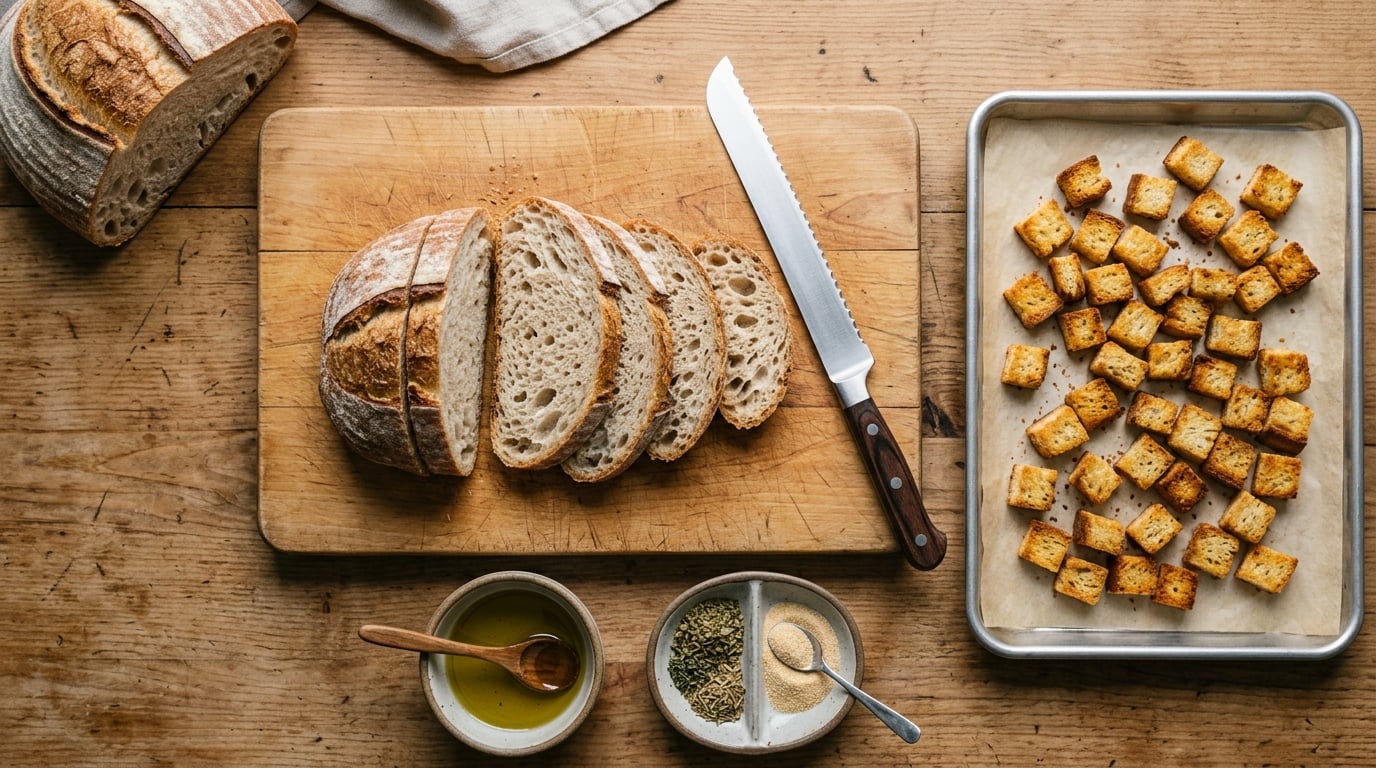
Learning how to make croutons from stale bread takes about 25 minutes, and the stale loaf on your counter is the right ingredient rather than a fallback. Cut 4 cups of day-old bread into 3/4-inch cubes, toss them with 3 to 4 tablespoons of olive oil, 1/2 teaspoon garlic powder and 1/2 teaspoon salt, then bake at 375F for 15 to 20 minutes until deep gold.
Fresh bread fights you here. It holds more water, so it steams before it toasts and tends to bake up chewy in the middle. Bread that has already dried out has less moisture left to escape, which is why croutons are one of those recipes where the leftovers genuinely taste better than the starting point.
If you are prepping for a bigger table, croutons fit neatly into a spread built around [how to make brunch for a crowd without stress](https://5anddiamondrestaurant.com/how-to-make-brunch-for-a-crowd-without-stress/), or they can go out alongside [restaurant-style mashed potatoes at home](https://5anddiamondrestaurant.com/how-to-make-restaurant-style-mashed-potatoes-at-home/) as a crunchy contrast to something soft.
What You Need
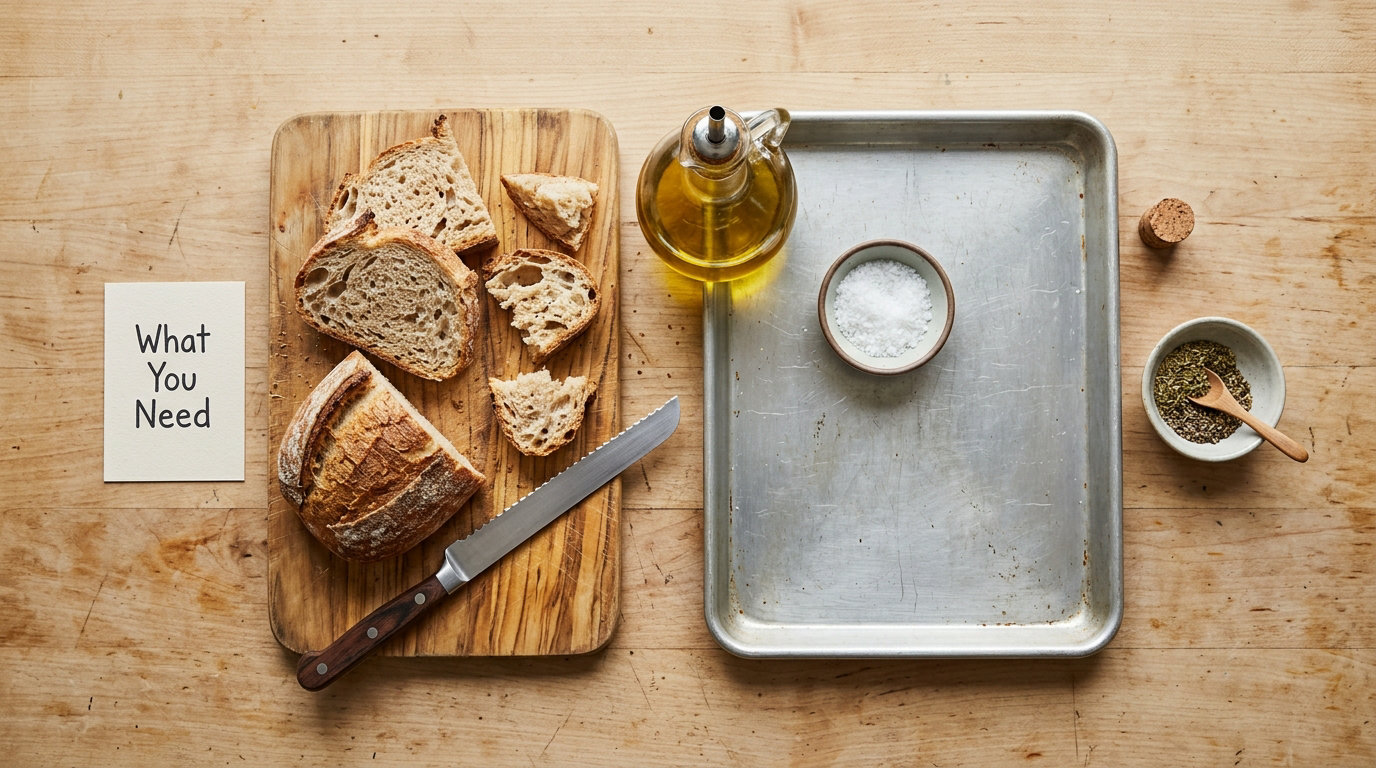
This recipe makes roughly 4 to 6 cups of croutons, which comes out of about one 12-ounce loaf including the heel and crust trimmings.
- 4 cups stale bread, torn or cut into 3/4-inch cubes
- 3 to 4 tablespoons extra-virgin olive oil
- 1/2 teaspoon garlic powder
- 2 teaspoons Italian seasoning
- 1/2 teaspoon salt
- 1/2 teaspoon freshly ground black pepper
For equipment you need a rimmed baking sheet, a sheet of parchment paper, a serrated knife, a large bowl for tossing, and an oven you can heat to 375F (190C).
Bread choice matters more than most people expect. Sourdough, ciabatta, baguette and any crusty country loaf give you the best result because the crust is already part of what you want. Whole wheat works well too, though it is denser and usually wants 3 to 5 extra minutes in the oven. Soft sandwich bread still works, but it needs to be genuinely dry or the cubes will compress instead of staying crisp.
On the oil: extra-virgin olive oil gives the cleanest flavor, but melted butter works and browns faster, so if you use it, watch the pan a minute sooner. A mix of the two is the fussiest option people skip straight past. Leftover olive oil is fine to pour in here, provided it is recent, smells normal, and has no cloudy sediment or bread crumbs sitting in the bottom.
You can skip oil entirely if you want, and use a light mist of water or broth instead. Expect a lighter, more fragile crouton, though, and add seasoning carefully because with no fat there is nothing carrying it.
Step-by-Step
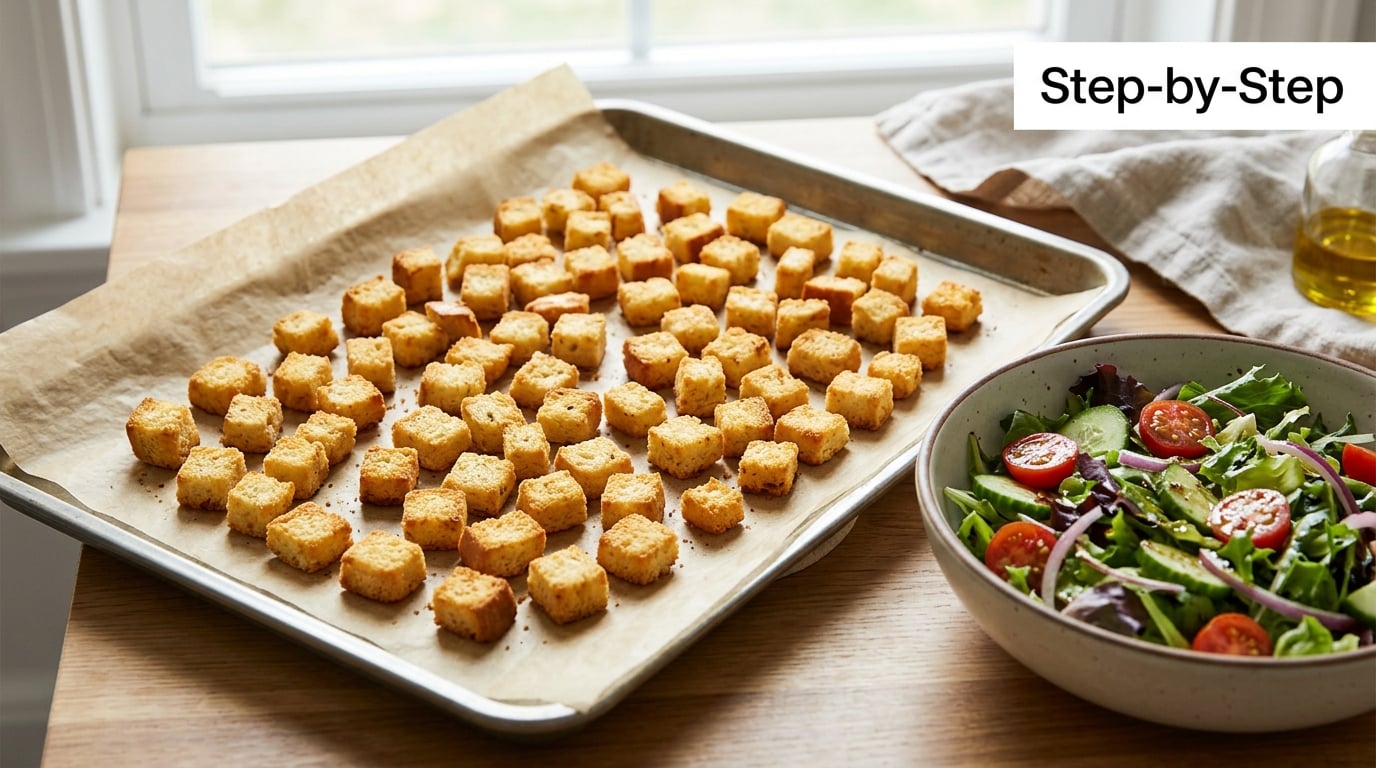
Preheat the Oven and Choose Your Baking Method
Heat the oven to 375F (190C) and set a rack in the middle. Give it a full 10 minutes to come to temperature, because cold ovens are the usual reason croutons brown unevenly from the outside while staying pale underneath.
Line a rimmed baking sheet with parchment, or leave it bare if you like extra browning on the underside. The important part is leaving room: one single layer with the cubes not touching is what gives you all-around crunch.
The oven is the best all-rounder, but two other methods work well and take less energy:
| Method | Temperature | Time | What you get | Best for |
|---|---|---|---|---|
| Oven | 375F (190C) | 15-20 minutes | Even golden color all over | Big batches, full flavor |
| Air fryer | 350F (175C) | 8 minutes | Darker, crunchier, extra-crisp edges | Small batches, quick sides |
| Cast iron skillet | Medium heat | 5-8 minutes | Toasted corners from the pan | Croutons for one salad |
| Microwave | High | 2-3 minutes, 30-second bursts | Soft-crunchy, dries out unevenly | Reviving a stale batch |
Cut the Bread Into Even Pieces
Before you cut anything, look at the bread properly. Stale is fine: dry, hard, slightly crumbly, no smell. Not fine is any green, blue, grey or fuzzy patch, a sour or musty odor, or bread that has been sitting in a damp bag where it went damp rather than dry.
If the bread is spoiled rather than stale, baking will not save it. Heat does not reliably kill the toxins some molds produce, so discard it.
Cut everything into 3/4-inch cubes. The single biggest cause of failure is uneven size, because small pieces burn while large ones still have a chewy middle at the same moment. Wipe the knife between cuts and the crumb stays out of the way of the cubes.
Tearing works just as well, and the ragged edges catch more oil and crisp up nicely. It is slower, so I cut for speed and tear whatever looks like it is about to go anyway.
Rock-hard bread is a separate case. If it is genuinely too stiff to cut, put the slices in a damp towel for 10 minutes or spritz them very lightly with water. You are rehydrating the surface only, which softens the blade path without adding enough moisture to slow the bake.
How to Make Croutons from Stale Bread Without Soaking
Do not soak the bread and do not put it in the oven first to dry it out. Both add a step and both make things worse, because the surface has to dry again before it can brown.
Instead, put the cubes in a large bowl with the oil and toss with your hands for about 30 seconds. You want every surface faintly glossy, not dripping. Get the oil right and you can skip the oiling step entirely by misting the cubes instead.
Then tip them onto the baking sheet and spread into one layer. If they sit in clumps, they steam each other and the underside goes soft. Crowding the pan is the second most common reason croutons come out disappointing.
Season for Maximum Flavor
For the basic garlic-herb version, use the quantities in the list above on 4 cups of bread. Garlic powder beats fresh chopped garlic here, which tends to burn and turns bitter in a hot oven.
Once you have that base down, the variations are cheap and fast:
- Finely grated Parmesan, mixed in before baking, for a salty, nutty crust.
- Red pepper flakes or a pinch of cayenne, added with the oil.
- Cajun or blackening seasoning instead of the Italian blend, which leans heavy and smoky.
- Cinnamon and sugar with a little vanilla for dessert croutons, baked the same way at 350F.
- Onion powder alongside the garlic powder, which adds a rounder, savory note.
- Dried parsley or dried basil stirred in during the last 3 minutes so the herbs do not scorch.
Bake Until Golden and Crisp
Bake at 375F for 15 to 20 minutes, turning the cubes once at the halfway mark so the bottoms brown too. Pull them when they are deep golden brown and they sound hollow and sharp when you tap one with your fingernail.
If they brown too fast before the centers dry out, drop the oven to 350F. If they bake up pale and dry-looking, give them another 3 minutes rather than reaching for more oil after the fact, which just makes them greasy.
Size and temperature move the timing. Half-inch cubes finish closer to 12 minutes, while 1-inch chunks need 20 to 25 minutes because the middle has further to go. Dense whole wheat also skews slower.
Cool, Store, and Use the Croutons
Let the croutons cool completely on the sheet, about 10 minutes, before moving them. Trapping warm air in a container is the main reason homemade croutons go soft faster than store-bought ones.
Stored in an airtight container at room temperature they stay crisp for 5 to 7 days, and fully bone-dry batches can stretch to 2 weeks. The refrigerator softens them within hours, so skip it.
For longer storage, freeze them in a single layer on a tray, then move them to a bag. They keep well frozen for about 3 months. When a batch softens, five minutes back in a 375F oven or 30 seconds in the air fryer brings the crunch back.
Croutons are really just the first stop for stale bread. Pulse a few in a food processor and you have breadcrumbs for casseroles and stuffed peppers. They also make a sturdy top for Caesar salad, gazpacho, tomato soup or broccoli cheddar, and a fine last layer under stuffing before it bakes.
For a spread where they work as a savory anchor, they sit fine alongside crackers and fruit on a [cheese board for beginners](https://5anddiamondrestaurant.com/how-to-make-a-cheese-board-for-beginners/).
Common Mistakes
Soggy croutons come down to two things: a crowded pan and cutting them too small. One layer, 3/4-inch cubes, and give them the extra few minutes instead.
Hard, shelled-out croutons with a chewy center are almost always a size problem. Mixed cubes and 1-inch pieces on one sheet will always finish at different rates, so spend the extra two minutes cutting them even.
Burnt outside, pale inside means your oven runs hot. Move the rack down a level, drop to 350F, and check at 12 minutes rather than 15.
Greasy, heavy croutons mean too much oil. Use the bottom of the range, toss until every cube looks faintly glossy and stop there.
Bland croutons are under-salted bread. Season the oil rather than the pan, and taste a piece before it goes into the oven next time so you know the ratio you actually like.
Two habits fix most of this at once. Salt early, and never store croutons until they are completely cool.
Frequently Asked Questions
What kind of stale bread is best for making croutons?
Crusty loaves win: sourdough, ciabatta, baguette and country bread all carry enough structure and crust to stay crunchy. One to five days old is the useful window, as long as the bread is dry and free of mold. Dense whole grain works too and just needs 3 to 5 extra minutes. Soft sandwich bread is the weakest option because the cubes compress instead of toasting.
Can I make croutons from sourdough or whole-wheat bread?
Both work well. Sourdough is arguably the best everyday choice, since its open crumb and tangy flavor hold up against garlic and herbs. Whole-wheat is denser and slightly moister, so give it 20 to 25 minutes at 375F instead of 15 to 20, and cut closer to 3/4 inch. Rye is worth a try if you want a darker, malty crouton.
Should I soak stale bread before making croutons?
No. Soaking adds moisture that has to come back out, which slows the bake and softens the crumb. If the bread is so hard you cannot cut it, wrap the slices in a damp towel for 10 minutes or spritz them lightly with water, which softens the surface without soaking the interior. Skip any pre-drying in the oven for the same reason the surface has to lose water twice.
How do I keep baked croutons from getting soft?
Cool them completely on the baking sheet, about 10 minutes, before storing them. Warm croutons release trapped moisture into the container, which is the main reason homemade batches stale fast. Then keep them in an airtight container at room temperature for 5 to 7 days. Avoid the refrigerator, and if they soften anyway, five minutes back in a 375F oven restores them.
Can I freeze homemade croutons?
Yes, and they freeze very well. Freeze them in a single layer on a tray first so they do not clump, then transfer to a freezer bag or airtight container. They keep their crunch for roughly 3 months. Thaw them in the open rather than sealed, and refresh straight from frozen in a 375F oven for 5 minutes or 30 seconds in the air fryer.
Why are my croutons soggy after baking?
Three causes account for nearly all of it. First, crowding the pan so the cubes steam each other, which is why a single uncrowded layer matters. Second, cutting them too small, so they finish in a steam bath before the heat can drive the moisture out. Third, using bread that was damp rather than dry. Spread them out, use 3/4-inch cubes, and add 3 minutes at 350F if the color arrives before the crunch does.
Conclusion
Heat the oven to 375F while you cut 4 cups of stale bread into even 3/4-inch cubes, toss them with just enough olive oil and seasoning to look faintly glossy, and bake in a single uncrowded layer for 15 to 20 minutes. That is the whole job, and it turns the loaf you were about to throw away into something a salad or a soup is short on.