
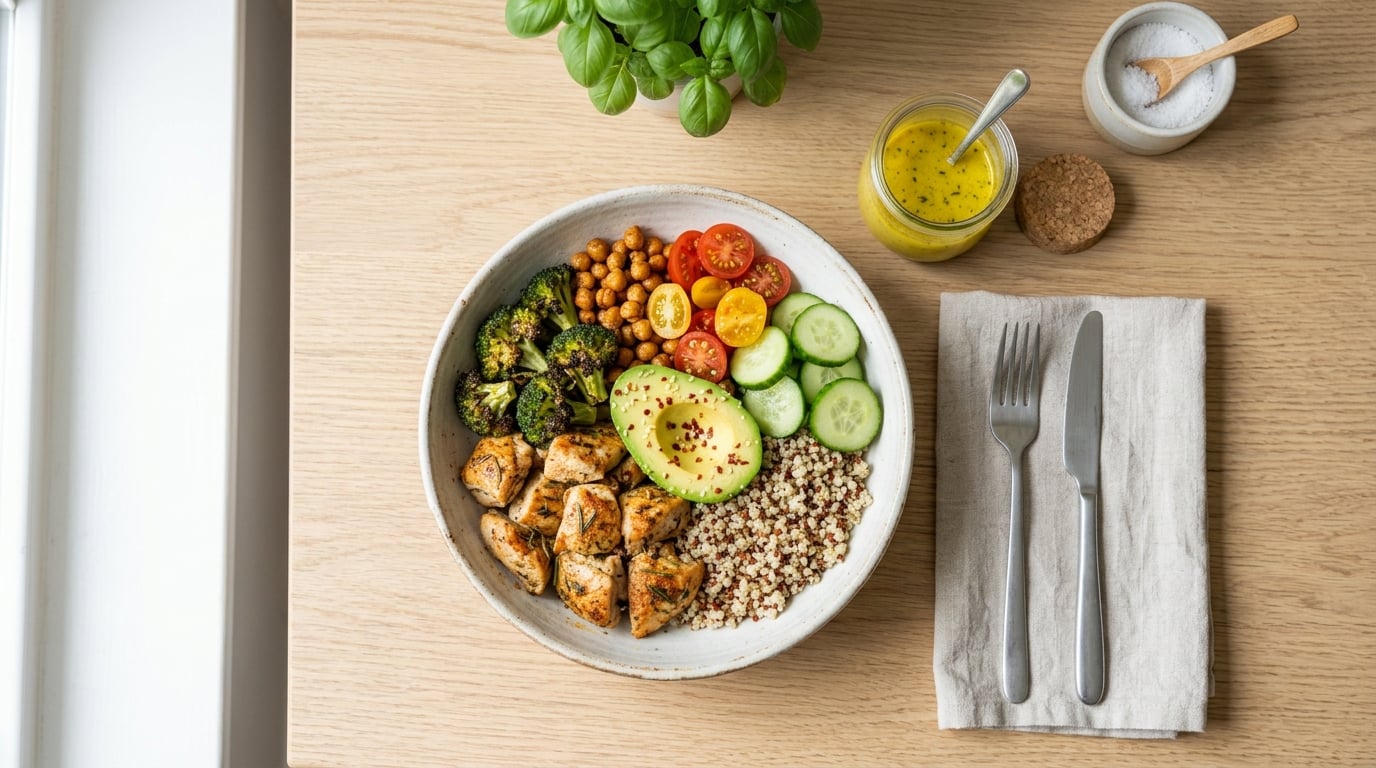
A grain bowl for dinner comes down to five components in fixed order: a cooked whole grain, a protein, vegetables, a sauce you actually like, and something crunchy on top. Once you know the order, this is a 40-minute weeknight meal that reheats, travels, and takes one pan and one pot to clean.
Most bad grain bowls fail for the same reason, and it is not the ingredients. It’s that the grain gets seasoned at the table instead of in the pot, so you end up eating plain quinoa under a heavy dressing. Fix that one thing and the rest is assembly.
Below is the method first, then a full chicken bowl you can cook tonight, plus the fixes for the problems home cooks actually run into.
What You Need to Make a Grain Bowl for Dinner
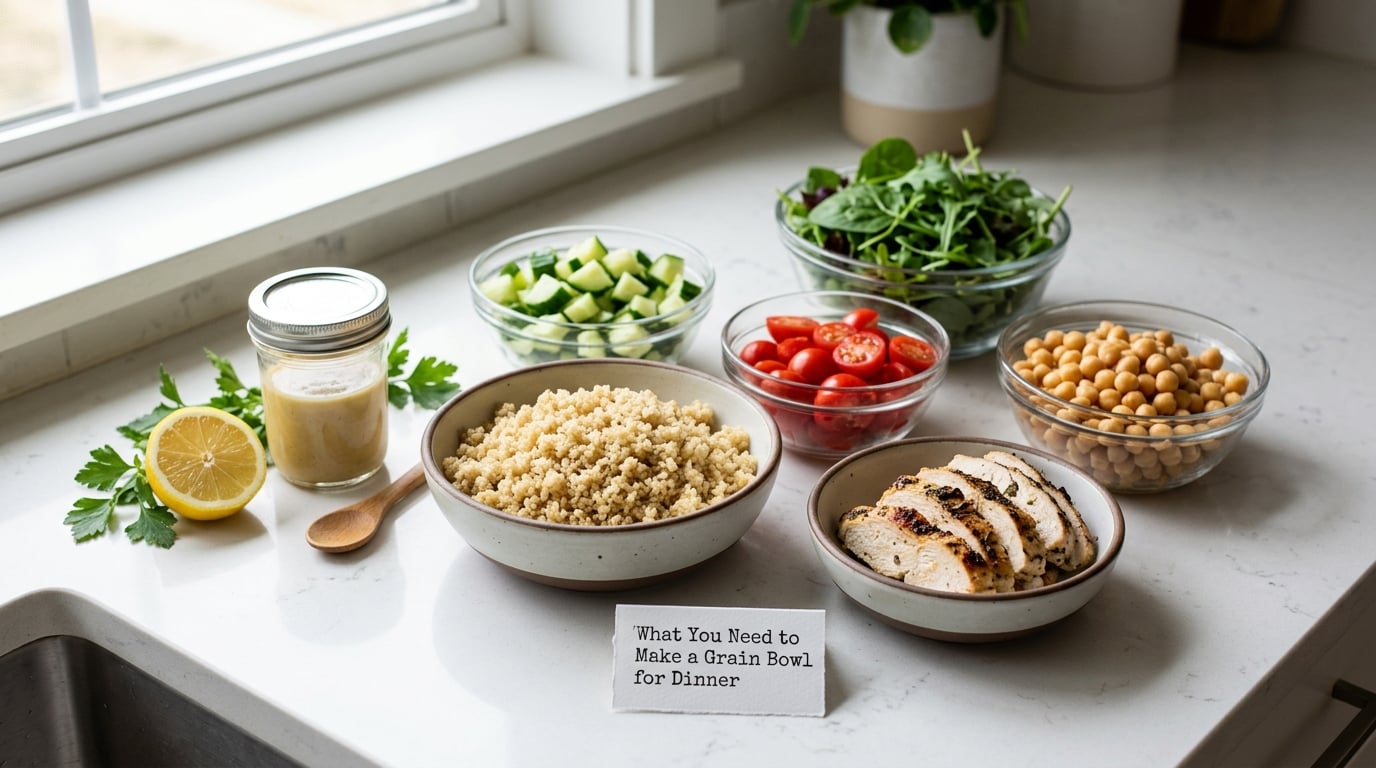
For four servings, gather your components separately rather than mixing anything yet. Everything cooks on its own timeline, and the bowl gets built at the end.
The grain: 1 cup dry quinoa, which cooks into roughly 3 cups. Brown rice, farro, bulgur, and millet all work with the same method, just different cook times.
The tray: 6 bone-in, skin-on chicken thighs, 4 cups broccoli florets, and one 15-ounce can of chickpeas, rinsed and patted dry.
The dressing: 1/3 cup olive oil, the juice of 2 lemons, 1 tablespoon Dijon mustard, 1 teaspoon honey or maple syrup, 1 minced garlic clove, and a pinch each of salt and black pepper.
The fresh and the crunchy: 4 cups chopped romaine or spring mix, 1 cucumber, 1 cup cherry tomatoes, 1 avocado, 1/3 cup pepitas or toasted cashews, and a handful of fresh dill or parsley.
Equipment is basic: a sheet pan, a small saucepan with a lid, and a wide bowl for whisking. A fork is your doneness tester for the grain, and a meat thermometer is the only reliable way to know the chicken is done.
Per bowl, aim for about 1 cup cooked grain, 1/2 cup protein, 2 cups vegetables, and 2 to 3 tablespoons of dressing. That ratio is what keeps a dinner bowl filling instead of leaving you hungry an hour later.
Step-by-Step: Cook, Dress, and Assemble
The order here is the whole trick. Start the oven first, put the grain on while the oven heats, and make the dressing while the tray roasts. Nothing waits on anything except the chicken.
Step 1: Roast the Chicken and Vegetables
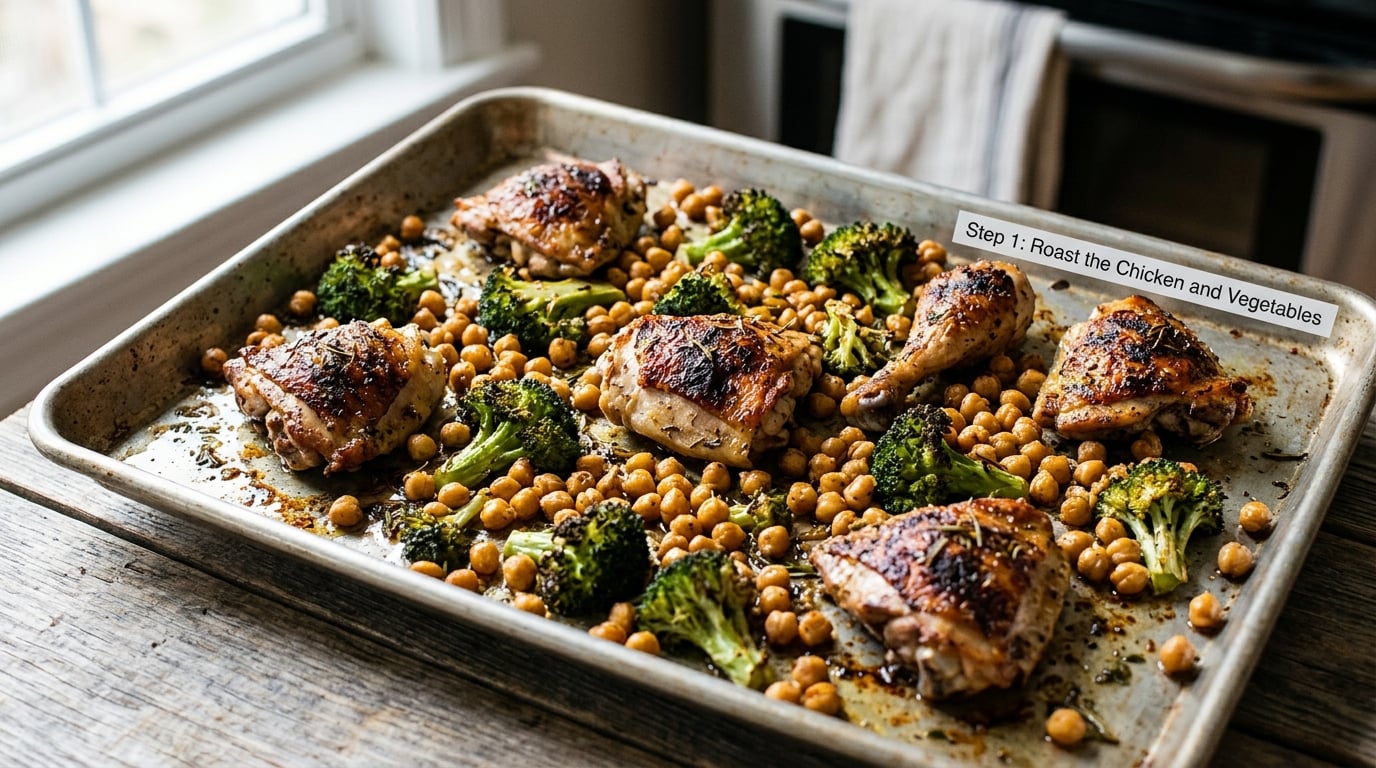
Heat the oven to 425°F. Pat the chicken thighs dry, season the skin with salt and pepper, and lay them skin-side down on one side of the sheet pan. Toss the broccoli and drained chickpeas with a little olive oil, salt, and pepper, and spread them on the other side.
Keep everything in a single layer. Crowding the pan steams the broccoli and the chicken skin never crisps, which is where most of the flavor lives.
Roast for 30 to 35 minutes. The chicken is done when an instant-read thermometer inserted into the thickest part reads 165°F, per USDA guidance for poultry, and the juices run clear. The chickpeas should be dry and lightly split, not pale and soft. If the chickpeas need more time, pull the chicken out and give them 5 more minutes alone.
Step 2: Cook the Grain
Rinse the quinoa in a fine sieve under cold water for about 30 seconds. That removes the bitter coating and stops it from tasting dusty in the finished bowl.
Toast it in the saucepan with a teaspoon of oil for a minute, then add 2 cups of water or broth, a generous pinch of salt, and the zest of half a lemon. Bring to a boil, cover, drop the heat to low, and cook for 14 minutes.
Turn off the heat and let it sit covered for 5 minutes more. Then fluff with a fork. Season it now, while it’s warm and slightly glossy, with a little olive oil, salt, and lemon juice. This is the step that separates a seasoned grain bowl from a bland one, and it takes about 30 seconds.
The grain should look separate and slightly moist, not wet. If a fork leaves a clean line and the grains fall apart easily, it is done.
Step 3: Make the Lemon Dressing
Whisk the lemon juice, Dijon, honey or maple syrup, minced garlic, salt, and pepper together in a bowl first. Whisk until the honey dissolves.
Then stream in the olive oil while whisking steadily. The dressing should thicken and turn opaque rather than split into oily patches. Taste it on a piece of quinoa before it goes near the bowl, and adjust with more lemon if it tastes flat or more honey if it bites.
For a thicker, creamy version, stir in a tablespoon of tahini or Greek yogurt after emulsifying. Keep it loose either way, since it will thicken as it sits on the grain.
Step 4: Assemble the Grain Bowls
Build in a wide bowl so the components stay visible and separate. Start with the greens, add a cup of warm quinoa, then the chicken and vegetables from the pan, then the fresh cucumber, tomatoes, and avocado.
Drizzle 2 to 3 tablespoons of dressing over the top and toss gently at the table, or leave it layered if you prefer to keep the textures distinct. Finish with pepitas, a pinch of flaky salt, and a few torn dill or parsley leaves.
The bowl is ready to eat immediately and it also holds up as a packed lunch. Add the crunchy topping only at the table or pack it in a separate container, since it softens within a few hours.
How to make a grain bowl for dinner ahead of time
Cook the grain, roast the tray, and mix the dressing once, then portion everything into containers. Store the grain, protein, and vegetables together, and keep the dressing in a small jar and the pepitas in a bag.
Cooked grains and roasted vegetables keep about four days in the refrigerator. Cooked chicken keeps three to four days. The dressing keeps up to a week refrigerated in a sealed jar.
To reheat without a dry bowl, add a teaspoon of water to the grain and cover loosely for 60 seconds in the microwave, then stir. A splash of the reserved dressing or a drizzle of olive oil also brings it back. Reheat the chicken separately if you like the skin to stay crisp, or eat it cold, which is how most people end up eating it on day three.
Common Mistakes and How to Fix Them
The chicken is dry. Thighs are forgiving, breasts are not. If you use breast, pound it to an even thickness, don’t let it sit on the pan past 165°F, and add a spoonful of pan juices or dressing over it after slicing.
The grain is bland. Season it in the pot with oil, salt, and acid while it’s warm, not at the table. And season in layers, the same way you would with pasta water.
The bowl is soggy. Dressing sitting on grain overnight is the cause. Pack the dressing separately, drain any liquid from roasted vegetables before they go in the container, and avoid layering wet ingredients directly on top of the grain.
The reheated grain is dry and clumped. Grains reheat better on the stovetop with a splash of water than in a dry microwave. Break up the clumps with a fork before you add anything else.
The vegetables are pale and lifeless. Roast them on a hot pan rather than steaming them, and don’t crowd the tray. If you’re short on time, broil them for 4 minutes at the end of the roast.
The bowl looks like beige food. Add color on purpose: purple cabbage, red cabbage, roasted red pepper, cherry tomatoes, or a handful of herbs. Green herbs and yellow dressing against a brown grain is what makes the bowl look like food instead of a pile.
Canned chickpeas taste flat. Rinse them, dry them well, and toss them with olive oil, smoked paprika, cumin, a pinch of salt, and a squeeze of lemon. Five minutes in a hot pan fixes a whole can, and it is the single biggest upgrade to a pantry bowl.
Frequently Asked Questions
What should I put in a grain bowl?
Put five things in it: a cooked whole grain as the base, a protein, vegetables, a sauce, and a crunchy topping. About 1 cup of grain, 1/2 cup of protein, and 2 cups of vegetables per bowl is a reliable ratio. The order stays the same every time even when the ingredients change, and that fixed formula is what makes grain bowls easy to improvise.
Are grain bowls actually healthy?
They can be, but only if you build them with intention. A bowl with 1 cup of quinoa, 4 ounces of chicken, 2 cups of vegetables, chickpeas, and a tahini-lemon dressing lands around 30 grams of protein and 12 to 15 grams of fiber. Skip the protein and you have a side dish, not a meal. Skip the vegetables and the calories add up fast without the fiber.
What are the best grains to use in grain bowls?
Quinoa, brown rice, farro, bulgur, barley, and millet all work well. Farro and barley stay chewy and forgiving when reheated, which makes them the best choice for meal prep. Quinoa cooks fastest at about 14 minutes and is naturally gluten-free. Millet is the softest of the group and disappears into a bowl, so pair it with louder vegetables and a strong dressing.
How do I keep a grain bowl from getting soggy?
Keep the wet ingredients away from the grain. Store the dressing in a separate jar, drain any excess liquid from roasted vegetables before assembling, and put the crunchy toppings in their own container. If you have to prep it all together, add the dressing only at the table. Dressing left on grain overnight soaks in and the bowl turns to mush by the third day.
Can I make a grain bowl vegetarian or vegan?
Yes, and nothing else changes. Swap the chicken for 1/2 cup of roasted chickpeas, white beans, black beans, crispy tofu, tempeh, or a hard-boiled egg for a vegetarian version. Use maple syrup instead of honey in the dressing and check that your grain is gluten-free if that matters to you, since farro, bulgur, and barley all contain it.
Is a grain bowl filling enough for dinner?
It is, if you get the proportions right. Most people underbuild the protein and overbuild the grain, then feel hungry an hour later. Aim for a palm-sized serving of protein and a full cup of grain, add a fat such as avocado, tahini, or olive oil dressing, and eat it sitting down rather than over the counter. A grain bowl is a complete dinner, not a salad.
Conclusion
Start the oven and the grain pot at the same time, and that ordering is the whole dinner. Roast the tray, cook the grain, whisk the dressing, then layer it all while the chicken is still hot.
After the first bowl, change one thing at a time. Swap quinoa for farro, chicken for crispy chickpeas, and lemon dressing for tahini or green herb dressing, and you have a different dinner that takes the same 40 minutes and the same one-pan cleanup. 2026