
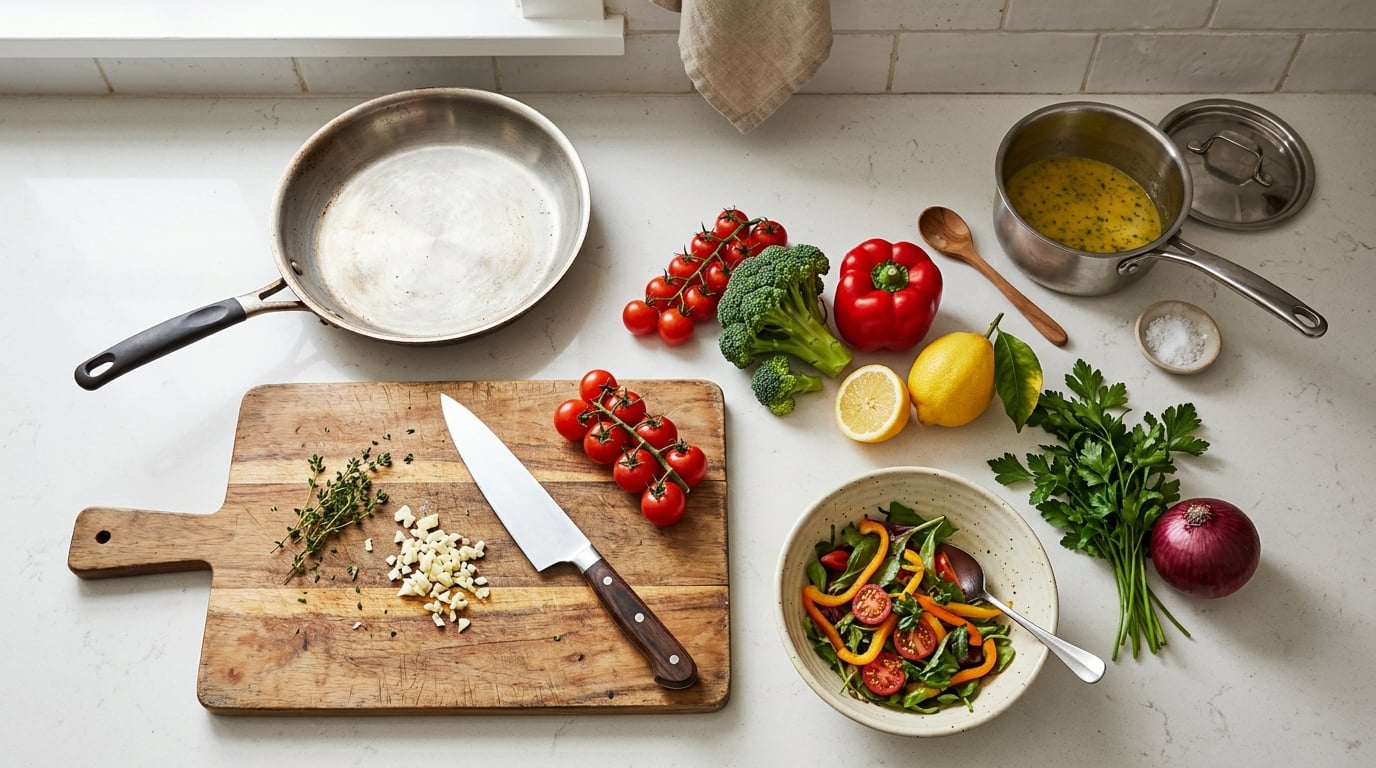
Cooking dinner in under thirty minutes comes down to one habit: start the slowest item first and cook two things at once. Pick a protein that sears in 8 minutes, a vegetable that hits a hot pan in 4, and a starch that boils in 10, and the three overlap into a 25-minute meal. Nothing in that equation is fast cooking. It is all just parallel cooking, and it works every night. Updated for October 2026.
I cook this way most weeknights, and the part that changed my kitchen was not recipes. It was learning to read a cooking time honestly. Total time is what the clock on the wall says from the first chop to the last plate. Hands-on time is how many of those minutes you are actually working. A good 30-minute dinner is usually 25 minutes of total time and 12 to 15 minutes of hands-on work, and any recipe that claims 30 minutes without splitting those two numbers is guessing.
This guide gives you the method first, then five dinners built on it, so you can stop browsing recipes at 6pm and start cooking.
Table of Contents
- What You Need
- Step-by-Step: How to Cook Dinner in Under Thirty Minutes
- Common Mistakes
- Frequently Asked Questions
- Can I really cook a complete dinner in under 30 minutes?
- What ingredients cook fastest for a 30-minute dinner?
- Can I prepare a 30-minute dinner ahead of time?
- How should I safely store leftovers from a quick dinner?
- What is the easiest dinner to make in under 30 minutes?
- Can I use frozen vegetables in a 30-minute dinner?
- Start with the fastest dinner you can build
What You Need
You need almost nothing. A 12-inch skillet, a sheet pan, a small pot, a sharp knife, and a cutting board you do not mind abandoning for the evening will carry you through most weeknights. A microwave is useful but not required, and it is the single most underrated tool for a 30-minute dinner because it cooks two sides of the meal in parallel without dirtying a pan.
The four tools that actually save time
- A wide skillet. Surface area is the whole game. The same chicken breast that takes 12 minutes in a small sauté pan takes 8 in a 12-inch skillet, and nothing sticks or steams if you leave a finger’s width between pieces.
- A sheet pan. One pan means protein and vegetables roast together instead of competing for the burner. Buy the one with a rim so juices do not run onto the oven floor.
- A chef’s knife and a stable cutting board. A dull knife is not just slower, it crushes cells and makes vegetables watery. Dampen the board under a folded towel if you push too hard.
- A small pot with a lid. Pasta and rice cook faster and more evenly under a lid, and the lid holds heat so you do not lose the boil every time the burner dips.
The ingredients that make speed possible
Speed comes from ingredients that need no thawing, no soaking, and no long cooking. Keep a backup shelf of frozen vegetables, canned beans, a boxed pasta, rice, eggs, tortillas, and rotisserie chicken, and you can always build something. My pantry staples list for every home cook covers the shelf itself.
Then keep five flavor levers within arm’s reach: butter, lemon or vinegar, garlic, soy sauce, and hot sauce. Those five are what keep a 15-minute dinner from tasting like a 15-minute dinner.
Fresh herbs are worth the price. Chopped parsley, basil, or cilantro scattered on at the end cost you ten seconds and change the whole plate.
Step-by-Step: How to Cook Dinner in Under Thirty Minutes
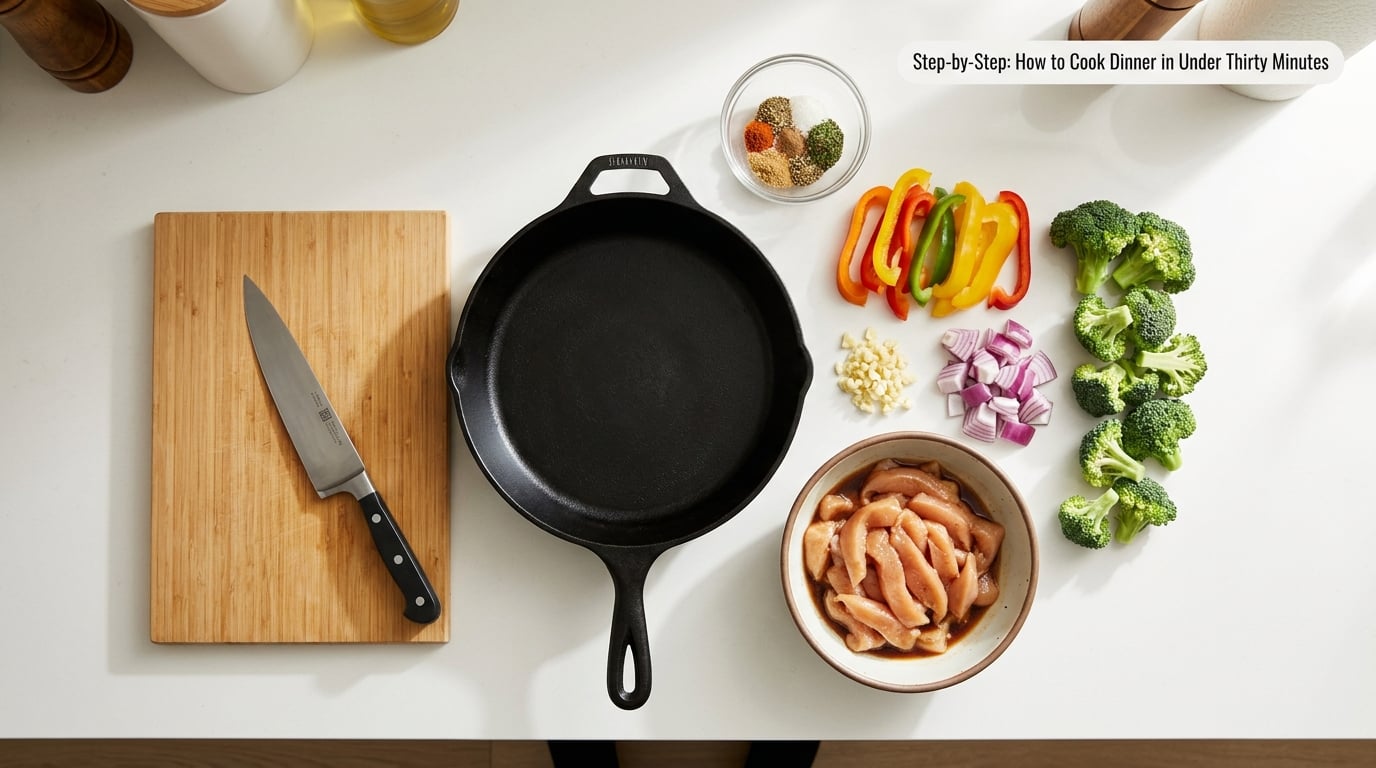
The workflow is five steps, and the order is fixed: choose the method, gather everything, prep before the heat is on, cook the slowest item first, and finish in under two minutes. The four that matter are steps 2 through 4, because that is where the time is won or lost.
How to cook dinner in under thirty minutes: Pick a one-pan or quick-cooking meal
Choose a base that cooks in under 12 minutes: a protein that sears, a grain that boils, a canned ingredient that only needs reheating. A 30-minute dinner is one main component, one vegetable, and one starch, and each one has to land under 12 minutes or the clock breaks.
Five combinations I keep in rotation:
- Lemon chicken and vegetables, 25 minutes. Boneless thighs sear 8 to 10 minutes, broccoli roasts on the same pan or in the oven at 425F for 12, rice simmers alongside. Salt the chicken, leave it alone for 4 minutes, then add lemon juice and butter to the pan drippings.
- Garlic shrimp and pasta, 22 minutes. Pasta boils for 9 minutes. In the last 3, shrimp go in a hot skillet with garlic for 90 seconds a side. Pasta water plus butter and Parmesan turns the pan drippings into a sauce in 30 seconds. Our guide to cooking pasta so it does not stick covers the timing detail that makes this work.
- Beef tacos with quick slaw, 20 minutes. Ground beef in a hot skillet, 6 to 8 minutes while the tortillas warm directly over the flame. Shredded cabbage, a spoon of mayo, and lime juice need no cooking at all, which makes this the fastest dinner on the list.
- Tomato basil pasta with greens, 20 minutes. Boil pasta and save a mug of the water. Warm canned tomatoes with garlic in the same pot, then toss in the pasta, a handful of spinach, and Parmesan until the spinach wilts.
- Sheet-pan salmon with potatoes, 28 minutes. Cut potatoes into 1-inch cubes, roast alone at 425F for 12 minutes, then push them to one side and add salmon. Ten minutes of salmon, five minutes under a broiler, done. The 12-minute head start is the entire trick.
Each of those has a swap. Chicken for shrimp, pasta for rice, whatever vegetable is in the crisper drawer. The formula holds even when the ingredients change.
Prep ingredients before the heat is on
Prep everything before you turn on a burner, not while. This is called mise en place, and on a 30-minute clock it is the difference between cooking and hovering. Chopping while a pan heats adds four minutes; chopping during a stir adds one.
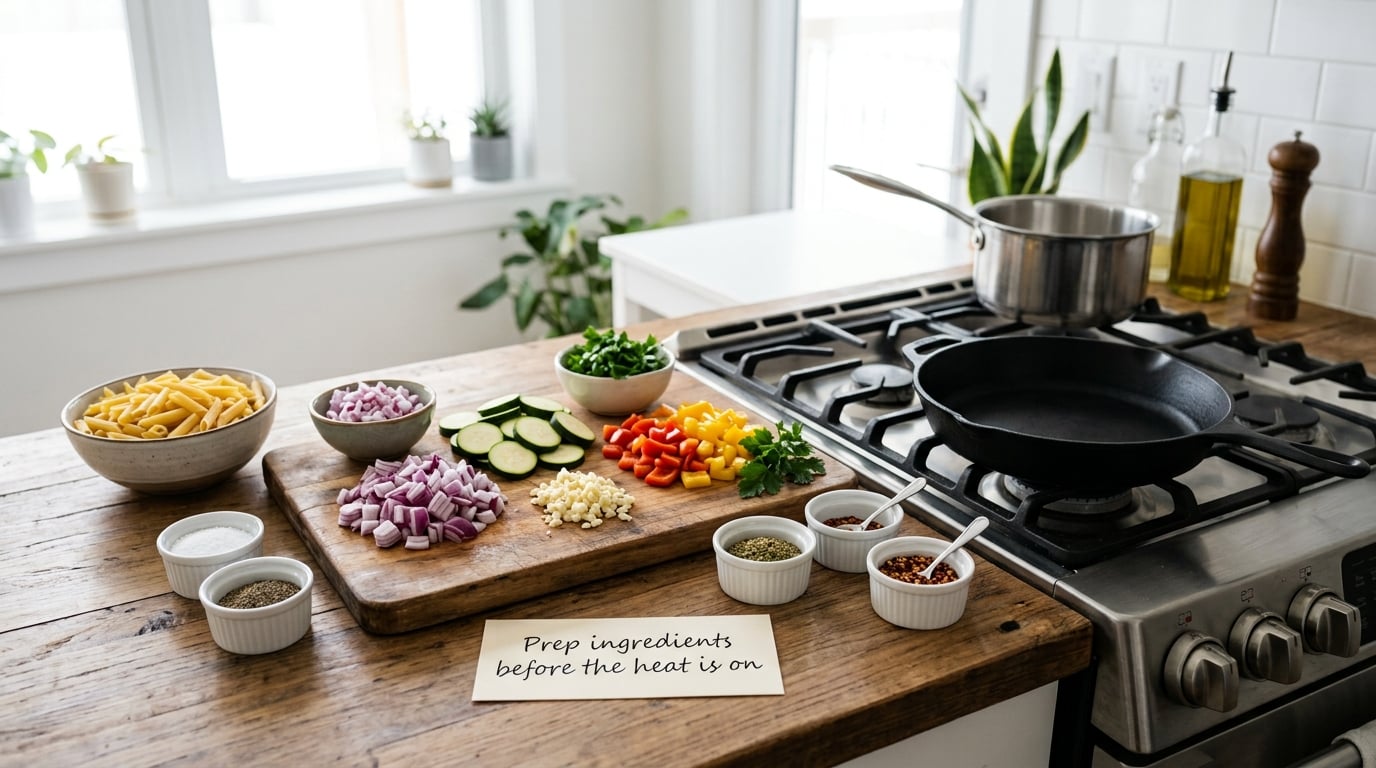
Four habits do most of the work. Thaw frozen things in cold water, which takes 20 minutes and requires no planning. Measure every seasoning into a small bowl before cooking, because reaching for the bottle mid-sear is a ten-second mistake that adds up. Pat proteins dry with a paper towel, since a wet surface steams instead of browns. And put the salt and pepper within reach of the stove, not in the cabinet.
Then work in this order while the water heats: vegetables first, then the protein cut into pieces, then anything that needs to be measured. The only prep that can wait is chopping herbs, which keeps better in the fridge for the next night.
Cook the fastest component first
Work backward from the minute you want to eat. If you want to sit at 7:00, the protein goes into the pan at 6:45 at the latest, and the rice or pasta goes in at 6:32. Anything that takes 12 minutes starts at 6:45 or earlier, and everything else schedules around it.
Start the pot first because water is the slowest thing to respond. While it heats, finish your prep. When it boils, add the pasta or rice, set a timer, and move to the skillet. Sear the protein in a hot pan with oil, then push it aside or plate it, and cook the vegetables in the same pan so the browning flavors them. The order is always: long grain, then protein, then vegetable, then sauce.
Here is what a real evening looks like, so you can see the overlap rather than trust it:
- 0 to 6 minutes. Cold water on, salt added, chopped vegetables and measured seasonings on the counter, protein out and patted dry.
- 6 to 16 minutes. Pasta in the pot. Skillet on high with oil. Protein sears 4 to 6 minutes undisturbed while you stir nothing and watch the clock.
- 16 to 22 minutes. Protein out to a warm plate. Vegetables into the same pan, 4 to 6 minutes. Pasta drained, a mug of the starchy water saved.
- 22 to 26 minutes. Pan sauce from the drippings, vegetables back in, everything on the table with lemon, butter, and herbs.
Total time is 26 minutes, and hands-on time is closer to 13. If you have less time on your feet than that, the sheet pan and the microwave are the two methods that ask the least of you, because both need less stirring and less babysitting. The constraint on a weeknight is rarely the hour itself, it is how much of that hour you want to spend standing over a pan.
Add a fast sauce and finish the meal
The last two minutes decide whether the dinner tastes rushed. Deglazing means pouring liquid into a hot pan to dissolve the browned bits stuck to the bottom, which is where the flavor is, and it takes 30 seconds. Then finish with one of these:
- Butter, lemon juice, and chopped parsley, stirred into pan drippings. This is the finish for chicken, fish, and green vegetables.
- Garlic, Parmesan, and a splash of pasta water, emulsified in the pan. This is the finish for pasta.
- Salsa and lime juice, added off the heat so the tomatoes stay bright. This is the finish for ground beef and eggs.
- Warm canned tomatoes, a torn basil leaf, and a drizzle of olive oil. This is the finish for anything vegetable-heavy.
- A mustard and vinegar vinaigrette shaken in a jar, which costs 20 seconds and no pan. This is the finish for roast vegetables and chickpeas.
On safety, a fast dinner still has to reach temperature. Use an instant-read thermometer: poultry to 165F, ground meat to 160F, and whole cuts of beef, pork, or lamb and fish to 145F. The thermometer costs less than a takeout order and it takes the guessing out of the 8-minute sear, which is where rushed chicken usually goes wrong.
Refrigerate leftovers within two hours and use them within three to four days. Reheat to 165F, and toss a fresh lemon or vinegar over greens and grains when you pull them out, because the acid is what makes day-old food taste intentional.
Common Mistakes
Almost every 30-minute dinner that runs to 50 minutes fails in the same six ways. Each one has a fix you can apply tonight.
Choosing a slow cut
A whole chicken breast takes 25 minutes and a pork shoulder takes hours, no matter how hot your pan is. Fix: buy thin cuts, shrimp, ground meat, or anything already cut. Time is decided at the store, not at the stove.
Crowding the pan
Ten pieces in a skillet do not brown, they steam, and then you spend 6 extra minutes under the broiler to fix the pale patches. Fix: cook in two batches, or use a sheet pan so everything keeps a 1-inch gap.
Starting with cold ingredients
Cold protein and cold vegetables take far longer to reach cooking temperature than food that has sat out 10 minutes. Fix: pull everything out while you heat the pan or the pot.
Forgetting to measure the seasonings
Free-pouring salt mid-cook means you overdo it, taste again, and keep adjusting until the dish is ruined. Fix: measure everything into a bowl at prep time and season in two stages rather than one.
Saving all the prep for the end
Chopping vegetables while the pasta boils is fine. Chopping while the protein sears is how dinner ends at 7:40. Fix: use the full 5 minutes before the heat is on for the whole prep list, and only chop herbs at the end.
Trusting a recipe’s total time
Published 30-minute recipes frequently include passive time like marinating or resting, and they rarely count the washing up. Fix: check whether the time is listed as prep, cook, or total, and add 8 minutes for the pot and pan if the recipe was tested by someone who owns a dishwasher.
Frequently Asked Questions
Can I really cook a complete dinner in under 30 minutes?
Yes, if every component cooks in under 12 minutes and two of them run at the same time. Chicken thighs, shrimp, ground beef, pasta, rice, and frozen vegetables all qualify. The limit is a component like a whole chicken breast, a bone-in roast, or a braise, which will not fit the clock. Count from your first chop to the last plate, and expect 25 to 28 minutes for most meals.
What ingredients cook fastest for a 30-minute dinner?
The fastest proteins are shrimp, sliced thin chicken, ground beef, eggs, and rotisserie chicken. The fastest starches are pasta, microwave rice, and tortillas, none of which need soaking or long simmering. Frozen vegetables cook in 4 to 6 minutes, canned beans need only reheating, and pre-washed greens need no cooking at all. Canned tomatoes and jarred sauces need 2 minutes of heat, not 20.
Can I prepare a 30-minute dinner ahead of time?
Partly, and the prep you do ahead should be the chopping, not the cooking. Chopped vegetables, measured seasonings, and grated cheese keep several days in sealed containers in the fridge, and frozen vegetables need no prep at all. What does not save time is precooking and reheating proteins, which usually needs more than 30 minutes. Save the assembly for the night itself.
How should I safely store leftovers from a quick dinner?
Move leftovers into the refrigerator within two hours of serving, keeping them in shallow containers so heat escapes fast. Use them within three to four days and reheat to 165F. Seafood is the exception and is best used within a day or two. When you reheat, add something sharp, such as fresh lemon, vinegar, or a hot sauce, because day-old food usually reads as dull rather than unsafe.
What is the easiest dinner to make in under 30 minutes?
For a total beginner, start with a one-pan meal: chicken thighs, broccoli, and potatoes roasted on a sheet pan at 425F, finished with lemon and butter. There is no technique to learn, nothing to time except one dish, and only one pan to wash. Pasta with canned tomatoes and greens is the same idea with even less knife work, and it is the easiest dinner for cooking with limited standing time.
Can I use frozen vegetables in a 30-minute dinner?
Frozen vegetables are often better than fresh for a fast dinner because they are picked and frozen at peak and need no washing or chopping. Roast them at high heat, 425F or higher, rather than steaming, or they turn watery. Thaw greens and peas straight from the bag in a hot pan, and thaw thicker vegetables like broccoli in cold water for about 20 minutes if you want them seared instead of steamed.
Start with the fastest dinner you can build
Pick one quick-cooking protein, two vegetables, and one sauce you already have in the cupboard, and let that be tonight’s dinner. Chicken thighs, broccoli, and lemon butter is enough to start, and once you can time that one in 25 minutes, the rest of the rotation takes no thought at all.
Cook the same five or six meals on a rotation, double the batch on a Sunday, and you will stop deciding entirely. If you want a reliable base for the pot, our guide to cooking rice on the stove without a rice cooker is worth a read before you start.