
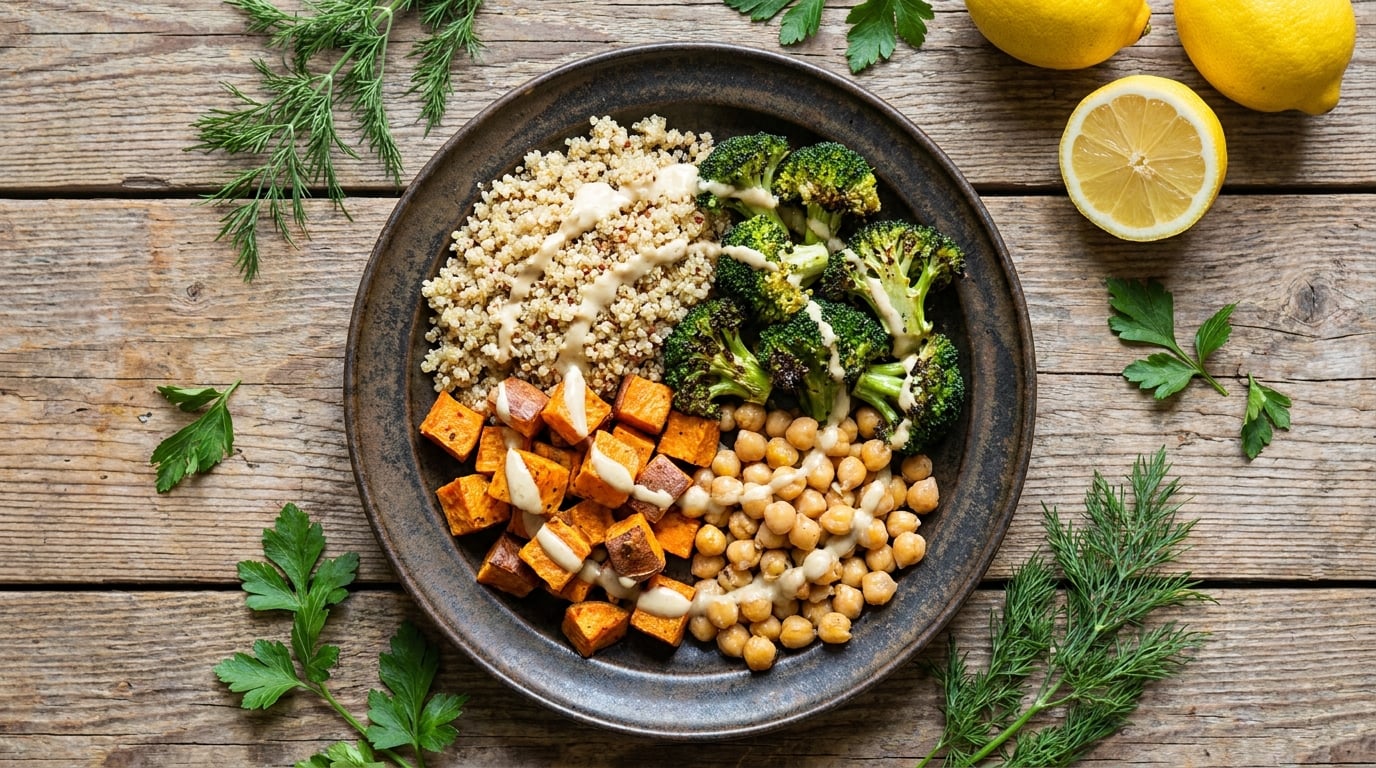
Most meatless dinners fall apart for one reason: they are built from a carbohydrate and a pile of raw greens, with nothing on the plate doing the work of keeping you full. The fix is to stop improvising and start building. Knowing how to make a meatless dinner filling means treating dinner as a formula, a named protein anchor, a cooked starch, a generous volume of vegetables, some real fat, and a sauce with flavor in it. Each piece has a job. Together they hold hunger off for hours instead of ninety minutes.
The method works with whatever is in your pantry, and most of it comes together in about thirty minutes. No protein powder, no specialty products, no single rigid recipe to memorize.
Table of Contents
- What You Need to Make a Meatless Dinner Filling
- Step-by-Step: How to Make a Meatless Dinner Filling
- Common Mistakes
- Frequently Asked Questions
- How do you make a meatless dinner filling?
- What can I add to a meatless meal to make it more filling?
- Which vegetables work best on a filling meatless dinner plate?
- Can I use tofu instead of beans or lentils?
- What sauce goes well with a mixed vegetarian dinner plate?
- How long do leftovers from a meatless dinner last?
- Conclusion
What You Need to Make a Meatless Dinner Filling
The formula has five parts. Build all five and the plate takes care of itself.
- A protein anchor. Three to four ounces of beans, lentils, tofu, tempeh, eggs, edamame, or Greek yogurt. This is the part that does the most work for satiety.
- A cooked starch. About three quarters of a cup of brown rice, quinoa, couscous, farro, or potatoes, or a cup of cooked pasta.
- Two vegetables. One roasted, one quick-cooked or raw. Volume and fiber are what let a plant plate feel as substantial as a meat one.
- A source of richness or crunch. Olive oil, tahini, avocado, toasted nuts, seeds, or a spoonful of grated cheese.
- A sauce or strong seasoning. Something acidic, herby, garlicky, or smoky enough that you would eat the vegetables on their own.
Aim for 20 to 30 grams of protein at dinner. As a daily reference, most adults need roughly 0.36 to 0.60 grams of protein per pound of body weight, and plant-based eaters reach the same number without much extra effort when a protein anchor appears at every meal.
What to use when you are missing something
No beans in the cupboard? Canned chickpeas work the same way, and a drained can is roughly three quarters of a cup cooked. No tofu? Tempeh, seitan, and extra-firm tofu all take the same slot.
Out of quinoa? Rice, couscous, farro, barley, or a baked potato all fill the same role. The starch is not the interesting part of the meal, it is the volume, so swap freely there.
Cooking for people with different tastes is easier when you keep the components separate on the table and let everyone build their own plate. How to build a three course dinner menu at home covers the structure for a longer meal when you have guests.
Step-by-Step: How to Make a Meatless Dinner Filling
Six steps, in order, and the order matters. Protein and starch go down first because they need heat, vegetables come next, and flavor and sauce go on at the end so nothing gets soggy.
Step 1: Choose a Protein That Stays Satisfying
Beans, lentils, tofu, tempeh, eggs, edamame, and mushrooms all work. Portion matters more than people think: three to four ounces of cooked protein is the amount that carries a meal. That is about three quarters of a cup of cooked beans or lentils, or half a block of extra-firm tofu pressed and cubed.
Prepare it so it tastes like something. Beans and lentils get a hard sear in oil rather than a gentle simmer, with salt added at the end so the skins soften but do not turn to mush. Tofu gets pressed between two plates for fifteen minutes, cubed, and cooked until the edges are genuinely golden and it rattles when you move the pan. That browning is the whole difference between tofu people eat and tofu they quietly push around the plate, which is a complaint that comes up constantly in home cooking forums.
Tempeh does not need pressing, but it does need seasoning, since it is fairly bland on its own. A tablespoon of nutritional yeast or a teaspoon of smoked paprika does the job. Mushrooms need a hot pan and no crowding, or they steam instead of browning, and they are best treated as a supporting protein rather than the sole anchor.
One useful trick for texture and satisfaction is pairing plant proteins across categories, such as rice with beans, or hummus with whole grain toast. Combining two sources that cover each other’s amino acid gaps is often called a complete protein pairing, and it is a cheap insurance policy on a single-ingredient dinner.
Step 2: Add a Filling Starch
A plate with no starch feels unfinished, and it also runs short on calories. Cooked brown rice, quinoa, couscous, farro, whole-wheat or chickpea pasta, potatoes, and corn all work. Three quarters of a cup of cooked grain, or one medium potato, is the usual serving.
Add flavor without meat by finishing the grain in the pan it cooked in with a spoon of olive oil, or by tossing it with toasted nuts, seeds, grated parmesan, or a handful of chopped herbs. Toast the grain briefly in oil before serving if you have a minute. It takes almost no time and changes the flavor completely.
Step 3: Load the Plate with Colorful Vegetables
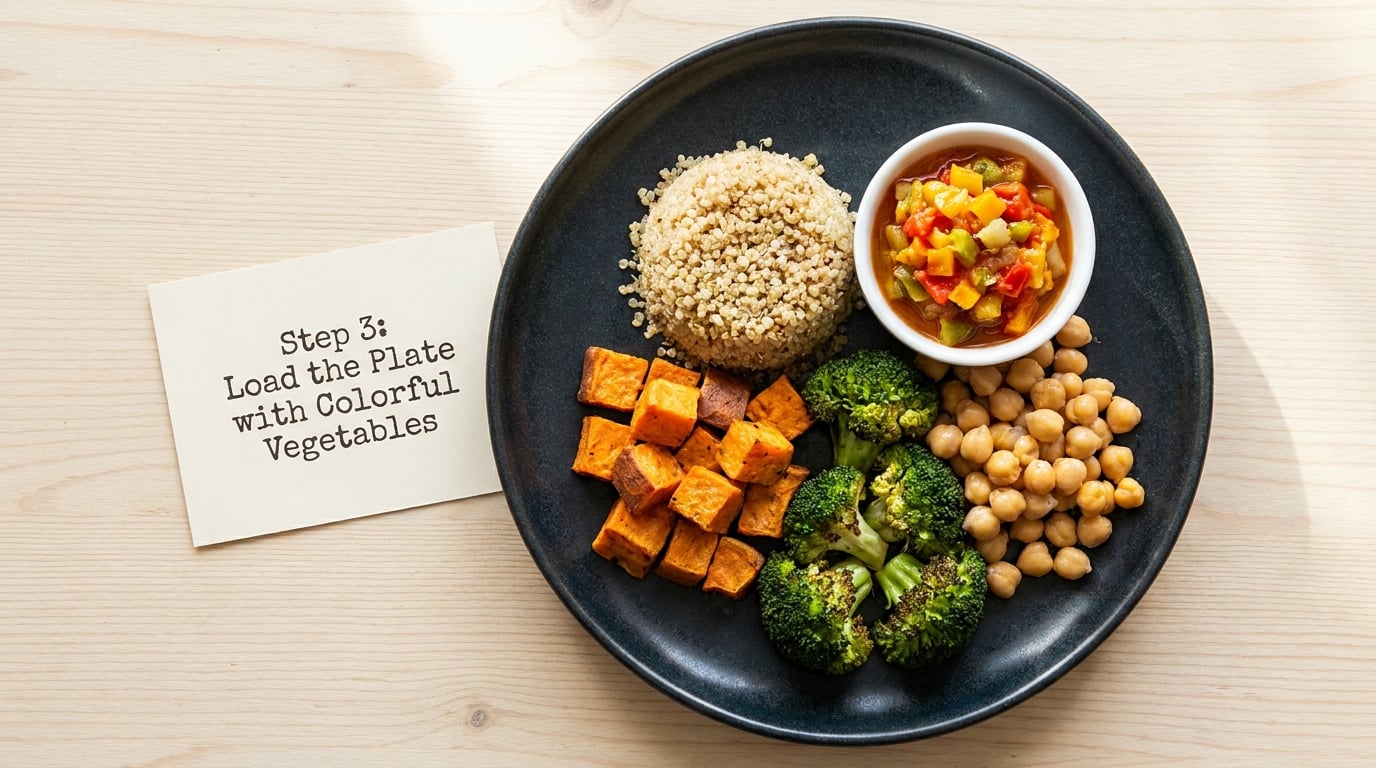
Vegetables supply the volume that makes a plate look and eat generous. Most home cooks underdo this, serving a sad spoonful next to a mountain of rice. Aim instead for enough vegetables that they take up roughly a third of the plate.
Quick-cooking options take five minutes: spinach, broccolini, green beans, zucchini, or mushrooms in a hot pan with garlic. Roasted options take longer but do the work hands-off: sweet potato, carrots, cauliflower, peppers, and red onion on a sheet pan at high heat with oil and salt. Brussels sprouts and cabbage roast in about twenty-five minutes and go crisp at the edges, which is exactly the kind of contrast that makes a plate satisfying.
Look for two textures in one dinner. Something soft and roasted next to something crisp or raw keeps each bite interesting. A plate with four colors on it also tends to signal fullness before you take the first bite, which matters more than it sounds.
Step 4: Flavor Each Component Instead of Just the Plate
The most common mistake is seasoning at the end and hoping it distributes. Salt only on the surface, and a plate full of separately cooked components ends up tasting like five mild things sitting near each other.
Season each part as it finishes. Smoked paprika, cumin, or chili powder on the beans. Salt and a squeeze of lemon on the grain while it is still hot. Olive oil and a pinch of salt on the roasted vegetables. Garlic and chile in the pan with the greens.
A combination that works almost every time: smoky and warm on the protein, bright and acidic on the vegetables, and something green and fresh somewhere on the plate, such as parsley, cilantro, dill, or a spoonful of pesto. The contrast matters more than the intensity. If everything tastes like the same salty thing, the plate reads as heavy rather than satisfying.
Step 5: Add a Sauce or Creamy Finish
A sauce ties the components together and adds moisture and richness. Five-minute versions cover almost everything. Tahini-lemon dressing is three tablespoons of tahini, the juice of half a lemon, a clove of grated garlic, and enough water to loosen it to the thickness of cream. Salsa works on anything with beans or corn. Pesto is a two-minute finish on grains and roasted vegetables. Greek yogurt thinned with lemon juice and a little water makes a cool drizzle. Peanut or sesame sauce, loosened with warm water and a splash of vinegar, turns noodles, tofu, or a grain bowl into dinner fast.
Taste the sauce before it goes on. Most bland sauces need more acid than you expect and more salt than feels polite. If it is too thick to drizzle, thin it with water rather than giving up on it, since a sauce left sitting on the side goes unused and the plate loses its moisture.
Step 6: Balance the Plate and Make It Filling
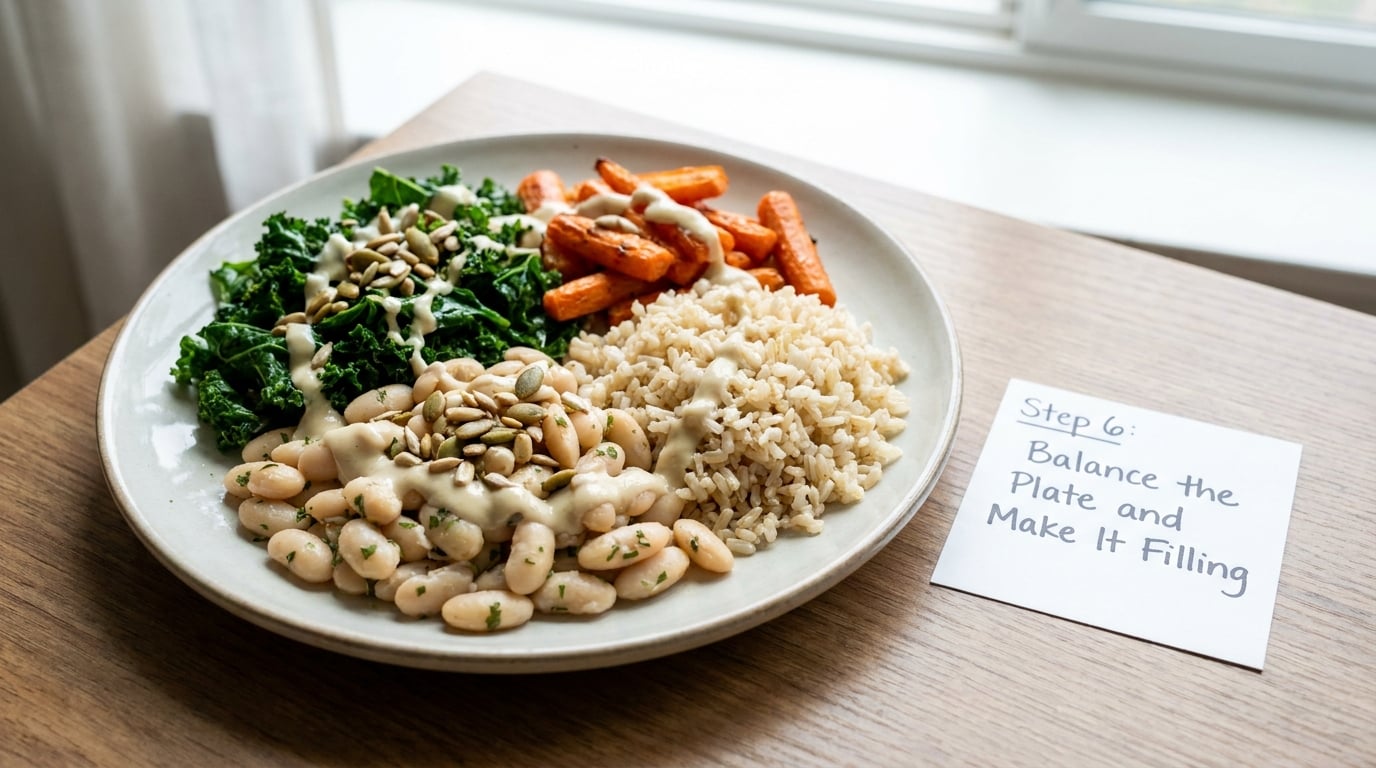
Portion it roughly in thirds: one third vegetables, one third protein, one third starch. Then add a small amount of sauce or a crunchy garnish, which is the part that makes the plate feel deliberate.
If you are still hungry afterward, add calories rather than volume. A tablespoon of olive oil, an ounce of toasted seeds, half an avocado, or a spoonful of tahini adds roughly 80 to 160 calories with fat that slows digestion. People who cut meat out of a meal often drop several hundred calories without noticing, and that gap, not the missing chicken, is usually what they are actually hungry about.
Finish with something crisp. Toasted seeds, crushed nuts, fried onions, or a scatter of chili flakes. Texture is a real satiety lever and it takes ten seconds.
Quick protein reference per serving
Here is the math, roughly, for everyday portions. Exact numbers vary by brand and preparation, but the order of magnitude is reliable.
- Cooked lentils, 1 cup: about 18 grams of protein. Swap for black beans, chickpeas, or butter beans at the same volume.
- Extra-firm tofu, 1/2 block (about 7 ounces): about 25 grams. Swap for tempeh, which runs lower at roughly 20 grams per half block.
- Seitan, 3 ounces: about 21 to 25 grams, the densest plant option, though it is wheat gluten and not gluten-free.
- Edamame, 1 cup shelled: about 17 grams. Swap for shelled peas or green beans, which drop to roughly 8.
- Greek yogurt, 3/4 cup: about 15 to 18 grams. Swap for cottage cheese at a similar serving.
- Eggs, 2 large: about 12 grams.
- Cooked quinoa, 1 cup: about 8 grams. Swap for cooked brown rice at roughly the same number.
- Hemp hearts, 3 tablespoons: about 10 grams, and a useful boost on top of anything.
No protein powder required. That objection comes up constantly, and honestly it is the right one, since whole foods carry fiber and volume along with the protein.
Common Mistakes
Building the whole dinner out of salad vegetables
Raw greens are wonderful but they do not carry a meal on their own. Fix: treat vegetables as one third of the plate and make sure one component is roasted or browned. Heat and fat change how satisfying raw vegetables feel.
Under-portioning the protein
Two tablespoons of beans next to a mountain of rice looks generous and is not. Fix: measure once. Three quarters of a cup of beans or lentils, or half a block of tofu, and put it on the plate before you decide you are done.
Skipping the starch
Protein and vegetables without a carbohydrate is a strange half-meal that rarely satisfies. Fix: three quarters of a cup of cooked grain, a medium potato, or a cup of cooked pasta.
Resting on bland toppings
Dried herbs, olive oil, and lemon are not seasoning. Fix: build one strong element, such as a spice blend on the protein or a sharp vinaigrette, and let the other components stay simple.
A sauce that overwhelms the plate
Heavy dressing hides everything good underneath it. Fix: drizzle rather than pour, and taste the plate without the sauce first. If the plate is boring on its own, the sauce is not going to save it.
Skipping fat because the meal feels heavy
Cutting oil and fat for the sake of eating lighter is one of the fastest ways to end up hungry again. This comes up again and again in community discussions about low-calorie vegan diets, where the missing calories and missing fiber, not the vegetables, are the problem. Fix: keep a real fat in every meal and pair it with fiber-rich vegetables.
Cooking the same three proteins forever
Boredom with tofu and lentils is the most common complaint in vegetarian cooking forums, an entire thread of it. Fix: rotate across four categories, legumes, soy, whole grains and seeds, and eggs or dairy. Pick one from each category for the week and the same ingredients turn into very different dinners.
Cooking two dinners for a mixed table
Fix: cook one base, such as a big tray of roasted vegetables and grains or a bean chili, and serve meat or fish on the side for anyone who wants it. Everyone eats the same meal, and nobody is cooking twice. If guests are involved, how to plan a dinner party menu a week ahead is worth a read before the day itself.
Seasoning only at the table
Fix: salt beans, lentils, and tofu during cooking, not after. Seasoning at the end cannot reach the inside of anything, and underseasoned food that gets topped with dressing still tastes underseasoned underneath.
Ahead of time, cook a double batch of grains and roast a full sheet pan of vegetables. Both keep three to four days in the refrigerator, and both freeze well for two to three months. Beans and cooked tofu freeze flat in a sealed container; sauces made with yogurt or fresh herbs keep only in the refrigerator, so hold those back and make them fresh.
Frequently Asked Questions
How do you make a meatless dinner filling?
Build the plate in five parts: a protein anchor of three to four ounces, three quarters of a cup of cooked starch, two vegetables taking up about a third of the plate, a real fat such as olive oil or tahini, and a sauce with enough acid and seasoning to taste good on its own. How to make a meatless dinner filling is really a question of proportions rather than recipes. Aim for 20 to 30 grams of protein at a meal.
What can I add to a meatless meal to make it more filling?
Add protein first, then fat, then texture. Three tablespoons of hemp hearts add roughly 10 grams of protein, a spoonful of nutritional yeast adds a few more, and Greek yogurt or cottage cheese works as a swap for any plate that is missing a creamy protein. For fat, a tablespoon of olive oil, half an avocado, or a spoonful of tahini adds 80 to 160 calories. Toasted seeds or nuts add crunch, which makes the plate feel more complete.
Which vegetables work best on a filling meatless dinner plate?
Pick two with different textures. Roasted sweet potato, carrots, cauliflower, Brussels sprouts, or peppers give a soft, caramelized base, while spinach, broccolini, green beans, or a raw cabbage slaw keep the plate lively. Volume matters more than any single vegetable, so aim for enough to fill about a third of the plate. Cooking at high heat is what gives vegetables flavor and fat, the two things that stop them feeling like a side dish.
Can I use tofu instead of beans or lentils?
Yes. Half a block of extra-firm tofu delivers about 25 grams of protein, more than a cup of cooked lentils. Press it for fifteen minutes to drain, cube it, and cook it in a hot pan until the edges are properly golden and crisp. That step is the difference between tofu people look forward to and tofu they push around the plate. If plain tofu gets old fast, swap in tempeh, seitan, or edamame on the next week.
What sauce goes well with a mixed vegetarian dinner plate?
A lemon-tahini dressing is the most forgiving option, since it works over grains, roasted vegetables, and tofu without changing character. Three tablespoons of tahini, the juice of half a lemon, one grated garlic clove, and enough water to reach the thickness of cream. Pesto suits grains and roasted vegetables, salsa suits beans and corn, and a thinned yogurt sauce cools anything spicy. Thin any of them with water rather than pouring less.
How long do leftovers from a meatless dinner last?
Cooked beans, grains, tofu, and vegetables keep three to four days in the refrigerator, stored in shallow containers and refrigerated within two hours of cooking. Sauces made with yogurt, dairy, or fresh herbs keep the same length of time but are best used within two days. Grains, roasted vegetables, beans, and cooked tofu freeze well for two to three months. Cool everything before sealing, and reheat rice and cooked vegetables until steaming hot all the way through.
Conclusion
A filling meatless dinner is not one clever recipe. It is a protein anchor, a cooked starch, a third of the plate in vegetables, real fat, and a sauce worth eating. Get those five in place and the hunger that usually arrives an hour after dinner tends not to.
Try it tonight with what you already have: pick one protein, one grain, and whatever vegetables are in the fridge, put them on a plate, and finish with a sharp sauce. Adjust the portion on day two. That is the whole method.