
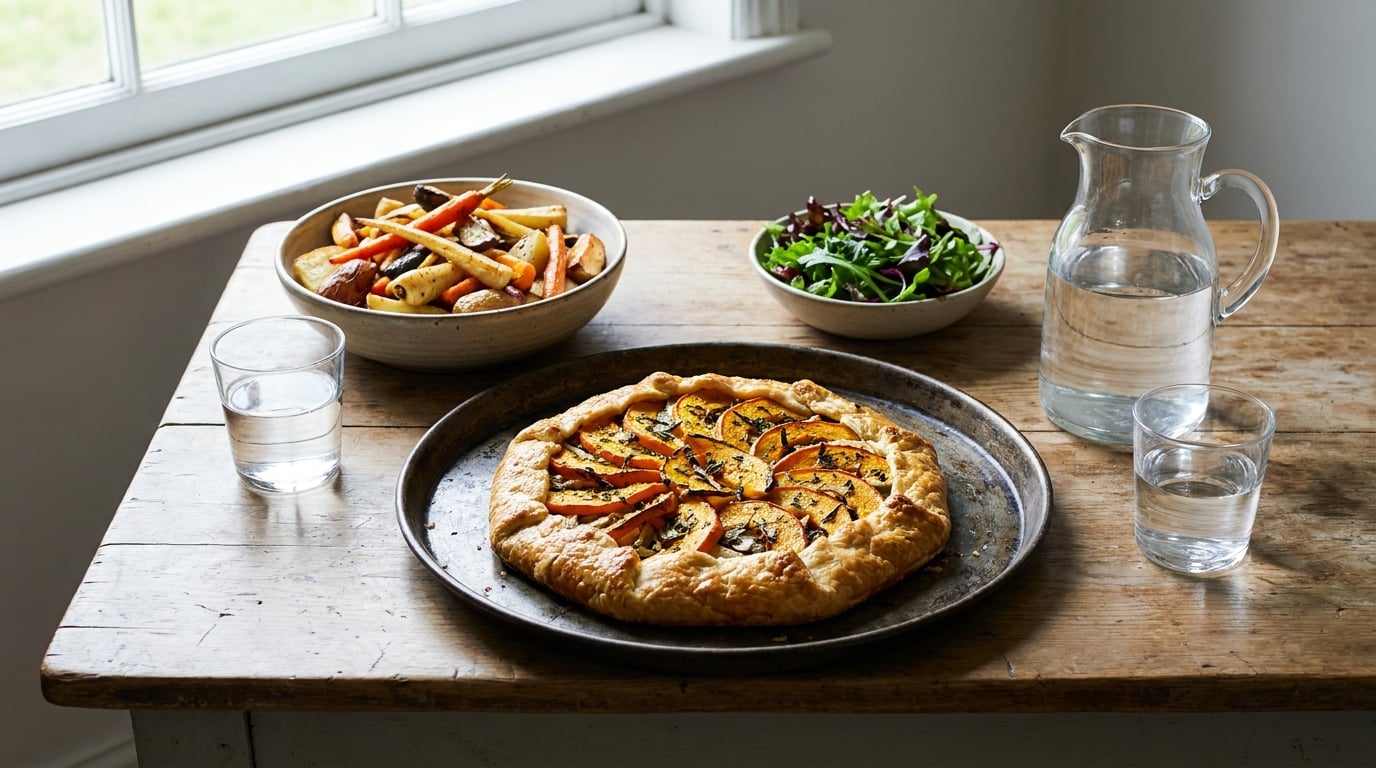
Cooking for a vegetarian guest is a menu decision, not a cooking problem. Ask what the guest actually eats, then build one dinner out of dishes that were always meatless — beans, grains, roasted vegetables, eggs, cheese — and serve it from the same pan as everything else. About 45 minutes of cooking on the day, and most of it can happen the day before.
A quick definition matters here. A vegetarian eats no meat and no fish. Eggs, dairy and honey are normally fine. So are butter in the sauce and cheese on the tart. When hosts over-restrict and cook a vegan meal for a lacto-ovo vegetarian, the guest gets tofu and nutritional yeast for the third time this month, and nobody at the table enjoys it.
The second thing to unlearn is the separate plate. Plating someone’s dinner later, in the kitchen, on a different plate, tells the table that this person is a problem to be managed. Food that goes straight onto the shared serving dish, at the same moment as everything else, says something entirely different.
What You Need
You need three things before you shop: what the guest actually eats, a short list of dishes that need no substitution at all, and a rough plan for what happens the day before.
Start with information rather than food. Four questions cover almost every situation:
- Are you vegetarian, or do you also avoid eggs and dairy?
- Any allergies I should plan around, and how severe are they?
- Any foods you have stopped eating, even ones a vegetarian would normally eat?
- Is there one dish you would hate to miss?
Asking is not awkward, it is normal hosting. The easiest version is a short text a week ahead: “We’re doing dinner on Thursday, about 7pm. Anything you don’t eat I should plan around? No pressure to be formal about it, just want to make sure there’s plenty you can actually eat.” That last sentence does a lot of work, because the usual fear is cooking a meal the guest can only pick at.
For equipment, a home kitchen is fine. You want a large sheet pan, a wide skillet, a big pot for grains, a decent knife, and either a blender or an immersion blender for sauces. Nothing here is special.
For ingredients, this formula covers most dinners: one plant protein, two vegetables (one roasted, one raw or lightly cooked), one grain or starch, one sauce that ties them together, and something sharp to finish — herbs, toasted nuts, lemon zest, a spoonful of pickle.
One caution on the protein. Canned beans, lentils and tofu are cheaper than a piece of meat and quicker than you would think, so buy one of those and skip the “vegetarian protein” aisle entirely. Meat substitutes are the one category to leave on the shelf.
Step-by-Step: How to Cook for a Vegetarian Guest
Seven stages, in this order. Follow them in sequence and cooking for a vegetarian guest becomes an ordinary Friday evening rather than a small crisis.
1. Confirm What the Guest Eats
Confirm the diet before you write a menu, not after you have bought the food. There is a real difference between a vegetarian who eats eggs, dairy and honey, and a vegan who eats none of those, and they are easier to cook for than most hosts assume.
Four labels cause the confusion. A vegetarian eats no meat or fish. A lacto-ovo vegetarian is the same, with eggs and dairy, which is most people who use the word. A vegan eats no animal products at all, including stock, butter, cheese and honey. A flexitarian mostly eats plants but still eats meat, so treat that guest like any other omnivore. If you are unsure, cook the dish that works for the widest group and keep the one risky ingredient easy to leave out.
People sometimes add “no cilantro” or “I don’t like mushrooms” and that is not fussiness, it is a preference. Write it down next to the dietary answer.
2. Decide How to Cook for a Vegetarian Guest Based on the Occasion
How you cook for a vegetarian guest depends on setting, service style, headcount and your equipment, and the honest answer for a weeknight is different from the answer for eight people on a holiday table.
For a weeknight dinner for two or three, keep it to one dish plus one side and finish it fast. One-pot or one-pan dishes are forgiving of last-minute changes and hard to get wrong.
For a dinner party of six or more, cook the main in a dish that can go straight to the table and put the sides in bowls on the counter. Serve-yourself service means everyone builds their own plate, including the vegetarian guest, and nobody watches what anyone puts on it.
For a holiday meal, treat the vegetarian main as a centrepiece rather than a side dish. A galette, a stuffed squash or a big tray of roasted vegetables with a cheese crumb on top looks like the food the table is waiting for, and that presentation is doing real work.
3. Build One Main and Two Supporting Dishes
A meal that satisfies a mixed table needs one substantial centrepiece, supported by two sides that contrast in colour and texture. Skip the pile of small dishes that all taste the same.
Eight centrepieces that work when guests are coming over:
- A mushroom and thyme tart with goat cheese — looks generous, arrives whole, feeds six.
- Lentil and rice pilaf with roasted peppers and herbs — one pot, forgiving, feeds a crowd.
- Stuffed butternut squash with wild rice and walnuts — impressive, and it can be made a day ahead.
- Chickpea and vegetable pasta bake — real cheese, real browning, reheats without turning to mush.
- Eggplant parmesan with a tomato sauce — layered, rich, nobody at the table feels short-changed.
- Spanakopita — phyllo, spinach, feta, and it holds its shape on the buffet.
- Sheet pan roasted vegetables with halloumi laid over the top — one pan, very little washing up.
- Black bean and sweet potato tacos, built at the table — cheap, generous, no stress.
Two sides do the rest. A green salad with a strong vinaigrette, and something warm and starchy such as roasted potatoes with rosemary, or a grain salad made with a lot of herbs.
If the omnivores at your table want something with meat on the plate too, cook it alongside rather than instead. A cast iron skillet steak takes about twenty minutes on the stovetop and never crowds the oven, which is where the vegetarian centrepiece usually is.
4. Shop for Flexible Ingredients
Shop for ingredients that work in more than one dish, so a forgotten detail does not sink the evening. Fresh seasonal vegetables, a shelf-stable grain, canned beans, and a sauce with a short ingredient list do most of the work.
Vegetarian proteins behave very differently in the pan. These are the timings worth knowing cold, plus how well each one survives being made ahead.
| Protein | Cook time | Cost | Made ahead |
|---|---|---|---|
| Brown or green lentils | 20 to 25 minutes | Low | Better the next day |
| Canned chickpeas, drained | 5 minutes to warm through | Low | Holds well |
| Firm tofu, pressed | 15 to 20 minutes | Low | Good, keeps its texture |
| Tempeh | 20 to 30 minutes | Low to moderate | Excellent |
| Cremini or shiitake mushrooms | 10 to 12 minutes | Moderate | Reheat in a hot pan |
| Halloumi | 5 to 8 minutes a side | Moderate | Best cooked to order |
Before the shop, read the labels on the jars in your own cupboard. Butter hides in a cream sauce, cheese hides in a pasta sauce, Worcestershire sauce is anchovy-based, and chicken broth turns a vegetarian risotto into something else entirely. Vegetable broth, olive oil in place of butter, and a squeeze of lemon do the same work without any of that.
One more shopping note: buy a second bunch of herbs than you think you need. A dish that looks finished is mostly parsley, dill or basil scattered at the end.
5. Prepare the Easy Components Ahead
Most of a dinner party is assembly, and assembly happens the day before. Dressing, cooked grains, roasted vegetables, a marinated bean mix and an assembled tart all wait for you without complaint.
Most cooked or prepared vegetarian dishes keep three to four days in the refrigerator, covered and cooled within two hours of cooking. Grains and roasted vegetables dry out faster than they spoil, so store them with a little oil or a splash of water and reheat in a covered pan.
A practical day-before list: make the vinaigrette, cook a pot of rice or another grain, roast the vegetables, mix the beans with their dressing, and buy the bread. What you leave for the day is the sauce, anything that must stay crisp, and halloumi.
6. Cook in the Right Order
Cook backwards from the minute you want to sit down. Work out what has to be hot, what can wait, and what only needs a quick blast before service.
For a 7pm dinner, the run sheet looks like this:
- The day before: dressing, grains, roasted vegetables, assembled tart, marinated beans, bread, drinks chilled.
- Four hours ahead: reheatable components into the oven, sauces mixed and refrigerated.
- Two hours ahead: the stove dish goes on low heat, the salad is dressed but not tossed, table set.
- One hour ahead: the crisper oven comes on, potatoes or crumble toppings go in.
- Fifteen minutes ahead: halloumi or tofu seared in a hot pan, green salad tossed, everything onto the table at once.
Reheat leftovers to 165°F (74°C) and let them stand a minute before serving. If a dish has to sit in a warmer for more than half an hour, move it back into a low oven instead, or its edges dry out long before the inside is safe to eat.
7. Plate the Meal Without Making It Feel Special
Serve the vegetarian food the same way you serve everything else, at the same moment, on the same platters. That is the whole technique.
Put the main in the middle of the table and pass it first, before any meat dish. Sides go in bowls so people can help themselves. Use the plates you normally use rather than the good ones kept for special occasions, which quietly signals that this is a compromise meal.
Give real portions, not a token scoop. Check that the main is hot all the way through the middle, since a cold centre is the most common way a carefully planned vegetarian dish disappoints. And skip announcing what is meatless — nobody needs a paragraph before dinner.
Common Mistakes
Six mistakes account for nearly every bad vegetarian dinner, and each one has an easy fix.
Mistake 1: Assuming all vegetarians eat the same things
Fix: ask, and treat a lacto-ovo vegetarian as someone who eats eggs, dairy and honey. Over-restricting a guest into a vegan meal they did not ask for is a kind of fussing.
Mistake 2: Planning a salad and some soup
Fix: build around one substantial centrepiece. A side salad and a soup is lunch, and it tells the table the guest was an afterthought.
Mistake 3: Reaching for meat substitutes
Fix: cook food that was always meatless. Processed mince, vegan chicken and similar products are disliked by more people than the guests they were made for, and the omnivores notice the difference too.
Mistake 4: Defaulting to the same tired staples
Fix: a plain quinoa salad, a naked baked potato, one vegetable platter passed around for the whole table to pick at, and undressed pasta on a Tuesday all read as “I thought about it and decided this was fine”. Pick the dish with colour, browning and a sauce instead.
Mistake 5: Cooking everything at the last minute
Fix: make three of the four components the day before. The final hour should be a stove top and a salad bowl, not six burners and a timer.
Mistake 6: Forgetting to ask about allergies
Fix: treat an allergy as a different question from a preference, and ask how severe it is. Nut allergies and coeliac disease change what you can buy, what you can fry in shared oil, and whether you need a separate pan and a clean surface at the start.
Two habits that fix most of the above. Season in layers, since a meatless dish has less fat and salt to carry the flavour, so taste the beans, the sauce and the finished dish separately. And keep a tamari or miso nearby, because a spoon of either in a tomato sauce or a bowl of grains adds the savoury depth that a roast chicken would have given you for nothing.
For hosting, lower the pressure before people arrive. Put the drinks out first, let the sides go out early, and if you are also cooking a meat main, start it after everyone has already taken some of the vegetarian food.
Frequently Asked Questions
What should I cook for a vegetarian guest for dinner?
Cook one meatless dinner the whole table shares: a substantial centrepiece plus two contrasting sides. Reliable choices are a mushroom and thyme tart, lentil and rice pilaf, stuffed butternut squash, a chickpea and vegetable pasta bake, or sheet pan roasted vegetables with halloumi. Skip salad and soup, which reads as an afterthought, and skip meat substitutes, which most guests dislike. Start from foods that were always meatless rather than from replacements.
How can I make a vegetarian dinner filling without meat?
Build the plate around protein, fibre and fat together. Lentils, chickpeas, black beans, firm tofu and tempeh carry the filling part, whole grains such as rice, farro or quinoa add bulk, and olive oil, nuts, tahini, avocado or a cheese crumb add the richness that meat usually supplies. A large plate of salad with no protein on it is not a dinner, and neither is a bowl of rice with no seasoning.
What can I serve someone who is a strict vegetarian?
A strict or vegan guest eats no meat, fish, eggs, dairy or honey, which means checking more than the protein. Use olive oil instead of butter, vegetable broth instead of chicken broth, and skip Worcestershire sauce because it is anchovy-based. Cook from whole foods rather than substitutes, and build flavour with browned mushrooms, tomato paste, miso, nutritional yeast, roasted onions and soy or tamari.
How do I cook one meal for both vegetarian and non-vegetarian guests?
Make the vegetarian dish the main and cook anything with meat separately, so nobody eats a substitute. Serve the meatless dishes in shared bowls and platters at the same moment as everything else, and pass the vegetable main first. If a guest also avoids dairy or gluten, keep those ingredients in one separate dish, such as a grain salad or roasted vegetables, rather than trying to modify the main in front of everyone.
How long can I prepare vegetarian dishes before guests arrive?
Most cooked or prepared vegetarian dishes keep three to four days in the refrigerator, covered and cooled within two hours. Grain dishes, curries, bean salads and assembled tarts all travel well and often taste better the next day. Hold the dressing, the salad leaves and anything crisp until the last minute, and reheat cooked leftovers to 165°F (74°C) before serving.
Conclusion
Cooking for a vegetarian guest is easier than the anxiety around it suggests, because most of the work happens before anyone arrives. Ask what the guest actually eats, pick one substantial centrepiece from food that was always meatless, and finish two sides the day before.
Then put it in the middle of the table and serve it like anything else. The dish stops being a special case the moment it is not plated separately.