
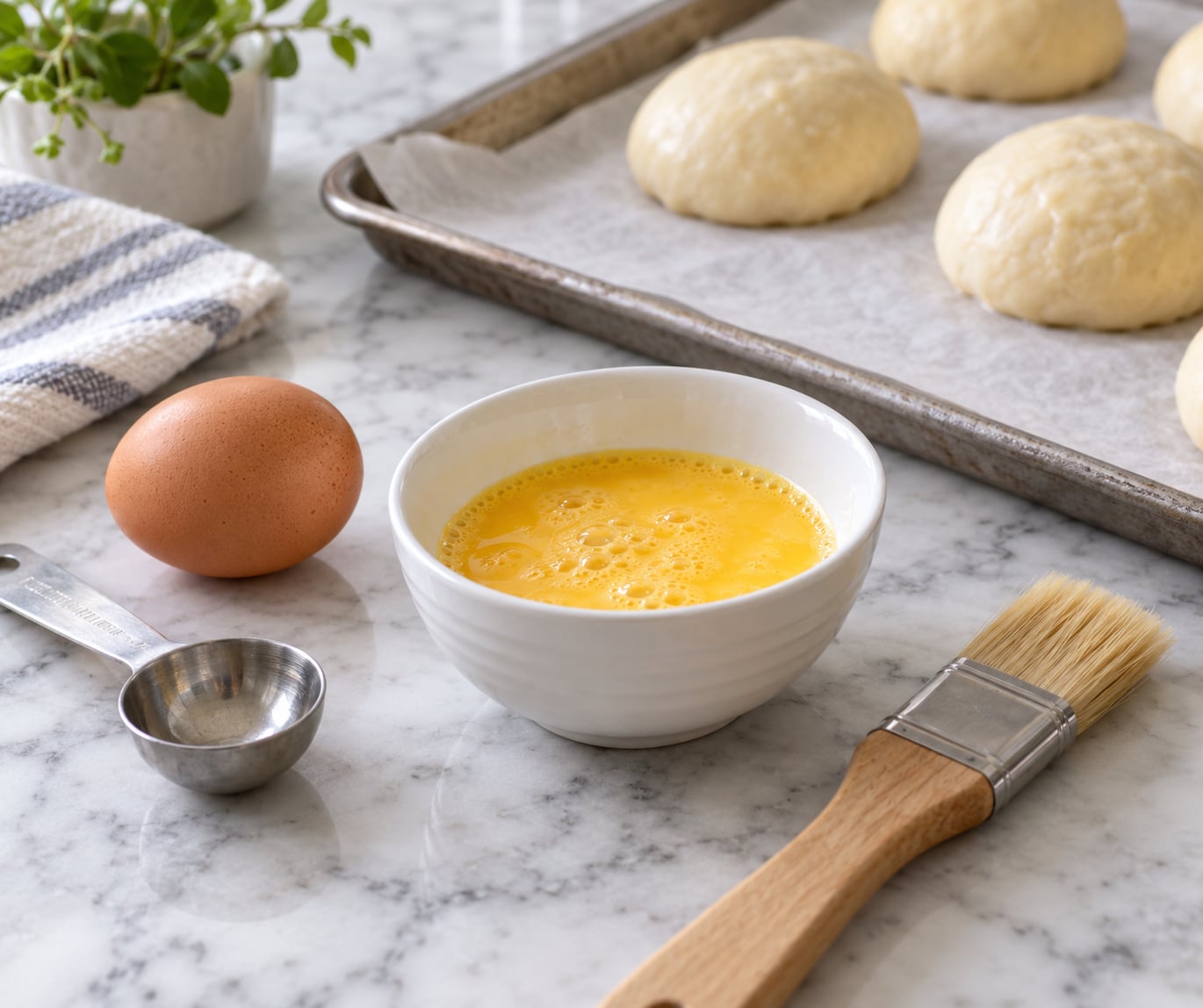
Egg wash is a thin mixture of beaten egg and a small amount of water, milk, or cream, brushed onto dough before baking to give it shine, deeper color, and a sealed surface. The simplest version is 1 whole egg whisked with about 1 tablespoon of water, and it takes under two minutes to make. It is the cheapest step in baking that produces a bakery-looking finish.
Knowing how to make pizza dough at home is more useful if the crust browns evenly, which is partly what the wash handles. In this guide I break down the ratios, the four main variations, and the small habits that stop a wash from turning blotchy.
What You Need
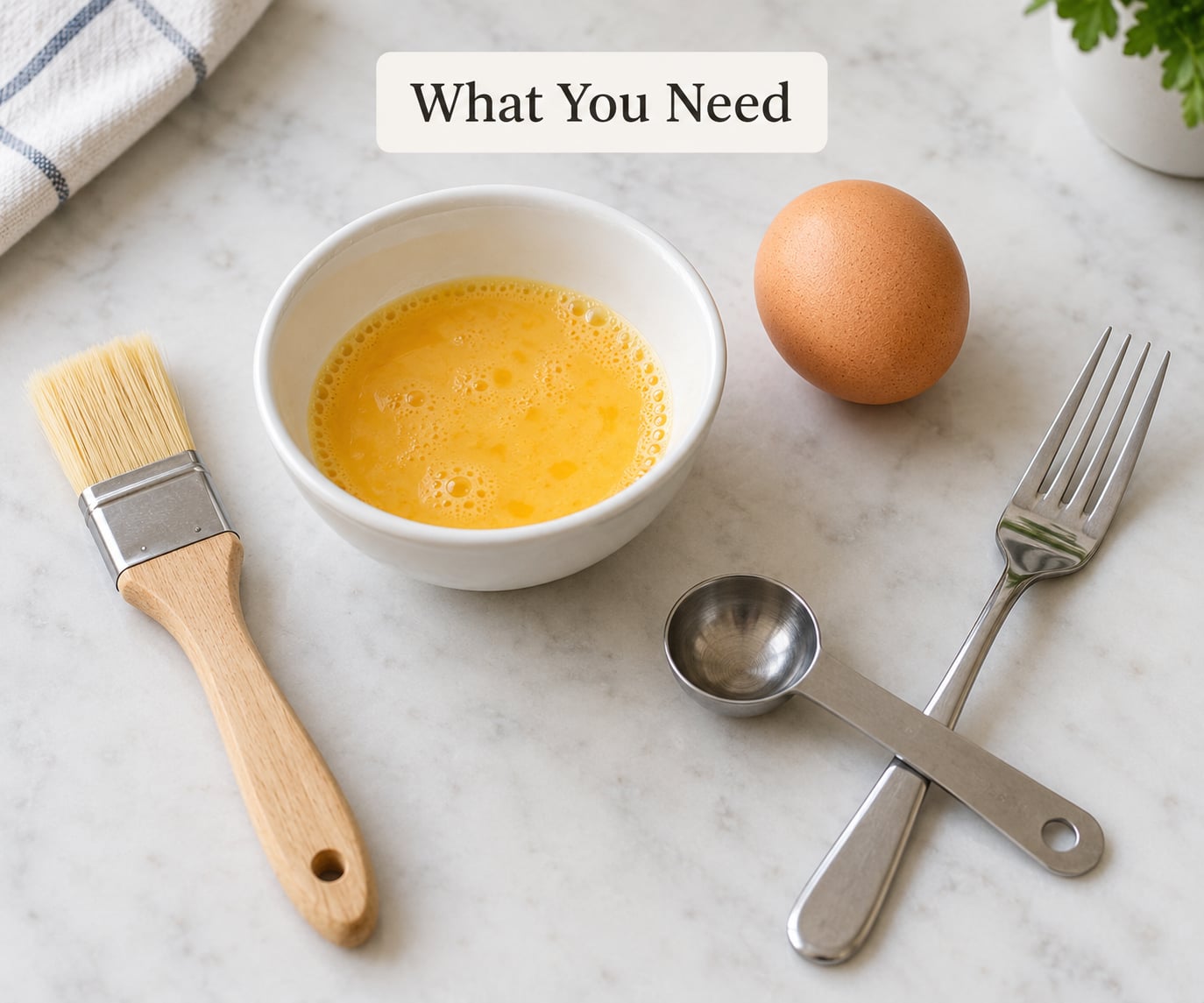
For a standard whole-egg wash you need very little, and small quantities matter because egg wash is meant to be a film, not a coating.
- 1 whole egg, room temperature if you have a few minutes
- 1 tablespoon of cold water for the crispest, lightest result
- 1 tablespoon of whole milk or heavy cream for a darker, softer crust
- A pinch of salt to smooth the mix and make it easier to brush
- A small bowl and a fork or whisk
- A pastry brush, or any soft brush you already own
For a yolk-only wash, separate one egg and keep just the yolk, then add two teaspoons of water or milk. For a vegan version, use the water from a tin of chickpeas (aquafaba) thinned with a teaspoon of water, or plain plant milk mixed with a teaspoon of maple or agave syrup for shine.
Step-by-Step: How to Make Egg Wash for Baking
Whisk, brush thin, and get it in the oven. The whole method takes about two minutes and works on pie crust, rolls, pretzels, scones, and puff pastry alike.
Step 1: Choose the Right Egg Wash
Whole egg, yolk-only, white-only, milk, cream, and plant milk each change the finish, so pick based on what you are baking rather than on habit.
Whole egg is the reliable default. It gives an even golden color with a moderate shine, and it works on nearly anything. Yolk only gives the deepest yellow and the glossiest surface, which is why it is the classic choice for croissants, Danish pastries, and brioche buns.
White only gives a paler, matte sheen. One home baker I read uses white, water, and a little sugar for bagels, and it browns well with a fine crust. Egg white on its own is thinner and less forgiving, so whisk it hard and brush quickly.
Milk or cream alone is a legitimate dairy wash, not just an egg wash shortcut. Milk darkens the color slightly and softens the crust a touch, which some bakers prefer on pie crust; cream gives the deepest browning of the dairy options. One widely read baking site warns against plain milk, while another lists it as a fine choice. In practice, plain milk works. It simply produces a softer, less shiny result than egg, so it suits a tender crust rather than a glossy pastry top.
Step 2: Mix the Egg Wash Until Smooth
Crack 1 egg into a small bowl, pull out the stringy white bits (chalaza), add 1 tablespoon of cold water, and whisk briskly until it is completely frothy with no white streaks.
The streaks and snail trails that frustrate so many bakers come from white that has not fully emulsified into the yolk. Whisking hard for 15 to 20 seconds fixes most of it. If streaks persist, add a few more drops of cold water, which breaks down the enzymes in the white and helps the mixture spread.
A proper wash looks pale yellow, slightly foamy, and pourable. If it is thick, sticky, or leaves a heavy film on the bowl, thin it with another teaspoon of water. A pinch of salt helps here too. Salt loosens the egg proteins slightly, so the wash spreads more evenly and dries on the surface with fewer white marks.
Step 3: Brush It On Just Before Baking
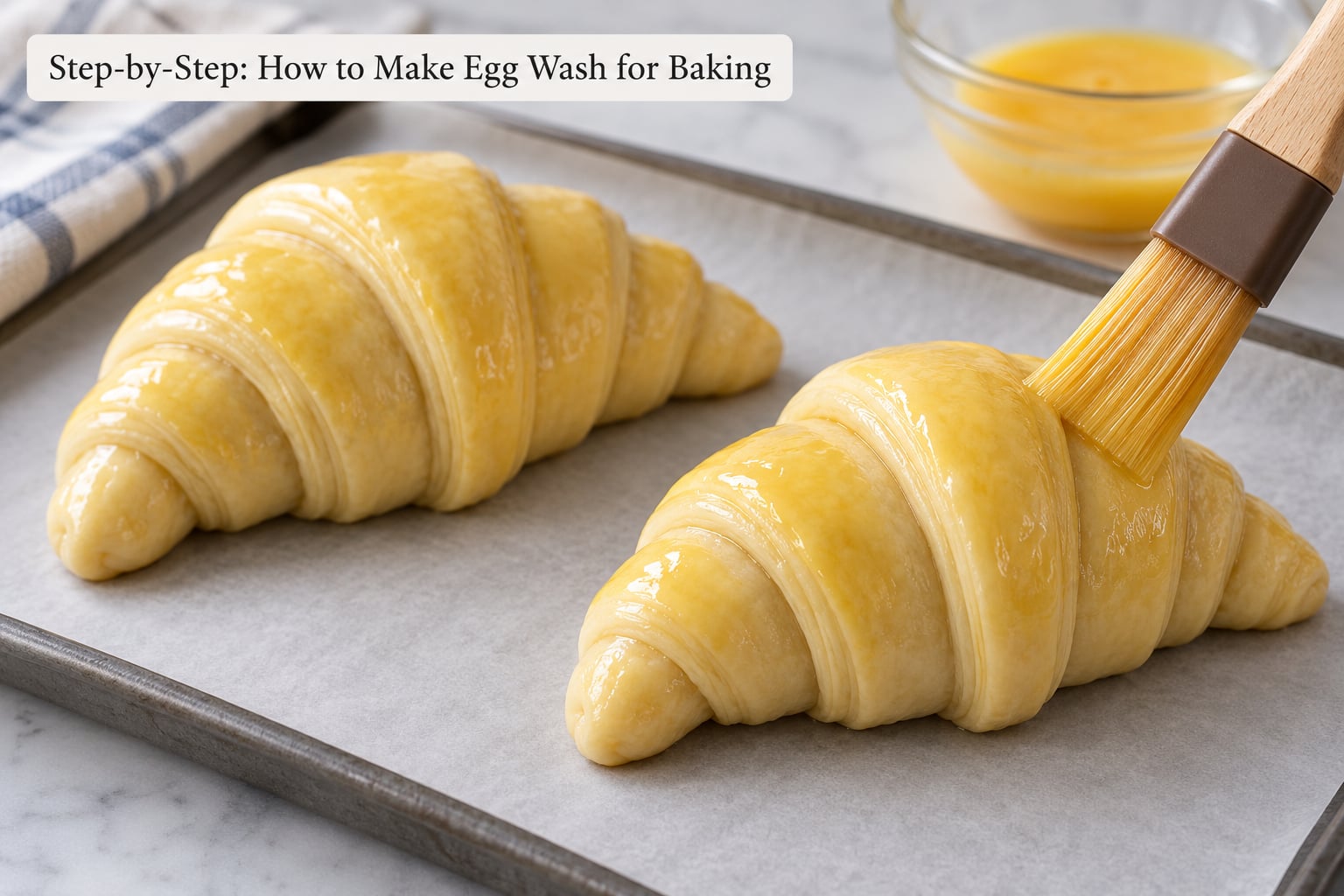
Apply a thin, even layer with light strokes, working from the center outward, right before the dough goes into the oven.
Score first, wash second. If you cut the slits and then brush over them, the wash can seal the openings shut and the pastry will not open properly in the oven. The same goes for pie crust: crimp and vent, then wash, then score the decorative marks if your recipe calls for them.
Use long light strokes and keep the brush moving. A thick coat in one spot bakes darker than its neighbors, which is the blotchy look most bakers are trying to avoid. Wipe and reload the brush often rather than dumping on one section.
Add seeds, cheese, or chopped nuts immediately after the wash, while it is still wet and tacky. For heavily scored or cracked pastry such as empanadas or hand pies, a second thin coat right before baking helps the deep cuts fill evenly instead of showing bare dough.
No pastry brush? A clean silicone basting brush works, and so does a soft clean paintbrush, which is a common stand-in among home bakers. A paper towel folded into a pad works in a pinch, and a spoon with a little wash poured over the top will do for a small round pie. Synthetic bristle brushes tend to go brittle and shed in a wet wash, so if your brush is shedding, switch to natural bristles or a silicone one.
Step 4: Bake Until Glossy and Golden
Follow the recipe’s oven temperature and baking time, since those control the result, but expect a washed bake to brown faster than an unwashed one and to come out shinier.
The egg proteins set and tighten during baking, which is what creates that bakery gloss, and the sugars and amino acids in the egg react for deeper browning. That means a washed item can reach the right color ahead of schedule. If your top darkens before the center is done, tent it loosely with foil, or pull it a few minutes early if the interior is set.
What egg wash does not do is add flavor. It adds no taste of its own, which is why sweet pastries often get a sugar or spice variation and savory breads often get a pinch of salt.
Common Mistakes and How to Fix Them
Almost every egg wash problem traces back to one of four things: an uneven mix, a thick coat, the wrong timing, or the wrong order of operations.
White streaks and snail trails come from under-whisked white. Whisk longer, add a few drops of cold water, and add that pinch of salt.
Patchy, uneven color usually means the coat was too thick in some places and missing in others. Shake the brush so only the tips are wet, and keep brushing past each section so a thin film overlaps instead of a heavy layer sitting beside bare dough.
Wash pooled at the base or ran off the edge means too much liquid. Mix a fresh thinner batch rather than trying to brush off what you have already applied.
Overly dark tops and drying out happen because egg wash speeds up browning. Foil the top, drop the oven temperature by about 25°F (14°C), or pull the item early if the inside is done.
Peeling or flaking crust is usually a sign that too much wash went on in one place, creating a film thicker than the dough can support.
Soggy pastry happens when the wash was applied to the wrong surface, or not at all, on a bake with a wet filling. Egg wash is a moisture barrier, so a properly sealed pie crust keeps berry or pumpkin filling from soaking through. If you want a different result on a savory bake, melted butter is often the better choice, and it is the standard finish for yeasted dinner rolls.
One more timing trap: applying the wash hours ahead. It sits, dries unevenly, and loses its bond with the surface.
If a bake is pale and flat rather than glossy, the wash is rarely the culprit. Leavening that is out of balance will do that, and how to substitute baking powder for baking soda covers the swap that fixes most of those batters.
To store extra wash, keep it in an airtight container in the refrigerator and use it within 3 to 4 days if you mixed it with milk or cream, or up to 5 days if you used water. It contains raw egg, so keep it refrigerated and re-whisk before reuse. If you mixed it with milk or cream, you are also relying on that dairy lasting the same length of time, which is why the water version keeps longer. Discard it if it smells off or looks slimy. If you want to know how this fits with other holiday bakes, our guide to how to make stuffing that is not soggy covers the same sealing logic.
Frequently Asked Questions
What is the best egg wash ratio for baking?
One whole egg to about 1 tablespoon of water is the standard ratio, and it is the one most home bakers land on. Yolk-only washes want roughly 1 yolk to 2 teaspoons of liquid. If your mix looks thick enough to leave a heavy film on the bowl, thin it with a teaspoon of water at a time until it pours like thin cream.
Can I use egg yolk without egg white for a wash?
Yes, and it is the classic choice for croissants, Danish pastries, and sweet buns. Yolk-only gives the deepest yellow color and the highest shine. Because yolk is thicker than a whole egg, reduce the liquid a little, using about 2 teaspoons of water or milk instead of a full tablespoon.
Can I use milk or plant milk instead of egg wash?
Yes. Plain milk, cream, oat milk, or soy milk all work as dairy-free or egg-free washes. They brown a pastry more deeply and give a softer crust with far less shine. Use them on pie crust, scones, and rustic breads where gloss matters less than color. Note that almond milk browns slowly because of its low protein content.
Should I add sugar or salt to egg wash?
A pinch of salt makes the wash spread more smoothly and cuts down on white streaks, so it is the most useful addition. Sugar gives sweet pastries a deeper caramelized color and a slight crunch. Spices such as cinnamon or nutmeg work on sweet bakes, and a savory sprinkle is useful on breads topped with seeds or coarse salt.
Can egg wash be used before air-frying?
Yes, and it behaves the same way. Air fryers brown the surface quickly, so brush the wash on just before the basket goes in, apply it thin, and check a minute or two earlier than the oven time suggests. If the top darkens too fast, tent it loosely with foil the same way you would in a conventional oven.
How long can leftover egg wash be kept safely?
Store extra wash in an airtight container in the refrigerator for up to 5 days if you mixed it with water, or 3 to 4 days if you used milk or cream. It contains raw egg, so keep it cold and re-whisk it before brushing. Discard it if it smells off, and never leave it sitting out on the counter.
Conclusion
Whisk 1 whole egg with 1 to 2 teaspoons of water or milk, brush a thin layer just before baking, and adjust from there. Use yolk-only for the shiniest, deepest-gold pastry tops, add water for a crisper crust, or use milk and cream for a darker, softer finish. Score the dough before you wash it, add that pinch of salt if you want a smoother coat, and keep stored wash refrigerated and used within a few days. Last updated for 2026.