
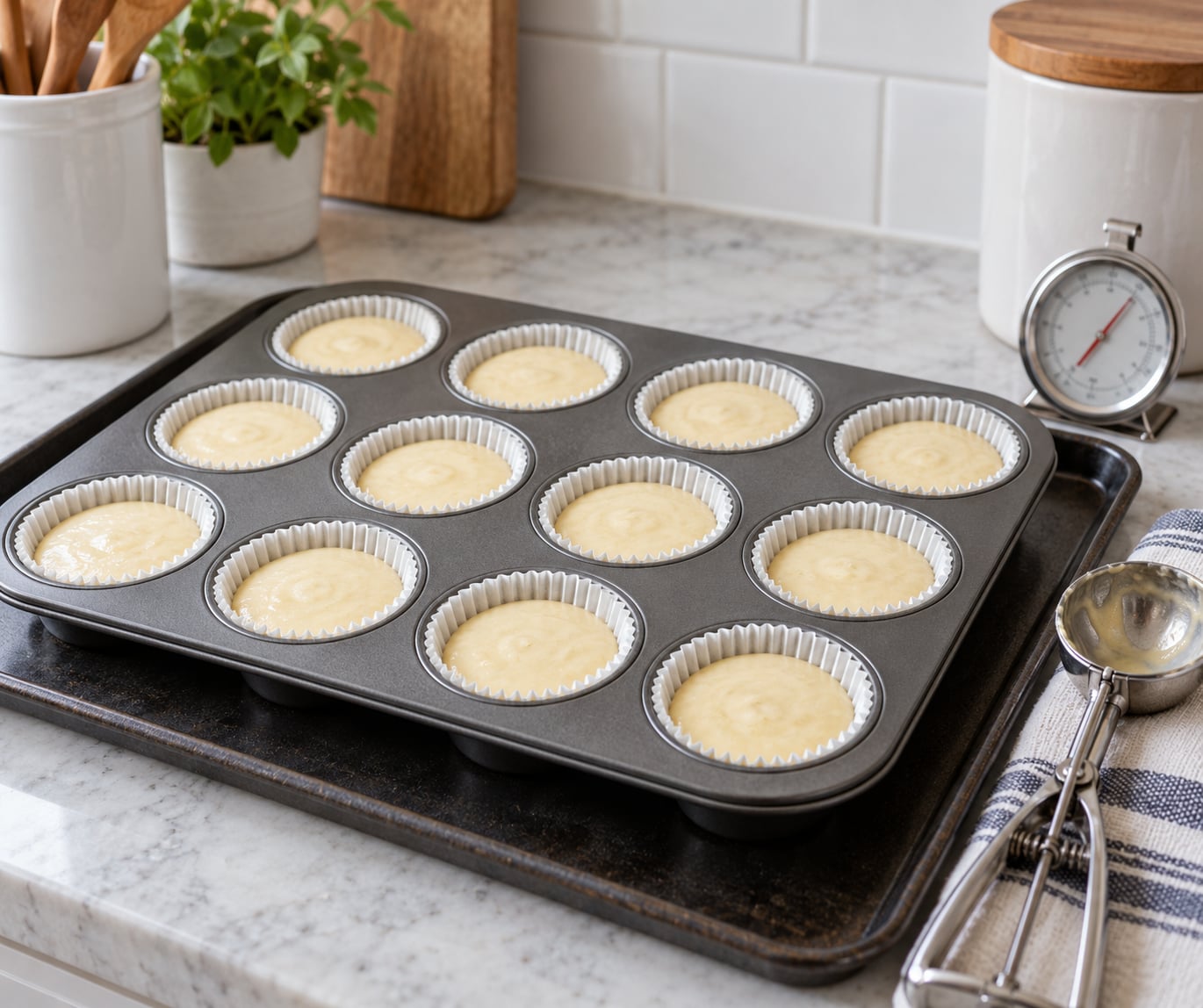
Lopsided cupcakes usually come down to four things: an oven that is not really at the temperature printed on the dial, liners filled at different levels, batter mixed too long, and cupcakes pulled out before the crumb has set. To make cupcakes rise evenly, fill each liner about two-thirds full, bake one batch on the center rack at 325F (160C), and stop mixing the moment the dry ingredients disappear. From mixing to cooling, the whole thing takes about 40 minutes.
The good news is that you do not need a new recipe or a new pan. You need the same recipe, measured more carefully and baked with less fuss.
What You Need
The tools here are cheap and mostly optional, but each one removes a variable that causes uneven rises:
- An oven thermometer, because the dial lies more often than bakers expect. A rack that reads 25F (14C) hot is the single most common reason for pointy tops.
- A 12-cup muffin pan and paper liners that stand up on their own. Flimsy liners slump against the side of the cup and bake into a lopsided edge.
- A small digital scale for the leavening agent. Baking powder scoops clump or come out light, and a teaspoon rounded up or down is a big swing in a 12-cup batch.
- Room-temperature eggs, butter and milk. Cold ingredients slow the rise in the first minutes, which is exactly when cupcakes need to climb.
- A fresh leavening agent. Let the written recipe decide between baking powder, baking soda, or a combination. Baking soda needs an acidic ingredient such as buttermilk or cocoa; baking powder works on its own. The same weighing rule applies to how to make pizza dough at home, where yeast is the leavening agent.
- A small scoop or a quarter-cup measuring cup for portioning, a skewer or cake tester, and a wire cooling rack.
Step-by-Step: How to Make Cupcakes Rise Evenly
Set Up the Oven and Prepare the Pan
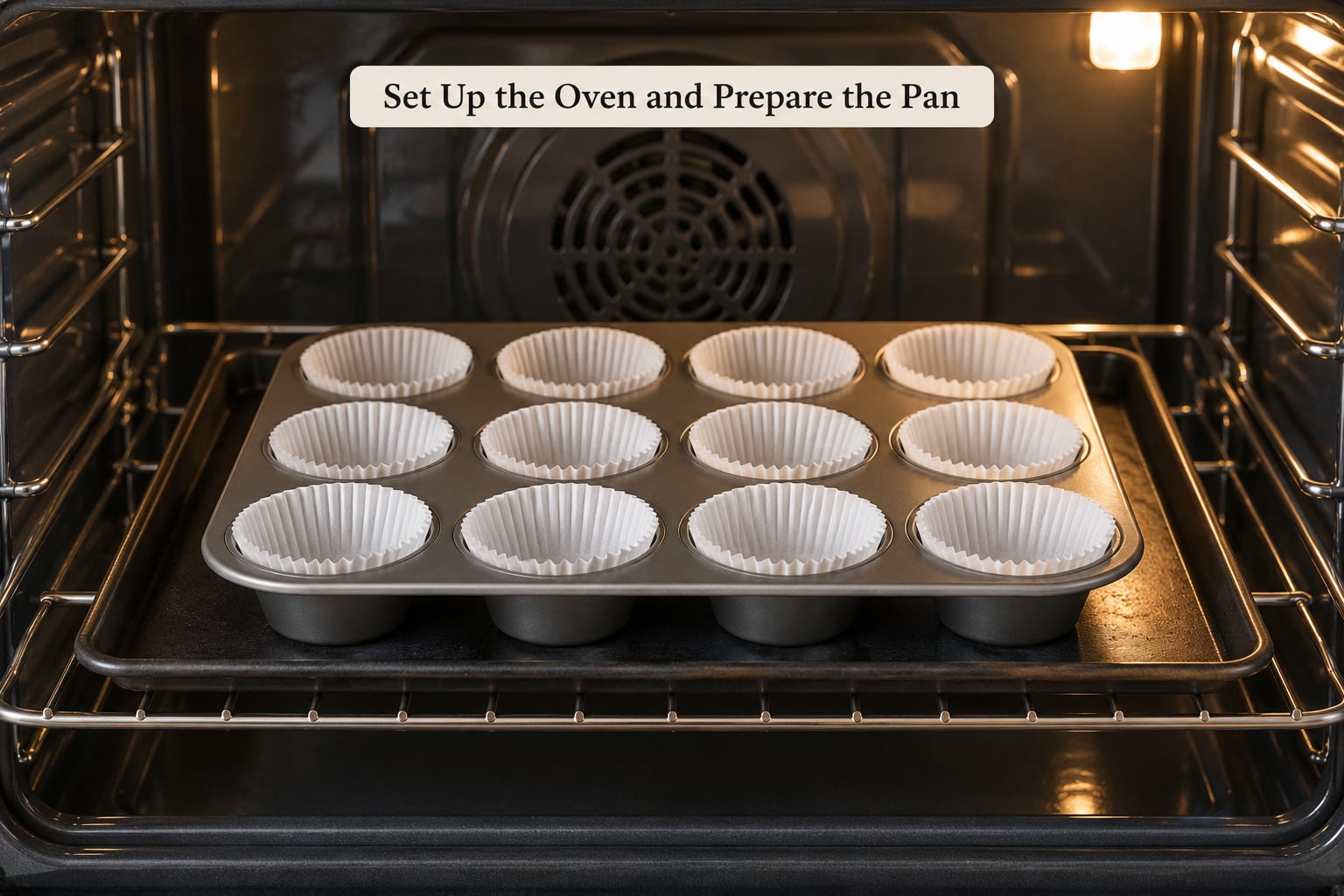
Preheat for a full 20 minutes, not the 10 most recipes imply, so the oven walls reach temperature along with the element. Put the rack in the center, never on the bottom or the top shelf.
Bake one batch at a time. Two trays in the oven cook unevenly because the fan and element cannot recover the heat fast enough between racks, and the tray nearer the element ends up shorter.
Press each liner into its cup so it sits flat against the metal with no air pocket underneath. An air pocket is a hot spot that browns the base before the rest of the batter has risen.
How do you know the setup worked? The pan is level, every liner stands upright, and the oven thermometer sits in the center of the chamber, not touching a wall.
Mix the Batter Without Overworking It
Weigh your flour and leavening, and sift the dry ingredients if you have time. Sifting breaks up any lumps of baking powder that would otherwise leave a pocket of weak batter in one cupcake.
Let the butter, milk and eggs come to room temperature. Cold fat slows the batter, so the outer edge sets before the center and pushes the middle into a dome.
Add the dry ingredients in two additions. On a stand mixer, use the lowest speed and stop the moment no dry flour is visible at the top, then scrape the bowl once. The batter should look slightly under-mixed and a little lumpy.
Overmixing develops gluten, which makes the batter stretchy and tight. That dense web pushes air into large uneven pockets instead of small even ones, so the cupcake rises short and heavy. Undermixing has the opposite problem: dry pockets of baking powder sit unactivated and the crumb sets unevenly. You are looking for the moment just past the flour disappearing, not a smooth batter. The same restraint matters in a taller bake, as we explain in how to make biscuits that rise tall.
Portion the Batter to Make Cupcakes Rise Evenly
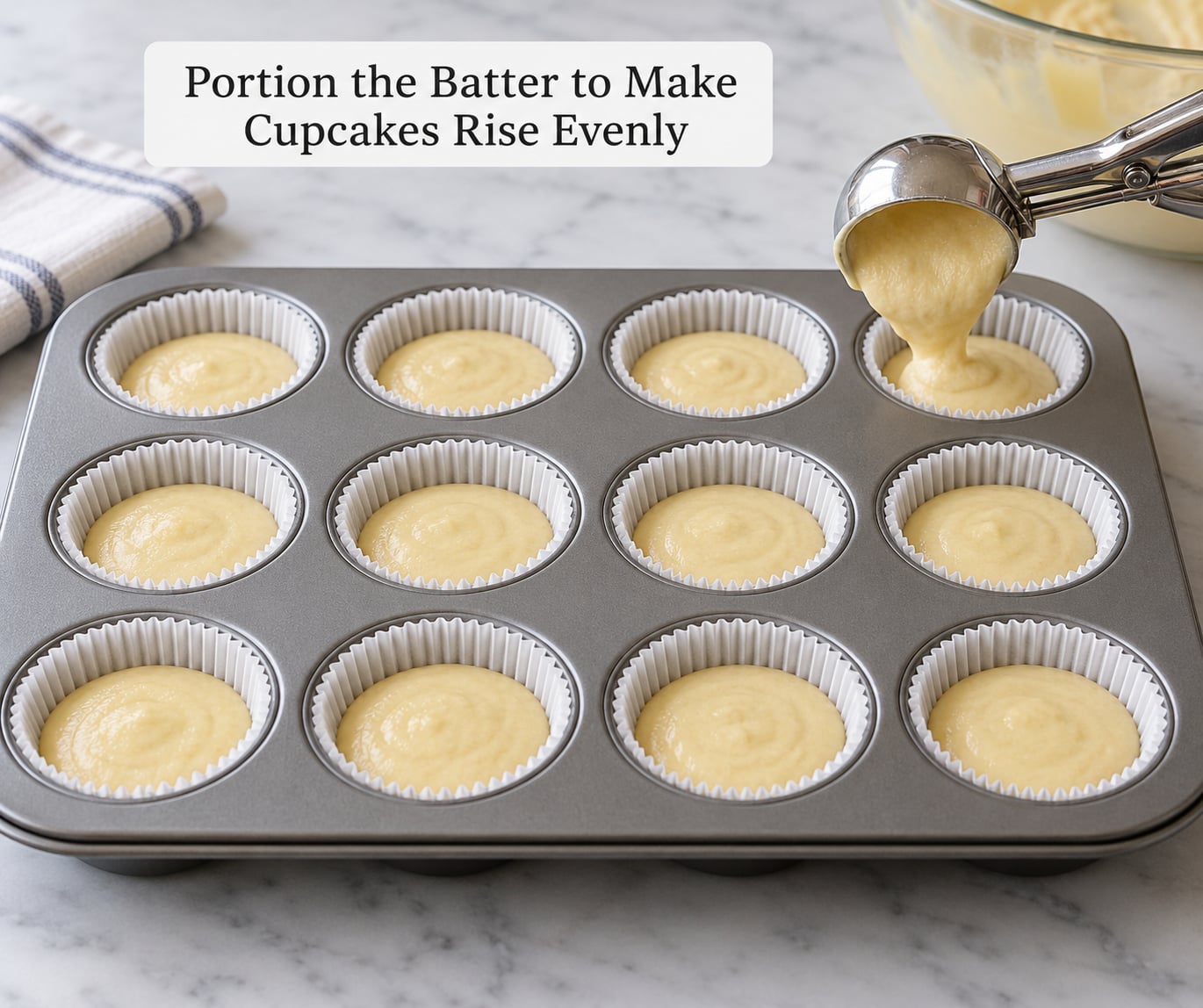
Stir the finished batter gently with a spatula, folding from the bottom a couple of times. Most uneven trays come from batter that sat while you portioned the first few cups.
Fill every liner to about two-thirds full. That is roughly three scant tablespoons, or just under a quarter-cup measure. For a standard paper liner, the finished cupcake should finish level with or a fraction above the top of the liner.
Go a little lower for chocolate or other heavy batters, around one-half full, because those batters hold onto more heat and steam and expand more than a vanilla batter. Half full leaves a cupcake that sits too low in the liner, and three-quarters full reliably overflows.
Scrape any drips off the flat surface of the pan between cups. Those spots smoke and can taste bitter once the batch cools.
Bake Until the Rise Is Set
Bake at 325F (160C) for an even, flatter top, or at 350F (175C) for a taller dome. Either works for an even rise as long as you do not open the door while the cupcakes are still climbing.
The first 8 to 10 minutes are oven spring, when the carbon dioxide from the leavening expands and steam lifts the batter fast. If you open the door in that window, you release the hottest air in the chamber, drop the temperature sharply and let the set structure collapse before it can hold itself.
If you must rotate the pan, do it once, quickly, in the last third of the bake. Skip it entirely if your oven heats evenly.
Test one cupcake from the center of the pan, not the edge. A skewer inserted to the base should come out with a few moist crumbs and no wet batter. If it comes out clean, bake two more minutes.
Press the top gently with a fingertip. It should spring back and leave no dent. That spring-back test catches the cupcakes that look done but are still raw in the middle.
Cool Without Trapping Steam
Leave the cupcakes in the pan for 10 minutes, then turn them out onto a wire rack. Pulling them out while hot and glossy tears the crumb, and the exposed soft interior collapses as it cools.
Cool them uncovered. A cake dome trapped under plastic or in a sealed box sweats, and condensation soaks the top and turns it sticky.
Wait until the cupcakes are completely cool before frosting, usually one to two hours. Frosting a warm cupcake melts and drags crumbs across the surface.
Common Mistakes
Most failures announce themselves visually, so match what you see to the cause:
- Dome or pointy top: the oven is running hot, the liners were overfilled, or you were too generous with the leavening. Drop to 325F (160C), fill to two-thirds, and check the temperature with an oven thermometer.
- Sunken center: the cupcake was underbaked, the door was opened early, or the sugar was weighed heavy. Bake until the skewer test and the spring-back test both pass, and stop peeking.
- Overflowing the liners: too much batter or too much leavening, often combined with a hot oven. Fill to two-thirds and check that your baking powder is still active by mixing a teaspoon into hot water; it should bubble hard right away.
- Cracked across the top: a dome that set fast and then split while the inside kept rising. Same fix as doming, plus a longer bake at the lower temperature.
- Dense and flat: overmixed batter, old leavening, or a recipe converted from a full cake without adjusting the leavening. Mix only until combined and replace any leavening older than about six months.
- Batches that rise differently: inconsistent portioning, two trays in the oven, or a bake sheet spun by a fan. One batch, one tray, equal scoops.
A few extras worth knowing. If you are above 3,000 feet, reduce the leavening by about a quarter and drop the oven temperature 15 to 25F, because air pressure affects how fast gas expands. From a boxed cake mix, add an extra egg and a couple of tablespoons of milk for a taller, more stable crumb, then follow the same fill rule. If a batch domes anyway, let the cupcakes cool completely, slice the dome off level, and use the scraps in the frosting.
Frequently Asked Questions
Why are my cupcakes rising unevenly?
Uneven rise almost always comes down to four things: an oven that is not really at its set temperature, liners filled to different heights, batter that was overmixed until the gluten tightened, or cupcakes that were pulled out before the crumb set. Check your oven with a thermometer, fill every liner to two-thirds, stop mixing when the dry ingredients disappear, and bake one batch on the center rack until a skewer to the base comes out with moist crumbs.
Should cupcakes rise above the liner?
For a standard paper liner, a good cupcake rises to level with the top of the liner, or a fraction above it. Rising well past the liner means the batter was overfilled or the leavening was too generous, and it usually comes out with a cracked dome. For a flatter top you can frost, pull the fill back to one-half to three-quarters full and bake at 325F instead of 350F.
How do I adjust cupcakes for a convection oven?
A convection fan cooks faster and dries the top out sooner, which is why fan mode quietly gives you pointy tops. Drop the recipe temperature by 25F (14C) so 350F becomes 325F, and check the cupcakes ten minutes earlier than the recipe says. Convection also evens out hot spots, so you no longer need to rotate the pan halfway through the bake.
Can I still use the batter if I overmixed it?
Yes, but expect a denser, chewier crumb rather than a tall rise. Overmixed batter still bakes and tastes fine, it just cannot trap the same amount of air, so the cupcakes come out shorter and heavier. Fill the liners only to one-half full so they do not spread past the liner, and bake until a skewer to the base comes out clean.
Do cupcake liners change how cupcakes rise?
Liners matter more than most recipes admit. Grease-proof liners release cleanly and keep the batter from climbing up the metal wall to form a rim or a pointy top, while cheap uncoated liners stick and drag the edges inward as the cupcake climbs. Paper also slows the outside of the batter, so it rises more evenly and bakes slightly faster than a bare metal cup.
Get an Even Rise on the Next Batch
Three things will fix most trays before you change anything else: weigh the leavening instead of scooping it, check your oven with a thermometer so you know the real temperature, and give every liner the same two-thirds fill. After that, mix only until the flour disappears, keep the door shut through oven spring, and leave the cupcakes in the pan for 10 minutes before they touch a rack. That is the whole routine behind learning how to make cupcakes rise evenly, and it works with the recipe you already use.