
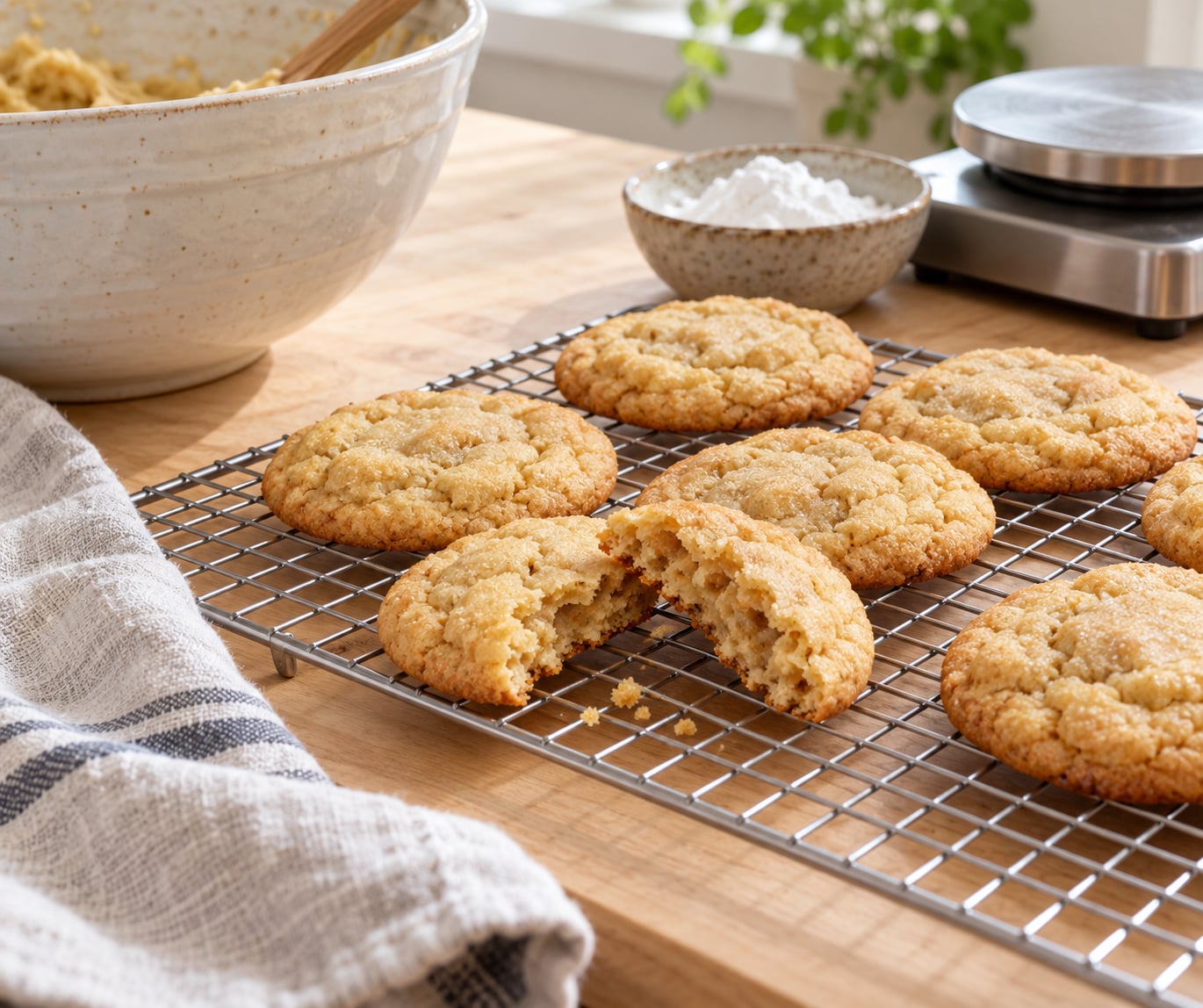
To make cookies chewy instead of crispy, keep more moisture inside the dough and pull the tray out before the cookies look done. That means more brown sugar, melted butter, less flour, a spoonful of cornstarch, and two minutes less baking time than the recipe calls for. Most crisp batches are overbaked, and that is the first thing to change.
Chew is not luck, though. It is the sum of a handful of variables you can read in a dough before it ever hits the oven, and each one of them is repeatable. I have baked enough batches that went rock-hard on the cooling rack to know the pattern well: same recipe, same oven, one change at a time until the texture lands where you want it.
If you want the fastest version of this, apply these in order and change nothing else:
- Pull the cookies two minutes earlier than the recipe says, while the centers still look slightly underdone.
- Swap most of the white sugar for brown sugar, roughly a 2:1 brown-to-white ratio.
- Melt the butter instead of creaming it soft, and add an extra egg yolk.
- Cut the flour by 1 to 2 tablespoons per cup and weigh it on a scale if you have one.
- Add 1 to 2 tablespoons of cornstarch per cup of flour for a tender, slightly gooey center.
- Rest the dough covered in the fridge for 24 hours before baking.
What You Need to Make Cookies Chewy Instead of Crispy
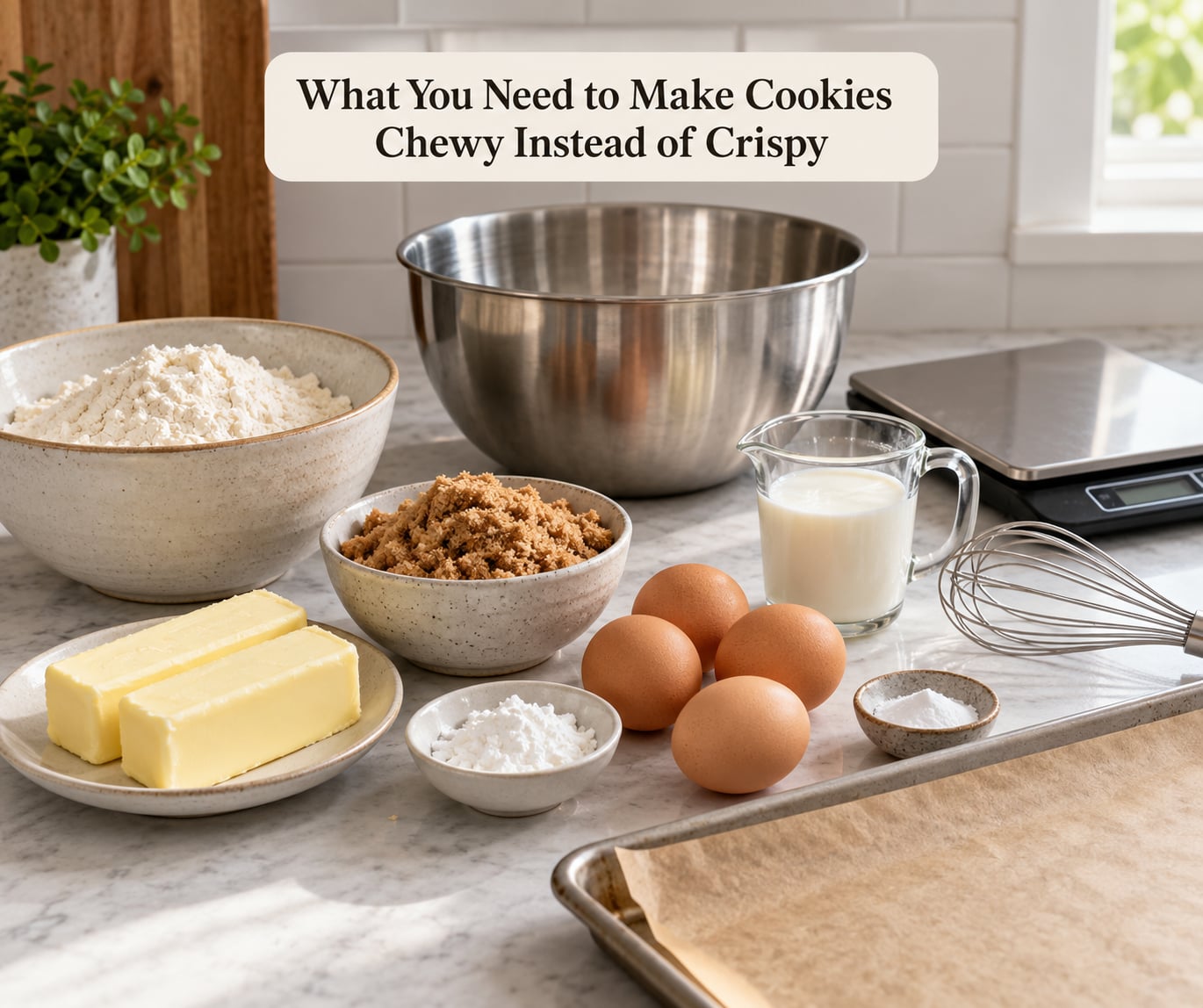
You do not need anything unusual. Every one of these ingredients is in a standard pantry, and the whole list matters less than the ratios between them.
Flour. All-purpose flour gives a tender crumb because it is only about 10 to 12 percent protein. Bread flour sits closer to 12 to 14 percent, and that extra gluten develops into a chewier, more elastic network. Either works, but weigh it if you can, since a heavy cup of packed flour is one of the quietest reasons a cookie bakes up dry. If you enjoy working dough by hand, our pizza dough guide covers the same weighing habits in more depth.
Sugar. Brown sugar is hygroscopic, meaning it pulls moisture out of the air and holds it in the cookie. White sugar is not, and it dissolves into a crisp shell. You want both: brown sugar for the chew, a little white sugar so the edges caramelize.
Fat. Butter, in one of two states. Melted butter spreads the dough thin and dense and chewy. Cold or softened butter creamed with sugar traps air and produces a taller, cakier cookie. Shortening has a higher melting point than butter, which bakers say leads to a puffier result, so butter is the better starting point.
Eggs and yolks. An egg is about 70 percent water, and an extra yolk adds fat and protein that set into a tender rather than bouncy crumb. Whole egg alone gets you part of the way.
Cornstarch. A tablespoon or two per cup of flour dilutes the gluten network slightly, which is exactly what you want in the middle of the cookie.
Milk or heavy cream. A tablespoon of either adds a little extra moisture that survives the oven.
Leavener. Baking soda browns and reacts with acid, pushing toward crisp. Baking powder is neutral in flavor and leaves a more tender crumb. Cream of tartar added to a soda recipe softens things further.
Equipment. A kitchen scale, a baking sheet, parchment paper or a silicone mat, and a wire cooling rack. The rack matters more than it sounds, because a cookie left on the hot pan keeps cooking from underneath.
Step-by-Step
Here is the order I work in, cheapest fix first. Change one thing per batch so you know which variable did the work.
Reduce the Flour and Keep the Dough From Drying Out
Too much flour is what turns a chewy cookie dry and crisp in the first place. It absorbs water that the sugar would otherwise hold, and the extra unhydrated pockets are exactly where crispness lives.
Put the flour on the scale and use the gram weight rather than scooping. If you have no scale, spoon it into the cup, level it with the back of a knife, and do not press it down. Then cut 1 to 2 tablespoons per cup of flour from whatever the recipe calls for and see how the dough feels. It should be tacky, not sticky.
Overmixing is the second half of this problem. Flour has no gluten until water and motion bring it together, and the first minute of mixing is where you want the gluten. After that, stop. The moment the last streak of white disappears, mix in the chocolate chips and stop again. Ten extra seconds of beating is the difference between tender and tough.
Use More Brown Sugar and Cornstarch for a Chewy Center
Brown sugar is the single biggest lever, and the reason is moisture. Dark brown sugar carries molasses, which is hygroscopic and sticky, so it holds water in the crumb instead of letting it migrate out and evaporate. Light brown sugar works, but dark gives you more chew and a deeper flavor.
Aim for a 2:1 ratio of brown to white sugar by weight. Recipes that go all brown sugar get very soft and very sticky, so the white sugar is there on purpose: it melts, caramelizes, and gives you those thin crisp edges that make a chewy center taste like a chewy cookie rather than a fudge square. This is the part most bakers get wrong, going all brown and wondering why the batch fused into one sheet.
Cornstarch is the second lever. One teaspoon per cup of flour is subtle, two tablespoons per cup is noticeable. It weakens the gluten structure just enough that the interior stays tender, and it slows how fast moisture leaves. The cost is spread, so add it after you have the other variables working, not on day one.
For a chocolate chip cookie, chocolate is dry and steals moisture from the dough. Two options: use semi-sweet chocolate instead of bittersweet, or add one extra tablespoon of milk or corn syrup to the batter. No corn syrup needed if the brown sugar ratio is right.
Add Fat and Moisture Without Making the Dough Soggy
Fat controls spread, and spread controls thickness, and thickness controls whether you are left with something tender or something wafer-thin that crisps in three minutes. Melted butter spreads more than creamed butter, which is one of the main reasons melted butter reads as chewy.
Melt the butter, cool it just until it is pourable, and whisk it into the sugar rather than beating it. Expect a dough that looks looser than you are used to. That is correct. If it pools under the chips, chill it 30 minutes and scoop it cold.
Add an extra yolk for fat and tenderness, and up to a tablespoon of milk or cream if the dough feels tight. Both add moisture, but the line is easy to cross: past that tablespoon, the dough spreads thin and bakes up crisp, which is the opposite of what you are after. If a dough is wet and sticky, the answer is more chilling and more flour, never more liquid.
On leavening, baking soda browns the dough through the Maillard reaction and dries it faster than baking powder. Switching a soda recipe to powder, or halving the soda and adding a quarter teaspoon of cream of tartar, keeps the lift but takes the edge off the browning.
Chill the Dough and Control the Baking Time
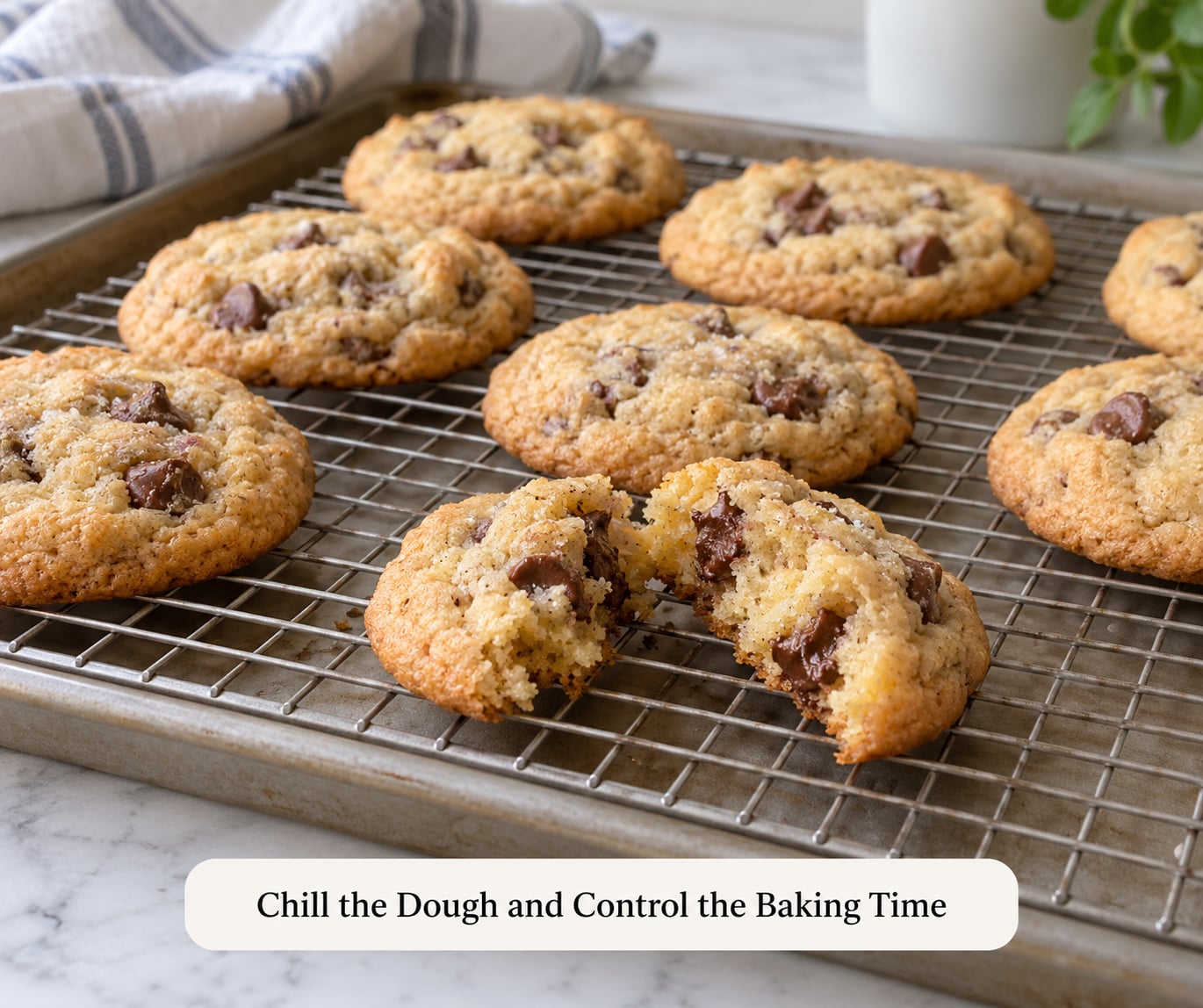
A 24 hour rest in the fridge, covered, does two things. The flour hydrates fully and the gluten relaxes, so the dough spreads less. More importantly for texture, the dough loses water to the fridge, and the sugar has more moisture left to work with at bake time. Bakers on baking forums report overnight chilling as the change that fixed chew for them more than any ingredient swap.
Go up to 48 hours if you want. Beyond about 72 hours you are on borrowed time: the dough dries out, and bakers who push past that point report cookies that spread flat and bake up paper-thin.
Then the part that matters most. Drop the oven to 325F, or 300F for convection, and bake less time than the recipe states. If you are baking in convection mode at a conventional temperature, cut it by 25F or shorten the time by 20 to 25 percent, because the fan dries the surface faster. This is the single most cited cause of hard cookies in forum threads.
Judge doneness by look, not by timer. The edges should be set and lightly golden, the center should still look pale and slightly puffed, and the whole tray should smell of toasting sugar rather than fully browned butter. Pull it two minutes early and let carryover heat finish the middle on the sheet, then move the cookies to a wire rack after 2 or 3 minutes. Cookies that cool on the baking sheet for ten minutes go dry on the bottom while staying soft on top.
| Ingredient | Crisp version | Chewy version | What changes |
|---|---|---|---|
| All-purpose flour | 150 g | 135 g | Less unhydrated flour, less crispness |
| Brown sugar | 75 g | 170 g | Molasses holds moisture in the crumb |
| White sugar | 150 g | 85 g | Keeps thin caramelized edges |
| Butter | 115 g, softened | 115 g, melted and cooled | Spread without the aerated cakiness |
| Egg | 1 large | 1 large plus 1 yolk | More fat and protein, tender set |
| Milk | 0 | 15 ml | Survives the oven |
| Cornstarch | 0 | 8 g | Softens the gluten network |
| Baking soda | 1 tsp | 1/2 tsp | Less browning and less spread |
| Bake | 350F for 12-14 min | 325F for 10-12 min | Center stays underdone in the oven |
That table is a standard two-cup-flour crisp cookie dough converted to chewy. Nothing exotic entered it, which is the point: five of the nine changes are subtractions.
Common Mistakes
Most failures are recognizable from the finished cookie, so read the symptom first and then look at the likely cause.
| Symptom | Likely cause | Fix |
|---|---|---|
| Crisp and crunchy all over | Overbaked, or the oven runs hot | Drop to 325F, pull two minutes early, verify with an oven thermometer |
| Crisp edges, rock-hard center | Baked too long in a hot oven; the center dried out last | Cut 2 minutes and tent the foil loosely if the tops brown before the middle sets |
| Spreads flat and thin | Too much sugar relative to flour, melted butter plus a hot sheet, or rested dough that dried out | Add flour back, chill the dough balls 30 minutes, bake on a cold sheet |
| Chewy for an hour, then rock hard | Stored uncovered, or left on the baking sheet | Airtight container with a slice of bread; never the fridge |
| Cakey and tall | Butter creamed too long, too much baking powder, or overmixing | Melt the butter, stop mixing early, use soda not powder |
| One cookie chewy, the neighbor dry | Uneven portions | Weigh every ball at 60 g or use a #40 scoop |
Two popular pieces of advice are worth discarding. Adding water to cookie dough does nothing useful; the dough already has more water than flour can hold, and extra liquid just makes it spread. And the instruction to refrigerate cookies is backwards, since cold is what dries starch out of a baked good.
Storing is simple. Let cookies cool completely, then put them in an airtight container with a slice of bread, which gives up its moisture to the cookies and keeps them soft for three to five days. Skip the fridge entirely. If you want to freeze them, freeze in single layers and thaw sealed on the counter.
And if a batch has already gone hard, it is not wasted. Microwave each cookie for 8 to 10 seconds, or put the whole container on low heat in the oven for five minutes, then cool it sealed. The starch has taken on moisture it cannot give back, and gentle reheating returns just enough of it to soften the crumb. Same idea as keeping a loaf of bread fresh, and the same idea behind our tips for stuffing that does not turn soggy.
Two more notes worth having in your back pocket. Bran, oats and other high-fiber additions drink moisture out of the dough, so expect to add brown sugar or a spoon of milk alongside them. And humidity changes the game: on a muggy day, chill longer and expect less spread; in dry winter air, add that extra tablespoon of milk.
While you are adjusting texture, it is the same moisture balance that keeps a salad from going limp. Our coleslaw guide covers the other side of the same idea.
Frequently Asked Questions
What makes a cookie chewy vs. crunchy?
Chew comes from moisture trapped in a tender sugar and gluten matrix; crispness is the same dough with that moisture driven off. Three variables decide which you get: sugar type sets how much water the dough can hold, fat type sets how thin the cookie spreads, and bake time drives off whatever is left. More brown sugar, melted butter, less flour and less baking time push the result toward chewy.
Should I melt the butter for chewy cookies?
Yes, melted butter is one of the two changes most likely to fix a crisp batch. Liquid fat spreads the dough more than creamed butter and produces a denser, chewier cookie with a slightly shinier top. Cool it until it is just pourable, whisk it into the sugar, then expect a looser dough. If it is too wet to scoop, chill it 30 minutes rather than adding flour.
How long do you bake cookies for a soft center?
At 325F, most doughs are done at 10 to 12 minutes, and the reliable cue is color rather than time: edges set and lightly golden, center still pale and puffed. Pull two minutes before the recipe’s stated time and let carryover heat finish the middle on the sheet. If you bake in convection mode, cut the temperature by 25F or the time by 20 to 25 percent.
Why are my cookies hard the next day?
Starch in a baked cookie keeps absorbing whatever moisture is left, so a cookie that is good at hour one can be dry by morning. Exposed air speeds that up. Store cooled cookies in an airtight container with a slice of bread and leave them at room temperature for three to five days. Refrigeration makes it worse, because cold pulls water out of starch faster.
Does corn syrup make cookies chewy?
Corn syrup does hold moisture, so a tablespoon works, but it is not the fix most batches need. A brown-to-white sugar ratio of 2:1 and one or two tablespoons of cornstarch per cup of flour do the same job without adding a strange ingredient to the bowl. If you do use corn syrup, cut the granulated sugar slightly so the batch is not too sweet.
Can I make chewy cookies without eggs?
Yes. Eggless dough gets its moisture from corn syrup, honey or a little extra milk, and its tenderness from cornstarch, so lean on both. Use 8 to 10 g of cornstarch per cup of flour and keep the brown sugar ratio at 2:1. Chilling matters more without egg protein holding the structure together, so rest the dough a full 24 hours and expect a slightly more fragile crumb.
Conclusion
If you only want the short answer to how to make cookies chewy instead of crispy, pull the tray two minutes early and watch the center instead of the clock. After that, work down the list: 2:1 brown to white sugar, melted butter with an extra yolk, flour weighed and cut back, cornstarch for tenderness, a 24 hour rest, then airtight storage with a slice of bread. Change one variable per batch and you will have the texture dialed in within three or four tries.