
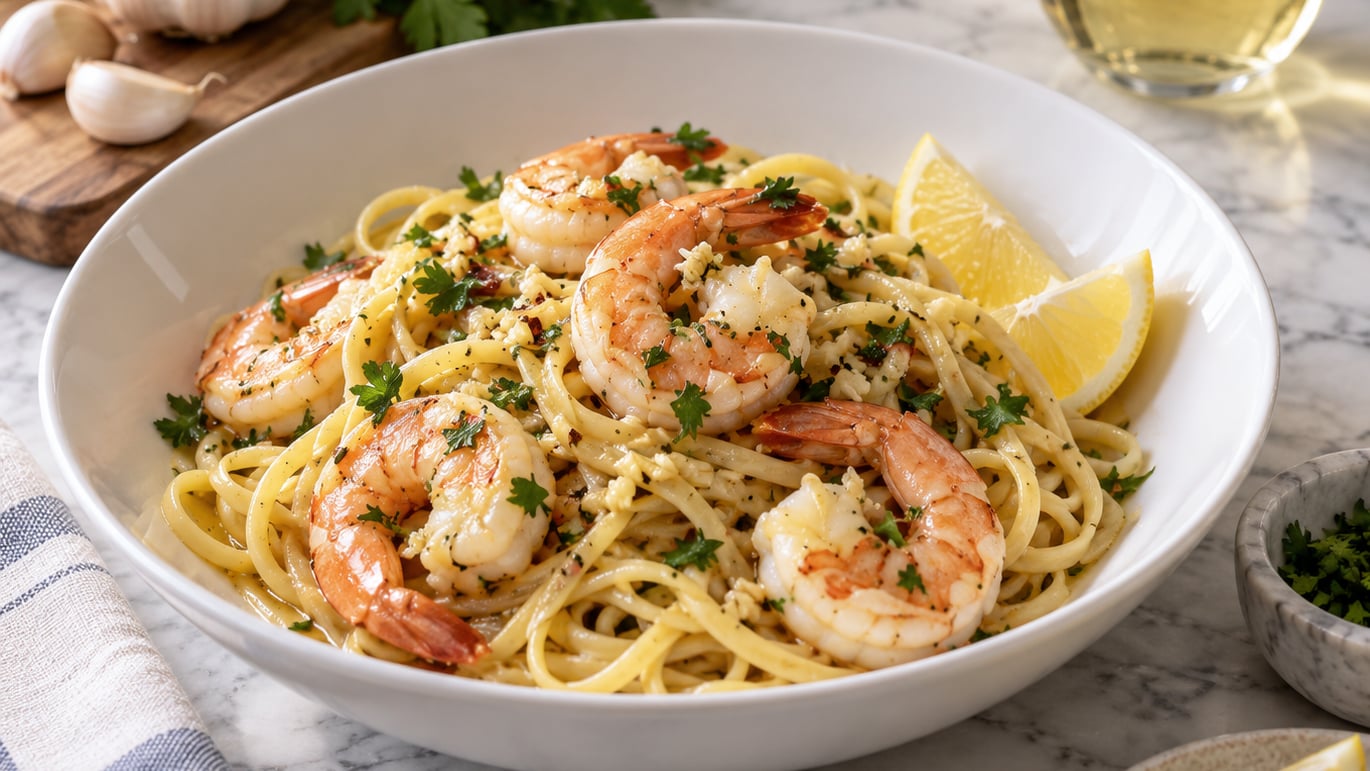
Shrimp scampi is shrimp cooked fast in a garlic, butter, white wine and lemon sauce. Traditionally it arrives at the table without pasta, but the pasta version you see on nearly every Italian-American menu is the same dish, tossed with noodles at the very end so the sauce clings to them.
This is how to make shrimp scampi with pasta the way a restaurant kitchen does it. Prep is 15 minutes, the pan work is 10, and the whole thing lands on the table in about 30 minutes on a weeknight. The one thing you have to respect is the clock on the shrimp. They go from raw to overcooked in well under two minutes, so everything else gets chopped, measured and lined up before the heat goes on.
Prep: 15 minutes | Cook: 15 minutes | Total: 30 minutes | Yield: 4 servings
If you have never made a sauce from scratch, the one technique that changes everything is the pasta water. That cloudy, starchy water you scoop out of the pot is what turns butter and wine into a glossy sauce that sticks instead of sliding off the noodles. More on that in a minute.
What You Need
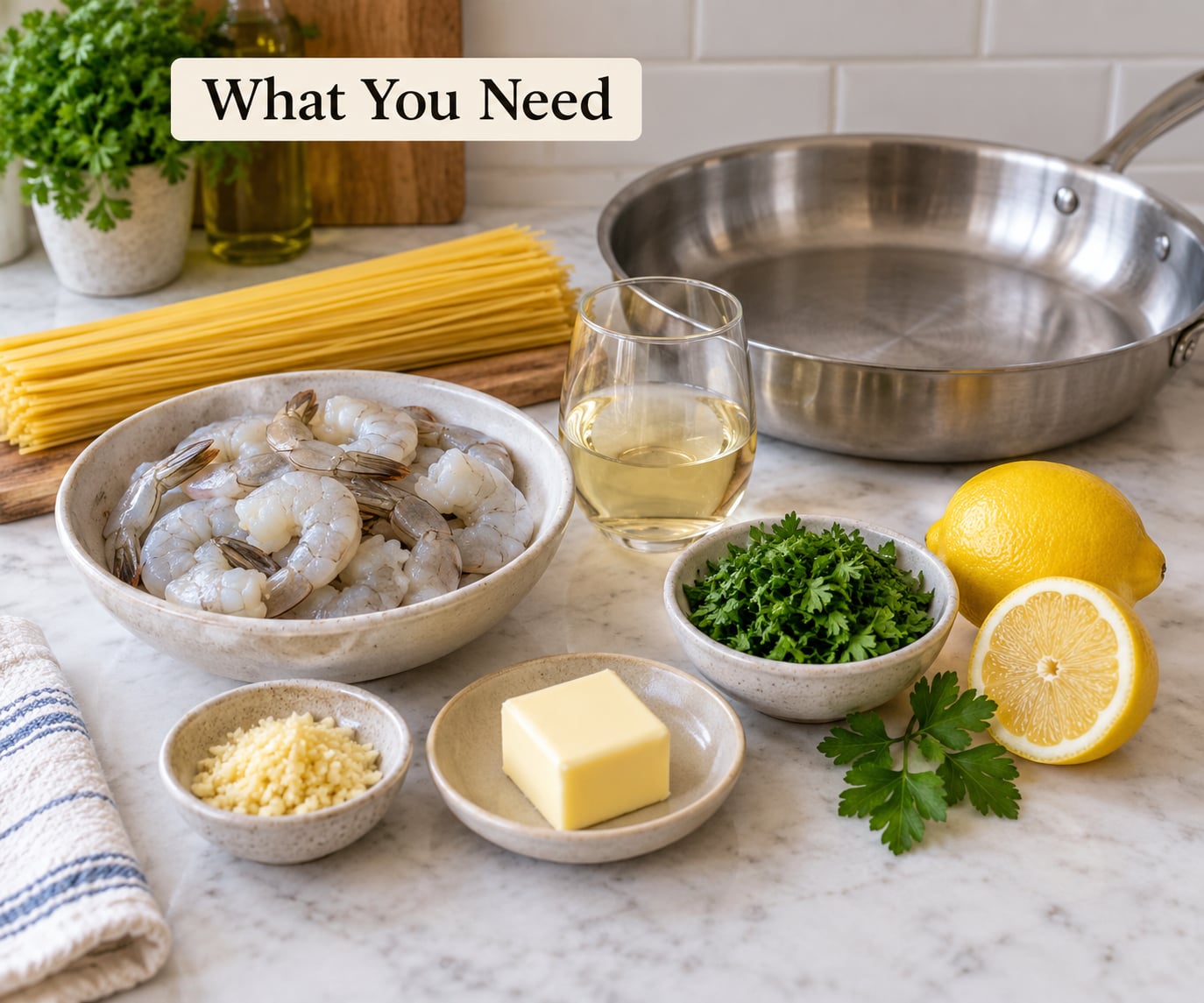
The ingredients
For four people, buy 1 pound of large shrimp, peeled and deveined. Large and jumbo shrimp hold up better to the heat than medium, and they are the size most restaurants use.
- 1 lb large shrimp, peeled and deveined, tails on or off
- 12 oz linguine or spaghetti
- 5 tbsp unsalted butter, divided
- 3 tbsp extra-virgin olive oil
- 4 garlic cloves, thinly sliced or finely minced
- 1/4 tsp crushed red pepper flakes, more to taste
- 1/3 cup dry white wine
- 2 lemons — one for juice and zest, one for serving
- 1/3 cup chopped flat-leaf parsley
- 1/4 cup finely grated Parmesan, plus more at the table
- Kosher salt and freshly ground black pepper
Shallots are a good addition and many Italian-American kitchens start with them, but they are not in the classic version. One small shallot, minced fine and cooked with the garlic, softens the edge of the raw garlic without muddying the dish. Skip it if you want the purist plate.
The equipment
You need one 12-inch skillet, a large pot for the pasta, a colander, a microplane or peeler for the zest, and a mug or measuring cup you can scoop pasta water with. A wide skillet is not a nice-to-have. A narrow pan drops the temperature of the butter the second the shrimp hit it, and then the sauce breaks.
Choosing the pasta
Linguine is the traditional pick for how to make shrimp scampi with pasta done the old-school way. Spaghetti works just as well and is what many home cooks reach for. Here is how the common shapes compare.
| Pasta | Cook time | Holds the sauce | Best for |
|---|---|---|---|
| Spaghetti | 9 to 11 minutes | Excellent | The most forgiving option; strands trap the sauce |
| Linguine | 10 to 12 minutes | Excellent | The classic choice, flat and wide |
| Tagliatelle | 10 to 12 minutes | Very good | Ribbon pasta with a little more chew |
| Fettuccine | 10 to 12 minutes | Fair | Too wide, so the sauce sits on top |
| Angel hair | 4 to 6 minutes | Poor | Too fragile to toss without breaking |
If you have the time and the inclination, a hand-rolled pasta makes this feel like a project instead of a Tuesday. Our guide to how to make fresh pasta without a machine walks through rolling sheets and cutting strands on a wooden table.
Choosing the wine, or skipping it
Any dry, light white wine works: Pinot Grigio, Sauvignon Blanc, unoaked Chardonnay, Pinot Blanc. Avoid anything sweet and avoid oaked Chardonnay, which reads as butter on top of butter. The wine cooks off almost entirely, so a cheap bottle will not hurt the dish.
| Substitute | Amount | How to adjust |
|---|---|---|
| Dry white wine | 1/3 cup | Use as written |
| Low-sodium chicken broth | 1/3 cup | Add 1 extra teaspoon lemon juice at the end |
| Clam juice | 1/3 cup | Naturally salty, so skip added salt |
| Water plus white wine vinegar | 1/3 cup water, 1 tbsp vinegar | Tastes brighter and more acidic than wine |
| Pear or white grape juice | 1/3 cup | Sweeter, so add a squeeze more lemon |
| Broth plus lemon juice | 1/3 cup broth, 2 tsp lemon | The best no-alcohol version |
How much shrimp to buy
Plan on 4 to 5 ounces of raw, shell-on shrimp per person. That sounds light until you remember a pound of shell-on shrimp yields close to half a pound of meat. For six people, buy 2 pounds. Keep the extra cooked shrimp cold and fold it into a salad later in the week, because it will not survive a second reheat with any tenderness left.
What to prep first
Everything except the shrimp can be done ahead. Chop the parsley, mince the garlic, zest the lemon, measure the wine and grate the Parmesan in the first ten minutes and set them in small bowls around the stove. Shrimp should be seasoned and patted dry right before the pan gets hot. Once the butter is in, you have about six minutes of work, and none of it allows for wandering off to find a peeler.
Step-by-Step
Shrimp reach 145°F (63°C) internal and are done at that point. Cook them past that and the protein tightens, which is exactly why they turn rubbery. So the timing below is a backstop, not the plan. Watch the shrimp, not the clock.
1. Cook the pasta until just tender
Bring a large pot of water to a boil and salt it until it tastes like the sea, about 1 tablespoon of kosher salt per gallon. Add the pasta and set a timer for one minute less than the package says.
You are pulling the pasta out one minute early on purpose. It finishes cooking in the skillet, and the difference between al dente and mush is usually about 60 seconds.
Before you drain, scoop out a full mug of pasta water and set it on the counter. Not a splash, a full mug. Then drain and return the pasta to the dry pot so it does not sit in water and turn gluey.
2. Saute the garlic and build the sauce
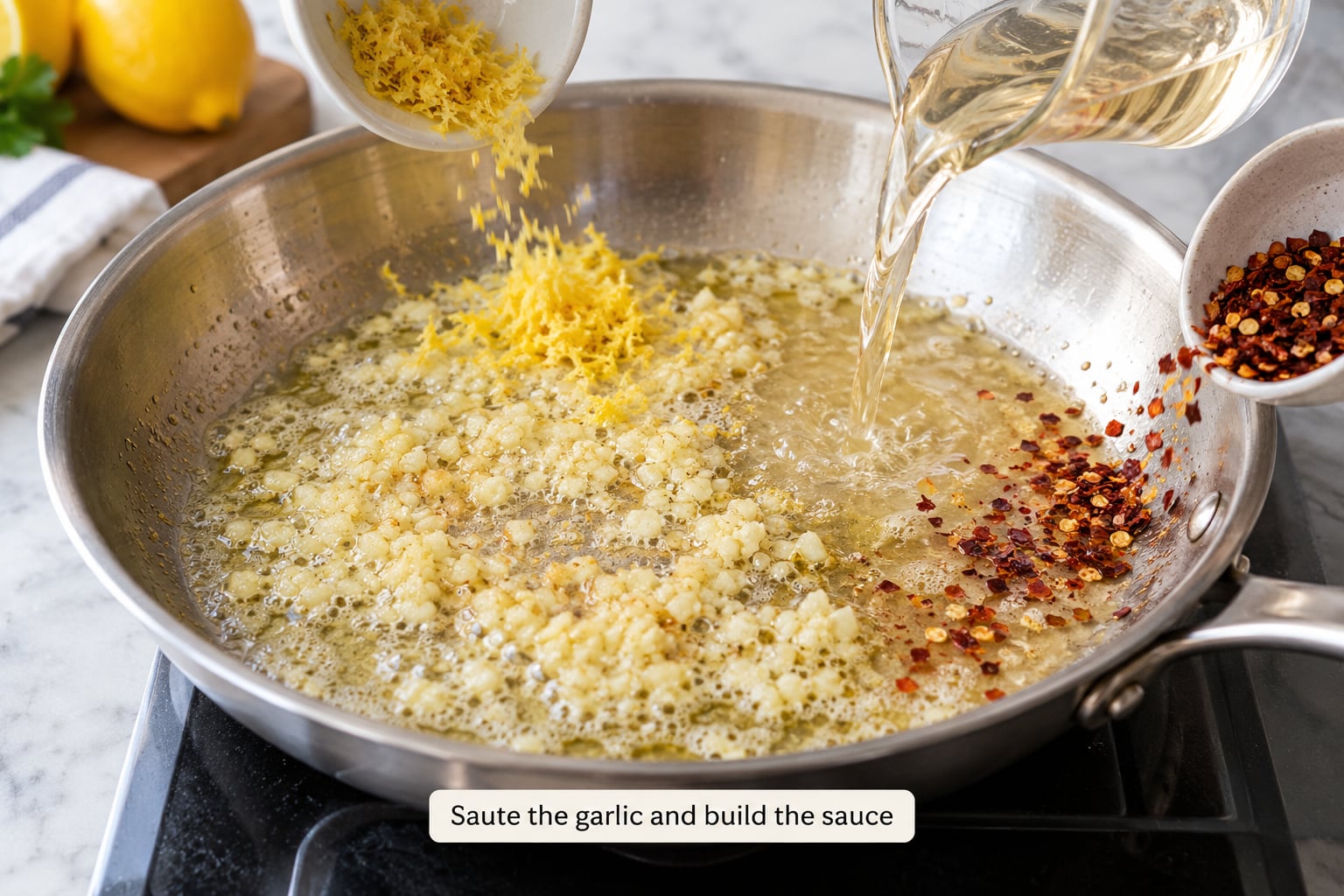
Set the 12-inch skillet over medium heat. Add 2 tablespoons of olive oil and 2 tablespoons of butter, then the garlic and red pepper flakes. Stir constantly for about 45 seconds, until the garlic is fragrant and barely blonde. If it turns golden brown, it will taste bitter by the time the sauce is finished. Pull the pan off the heat for a second if you are at all nervous.
Pour in the wine and scrape the bottom of the pan as it bubbles. Simmer until the liquid drops by about half, roughly 2 minutes. Add the lemon zest at this stage so it infuses into the wine rather than tasting raw.
This reduction is the whole point of the wine. It deglazes the garlic and pepper flakes off the pan and concentrates the liquid until it tastes like something more than wine.
3. Cook the shrimp until just opaque
Pat the shrimp dry with paper towels and season them with salt and pepper. Add the remaining olive oil to the skillet, then the shrimp in a single layer. Do not crowd them. If they touch, they steam instead of sear and nothing browns.
Cook for 60 to 90 seconds per side, and watch the shape. The shrimp are done when they turn pink, firm up and curl into a loose C. A tight O means they went too far, and there is no fixing it after the fact. Lift them out of the pan onto a plate the moment they hit the C stage.
They will carry a little residual heat into the sauce and finish cooking there, so take them out slightly early.
4. Toss the pasta with the shrimp and sauce
Lower the heat to medium. Add the pasta to the skillet along with the cooked shrimp, then add 1/2 cup of the reserved pasta water and toss hard with tongs for a full minute.
Watch the bottom of the pan while you toss. The sauce is ready when it looks glossy and a little milky, and it coats the outside of a strand rather than pooling underneath. Too tight, add another splash of pasta water. Too loose, let it simmer for another minute.
That cloudy water is doing the work. The starch particles scatter through the butter and wine and bind them into a stable emulsion, which is the difference between a sauce that clings and one that puddles in the bowl. Skip it and no amount of stirring will save you.
Take the pan off the heat, then stir in the parsley, the Parmesan, 2 tablespoons of cold butter and the juice of one lemon. Taste and season. The lemon usually needs more than you expect, and the Parmesan adds salt, so go light on both at first.
Serve immediately with lemon wedges and more Parmesan. The dish is at its best within a minute of leaving the pan.
Common Mistakes and How to Fix Them
Almost every bad shrimp pasta comes down to timing, pan temperature or skipped pasta water. The table below covers the ones people actually hit.
| Mistake | Why it happens | How to fix it |
|---|---|---|
| Rubbery shrimp | Cooked past 145°F, or left sitting in the hot pan while you make the sauce | Pull them at the loose C stage and let carryover heat finish them |
| Shrimp curl into tight O shapes | Same as above, usually a full extra minute of inattention | Pull earlier, and use two sets of tongs to flip them quickly |
| Sauce slides off the pasta | Not enough pasta water, or the pan was off heat so nothing emulsified | Toss over medium heat and add pasta water a quarter cup at a time |
| Greasy, separated sauce | Pan too cold, pan too crowded, or the emulsion broke | Push the pasta aside, add cold butter off the heat and whisk the liquid hard |
| Bitter garlic | Garlic added to a hot empty pan and left for more than a minute | Cook it with the fat over medium heat and pull it the moment it smells good |
| Watery sauce | Frozen shrimp released ice melt, or the wine was not reduced | Drain thawed shrimp thoroughly and simmer the wine until halved |
| Mushy, pasty pasta | Cooked to the full package time, then held in the pot | Pull one minute early and finish it in the skillet |
| Bland sauce | Not enough acid, or lemon added too early and cooked off | Add lemon juice at the end and taste before serving |
| Sauce tastes heavy | Too much butter, or Parmesan folded in before the emulsion set | Stretch it with pasta water and a little more lemon |
Three habits cover most of the above. Get everything prepped before the heat goes on, keep the pan wide and the flame at medium, and taste for acid last because it is the flavor people under-add most.
On frozen shrimp, thaw them in the fridge overnight and blot them dry. Thawing in cold water works in about 15 minutes, but you have to dry the shrimp thoroughly afterward or they water down the pan. Never thaw them on the counter.
Cooked shrimp scampi keeps in the fridge for 3 to 4 days at or below 40°F (4°C), and should not sit at room temperature longer than 2 hours. Reheat it in a buttered skillet over medium-low heat, adding a splash of water, and toss until just hot. Microwaving dries the shrimp out, and the microwave is the reason leftovers get rubbery the second time.
Frequently Asked Questions
What pasta is best for shrimp scampi?
Linguine is the classic choice because the flat, wide strands catch the garlic-butter sauce and the shrimp sit on top of them rather than falling through. Spaghetti is an equally good second choice and is actually harder to overcook by accident. Skip fettuccine, which is too wide to coat, and angel hair, which breaks apart when you toss it. Whatever you pick, pull it one minute short of the package time.
Can I make shrimp scampi without white wine?
Yes, and you will not miss it once the liquid reduces. Use 1/3 cup low-sodium chicken broth with an extra teaspoon of lemon juice at the end, or 1/3 cup water with a tablespoon of white wine vinegar for a brighter, sharper result. Reduce it the same way you would the wine, until the liquid drops by half. Clam juice also works and saves you on salt.
How do I know when the shrimp are cooked?
Look at the shape, not the clock. Raw shrimp are limp and gray. They are done when the flesh turns pink and opaque, the texture is firm, and the shrimp curl into a loose C shape. A tight O means they have cooked too long and the texture is already tightening. For a hard number, they are safe and done at 145°F (63°C) internal temperature.
Can I make shrimp scampi pasta ahead of time?
Prep ahead, not finish ahead. Chop the garlic, parsley and lemon zest, grate the Parmesan and measure the wine up to a day in advance, and keep them covered in the fridge. Cook the pasta and sauce only when you are about to eat, because the noodles turn pasty and the shrimp go rubbery in a fridge. Cooked scampi without the pasta freezes for up to two months.
How do I reheat shrimp scampi without drying it out?
Use a buttered skillet over medium-low heat, add a splash of water, and toss until the whole thing is just hot. The water loosens the sauce that has set in the fridge and steams the shrimp gently. The microwave heats the outside of the shrimp before the center, which is exactly how you get rubbery leftovers. If you must use a microwave, cover loosely and stop at 60 seconds.
Can I use frozen shrimp for this recipe?
Frozen shrimp works well and most supermarket shrimp is flash-frozen anyway. Thaw 1 pound in the fridge overnight or in cold water for about 15 minutes, then blot the shrimp completely dry on paper towels before seasoning. Any melt water left on them will thin your sauce and stop the emulsion. Skip the microwave for thawing, and never thaw on the counter.
Start with the mise en place, then pull the shrimp at the loose C shape. Everything else on this page is a detail you can adjust, but those two habits are what separate a restaurant plate from a disappointing one.
Once you have the base down, the same garlic-butter-sauce thinking travels well. A grain bowl built for dinner uses the same prep-ahead discipline for a completely different meal, and a heavier sauce turns into a creamy chili version if you swap the wine for cream and add chili flakes.