
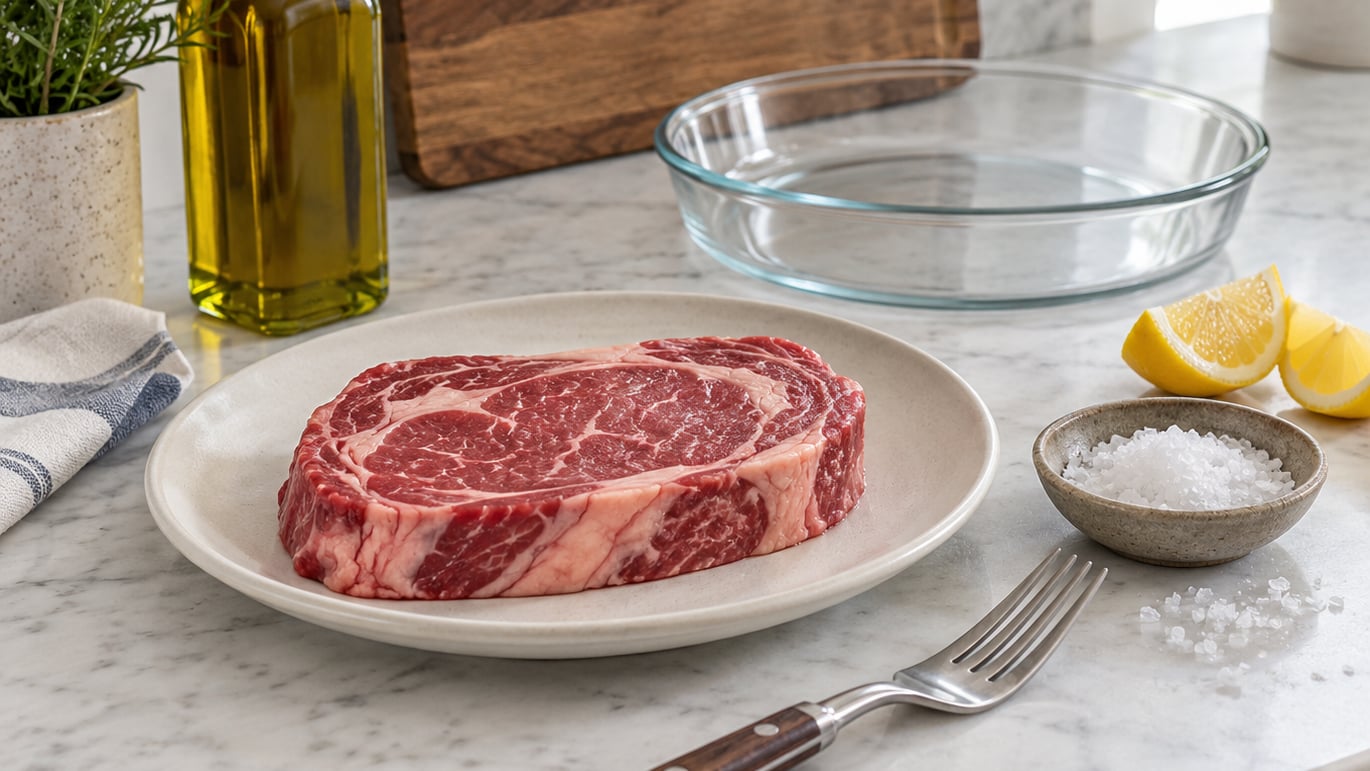
You do not need a meat mallet to fix a tough steak, and the honest version of how to tenderize steak without a mallet starts with your pantry. Salt, a short soak in acid, a coating of oil, a sturdy fork, and picking the right cut handle almost every case a mallet would, and most of them take less than an hour. The whole thing costs about ten minutes of active work plus whatever resting time you can plan around dinner.
The key is to start gentle and work up. A ribeye does not need help at all, while a flank steak needs real attention, and running a harsh method on both is how you end up with a mushy dinner.
What You Need
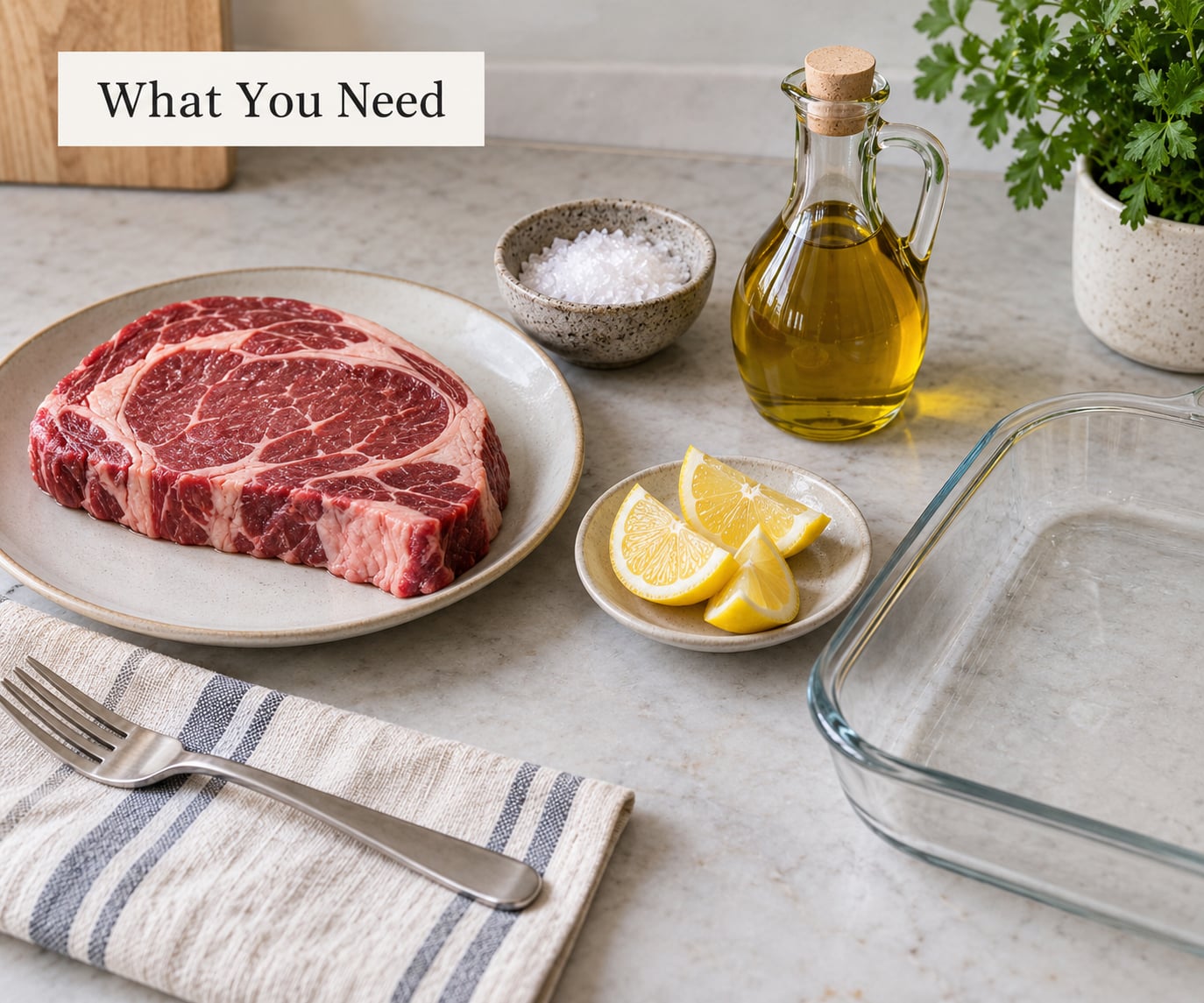
Almost everything on this list is already in your kitchen, and the methods are optional. Pick one or two rather than doing all five to the same steak.
- Coarse salt or kosher salt for dry brining. Table salt is twice as strong per teaspoon, so it works but needs half the volume.
- An acid such as lemon juice, red wine vinegar, rice vinegar, cider vinegar, or buttermilk.
- Baking soda for velveting, plus clean water for a mandatory rinse.
- A heat-stable oil such as olive oil, avocado oil, or grapeseed oil.
- A shallow glass or ceramic dish large enough to hold the steak in one layer.
- Plastic wrap or a sheet of parchment to hold the steak while you work on it.
- A sturdy fork or a multi-needle meat tenderizer.
Glass or ceramic matters more than people expect. Acid reacts with reactive metals like aluminum or bare copper and can pick up a metallic taste, so keep marinades in glass, enamel, or stainless steel.
How to Tenderize Steak Without a Mallet: Step-by-Step
Here is the same guide in one view. Methods are ordered from gentlest to most aggressive, and you rarely need more than one of them.
| Method | Time | Effort | Flavor impact | Best cuts |
|---|---|---|---|---|
| Dry brine with salt | 45 minutes to overnight | Almost none | None, just seasoning | Flank, skirt, London broil, bottom round |
| Short acid soak | 30 minutes to 2 hours | Minimal | Tangy, brightening | Flank, skirt, hanger, tri-tip |
| Oil coating or marinade | 30 minutes to overnight | Minimal | Rich, savory | Chuck, top round, any lean cut |
| Fork or multi-needle tenderizing | 5 to 10 minutes | Light | None | Chuck, round, brisket, skirt |
| Baking soda velveting | 15 to 30 minutes plus a rinse | Light | None if rinsed | Flank, skirt, round, stir-fry beef |
Run the steak to an internal temperature of 145°F (63°C) for a whole cut and let it rest before slicing, no matter which method you used. Tenderizing only makes the muscle easier to chew; cooking it properly is what makes it taste good.
1. Salt the Steak for Tenderness and Flavor
A dry brine is the best first move because it seasons the meat all the way through and firms up the surface so it sears better. Salt draws moisture out of the muscle and then draws it back in with the salt along with it, which tightens the proteins and gives the steak a slightly firmer, more steak-like bite rather than a slack one.
Use about half a teaspoon of kosher salt per pound of steak. Pat the steak dry with paper towels, salt both sides evenly, and leave it uncovered on a wire rack in the refrigerator.
For a weeknight dinner, 45 minutes is enough to notice a difference. Overnight is better, and it is the standard move for anything you are grilling over high heat, because the surface dries out and no longer sears.
Rinsing is not required. Unlike baking soda, salt does not leave an off flavor, so you can season and cook straight from the dry brine. If you brine in liquid instead, you have made a wet brine, which soaks the flavor out of the surface and dilutes the juices you want to keep. Dry brine is the right call for steak.
2. Use a Short Acid Marinade
Acid is the most direct answer to how to tenderize steak without a mallet, because it attacks the surface proteins directly. Lemon juice, vinegar, and buttermilk all lower the pH enough to loosen the muscle fibers, and a short exposure makes the outside noticeably more tender.
For a pound of steak, mix a quarter cup of lemon juice or vinegar with a tablespoon or two of oil, a smashed garlic clove, and whatever seasoning you like. Put the steak in a shallow dish, pour it over, and turn the steak once so all sides sit in the liquid.
Keep the total time between 30 minutes and 2 hours. That is the range home cooks converge on for skirt and flank steak, and going past it flips the result: the surface turns gray, the outer layer goes mealy, and the interior no longer shows an even gradient of doneness. You end up with a steak that is soft on the outside and still chewy in the middle.
Acid also seasons the surface, which means it competes with salt. Salt the steak lightly instead of using a full dry brine, or skip one of the two methods rather than both.
If you are serving this with wine, how to pair wine with steak for beginners covers which bottles handle a marinated cut better than an unmarinated one.
3. Add Oil or Marinade for Moisture
Oil does not break anything down, but it reduces how much moisture the steak loses in the pan. Fat coats the surface, slows evaporation, and gives lean cuts like round and top sirloin a chance to stay juicy through a hot sear.
Coat the steak lightly on all sides and let it sit 30 minutes at room temperature, or refrigerate it for up to a day. Use an oil that tolerates heat, so olive, avocado, grapeseed, or canola. Butter and other dairy fats burn before a steak hits searing temperature.
For an oil-based marinade, combine a quarter cup of oil with a teaspoon of sugar or honey, a teaspoon of low-sodium soy sauce, and a grated garlic clove. The sugar and soy do the seasoning work and the oil does the moisture work.
Watch the exterior. Oil plus a wet marinade can leave the surface too slick to sear, and it will brown unevenly or steam instead of crust. Pat the steak dry again right before it hits the pan.
4. Use a Fork or Multi-Needle Tenderizer
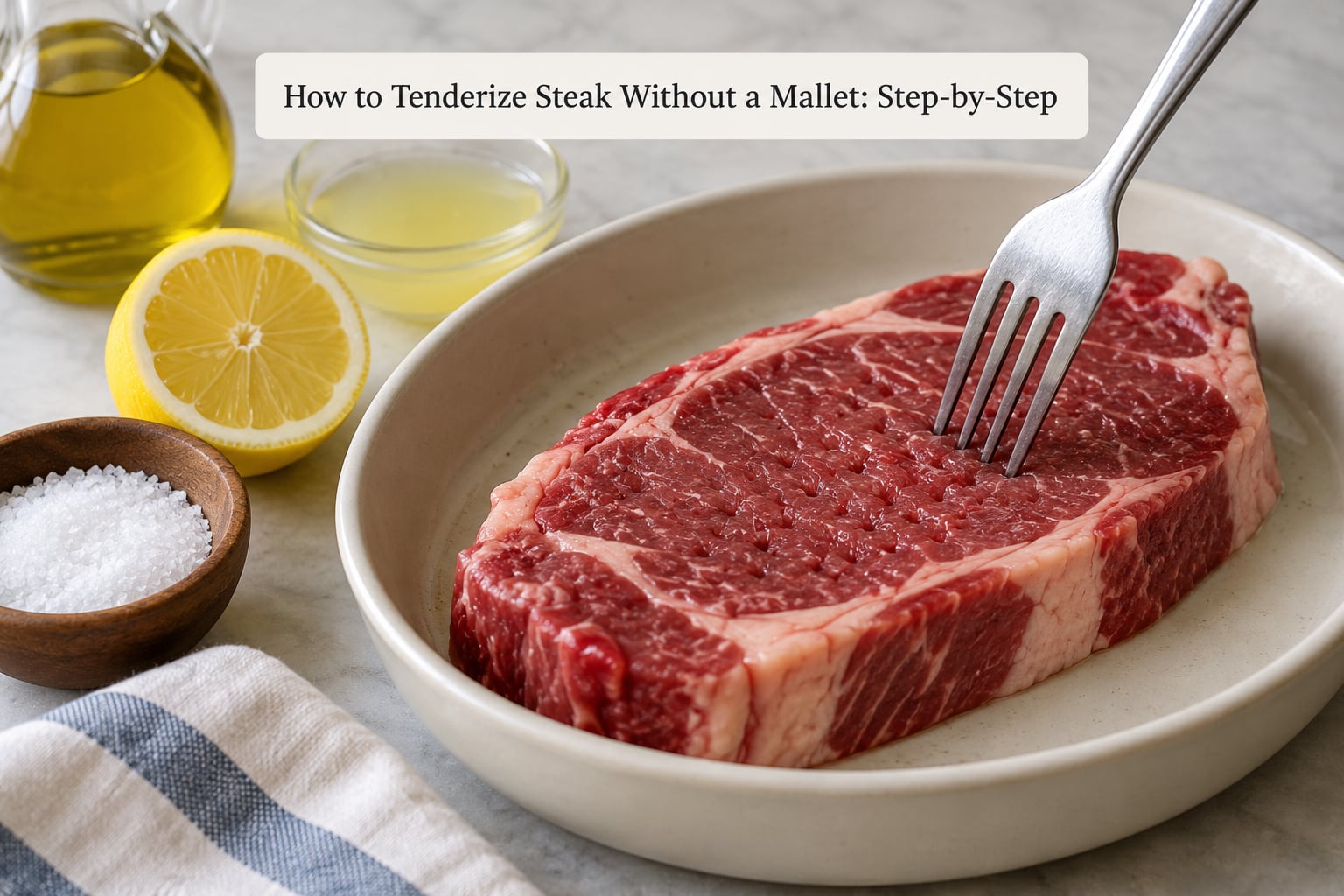
A sturdy fork is the tool most people already own and it works better than people expect. The tines reach past the surface and into the muscle, severing the long fibers in a way a blunt pounding never manages, which is why a fork often beats a mallet for thin cuts.
Put the steak between two sheets of plastic wrap or on a sheet of parchment so it does not slide and the juices stay on the counter. Pierce the surface all over with the fork, working in rows about half an inch apart. Turn the steak and repeat on the other side.
Push with moderate, steady pressure. You want the tines to sink roughly an eighth of an inch, not to skewer the steak or tear holes in it. Deep holes mean juices escape into the pan and you lose the thing you were trying to save.
A multi-needle tenderizer is the same idea with sharper blades and less effort. It is one of the cheapest upgrades you can make, and it works best on thick, tough cuts like chuck and brisket where a fork would take a while.
Scoring works too, and it is worth knowing because it costs nothing. Cut shallow lines about a quarter of the way into the steak, on one diagonal, then a quarter turn and cut the second set at right angles to form a crosshatch. The cuts should barely open up. Deep crosshatch scoring is for a grilled skirt steak you want to char, not for a thick roast.
For thick and heavily worked cuts, you can also press the flat bottom of a cast iron skillet, the base of a heavy saucepan, a rolling pin, or the back of a chef’s knife through the steak inside a plastic wrap sleeve. Wrap it, lay it on a cutting board, and press down with even weight rather than swinging. This is the one place where the rolling pin genuinely earns its drawer space.
5. Choose the Right Cut and Cooking Method
Sometimes the honest answer is that you picked the wrong steak. Ribeye, filet, and New York strip are already tender from short intramuscular fat and minimal muscle use, and any aggressive treatment just dries them out or turns the texture to pudding.
Lean and heavily worked cuts are the ones that need help: flank, skirt, hanger, tri-tip, London broil, chuck, and bottom round. Round in particular is a leg muscle that spends its life moving, so it carries a lot of connective tissue and collagen that turns to gelatin under slow, moist heat.
Baking soda is the most effective pantry option for those cuts and worth its own explanation. Roughly one teaspoon per pound, rubbed into the surface, left 15 to 30 minutes, then rinsed thoroughly under cold water and patted dry. Baking soda raises the surface pH just enough that the proteins cannot bond tightly to each other, which is the same principle Chinese restaurants use in velveting beef for stir-fries.
You will see advice ranging from 6 minutes to a full day. Six minutes barely does anything; overnight starts breaking down the surface itself and you get a chalky, soapy coating. 15 to 30 minutes is the defensible middle, and the rinse is not optional. Skip it and you will taste it immediately, and that metallic note is the single most common complaint people have about this method.
Cooking method does the other half of the work. Anything with a lot of connective tissue wants low heat and time: braise chuck in the oven at 300°F (150°C) until it gives way to a spoon, or give a flank steak a long, gentle sear and let it rest. Take a whole cut off the heat at 125°F (68°C) for medium rare and let it sit 5 to 10 minutes before slicing, because the juices need to redistribute.
Cutting against the grain is the free technique that helps more than any marinade. Find the direction the fibers run across the raw steak, then slice perpendicular to them. A flank steak sliced correctly feels like it transformed even with nothing else done to it.
For the pan part, see how to cook a steak in a cast iron skillet for searing times by thickness. If you are working with leftovers rather than raw meat, how to reheat steak without overcooking it has the low-and-slow method.
Common Mistakes
Most disappointing steaks come down to one of these six.
- Salting too late. A steak salted two minutes before the pan gets a seasoned crust and nothing else. Give kosher salt at least 40 minutes, or go overnight.
- Soaking in acid for hours. Past about 2 hours the surface goes gray and mealy and the doneness gradient flattens. Acid is a surface treatment, not a soak.
- Pounding too hard. Force turns a steak into a flat, torn piece of meat that dries out on contact. Press through plastic wrap with steady weight instead of swinging.
- Piercing without a tray. Fork holes with nothing underneath spill the juices you were trying to keep in the meat. Work over a board lined with plastic wrap or parchment.
- Treating tenderizing as cooking. No method makes a tough cut safe to eat rare-sounding on the outside. Cook to 145°F (63°C) for a whole cut and use a thermometer.
- Running harsh methods on tender cuts. Baking soda, acid, and fork work all damage ribeye and filet. Salting is enough there.
Two more that catch people out: marinating at room temperature for a full afternoon, and mixing a salt dry brine with a salty marinade so the steak ends up inedible. Both are easy to fix by using one or the other, not both.
Frequently Asked Questions
What can I use instead of a meat mallet to tenderize steak?
A sturdy fork is the best substitute for most cuts. Pierce the steak through plastic wrap or parchment, working in rows about half an inch apart, and push the tines roughly an eighth of an inch deep. A multi-needle tenderizer, the flat bottom of a cast iron skillet, a heavy saucepan, a rolling pin, or the back of a chef’s knife all work the same way for thick cuts.
How long should a steak marinate in acid before it turns mushy?
Keep total marinating time between 30 minutes and 2 hours for a thin steak such as flank, skirt, or hanger. Acid only works on the surface, so a long soak adds nothing after that point. Past a few hours the outer layer turns gray and mealy and the interior loses its even gradient of doneness, which leaves you with a soft edge and a chewy middle.
Does baking soda really tenderize steak, and does it have to be rinsed off?
Yes, and yes, it must be rinsed. Roughly one teaspoon of baking soda per pound of meat, rubbed in and left 15 to 30 minutes, raises the surface pH so proteins cannot bond tightly. Rinse thoroughly under cold water and pat dry before seasoning. What you skip is the rinse, you get a metallic or soapy coating that most people describe as the reason they stopped using it.
Does poking a steak with a fork actually tenderize it?
It does, particularly on thin cuts, and the tines reach deeper than a blunt mallet face does. The real risk is going too hard, which tears the surface and lets the juices run out onto the board. Moderate pressure, about an eighth of an inch deep, on a steak that is not sliding around, gives you a noticeably more tender result without the loss.
Which steak cuts do not need tenderizing at all?
Ribeye, filet, and New York strip are naturally tender and gain nothing from acid, baking soda, or fork work, which usually just dries them out or makes the texture mealy. A light dry brine is all they need. Save your effort for lean, heavily worked cuts: flank, skirt, hanger, tri-tip, London broil, chuck, bottom round, and brisket.
Conclusion
Start with a dry brine of about half a teaspoon of kosher salt per pound, 45 minutes to overnight, for any lean cut. Add a short acid soak of 30 minutes to 2 hours when the cut is flank or skirt, and reach for the fork or baking soda only when the cut is genuinely tough.
Three habits do most of the work: pat the steak dry before it hits the pan, use the gentlest method that solves the problem instead of all of them at once, and let the meat rest 5 to 10 minutes before you slice it. That is how to tenderize steak without a mallet, and it costs you a fork and a bit of patience rather than a drawer full of gear.