
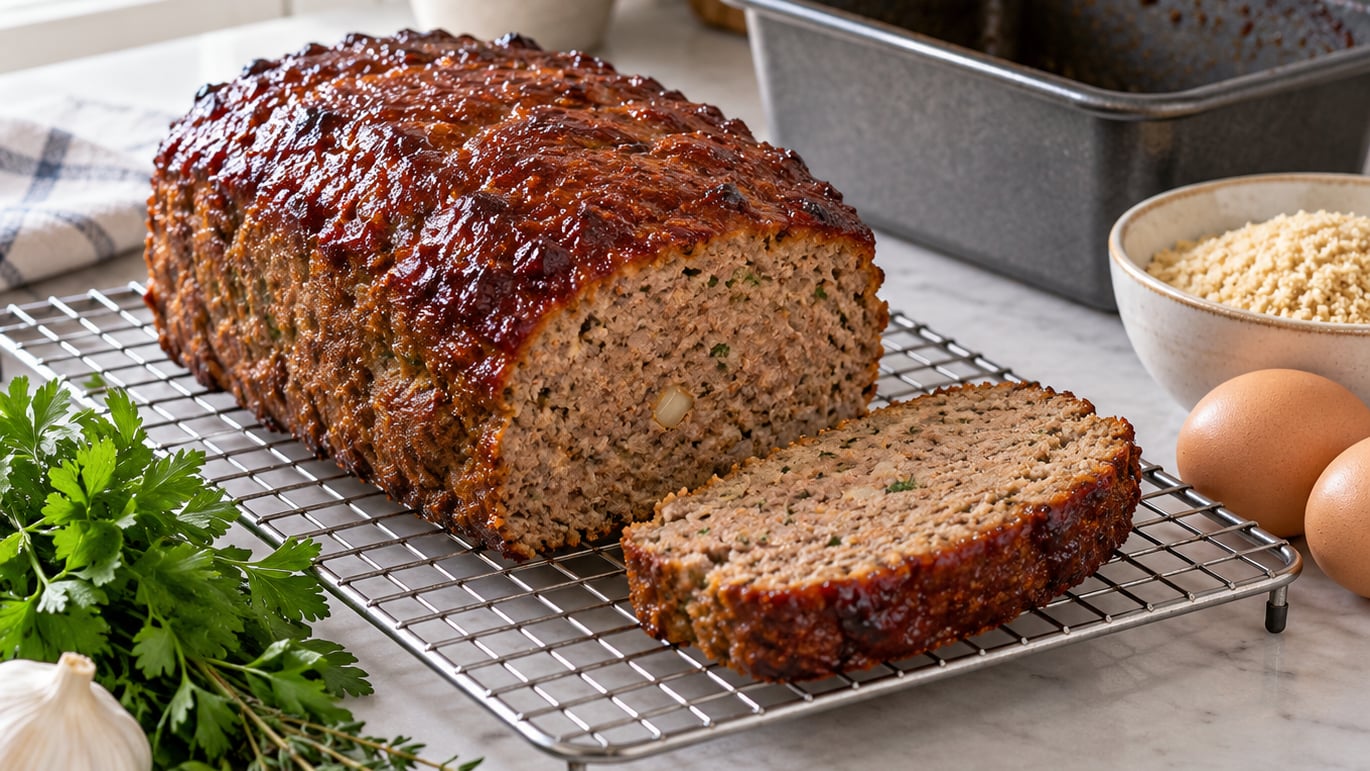
How to make meatloaf that holds together comes down to four things: one egg and a third to a half cup of breadcrumbs for every pound of ground meat, a meat blend with enough fat to stay moist, gentle mixing, and a ten minute rest before you cut it. Get those right and the loaf slices cleanly, holds its shape on a plate, and reheats without crumbling.
The reason most meatloaf crumbles is not the oven. It is a mixture that never had a scaffold to hold it together, or one that was worked too hard once the binder went in. Both are easy to fix, and both are fixable on the second loaf, not the third.
Here is the equipment and the short method, then the mistakes that cause the crumbling and how to correct each one.
Table of Contents
- What You Need
- Step-by-Step
- 1. Choose a meat mixture with enough fat
- 2. Toast the breadcrumbs for better structure
- 3. Hydrate the binder before adding the meat
- 4. Mix gently and stop when the ingredients look even
- 5. Rest the mixture before shaping
- 6. Shape the loaf tightly and leave room for cooking
- 7. Bake to the right temperature and rest before slicing
- Common Mistakes
- Frequently Asked Questions
- Conclusion
What You Need
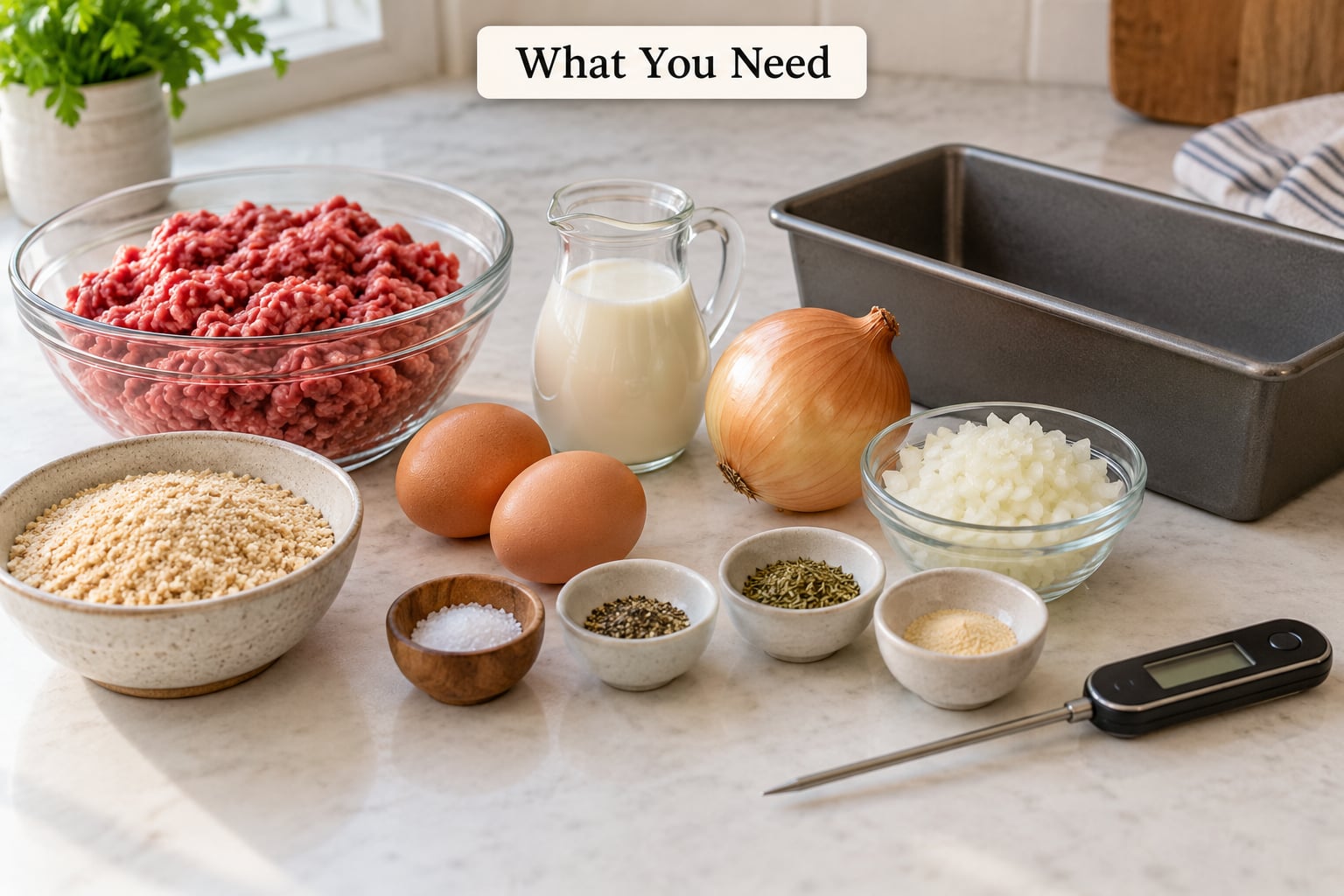
Everything below is per pound of ground meat, so you can scale it without thinking. If you are working from a two pound recipe, double each item.
- Ground beef or a beef and pork blend at roughly 80/20, which is 80 percent lean. Ground chuck is a good buy for this since it carries more fat through the grind.
- One large egg per pound of meat. It supplies protein that sets as it bakes and glues the crumbs to the meat.
- One third to one half cup of dry breadcrumbs per pound. Panko, crushed saltines, and rolled oats all work in the same slot.
- Two to three tablespoons of milk, broth, or water to hydrate the crumbs before they meet the meat.
- Finely diced onion, one small per pound, plus garlic, salt, black pepper, and a splash of Worcestershire sauce.
- A 9 by 5 inch loaf pan lined with parchment paper, leaving an overhang on the short ends so you can lift the loaf out without gripping it.
- An instant-read thermometer. Ground meat is done at 160°F, and that reading is also your best signal that the loaf has set enough to hold its shape.
If you like the texture of stuffing as a reference point for how much bread a meat dish can absorb, our guide on how to make stuffing that is not soggy covers the same hydration idea from the other direction.
Step-by-Step
1. Choose a meat mixture with enough fat
Structure and moisture both come from fat. At 80/20, the lean protein has something to cling to and there is enough rendered fat to keep the loaf tender without the matrix collapsing into crumbs. Ground turkey and 90 percent lean beef are the two that most often fail, and both can be rescued with extra binder rather than extra liquid.
A beef and pork blend works well for the same reason the fat does. If you are after the juiciness question more broadly, how to make burgers that stay juicy covers why fat content matters in a formed patty, which is the same principle applied to a loaf.
2. Toast the breadcrumbs for better structure
Dry breadcrumbs toasted in a dry skillet for two or three minutes, until they smell toasty and look a shade darker, hold more liquid and give the loaf a firmer crumb. Toast them in butter or oil if you want the nuttier flavor, but drain any excess fat before they go into the bowl, or you will be back to a wet mixture.
No skillet? Put them on a sheet pan in a 350°F oven for about five minutes. Oats behave the same way and toast just as quickly.
3. Hydrate the binder before adding the meat
Mix the crumbs and the milk first and let them sit for three to five minutes until the liquid is absorbed and the crumbs look damp. This is the classic panade method, and it is the single change that fixes the most dry, dense meatloaves, because the crumbs arrive at the meat already carrying an even share of moisture instead of pulling it out of the meat during the bake.
The practical ratio is one third to one half cup of crumbs to two tablespoons of liquid per pound. Go past that and the crumbs turn to paste, which makes the loaf heavy and prone to splitting. A good check: squeeze a handful. It should clump and hold its shape without water dripping out.
4. Mix gently and stop when the ingredients look even
Add the meat to the hydrated crumbs and work it just until the mixture turns uniform and no bright dry pockets of egg or crumb remain. Then stop. Overworking the meat develops the proteins further and squeezes out fat, which gives you a dense, tight, rubbery loaf that genuinely crumbles when sliced, which is the opposite of what you wanted.
Mustard and Worcestershire sauce help here for a chemical reason, not a flavor one. They are mild emulsifiers that keep fat and water suspended in the mix instead of letting the fat pool at the bottom of the pan. That idea shows up again in how to make a simple vinaigrette that emulsifies.
The success cue is a squeeze test: grab a handful and squeeze. If it holds together in a rough ball, you have enough binder. If it crumbles before you finish the squeeze, add another quarter cup of crumbs.
5. Rest the mixture before shaping
Cover the bowl and put it in the refrigerator for 15 to 30 minutes. Cold, hydrated crumbs and egg firm up in that window, and the mixture becomes far easier to press into a pan without tearing.
Worth doing even when you are in a hurry. A cold mixture that leaves the pan intact in the oven rarely breaks on the cutting board.
6. Shape the loaf tightly and leave room for cooking
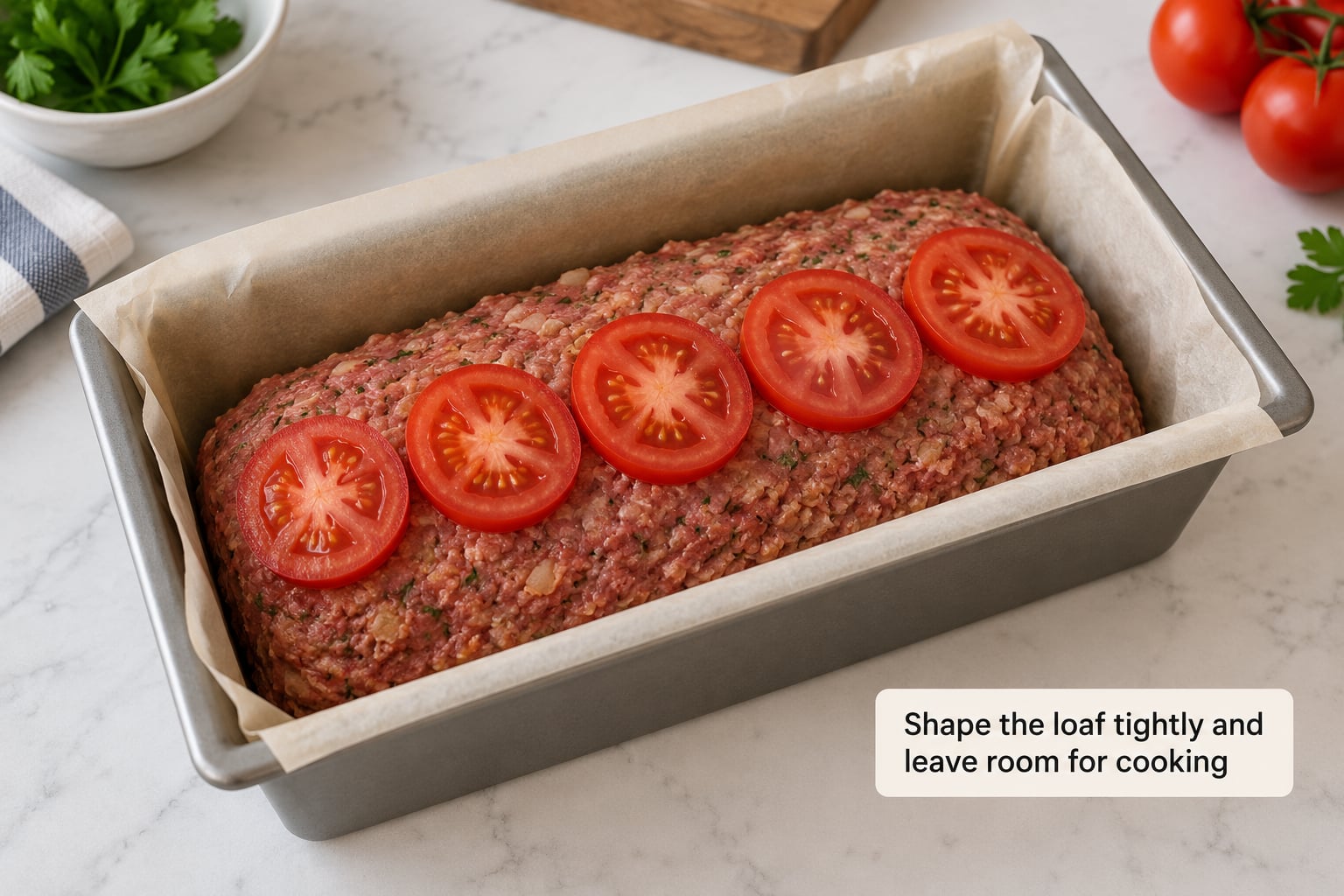
Pack the mixture into the pan with your hands and press firmly but without force. Firm is the operative word. You want no visible gaps of air inside the loaf, because those gaps are where a slice snaps, but you also do not want to compact it into a brick.
Fill the pan no more than three quarters of the way up. Meat shrinks as it cooks, and a loaf that starts flush with the rim will dome, crack along the top, and push out of the pan. A smaller, thicker loaf also holds together better than a thin, wide one, so two smaller loaves beat one oversized tray of the same mixture.
Leave the parchment overhang long on both ends. Pulling the loaf out by the foil or by gripping the sides is the most common way people break a good loaf before it ever reaches the board.
7. Bake to the right temperature and rest before slicing
Bake at 350°F for 55 to 70 minutes for a standard 9 by 5 inch loaf, until the internal temperature in the thickest part reads 160°F. That is the USDA minimum for ground meat, and for structure it is also the point where the egg and proteins have fully set. Pull it at 160°F rather than pushing to 170, because extra time dries the fat out of the matrix and the loaf starts shedding crumbs.
Rest it in the pan for 10 minutes. Those ten minutes let the juices redistribute and the protein network firm up, and it is the difference between slices that stay whole and a pile of loose meat. Cooks argue about whether rest time matters, and in my kitchen skipping it is the one shortcut I can always notice.
Lift the loaf out using the parchment handles, set it on a rack, and cut with a serrated knife using one steady sawing motion rather than pressing straight down.
Common Mistakes
How to make meatloaf that holds together comes down to avoiding a short list of specific errors, and each one has a correction you can apply the next time without wasting a loaf.
Not enough binder for the amount of meat
The most common cause. Breadcrumbs absorb fat and juice; without them the loaf has nothing to bind the loose meat particles. Measure by weight of meat rather than by volume of bowl, and use the full one third to one half cup per pound.
Overmixing the meat
Mixing past the point where everything looks even develops the proteins and squeezes out fat, leaving a dense loaf that crumbles on the first cut. Stop when you see no dry pockets. Ten seconds of gentle folding beats a minute of hard stirring.
Using a very lean blend
Ninety percent lean beef and plain ground turkey lack the fat that keeps the matrix bonded, and they dry out and contract in the oven. Stay at 80/20 or 85/15, or add extra breadcrumbs and a tablespoon of olive oil to compensate.
A mixture that is too wet
Milk-soaked bread, plus ketchup, plus salsa, plus Worcestershire adds up to a mixture that releases water as it bakes. The result is mushy rather than crumbly, which people often mistake for the same problem. It is a different failure. Keep wet ingredients to the two tablespoons of hydration, and put the rest of the sauce on top as a glaze.
Baking past done
Ground meat carries very little internal moisture. Every minute past 160°F pushes more fat out of the loaf, and fat leaving is structure leaving. Take the thermometer out first, not the guesswork.
Slicing straight from the oven
The interior is still cooking when you pull it, and the protein network has not tightened yet. Ten minutes in the pan is enough. Cutting at minute three is why so many people conclude their recipe failed.
| Symptom | Likely cause | Fix |
|---|---|---|
| Crumbles into loose meat when sliced | Not enough binder | Add 1/4 cup breadcrumbs per pound of meat next time |
| Dense, tight, rubbery texture | Overmixed | Mix only until no dry pockets remain |
| Dry, shrunken loaf | Meat too lean or baked too long | Use 80/20 and pull at 160°F |
| Wet, mushy bottom | Too much liquid in the mix | Limit hydration to 2 tablespoons per pound, glaze on top |
| Cracks along the top while baking | Pan filled too full | Fill the pan three quarters of the way |
| Slices snap and snap apart | Sliced while hot | Rest 10 minutes in the pan |
| Turkey loaf always breaks | Lean meat, insufficient binder | Extra quarter cup crumbs per pound, or a pork blend |
If the loaf is already in the pan and cracked, press the top gently with the back of a spoon to push it back together and glaze it. If it broke after baking, serve it loose rather than pretending it will slice: spoon it over mashed potatoes, pile it into a sandwich as a thick chopped filling, or form patties and pan fry them in a little rendered fat for a few minutes so the outside sets.
For binders outside the breadcrumb family, the short version: panko gives the firmest structure with the least effort, rolled oats work and add a nutty flavor, mashed potato binds well in a pork-forward loaf, and finely grated Parmesan works in place of half the crumbs for a low-carb version. For gluten free, certified gluten-free panko or a gluten-free oat product keeps the same ratios. For very lean meats, ground flaxseed and chia both swell with liquid and add a firmer gel than crumbs alone.
Storage matters too. Cool the loaf completely, wrap it tightly, and refrigerate it for up to four days. Reheat a slice in a skillet over medium heat for two minutes a side rather than in the microwave, which steams the bread and dries the meat. Frozen portions wrapped individually keep for about three months and can go from freezer to skillet without thawing.
Frequently Asked Questions
What is the best binder for meatloaf that holds together?
Plain egg plus dry breadcrumbs is the most reliable binder there is. Per pound of 80/20 ground meat, use one large egg and one third to one half cup of crumbs, and hydrate the crumbs in two tablespoons of milk before mixing. Panko gives firmer structure with less effort, and ground flaxseed or finely grated Parmesan work for low-carb versions, but egg and breadcrumbs need no adjustment for anyone.
How much breadcrumbs should I add to meatloaf?
Use one third to one half cup of dry breadcrumbs per pound of ground meat. If your meat is on the lean side, such as ground turkey or 90 percent lean beef, go to the higher end or add another quarter cup. There is a simple squeeze test: grab a handful of the mixed meat and squeeze it. If it holds together as a rough ball, the binder is right.
Why does my meatloaf fall apart when I cut it?
The three usual reasons are too little binder, meat that is too lean, and cutting it straight from the oven. Breadcrumbs are what give the loaf a scaffold, fat is what keeps the meat bonded and moist, and ten minutes of resting lets the protein network tighten before you slice. Overmixing is a fourth cause, and it gives you a dense loaf that crumbles no matter how long it rests.
Should I use an egg in meatloaf?
Yes. One large egg per pound of meat is the standard amount, and it does two jobs. The proteins in the egg set during the bake and glue the meat to the breadcrumbs, and the yolk adds fat and moisture that keep the interior tender. More than one egg per pound makes the loaf spongy and can make it shrink noticeably as it cooks.
How long should meatloaf rest before slicing?
Ten minutes in the baking pan is enough, and fifteen is fine if the kitchen is cool. Resting lets the juices redistribute and the set protein network firm up, which is what keeps slices whole on the board. Cutting at minute three is the reason so many good loaves fall apart, and no amount of extra binder fixes a slice that was taken too early.
Can I make meatloaf without breadcrumbs?
Yes, and it holds together fine. Replace the crumbs with one half cup of ground flaxseed or chia seeds plus the egg, which form a gel when they absorb liquid. Grated Parmesan works for a low-carb loaf, and mashed potato or cooked quinoa also bind well. Skip the binder entirely and lean on egg alone only if you are using a fatty blend such as 80/20 beef or a beef and pork mix.
Conclusion
Start with an 80/20 blend, one egg and a third to a half cup of breadcrumbs per pound, and crumbs hydrated in two tablespoons of milk. Mix only until the mixture looks even, press it firmly into a pan filled three quarters of the way, and pull it at 160°F.
Then give it ten minutes in the pan before the first cut. That rest, more than any secret ingredient, is what turns a tray of seasoned ground beef into a loaf that holds together.