
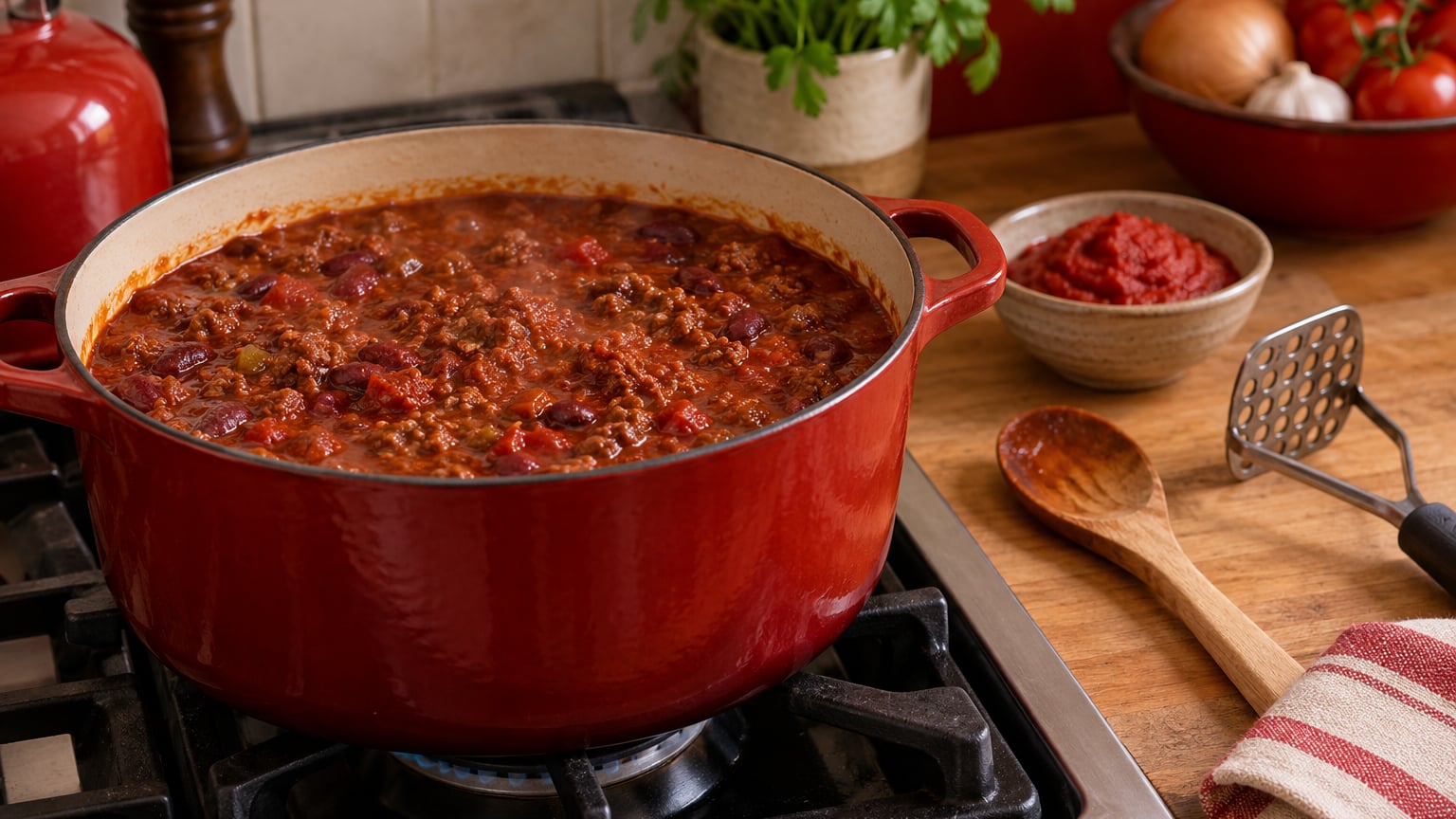
The quickest way to learn how to make chili thicker without cornstarch is to skip the thickener entirely: simmer it uncovered so the liquid cooks away, mash a portion of the beans, or stir in tomato paste, masa harina or a cooked flour roux. Any of those takes under 30 minutes, and none of them needs cornstarch.
Almost every thin pot of chili is thin for one of three reasons: it simmered with the lid on, it had more liquid than solids, or it was thickened with something starchy that loosened up again in the fridge. Knowing which one you have saves you from throwing a third of the pot away.
Updated for 2026. Every method below works in a regular pot, a wide Dutch oven or a slow cooker, though the timings change with the vessel.
Table of Contents
- What You Need
- Step-by-Step
- Common Mistakes
- Frequently Asked Questions
- What is the best way to thicken chili without cornstarch?
- How long does it take to reduce chili until it is thick?
- Can I use flour to thicken chili instead of cornstarch?
- How much tomato paste should I add to thin chili?
- Why does my chili become too thick after reheating?
- Can I thicken chili after it has been served?
- Conclusion
What You Need
You do not need a special ingredient list. Most thin chili can be fixed with what is already in the cupboard, and the first two methods need nothing new at all.
- The chili itself, plus a spoon for tasting as you go.
- A potato masher or a sturdy fork for breaking down beans. An immersion blender works too, if you have one.
- A wide, heavy pot — a Dutch oven, a shallow stockpot or a saute pan. Surface area is what drives evaporation.
- Optionally: tomato paste, a can of refried beans, masa harina or cornmeal, and a handful of tortilla chips.
- Broth or water nearby, for the opposite problem. Over-thickened chili is fixed a tablespoon at a time.
Which optional ingredient you need depends more on the pot than on the recipe. A slow cooker that has been sitting on low for eight hours will not thicken on its own, because the lid traps every bit of steam. Take those batches out of the crock and into a stovetop pot before you start.
One food-safety note while you work: keep the chili at 165°F (74°C) or hotter while it thickens, and refrigerate it within two hours of serving. Chill it in shallow containers rather than the whole Dutch oven, and eat it within three to four days.
Step-by-Step
Taste before you thicken anything. If the chili already coats the spoon and holds a line for a second before dripping, it is done. Chili thickens as it cools, so a pot that looks right on the burner can turn pasty in the fridge.
How to make chili thicker without cornstarch: reduce the chili
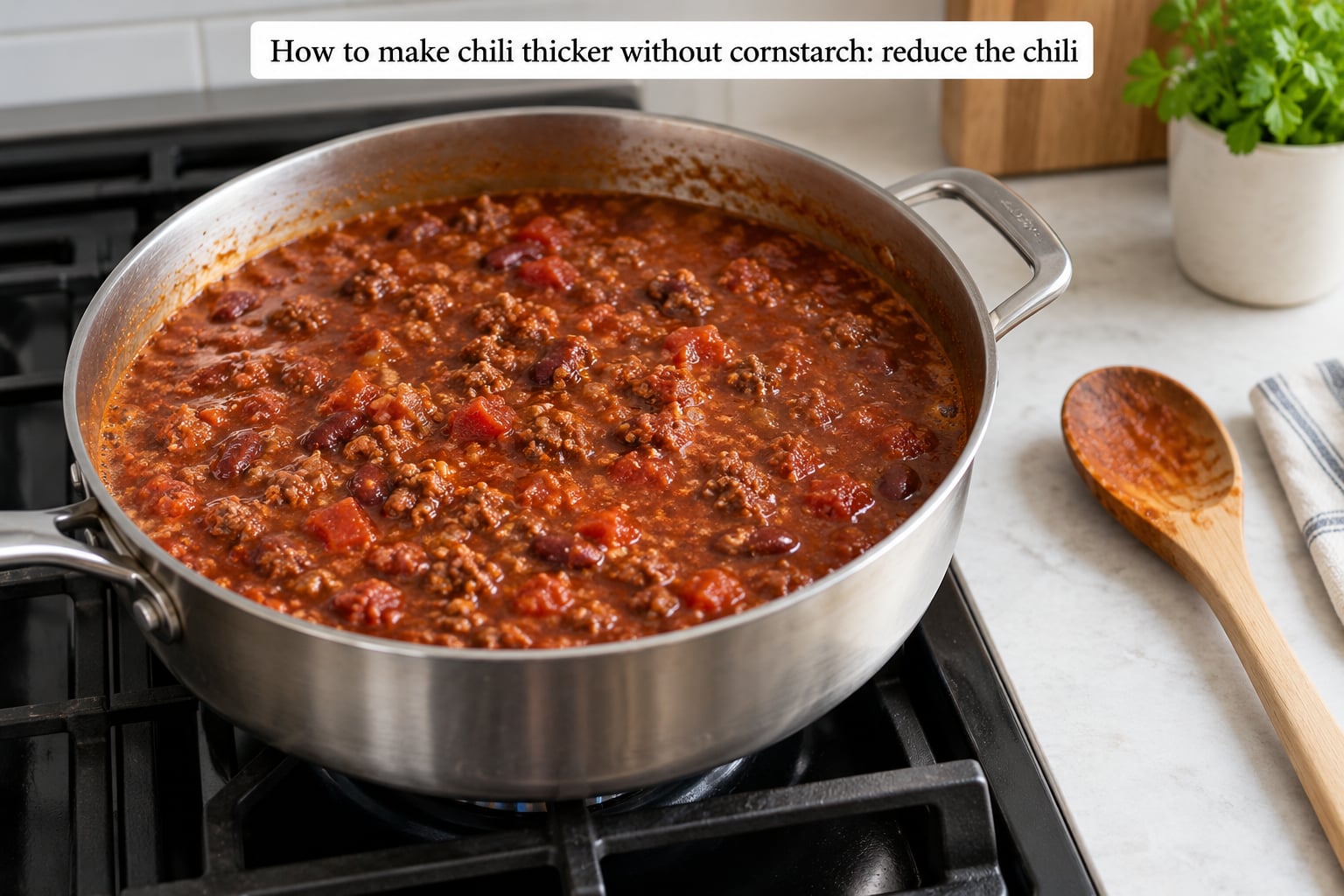
Take the lid off and drop the heat to a low simmer. Let it go 15 to 20 minutes, stirring every three or four minutes so nothing catches on the bottom, then taste. That is usually enough.
The reason it works is plain physics: the liquid leaves as steam, and the solids stay behind. A wide Dutch oven can do it in about 10 minutes because there is more surface exposed; a tall narrow pot can take 30. If you have time, transfer the chili to a saute pan first — it is the fastest route and it barely takes a minute.
Keep the bubbles small. A rolling boil drives off liquid faster but also scorches the meat at the bottom of the pot, and once the chili starts sticking, the starch in it cooks onto the pan and you have a cleanup problem on top of a texture problem.
Taste for salt while you reduce. Water is leaving but the salt is not, so a pot that was seasoned correctly an hour ago can suddenly taste like a brine. If it needs salt, add it at the end, not during.
Do the back-of-the-spoon test before you stop. Dip a spoon in, hold it upright, and watch the chili run back down. If it leaves a thin, even coat instead of a watery trail, it is thick enough for the table.
Mash some of the beans for a thicker texture
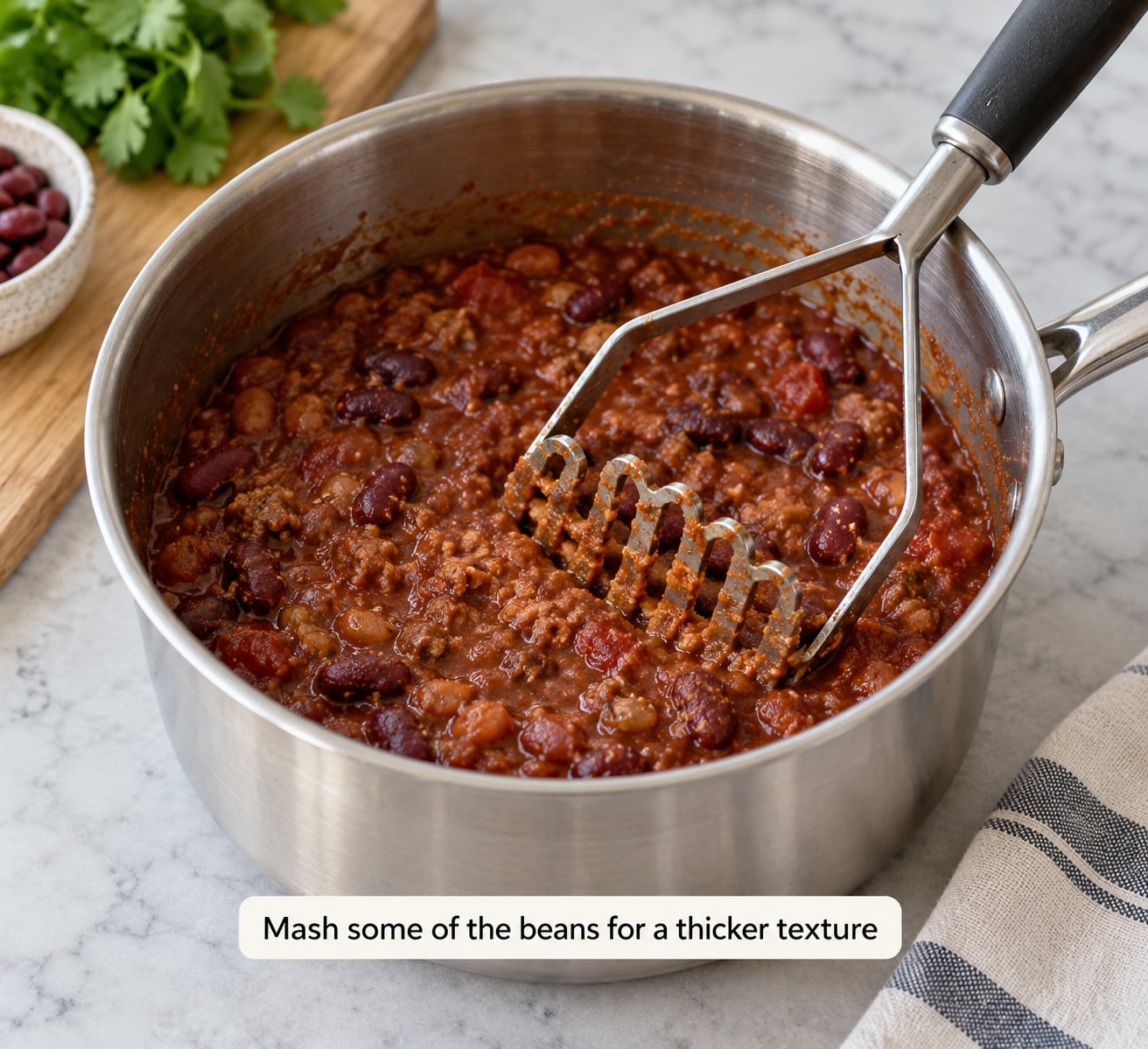
Mashing is the flavor-neutral option and the most dependable answer to how to make chili thicker without cornstarch, because it changes the body of the pot without touching the flavor. Beans carry their own starch, so breaking them down thickens the whole pot with nothing added.
Start by mashing about a quarter to a third of the beans, right in the pot, with a potato masher or the back of a fork. Leave at least half the beans whole — chili that is entirely puree is soup with chili in it, and the whole beans are what people actually want to bite into.
Beans also get thicker as they cook, so a modest amount early on does more work than the same amount at the end. Mash with the pot still on the heat and you will feel the texture change within a few minutes.
No beans in the pot? Scoop out a ladleful, mash it in a bowl until smooth, and stir it back in. The same move works on a batch with no beans at all, which matters for no-bean Texas-style chili where adding beans would change the dish rather than just the texture. For a cold pot, half to three-quarters of a 15-ounce can of refried beans stirred in raw works surprisingly well — that is essentially what the canning process already did for you.
One caution from cooks who have made this mistake: mashing is not the same as blending. A fork leaves a rustic, slightly lumpy body that suits chili. A blender gives you a smooth, almost creamy pot that some people love and others find flat.
Use a roux or slurry as an optional shortcut
Sometimes you are twenty minutes from serving and reducing is not on the table. These work immediately, and each one trades a little flavor for body.
Flour roux. Whisk 2 tablespoons of all-purpose flour into 2 tablespoons of melted butter or oil in a separate pan. Cook it over medium heat for 1 to 2 minutes, until it smells nutty and darkens a shade. Then whisk in half a cup of the chili, a little at a time, and when that mixture looks smooth, pour it back into the pot and simmer 5 to 10 minutes.
Cook the flour. Raw flour stirred straight into hot chili leaves a pasty, starchy taste that no amount of simmering fully hides — that is the single most common way this shortcut goes wrong. A cooked roux, by contrast, adds a nuttiness that reads as more chili, not less.
Masa harina or cornmeal slurry. Stir 1 to 2 tablespoons of masa harina into a cup of cold water until smooth, pour it in, and simmer 3 to 5 minutes. It thickens fast and adds a faint corn aroma. Be aware that masa harina is corn, so this is not a choice for a corn-free diet, and both corn thickeners soften the heat a little.
Tomato paste. Stir in 2 tablespoons for a 4-quart pot, up to 6 for something large, and let it bubble 30 to 60 minutes. Tomato paste adds concentrated solids and a sweeter, deeper tomato note, and unlike corn or flour it sharpens the heat rather than muting it.
Crushed corn chips. A handful, crushed in a bag, stirred in during the last 20 minutes. This one is salty, so season the chili lightly if you plan to use it.
If the chili is going into grain bowls for dinner rather than standing on its own, aim one step thicker than you would serve straight from the pot. Bowls cool fast and a thin chili that seemed fine in the saucepan will pool at the bottom.
Common Mistakes
Adding a thickener all at once. Dashes and small amounts, then stir and wait two minutes before adding more. Nobody can pull starch back out of a pot, and a correction is always easier than a rescue.
Using the wrong heat. Too low and nothing evaporates; too high and the bottom burns within minutes. You want a steady, gentle simmer with bubbles breaking the surface every second or two.
Reducing past the point. Push too far and the chili goes from scoopable to cement, the meat dries out, and the sugars scorch. If that happens, take it off the heat and add broth or water one tablespoon at a time, stirring until it loosens.
Not tasting as you go. Reduction concentrates salt, sugar and acid all at once. Season near the end, and taste again after every addition rather than trusting the first spoonful.
Sprinkling dry powder into a hot pot. Cornstarch, flour, masa harina and xanthan gum all clump when they hit liquid directly. Mix them with cold water first, or whisk a little at a time into the bubbling pot with the burner off. For gum, a cook on a forum thread noted that premixing with a small amount of oil before whisking keeps it smooth.
Expecting a slow cooker to do it. A closed crock cannot evaporate anything. For a batch that came out thin, move it to a stovetop pot, mash some beans, or add tomato paste and leave the lid cracked for the last half hour.
Thickening for the table instead of the fridge. Beans keep releasing starch in storage, so chili that is right today can be pasty tomorrow. Aim a touch loose on the burner and you will be glad of it. The same starch that thickens leftovers will drink up broth — the reason a holiday reheated too carefully can still end up dry is usually over-thickened sauce, not the oven.
Mixing up liquid and starch. It is easy to remember that starch draws liquid and forget that a pot sitting on warm heat keeps drawing it. If your chili thickens while you wait for guests, stir in a splash of broth. Starch and cold stock do not combine, so keep the broth nearby.
There is one more worth knowing. Chili that thins again on the second or third reheat is not a failed batch. The starch in the beans and in any thickener you added keeps absorbing water as it sits, so the fix is always more broth, never more thickener.
Frequently Asked Questions
What is the best way to thicken chili without cornstarch?
Simmer it uncovered. Take the lid off, drop to a low simmer and let it cook 15 to 20 minutes, stirring every few minutes, until the liquid drops and the chili coats the back of a spoon. Reduction concentrates flavor as it thickens, so nothing tastes added. If you need more after that, mash a quarter of the beans.
How long does it take to reduce chili until it is thick?
Most pots need 15 to 20 minutes of uncovered simmering, and a wide Dutch oven can manage it in about 10. Slow-cooker chili that has been sitting on low for eight hours usually needs 30 to 45 minutes after you transfer it to a stovetop pot. Stir often, watch the bottom, and remember the chili thickens again as it cools.
Can I use flour to thicken chili instead of cornstarch?
Yes, but cook the flour first. Whisk 2 tablespoons of all-purpose flour into 2 tablespoons of melted butter or oil, cook the paste 1 to 2 minutes until it smells nutty, then whisk in half a cup of the chili at a time and simmer 5 to 10 minutes. Raw flour stirred straight into the pot leaves a pasty, starchy taste that simmering does not fix.
How much tomato paste should I add to thin chili?
Start with 2 tablespoons for a 4-quart pot and go up to 6 for a large one. Stir it in during the last 30 to 60 minutes of cooking rather than at the end, so it cooks sweet instead of sharp. It thickens by adding concentrated solids, and it deepens the tomato flavor without dulling the heat the way corn or flour does.
Why does my chili become too thick after reheating?
Beans break down further in the refrigerator and release more starch, and any starch you added keeps drawing in liquid as it sits. What you need is water, not thickener. Loosen it with broth or water a tablespoon at a time over gentle heat and taste before serving. You can always add more liquid later, but you cannot take it back once it is thin again.
Can I thicken chili after it has been served?
Yes. Mash a ladleful of beans in a bowl and stir it back in, or add 2 tablespoons of tomato paste and let it bubble for five minutes while everyone is still sitting down. Skip the dry thickeners in that situation — they need several minutes of simmering and they will sit on the surface as a dusty layer before they dissolve.
Conclusion
Start with the pot uncovered and give it 15 to 20 minutes of low simmer. That is the method that changes nothing about the flavor, and for most thin chili it is the whole fix.
Knowing how to make chili thicker without cornstarch comes down to which of those three problems you actually have. Before you add any liquid or any thickener, taste it — and remember it thickens on the way to the table. If reduction alone leaves it still loose, mash a quarter of the beans, then add 2 tablespoons of tomato paste for a bigger pot. Save the roux and the slurry for the night you are out of time.
If the chili is going alongside something that soaks up liquid, such as a batch of stuffing that stays crisp rather than soggy, make it a shade thicker than the recipe calls for. The starch in those sides will pull liquid out of the pot anyway.