
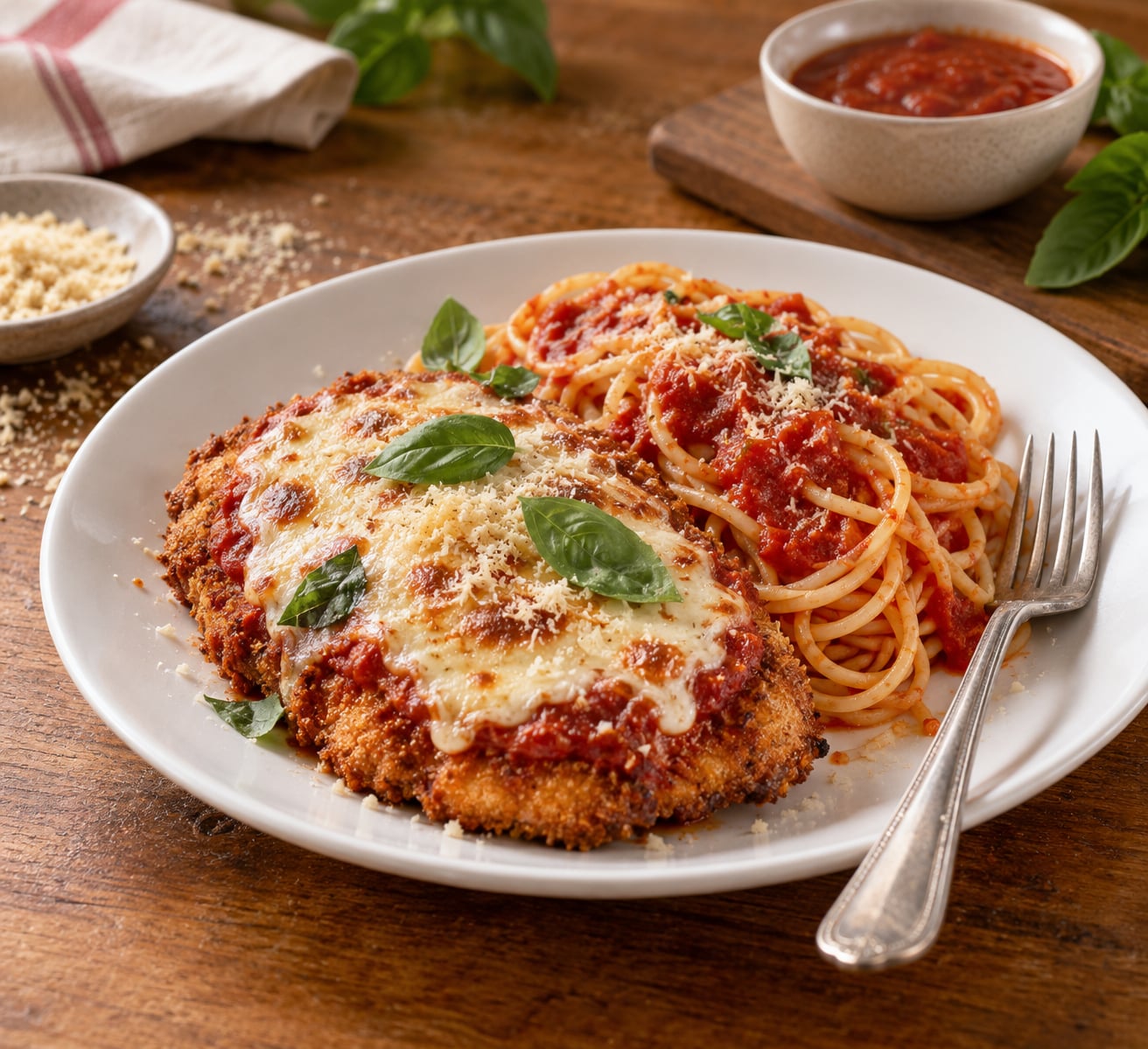
To make chicken parmesan at home, pound the chicken breasts to an even 1/4 inch, dredge them in flour then beaten egg then a panko and Parmesan crumb, pan-fry until deep golden, then top with a light hand of marinara and mozzarella and broil until bubbling. From counter to table it takes about 45 minutes and feeds four.
That short version is where nearly every home version goes wrong. Three of those words carry all the weight: even, light, and broil. Sauce applied generously, chicken pounded unevenly, or a skillet on medium-high instead of hot enough will each ruin a batch that was seasoned perfectly.
The method below is the one I cook when I want the crust to still be crunchy an hour after serving, not just the first minute. It follows the Italian-American restaurant standard rather than the lighter Neapolitan original, which is a different dish entirely.
Table of Contents
- What You Need
- Step-by-Step: How to Make Chicken Parmesan at Home
- Common Mistakes
- Frequently Asked Questions
- Should the parmesan go on top of the chicken or in the breading?
- Does the sauce go on before or after the cheese?
- What is the best cheese for chicken parmigiana?
- How thick should I pound the chicken before breading?
- Can chicken parmesan be made in the oven instead of fried?
- Can you make chicken parmesan ahead and freeze it?
What You Need
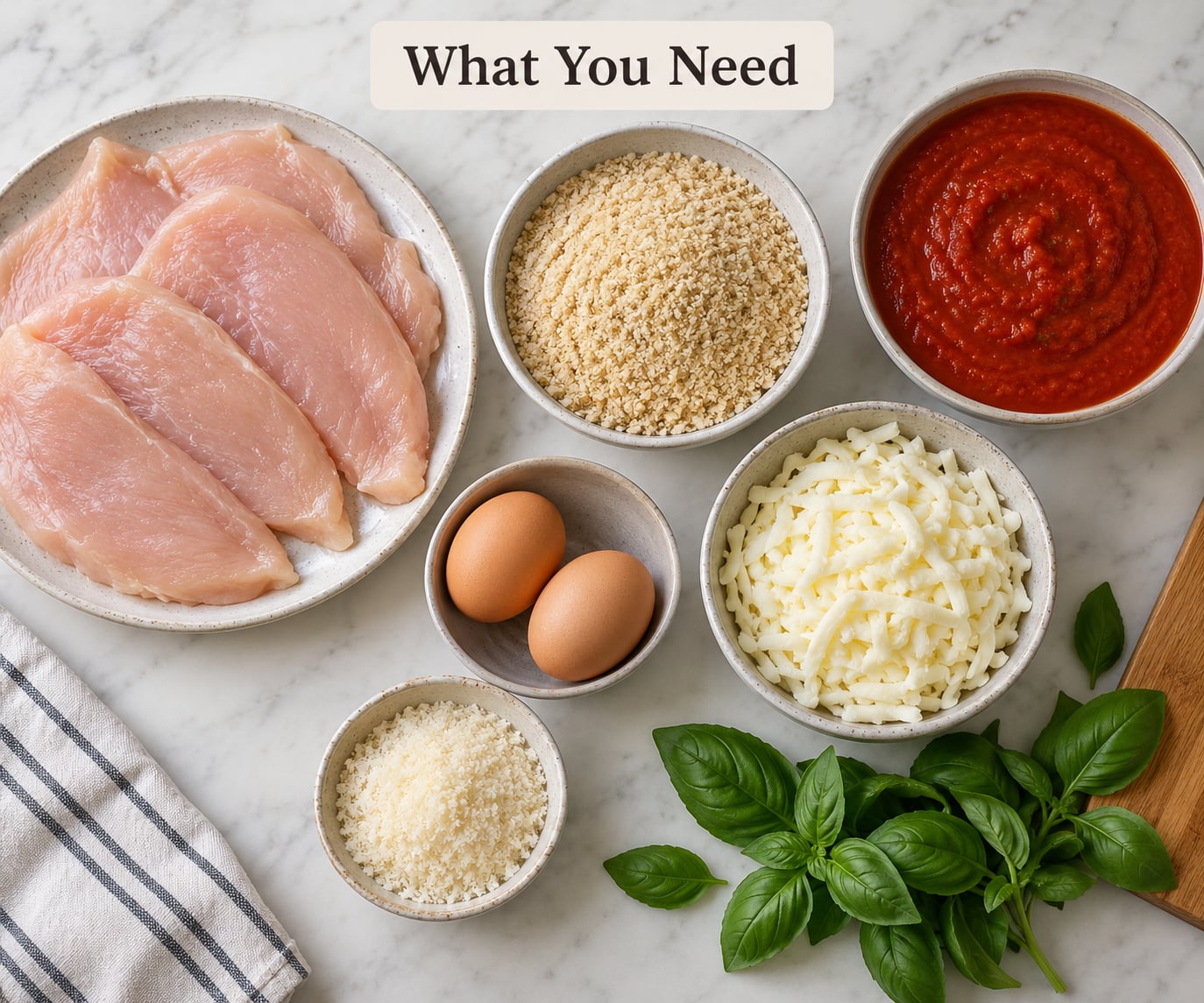
For the chicken, 4 servings
- 4 boneless, skinless chicken breasts, or 2 whole breasts plus 2 thin-sliced ones
- Kosher salt and freshly ground black pepper
- 1 tablespoon olive oil or avocado oil for the pan
For the breading station
- 1 cup all-purpose flour, plus a shallow dish for it
- 2 large eggs, beaten with a splash of water
- 1 cup panko breadcrumbs
- 1/2 cup finely grated Parmesan cheese (Parmigiano Reggiano if you have it)
- 1 teaspoon garlic powder and 1 teaspoon dried Italian seasoning
For the sauce and cheese
- 2 cups marinara sauce, homemade or jarred
- 8 to 12 ounces low-moisture whole milk mozzarella, sliced or shredded
- 2 tablespoons grated Parmesan for the top
- Fresh basil or flat-leaf parsley, torn
Two substitutions carry most of the value. Panko is a coarser, less processed crumb than standard breadcrumbs and it stays crisp longer, so use it if you can find it; plain breadcrumbs still work but tend to go softer in the oven. Low-moisture mozzarella is the right default for the top because it browns rather than turning rubbery, while fresh mozzarella releases a lot of water and is better used in a baked dish where the sauce can absorb it.
Equipment is simple: a large skillet, a mallet or rolling pin, three shallow bowls set up in order, a wire cooling rack, and a baking sheet. If you are cutting chicken rather than pounding it, a sharp knife and a steady hand work about as well, and there is a beginner walkthrough on how to break down a whole chicken at home that explains the anatomy first.
Step-by-Step: How to Make Chicken Parmesan at Home
Three rules run through everything below. Pound the chicken to an even thickness so it cooks at one rate, press the crumb on firmly and rest the cutlets on a rack so the coating sets, and keep the sauce light enough that it glazes the crust instead of soaking it.
1. Prepare the Tomato Sauce
Warm 2 cups of marinara in a saucepan over medium heat. If it is homemade, add a pinch of salt and simmer it for 15 to 20 minutes until it has darkened a shade and coats the back of a spoon; if it is jarred, warm it through and taste it, adding nothing more than a pinch of sugar if it tastes sharp.
A thicker sauce clings instead of pools, which is the entire game. Hold the sauce on low so it stays warm and does not skin over while you bread the chicken.
2. Season and Bread the Chicken
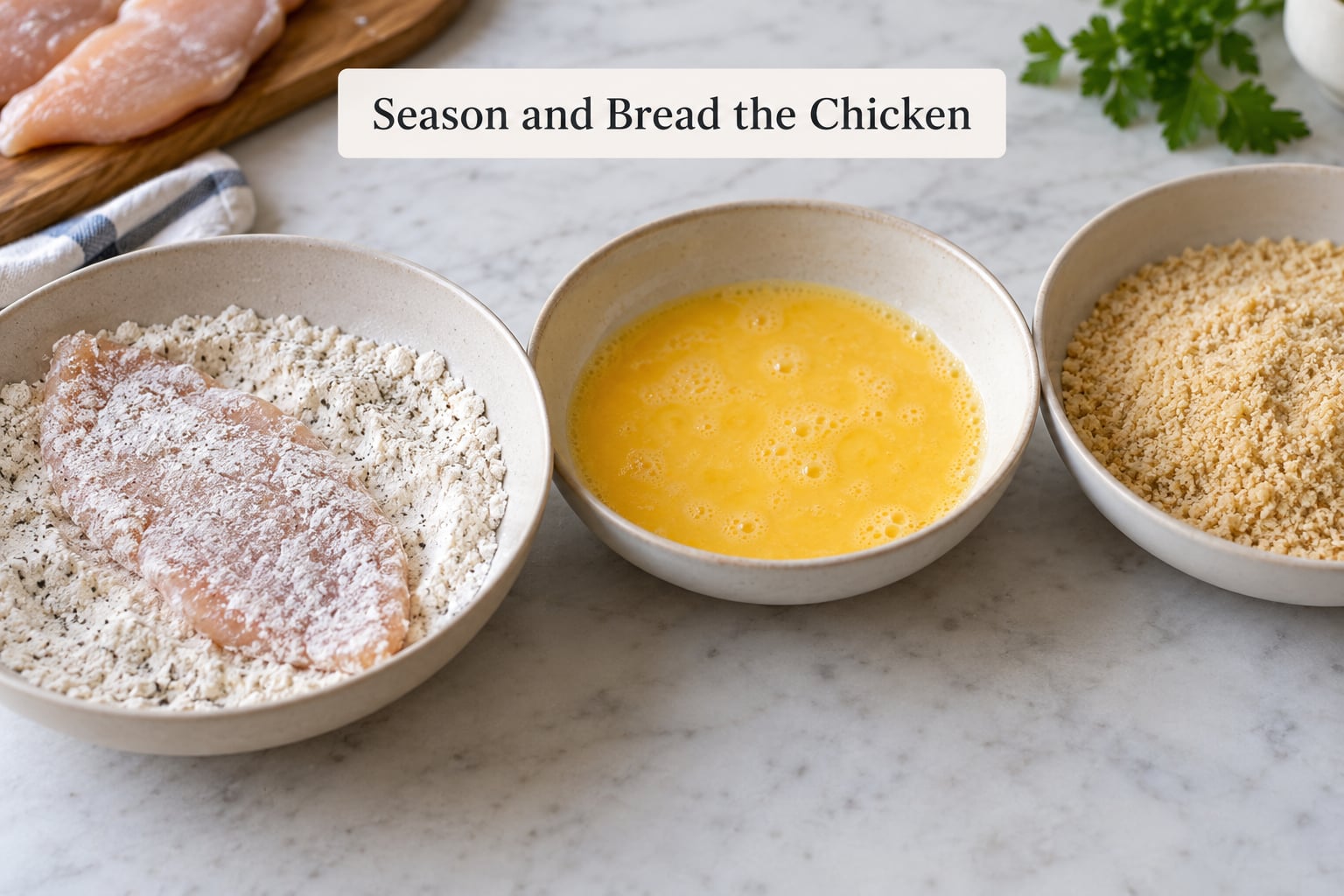
Place the chicken between two sheets of plastic wrap or parchment and pound it to an even 1/4 to 1/2 inch, working from the center outward. Uneven thickness is the number one reason a batch has one dry piece and one raw piece, and no amount of skillet time fixes it. Salt and pepper both sides.
Set up three bowls in a row: flour mixed with a pinch of salt, beaten egg, and panko combined with the Parmesan, garlic powder and Italian seasoning. Dredge each cutlet in flour and shake off the excess, then egg, letting the excess drip back into the bowl, then the crumb. Press the crumb on with your fingertips, especially along the edges, because that is where it lifts off first.
Rest the breaded cutlets on a wire rack set over a baking sheet for 10 minutes. The rest gives the egg time to set and glue the crumb to the chicken. Some of the Parmesan does not stick and will stay in the bowl; that is fine, and it is why mixing the cheese into the crumb works better than spooning it on top of the breading.
3. Cook the Chicken Until Golden
Heat 1 tablespoon of oil in a large skillet over medium-high until it shimmers but does not smoke. Lay the cutlets down and leave them alone for 3 to 4 minutes, until the underside is deep golden and releases on its own, then turn and cook 2 to 3 minutes more.
Drain on the rack or a paper towel. For a lighter version, oil a baking sheet, space the cutlets 2 inches apart, mist or drizzle them with oil, and bake at 425°F for 12 to 14 minutes, flipping once. The crust is good but never quite as loud as skillet-fried.
Check the thickest piece with an instant-read thermometer and pull it at 165°F / 74°C. Many home cooks go well past that number chasing for a golden crust, and every extra minute past 165°F takes moisture out of the meat.
4. Top the Chicken With Sauce and Cheese
Spoon about 1/3 cup of sauce onto each cutlet and spread it to the edges without pushing it into the crumb. Then lay mozzarella over the sauce so the cheese fully covers the wet layer, and dust with the remaining Parmesan.
The order matters more than people expect. Sauce first, cheese second. The cheese sits between the wet sauce and the crust and slows the moisture transfer that turns breadcrumbs soft. Add the ham, pepperoni or roasted peppers now if you want them, tucked into the cheese layer.
5. Melt and Brown the Cheese
Move the cutlets to a baking sheet and set the broiler to high with the rack about 4 inches from the element. Broil for 2 to 6 minutes, watching the whole time, until the cheese bubbles, blisters and browns in spots. Oven-bake at 400°F for 8 to 10 minutes if you would rather not hover over the broiler.
If the edges scorch before the middle melts, move the sheet down one rack position or switch to a lower broil setting. A sheet that is too close to the element is the usual reason for a blackened rim and a pale center.
6. Rest, Serve and Store Leftovers
Rest the finished cutlets on the rack for 3 to 5 minutes. The cheese firms up and the crust settles, and cutting straight into a molten pile just makes a mess. Tear the cutlets over spaghetti with more warmed sauce and plenty of grated Parmesan, or serve one with salad and crusty bread.
Store leftovers in the refrigerator within two hours and eat them within three to four days. For longer storage, freeze the unbreaded raw cutlets in a single layer on a tray, then bag them; they keep up to three to four months. Breading and saucing baked chicken freezes poorly, since the crumb turns soft and the sauce makes the crust damp.
Reheat leftovers on a rack set over a baking sheet at 375°F for 10 to 12 minutes, with the cheese side up. A wire rack lets hot air reach the underside, which keeps the bottom from going soft while the cheese re-melts. A skillet works too, and it revives the crust faster than the oven.
Common Mistakes
Almost every complaint about homemade chicken parmesan traces back to moisture, either in the pan or in the breading. Here is what goes wrong and what actually fixes it.
Soggy crust
Cause: too much sauce, or the chicken baked submerged in it. Fix: use about 1/3 cup per cutlet, spoon it on rather than pouring, and put cheese directly on top of the sauce as a barrier.
Pale crust
Cause: skillet not hot enough, or the oil was cool when the chicken went in. Fix: heat oil until it shimmers, lay cutlets away from you, and do not move them for the first 3 minutes.
Dry, tough chicken
Cause: breast not pounded, or cooked well past 165°F / 74°C. Fix: pound to an even 1/4 inch and pull the thickest piece at 165°F / 74°C.
Raw or overcooked edges
Cause: cutlets of mismatched thickness. Fix: pound each piece to the same thickness, or trim the thick ones into two thinner cutlets.
Breading sliding off
Cause: pressed too lightly, no rest before cooking. Fix: press firmly at the edges and rest the cutlets on a rack for 10 minutes.
Watery sauce
Cause: fresh mozzarella drained too little, or a thin jarred sauce. Fix: drain fresh mozzarella 30 minutes, use low-moisture mozzarella, and simmer the sauce until it coats a spoon.
Rubbery or browning cheese
Cause: shredded cheese overheated, or broiler too close. Fix: broil 2 to 6 minutes from 4 inches away and pull the sheet as soon as it blisters.
Dull reheated leftovers
Cause: reheated covered, or reheated straight from the fridge. Fix: reheat uncovered on a rack at 375°F for 10 to 12 minutes.
One more worth calling out: the ham, pepperoni and pineapple that show up on many recipes are American diner additions, not part of the Italian dish. If you want the flavor of the original, skip them and let the sauce, mozzarella and Parmesan do the work. It is a different dinner when they are absent.
If you prefer smaller, faster-frying pieces with the same coating logic, how to make chicken tenders in the oven covers the timing on thinner cuts.
Frequently Asked Questions
Should the parmesan go on top of the chicken or in the breading?
Both, and they do different jobs. Grated Parmesan mixed into the panko seasons the crust from the inside and helps it brown. The second sprinkle on top of the mozzarella adds a salty, nutty crust to the melted cheese. Putting all of it on top and none in the crumb is the version most people find bland.
Does the sauce go on before or after the cheese?
Sauce first, cheese second. Spoon about 1/3 cup of marinara onto each fried cutlet, spread it to the edges, then cover it completely with mozzarella. The cheese layer sits between the wet sauce and the breading and slows moisture from soaking through, which is the main reason a home batch stays crunchy.
What is the best cheese for chicken parmigiana?
Low-moisture whole milk mozzarella is the safest choice for the top because it melts evenly and browns under the broiler. Fresh mozzarella is creamier but releases a lot of water, so drain it for 30 minutes first or add it after the sauce has thickened. A provolone and Parmesan blend adds sharpness if you want a stronger flavor.
How thick should I pound the chicken before breading?
Aim for an even 1/4 to 1/2 inch, and check several pieces rather than trusting your eye. Matching thickness is what lets one cook time work for the whole batch. Very thin breast halves cook in a few minutes, while a thick pounded cutlet needs the full 3 to 4 minutes a side in the skillet.
Can chicken parmesan be made in the oven instead of fried?
Yes, and it is a good option when you want less oil or are cooking for a crowd. Oil a baking sheet, space the cutlets about 2 inches apart, and bake at 425F for 12 to 14 minutes, flipping once, then top and broil for 2 to 6 minutes. The crust is lighter than skillet-fried but still holds up under sauce.
Can you make chicken parmesan ahead and freeze it?
Freeze the raw chicken before breading: pound the cutlets, lay them on a tray in a single layer until solid, then bag them and keep up to three to four months. Breaded and sauced chicken freezes but the crumb turns soft and the sauce makes it damp. Cooked leftovers keep three to four days in the refrigerator and reheat best uncovered on a rack.
If you want a side that follows the same logic, a tomato soup made with roasted tomatoes does well next to it. I have the method for how to make tomato soup taste like a restaurant at home written up separately.
Start by pounding the chicken and setting the three bowls out before anything else. Even pieces and a firm crumb do most of the work, and the rest is just a light hand with the sauce.