
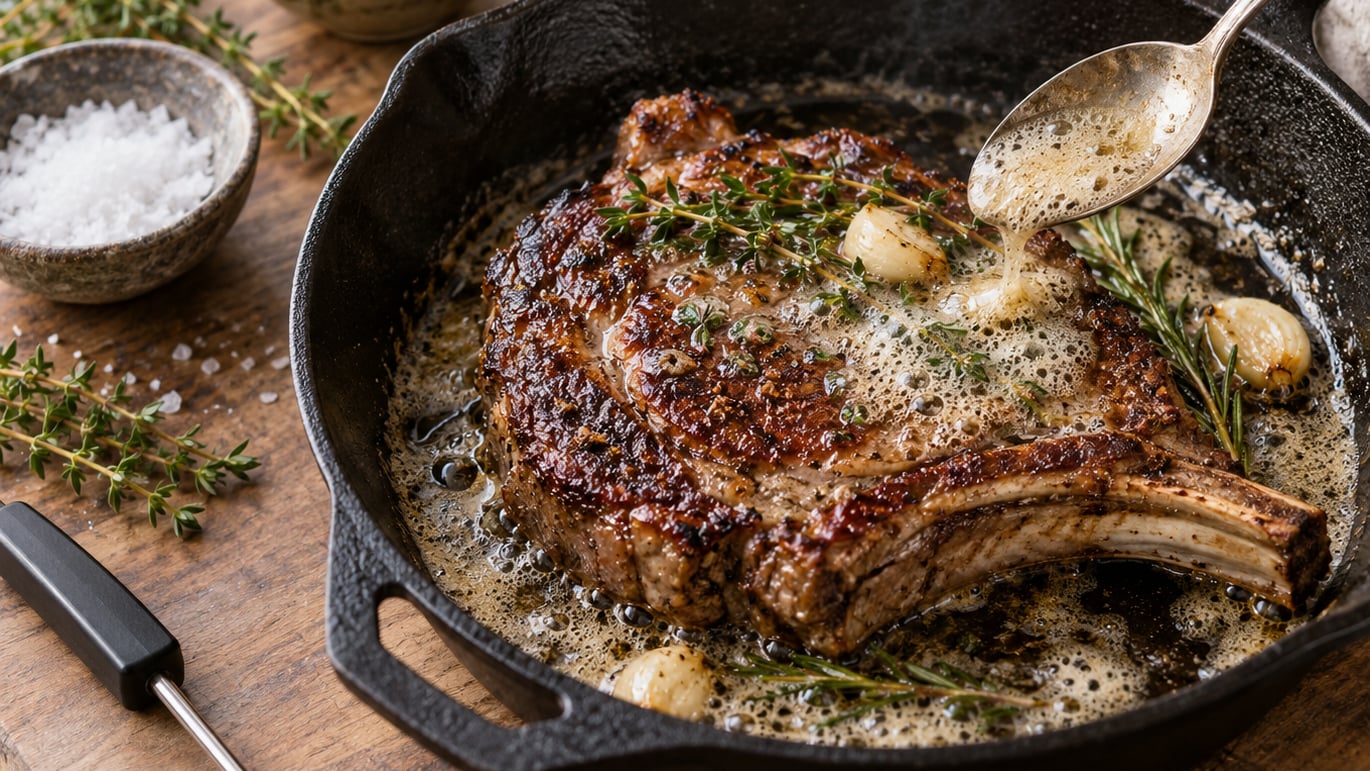
Learning how to cook a ribeye on the stove comes down to four things: a bone-dry steak, a heavy pan hot enough to make oil shimmer, a thermometer instead of a timer, and a proper rest at the end. A 1.5-inch ribeye needs about 3 to 4 minutes per side in cast iron for medium-rare, so you are looking at roughly 20 minutes start to finish including the rest.
Ribeye is the easiest steak to love and the easiest to ruin. It carries so much marbling that it stays tender well past the point most steaks turn chewy, which means you can serve it pink without much risk. It also has a fat cap and loose edges that catch and burn, so a little attention during the sear pays off.
I cook ribeye this way most weeks. The single change that made the biggest difference was buying a $15 instant-read thermometer and trusting it over every published cook time, including the ones on this page.
What You Need
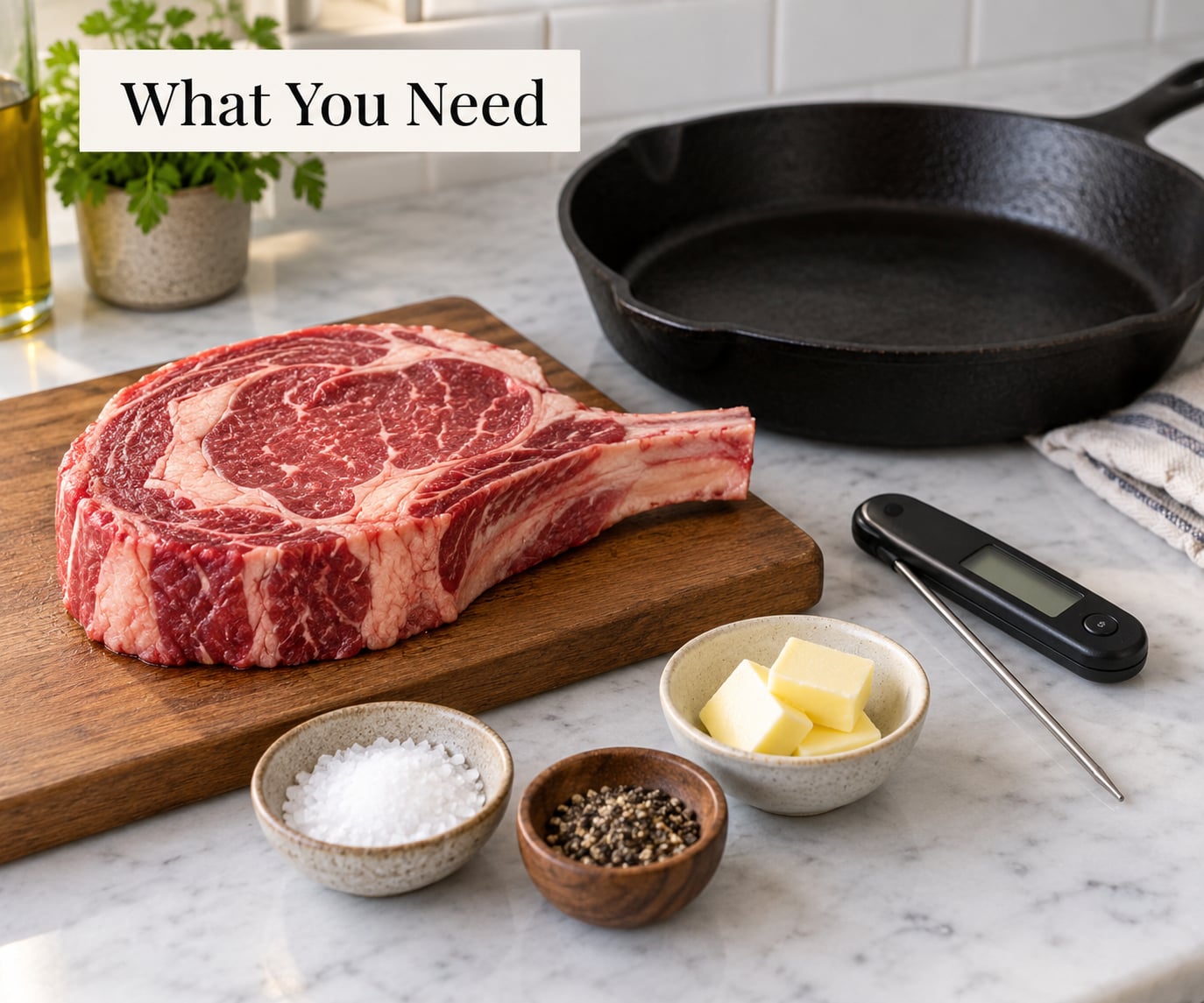
You do not need a drawer full of gear. You need one good pan, one thermometer, and about fifteen minutes of prep.
- A ribeye, ideally 1 to 1.5 inches thick. Thicker than 1.5 inches and stovetop-only cooking gets tight. Look for white marbling flecked through the muscle, a bright red color, and a creamy fat cap.
- A 12-inch cast iron skillet or heavy stainless-steel pan. Cast iron wins on heat retention, which is what holds a hard sear. Stainless works nearly as well for most people and is far easier to move around. A nonstick pan is fine but gives up a little crust.
- An instant-read thermometer. The single tool that separates a good steak from an overcooked one. Leave it in the freezer-adjacent drawer and use it every time.
- High smoke point oil. Avocado, grapeseed, canola, or ghee. Olive oil burns below searing temperature, which is where the acrid smoke comes from.
- Coarse kosher salt and cracked black pepper. Roughly one teaspoon of kosher salt per pound of beef, applied to every surface, not just the two flat sides.
- Unsalted butter, plus optional garlic and thyme. This is the baste, and it is the whole difference between a good steak and the one you order out.
- Paper towels and a splatter screen. Drying the steak is not optional. The screen keeps your hood and your forearms intact.
More on pan choice and technique in how to cook a steak in a cast iron skillet, and on building flavor in layers in how to season food as you cook.
Step-by-Step: How to Cook a Ribeye on the Stove
Step 1: Prepare and Season the Ribeye
Take the steak out 30 to 45 minutes before cooking so it loses its refrigerator chill. Cooking straight from cold is the reason so many steaks cook unevenly, with a cold center and an overcooked edge.
Pat the surface bone dry with paper towels, both sides and the edges. Every bit of surface moisture turns to steam in a hot pan, and steam is the enemy of browning.
Season generously with kosher salt, roughly one teaspoon per pound, working it into the top, bottom, sides, and fat cap. Add cracked pepper after the first flip so it does not scorch during the long sear. If you have time, salting the steak 40 minutes ahead and leaving it uncovered on a rack gives you a noticeably deeper crust because the salt draws a little moisture to the surface and dries it.
Leave the fat cap on. Trim it only if it is more than about a quarter inch thick, since it renders down and bastes the steak while it cooks.
Step 2: Make sure the Skillet Is Hot
Set the skillet over medium-high heat and give it a full 3 to 5 minutes. Cast iron announces itself when it is ready: a thin shimmer of smoke rises off the surface and a flick of water beads up and skates across the metal before flashing to steam.
Add a generous tablespoon of high smoke point oil and let it shimmer and just begin to smoke. Oil that sits cold on a lukewarm pan is why so many steaks cook grey and steamed instead of browned.
Do not use high heat by default. Sear at medium-high, which browns well without burning the crust or stripping seasoning from a cast iron pan. If the oil smokes heavily the moment it hits the pan, turn the heat down one notch and wait a minute.
For a bone-in ribeye, set the steak in away from the handle so the bone sits near the far wall and the thick meat sits over the hottest part of the pan. If your pan is only 10 inches, the bone will crowd it and you will cook unevenly, so use a 12-inch skillet when a bone-in steak does not fit your pan well.
Step 3: Sear the Ribeye on Both Sides in the Hot Pan
Lay the steak away from you and press it flat for two seconds. Then leave it alone. The crust that forms in the first 90 seconds is what you are after, and every early peek or prod lets heat escape.
Turn it when a deep brown crust has formed, usually 3 to 4 minutes for a 1.5-inch steak. A steak you flip every 30 seconds is not searing, it is boiling the surface moisture off, and you end up with a grey exterior and no fond. A steak you never flip for 6 minutes will scorch its first side. Two or three minutes per side is the useful middle.
Use tongs and lift rather than spear, so you do not puncture the crust and let juices run out.
How to Cook a Ribeye on the Stove at Any Thickness
Published times overshoot because they assume one thickness. Measure yours at the thickest point with a ruler or a caliper, then use these sear times as a starting point. Always verify with the thermometer.
| Steak thickness | Sear time per side | Finish for medium-rare |
|---|---|---|
| 1 inch | 2.5 to 3.5 minutes | In the pan, no oven needed |
| 1.5 inches | 3.5 to 4.5 minutes | In the pan, check temp after second side |
| 2 inches | 4 to 5 minutes | Oven at 400°F until 130°F |
| 2.5 inches or more | 4 to 5 minutes | Oven at 400°F until 130°F |
For anything over 1.5 inches, searing both sides and moving it to a 400°F oven is far more forgiving than trying to cook the center in the pan. The oven finishes the steak gently while the crust stays intact.
You can also flip the script entirely. Cook the ribeye in a 350°F oven until it reaches about 125°F, then sear it 45 to 60 seconds per side in a screaming-hot cast iron pan. Steak cooks lean heavily toward the reverse sear because oven heat is gentle and even and the hard sear at the end is where all the flavor comes from.
Step 4: Add Butter and Baste for Flavor
When you flip the steak for the final side, drop in 2 to 3 tablespoons of unsalted butter. Add two smashed garlic cloves and a couple of thyme sprigs once the butter foams.
Pick up the pan by the handle with a folded towel or mitt, tip it away from you, and spoon the foaming butter over the top of the steak repeatedly for 30 to 45 seconds. That butter, carrying garlic and browned bits off the pan bottom, is what people remember about a restaurant steak.
Watch it rather than the clock. The butter should foam loudly and turn the color of hazelnut, and it should never turn brown or smell nutty-burnt. If it goes quiet and stops sizzling, the pan has dropped off the heat, so give the burner a nudge.
Step 5: Check Doneness and Rest the Steak
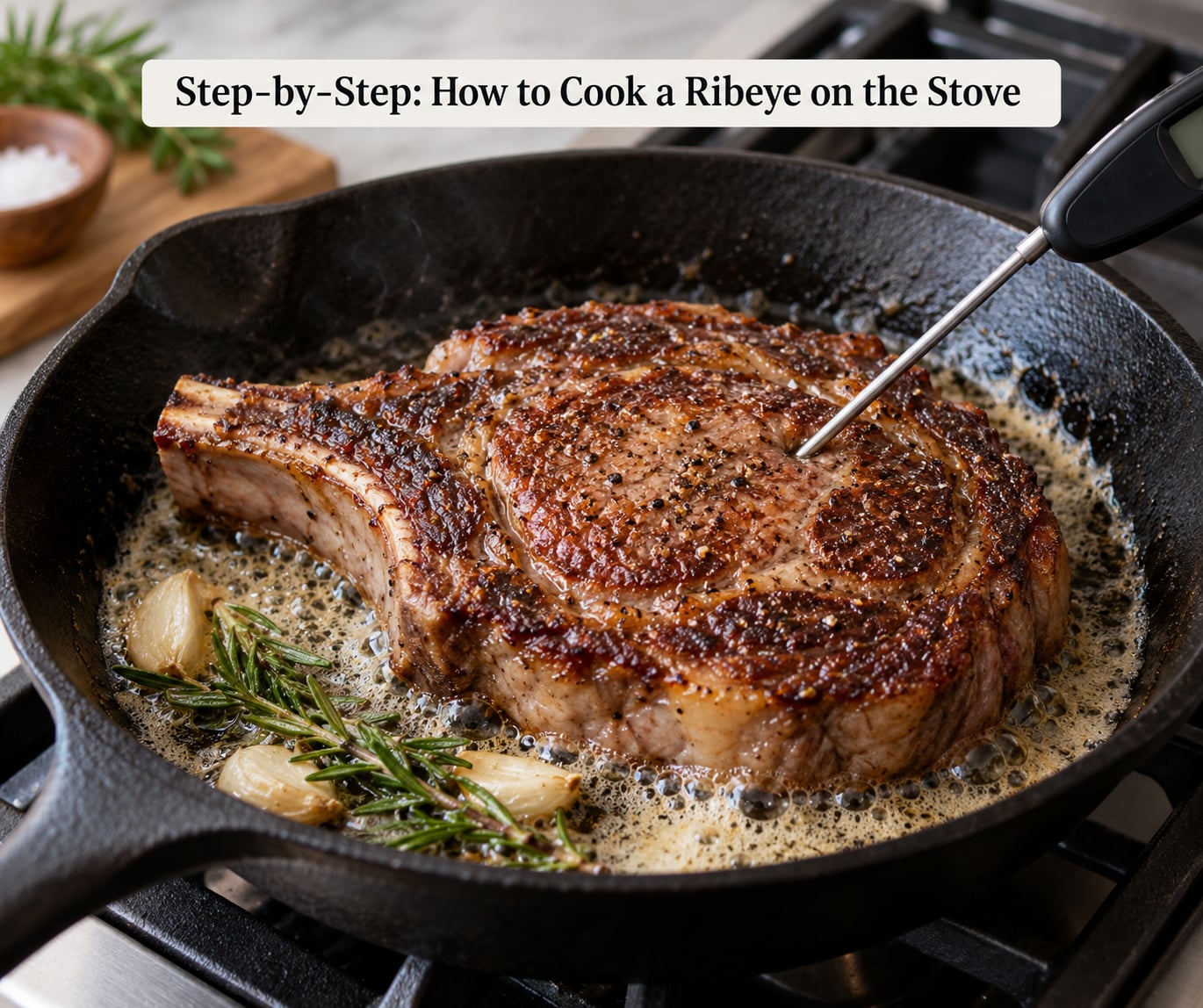
Insert the thermometer into the thickest part of the meat, away from the bone and away from the pan surface. Aim for the center, push until you feel nothing but steak, and read it fast.
Pull the steak 5°F below your target. Carryover cooking pushes the center temperature up another 5 to 10°F while the steak rests, which is why recipes that tell you to pull it at 135°F land on medium.
| Doneness | Pull off the heat at | What you should see |
|---|---|---|
| Rare | 115 to 120°F | Barely warm, deep red center |
| Medium-rare | 125 to 130°F | Warm, red center with a pink ring |
| Medium | 135 to 140°F | Pink turning tan, firmer to the touch |
| Medium-well | 145 to 150°F | Mostly tan with a hint of pink |
| Well-done | 155 to 160°F | Brown throughout, noticeably firmer |
Ribeye has a lot of fat to render, so most cooks land on medium-rare or medium. On tenderness terms, USDA recommends whole cuts of beef reach at least 145°F for food safety, which is about medium, so if anyone at the table is pregnant, elderly, or immunocompromised, cook it through to that temperature.
Rest the steak on a warm plate for 5 minutes for a thin cut, 8 to 10 minutes for a thick one, loosely tented with foil. Resting lets the juice redistribute instead of running out onto the cutting board in a puddle.
Slice across the grain at a low angle. Find the direction of the muscle fibers on the cut face and cut perpendicular to them, and even a medium-well steak tastes noticeably more tender.
Common Mistakes and How to Fix Them
The crust is grey or pale. The pan was not hot enough or the steak was wet. Preheat longer, dry the surface again right before it goes in, and wait for the oil to shimmer and smoke faintly.
The exterior burned while the center stayed rare. Too much sugar in the seasoning or butter added too early. Salt early, pepper late, and keep the butter in the last 45 seconds.
The steak is tough and dry. It went too far. Pull at 5°F below target and take the thermometer reading instead of counting minutes.
The steak cooked unevenly. A bone-in ribeye has a thin section near the eye and a thick section near the spine. Check both spots, or fold the thin flap under for the last minute of cooking.
It finished tougher than expected after a long rest. Resting more than 15 minutes lets the surface cool and the fibers relax too far, so it loses the warmth that made it tender. Rest, then serve.
It tastes salty or muddy. You salted after searing, or salted right before cooking on top of an already-salted steak. Salt goes on ahead of time, once, at roughly a teaspoon of kosher salt per pound.
The pan is smoking enough to set off the alarm. Turn the burner down before you add the steak, use a splatter screen, and open a window first. Oil smokes at its smoke point, and the smoke is the oil breaking down, not the beef.
It sticks and tears. Usually moisture, not stickiness. The protein in raw beef releases when it is near its boiling point, so a wet steak welds itself to the pan. Dry steak, hot pan, and let it sit before turning.
Tips for the Juiciest Stovetop Ribeye
Dry the steak twice. Pat it before seasoning and pat it again right before it hits the pan.
Preheat for at least 3 minutes at medium-high, and 5 if the skillet is thick cast iron coming from cold.
Leave the steak completely undisturbed for the first 90 seconds of each side.
Add butter after the final flip and keep the baste moving.
Take the steak out of the fridge 30 to 45 minutes early. A cold steak cooks its edges long before its center, and that is the number one reason home ribeye reads as tough.
Adjust for thickness honestly. A 2-inch steak is not a 1-inch steak with double the time, it is a 1-inch steak plus an oven finish.
Use the hot pan juices. After resting the steak, tip the skillet and spoon the butter and fond over the slices. It takes ten seconds and it finishes the dish.
If you are short on time, cooking dinner in under thirty minutes and this ribeye method are a good match.
Frequently Asked Questions
How long should I cook a ribeye on the stove?
For a 1 to 1.5 inch ribeye, sear 3 to 4 minutes per side over medium-high heat, then check with an instant-read thermometer. Pull it at 125 to 130°F for medium-rare. A 2 inch steak needs the same sear plus an oven finish at 400°F until the center reaches 130°F. Times are only a starting point; thickness, starting temperature, and your pan all change them.
What temperature should a ribeye reach?
Pull the steak 5°F below your target so carryover heat finishes the job during the rest. That means 125 to 130°F for medium-rare, 135 to 140°F for medium, and 150°F or so for medium-well. USDA food safety guidance for whole cuts of beef is 145°F. Always measure in the thickest part, away from bone and pan.
Should I cover the ribeye while cooking it?
No, not during the sear. Covering traps steam against the crust and turns a browned surface grey and soft. A loose foil tent during the rest is a different thing and is a good idea for a thick cut, since it holds warmth without letting the surface sweat.
How do I know when a ribeye is done without cutting it?
Use touch as a rough backup, not a rule. Medium-rare feels soft and loose with no resistance, medium feels like the fleshy base of your thumb pressed against your palm, and well-done feels firm with no give. Touch cannot tell you the difference between 130°F and 145°F, so a $15 instant-read thermometer is the only reliable answer, and it is easier than making a cut and losing the juices.
Can I cook a bone-in ribeye in a cast-iron skillet?
Yes, and it is the best pan for the job. Use a 12-inch skillet so the bone and the thick meat both have room without crowding. Set the steak in with the bone near the far wall so the thickest part sits over the hottest zone. Cook it exactly as you would a boneless ribeye; the bone contributes nothing to flavor, but it does make the steak cook unevenly, so check the temperature in two spots.
How should I reheat leftover ribeye?
Reheat gently in a skillet over medium-low heat with a splash of butter, about 1 to 2 minutes per side, and pull it while the center is still warm rather than piping hot. The microwave is the fastest option and the worst one, since it makes the edges leathery. Cooked steak keeps 3 to 4 days in the refrigerator, tightly covered.
Start with a 1.5-inch ribeye, dry it properly, and give the cast iron a full five minutes over medium-high heat. Sear three to four minutes per side, baste with foaming butter for the last forty-five seconds, and pull the steak at 125 to 130°F. Rest it eight minutes, slice against the grain, and spoon the pan butter over the top. Once you do that reliably, adjust the timing to your own pan and your own eye.