
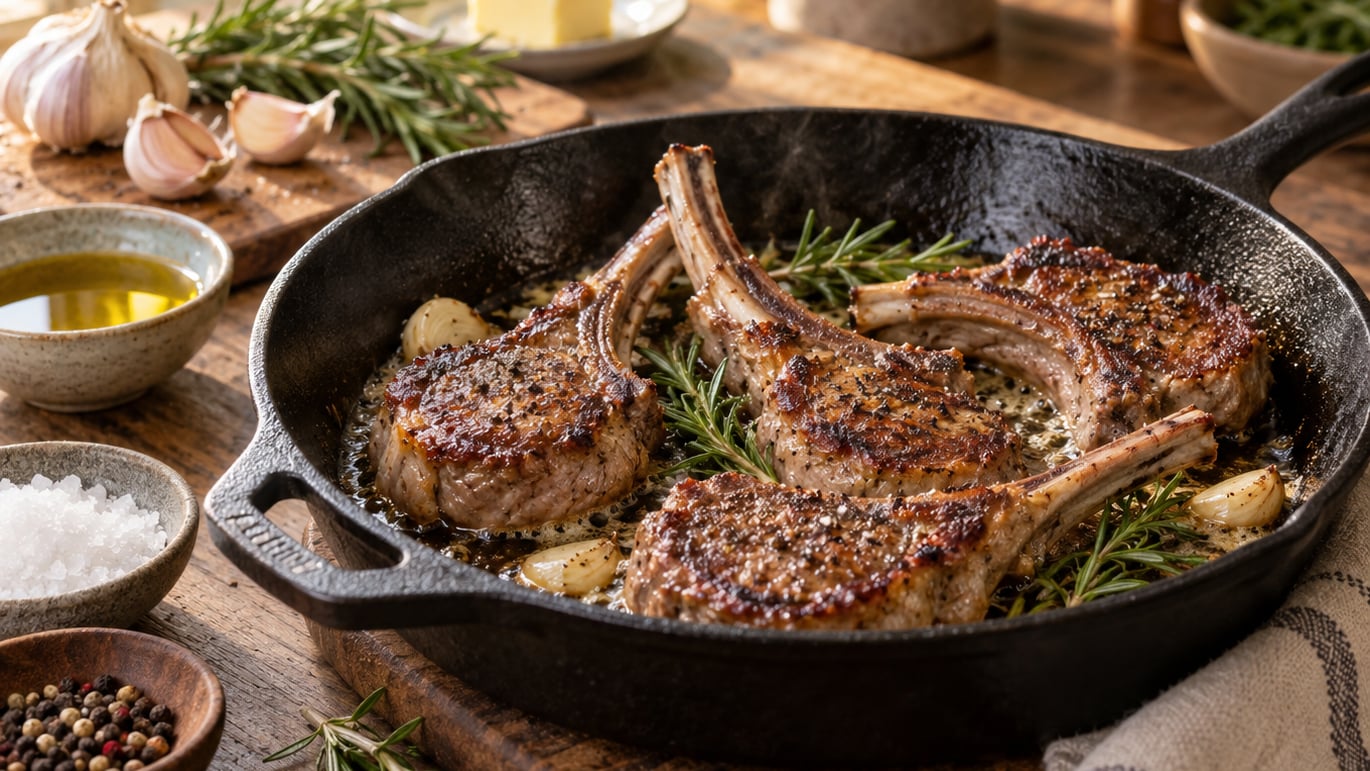
To cook lamb chops in a pan, sear them 3 to 4 minutes per side in a preheated cast iron skillet over medium-high heat, baste with butter, garlic, and rosemary for the final minute, then rest 5 to 10 minutes off the heat. From board to plate the whole thing takes about 20 minutes.
If you have been putting lamb off because you think it is finicky, it is not. Lamb chops are one of the fastest proteins in the kitchen: they are small, fatty, and thin enough that a mistake in timing shows up fast but is also easy to walk back. Most of the horror stories you have read about tough lamb come from one of two places, a cold pan or an overcooked chop, and both are avoidable.
This guide covers the full method, how to adjust for thicker cuts, what temperature to pull at, and what to do with the drippings. Cooking a steak in a cast iron skillet uses the same core technique if you want the pan-heating drill first.
Table of Contents
- What You Need
- Step-by-Step: How to Cook Lamb Chops in a Pan
- Resting: What It Means and Why It Matters
- Pan or Oven for Thick Chops?
- Common Mistakes and How to Fix Them
- What to Serve With Pan-Seared Lamb Chops
- Frequently Asked Questions
- Is it better to cook lamb chops in the oven or pan?
- How long do you cook lamb chops in a frying pan?
- What are the common mistakes when cooking lamb chops?
- How do I know when lamb chops are done without a thermometer?
- How long do you let lamb chops rest after cooking?
- Is lamb safe at 145F, and does it get more tender the longer it cooks?
- Conclusion
What You Need
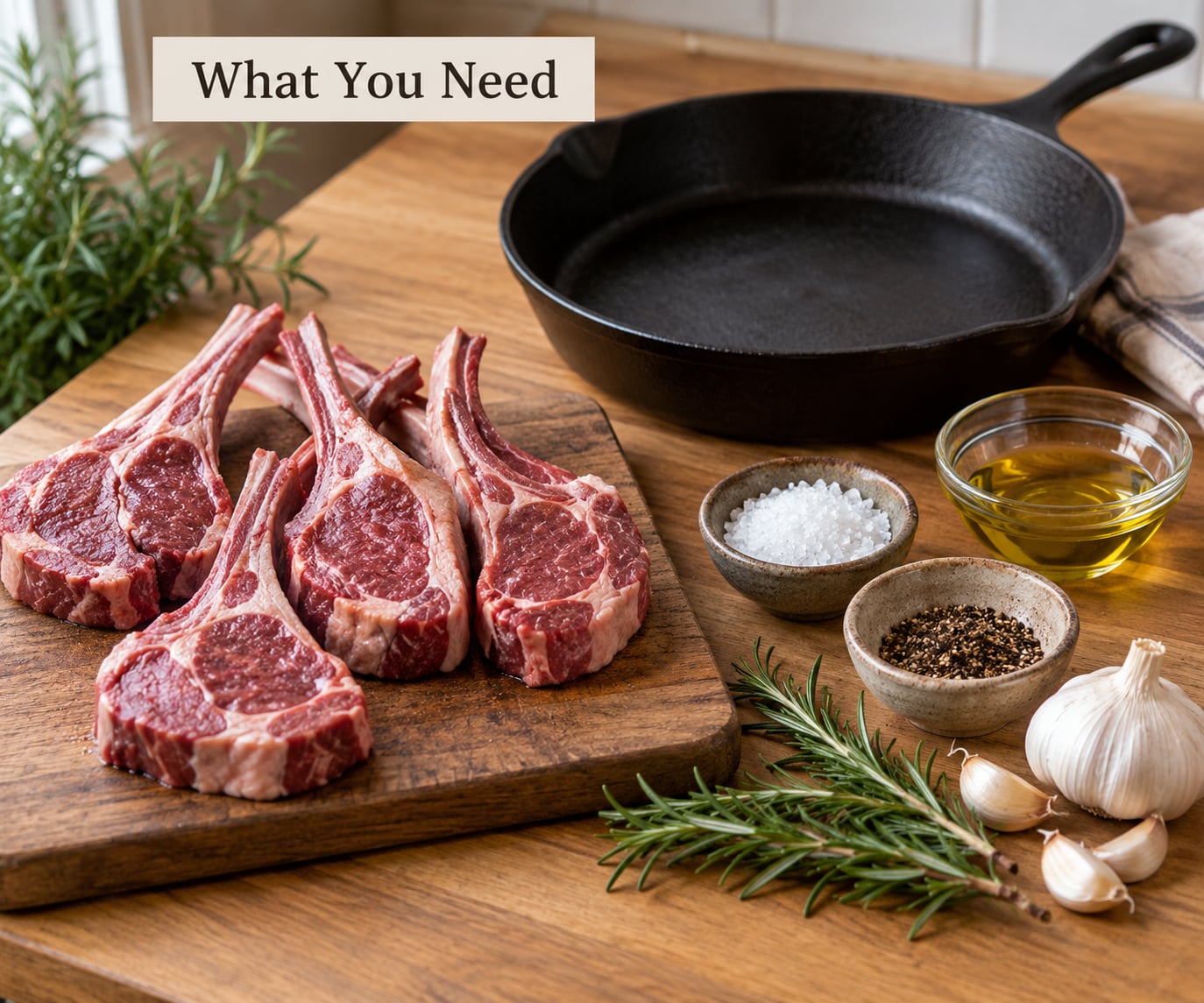
You need very little, and almost none of it is special. A 12-inch cast iron skillet is the best pan for the job, but a heavy stainless skillet works nearly as well.
- A 12-inch cast iron or heavy stainless skillet. Cast iron wins because it holds heat: the pan stays searing hot when the cold chop hits it instead of dropping 50 degrees and going stewed. A 10-inch skillet is fine for two chops but crowds anything beyond that.
- 4 to 8 lamb chops, 3/4 to 1 inch thick. Loin chops are the easiest, rib chops have more fat and more flavor, shoulder chops are bigger and need extra time. Thinner than 3/4 inch and you have almost no margin for error.
- 1 to 2 tablespoons high-smoke-point oil. Avocado, canola, grapeseed, or any light olive oil. This is the fat the meat sears in.
- 2 tablespoons salted butter. Added only at the end. Butter burns fast on a searing-hot pan, which is why it never goes in until the heat comes down.
- 3 to 4 garlic cloves, lightly smashed, plus rosemary and thyme sprigs. Smashing rather than chopping keeps the cloves from scorching into bitter chips during the baste.
- Kosher salt and freshly ground black pepper. Diamond Crystal or similar coarse salt sticks to a damp surface and seasons in a single pass.
- Tongs, an instant-read thermometer, paper towels, and foil. The thermometer is not optional in my kitchen. Time varies with your pan, your stove, and the thickness of the chop; a thermometer does not.
Do not skip the counter rest before cooking if you can avoid it. Thirty minutes at room temperature is the single best fix for lamb chops that come out with a hot crust and a cold center.
Step-by-Step: How to Cook Lamb Chops in a Pan
Trim and Season the Lamb Chops
Trim the fat cap down to about a quarter inch, leaving some fat on the chop. Take off the whole thing and you lose flavor and the fat that bastes the meat; leave the whole thick slab and it will not render, it will just sit there and make the chop curl off the pan.
If the fat cap is more than a quarter inch thick, score it lightly with a sharp knife in a diamond pattern, cutting into the fat without cutting into the meat. That gives the fat somewhere to split so it renders instead of warping.
Pat the chops completely dry with paper towels. Wet surface equals steam, and steam is the opposite of a crust.
Season both sides with a generous amount of kosher salt and black pepper right before the chops hit the pan. Salting earlier is fine for flavor, but salt sitting on wet meat for a long time pulls out moisture, which works against the sear.
If you like a wet rub, mix olive oil with minced garlic and herbs and let it sit on the chops for a couple of hours. Just know that any sugar or wet marinade on the surface burns in a hot pan, so scrape off the loose garlic before searing.
Heat the Skillet Until It Is Very Hot
Put the skillet over medium-high heat with nothing in it and give it five minutes to heat through. Cast iron takes a while to come up and keeps climbing after you think it is there.
Add the oil and swirl it around until it shimmers and just begins to smoke. That shimmer is your signal. Add the chops in a single layer with space between them. They should hiss loudly and immediately; a lazy sizzle means the pan was not hot enough or the surface was wet.
Cook in batches rather than crowding. Chops touching each other steam, and a steamed chop has no crust no matter how long you leave it alone.
Sear the Lamb Chops on the First Side
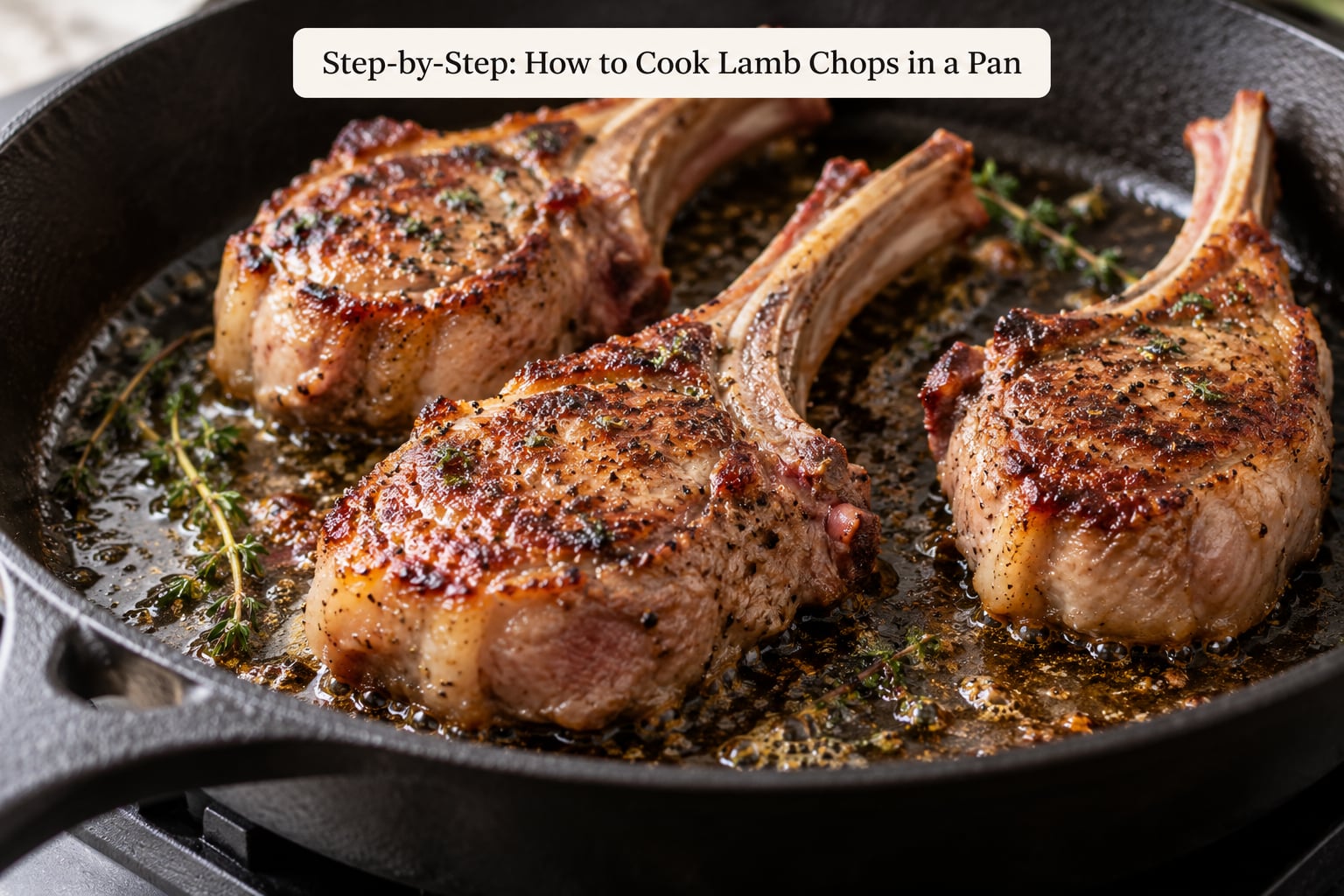
Leave the chops untouched for 3 to 4 minutes at 1 inch thick. Do not move them, do not flip early, do not press down. The crust forms during this time and every time you nudge the meat you tear it off.
Adjust for thickness rather than following a fixed clock:
| Chop thickness | First side | Second side | Total pan time |
|---|---|---|---|
| 3/4 inch | 2 to 3 minutes | 1.5 to 2 minutes | 4 to 5 minutes |
| 1 inch | 3 to 4 minutes | 2 to 3 minutes | 5 to 7 minutes |
| 1.5 inch | 4 to 5 minutes | 3 to 4 minutes | 7 to 9 minutes |
| 2 inch or thicker | 5 to 6 minutes | 4 to 5 minutes, or finish in the oven | 9 to 11 minutes |
Thin one-bone chops are the ones people ruin most often, because the eye of the loin is thin even when the chop looks substantial. Two-bone chops cook far more evenly.
You are looking for a deep golden-brown crust with no raw pink patches. If the surface is brown but the fat edge is still pale, give it another 30 seconds before turning.
Turn and Cook to the Desired Doneness
Turn with tongs and turn once. After the flip, drop the heat to medium and cook for 2 to 3 more minutes, then lower it further and add the butter, garlic, and herbs.
For the butter baste, drop in 2 tablespoons of butter, the smashed garlic, and a few rosemary and thyme sprigs. Let the butter foam, then tilt the pan and spoon the foaming butter over the lamb repeatedly for 1 to 2 minutes. That butter is where most of the flavor comes from, and the aromatics stay in the pan, not on the meat.
Check with your thermometer in the thickest part, away from the bone. Pull about 5 degrees below your target, because the temperature keeps climbing while the meat rests.
| Doneness | Pull off the heat at | Final temperature after resting | What it looks like |
|---|---|---|---|
| Rare | 115 to 120F | 120 to 125F | Deep red center, very soft |
| Medium-rare | 120 to 125F | 125 to 130F | Warm red center, the classic result |
| Medium | 125 to 130F | 130 to 135F | Pink but no red, firmer texture |
| Medium-well | 130 to 135F | 135 to 140F | Faint pink or gray throughout |
| Well-done | 140 to 145F | 145F and up | No pink, noticeably drier |
You will see two different medium-rare numbers published everywhere, 125F and 135F. Both are legitimate because they use different reference points: one is the final temperature after resting, the other is the pull-off temperature. Use the pull-off column above and pull at 120 to 125F for a final 125 to 130F.
If you have no thermometer, use the bone and the touch test. When the meat slides easily off the bone and the juices run clear rather than red, it is at least medium-rare. Cooking lamb past roughly 155F is what makes it dry and chewy, because the fat renders out and the muscle tightens. Lamb does not fall apart like a stew cut; more heat does not make it more tender. If you want more tenderness, you want a different cut.
Resting: What It Means and Why It Matters
Rest 5 to 10 minutes. Resting means the chops stay in the pan with the burner off, loosely tented with foil, while the juices redistribute back into the muscle instead of running out the moment you cut them.
Five minutes is enough for thin chops, ten for thick ones. Pulling the meat out of the pan onto a board does no harm, but leaving it in the pan keeps it warmer and loses less juice. Do not slice it. Cutting too early is why lamb chops so often look fine on the plate and taste dry on the plate.
While it rests, use the pan. Those brown bits in the fat are the best sauce you will make tonight: set the pan over medium heat, add a tablespoon of butter if the pan looks dry, then pour in a splash of stock or water and scrape. Add a squeeze of lemon for brightness or a spoonful of mint sauce for the traditional pairing. Never ketchup.
Pan or Oven for Thick Chops?
Use the pan for anything under 1.5 inches thick. It gives a better crust, it is faster, and you control doneness more precisely. The oven only wins when the chop is thick enough that the center cannot catch up.
For a 2-inch chop, sear 3 minutes per side in the skillet, then move the pan into a 300F oven. Check the temperature every two minutes and pull at 120 to 125F for medium-rare. Gentle oven heat finishes the center without the crust going dark.
Do not start the chops in the oven. An oven-seared chop has a pale, dusty crust, and that crust is most of what makes lamb taste like something worth ordering.
Common Mistakes and How to Fix Them
- Cold pan. The chop hits lukewarm cast iron, the temperature collapses, and the chop poaches in its own liquid. Fix: five minutes of preheating, then oil until it shimmers, then the meat.
- Crowded skillet. The pan temperature drops and the chops steam instead of searing. Fix: cook in batches of three or four, or use a second pan. Two pans beat one slow pan.
- Moving the chops too early. Every touch before the crust forms peels it back. Fix: set the tongs down and leave the meat alone for the full first-side time.
- Not patting them dry. Surface water steams instead of browning. Fix: paper towels on both sides right before seasoning.
- Searing in butter. Milk solids burn at searing temperature, which is where bitter smoke and black garlic come from. Fix: oil for the sear, butter only after the heat drops.
- Cooking straight from the fridge. The outside chars long before the center warms, so you get a raw core wrapped in a burnt crust. Fix: 20 to 30 minutes on the counter before cooking.
- Skipping the rest, or resting too long. Cutting immediately dumps every drop of juice onto the board. Fix: 5 to 10 minutes, and if you go past 15 the meat drops below serving temperature.
- Scorched garlic and bitter crust. Butter left over a screaming-hot burner burns before the center cooks. Fix: turn the heat down to medium or medium-low when the butter goes in.
One more: ignore the clock when it disagrees with the thermometer. Pan, burner, and chop thickness all vary, so time is a rough guide and temperature is the fact. If you want more on building flavor as you go rather than salting at the end, see how to season food as you cook.
What to Serve With Pan-Seared Lamb Chops
Serve something with acid and something creamy. A pan sauce with lemon, mashed potatoes, roasted asparagus, or a cucumber salad all balance the fat. A minted pea puree is the classic pairing if you want the restaurant version. How to cook a pork chop that is not dry follows the same rest-and-thermometer logic if lamb is not the only chop on your shopping list.
Frequently Asked Questions
Is it better to cook lamb chops in the oven or pan?
For chops under 1.5 inches thick, pan searing is faster and gives a far better crust. The oven only wins on thick chops: sear 3 minutes per side in a hot skillet, then move the pan to a 300F oven and check the temperature every two minutes until it hits 120 to 125F for medium-rare. Never start lamb chops in the oven alone, because the crust comes out pale and dusty.
How long do you cook lamb chops in a frying pan?
About 5 to 7 minutes total for a 1-inch chop: 3 to 4 minutes on the first side, 2 to 3 on the second, then 1 to 2 minutes of butter basting. Thin 3/4-inch chops need 4 to 5 minutes and thick 2-inch chops need 9 to 11 or an oven finish. Use those numbers as a guide and pull at 120 to 125F for a final medium-rare.
What are the common mistakes when cooking lamb chops?
The big ones are a cold pan, crowding the skillet, moving the chops before the crust sets, not patting the surface dry, searing in butter instead of oil, cooking meat straight from the fridge, and cutting before resting. Each has a simple fix: preheat five minutes, batch the chops, leave them alone, pat them dry, use oil for the sear, rest the meat out first, and give it 5 to 10 minutes tented in the pan.
How do I know when lamb chops are done without a thermometer?
Use two cues together. First, the meat should slide off the bone with almost no resistance and the juices at the bone should run clear or faintly pink, not red. Second, press the thickest part gently: it should spring back and feel firm but not rubbery. Be honest about what this can and cannot tell you. It gets you to medium-rare, but a thermometer is the only way to land on the same result twice.
How long do you let lamb chops rest after cooking?
Five to ten minutes. Leave the chops in the pan with the burner off, tent them loosely with foil, and do not slice them. Resting lets the juices redistribute into the muscle instead of flooding the cutting board the moment you cut. Thin chops need the shorter end of that range, thick chops can take the full ten, and going past about fifteen means serving cold meat.
Is lamb safe at 145F, and does it get more tender the longer it cooks?
The USDA safe minimum internal temperature for intact whole cuts of lamb is 145F with a three-minute rest. Most cooks pull lamb well below that, and medium-rare is the traditional result, but the guidance assumes an unbroken whole cut. On tenderness, more heat does not help. Lamb chops tighten and dry out past roughly 155F, so if a chop is chewy, it is almost certainly overcooked rather than undercooked.
Conclusion
Start with the three things that decide the result. Pat the chops dry and season them right before they go in the pan, give the cast iron a full five minutes to heat until the oil shimmers, and pull the meat at 120 to 125F rather than at a time on the clock.
Everything else is detail. Rest the chops 5 to 10 minutes, loosen the drippings with a splash of stock and lemon, and serve it with something acidic on the side.