
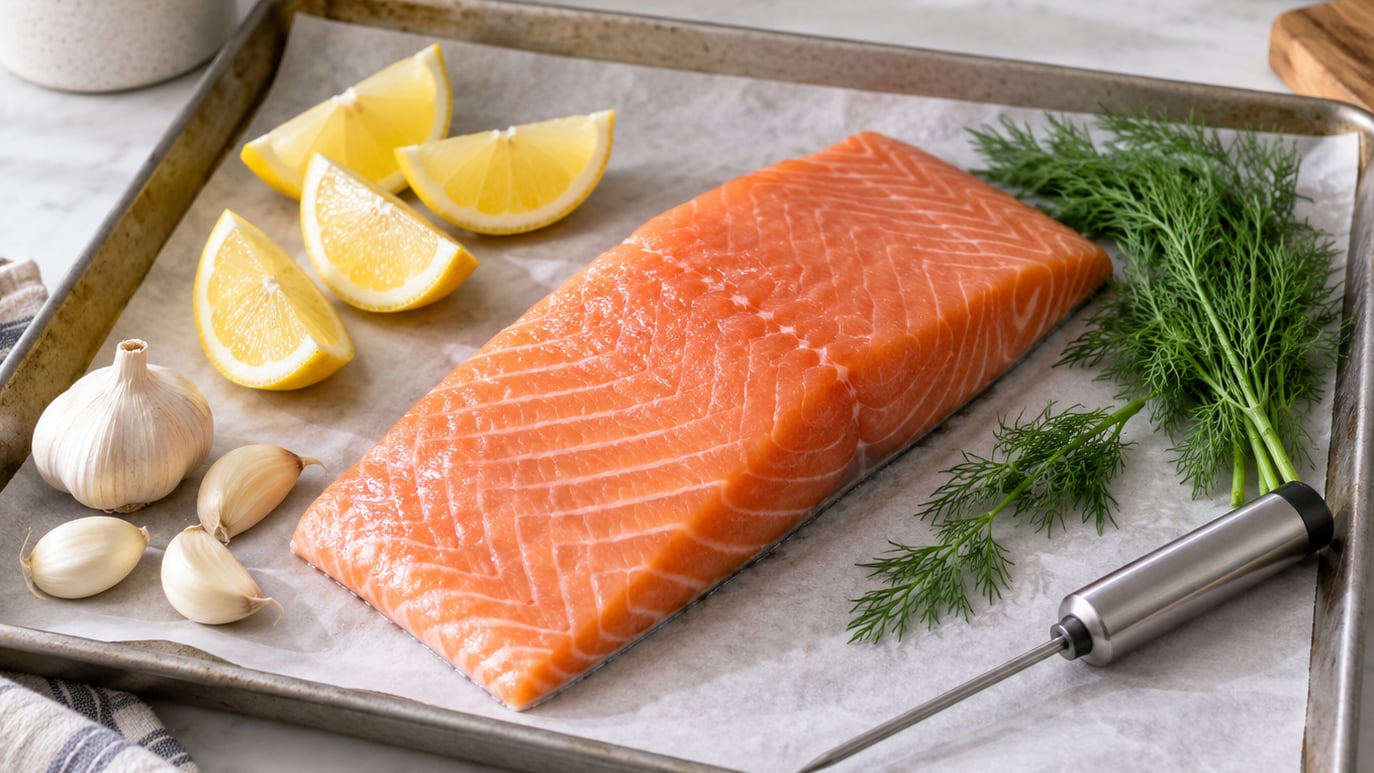
Cook salmon at 400°F uncovered for about 10 to 14 minutes and pull it at 125°F to 130°F in the thickest part. That combination of moderate heat, a short bake and an early pull is how to cook salmon in the oven without drying it out, and it takes under 20 minutes start to finish once the oven is hot.
Dry salmon is almost always one of three things: too much heat, too much time, or not enough protection on the surface. You can fix all three at once with a heavy sheet pan, a light coat of oil and a thermometer that costs less than a takeout order.
What You Need
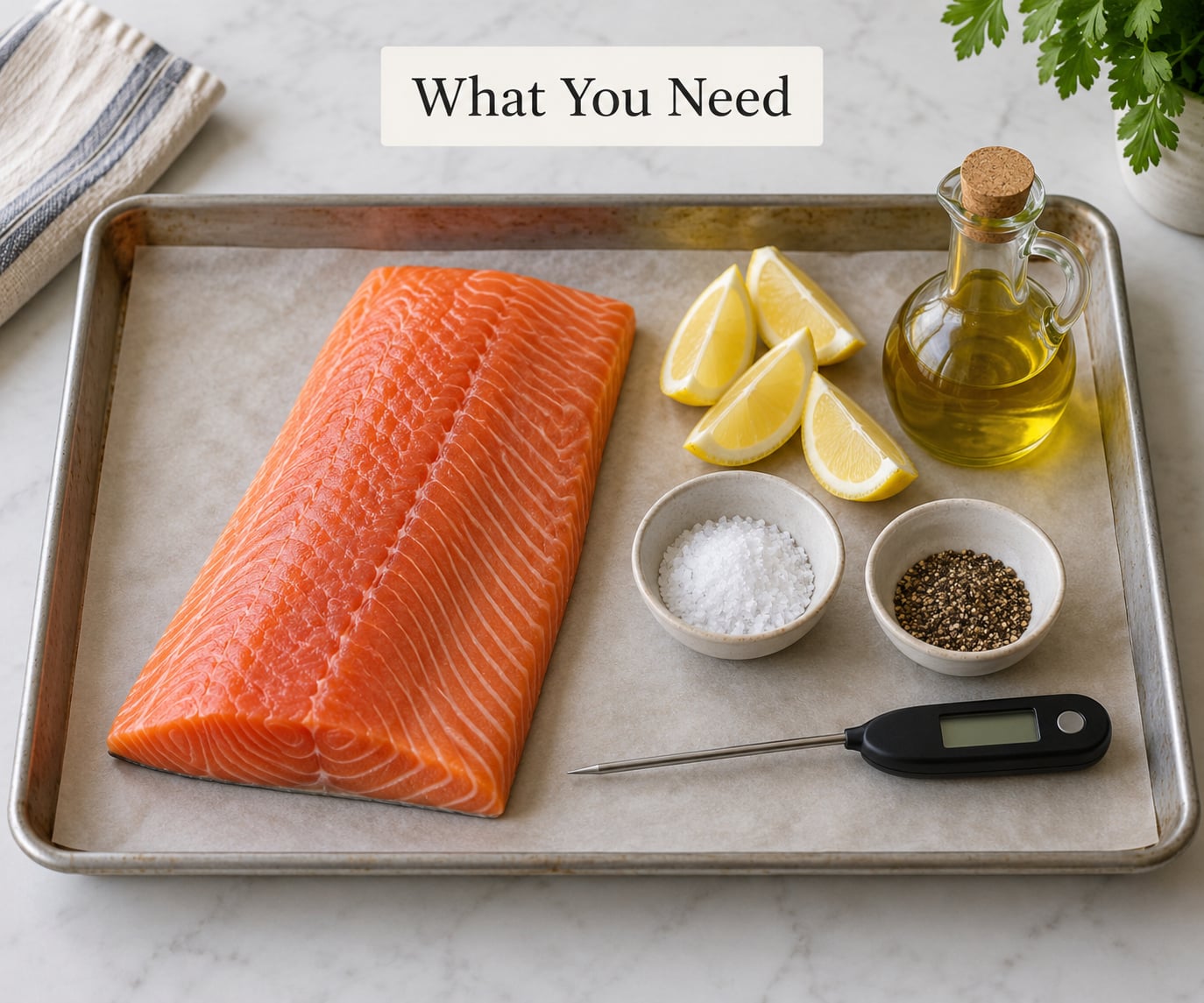
- A rimmed sheet pan, ideally 13 by 18 inches. A crowded pan steams the fish instead of roasting it.
- Parchment paper or a sheet of foil for the pan surface, plus a little oil if you are using parchment.
- An instant-read thermometer. This is the single tool that turns guessing into control.
- Olive oil or melted butter to brush on the fillet.
- Kosher salt and black pepper, plus optional lemon slices, garlic, dill or paprika.
A thicker fillet is more forgiving than a thin tail section, which is where most overcooking happens. If your salmon is thin at one end, tuck that end under or cut it off before baking.
Skin-on salmon works best here. The skin acts as a moisture barrier during the bake, and it gives you a built-in doneness cue. Leave it on unless a recipe tells you otherwise, and there is more on that below.
Step-by-Step: How to Cook Salmon in the Oven Without Drying It Out
Four things keep oven salmon moist: a fully preheated oven, moderate heat, enough pan space around the fish and an early check. Leave any one of them out and the fillet loses moisture faster than you expect.
1. Preheat the oven and prepare the salmon
Set the oven to 400°F and let it reach temperature fully, about 10 to 15 minutes. A cold oven plus a long bake is the slow route to dry fish, so give it time to preheat rather than cranking the heat up.
Pat the fillet dry with paper towels, then brush it lightly with olive oil or melted butter. Oil slows evaporation from the surface, and it turns a piece of salmon into something that looks like it came out of a restaurant.
Season with salt and pepper right before it goes in the oven. If you want garlic, dill or a spice rub, apply it now and keep the layer thin. A heavy coat of salty seasoning can salt the surface hard enough to pull water out before the center ever cooks, which is the single most common cause of disappointing baked salmon.
2. Choose the right pan and cooking environment
Line a rimmed sheet pan with parchment paper or foil, leaving a little space around the edges for hot air to move. Give the salmon at least an inch of clear space on every side.
Crowding is what turns an oven into a steamer. Two fillets touching, or fillets tucked under a heavy vegetable, will trap moisture and cook unevenly, so the thin parts overcook while the thick parts lag behind.
Keep the salmon skin-side down on the pan and leave it uncovered. Foil packets and tented foil work well, but they trap steam, so check the fish a few minutes early when you use them.
3. Cook the salmon until the center is just opaque
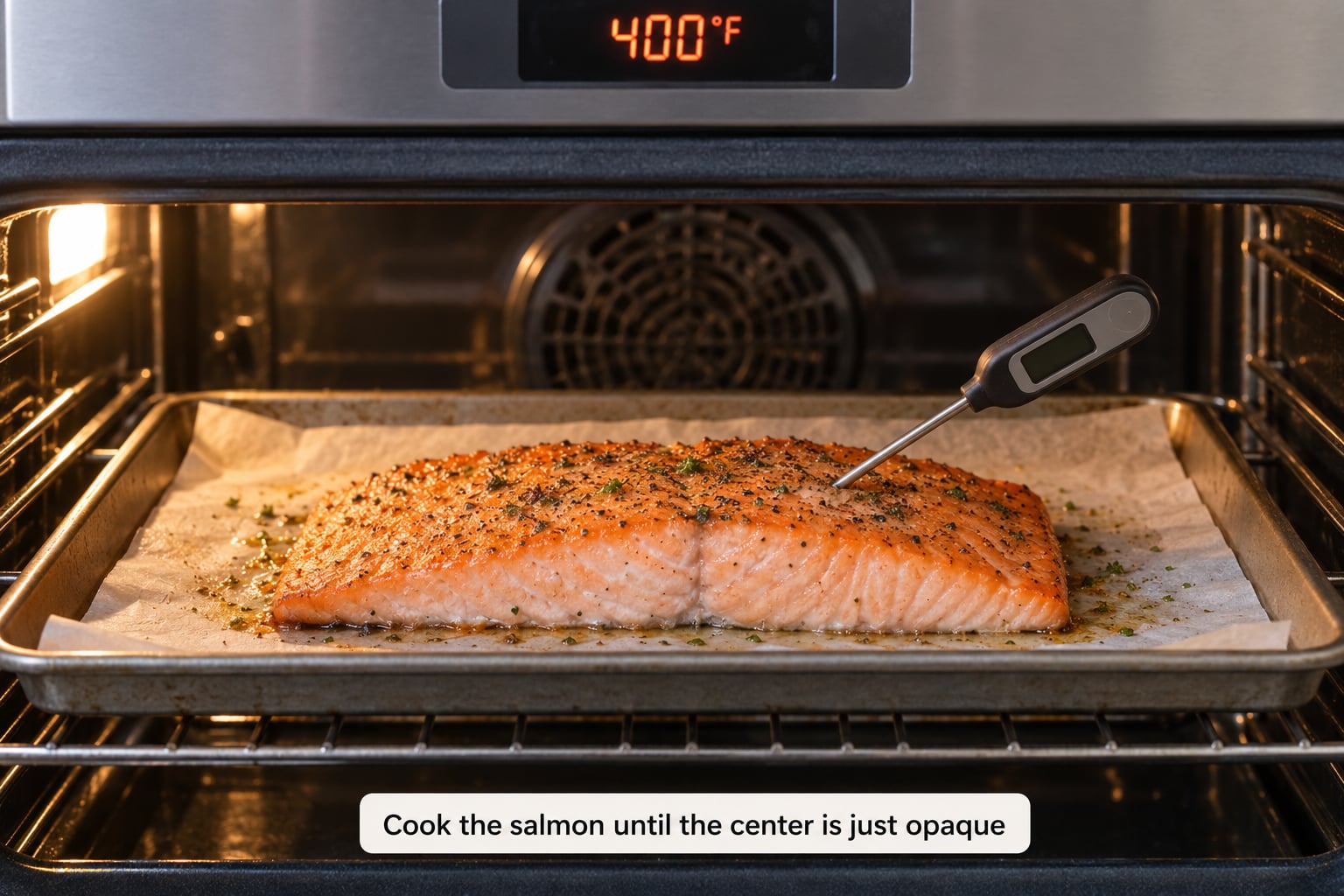
Bake at 400°F and start checking at 8 minutes. The thickest part should read 125°F to 130°F for moist, slightly translucent salmon, and you can watch the color change travel up the fillet as it cooks.
The USDA recommends 145°F for fish, which is the safe minimum and worth following if you are cooking for someone pregnant, elderly or otherwise vulnerable. The honest tradeoff is that a fillet taken all the way to 145°F loses the buttery texture people mean when they say moist salmon, and no resting technique brings that back.
Once the pan comes out, residual heat keeps cooking the fish. A fillet pulled at 130°F will often land near 135°F after a five minute rest, which is why pulling early is the habit that matters more than any other trick.
| Fillet thickness | Time at 400°F | Pull at |
|---|---|---|
| 3/4 inch | 8 to 10 minutes | 120°F to 125°F |
| 1 inch | 10 to 12 minutes | 125°F to 130°F |
| 1.25 inch | 12 to 14 minutes | 130°F |
| 1.5 inch | 15 to 18 minutes | 130°F to 135°F |
If your oven runs hot, drop a notch to 375°F and add a few minutes, or slow everything down at 300°F for roughly 20 minutes. Home cook forums are full of people who only trust a low-and-slow roast because their ovens run 20 degrees hot, and calibrating your oven with an inexpensive oven thermometer is a good weekend project.
4. Let it rest before serving
Rest the salmon for 3 to 5 minutes on the pan or a plate. Resting lets the juices redistribute instead of running out the moment you cut, and a loose foil tent over the fillet keeps the surface from cooling and drying.
Check it once more before slicing. The flesh should flake apart with a fork but still look slightly translucent in the very center of a thick cut. If it is chalk white all the way through, it went too far, and no squeeze of lemon will change that.
Common Mistakes That Dry Out Oven Salmon
- Cooking at excessive heat. A screaming hot oven browns the outside long before the center catches up to the safe temperature. 400°F is the sweet spot; anything at 450°F needs a much thinner fillet and an early pull.
- Leaving it in too long. Overcooking is not about the oven, it’s about the minutes after the center hits temperature. Set a timer, and check early.
- Crowding the pan. Steaming, not roasting. Give each fillet room.
- Salting too early or too heavily. Salt applied 30 minutes ahead of the oven starts drawing moisture to the surface. Season right before baking and use a lighter hand than a recipe suggests if you are sensitive to salt.
- Baking a thin tail section at the same time as a thick center cut. Pull the thin piece early or fold it under.
- Slicing straight out of the oven. Skipping the rest dumps the juices onto the plate instead of into the fish.
A white, milky liquid pooling under salmon is not a problem. That is albumin, a water-soluble protein pushed out by heat, and it is more visible on frozen or previously thawed fish because the flesh has already been damaged. Patting the fillet dry before oiling and not overcooking it keeps most of it inside.
For leftovers, cool the fish and refrigerate it within two hours. Reheat gently in a 275°F oven with a splash of oil or a damp paper towel, or warm it in a covered skillet over low heat for a few minutes. Microwaving on high dries it out fast, and we have a longer guide on how to reheat leftovers without drying them out.
Seasoning works best as layers rather than a soak. A short 15 minute rest in oil, lemon and salt before the oven seasons the surface and stops there, which is the light touch we cover in how to season food as you cook.
Frequently Asked Questions
How long do I keep salmon in the oven at 400 degrees?
At 400°F, a 1 inch skin-on fillet needs about 10 to 12 minutes. A 3/4 inch piece needs 8 to 10 minutes and a 1.5 inch piece needs 15 to 18 minutes. Start checking with a thermometer at 8 minutes and pull at 125°F to 130°F in the thickest part, because the fish keeps cooking after it leaves the oven.
Is salmon better at 400 or 425?
400°F is the safer default for home cooks because it gives you a wider margin before the surface burns. At 425°F, cut roughly a minute or two from the timing and check two minutes early. Higher heat mainly caramelizes the outside, so it only helps if you want that crust and a very thin fillet.
What temperature do chefs cook salmon at?
Restaurant methods vary widely, from a slow roast near 275°F to a very fast high-heat finish. Most home kitchens land at 375°F to 400°F, which is forgiving of an oven that is not perfectly calibrated. The doneness target matters more than the dial setting.
How do I know when salmon is fully cooked?
Use an instant-read thermometer in the thickest part of the fillet, pushing in just until the tip reaches the center. 125°F to 130°F gives moist salmon, and 145°F is the USDA safe minimum. Visual cues help too: the flesh should flake with a fork and turn opaque, but stay slightly translucent in the center of a thick cut.
Should I cover salmon when baking?
Uncovered gives you browning and a drier surface, which is the safer route to flavor. Covering with foil or baking it in a packet traps steam and keeps the flesh moist, so check the fish a few minutes early and pull it at the same internal temperature. Either way works, as long as the timing adjusts.
Can I reheat baked salmon without drying it out?
Yes, if you reheat gently. Use a 275°F oven with a splash of oil on the fish, or warm it in a covered skillet over low heat for a few minutes. Avoid high microwave power, which pushes moisture out fast. Reheated salmon will never be quite as moist as fresh, so use it in salads, grain bowls or flaked into pasta rather than serving it as a main.
Conclusion
Preheat the oven to 400°F, give the fillet room on a lined pan, and start checking at 8 minutes with a thermometer. Pull at 125°F to 130°F in the thickest part, rest it for a few minutes, and that is how to cook salmon in the oven without drying it out, safely and every time.
Once the salmon is cooked and cooling, our under thirty minute dinner method works well for building a full plate around it.