
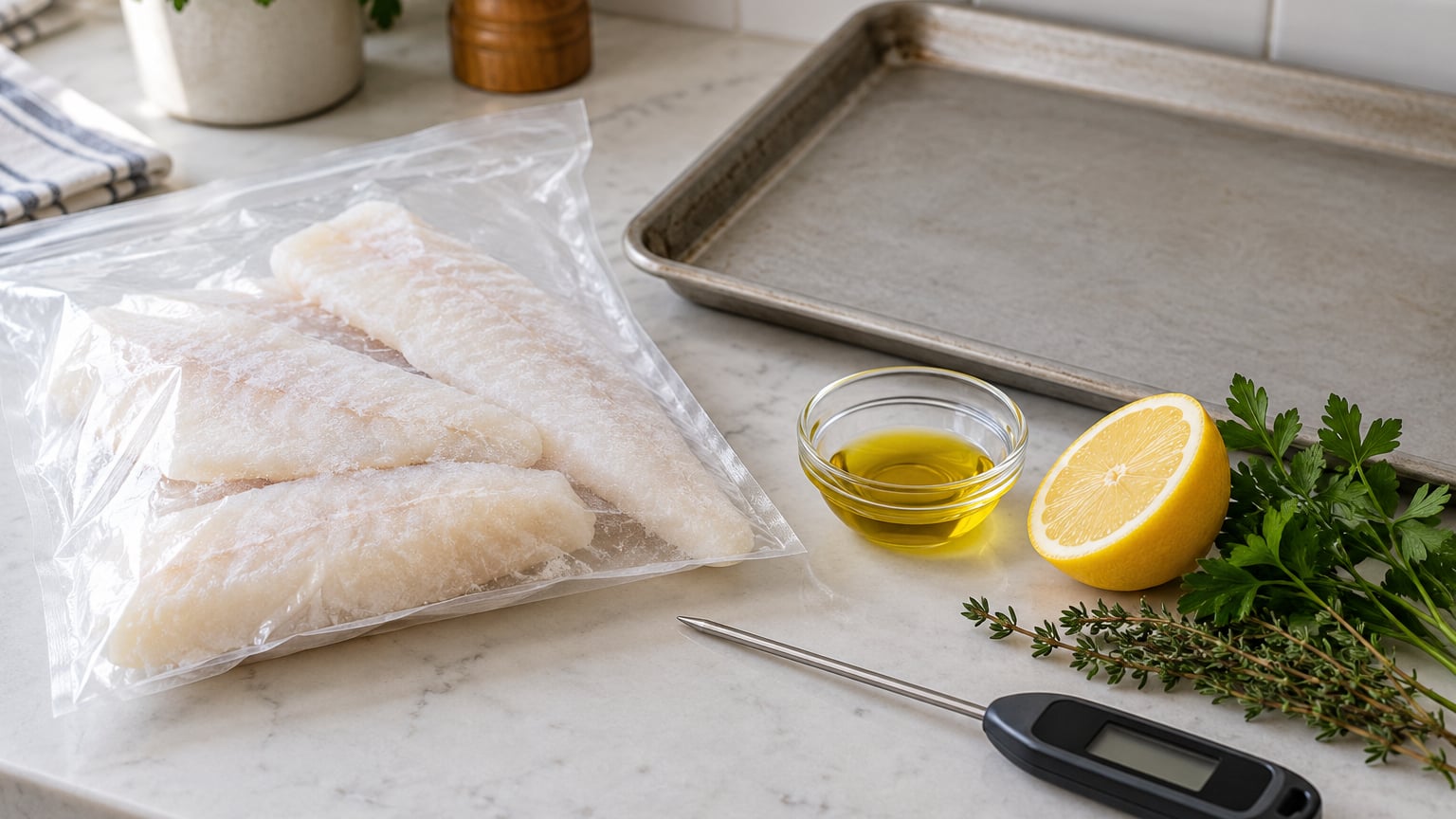
Yes, you can cook frozen fish without thawing it. Rinse off the ice glaze, pat the fillet completely dry, and give it roughly 50% more cooking time than a thawed piece would need. Most fillets under one inch thick go from freezer to plate in about 20 to 25 minutes.
The mistake that ruins frozen fish is cooking it gently for a long time. Ice turns into water in the pan, and water means steaming, not searing. Get a hot oven or a hot pan, and keep the surface dry.
Cooking from frozen is not a food safety shortcut, by the way. The fish is just as safe as a thawed one as long as the thickest part reaches 145°F. More on that below, including the fix when a fillet comes out of the freezer harder than a brick.
What You Need
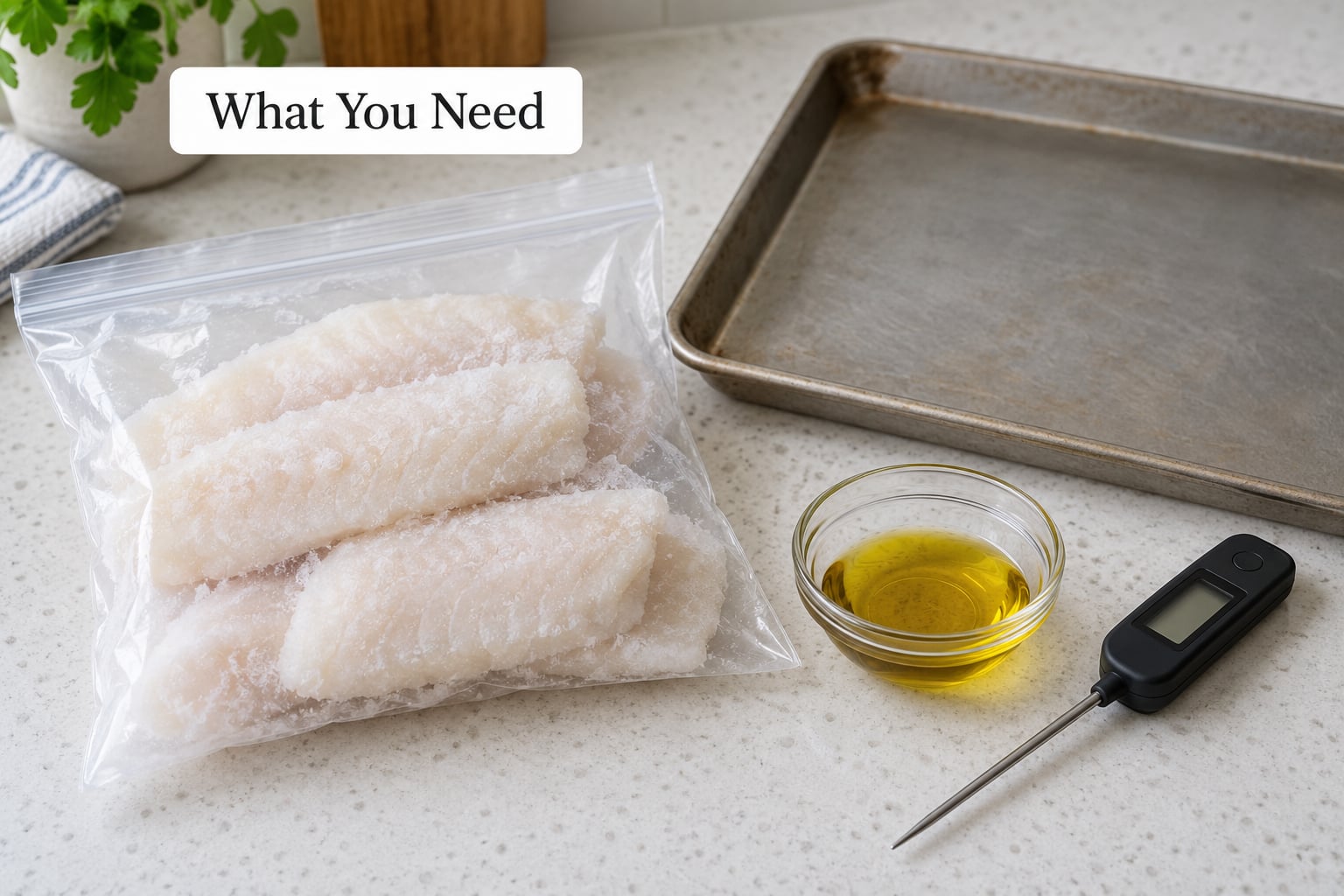
The tool that changes everything is an instant-read thermometer. Without one, you are guessing at the only number that matters, and guessing is how frozen fish ends up raw in the middle or dry all the way through.
Everything else is standard equipment: a rimmed baking sheet or foil-lined sheet pan for the oven, an oven-safe dish, a skillet with a heavy bottom, a wide shallow pan for poaching, and an air fryer if you have one.
On the fish side, keep it simple. Olive oil or avocado oil for the surface, coarse salt, cracked pepper, a lemon, and whatever herbs are within reach. Dill, parsley, thyme and garlic all work. Check out how to buy fresh fish at the counter if you want to move from freezer portions to whole fish sometime.
Method choice comes down to two things: how thick the fish is and what equipment you have. Thin fillets under half an inch cook fast in any method. Thick steaks over an inch want the oven or a pan, because the microwave will never heat them evenly. Very thick frozen portions need extra time and a thermometer, no matter which method you pick.
Step-by-Step: How to Cook Frozen Fish Without Thawing
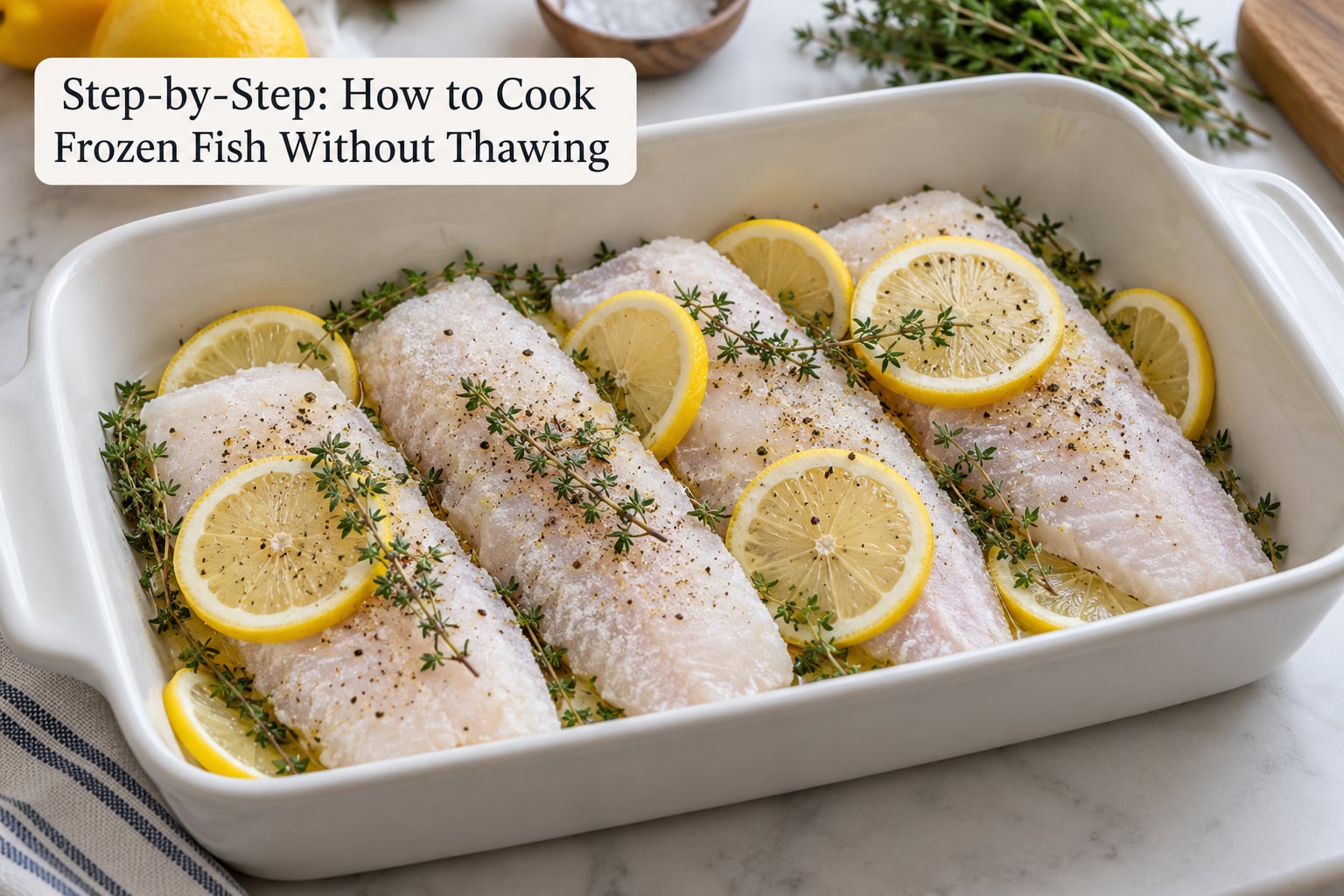
Four methods work well: baking, air frying, pan-searing and poaching. A fifth, microwaving and finishing in a pan, is the shortcut home cooks use most and it works better than most people expect.
Step 1: Choose the Right Method for the Fish
Start by looking at the cut and measuring the thickest part. A 1/2 inch tilapia fillet and a 1.5 inch halibut steak are the same problem with very different answers.
- Under 1/2 inch thick (tilapia, thin salmon portions): air fryer or skillet. Both finish in minutes.
- 1/2 to 1 inch thick (cod, thicker salmon portions, most fillets): oven, air fryer or skillet all work.
- Over 1 inch thick (halibut, swordfish, tuna steaks): oven or skillet only. Add 5 to 8 minutes and check with a thermometer early.
- Breaded or battered portions: oven or conventional fryer, never an air fryer basket.
Before anything else, take the fish out of the freezer and remove the plastic and the ice glaze. A vacuum-sealed block that goes straight into the pan will cook unevenly no matter how long you give it. Separate individual portions if they are frozen together in one block.
Rinse the fillet briefly under cold water to knock off ice crystals, then dry it. A 10-minute rule question gets asked constantly here, so let me be clear about it: the 10-minute rule means 10 minutes per inch of thickness, and it applies to thawed fish in a hot oven. Frozen fish needs about 50% longer.
Step 2: Prepare the Frozen Fish
Preheat the oven to 425°F, or 400°F if you are cooking a large batch. Air fryers preheat in two to three minutes at 400°F, and skipping it is the second most common reason frozen fish sticks and dries out.
Pat the fillet dry with paper towels. This is the step people skip, and it is the difference between a browned surface and a pale, steamed one.
Then season. Rub both sides with oil, salt and pepper before the fish hits the heat. Seasoning only the top surface tastes like seasoning only the top surface, especially when the flesh is frozen solid and absorbs so slowly.
Lay the fillets in a single layer on the baking sheet or in the air fryer basket. Crowding drops the temperature and traps steam, which is exactly what you are trying to avoid. Use a second pan rather than stacking.
For the oven, a foil packet works well on thinner fillets: put the fish on a square of foil, add lemon and herbs, fold it closed and bake at 400°F for 18 to 22 minutes. The trapped steam cooks a thin fillet evenly without drying it out.
Step 3: Cook Until the Center Reaches 145°F
This is the part people get wrong, because a timer set for thawed fish is always too short. Frozen fish needs about 50% more time than the same fillet thawed.
Timing by thickness, at 425°F in the oven:
- Under 1/2 inch: 12 to 16 minutes
- 1/2 to 1 inch: 18 to 22 minutes
- Over 1 inch: 25 to 35 minutes
Air fryer at 400°F runs faster: 6 to 8 minutes for a thin fillet, 10 to 14 minutes for a thick one, flipping once at the halfway mark. A frozen breaded portion in the basket is the exception. The breading will fall off, land in the element and go greasy, so use the oven for those.
In a skillet, heat a tablespoon of oil until it shimmers, lay the fillet in and leave it alone for four minutes per side at medium-high heat. Pressing, flipping early or moving it around is what gives frozen fish that uneven, steamed texture. Pat the dry side again before the second flip.
Poaching is the most forgiving method. Put the fillet in a shallow pan with broth, wine or milk, bring it to about 350°F and hold it there for 15 to 25 minutes. Nothing sticks and nothing burns.
The microwave shortcut: 50% power for two to three minutes, then finish in a buttered pan for three to four minutes. The microwave gets the frozen core to temperature without drying the outside, and the pan finish gives you a browned, buttery surface. This is the technique home cooks in cooking forums describe as the one that actually works on weeknights.
Whichever route you take, confirm 145°F at the thickest point with an instant-read thermometer. Push the probe in from the side, halfway between the skin and the top of the fillet. Do not rely on color: the outside can look done while the center is still raw, and that is the specific failure mode of cooking fish from frozen. How to tell when fish is done cooking covers the other cues worth checking.
Step 4: Rest, Check, and Serve
Let the fish sit two to three minutes after it leaves the heat. Thick fillets keep cooking from residual heat, so the center climbs another few degrees while you wait. That rest is also why the flesh relaxes enough to flake cleanly instead of tearing.
Push a fork in the thickest part and twist gently. It should slide in with almost no resistance and the flesh should separate into flakes. If the probe is still under 145°F, give it another two minutes and check again rather than cooking the whole fillet longer on the first try.
Keep an eye on carryover cooking with thick frozen portions. Because the center is the last thing to heat up, a fillet that hits 145°F straight out of the oven can end up past well-done by the time it reaches the table. Pulling it a shade early on thick cuts avoids dry, tight flesh.
Common Mistakes
Cooking it low and slow. A 300°F oven with a lid traps steam and cooks frozen fish into a pale, watery block. Use 400 to 425°F and keep the heat moving with a fan if you have one.
Microwaving a thick fillet and calling it done. Microwaves cook the edges long before the center. Use the microwave only as a first stage, then finish in a pan or under the broiler.
Crowding the pan. Two fillets touching each other drop the surface temperature and steam instead of sear. Space them a finger-width apart or use a second sheet pan.
Skipping the thermometer. Time is a guess based on thickness; temperature is a fact. A cheap instant-read probe removes the guesswork entirely.
Seasoning only the top. Frozen flesh absorbs flavor slowly. Oil and salt both sides before cooking and let the heat do the spreading.
Cutting into it too early. Slicing a fillet before it has finished cooking dumps the juices and shows you a center that is not ready yet.
Leaving it wet. Surface moisture is the root cause of both sogginess and sticking. Paper towels, twice, before it goes anywhere near heat.
As for why frozen fish turns mushy: freezing forms ice crystals that rupture muscle fibers, and a long gentle cook lets those damaged cells collapse into water. Flash-frozen fish that was frozen solid within hours of being caught has smaller crystals and suffers far less, which is why a portion that went straight from a freezer case can hold up better than one that sat through a thaw and refreeze.
Two habits fix most of it. Keep the fish dry and keep the heat high enough to brown the surface quickly, which sets the outside before the inside can overcook. If you want the texture back rather than just the safety, defrosting in cold water takes about 30 minutes for a one-pound fillet, and a microwave on defrost followed by an immediate cook is faster still. If you are defrosting shrimp instead, see how to cook shrimp without making it rubbery.
Frequently Asked Questions
Can you cook fish straight from the freezer?
Yes. Cooking fish from frozen is safe and, with a few adjustments, gives results close to thawed fish. Rinse off the ice glaze, pat the fillet dry, season both sides with oil, and cook it at 400 to 425 degrees. Give it about 50 percent more time than a thawed fillet needs and confirm 145 degrees at the thickest point before serving.
How much longer does frozen fish take to cook?
Roughly 50 percent longer than the same fillet cooked from thawed, and thick cuts need even more. At 425 degrees, plan on 12 to 16 minutes for fillets under half an inch, 18 to 22 minutes for fillets between half an inch and one inch, and 25 to 35 minutes for steaks over an inch thick. Start checking early with a thermometer rather than trusting the clock.
What is the 10 minute rule for fish?
The 10-minute rule means baking fish for about 10 minutes per inch of thickness in a preheated oven. It assumes thawed fish at 400 degrees. For frozen fillets you can add roughly half again, which is why a one-inch frozen piece needs closer to 20 minutes. The rule is a starting estimate, not a doneness test. Check 145 degrees at the thickest point.
Can you air fry frozen breaded fish?
You can, but you will not get a good result. The breading softens during thawing in the hot air, releases, and lands in the basket and heater where it turns greasy. Un-breaded fillets air fry well from frozen at 400 degrees for 6 to 14 minutes depending on thickness. For breaded or battered portions, use a conventional oven at 425 degrees for about 20 to 25 minutes.
What is the fastest safe way to defrost frozen fish?
The cold water method is the fastest safe option. Seal the fillet in a leakproof bag, submerge it in cold tap water and change the water every 30 minutes. A one-pound fillet thaws in roughly 30 minutes. Microwave defrost on low power takes less time but requires cooking the fish immediately, since the edges enter the food safety danger zone while the center is still frozen.
Why did my frozen fish come out mushy, and is it safe to eat?
Mushiness usually comes from long gentle cooking plus surface moisture. Ice crystals damage muscle fibers during freezing, and trapped steam breaks the flesh down further. Mushy is a texture problem, not a safety problem, as long as the fish hit 145 degrees. Next time, pat the fillet dry, use high heat for a short time, and avoid cooking it from thawed and refrozen.
Conclusion
The simplest version of how to cook frozen fish without thawing is three moves: preheat the oven to 425°F, lay the dried, lightly oiled fillets on a sheet pan in a single layer, and check 145°F at the thickest point with a thermometer before you take it out.
Everything beyond that depends on the cut. Thin fillets suit the air fryer or a skillet, thick steaks want the oven or a pan with extra minutes, and poach when you want zero risk of sticking. Whatever you choose, keep the heat high, keep the surface dry and add about half again the time a thawed fillet would need.