

To make naan bread on the stovetop, cook the dough in a preheated cast iron skillet over medium-high heat and flip it when big bubbles form across the top, about 1 to 2 minutes per side. It takes roughly an hour end to end, and most of that is the dough rising while you do something else.
No tandoor, no oven, no special equipment beyond a heavy skillet. A tandoor runs around 900 degrees, which is why so many people assume restaurant naan is off-limits at home, but a screaming-hot cast iron pan gets you the blistered top and chewy middle that matter.
What You Need
For six small naan, about the size of a folded tortilla, you need:
- 3 cups (360 g) all-purpose flour, plus more for dusting
- 2 teaspoons instant yeast, or 2 teaspoons active dry yeast
- 1 teaspoon salt
- 1 teaspoon sugar
- 3/4 cup (180 ml) lukewarm water, about 110 F (43 C)
- 1/3 cup (80 g) plain yogurt at room temperature
- 1 tablespoon olive oil, plus more for the pan
- 2 tablespoons melted butter or ghee for brushing
The equipment list is short: a 10 to 12 inch cast iron skillet or heavy stainless pan, a rolling pin, a clean tea towel or bowl cover, and a brush or the back of a spoon for butter.
Which pan and which fat work best
| Option | What you get | Watch out for |
|---|---|---|
| Cast iron skillet | Best char, best blister, holds heat steady | Needs a long preheat, and the handle gets hot enough to need a mitt |
| Griddle or tawa | Even browning, easiest way to cook two at a time | Less blistered than cast iron, so the top stays paler |
| Nonstick skillet | Forgiving, minimal sticking for beginners | Poor char; the bread browns without blistering |
For the fat, ghee has the highest smoke point and adds a nutty note, butter burns if the pan is too hot, and a neutral oil like canola gives you clean char with no flavor of its own. Cooking spray works for a lighter, less oily naan.
Step-by-Step: How to Make Naan Bread on the Stovetop
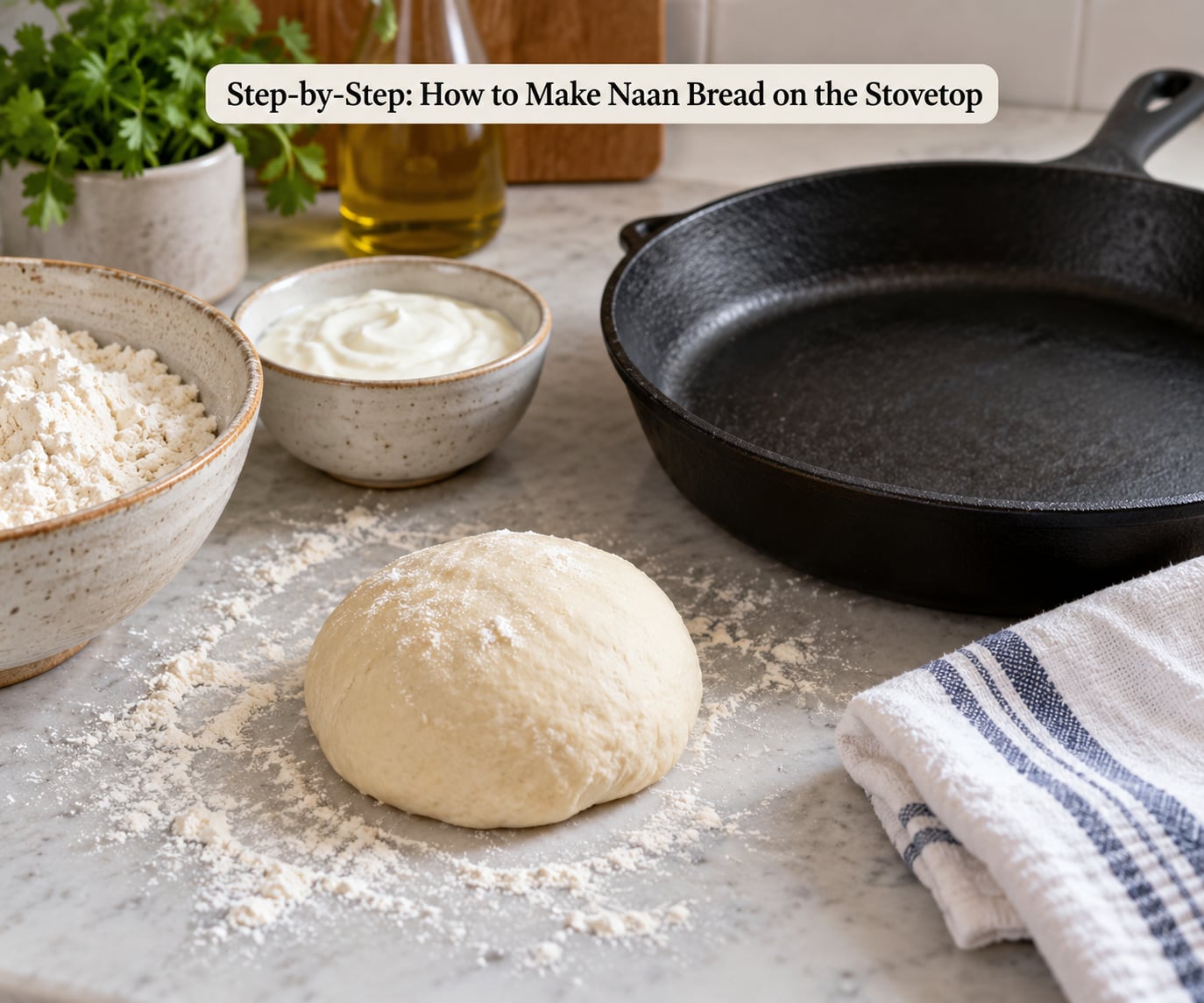
Step 1: Activate the yeast
Warm the water first and check it with your wrist. It should feel comfortably warm, not hot. If you do not have a thermometer, imagine the water used to warm a bottle of baby formula.
Stir the sugar into the water, sprinkle the yeast on top, and wait 5 to 10 minutes. Active yeast is ready when a thick foam sits on the surface and the water smells sweet and bready. Instant yeast skips this step and goes straight into the flour.
If after 10 minutes nothing has happened, the water was too hot and the yeast died. Pour it out, cool the water for 10 minutes, and start again with fresh yeast. This is the single most common reason a batch of naan comes out flat and dense.
Step 2: Make and knead the dough
Combine the flour, salt, remaining sugar, and yogurt, then add the activated yeast and water. Mix with a spoon until it is too thick to stir, then turn it out onto a floured surface.
Knead for 8 to 10 minutes. You are looking for a smooth, slightly tacky ball that springs back when you poke it. If it tears as you knead, add a tablespoon of water; if it sticks to your hands the whole time, dust in another tablespoon of flour.
Do not rush this stage. Gluten that has not developed will not hold the stretch you need in the next step, and you will fight a dough that tears instead of springing back. If you enjoy working dough by hand, our guide to making pizza dough at home uses the same kneading logic.
Step 3: Let the dough rise
Put the dough in a lightly oiled bowl, cover it with a damp towel, and leave it somewhere warm until it looks puffy and roughly doubles in size. That is usually 45 to 60 minutes in a kitchen around 72 F (22 C).
If you are in a hurry, put the bowl inside your oven with just the light on, or on top of the refrigerator. Cold kitchens push the rise closer to 90 minutes. A second short rise after you divide the dough adds flavor, so do not skip it, but a long cold overnight rise in the fridge works well too.
Home bakers on r/Bread and r/Breadit count stovetop naan as one of the few yeasted breads that reliably works without an oven. If your first attempt is going somewhere else, you may also like no knead bread in a dutch oven.
Step 4: Shape the naan
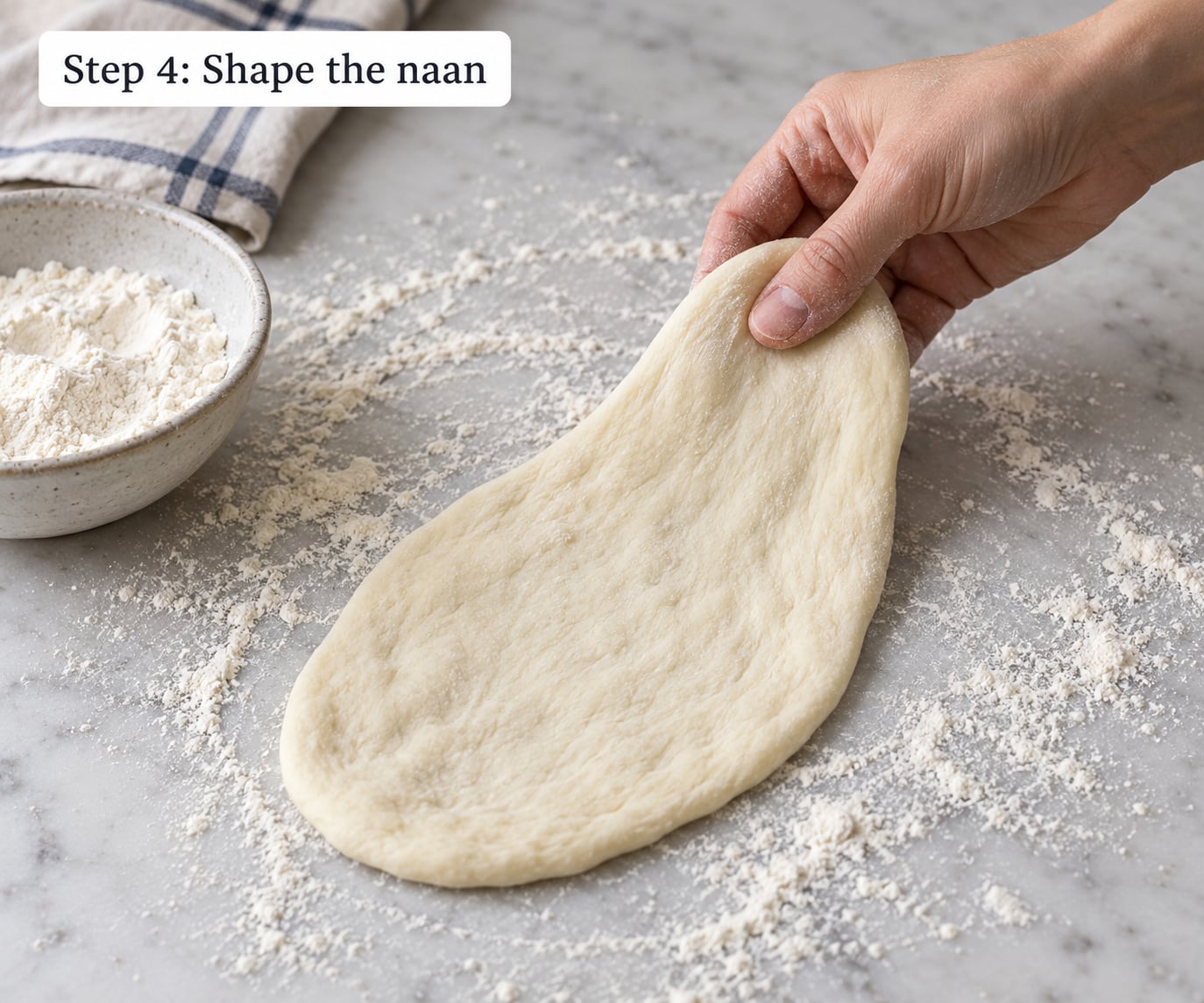
Punch the dough down and cut it into six pieces. Let each piece rest for 5 minutes so the gluten relaxes, then roll one out into a circle roughly 1/4 inch thick.
Stretch it instead of rolling it harder. Press your knuckles into the center of the dough and push them outward, leaving the middle a little thicker so it puffs instead of deflating, then pull the edges thin the way you would stretch pizza dough.
Dock the whole surface with a fork or the tip of a knife. Skip this and you get a flat, cracker-like round with no bubbles. Scatter on nigella seeds, sesame seeds, or a pinch of flaky salt, and repeat with the rest of the pieces.
Step 5: Cook the naan on the stovetop in a skillet
Set the cast iron skillet on medium-high heat and leave it for a full 5 minutes before adding anything. A pan that was just oiled and heated for 30 seconds will tear the dough when you lay it on.
Dip your fingertips in water and dab the top of the naan. The moisture turns to steam on contact, which is what drives the puff. Lay the wet side down on the dry hot pan in one motion, close to the surface.
Cook 1 to 2 minutes and watch the top rather than the clock. Large bubbles across the surface and the edges starting to lift mean it is time to flip. If you want a lid, cover it for the first minute to trap steam and help the center cook through.
Flip with your fingers or a pair of tongs, press out any large folds, and cook the second side for another 1 to 2 minutes. Look for brown spots, and a charred patch here or there is a feature, not a failure.
Step 6: Check the naan and serve it warm
Flip it once more if you want a second look at the first side. Cooked naan is golden with dark freckles, flexible enough to fold without cracking, and slightly blistered on top.
Brush it immediately with melted butter or ghee. While the first one cooks, warm 3 tablespoons of butter with two crushed garlic cloves and a pinch of salt for garlic naan, then brush that on instead.
Stack finished naan in a clean tea towel or a bowl covered with foil. They stay soft for 20 to 30 minutes that way, and any moisture left on the surface keeps the crust from going stale. Serve alongside a curry, or slice one open for a grilled cheese with crisp bread style sandwich the next day.
Common Mistakes
| What went wrong | Why | Fix it |
|---|---|---|
| Dense, hard, chewy bread | Too much flour, or not enough kneading | Add a tablespoon of water at kneading, and stop adding flour once the dough feels tacky rather than dry |
| Flat naan with no puff | Yeast was dead or the water was above 115 F (46 C) | Check the water with your wrist and always look for the foam before mixing |
| Burnt outside, raw middle | Pan too hot, bread too thick, or no lid | Drop to medium heat, roll thinner, and cover for the first minute |
| Sticks to the pan or tears | Pan not hot enough, or dough rested too long | Preheat for a full 5 minutes and keep shaped naan under 15 minutes before cooking |
| Tough and cracker-like | Not docked, or rolled with a pin instead of stretched | Poke holes all over and stretch by hand so the interior stays open |
| Yogurt makes the dough sticky | It went straight from the fridge into the mix | Let the yogurt sit out for 30 minutes until it is room temperature |
Cold yogurt is the quiet culprit behind a lot of disappointing naan. It slows the yeast and leaves the dough slack and sticky, which is why cooks on cooking forums always let it warm up first.
One more trick worth knowing: after cooking, hold the naan with tongs directly over a gas flame for 10 to 15 seconds. The top blackens in spots and picks up a smoky flavor that no home oven will give you. Skip it if you have a gas stove with an exposed flame you are not comfortable working near, or if your skillet is seasoned and thin enough to be a concern.
A quick version exists for nights when you have no time for a rise. Mix 2 cups of flour, 1 teaspoon of baking powder, 1/2 teaspoon of salt, and 3/4 cup of yogurt, knead for 2 minutes, rest under a towel for 15 minutes, then shape and cook exactly as above. It will not puff like yeast dough, but it cooks in 20 minutes and eats well with soup.
Frequently Asked Questions
What is the secret to making naan?
Heat and a wet cooking surface. A properly preheated cast iron skillet plus a light dab of water on the top of the dough creates the steam that blisters and puffs the bread. High enough heat, a well-developed dough, and thin rolling are the other three pieces.
What is the secret ingredient in naan?
Yogurt. Its lactic acid tenderizes the gluten, which is why naan stays soft and chewy instead of turning tough like a standard loaf. Some bakers also add milk powder or ghee, but yogurt is the ingredient most recipes agree on. It also speeds up the rise slightly.
How do I cook naan bread in a frying pan?
Heat an empty skillet on medium-high for 5 minutes, dab the top of the naan with water, then lay it wet side down. Cook 1 to 2 minutes until big bubbles appear on top, flip, and cook the second side another 1 to 2 minutes. Brush with butter right away.
How long does naan take to cook on a stovetop?
About 1 to 2 minutes per side, so 3 to 4 minutes of skillet time per piece. Most of the hour-long process is resting: 45 to 60 minutes for the first rise and 15 minutes for the second. A no-yeast version with baking powder cuts the whole thing to about 20 minutes.
How do I heat up or toast leftover naan?
Warm naan in a dry skillet over medium heat for 30 to 60 seconds per side until soft again. A few seconds in the microwave with a damp paper towel also works. Store extra naan in a sealed bag at room temperature for two days, refrigerate for up to a week, or freeze flat for two months.
Can you eat naan bread cold, and is it okay for diabetics?
Cold naan is fine to eat, though it is chewier and less fragrant than it is warm. For diabetes, plain naan is a refined-flour carb with a large portion size; one small naan has roughly 30 grams of carbohydrate. Whole-wheat naan and a thinner roll cut the number, but portions matter more than any swap. A registered dietitian can help you work out numbers for your own meals.
Start with the dough tonight and the skillet work takes four minutes a piece. Get the water right, give the skillet its full 5 minutes of preheat, and stop watching the clock once the bubbles take over.