
Red wine and white wine are served at different temperatures for a reason. Most reds sit best between 55 and 65°F (13 to 18°C), while whites want to be well chilled, around 45 to 50°F (7 to 10°C), with sweet and sparkling wine colder still. Get this wrong and the same bottle tastes flat or boozy instead of balanced.
What trips people up is that almost nobody owns a wine thermometer, so the rule gets carried forward as “room temperature for red, fridge for white.” That is roughly right and mostly wrong at once, mostly because a modern heated room runs 70 to 75°F, which is too warm for almost every red.
The good news is that this is a two-minute adjustment once you know the target. Everything below gives you the number for your wine, the reason behind it, and a way to get there before guests arrive.
Table of Contents
Red Wine vs White Wine Serving Temperature Guide at a Glance
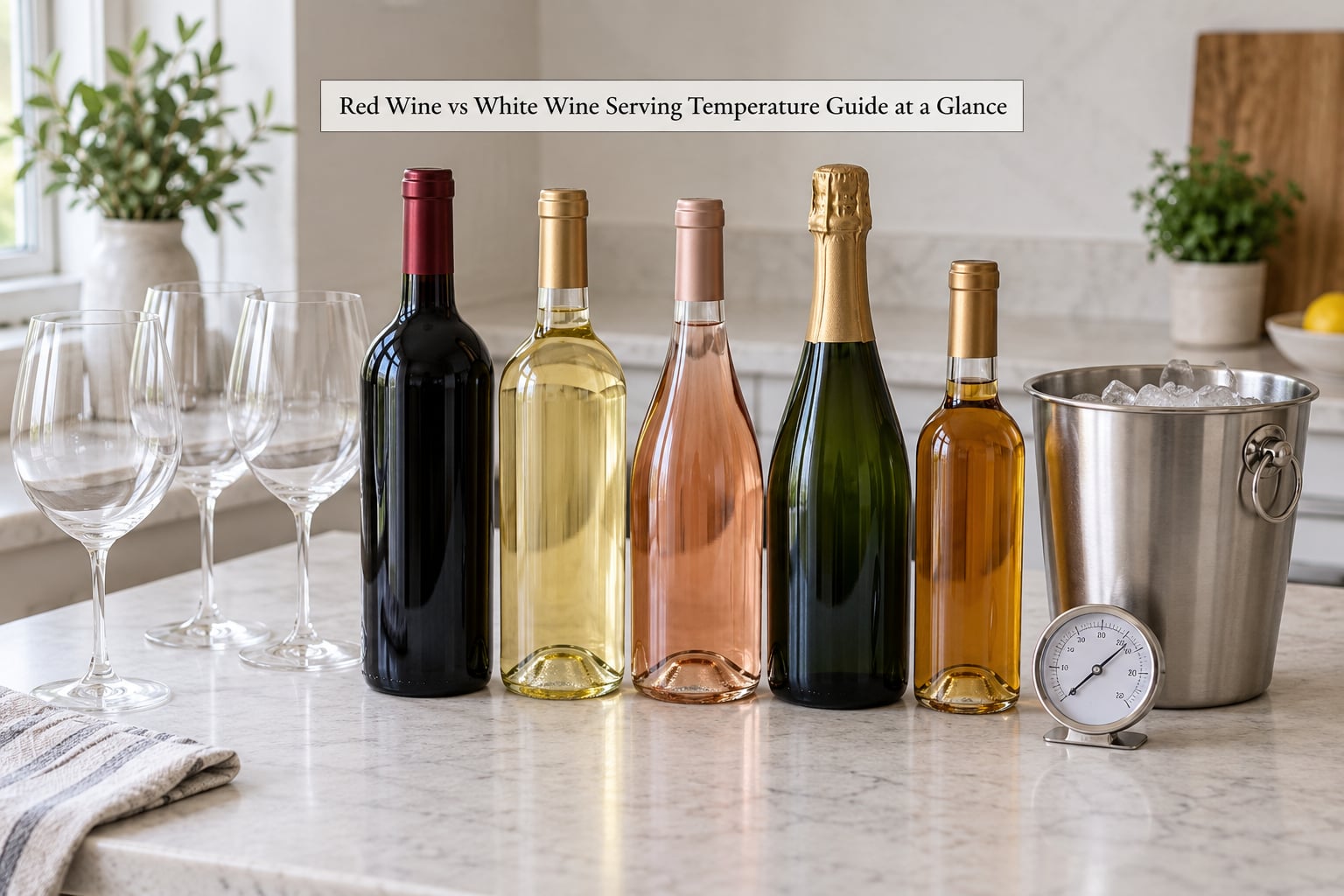
Start with the table, then read the sections that match what you are pouring. These are working ranges rather than single numbers, because body and sweetness move the target by several degrees in either direction.
| Wine style | Fahrenheit | Celsius | Too warm | Too cold |
|---|---|---|---|---|
| Light red (Pinot Noir, Gamay) | 54-58°F | 12-14°C | Alcohol dominates | Tannin goes hard and drying |
| Medium red (Merlot, Sangiovese) | 57-62°F | 14-16°C | Fruit tastes stewed | Aroma shuts down |
| Full-bodied red (Cabernet, Syrah) | 60-65°F | 16-18°C | Hot and boozy | Pebbly tannin, muted fruit |
| Light white (Sauvignon Blanc, Pinot Grigio) | 45-50°F | 7-10°C | Flat, no lift | Clean but sour |
| Rich or oaked white (Chardonnay, Viognier) | 50-55°F | 10-13°C | Oak and butter dominate | Buttery notes turn cloying |
| Rosé (dry) | 45-50°F | 7-10°C | Warm and watery | Fruit and acidity go flat |
| Sparkling wine | 38-45°F | 4-7°C | Bubbles feel soft and foamy | Aroma muted |
| Dessert or fortified wine | 45-55°F | 7-13°C | Alcohol overwhelms sugar | Too sharp for the sweetness |
Refrigerator, freezer, and ice bucket in real numbers
A standard refrigerator sits around 37 to 40°F (3 to 4°C). That is colder than almost every white wants to be served, so whites usually need to come out and sit before pouring. The same fridge is not much use for reds unless you want them cool rather than cellar-temperature.
A freezer runs roughly 0°F (-18°C) and is the fastest home method, but only for short spells. Nobody should guess. Plan for 20 to 25 minutes for a room-temperature bottle to reach drinking-ready chill, and always set a timer.
An ice-and-water bucket is the best tool of the three. Water conducts heat far faster than ice alone, and a half-ice-half-water mix drops a bottle several degrees in about 15 minutes and holds it steady at serving temperature for the length of a dinner.
Storage temperature is not serving temperature
These get confused constantly. A cellar kept at 55°F (13°C) is a storage setting chosen to protect long aging. Serving a wine at cellar temperature gives you a light, cool red and nothing more.
Similarly, a wine fridge set to 52 to 58°F (11 to 14°C) is protecting bottles, not serving them. Pull the red out 20 to 30 minutes ahead and the same bottle suddenly has room to open up.
How Temperature Changes Red Wine
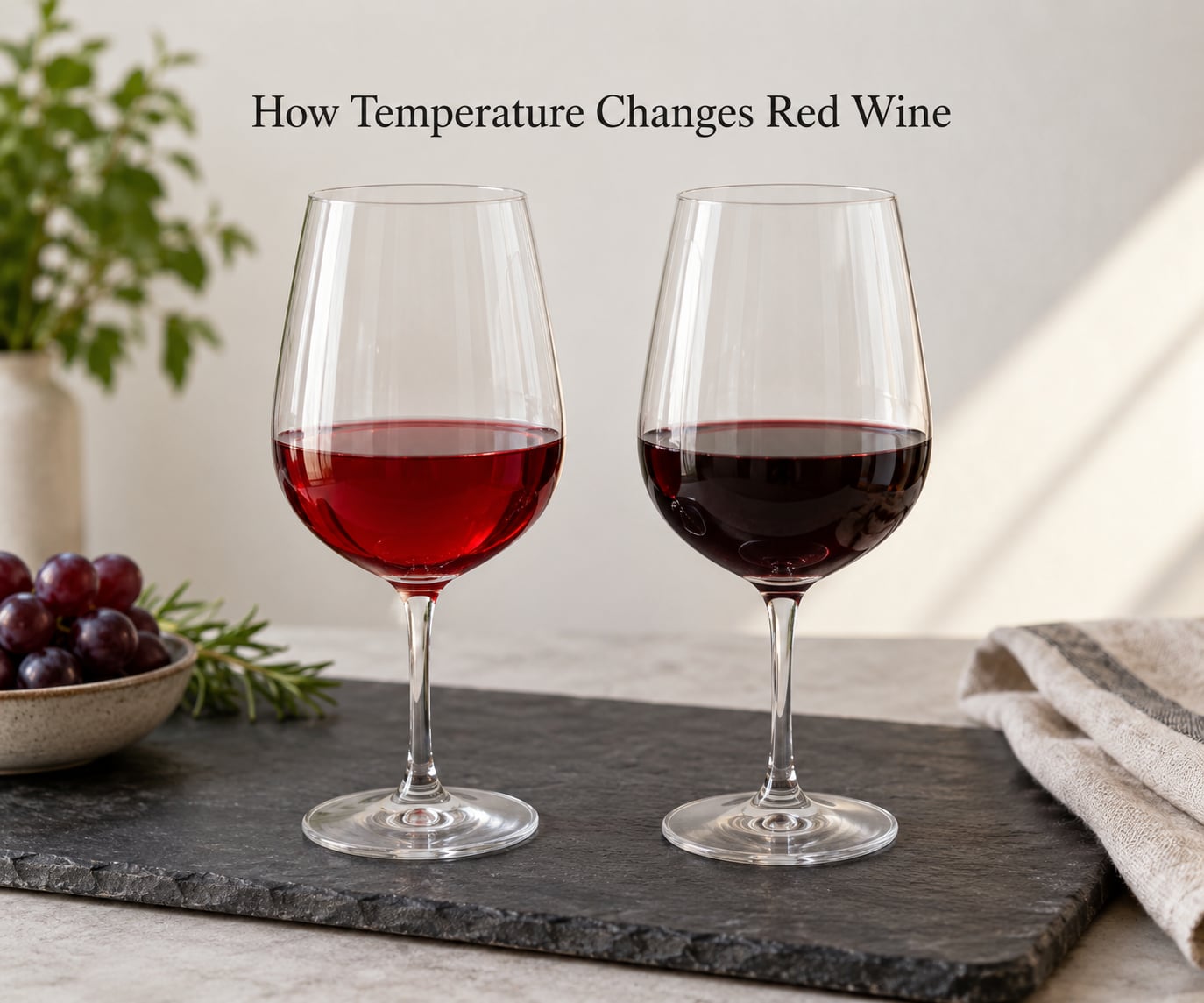
Red wine is served warmer because warmth releases aroma compounds and softens tannin, and both of those things are the difference between a wine that tastes generous and one that tastes punishing. Cold does the opposite of what most people expect.
Cold makes tannin harder, not softer
Tannin is the grippy, drying sensation you get from the skins of red grapes, and it is what makes a young Cabernet feel serious. Warmth relaxes it. Serve a tannic red cold and the tannin tightens up, the fruit recedes, and the wine reads as hard and dried out rather than young and closed.
This is why a fridge-cold Syrah with steak feels punishing while the same bottle at 62°F feels generous. It is also why a light red with almost no tannin does the opposite and wants to be cool.
Warmth opens the aroma, and too much warmth brings the alcohol forward
Aromas are volatile, so they escape more readily as a wine warms. Serve a red ice cold and you get a muted glass with almost none of the bouquet, which is why people often decide they do not like the wine before they have actually tasted it.
Push past about 68°F (20°C) and the ethanol starts shouting. The wine tastes hot and boozy, the fruit reads as cooked, and the alcohol warmth lingers in the finish. That is the temperature a 72°F living room produces, which is why restaurant reds that arrive warm frustrate people so reliably.
Light reds want less heat than heavy reds
Light-bodied reds have thinner skins, less tannin and more delicate fruit, so they prefer the cool end of the range. Full-bodied reds have more tannin and more concentration and benefit from extra warmth. Here is how the common grapes break down.
| Red grape | Body | Ideal serving temperature | Notes |
|---|---|---|---|
| Pinot Noir | Light | 54-57°F (12-14°C) | Delicate aroma; cold flattens the floral notes |
| Gamay (Beaujolais) | Light | 52-55°F (11-13°C) | Serve cool, almost cellar temperature |
| Merlot | Medium | 57-62°F (14-16°C) | Soft tannin, comfortable slightly cool |
| Sangiovese | Medium | 58-62°F (14-17°C) | High acidity wants a little warmth |
| Cabernet Sauvignon | Full | 60-65°F (16-18°C) | Tannic, needs warmth to relax |
| Syrah or Shiraz | Full | 60-65°F (16-18°C) | Big structure, peppery tannin |
| Malbec | Full | 58-63°F (14-17°C) | Sits between Merlot and Cabernet |
One nuance worth knowing: professional tasters evaluate wine warmer than the temperature at which they would drink it, because warmth opens the structure for analysis. That is a tasting-room technique, not a dinner technique. For everyday drinking, aim slightly below where you would evaluate.
How Temperature Changes White Wine
White wine is served cold for a simple reason that most people notice in their body rather than their nose. Alcohol and warmth make red wine feel bigger, and chilling a white does the opposite: it suppresses the alcohol, tightens the acidity and refreshes the palate, which is exactly what you want alongside food.
Lightly chilled is the target, not ice cold
The mistake I see most often is white straight from the fridge at 37 to 40°F (3 to 4°C). At that temperature the aroma is muted and the acidity takes over, so a Sauvignon Blanc tastes sour and a Chardonnay tastes thin and lemon-like. Take whites out of the fridge 15 to 20 minutes before you pour and they land where they should.
If you want a way to check without a thermometer, hold the bottle in your hand for a minute. Comfortably cool, not cold, is the right feel.
Style still matters, even within white wine
Light, crisp, high-acid whites like Sauvignon Blanc and Pinot Grigio are happiest at the cold end, around 45 to 50°F. Aromatic varieties such as Viognier or Gewürztraminer want similar chill but lose their perfume faster, so give them only a short rest outside the fridge.
Rich whites and oaked Chardonnays are the exception. They have enough texture and alcohol to taste flat and heavy when ice cold, so serve them closer to 50 to 55°F. If you are pairing, our white wine pairing basics for home cooks guide covers matching acidity to the plate, which matters just as much as the chill.
The rule for a cellar or fridge bottle
If your white has been sitting in a warm room and is at 68°F or higher, it needs active chilling, not time. If it came from a cellar at 55°F, it needs about 20 minutes in the fridge before service. Most home fridges run colder than that, so the bottle will keep cooling after you take it out, which is why the timer matters.
What About Rosé, Sparkling, and Dessert Wines?
Rosé, sparkling, fortified and dessert wines sit outside the simple red versus white split. Their ideal temperature is driven by sugar, carbonation and alcohol rather than by tannin, and getting it right makes a bigger difference than it does for table wine.
Rosé follows the acid, not the colour
Dry rosé is essentially a light-bodied red that has limited skin contact, so it wants the same treatment as a crisp white. Serve it at 45 to 50°F and its acidity reads as refreshment. Serve it warm and it turns flat and slightly watery, which is the most common rosé complaint there is.
Sparkling wine is the coldest wine you will ever pour
Carbonation feels sharper and more precise when the wine is cold, and warmth makes bubbles turn soft and foamy in the glass. Serve sparkling at 38 to 45°F (4 to 7°C), which in practice means fridge-cold rather than room temperature. Sweet styles such as Moscato or demi-sec can go a touch colder still.
Forgetting a bottle in the freezer is the one genuinely common home accident. Water expands as it freezes, and a forgotten bottle can crack or push its cork out. Set a timer, or put the bottle in a bowl of cold water first to slow the process.
Dessert and fortified wines are the exceptions to cold
Port, Madeira, sherry and late-harvest wines are higher in alcohol and often sweet, and chilling them too much makes the sugar feel sharp rather than luscious. Serve them around 50 to 55°F (10 to 13°C), which for a heavy bottle means a short time in the fridge rather than a full rest.
Ageworthy fortified wines with real acidity are different again. Those benefit from warming toward cellar temperature so the volatile aromatics open up, similar to an aged red.
How to Adjust a Wine Bottle Before Dinner
Here is the method I use, in order. Work through it top to bottom and you will not need a thermometer or any special equipment.
1. Estimate the starting temperature
A bottle standing in a 72°F room is warm. A bottle in a wine fridge at 55°F is cool. A bottle from a proper cellar at 55°F is already in the right neighborhood for a light red. Start from what you know and skip steps you do not need.
2. Pull reds out 20 to 30 minutes ahead
This is what people mean by the 20 minute rule. It is not a fixed rule so much as a useful default: take a red out of the fridge or cellar roughly 20 minutes before service, or take a warm-room bottle and put it into the fridge for 20 minutes. Either direction moves it toward the 55 to 65°F band. It is a starting estimate, not science, so taste before you commit.
3. Use an ice-and-water bucket for anything urgent
Fill a bucket with equal parts ice and water and submerge the bottle up to the shoulder. Expect meaningful cooling in 15 to 20 minutes for a warm bottle, and the mix will then hold the wine at serving temperature for an hour or more without over-chilling it. This is the same method sommeliers use, and it is much faster than ice alone.
4. Use the fridge for whites, and count backwards
Chilling rate is the useful number here: roughly 4 to 5°F per 30 minutes for the first hour or so. Coming from a warm room of about 70°F, plan on around 90 minutes to reach serving temperature. Coming from a cellar at 55°F, about 40 minutes is enough to reach 7°C.
Count backwards from when you plan to open the bottle, then add a few minutes because nobody pours on the dot. We wrote up four fast ways to chill a bottle if you need more options.
5. Warm gently, never with heat
If a white is too cold, take it out of the fridge and let it stand at room temperature for 15 to 20 minutes. Cup the bottle in your hands and rotate it slowly for a few minutes when you need to move faster.
Do not use a microwave. Microwaves heat unevenly, and a bottle can shatter or push its cork out as the liquid inside expands. No hot water bath, no radiator, no direct sun. All of these cook the wine and drive off the aromatics you are trying to keep.
| Method | Time needed | Good for | Watch out for |
|---|---|---|---|
| Ice and water bucket | 15-20 min from a warm room | Fastest reliable method, holds temperature through dinner | Refill as ice melts; keep water level up to the shoulder |
| Freezer | 20-25 min with a timer | Last-minute rescue | Set a timer, as a forgotten bottle can crack |
| Refrigerator | 90 min from 70°F; 40 min from 55°F | Overnight whites, wines served later in the evening | Ends colder than you want, so add pull-out time |
| Wet towel plus fan or cool room | 40-60 min | Gentle approach with no equipment | Slow, needs airflow to work |
| Counter, unopened | 2-3 hours from cold | Warming a chilled white gently | Too slow in a cold room |
Which Should You Choose?
If you only remember one decision, choose by how heavy the wine is and how warm the room is, not by colour. Here is how the choice plays out in practice.
Pick a cooler red when the room is warm or the wine is light. A 75°F summer house plus a Pinot Noir or Gamay means a bottle that came straight from a warm shelf will taste boozy at the table. Twenty minutes in the fridge fixes it, and the wine tastes far better for the effort.
Pick a chilled white when the food is rich or spicy. Acidity cuts through fat, and cold suppresses the alcohol that would otherwise make a creamy pasta or a curry feel heavier. This is where a well-chilled white beats a red on the table.
Pick moderate chilling for a normal dinner party. Most home fridges run 37 to 40°F, which is too cold for immediate service and too warm for nothing. Put whites in about 40 minutes before you eat and reds out about 30 minutes before, and both land in range.
Serving one wine temperature for the whole table? Pick the temperature that suits the majority of the glasses and accept that one bottle may be a few degrees off. Better to serve everything well than to run a wine refrigerator like a small kitchen.
Guests with different preferences? Pour the same wine at slightly different temperatures by pulling one bottle forward and holding another back. Nobody notices, and it solves the problem without a second bottle.
Ordering at a restaurant? Ask for the wine at the recommended temperature rather than accepting whatever arrives. If a red shows up lukewarm, a server can usually chill or warm it. Learning how to taste wine without overthinking it helps here, because being able to say it feels warm rather than heavy is enough of an answer.
Frequently Asked Questions
Is room temperature red wine too warm for serving?
In a modern home, usually yes. Room temperature once meant an unheated room near 60°F, but most American living and dining rooms sit at 70 to 75°F. At those temperatures a red tastes hot and boozy, with the alcohol standing out in front of the fruit. That is why 55 to 65°F (13 to 18°C) is the modern target, and why a fridge-cold red is not a good answer either.
What is the 20 minute rule for red wine?
It is a practical default rather than a fixed law. It means giving a red about 20 minutes of adjustment before service, in whichever direction it needs. Take a warm bottle and put it in the fridge for 20 minutes, or take a bottle out of a cold cellar and let it stand for 20 minutes. Light reds usually land right. A heavy, tannic Cabernet may still need a little longer.
How long should white wine sit in the fridge before serving?
Plan on 90 minutes from a warm room of about 70°F, or about 40 minutes if the bottle started in a cellar at 55°F. Refrigerators cool roughly 4 to 5°F every 30 minutes for the first hour. Because a home fridge runs colder than serving temperature, whites usually benefit from 15 to 20 minutes at room temperature after they come out. Pour and taste before serving to the table.
Can white wine be too cold?
Yes, and it is a very common mistake. Straight from a refrigerator at 37 to 40°F (3 to 4°C), the aroma is muted and the acidity dominates, so a Sauvignon Blanc tastes sharp and a Chardonnay tastes thin. Take the bottle out 15 to 20 minutes before you pour. The exception is sparkling wine, which genuinely is meant to be served at that fridge temperature.
What are the 30/30 and 75-85-95 rules for wine?
Both are informal tasting guidelines for judging wine at a single temperature. The 30/30 rule means holding the glass by the stem so the wine warms to about 30°C, or 86°F. The 75-85-95 rule refers to judging a wine at three points in its life, usually against a scoring scale. Neither is a serving rule, so neither should replace the ranges in this guide for a dinner table.
What temperature should a wine fridge be set at?
Most consumer wine fridges should be set between 52 and 58°F (11 to 14°C), which stores red and white bottles safely without shocking either style. That is a storage setting, not a serving setting. Reds still want 20 to 30 minutes out of the unit before they are poured, and whites served straight from it are usually too cold and benefit from sitting out briefly.
The Simple Rule to Remember
Forget the red-versus-white rule and start from the wine itself: body, sweetness and carbonation. Light reds and aromatic whites want to be cool, heavy reds want warmth, sparkling wants to be the coldest thing on the table, and dessert wines want somewhere in between.
Then adjust by taste rather than by theory. Chill the light whites for 20 minutes, give the reds 20 minutes in the other direction, and pour a small taste first. That single habit does more than any number on a chart, and it is what a good server does anyway.