
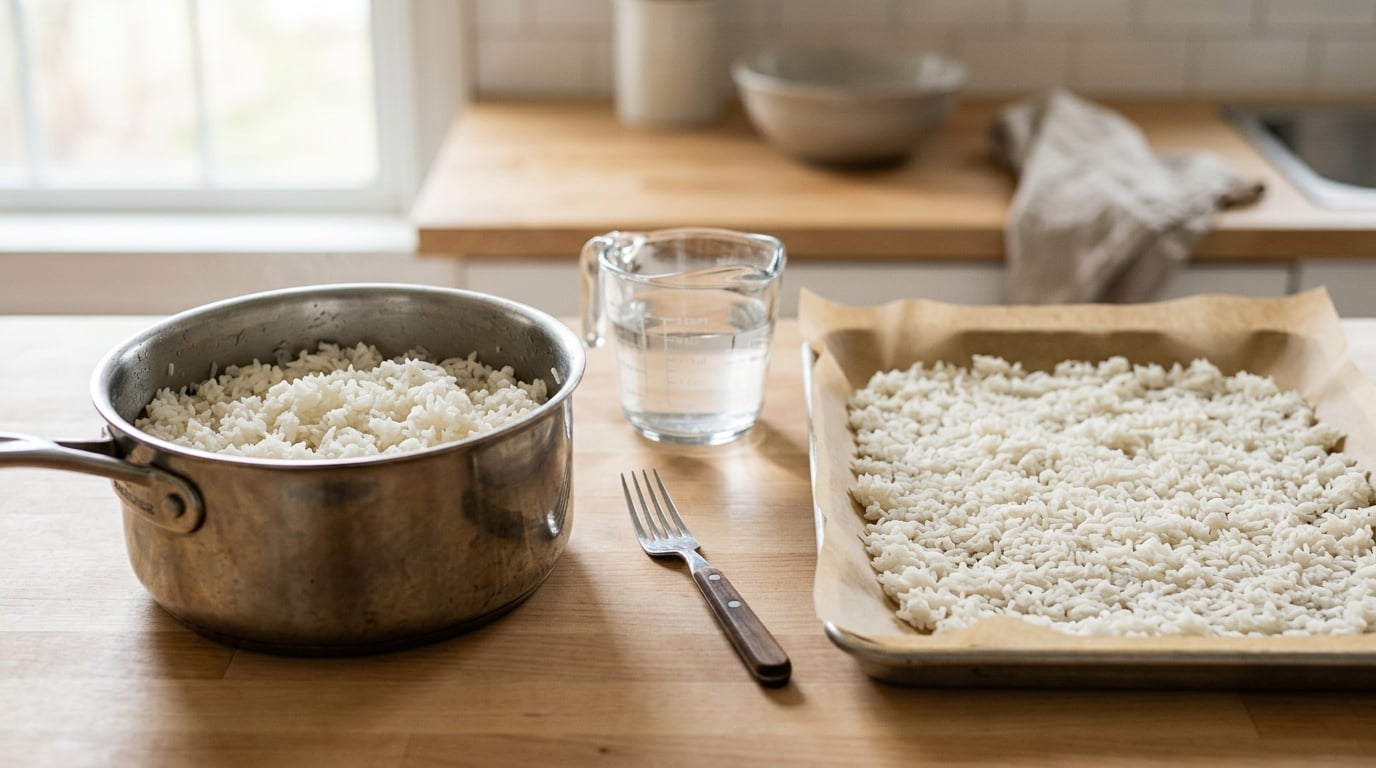
Rice turns mushy for two reasons: it absorbed more water than its starch could hold, or it cooked past the point where the water was gone. Either way the grain’s outer layer breaks, starch leaks out, and the grains glue themselves together. The good news is that a wet batch is usually fixable in five minutes, and the next one is entirely in your hands.
No, cooking it longer will not help. Once the grains have split, extra heat just turns them to paste. Everything below still holds for 2026 kitchens and the same stovetop, because the problem is water and time, not equipment.
Here is how to tell what went wrong, how to rescue the pot in front of you, and which numbers to use for your variety next time.
Table of Contents
- What You Need
- Why Rice Comes Out Mushy and How to Fix It: Step-by-Step
- Common Mistakes
- Frequently Asked Questions
- Can you fix mushy rice after it is already cooked?
- Why does my rice become sticky when I use a rice cooker?
- Should I rinse rice to prevent mushy texture?
- How much water should I add to different types of rice?
- Can I reheat mushy rice and make it fluffy again?
- How do I keep rice from sticking to the bottom of the pot?
- Conclusion
What You Need
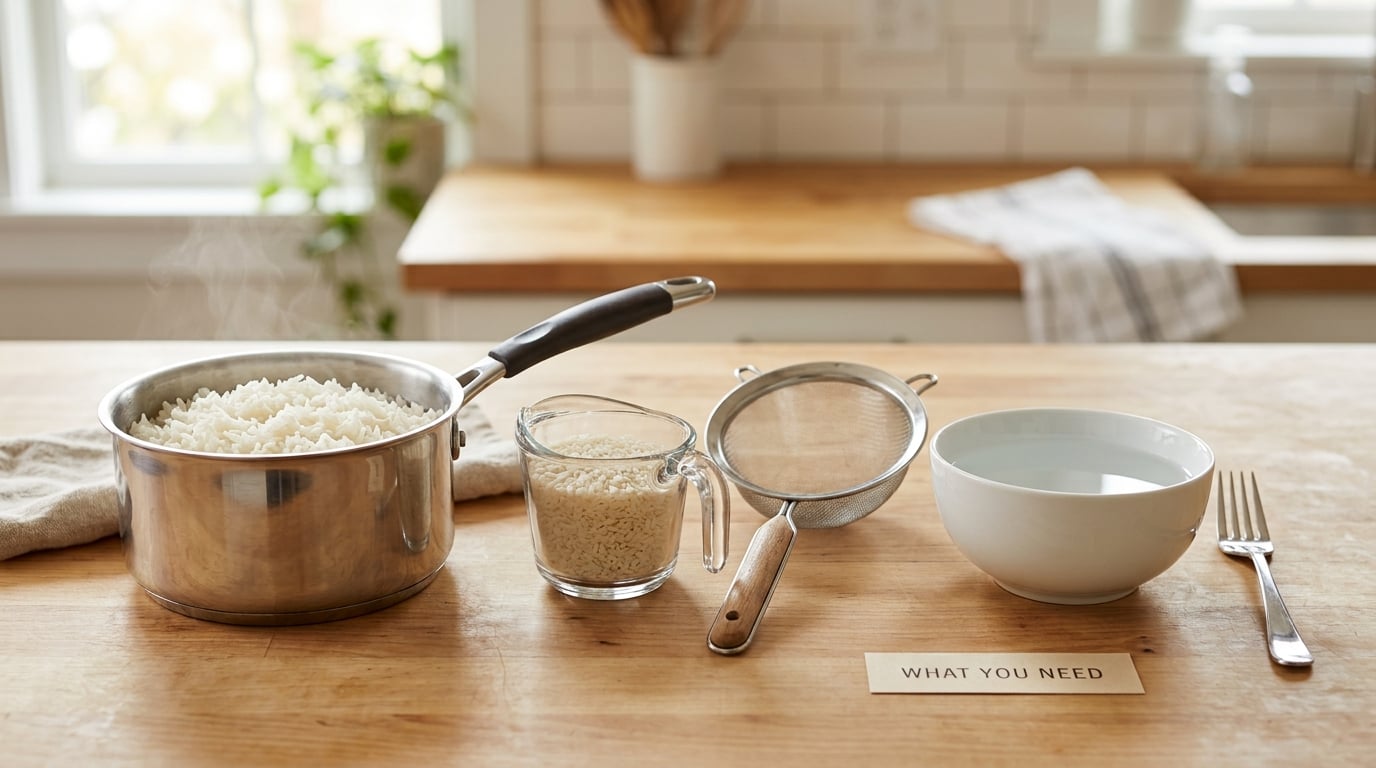
Most rescues need less than you would think. The tools matter less than judging how wet the rice actually is before you start.
- A pot or rice cooker for the stovetop and cooker methods.
- A measuring cup so the next batch is not guesswork. Cups beat volume, and volume beats scooping.
- A fork for separating grains gently, from the bottom up.
- A fine-mesh sieve or colander for draining pooled water and for rinsing before cooking.
- A baking sheet lined with parchment for oven drying. Metal alone works, but the rice can stick.
- A slice of plain bread for the fast moisture pickup trick. Stale is better than fresh.
Optional extras: a small splash of lemon juice or vinegar to loosen a slightly sticky batch, and a spoon of oil or butter to help grains separate. Both are small additions used after cooking, not substitutes for getting the water right.
If you cook on a stove and want steam control without a fitted lid, a frying pan slightly larger than your pot works as a makeshift lid. Home cooks on the cooking forums use this trick constantly, and it drops the condensation that makes grains gummy in the first place.
Why Rice Comes Out Mushy and How to Fix It: Step-by-Step
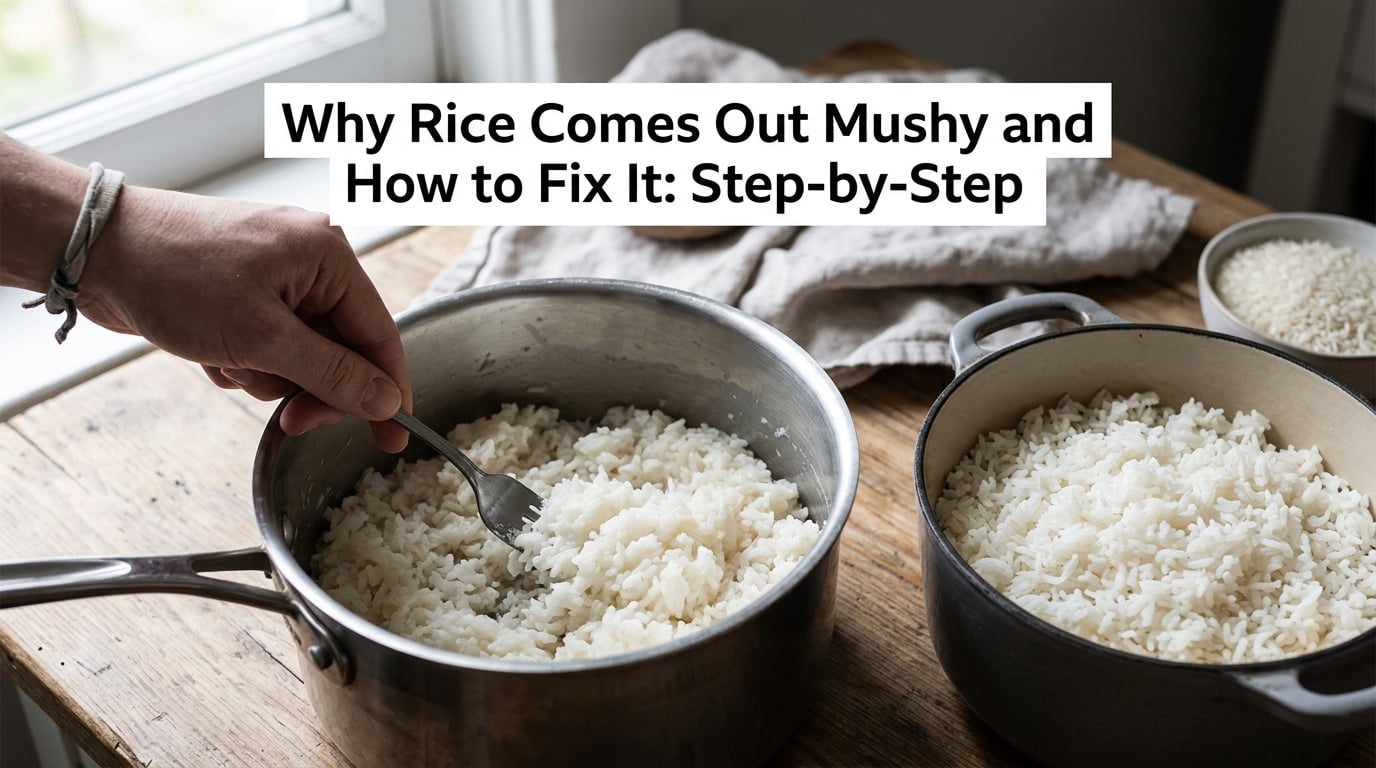
Work through this in order. Diagnose first, because the severity decides the method, and the wrong method on a soaked batch just spreads the problem around.
1. Identify What Went Wrong
Start by looking at the grains. Mushy rice is soft, swollen and slightly translucent, with grains that split and bend under a fork. Undercooked rice is firm with an opaque, chalky white core in the middle. Burnt rice tastes fine until you hit the crust at the base.
That distinction matters, because burnt and undercooked batches are not saved by drying. Once you know which one you have, look for these causes:
- Too much water for the variety. Package ratios assume a standard long-grain white rice in a standard pot. Jasmine, arborio, brown and sushi rice all drink differently.
- Not rinsing. The surface starch on an unwashed grain gelatinises into glue as it cooks, which is why rinsed rice needs less added water, not more.
- Overcooking past absorption. Once the water is gone, staying on low heat keeps steaming the grains and dries them out unevenly, then re-wets them with condensed steam from the lid.
- Lifting the lid and stirring. Both are habit, and both hurt. A lifted lid drops steam and lets the surface dry and split; stirring breaks grains and releases the starch that was holding them together.
On a rice cooker, add the culprit almost nobody mentions: the Keep Warm setting. Hours on warm dries the top layer, then condensation re-wets it into a gummy crust. Cookers on a delayed start or long warm cycle are the worst offenders.
A rice cooker also runs hotter and more evenly than a stovetop pot, so the same ratio can be wet on the stove and correct in the cooker. If you moved recently, that switch alone explains the change.
2. Fix Rice That Is Slightly Soft
If the grains still hold their shape and only cling lightly, this is a five-minute job. Tip the rice onto a baking sheet lined with parchment and spread it no thicker than about one-eighth inch. Thin layers release moisture far faster than a mound does.
Break up clumps with your fingertips, gently, then let it sit. Taste a grain after a few minutes. Once the grains no longer feel tacky, fluff with a fork and serve.
If it still needs help, a teaspoon of oil or butter through the warm rice coats the grains and helps them slide past each other. A few drops of lemon juice or vinegar does the same job and adds brightness, which suits rice that is going into a bowl rather than a fried dish.
3. Separate Sticky or Clumped Rice
Sticky rice that is still hot and wet behaves differently from slightly soft rice. Put the pot back on the lowest heat, add a tablespoon or two of water, cover it, and let it steam for two to five minutes. The steam loosens the starch that has already set on the surface.
Then fluff from the bottom with a fork, lifting in small amounts. Never press or mash, because pressure is what turns a clump into paste. If a piece is welded solid, break it with your fingers rather than the fork tines.
The bread trick is the fast version of the same idea. Lay a slice of plain bread on top of the rice, cover the pot and leave it for two to five minutes on low. The bread draws up moisture, and the rice underneath relaxes enough to fluff.
4. Rescue Rice That Is Very Wet
Very wet rice means free water sitting between the grains, not just tacky starch. There is pooled liquid in the pot, or the rice slumps when you tilt the spoon. Pick the method by how wet the batch is.
- Strainer and low heat, 2 to 5 minutes. Drain any pooled water first, then return the rice to the pot over low heat and let it steam, covered. Best for rice that is wet but still fluffy underneath.
- Oven drying, 350F for 5 to 10 minutes. Spread the rice thin on a parchment-lined sheet, dry it for five minutes, check, and continue in short bursts. Best for a large, genuinely soaked batch.
- Refrigerator spread, 15 to 20 minutes. Thin it on a tray and chill it uncovered. Cool moving air strips moisture quickly, and cold grains fluff more easily. Best when you are not in a hurry.
- Microwave, one-minute bursts. Cover loosely, heat one minute, stir, repeat. This reheats and re-steams, so it dries and firms at once. Best for small portions.
Whichever method you use, taste between rounds. You are looking for grains that are distinct and dry on the surface, not rice that has gone crunchy at the edges.
5. Prevent Mushy Rice Next Time
Prevention is mostly arithmetic. Measure the rice, measure the water, and use a ratio that matches the variety and the method.
- Long-grain white, basmati or jasmine, stovetop: about 1.5 to 2 cups water per cup of rice. Use the lower end after rinsing.
- Sushi rice: about 1.2 to 1.5 cups water per cup, and rinse until the water runs clear.
- Arborio for risotto: about 2.25 to 2.5 cups hot water per cup, added gradually. Loose arborio goes lower; the mushiness people complain about here is usually a soaked pot, not the rice.
- Brown rice: about 2 to 2.25 cups water per cup, plus a rest before opening the lid.
- Microwave rice: follow the packet’s water volume, but use the smallest measuring cup it gives you and add a minute of standing time at the end.
Rinsing changes the ratio, and this is the most common misconception I see. Washing until the water runs mostly clear removes surface starch, so the drained grains start drier and need slightly less added water. Rinse, drain for a full minute, then measure your water as if nothing changed. That single minute of draining is often the whole fix for people who rinse correctly and still get gummy rice.
Japanese cooks wash rice thoroughly and repeatedly as standard practice, and many Chinese home cooks rinse as well, especially for basmati. Plenty of other cooks, including some well-known American chefs, skip washing entirely and rely on ratio and technique instead. Both schools produce good rice; the mistake is rinsing and then cooking with an unrinsed-rice water volume.
For the rest of the process: bring the water to a boil before the rice goes in, or start both together and let the pot come to a boil, then drop to the lowest heat the moment it does. Keep the lid on from start to finish. Rest the pot off the heat, covered, for ten minutes before you open it. And leave the rice cooker on Cook, not Keep Warm, until you are actually eating.
One more cause worth knowing: if you are above about 3,000 feet, water boils at a lower temperature and rice cooks slower and drier, so add a little more water and expect to steam it longer. Very old rice also absorbs water unevenly, because the starch at the centre has partly degraded.
On safety, mushiness itself is harmless. The problem is time and temperature. Cooked rice left at room temperature for more than two hours is a real risk, because spores of Bacillus cereus survive cooking and produce toxins that reheating does not always destroy. Refrigerate rice within two hours, use it within three to four days, and reheat it to 165F, which is steaming hot all the way through. A grain that is slightly wet and freshly made is fine; a batch that has been sitting out all afternoon is not, however fluffy it looks.
Common Mistakes
Almost every mushy batch traces back to one of these, usually two at once.
- Adding water “to be safe.” Extra water has nowhere to go but into the grains. Measure to the variety, not to your mood, and remember that rinsed rice wants less.
- Stirring while cooking. It breaks grains and releases starch into the water. Fluff once, at the end, with a fork.
- Using an oversized pot. A wide surface area lets more water evaporate, so a big pot dries out and the bottom scorches. Match the pot to the rice.
- Cooking uncovered. Without a lid, steam escapes and the top layer cooks unevenly. Cover, or use a pan as a loose lid.
- Skipping the rest. Opening straight off the heat gives you loose, wet grains. Ten minutes covered lets the moisture redistribute.
- Leaving it on Keep Warm. Long warm cycles dry, then re-wet, then gum. Take it out of the cooker when you are done eating.
- Treating every variety the same. One cup of arborio is not one cup of jasmine. Same water, different results, and the mismatch reads as mush.
- Confusing sticky with mushy. Sticky rice is a texture, and glutinous rice is supposed to be sticky and opaque. Mushy rice is wet, swollen and split, which is a fault, not a variety.
- Cooking mushy rice longer. It does not work. Add heat and you lose the starch that is holding the grains together, and the batch turns to paste.
When a batch is past saving, cook it down instead of eating it wet. Loosen it with a splash of water and simmer it down for congee or porridge. Cold mushy rice fried hard in a hot wok is excellent, which is why so many takeout fried rice dishes are made from day-old rice. Stirred into a soup or stew, it thickens the broth the way a starch slurry would. Spooned into a halved tomato or a pepper, baked, it holds together well. And stirred into milk with sugar and vanilla, it becomes rice pudding with no extra cooking.
Reddit threads on this topic keep landing on the same verdict, and it is the right one: a wet batch is an ingredient problem, not a ruined dinner. Cool it fast, spread it thin, and use it within a day.
Frequently Asked Questions
Can you fix mushy rice after it is already cooked?
Yes, as long as the grains have not turned to paste. Spread it thin on a baking sheet or tray, break up the clumps gently, then dry it at 350F for 5 to 10 minutes, steam it covered over low heat for 2 to 5 minutes, or chill it uncovered for 15 to 20 minutes. Taste as you go. You cannot undo split grains, but you can remove the moisture that makes them clump.
Why does my rice become sticky when I use a rice cooker?
Two things usually. The Keep Warm setting dries the surface, then condensation falls back and gums it up, so take the rice out when you are done eating. Cookers also run hotter and more evenly than a stove, so a ratio that works on the stove leaves a wet batch in the cooker. Rest the rice ten minutes after it switches to Cook before you open the lid.
Should I rinse rice to prevent mushy texture?
For long-grain, basmati, jasmine and sushi rice, yes. Rinsing washes off surface starch that otherwise gelatinises into a gluey coating, and it lets you use slightly less water. Rinse until the water runs mostly clear, then drain for a full minute before measuring. The mistake is rinsing and then cooking with the water amount you would use for an unwashed grain.
How much water should I add to different types of rice?
Long-grain white, basmati and jasmine need about 1.5 to 2 cups per cup of rice. Sushi rice takes 1.2 to 1.5 cups. Arborio for a loose risotto takes 2.25 to 2.5 cups added gradually. Brown rice takes 2 to 2.25 cups plus a longer rest. Use the lower end of each range for rinsed rice, and add a little more above 3,000 feet where water boils cooler.
Can I reheat mushy rice and make it fluffy again?
Yes, and heat is on your side here. Spread the rice on a plate, cover it loosely with a paper towel, and microwave in one-minute bursts, stirring between each one. On the stove, a splash of water and a covered low heat for 2 to 5 minutes re-steams the grains so they separate. Reheat only rice that has been kept refrigerated, and bring it to 165F.
How do I keep rice from sticking to the bottom of the pot?
Match the pot to the amount of rice so it is not oversized, use enough water to steam rather than sit, and bring it to a boil before dropping to the lowest heat. Keep the lid on so steam condenses back into the pot. Wait ten minutes off the heat before fluffing. If a thin brown crust is forming anyway, lower the heat a notch or switch to a diffuser.
Conclusion
Start with the grains. Soft, swollen and split means excess water and time, and the fix is drying them out: thin spread, low heat or a short oven session, then fluff. Opaque and chalky in the middle means it is undercooked, not mushy, and it needs water and more time. Firm with a scorched base means the heat was too high for too long.
Rescuing a batch removes moisture. It does not teach you anything. The next pot gets a measured ratio for its variety, a rinse and a full minute of draining if you wash, a lid that stays closed, and ten minutes of rest before you open it. Those four things fix more mushy rice than any rescue method ever will.