
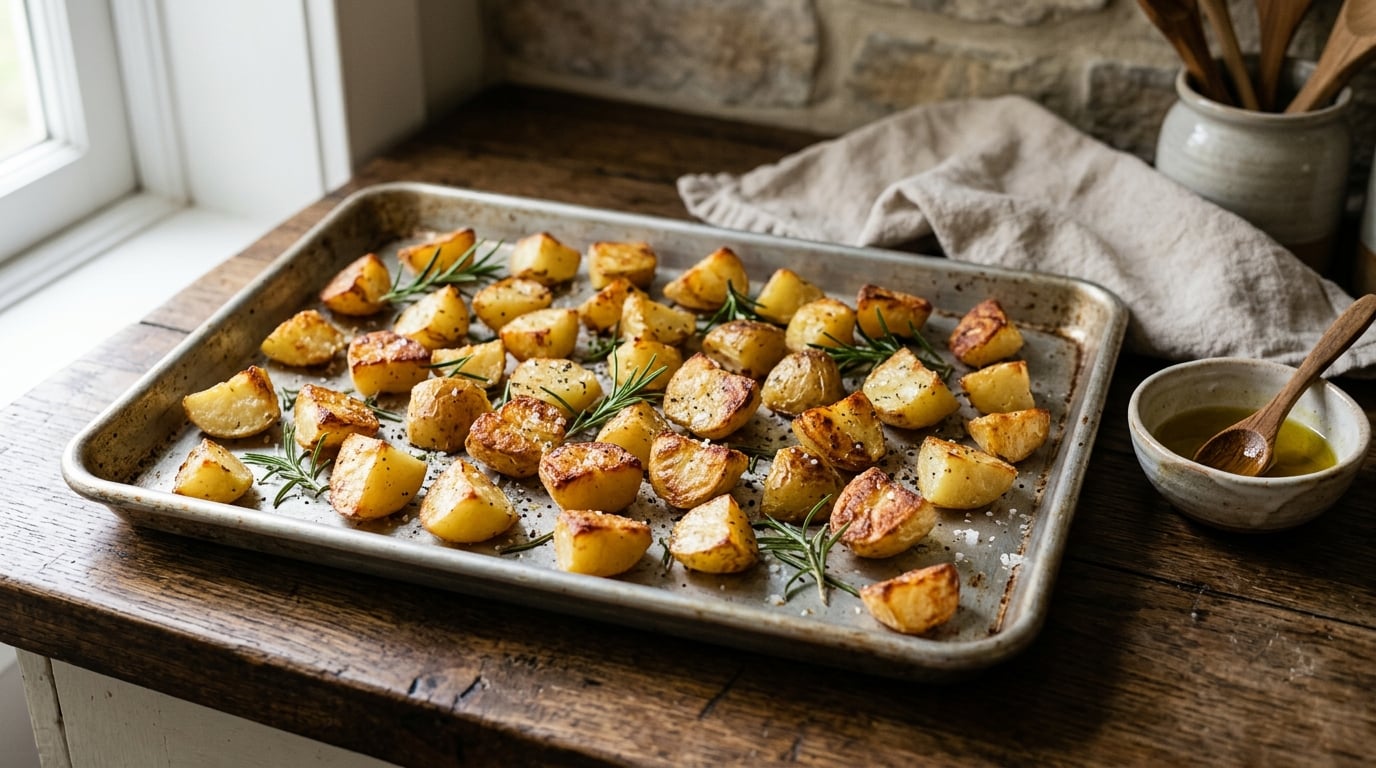
The secret to how to make crispy roasted potatoes comes down to four things: a completely dry potato surface, enough fat to conduct heat, a single uncrowded layer, and a hot oven. Parboil the chunks first, shake them dry, roast them cut side down at 425 F, and turn them once. That is the whole method, and it takes about 50 minutes start to finish.
Most soggy potatoes are not a potato problem. They are a moisture problem, and moisture is usually added by the cook rather than the vegetable. Cut a piece in half and look at it: if the surface is damp or tacky, it will steam before it browns, and a potato that steams never gets crisp no matter how long you leave it in the oven.
What You Need
For four servings you want about two and a half pounds of potatoes, which is roughly eight medium spuds or a large bag of the smaller varieties. Cut them into pieces of the same size, and hold the size steady across the whole batch. Pieces that differ by an inch cook at different rates, which is how you end up with burnt edges and a raw center in the same pan.
Choosing the potato. Russets and other floury, starchy potatoes have the driest flesh and give you the crispest, most crumbly result. Yukon golds are the forgiving choice: creamy, buttery, still genuinely crisp, and much harder to overcook. Red potatoes hold their shape beautifully and roast with a papery skin, so leave those unpeeled. Whatever you pick, leave the skin on. It browns, it crisps, and it holds a wedge together through the turning step.
If you also plan on mashing later in the week, note that the same starchy potatoes that crisp best are the ones that mash best, so a two-pound bag of russets does double duty. My guide to restaurant style mashed potatoes at home covers that side of it.
Fat. Olive oil is the everyday answer and it works well. Goose or duck fat gives you more flavor and crisper results, and the difference is small enough that most people cannot identify it in a blind taste. Avocado oil and any high-smoke-point vegetable oil behave the same way. Butter is worth using only with a little oil mixed in, because milk solids burn before the water in the butter leaves.
Seasoning. Kosher salt, coarse ground black pepper, garlic powder, and fresh rosemary or thyme cover most of the ground. Flaky salt goes on after the pan comes out of the oven so it stays crunchy instead of dissolving into the crust.
Equipment. A heavy rimmed baking sheet is the right tool, because its raised edges keep the potatoes from sitting in their own liquid as they cook. A wire rack set on top of the sheet lifts the pieces off the metal entirely and is even better if you own one. A large cast iron skillet works too, and it gives you the same sizzling crust a preheated pan does. An instant-read thermometer is worth more than any special pan, since it is the only reliable way to know when the centers are done.
Step-by-Step: How to Make Crispy Roasted Potatoes
Step 1: Choose and Cut the Potatoes
Scrub the potatoes well and leave the skins on. Cut them into chunks about one and a half to two inches, or halve the small fingerling varieties lengthwise. Halving is the better move when you want maximum surface area, because more flat face against the hot pan means more contact browning.
Stand the cut end against the counter and glance at the pieces. Any one that is dramatically smaller than the rest goes in a separate pan or cooks later. That single habit resolves most of the uneven-doneness complaints I get asked about.
Step 2: Parboil or Soak the Potatoes
Parboiling is optional but it is the step that separates good roast potatoes from great ones. Drop the chunks into heavily salted boiling water and cook them for 6 to 8 minutes, until a knife slides in with almost no resistance but the potato still holds its shape. Drain well, then put the empty pot back on the burner, add the potatoes, and shake it hard for about 10 seconds.
That shaking is called roughing up. It knocks the softened surface starch into a ragged, broken texture with cracks and torn edges, and those cracks are where the fat and heat do their work later. The pieces will look a little mangled. That is what you want.
Soaking in cold water is the alternative, and it is better for people who want the fluffiest possible interior. Leave the cut potatoes in cold water for 30 minutes to a few hours, then drain and dry them thoroughly. Never pour them into the pan wet, which defeats the point entirely.
Step 3: Dry and Season the Potatoes
This is the step people skip and then blame the oven. Spread the potatoes on a towel or on a baking sheet and let them sit until the surface looks matte and dry all over, about 10 to 15 minutes. If you parboiled them, they are already partway there from the steam escaping during the rough-up.
Then toss them with 2 to 3 tablespoons of oil and a heavy pinch of kosher salt. Use your hands and make sure every face gets a film of fat. Salt at this stage, not after, because the salt needs time to work into the flesh before the piece goes into a very hot oven.
If you want an extra-crunchy shell, dust the pieces in a very light coating of cornmeal or plain flour now, just before they hit the pan. The starch in that coating toasts into a brittle shell. Use it sparingly, since a thick coat turns to paste and tears the surface when you try to flip the potato.
Step 4: Roast Until Golden and Crisp
Set the oven to 425 F (220 C) and let it run for a full 10 to 15 minutes before the potatoes go in. A cold oven plus a cold pan is two cold pans, and it costs you the first stage of the browning. If you use convection, drop the temperature by 25 F to 400 F, because the fan ramps up browning noticeably.
Put the sheet in the oven empty to preheat, or heat the empty pan first, then lay the potatoes in one layer. Flat cut faces go down and do not move. Crowding drops the pan temperature and traps a layer of steam above the food, and steamed potatoes are the reason so many home batches come out pale.
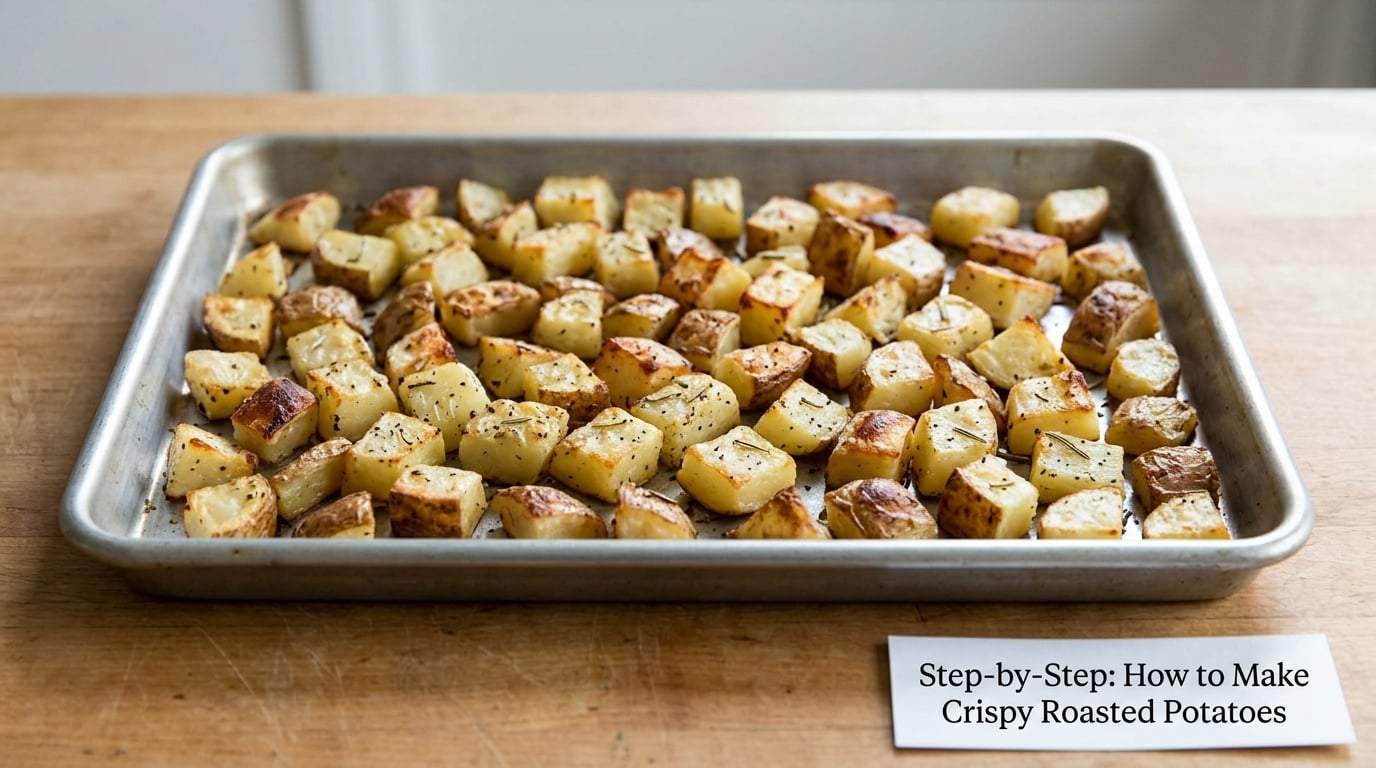
Roast for 30 to 40 minutes, turning the pieces once at the halfway mark with a thin spatula or tongs. If a piece sticks, leave it a few more minutes rather than forcing it, since the starch release means the crust is not set yet. Pull them when the cut faces are deep golden brown, the edges look dry and crunchy, and a fork goes through the thickest piece with no resistance at all. If you own a thermometer, the centers should read 205 to 210 F, which is softer than you would expect.
Sprinkle flaky salt over them the moment they leave the oven and serve right away. Crisp roast potatoes hold their crunch for about 20 to 30 minutes, and after that they start giving up.
Common Mistakes and Tips
They came out pale and soft. The pieces were wet, the pan was crowded, or the oven was not hot enough. The first two are the usual culprits, and a crowded pan cannot be fixed by leaving them in longer.
They stuck and tore apart when flipped. The pieces needed a drier surface, or the pan needed more oil, or you flipped too early. Give them a full undisturbed set on the cut face, then use a metal spatula rather than tongs, which grip and tear.
The edges browned but the centers were gummy. Uneven cut sizes. Match the pieces up before they go in the oven.
They were crisp in the oven and limp on the table. They sat out too long, or they were covered. Roast potatoes need air, not a foil tent, if you are serving them within the hour.
Reheating made them worse. The microwave always makes them soft. Put them back in a 425 F oven, or an air fryer at 400 F, for 8 to 10 minutes and they come back close to original.
The same recipe works one night and not the next. This one bugs people the most. Usually the potatoes were not dry enough, or the oven was not fully preheated, or the pan was overfilled. The variables that matter are few, and once you nail them down the result stops being a coin flip.
For variations, a base of olive oil, garlic powder, rosemary, salt, and pepper works for most dinners. Lemon and oregano suits fish and chicken. Paprika and cumin turn the same method into a side for kebabs. A spoonful of whole-grain mustard with brown sugar and mustard powder gives you a glazed roast that caramelizes at the edges. Whole garlic cloves added to the pan for the last 15 minutes soften into something worth squeezing out.
If you own an air fryer, skip the oven entirely. Parboiled and dried pieces go in at 400 F for 25 to 30 minutes, shaking the basket twice, and the circulating air gives you a very even brown with no preheating a pan.
One last thing about the pan: do not line it with parchment. Foil and parchment insulate the metal, and you lose the contact sear that makes the flat faces crisp. If you want an easier cleanup, use a disposable foil pan and raise the heat by 10 F to compensate.
To turn the leftovers into breakfast, crush them in a skillet rather than reheating them whole, the same idea behind making an omelet that does not stick. Crisp them with a fried egg on top.
Frequently Asked Questions
Do you have to parboil potatoes before roasting?
No. You can roast them straight from raw and they will still crisp, particularly if you soak them first and use a high-starch potato. Parboiling is what takes the result from good to restaurant-crisp, because the rough, broken surface it leaves behind gives the fat and heat far more to grip. If you skip it, roast 5 to 10 minutes longer to compensate.
Which potato is best for crispy roasted potatoes?
Russets and other floury, starchy potatoes give the driest, crispest result with the most crumbly texture. Yukon gold is the safer pick for beginners, since it stays creamy and forgiving instead of falling apart. Red potatoes hold their shape and roast with a papery crisp skin. Whatever you use, leave the skin on and cut every piece to the same size.
Why are my roast potatoes not getting crispy?
Four things cause this almost every time: surface moisture, crowding, low heat, and not enough fat. If the potatoes are damp going into the oven they will steam instead of brown. If the pan is full, the pieces sit in their own steam and never dry out. Check that the oven hit 425 F before the pan went in, and that every face is coated in oil.
Should I soak potatoes before roasting?
Soaking in cold water for 30 minutes or longer pulls surface starch out of the flesh, which gives you a fluffier interior and a drier face. It is optional, and it works well as a substitute for parboiling when you want to skip the boiling step. Either way, dry them thoroughly afterward, since putting wet potatoes on a hot pan undoes the whole point.
What oil is best for crispy roast potatoes?
Olive oil is the reliable everyday answer and it crisps very well at 425 F. Goose or duck fat adds flavor and crisps slightly more, and the difference is subtle in a blind taste. Any high-smoke-point vegetable oil behaves the same way. Plain butter on its own tends to burn because of the milk solids, so mix it with a little oil if you want that flavor.
How do I keep roasted potatoes crispy when reheating?
Skip the microwave. Spread the potatoes on a sheet pan or in an air fryer basket and return them to a 425 F oven, or 400 F in the air fryer, for 8 to 10 minutes. That dries the surface back out. Covered leftovers stay soft, so keep them uncovered, and skip the microwave entirely unless you plan to eat them soft.
Conclusion
Start by drying the potatoes properly. That single habit fixes more batches than any other step, and it costs you a towel and ten minutes. From there it is preheated 425 F oven, one uncrowded layer, cut faces down, turned once, and served straight away while the crust is still loud under your knife.