
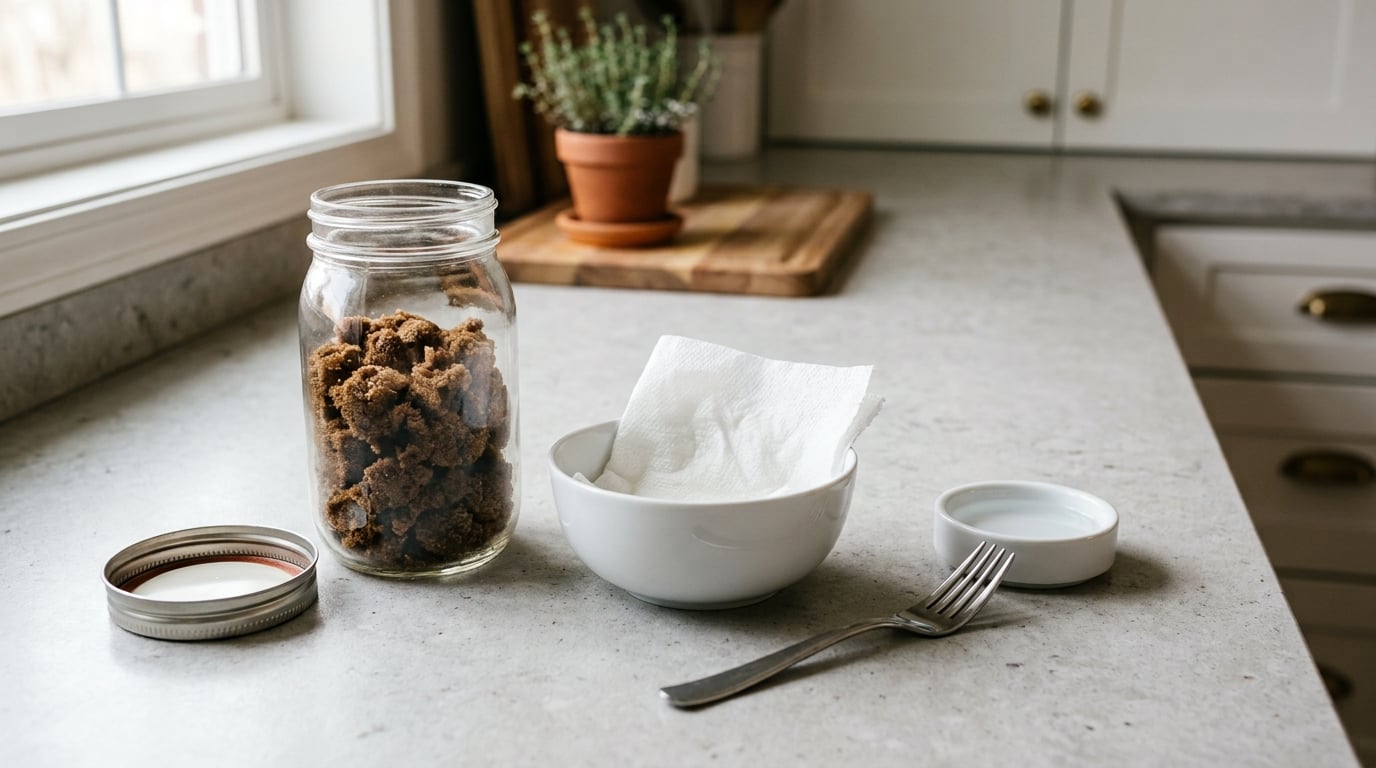
Put the hardened brown sugar in a microwave-safe bowl, drape a damp paper towel over the top, and heat it in 10 to 20 second bursts. Fluff it with a fork between bursts until the lumps crumble, then use it right away. The whole job takes about three minutes, and the sugar is still perfectly good to eat — it only lost the moisture that kept it scoopable.
I know how to soften brown sugar that hardened, and it comes down to one idea: sugar that has hardened is dry sugar, so every fix is about putting moisture back. Heat plus trapped steam does it in minutes. A slow, sealed transfer from something moist, like a slice of bread, does the same job over a day or two.
The reason this matters is measurement. You cannot pack rock-hard brown sugar into a measuring cup accurately, and the cup you fill by eye is always short, so cookies come out dense and cloying. Fix the texture first, then measure.
Table of Contents
- What You Need
- Step-by-Step
- Common Mistakes
- How to Keep Brown Sugar Soft
- Frequently Asked Questions
- Can you microwave hardened brown sugar?
- Will softening brown sugar change the way my recipe measures?
- How do I soften only a small amount of brown sugar?
- Why does brown sugar harden again after I soften it?
- Can you use brown sugar that has become slightly wet?
- How long should softened brown sugar be allowed to cool before using it?
What You Need
Softening brown sugar that hardened needs very little. Most of it is already in your kitchen.
- Microwave-safe bowl — wide enough that you can get a fork into the sugar and stir.
- A clean damp paper towel — damp, not dripping. Squeeze it out if water runs off it.
- A fork — better than a spoon for breaking up re-solidified molasses.
- Oven-safe dish or a parchment-lined baking sheet for the oven method.
- Small saucepan and a teaspoon of water for the stovetop method.
- An airtight container for storage, plus a measuring spoon or cup you can pack sugar down into.
- Optional moisture source — a slice of bread, an apple quarter, a marshmallow, or a terracotta sugar saver soaked in water.
None of this needs to be special equipment. If you are building out a small kitchen kit anyway, the same low-and-slow thinking applies to how to make an omelet that does not stick: control the heat, keep a close eye on it, and pull it early.
Step-by-Step
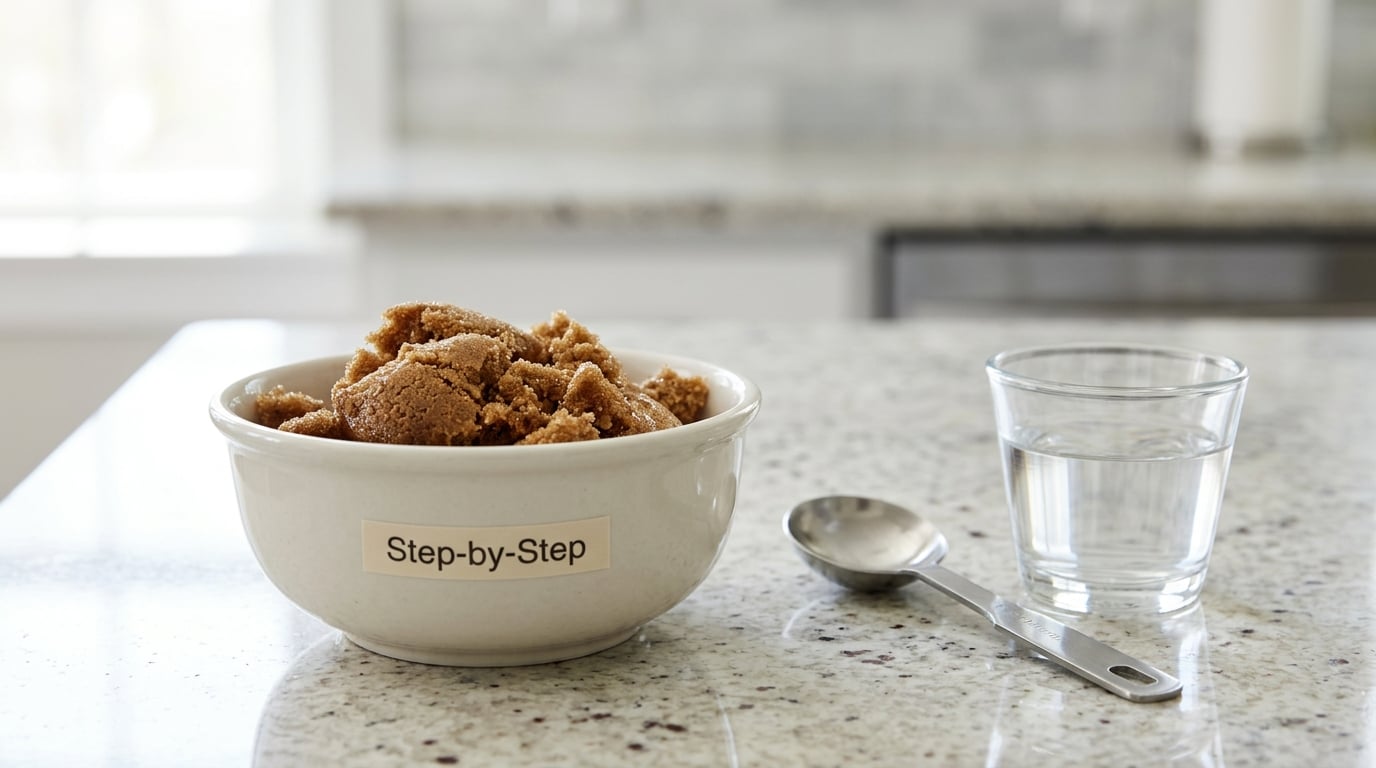
Microwave Method for the Fastest Results
This is the one to reach for when cookies are going into the oven in twenty minutes.
- Break up what you can. Chip the block into the bowl with the back of a spoon or the butt of a knife. You are not trying to crumble it, just making enough surface area that the heat gets in.
- Cover it. Lay the damp paper towel directly over the sugar and leave it damp, not soaked. That towel is the steam source — without it you are just drying the sugar out further.
- Heat in short bursts. Twenty seconds on full power for a cup or so of sugar. Pull it, poke with the fork, check, and repeat. Hardened brown sugar goes from brick to perfect in two or three cycles most of the time.
- Read the texture, not the clock. It is ready when it feels soft and crumbly and breaks apart under the fork instead of snapping.
Two safety notes, both real. Do not use metal in the microwave, and do not leave the sugar sitting through a long cycle — heated sugar can scorch, and melted sugar sticks to the bowl and to your hands. If you go past 60 seconds without checking, you have gone too far.
You will also notice the sugar stiffens again as it cools. That is normal, not a sign you failed. Measure it warm and get it into the bowl.
Oven Method for Slower, Gentle Softening
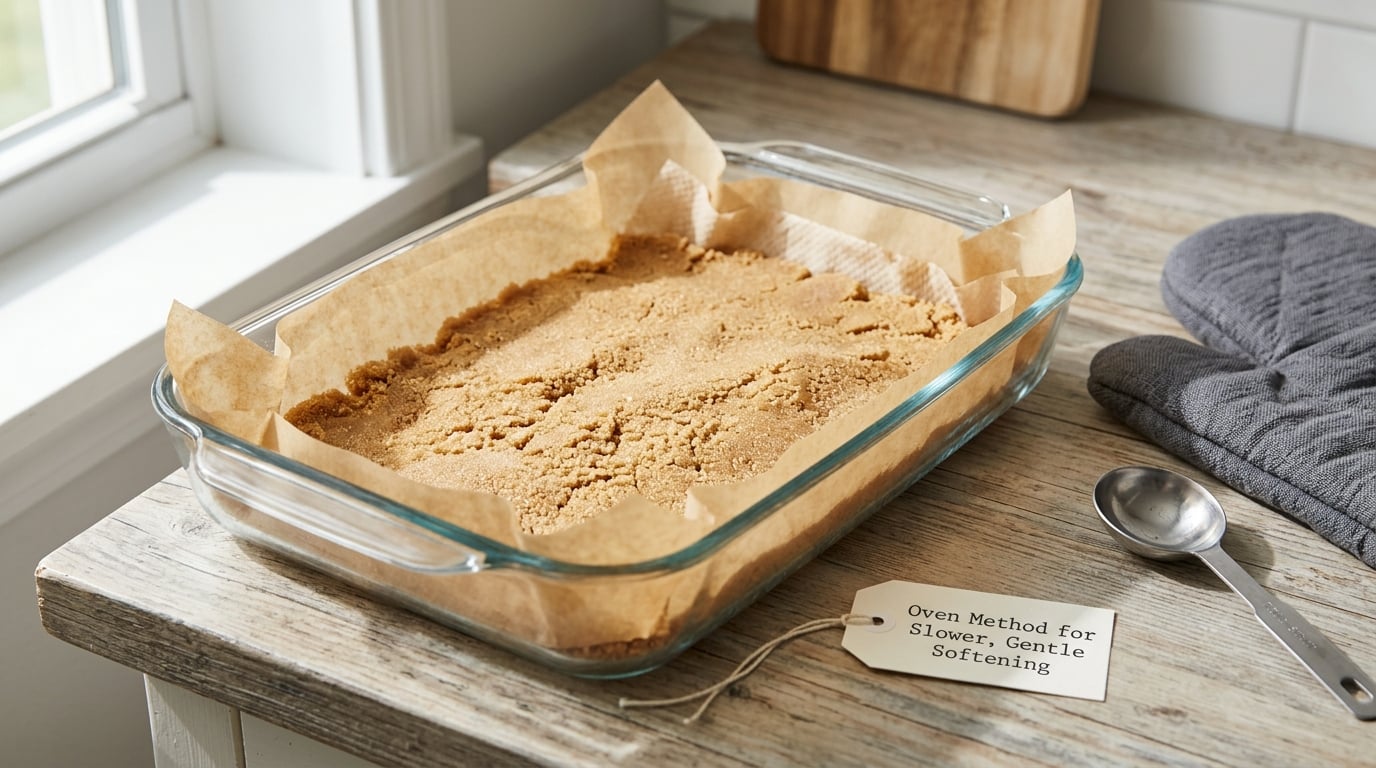
The oven handles more sugar at once than the microwave does, and the heat is gentler, so it is the better choice for a big bag you are working through.
- Heat the oven to 250°F (120°C). Do not go higher. Above that temperature you are caramelizing, not softening.
- Spread the sugar in a single layer. A shallow oven-safe dish or a parchment-lined baking sheet works; a deep pile steams unevenly and leaves hard spots in the middle.
- Add moisture if the sugar is really solid. A couple of tablespoons of water in the bottom of the dish, or a very lightly damp paper towel laid over the top, is enough.
- Warm for 10 to 15 minutes. Stir once halfway through.
- Let it cool in the dish, uncovered, for at least 30 minutes. Sugar straight out of a 250°F oven is hot enough to burn you.
It will feel firmer once it cools than it did warm, so give it a minute of testing before you measure. The readiness cue is the same as the microwave: crumbly and yielding, not glassy.
Stovetop Method for Small Portions
Most recipes call for a quarter cup or a couple of tablespoons, and for that amount the stovetop is quicker than preheating anything.
- Put the sugar and a teaspoon of water in a small saucepan. The teaspoon is the whole trick — enough to steam, not enough to make syrup.
- Heat over low, stirring constantly, for a minute or two. The sugar will look damp and slightly pasty at first.
- Take it off the heat the moment the lumps break up. The residual heat finishes the job.
- Cool it in the pan. It thickens back to a soft, scoopable paste as it sits, so scrape it out with a silicone spatula or a spoon.
Softened this way, the sugar is a little stickier than fresh brown sugar and works well in sauces, glazes, and crumb toppings. For cookies, strain out any excess water by pressing it firmly into the measuring cup with the back of the spoon.
Common Mistakes
Heating too long. Sugar that goes past softened starts melting, and melted sugar is a sticky, scorched mess. Heat in bursts, and stop as soon as the fork works. If you have already melted it, let it cool fully, dissolve it in a little warm water, and simmer it down — the flavor is unaffected.
Adding too much water. You want steam, not a bath. A damp paper towel or a teaspoon of water is the ceiling, and excess water has to evaporate out later, which means the sugar re-hardens in the bowl.
Leaving the moisture source uncovered. Bread, apple, marshmallows, and terracotta only work in a sealed container. Loose moisture just disperses into the room, and the sugar dries out again.
Measuring while the sugar is hot. Warm sugar packs loosely and gives you too little. Let it cool to room temperature, then pack it down firmly into the cup with the back of the spoon and level it off.
Reaching for a blender or food processor. This is the one I would cross off the list entirely. A hardened lump hits the blade and pulverizes into fine powder, which bakes up gritty and pasty instead of crumbly. Heat and steam are the fix; blades are not.
Storing it in the fridge. The fridge is not colder and drier, it is more humid, and that moisture gets into the sugar and speeds up the congealing. Keep it in a cool, dry cupboard in something airtight.
Confusing hardened with spoiled. Hardened sugar is a texture problem. Spoiled sugar smells fermented or musty, has visible webbing or insects, or has a slimy, wet texture. If you see any of that, throw it out. Hard and lumpy on its own is fine to use.
Emulsions get the same treatment, by the way. If you are fixing a sauce that seized, the trick is keeping hollandaise sauce from breaking in the first place, not rescuing it after.
How to Keep Brown Sugar Soft
Brown sugar is white sugar with a small amount of molasses, and the molasses is what holds moisture. Left in a box that lets air through, that moisture evaporates and the molasses re-solidifies. Storage is entirely about slowing that down.
- Move it to an airtight container. A glass jar with a gasket lid or a plastic container with a snap seal is a big improvement over the printed bag, which leaks. This is the single change that prevents most hardening.
- Keep it dry and out of the fridge. A cool pantry cabinet is the right spot. Heat and humidity are the enemies, and the fridge has humidity.
- Keep a moisture source in the container. A slice of white bread left in with the sugar releases water vapour slowly and holds the texture soft. A quarter of an apple works the same way, and a couple of marshmallows are reported to work nearly as well without adding crumbs or gluten.
- Try a terracotta sugar saver. A soaked clay disk releases moisture steadily over about 24 hours and can be re-soaked and reused for months. It is a slow fix, not an emergency one.
- Freeze what you will not use soon. Portion bulk buys into small bags, press the air out, and lay them flat in the freezer. Thaw sealed at room temperature for a couple of hours and the sugar comes back soft.
Expect the passive methods to take time. Light clumping usually clears in 8 to 24 hours; a true brick can take up to two days, and there is no shortcut for that with a moisture source alone. It is still waiting for you when you get home from work.
Frequently Asked Questions
Can you microwave hardened brown sugar?
Yes, and it is the fastest option. Put the sugar in a microwave-safe bowl, cover it with a damp paper towel, and heat in 10 to 20 second bursts, checking and poking with a fork between each one. Stop as soon as it is soft and crumbly. Never use metal, and pull it out well before the sugar starts to melt, because melted sugar sticks to the bowl and burns.
Will softening brown sugar change the way my recipe measures?
No, not once it is fully cooled. Warm or damp sugar packs loosely into a measuring cup, so it will seem like you need less, which is how recipes end up too sweet. Let the softened sugar come to room temperature, then press it firmly into the cup with the back of a spoon and level it off before you add it to the bowl.
How do I soften only a small amount of brown sugar?
Put the amount you need in a small microwave-safe bowl with a damp paper towel and heat in 10 second bursts. Or use a teaspoon of water in a small saucepan over low heat, stirring, and take it off as soon as the lumps break up. Softening a spoonful is faster than trying to revive a whole box, and the rest can stay in its airtight container.
Why does brown sugar harden again after I soften it?
Because the sugar is still drying out, just more slowly. Microwaved and oven-softened sugar gives up its added moisture as it cools, so it firms up again within an hour or two. Use it right away, or return it to an airtight container with a slice of bread so it holds its texture instead of going back to a lump.
Can you use brown sugar that has become slightly wet?
Yes, as long as it is only damp rather than slimy, sour or moldy. Damp brown sugar is still usable, though you may need to spread it out on a baking sheet to let extra water evaporate before storing it. If it smells fermented, has webbing or insects, or feels slimy in a way damp sugar never does, discard it.
How long should softened brown sugar be allowed to cool before using it?
Cool it to room temperature before measuring, which usually takes around 30 minutes for a bowl and less for a small amount on the stove. Warm sugar does not pack into a measuring cup accurately, which is the main reason a recipe comes out wrong after you soften it. The oven method needs the full cool-down because the dish holds heat.
Start with the microwave if you are baking today: a bowl, a damp paper towel, three 20-second bursts, and a fork. Then fix the real cause, because a sugar that goes into an airtight container with a slice of bread usually does not need fixing again.