
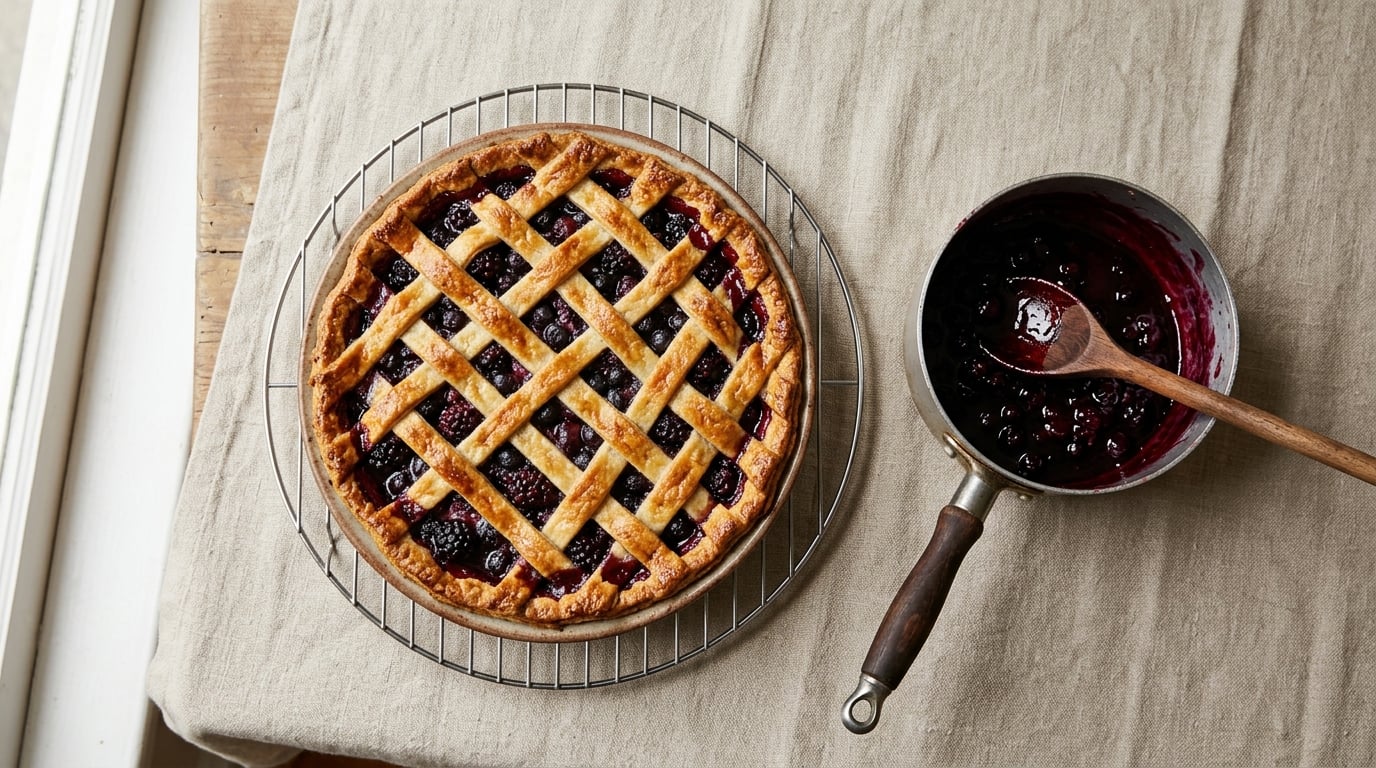
Pie filling turns out runny when there is more water in the pan than the thickener can hold, or when the filling never got hot enough to set. The usual culprits, in order: too little thickener for the amount of fruit, fruit that leaked more juice than the recipe counted on, and a pie that came out of the oven before the filling finished bubbling thickly. Updated for 2026.
The good news is that almost all of it is fixable, and most of it is fixable before the pie ever reaches the oven. Below I walk through what is actually happening in the pan, how to tell the three common failures apart, and the order to try fixes in.
Table of Contents
- Why Pie Filling Turns Out Runny: Quick Diagnosis Guide
- What Makes Pie Filling Runny?
- How Fruit and Other Ingredients Change the Texture
- How to Tell Whether the Filling Needs More Thickening
- 7 Easy Fixes for Runny Pie Filling
- How to Prevent Runny Filling in the Next Pie
- Frequently Asked Questions
- Why is my pie filling not thickening?
- Can I fix runny pie filling after the pie is baked?
- How long should pie filling cook before it goes in the crust?
- Does cornstarch or flour thicken pie filling better?
- Why does my fruit pie leak after it cools?
- Should pie filling be thick when it comes out of the oven?
- Conclusion: Start With the Filling’s Water Balance
Why Pie Filling Turns Out Runny: Quick Diagnosis Guide
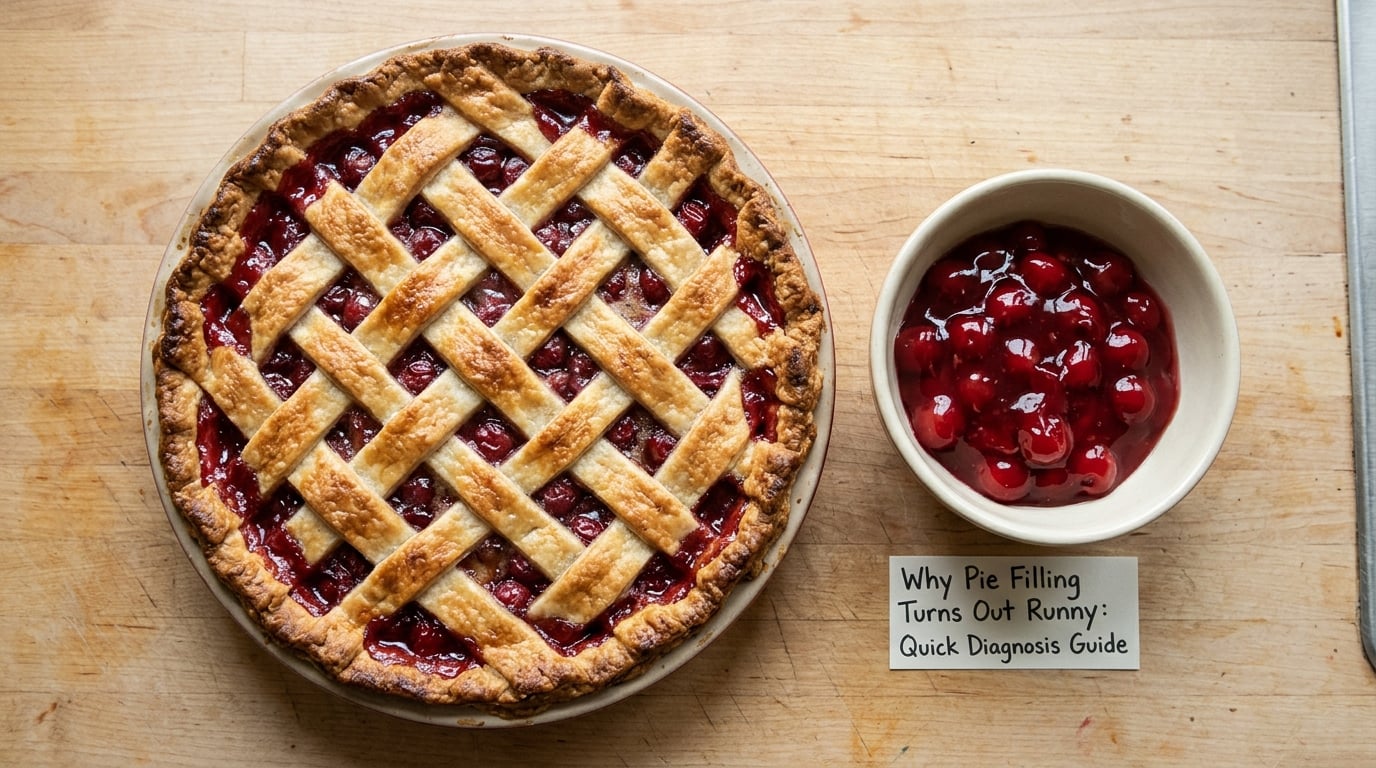
Runny filling is a water problem, and there are only three places water comes from: the fruit itself, the liquid you add, and the steam that never got a chance to escape. Whichever source is responsible, the fix is different. Start by matching your symptom in the chart below rather than throwing in more starch.
| What you see | Most likely cause | Fix first |
|---|---|---|
| Filling is loose and sloshes when you tilt the plate, but the crust is fine | Not enough thickener for the amount of fruit | Add a cornstarch slurry and simmer |
| Juice pooling on top, filling weeps after cooling | Fruit sat in sugar and released water, or filling was under-thickened | Simmer the filling down, then chill the pie before judging it |
| Filling leaked out through the bottom into the oven | Bottom crust was under-baked, unsealed, or pricked and never sealed | Bake on a lower rack in a preheated sheet pan; crimp the seam |
| Filling boiled over the rim | Almost no venting, or filling too full | Vent holes, and stop at 3/4 to 7/8 full |
| Bottom crust is pale and soft, filling is thick enough | Steam and liquid from the filling soaked the bottom | Pre-bake the shell, or bake blind with weights for 15 minutes |
| Filling is thick but cloudy and gluey | Too much starch, often flour, or over-stirred | Next batch: measure properly and stop adding once it sheets off the spoon |
| Pumpkin or pecan filling stays liquid even at the end of the bake | Eggs never set, which is a temperature problem rather than a starch problem | Bake until the center reaches 160°F |
One note on timing. A fruit pie straight from the oven will look looser than it should the moment it cools, and it can keep setting as it cools. Only judge consistency after at least two hours at room temperature, or after the full chilling time if you refrigerated it.
What Makes Pie Filling Runny?
Three mechanisms run at once in a fruit pie, and a runny filling means one of them came up short.
Fruit releases water on its own
Cells in cut fruit rupture when you slice, crush or cook them, and the juice runs free. The amount varies enormously by fruit, and it also depends on ripeness. Ripe, soft, wet fruit gives up considerably more liquid than firm fruit picked early.
Starch thickens only after it boils
Cornstarch, tapioca, flour and arrowroot absorb water and swell as they are heated, but the swelling does not happen at a simmer. The mixture has to reach a full boil and stay there long enough for the starch granules to burst. A filling that only ever gently warmed up is a filling that stayed thin, no matter how much starch went in.
The oven has to cook off some water
Baking is partly a drying step. A filling that starts with too much liquid needs oven time to shed it, and that time only counts once the thickener has activated and started holding what remains.
Soft is not the same as runny
Fresh fruit pies are meant to be slightly softer than a set gelatin dessert. A filling that glistens, holds a slice upright and releases a thin trail of juice when you cut it is right. A filling that spreads like custard the moment the knife goes in has not set.
How Fruit and Other Ingredients Change the Texture
The recipe assumes a certain amount of water. Swap one ingredient and you break that assumption without noticing.
Fresh, frozen, and canned fruit
Fresh fruit is the baseline. Frozen berries arrive already damaged and release a lot of juice as they thaw and cook, so they usually need pre-cooking, extra thickener, or both. Fruit bakers on baking forums report frozen berries as a frequent failure and say the filling sometimes never thickened at all.
Canned fruit behaves differently again. The packing syrup is already dissolved sugar, and the fruit is already softened, so less water moves. Drain well and treat canned fruit as already part-thickened.
Apple, pear, berry, and rhubarb
Apples release a slow, steady juice as they bake, which is why a pre-cook works so well. Pears are even wetter than apples. Blueberries, blackberries, and strawberries break down into juice rather than holding their shape. Rhubarb is mostly water with almost no pectin, so it needs a full-fat thickener at a firm ratio.
Sugar, juices, fats, and dairy
Sugar pulls water out of fruit cells, and the liquid it pulls still has to go somewhere, so a heavily sugared filling needs longer cooking. Fruit juice, apple cider, and vanilla extract add water you cannot see. Butter or oil in the filling slows evaporation. Milk, cream, and condensed milk in a custard-style filling add water that thickens only through eggs.
Baking soda and fresh fruit
A pinch of baking soda makes apples and peaches release their juice faster, so it works against you in a pie. It is there to keep fruit color, not to thicken anything.
How to Tell Whether the Filling Needs More Thickening
Three quick checks tell you more than any guess. Do them on the filling before it goes into the shell.
The spoon drag
Spoon the filling onto a chilled plate, let it sit a few seconds, then draw a finger through it. If the channel stays open and the sauce runs back to fill it, it is too thin. If the channel holds its shape and the edge leaves a clean line, the thickness is right.
The sheet test
Tip the pot and see whether the sauce falls off the spoon in a slow, heavy sheet. Thin filling runs like milk in a fast stream. Over-thickened filling sits on the spoon in a mound.
Why hot filling lies to you
Starch keeps swelling as it cools, so hot filling always looks thinner than the finished pie. Test near the end of the simmer and again after a minute off the heat, and if you can, check a cooled spoonful. A filling that only just passes while hot is about right.
Visual doneness cues in the oven
Look through the vent at the bubbling. Fast, thin, watery bubbles mean the filling is still cooking off liquid. Slow, heavy, glossy bubbles that hold their shape for a second after they pop mean the set is finishing. For egg-based fillings, the surface should look set a couple of inches in from the rim with no liquid jiggle when you gently shake the pan.
7 Easy Fixes for Runny Pie Filling
Work down this list in order. Each step costs a minute or two, and most pies stop being a problem by step two.
1. Simmer the filling until the liquid drops
Put the filling in a saucepan over medium heat and bring it to a full boil, stirring, then hold the boil for two to three minutes. This concentrates the juice and activates the starch at the same time, so it fixes thin filling and under-set filling in one pass.
2. Whisk in a cornstarch slurry
Stir one tablespoon of cornstarch with two tablespoons of cold water until smooth, pour it into the hot filling, and bring the mixture back to a boil while stirring. Add it one tablespoon at a time and stop as soon as the spoon test passes. A common anchor for pies is 2 to 3 tablespoons of cornstarch per 3 pounds of apples, and roughly 1 to 2 tablespoons for every 2 cups of juicy fruit.
3. Cook off the free juice
If your fruit sat in sugar before it went into the pan, that released liquid is sitting at the bottom. Drain it into a small pot, simmer it for three to four minutes, and stir it back in.
4. Drain or replace very wet fruit
Frozen berries and ripe stone fruit can flood a filling faster than starch can absorb it. Thaw frozen fruit in a colander, discard the juice or reduce it, and add a tablespoon of starch. Using slightly firmer fruit, or a cup less of the wettest variety, is the quieter fix.
5. Match the pan to the filling volume
Too much filling in too small a pan boils over, spills into the oven, and leaves you with less than the recipe called for. Stop at three-quarters full, or seven-eighths for fruit pies, and never mound the center higher than the rim.
6. Protect the filling from over-browning
Fruit pies darken before the filling finishes setting, so bakers tent them with foil for the first 20 to 30 minutes and remove it for the last stretch. Watch the bottom edge too, since a high-sugar filling in a glass or dark pie plate colors fast.
7. Cool the pie before you judge it
Let the pie sit on a rack for at least two hours, and longer for berry pies. Fruit filling continues to thicken as it cools, and cutting a warm pie makes a correctly set filling look like a failure.
Fixing a pie that is already baked
Yes, most fruit pies can be rescued. Lift the top crust off carefully, spoon the watery filling into a saucepan, and simmer it for three to four minutes. Add a cornstarch slurry if it still runs thin, then pour it back into the shell and bake for another 15 to 20 minutes at 350°F. Egg and custard pies are different: once the eggs have been under-set, you cannot thicken them without ruining the texture, and the honest fix is to serve them warm as a pudding-style dessert.
How to Prevent Runny Filling in the Next Pie
Prevention is mostly arithmetic, and it is much easier than rescuing a finished pie.
Measure and pre-cook on purpose
Level cups and weighed ingredients are the difference between a repeatable filling and a lucky one. Recipes vary widely, so if you swap in a different fruit, adjust the thickener rather than trusting the old number. Macerate the fruit with its sugar for 15 to 30 minutes, cook the mixture until the fruit softens and the juice begins to look syrupy, then cool it before filling the shell.
Bake the shell to protect the bottom
For pies with very wet fruit, blind-bake the shell for 15 minutes at 375°F with weights, then add the filling. Bake on a lower rack over a preheated sheet pan so a small leak is caught instead of soaked into the crust. Vent the top crust, and crimp the seam tightly so the filling cannot wick out where the doughs meet.
Get the thickener right for the job
| Thickener | Amount per 2 cups of juicy fruit | Flavor and texture effect | Best for |
|---|---|---|---|
| Cornstarch | 2 to 3 tablespoons | Neutral, glossy, slightly gel-like as it cools | Pies baked at 350°F to 375°F |
| Tapioca starch | 2 to 3 tablespoons | Neutral, clear, stays tender when cool | Berry pies that need fruit to stay intact |
| All-purpose flour | 3 to 4 tablespoons | Cloudy, adds a faint floury taste, can go gluey | Economical, gluten-free bakers skip it |
| Clear Jel | 1 to 2 tablespoons | Clear, no starch taste, extra-stable | Hot ovens, pies you plan to can, or repeated reheating |
| Arrowroot | 1 to 2 tablespoons | Clear and silky, breaks down if it boils hard | Light fruit pies where clarity matters, not for canning |
| Pectin (low-sugar) | As directed on the box | Firm, gel-like, holds fruit high | Low-sugar fillings, freezer and canning pies |
| Gelatin | 1 envelope bloomed in 2 tablespoons cold water | Clean jelly set, very clear | Pies where you want a firm, cool-set slice |
| Instant vanilla pudding mix | 3 tablespoons | Vanilla flavor, quick thickening | Emergency rescue, not a first choice |
Cornstarch has a real limit: prolonged high heat, long boils, and acidic fillings break its thickening down. Bakers describe it as stopping working, and the standard workarounds are Clear Jel or tapioca. If you plan to can any fruit filling, use a canning recipe with pectin or Clear Jel, since flour and cornstarch do not thicken safely in home canning.
Egg and custard fillings fail for other reasons
Pumpkin, pecan, and custard pies have no starch structure at all. They set because the eggs cook into a soft custard, and they stay runny when the filling never reached temperature. Bake until the center of the filling hits 160°F, and remember that egg dishes should not sit out for more than about two hours.
Read the fruit’s water, not the recipe’s
The same recipe can need a different amount of starch in August than in January, because the fruit is wetter at peak season. If your last two pies came out loose, add a tablespoon more next time rather than changing four things at once.
Frequently Asked Questions
Why is my pie filling not thickening?
Three things are usually going on: the filling was not brought to a full boil, so the starch never activated; the thickener was measured in a packed or heaped spoon; or the fruit gave off more liquid than the recipe expected. Bring the filling to a rolling boil, keep stirring for two to three minutes, and re-test. If it still runs thin, add a cornstarch slurry one tablespoon at a time.
Can I fix runny pie filling after the pie is baked?
For fruit pies, yes. Lift off the top crust, spoon the filling into a saucepan, simmer it for three to four minutes, and add a cornstarch slurry if it is still loose. Pour it back into the shell and bake another 15 to 20 minutes at 350°F. Egg-based pies like pumpkin and pecan cannot be thickened this way, because the filling is runny because the eggs never set.
How long should pie filling cook before it goes in the crust?
Most fruit fillings that use fresh fruit benefit from a short pre-cook of 5 to 10 minutes, just until the fruit softens and the juice starts to look syrupy. Fruit you have thawed from frozen, or stone fruit at peak ripeness, usually needs closer to 15 minutes. Let the filling cool a few minutes before pouring so it does not melt the butter in the raw crust.
Does cornstarch or flour thicken pie filling better?
Cornstarch gives a clearer, glossier filling and works at lower temperatures, which suits most home pies. Flour needs more quantity and more cooking time, and it clouds the filling and can turn gluey if it boils too long. For very hot ovens, berry pies, or any filling you plan to can, modified starches like Clear Jel or tapioca are more stable than either.
Why does my fruit pie leak after it cools?
Cooling draws moisture out of the fruit, and if the filling was already at the edge of set, that moisture collects on top as juice. Fruit pies also weep when steam condenses under a crust that cooled too quickly, which is why many bakers chill the pie first and only then loosen the vent. Judge a pie after two hours at room temperature or a full chill, not straight from the oven.
Should pie filling be thick when it comes out of the oven?
It should be bubbling slowly with heavy, glossy bubbles, and it will look looser than the finished pie because starch keeps swelling as it cools. If the filling is running fast and thin, give it more time at 350°F in 10-minute stretches, checking the bubbles each time. A filling that barely holds a channel on a chilled plate while hot is about right for the final slice.
Conclusion: Start With the Filling’s Water Balance
Runny filling is almost never mysterious. It is water that arrived faster than the thickener could hold it, or a filling that never got hot enough to set. Identify the source first: is the liquid coming from the fruit, from the pan, or from a leak through the bottom crust?
Then fix in order. Simmer the filling to cut the liquid and activate the starch, add a measured cornstarch slurry a tablespoon at a time, and drain or reduce juice from very wet fruit. Keep the filling under the rim, tent it with foil so it can finish cooking before it browns, and give the pie its full cooling time before you decide whether it worked.
Next time, change one thing: the thickener ratio, the fruit, or the bake time. Baking two pies with one variable changed is how you learn what your oven and your fruit actually need.