
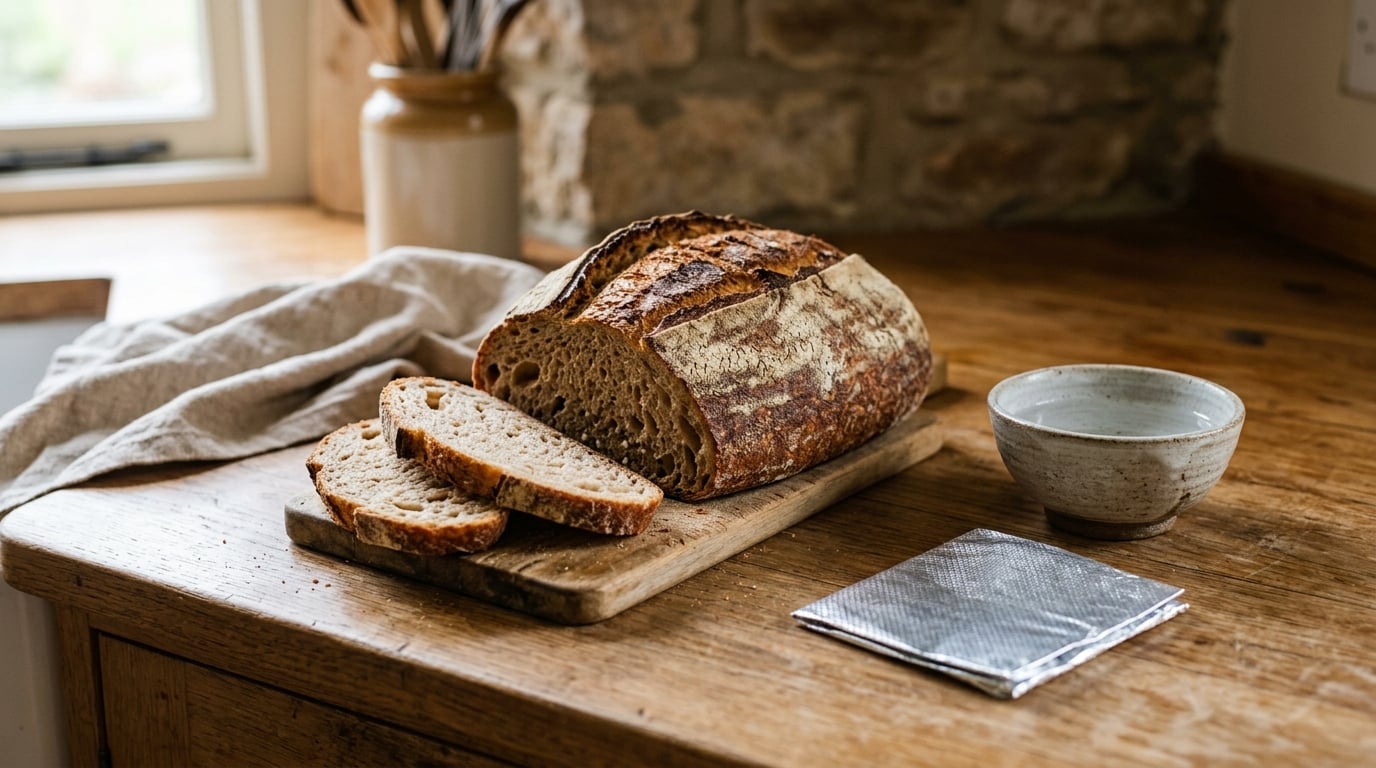
How to revive stale bread takes about ten minutes: run the crust quickly under cold water, wrap the loaf in foil, and bake at 300°F (150°C) for 10 to 15 minutes, taking the foil off for the last five so the crust crisps again. Before any of that, check the bread. Stale is safe to revive, mouldy is not.
Stale bread is not spoiled bread. It has simply lost the moisture holding its crumb open, and the starch has set into a firmer structure that no longer gives. Put water back and add gentle heat, and you get a loaf that eats like it was baked yesterday. Updated for 2026, and every temperature here is given in Fahrenheit and Celsius.
Table of Contents
- What You Need
- How to Revive Stale Bread Step by Step
- Reviving methods at a glance
- Common Mistakes
- Frequently Asked Questions
- Can you really revive stale bread?
- How do you know when bread is stale rather than spoiled?
- What is the best way to soften stale bread without making it soggy?
- Does adding water to bread make it fresh again?
- How long does revived bread stay fresh?
- Can stale bread be used for toast, sandwiches, or French toast?
- Conclusion
What You Need
Not much. The whole trick is water plus controlled heat.
- The bread. A loaf, half loaf, baguette, rolls, or slices. Dense sourdough, rye, sandwich bread, pita and croissants all respond.
- Cold water and a spray bottle. A cheap mister gives an even, light dampening on slices and rolls.
- An oven or toaster oven. A toaster oven does the same job faster for a few slices; an air fryer works at a similar temperature.
- Aluminum foil. It traps steam around the loaf so the crumb softens instead of drying out.
- A skillet with a lid. For the stovetop method. Heavy beats thin because it holds heat evenly.
- A microwave-safe plate and damp paper towel. Plus a small cup if you prefer steam to a wet towel.
- A cooling rack. Somewhere for the bread to stop steaming before you slice it. This step gets skipped more than any other.
How to Revive Stale Bread Step by Step
All three methods share four beats: confirm the bread is only stale, dampen the crust, apply gentle heat, and cool it before cutting. The oven is my default because it re-crisps the crust as it softens the crumb, which is exactly what the microwave cannot do.
- Check the loaf for mould. Fuzzy green, white or blue growth, or a sour musty smell, means discard the whole loaf, not just the spotted slice. Stale bread is dry and dull. It is not fuzzy and it is not odorous.
- Pick your method. Whole loaf or several slices, use the oven. One slice and no patience, use the skillet or microwave. No full oven, use the toaster oven or air fryer.
- Dampen the crust, not the crumb. Run the loaf under cold water for a few seconds, or spritz until the crust looks darker and slightly tacky. Stop there.
- Apply gentle heat. Steam at a moderate temperature rehydrates the inside. High heat drives moisture out and hardens the crust you worked to soften.
- Cool before you cut. Rest it uncovered for 10 to 15 minutes. Cutting while it steams traps moisture and makes the crumb gummy.
Reviving methods at a glance
This table is the fastest way to choose a method.
| Method | Best for | Time | Temperature | Result | Main warning |
|---|---|---|---|---|---|
| Oven with foil | Whole loaf, baguette, many slices | 10 to 15 minutes | 300°F (150°C) | Soft crumb, crisp crust | Unwrap the foil for the last 5 minutes or the crust stays soft |
| Stovetop skillet | One or two slices | 3 to 5 minutes | Low to medium heat | Warm, soft slice | Watch it constantly; scorched bread is worse than stale bread |
| Microwave | Smallest portion, eaten straight away | 10 to 20 seconds | Full power | Soft but rubbery crumb | It goes rock hard as it cools |
| Toaster oven or air fryer | Two to four slices, no full oven | 4 to 8 minutes | 300°F (150°C) | Close to full-oven results | Small cavities heat unevenly |
| Damp paper towel, no heat | Soft sandwich bread, rolls, pita | 10 to 15 minutes wrapped | Room temperature | Softened, not warm | Wet towel on the crumb makes a gummy patch |
Reviving Bread in the Oven for the Crispest Crust
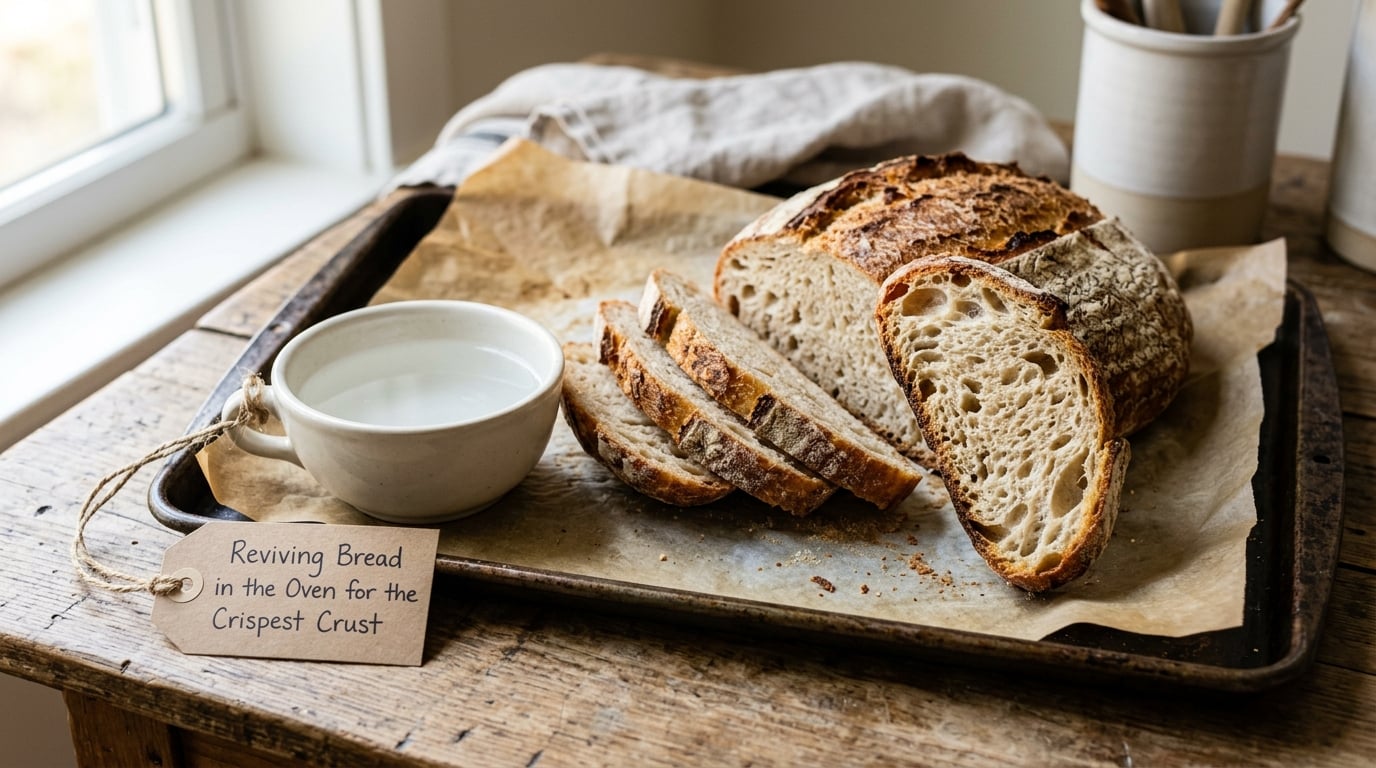
The oven gives the best result, and it is the only method that softens the crumb and re-crisps the crust in the same step. It is also the one that lets you un-stale a whole loaf at once.
- Heat the oven to 300°F (150°C). Do not go above 325°F (165°C).
- Lightly dampen the crust under a cold tap for three to five seconds, turning the loaf so the whole crust darkens slightly, or mist it. No soaking, no dripping.
- Wrap tightly in foil with the seams twisted closed. The foil is not for browning; it holds steam against the bread.
- Bake 10 to 15 minutes for a full loaf. A half loaf needs 8 to 10, slices about 5 to 7, and a baguette 6 to 8 since it is thin and dries fast.
- Open the foil for the final 5 minutes so the exposed crust goes from damp to properly crisp. Skip this and you get warm foil-wrapped bread with a soft shell.
- Unwrap and rest on a rack 10 to 15 minutes before slicing. It should feel springy when you press it.
Dense sourdough and rye drink more water, so spritz those with several light passes instead of running the whole crust under the tap. Baguettes and croissants want less time and less water, and a soft sandwich loaf usually needs a shorter bake than a crusty artisan loaf.
How to Revive Stale Bread on the Stovetop
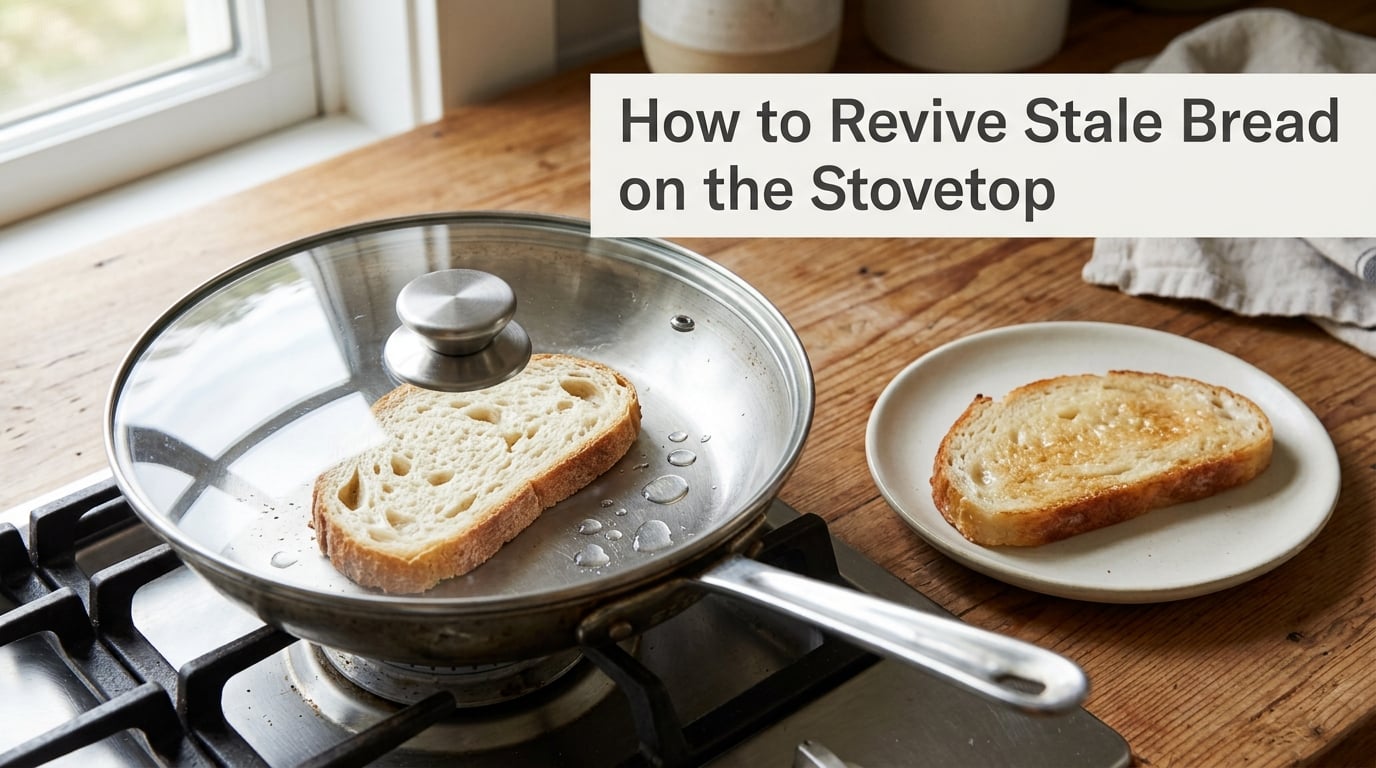
One slice does not justify preheating the oven, and this is what I reach for when someone wants warm bread right now. It takes about four minutes and one pan.
Set a slice or two in a skillet over low to medium heat and add a couple of tablespoons of water around the edge of the pan, away from the bread. Put the lid on and leave it 3 to 5 minutes, then take the lid off, flip the slice and give it 30 seconds to re-crisp.
Check constantly. A dry pan at medium heat scorches bread in under a minute. This is also the repair step for microwaved bread: 30 seconds in a dry hot pan fixes the rubbery texture.
Reviving Bread in the Microwave for the Fastest Fix
Can you microwave stale bread to make it taste fresh again? Yes, for a small portion, and only if you eat it straight away. Ten to 20 seconds, and the least good of the three methods.
Wrap a slice or small roll in a damp paper towel on a microwave-safe plate and heat on full power in 10-second bursts. Most bread is done by the second burst. Rest it a minute so moisture spreads through the crumb instead of sitting at the edges.
A cup of water a third full, set beside the bread on the same plate, works as well and many people prefer it, because the steam settles over the bread rather than soaking in. Heat in the same short bursts, and wait until the water is visibly steaming rather than still.
Here is the honest limitation. Microwave water lands unevenly, so part of the starch is heated much harder than the rest. The crumb turns tough and rubbery, then firms into something that goes rock hard as the loaf cools. This is the most common complaint from anyone who tries it, and it is why the microwave suits a slice you are about to eat, not a loaf you want to keep. If you want microwave softness with a real crust, soften it in 10-second bursts, then finish it for 30 seconds in a dry hot skillet.
Common Mistakes
Most ruined loaves come down to one of these five, and all are easy to avoid once you know them.
Baking it too hot and too long
A dry, very hot oven hardens the crumb and scorches the crust. Keep it at 300°F (150°C) and pull it while the center still feels slightly soft. You can always give it another minute; you cannot un-scorch it.
Wetting the crumb instead of the crust
How much water can the bread take? Less than most people use. Aim for a crust that looks damp, not dripping. A soaked crumb steams unevenly and comes out gummy in the middle, and fully soaking a slice is the most reliable way to ruin one.
Reviving bread that has moulded
Stale bread is safe. Mouldy bread is not, and no amount of baking fixes it, because the heat needed to kill mould spores turns the loaf to leather first. Discard the whole loaf, including clean-looking slices, and wash your hands and surfaces.
Letting microwaved bread cool, or storing warm bread sealed
You have about five minutes of microwave softness before the crumb firms again. For bread that stays soft a few minutes, use the skillet. Warm bread in a sealed container traps condensation and invites mould, so cool it fully on a rack first, then keep it at room temperature, cut side down, in a paper bag or cloth-lined bin. Expect a day of good eating, not a week. The same loaf can be revived once or twice, but each pass costs a little texture.
Putting bread too far gone into the oven
If the loaf snaps instead of bending, or the crumb crumbles to dust, the moisture is gone and heat will not bring it back. That bread is not waste. Tear it into croutons and oil them, blitz it into breadcrumbs for casseroles, soak it for French toast, or toast it hard and top it for bruschetta. A bread pudding absorbs a loaf no oven could rescue.
Two things prevent the problem in the first place. Pre-sliced bread goes stale faster than a whole loaf, because every cut exposes more surface to the air, so keep it whole if you can. And the freezer beats revival: freeze the loaf, then thaw it in the bag overnight. Thawed bread comes back tasting nearly fresh with no oven involved at all.
Frequently Asked Questions
Can you really revive stale bread?
Yes, as long as the bread is stale rather than mouldy. Staleness is a moisture and texture problem, not a safety one. Dampen the crust, apply gentle heat, and the crumb softens within minutes. Be realistic about the result: you get bread that eats like good bread, not bread indistinguishable from something baked that morning.
How do you know when bread is stale rather than spoiled?
Stale bread is dry, dull and hard, with a crumb that feels firm when you press it. Mouldy bread has fuzzy spots in green, white, blue or black, a sour or musty smell, or a slimy surface. If you see any mould, discard the entire loaf, not only the slice with spots, because the growth runs deeper than it appears.
What is the best way to soften stale bread without making it soggy?
Wet only the crust, and only until it looks damp. Run the loaf under cold water for a few seconds, wrap it in foil, and bake at 300°F (150°C) for 10 to 15 minutes. The foil traps steam so moisture reaches the crumb; taking it off for the last 5 minutes re-crisps the outside. Sogginess almost always means too much water or too much heat.
Does adding water to bread make it fresh again?
Water alone is not enough, and on its own it can make things worse. Plain water rehydrates the surface, but it needs heat to become steam and reach the starch inside. So the useful order is water first, then gentle heat. A damp paper towel with no heat will soften a soft loaf over 10 to 15 minutes, but it will not revive a crusty one.
How long does revived bread stay fresh?
Eat it the same day, ideally within a few hours. The starch sets again as the loaf cools, so the softness fades. Stored at room temperature in a paper bag or cloth-lined bin, it will hold another day or two. Reviving the same loaf more than twice is possible, but the texture keeps dropping and the third pass is rarely worth it.
Can stale bread be used for toast, sandwiches, or French toast?
Yes, and stale bread is often better for these than fresh bread. Revived stale bread toasts faster and holds its crunch better than a soft slice. For sandwiches, revive the loaf first so it is soft and pliable instead of tearing under the butter. French toast is the best use of all: day-old bread absorbs the custard without going to mush, and a loaf too hard to revive is ideal for it.
Conclusion
Start with the oven: dampen the crust, wrap in foil, 300°F (150°C) for 10 to 15 minutes, foil off for the last five. It is the only method that softens the crumb and crisps the crust together.
Use the skillet for one slice and no time, and the microwave when you need a piece in under a minute and will eat it immediately. Every time, check for mould first. That part is not negotiable.