
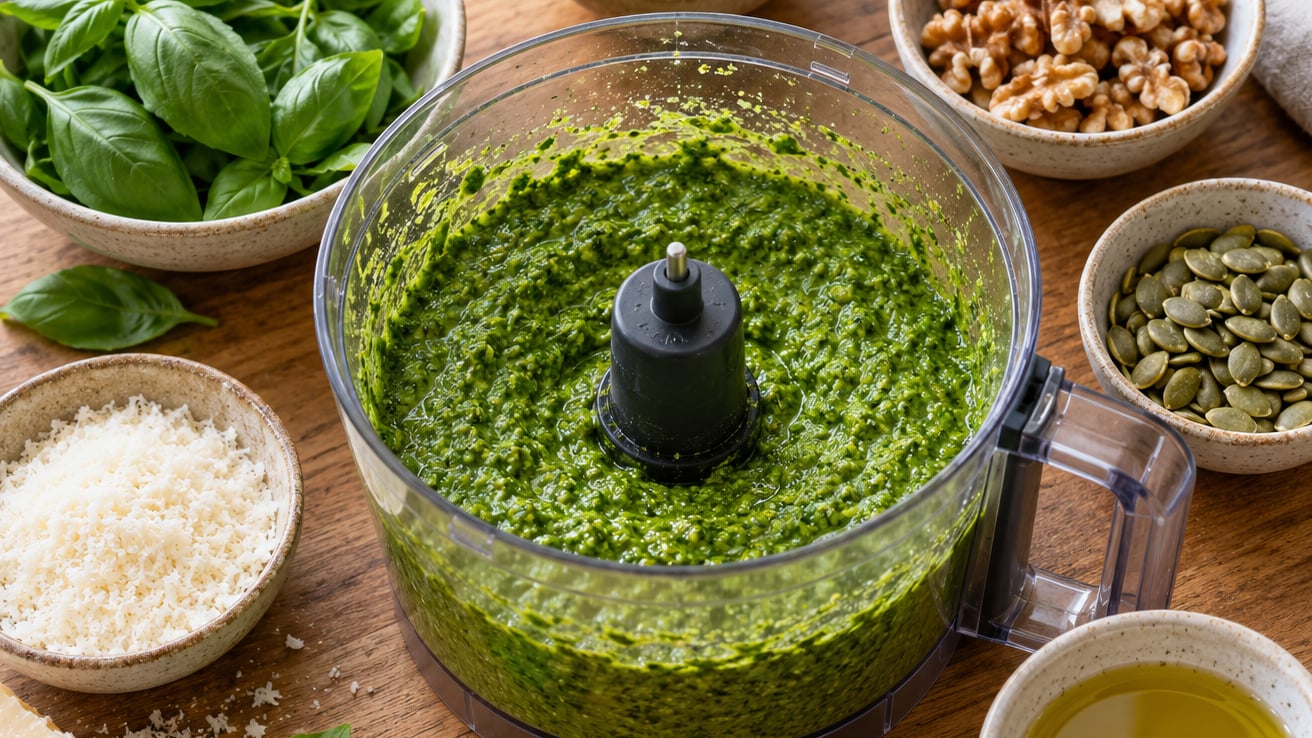
You can make pesto without pine nuts by swapping them for an equal volume of walnuts, blanched almonds, cashews, sunflower seeds, pumpkin seeds or hemp seeds, then blending everything exactly as you would a classic batch. The whole thing takes about five minutes in a food processor and tastes bright, garlicky and unmistakably basil.
Two reasons bring most people here. The first is a nut allergy in the house, theirs or a guest’s. The second is that pine nuts are pricey and come in bags sized for one recipe, so a lot of cooks just run out.
One fact worth knowing before you start: pine nuts are botanically seeds, not tree nuts. That is a technicality rather than a medical clearance, but it explains why seeds are the most defensible swap if nuts are the problem. If anyone in your house has a diagnosed nut allergy, check with their doctor or allergist before serving anything store-bought or cross-contacted.
So is pesto without pine nuts still pesto? Pesto alla Genovese lists basil, garlic, olive oil and cheese, with pine nuts an addition for body and mild nuttiness. Skip the nut or the seed and you have something very close to what the Genoese made before the sauce travelled. Some cooks call the no-nut version pistou, which is a French cousin rather than a failure.
What You Need
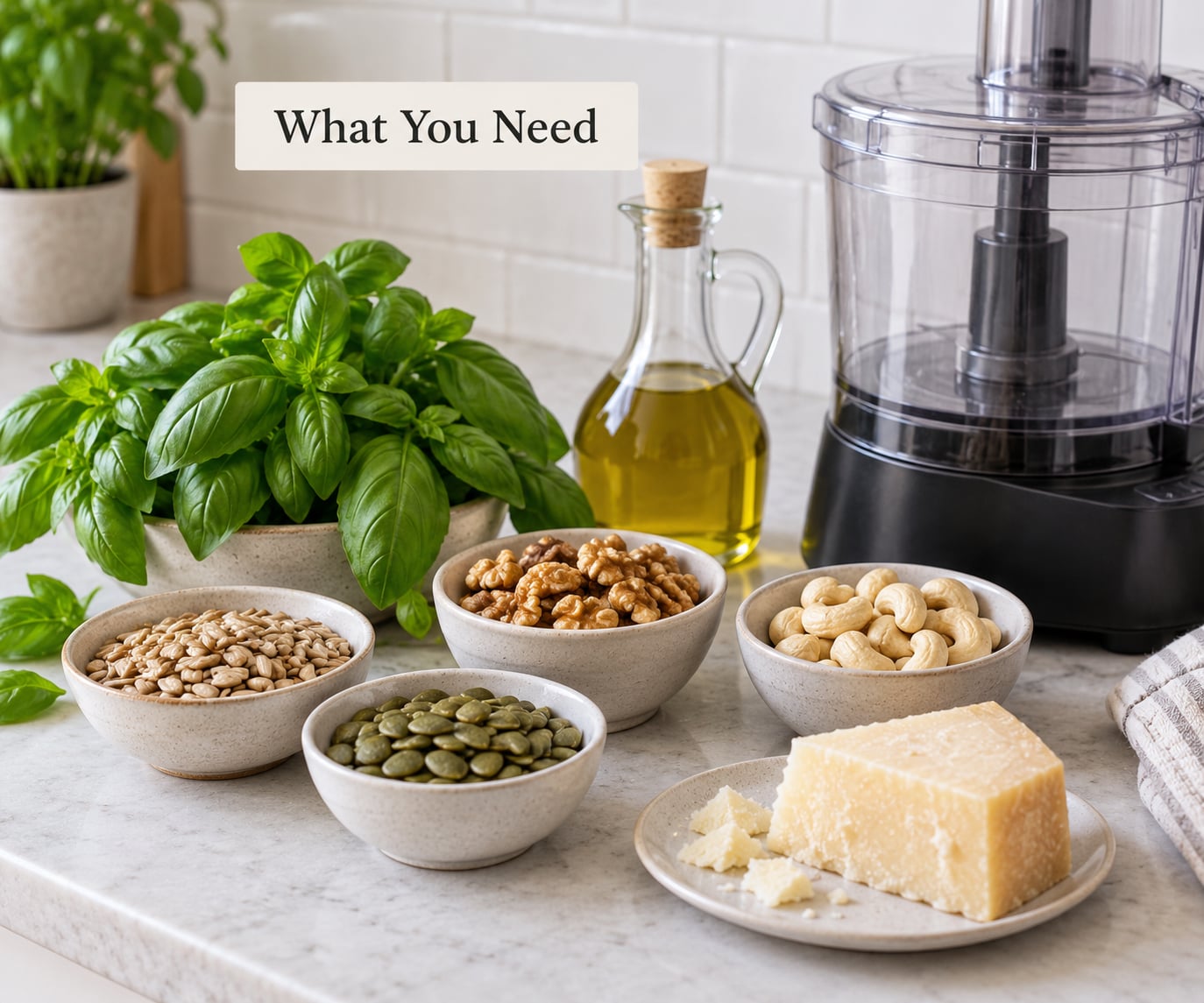
Everything below makes roughly half a cup of pesto, enough for about a pound of pasta or a round of bruschetta.
- 2 cups packed fresh basil leaves, large stems removed
- 1/4 cup walnuts, blanched almonds, cashews, sunflower seeds, pumpkin seeds (pepitas) or hemp seeds, toasted and cooled
- 1 small garlic clove, peeled and lightly crushed
- 1/3 cup extra-virgin olive oil, plus more for loosening
- 1/2 cup finely grated Parmigiano-Reggiano or Parmesan, plus extra to taste
- 1 tablespoon lemon juice
- 1/2 teaspoon fine salt and a few grinds of black pepper
- A splash of reserved pasta water when the sauce needs thinning
Equipment matters less than people think. A food processor gives you the smoothest result in the least time, a mortar and pestle gives you a coarser, more textured sauce, and a blender works if you are careful with the oil.
What Works Best in Place of Pine Nuts
Every option below replaces the pine nuts 1:1 by volume, so none of them needs any adjustment to the rest of the recipe. What changes is flavor, texture and whether the batch is safe for a nut allergy.
- Blanched almonds are the mildest swap. They soften into the basil and almost disappear, which makes them the closest thing to a neutral stand-in. Good when pesto is going onto something delicate.
- Walnuts are the richest and nuttiest. Toasting brings out a warm, almost savory depth that reads as a more substantial sauce. Skip them for a nut allergy.
- Cashews blend the creamiest because they dissolve into a smooth paste. They lean buttery rather than nutty and are the easiest option to emulsify.
- Sunflower seeds are the workhorse nut-free choice. Toasted and cooled, they taste faintly nutty and take on the herb flavor fast. Untoasted, they taste like sunflower butter and can turn bitter.
- Pumpkin seeds (pepitas) are nut-free, greener and earthier, with a snap if you pulse them only to a coarse grind. Buying them unsalted keeps the seasoning honest.
- Hemp seeds are nut-free, soft and faintly grassy. They do not toast well, so add them raw, and expect a greenish tint rather than bright green.
For a mixed batch, half sunflower seeds and half pumpkin seeds is my default. The sunflower gives the body, the pepita gives the bite.
Step-by-Step: How to Make Pesto Without Pine Nuts
The order of operations is what separates a glossy sauce from a dull one. Work in stages and taste at the end rather than seasoning twice.
How to Toast and Cool the Nut-Free Seeds
Put the seeds or nuts in a dry skillet over medium-low heat and stir constantly for 3 to 5 minutes, until they smell nutty and look a shade deeper in color. Watch them closely, because sunflower seeds go from golden to burnt in about fifteen seconds.
Pour them straight out of the pan onto a plate and let them cool completely, about 10 minutes. Warm seeds will turn bitter in the food processor, and that bitterness is the single most common complaint about sunflower seed pesto. Skip toasting for hemp seeds.
How to Make the Pesto Smooth Without Pine Nuts
Add the cooled substitute, the garlic, the lemon juice and the salt to a food processor and pulse in short bursts. You want a coarse sand, roughly 15 to 20 pulses, not a powder. A fine powder is what makes pesto taste gummy when it sits.
Add the packed basil and pulse again until it is chopped but still flecked, about 20 more pulses. Pack the basil in tightly. Loosely filled basil leaves contain trapped air, and that air is exactly why some batches turn watery.
With the motor running, drizzle in the olive oil in a thin stream. The sauce will look dry and pasty for a second, then pull together into a glossy, emulsified pesto. Scraping down the bowl once mid-pour helps.
Stop the motor, add the Parmesan, and pulse just until the cheese disappears. Taste and season. If it tastes flat, a squeeze of lemon fixes it before more salt.
For a coarser, more rustic sauce, use a mortar and pestle: pound the toasted substitute with the garlic and salt first, then work in the basil, then the oil and cheese. Immersion blenders work in a tall jar, and a regular blender needs a small batch with the lid vented, since a thick green sauce expands fast.
How to Adjust Flavor and Thickness
Homemade pesto tightens up in the fridge and loosens on warm pasta, so adjust it in the pan. To thin, stir in olive oil a teaspoon at a time. To thin without more oil, add a tablespoon of the starchy water you reserved from the pasta, which emulsifies better than plain water.
Two tablespoons of lemon juice can overwhelm a small batch of basil. Start with one, taste, then decide. Parmesan carries the savory weight, so if the sauce tastes flat rather than sour, add more cheese before more acid.
For a dairy-free version, swap the Parmesan for 1/3 cup nutritional yeast plus 2 tablespoons of cashew Parmesan, or leave the cheese out entirely and lean on lemon, garlic and a slow trickle of good oil. It is a different sauce, not a worse one.
If you want to stretch the basil, swap up to half of it for baby spinach. It adds bulk and keeps the cost down without thinning the sauce the way more water would.
How to Use and Store Nut-Free Pesto
Fold pesto into hot pasta off the heat, spread it on grilled bread, spoon it over roasted vegetables, or thin it with broth and cream for soup. A spoonful stirred into scrambled eggs right before they come off the heat is a good use. If you are rolling your own dough, the sauce is even better fresh, and it pairs especially well with fresh pasta made without a machine.
For storage, press plastic wrap directly onto the surface of the pesto, then cover the container and refrigerate. The film cuts off the air that turns basil brown. Expect about 4 to 5 days refrigerated in an airtight container.
Frozen pesto keeps several months. Spoon it into ice cube trays, freeze, then move the cubes to a bag. A frozen cube dropped into soup in February is a genuinely good shortcut. Thaw in the fridge, never in the pan, and stir in a fresh splash of oil. For a big brunch, make the batch two days ahead and keep it sealed and cold.
Common Mistakes
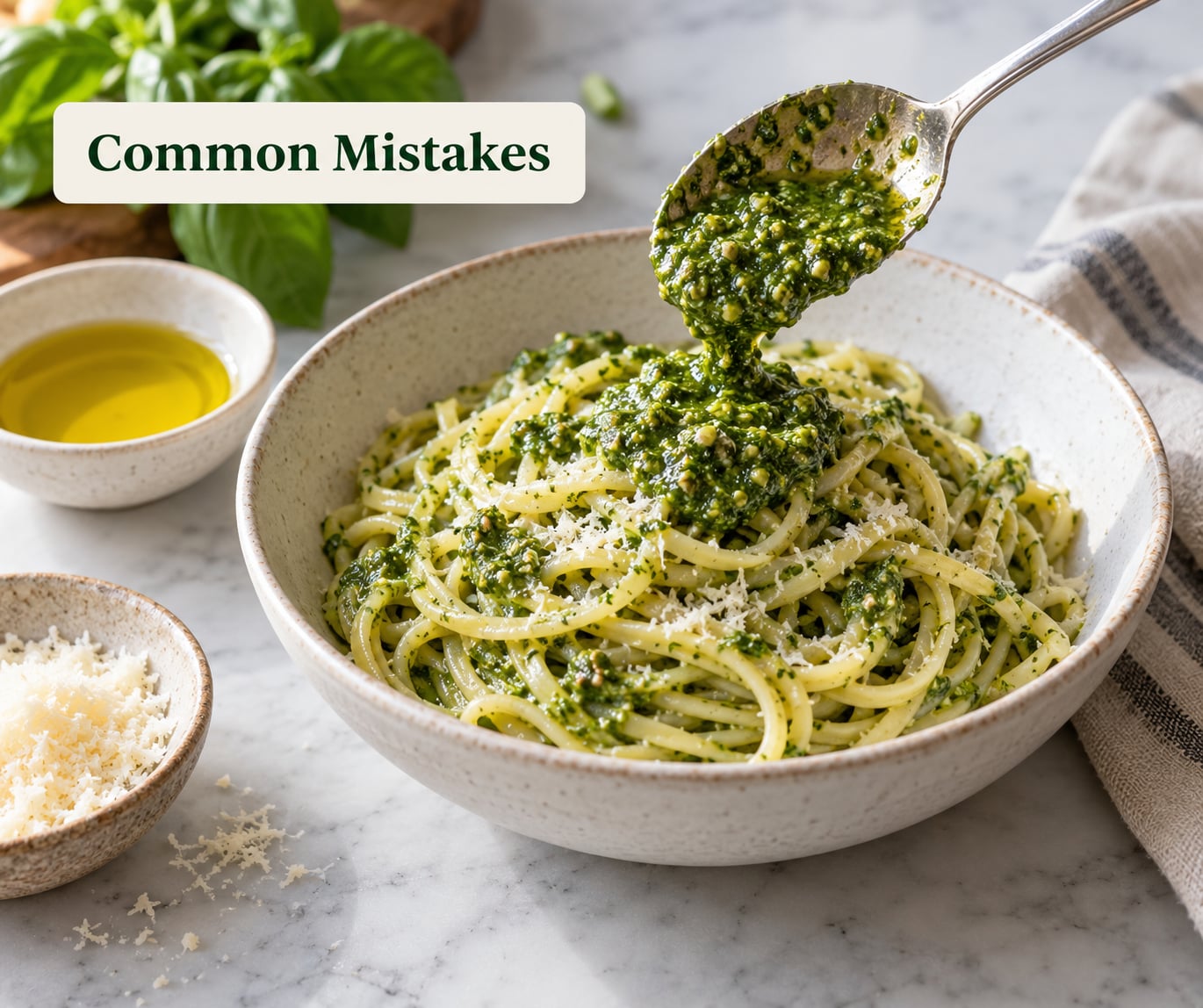
Nearly every bad batch comes down to one of five things.
- Bitter pesto. Usually un-toasted or burnt seeds, or a basil sitting on the counter for hours. Toast gently, cool fully, and use basil the same day you buy it.
- Watery pesto. Over-processed basil breaks down into a watery paste, and loosely packed leaves add air. Stop pulsing earlier, pack the basil tight, and let the oil do the emulsifying.
- Chunky pesto. Not enough processing time. After adding the oil, run the machine another 20 seconds. If you want it intentionally coarse, leave it alone and call it a rustic pesto.
- Greasy or separated pesto. Too much oil poured too fast. Drizzle slowly with the motor running until the sauce turns glossy, then stop. Oil added at the end sits on top.
- Grainy Parmesan. Pre-shredded cheese has anti-caking agents that make pesto sandy. Grate a real wedge, and if you have a Microplane, use it for the softest texture.
Two smaller things. Garlic cooked in oil until golden is sweet, but garlic that browns past that turns acrid in a raw sauce, so keep it pale. And measure the basil by volume, not weight, since it is the only variable that changes the sauce’s character quickly.
Frequently Asked Questions
What can I use instead of pine nuts in pesto?
Use an equal volume of walnuts, blanched almonds, cashews, sunflower seeds, pumpkin seeds or hemp seeds. Walnuts give the richest, most savory flavor, cashews blend the creamiest, and sunflower or pumpkin seeds are the nut-free options. Toast any seed or nut except hemp, let it cool, then blend it in exactly where the pine nuts would go.
Are sunflower seeds a good substitute for pine nuts in pesto?
They are the most popular nut-free swap and they work well in a 1:1 ratio. Toast them until fragrant and let them cool completely before blending, or the pesto will taste bitter. Buy them raw rather than salted or roasted, and expect a slightly softer, less savory sauce than a pine nut version.
How do I keep pesto from turning bitter?
Three things cause bitterness: burnt seeds, basil that has started to wilt and brown, and over-processing. Toast on medium-low heat and watch constantly, cool the seeds fully before they touch the processor, buy basil the day you cook, and pulse in short bursts instead of running the machine continuously.
Can I make pesto without Parmesan?
Yes, and the sauce still works, it just tastes greener and more herb-forward. Use 1/3 cup nutritional yeast for the savory depth, or a tablespoon or two of cashew Parmesan. Expect to add a little more lemon, since the cheese was also carrying the salt and the body that makes pesto feel rich.
How long does homemade pesto keep in the refrigerator?
About 4 to 5 days in an airtight container. Press plastic wrap directly onto the surface so no air sits on the pesto, and keep it at the back of the fridge rather than in the door. A darker green color on day two is normal; a sour smell, mold or fizzing means it has gone off.
Can I freeze pesto without pine nuts?
Yes, and it freezes better than most jarred pesto. Spoon it into ice cube trays, freeze solid, then move the cubes to a freezer bag. They keep for several months and drop straight into soup or a pasta sauce. Thaw in the fridge rather than in the pan, and stir in a fresh drizzle of olive oil to loosen it back up.
Conclusion
Pick a mild seed like blanched almonds or sunflower seeds if you want a texture that stays close to the original, and pick a nut like walnuts or cashews if you want something richer and more savory. Then make the base recipe exactly as written; once you know how to make pesto without pine nuts, the steps barely move from here. Adjust the lemon, salt and oil to taste.
Once you have a jar of it on hand, a lot of the work disappears. A meatless dinner filling gets easier when a spoonful of pesto is already in the fridge, and so does feeding a crowd without stress, since you can make the sauce a day or two ahead.