
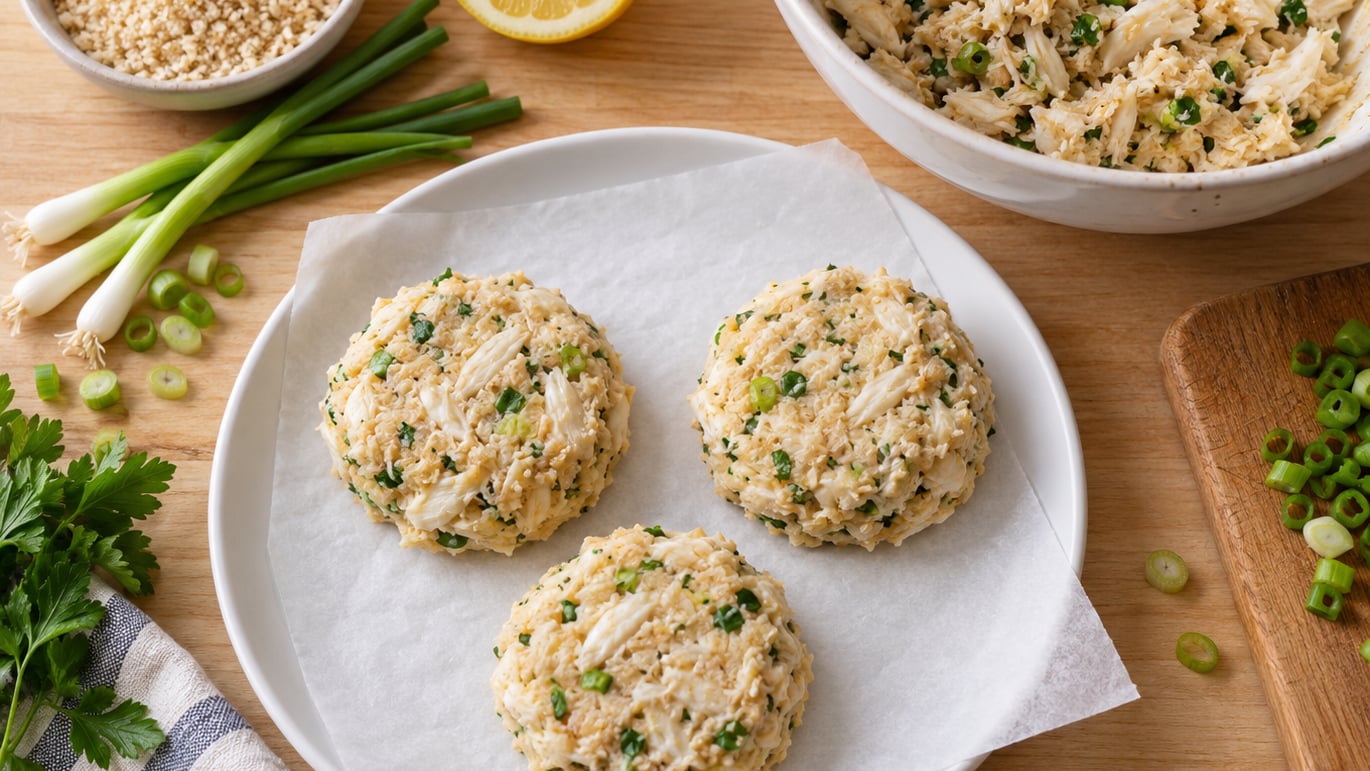
Crab cakes hold together when you squeeze out the liquid, bind the meat with a measured amount of crumbs or flour plus egg, fold the mixture gently, and chill the shaped patties for 30 minutes before they hit a moderately hot skillet. If you have ever flipped a cake and watched it break into three pieces, know that the method for how to make crab cakes that hold together is mostly about moisture control and a short chill, not a secret ingredient.
The whole thing takes about 45 minutes of active work plus chill time, and the technique matters far more than the ingredient list. Five steps cover almost every failure I see:
- Drain the crab first, seriously. Ten minutes in a colander, then a squeeze in a clean towel.
- Measure the binder by volume and stay near a third of a cup per pound of crab.
- Fold, never stir. The lumps of crab are what you are trying to keep.
- Chill the shaped patties 30 minutes before cooking.
- Cook at medium heat and flip once, using two spatulas if the cakes are large.
Read on if you want the reasoning behind each step, or scroll to how to make burgers that stay juicy for the same patty-shaping logic applied to a different meat.
What You Need
One pound of crab meat makes eight to ten cakes depending on how thick you shape them. Jumbo lump crab is the best pick: the meat comes in large firm pieces with almost no filler, and those pieces are what give a crab cake its reputation. Plain lump works nearly as well. Canned lump crab is fine as long as you drain it well and check the label for added binders.
Whatever you buy, buy it chilled and keep it cold from the store to the mixing bowl. Crab that has warmed up in a warm kitchen gets gummy, and gummy crab does not shape.
The binder is the part most recipes get wrong, mostly by guessing. Here is how the usual options compare, per pound of crab meat:
| Binder | Amount per pound of crab | How it holds | Best for |
|---|---|---|---|
| Panko | 1/3 to 1/2 cup | Large flakes grab moisture and leave a coarse, crunchy crust | Cakes cooked in a skillet or air fryer |
| Fresh breadcrumbs | 1/3 cup | Softer matrix, finer crumb, more tender center | The gentlest, most restaurant-style cake |
| Crushed crackers | 3/4 cup crumbs | Crackers add a sweet, salty snap | Maryland-style cakes with Old Bay |
| Flour | 2 to 3 tablespoons | Thickens the moisture into a paste; does not add texture | Combining with a crumb or cracker binder |
| Mashed potato | 1/2 cup | Starch swells and glues on contact with heat | Gluten-free cakes that need no egg |
| Egg | 1 large | Proteins coagulate and set in the pan | Every cake, unless you are avoiding egg |
My default is a modest amount of fresh breadcrumbs plus a spoonful of flour with one egg. The crumbs give structure and crust, the flour turns the crab liquid into a paste that fills the gaps between pieces, and the egg does the setting. That is also why a dusting of flour beats egg alone when cakes keep breaking.
For the wet side, you need one egg, a tablespoon of mayonnaise for moisture and fat, a teaspoon of Dijon or Worcestershire for depth, and a small splash of lemon juice. Small on the lemon. Juice is the quiet reason a batch goes soupy in the bowl.
Season simply: salt, black pepper, sliced scallions, and Old Bay or a similar celery-salt blend if you want the Chesapeake flavor.
Your tools matter more than people expect. A wide 12-inch skillet gives you space so the cakes sear instead of steam, a thin fish spatula makes lifting possible, and a wire colander plus a clean towel handles the draining.
Step-by-Step
Drain the crab and prepare the mixture
Put the crab in a colander set over a bowl and let it drain for 10 minutes. Then lay it in the center of a clean towel, gather the towel around it, and twist firmly until liquid stops coming out. This is the single most important step for how to make crab cakes that hold together, and skipping it guarantees a soft cake that sheds crumbs in the pan.
Whisk the egg, mayonnaise, mustard or Worcestershire, and seasonings in the wide bowl first, so the binder is evenly distributed before the crab goes in.
Add the drained crab and the dry binder on top. Fold with a spatula in small scoops from the bottom, turning the mixture over on itself about six or eight times. Stop as soon as a spoonful holds its shape when you squeeze it. Overmixing turns crab into paste, and paste fries into a dense rubber puck.
Shape the crab cakes without compressing them
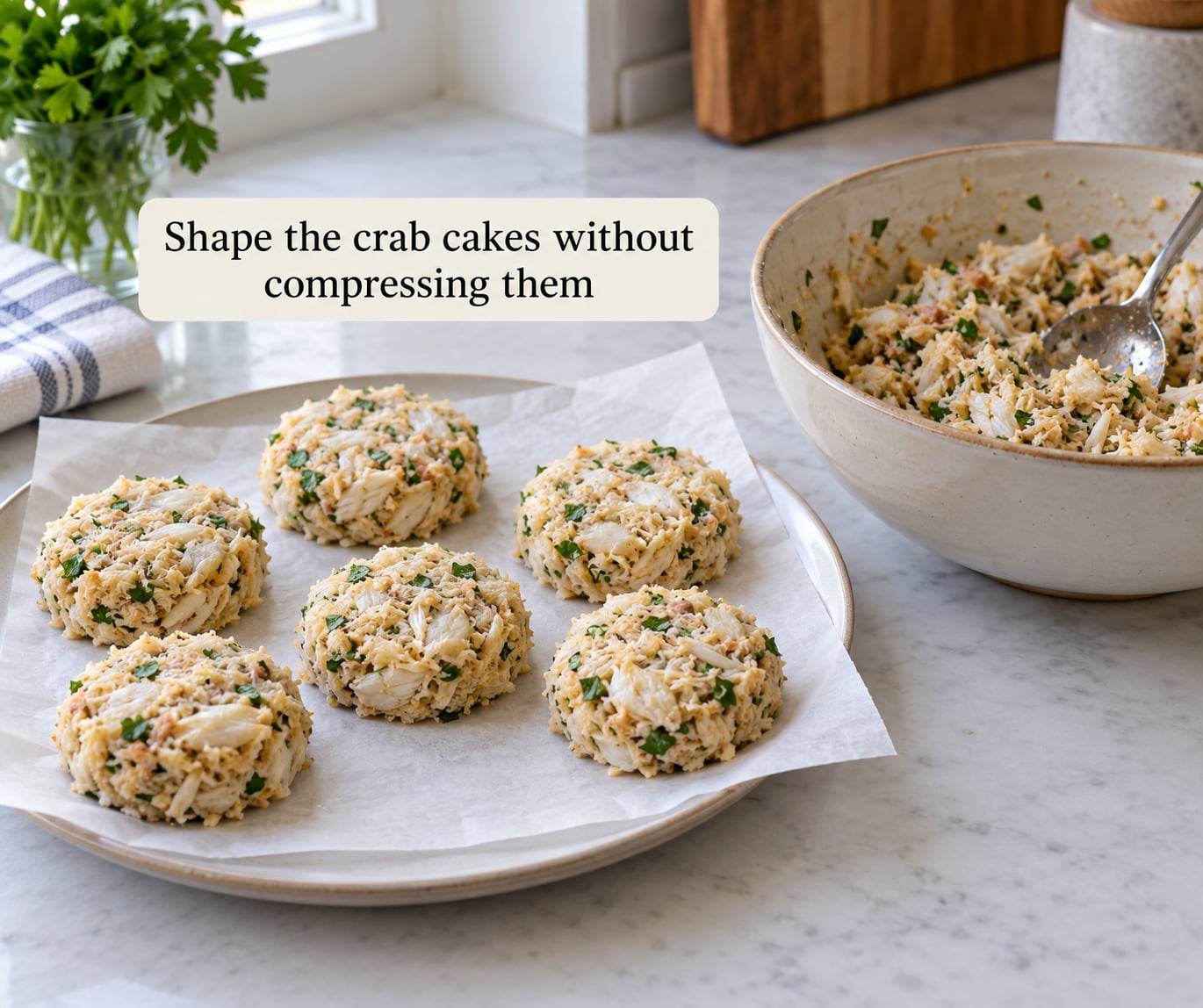
Use a 1/3 cup measure for a standard cake and level it with a wet hand. Pack the mixture in, then press the top flat and round the edges with your fingertips so there are no loose corners to shed in the pan.
Pack it, but do not squeeze it. You want the patty firm enough to survive a spatula, not dense enough to taste like filler. Aim for about three-quarters of an inch thick; anything thicker stays raw in the middle and needs longer in the pan. The same principles show up in our guide to how to make burgers that stay juicy, where overworking the meat ruins texture in the same way.
Chill the patties before cooking
Slide the tray onto a flat shelf in the refrigerator, uncovered or loosely covered, for 30 minutes. Thirty minutes lets the starch swell, the egg proteins start to set, and the fat firm up, so the patties hold their edges and release from the skillet cleanly. I have seen cakes go straight to a hot pan and crumble in the first thirty seconds.
Longer is better here. Chilling overnight works well for a party, and it makes crab cakes one of the easiest dishes in our appetizers you can prep ahead guide, since you can form them the night before and pan-fry them ten minutes before guests arrive.
Pan-fry until golden and cooked through
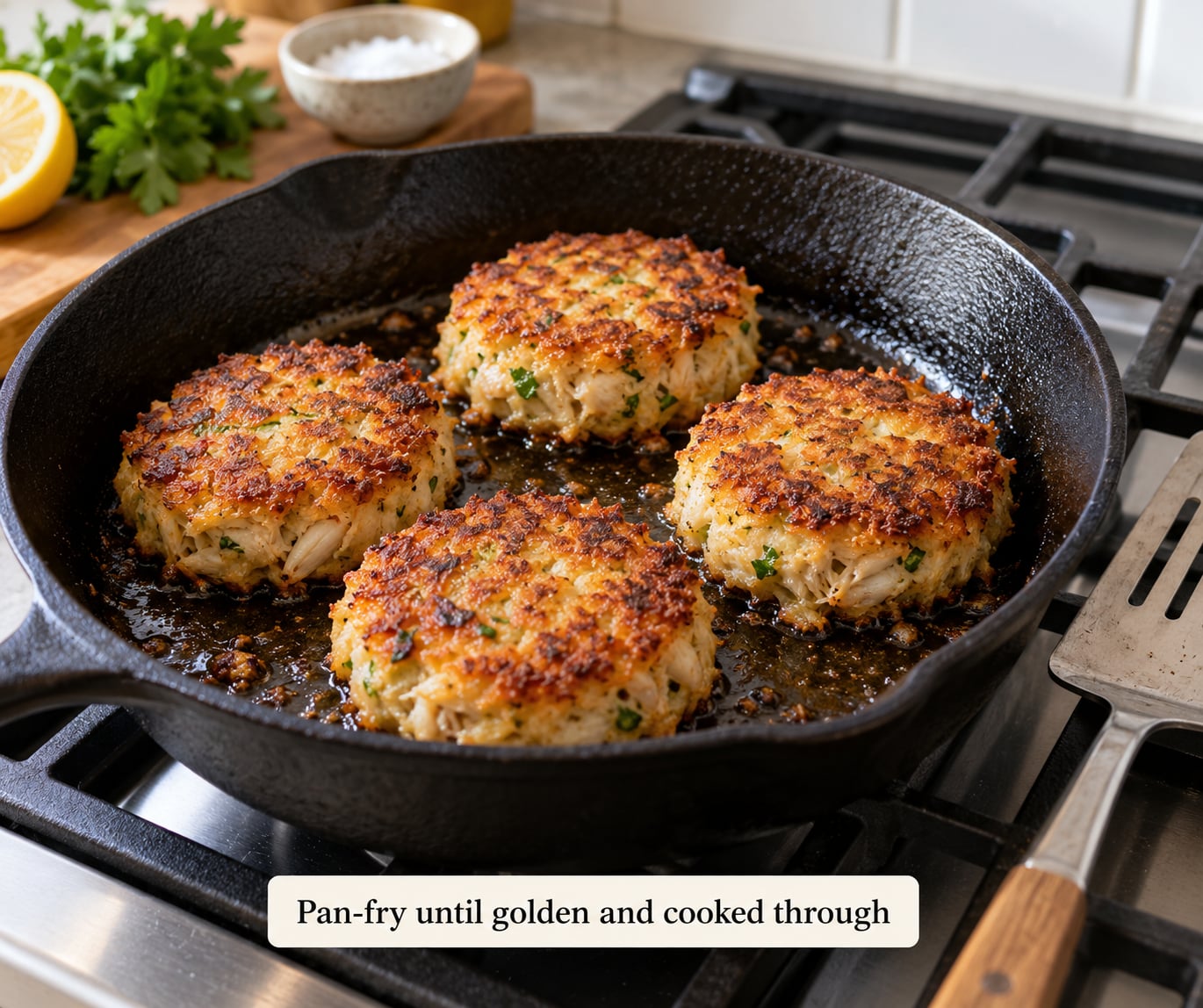
Set a wide skillet over medium heat and add a thin layer of a neutral oil, about an eighth of an inch. Medium is the right word. Oil that is too cool lets the cakes soak, go soft, and shed; oil that is too hot browns the outsides before the centers firm.
Wait for the oil to shimmer and for a drop of batter to sizzle immediately, then lay the patties in with a little space between them. Crowding drops the pan temperature and traps steam, which is another common reason crab cakes fall apart.
Fry for about 3 to 4 minutes per side, until the crust is deep golden and the edges look crisp. Flip once, using a thin spatula slid all the way under, with a second spatula supporting the cake. Do not move it more than that.
The crab is opaque and firm all the way through when it is done, and an instant-read thermometer in the center should show 145°F for food safety. Let the cakes rest on a rack rather than a plate for two minutes so the crust stays crisp, then serve with tartar sauce, remoulade, or a lemon wedge.
Common Mistakes
Almost every batch that falls apart fails for one of seven reasons, and each has a direct fix.
Wet crab, wet mixture. Squeeze the meat dry before anything else. If the mixture still looks loose after draining, add another tablespoon of flour or crumbs and stop.
Too much binder. More filler is not more structure. Past about half a cup per pound the cake holds together but tastes bready, and you can fix it only by using less next time.
Overmixing. Stirring vigorously or using a food processor breaks the crab into a paste. Fold until it barely holds together and stop there.
Overpacking. Pressing the patty hard under your palm squeezes out the air that helps it cook, and the compressed cake cracks when heated. Firm shape, gentle pressure.
Crowding the pan. Leave a finger of space between cakes. If your skillet is small, cook in two batches instead of crowding one.
Flipping too early. If the spatula drags through the crust, the surface is still wet. Give it another 30 to 45 seconds; the crust should release on its own when it is ready.
Skipping the chill. Even ten minutes in the refrigerator firms the fat and the starch. Thirty is better, and overnight is better still.
For the sauces that go alongside, a lumpy remoulade or a simple tartar of mayonnaise, capers, mustard, and chopped pickles works best. If you like an egg-based sauce too, our how to make hollandaise sauce that does not break recipe is a rich pairing for cakes cooked in the oven.
Frequently Asked Questions
What is the best binder for crab cakes that hold together?
Panko, fresh breadcrumbs, or crushed crackers with a spoonful of flour are the most reliable options, because their starch absorbs the crab’s liquid and sets into a matrix in the pan. Use about a third to half a cup per pound of crab meat. Going heavier is the other common failure: the cakes hold together but taste mostly like filler.
Can I make crab cakes without eggs?
Yes, and the change is small. Extra-moisture binders such as mashed potato, almond flour, or a heavier dose of panko can hold the crab on their own. Egg-free cakes want a slightly longer chill, about 45 minutes, so the starch has time to swell before the patties meet the pan.
Why do my crab cakes fall apart when I flip them?
Three causes account for most breakage: a loosely packed patty, a mixture that was too wet, or not enough chilling. Squeeze out the crab liquid, fold the binder in gently, press each patty compact but not dense, and refrigerate for 30 minutes. Then slide a thin spatula fully underneath and use a second spatula to support the cake as it turns.
Are frozen crab cakes better than homemade for holding together?
Homemade cakes usually taste fresher and let you control how much filler goes in. Commercially frozen cakes rarely break apart, because the manufacturer stabilizes them well and freezing firms the mixture, which makes them a dependable shortcut. Cook them straight from frozen at medium heat rather than thawing first, and expect a slightly softer crust.
To store cooked crab cakes, cool them on a rack, refrigerate in a sealed container for up to three or four days, and reheat in a hot oven or skillet so the crust comes back to life. For uncooked patties, freeze them in a single layer until solid, then bag them; they keep about two months and cook from frozen.
Use the gentlest mixing and a short chill first
If you change two things tonight, make them these. Fold the binder through the drained crab as gently as you can, stopping the moment a spoonful holds together, and put the shaped patties in the refrigerator for 30 minutes before the pan. Those two habits solve most of the crumbling, and neither depends on a special ingredient.
Then heat a wide skillet over medium, give the patties room, and fry about 3 to 4 minutes a side until the crust is deep gold and the centers read 145°F. Start there, taste the result, and adjust the next batch from what you notice.