
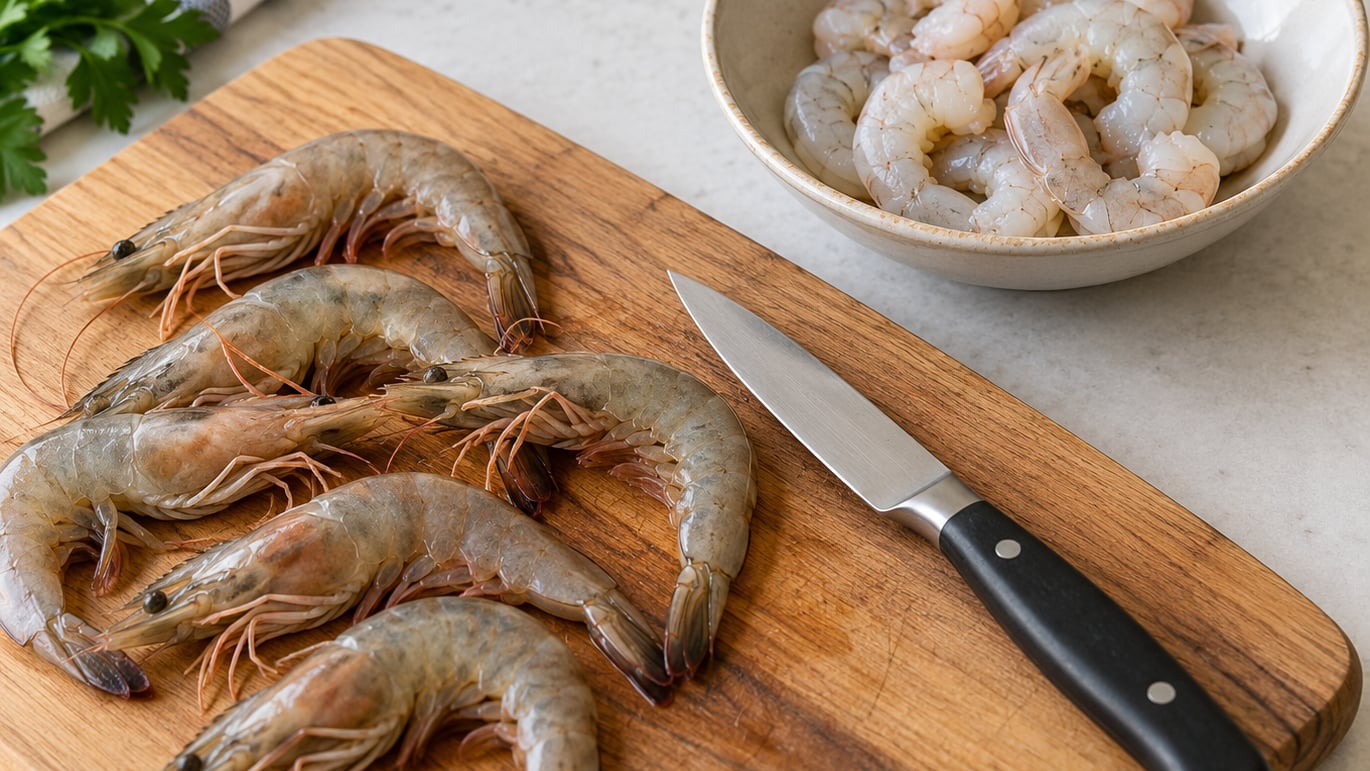
Learning how to devein shrimp quickly comes down to two decisions: which tool you pick, and whether you peel before you clean. A pound of raw shrimp takes roughly six minutes with a sharp paring knife, closer to four with a shrimp peeler, and about twelve if you peel each shrimp first and then cut into it afterward. Use a knife for a handful, a peeler for a batch, and a hollow paper tube when the only thing in the kitchen drawer is a toothpick.
Deveining means pulling out the dark digestive tract that runs along the back of the shrimp, sitting in a shallow channel between the head and the tail. Skip it and the shrimp is still perfectly safe to eat once cooked, so nobody is going to get sick. You clean it because the vein can taste bitter, can look gritty in a finished plate, and is the one thing that makes home-cooked shrimp read as restaurant-clean when it isn’t.
The biggest time sink isn’t the pulling. It’s peeling shrimp separately and then cutting into them afterward, doing the work twice. Pick one method, commit to it, and inspect the back of a shrimp when you’re done.
Table of Contents
- What You Need
- Step-by-Step
- Frequently Asked Questions
- Do all shrimp have a vein that should be removed?
- Is it better to devein shrimp before or after cooking?
- Can I devein frozen shrimp without thawing them first?
- Should I remove the vein from raw or already-cooked shrimp?
- Does deveining shrimp change its texture or flavor?
- How long can deveined shrimp stay refrigerated before cooking?
- Conclusion
What You Need
Everything below is either free or already in a kitchen drawer. You do not need a dedicated gadget to get a clean result.
- Shrimp — shell-on head-off, shell-off, or pre-peeled. Raw and chilled, or IQF shrimp thawed fast in cold water and still cold to the touch.
- A sharp paring knife — a small pointed blade beats a chef’s knife here, because you want to cut shallow in a small space.
- A shrimp peeler — the single-combination tool with a blade on one side and a slot on the other. Optional, but it’s the fastest option for a pound or more.
- A cutting board — with a damp towel laid under it so it doesn’t slide while you’re pressing down.
- A shallow bowl or a sheet pan — cleaned shrimp go straight in, and a pan keeps them in one layer instead of a pile.
- Paper towels — for the final pat dry, which matters more for how the shrimp sears than for how it tastes.
- Optional: kitchen shears — useful if you want the shell off in the same motion. And a hollow paper tube — the empty inner cardboard of a toilet paper roll or a paper towel rod — for the no-tool method.
Step-by-Step
How to Devein Shrimp Quickly With a Knife
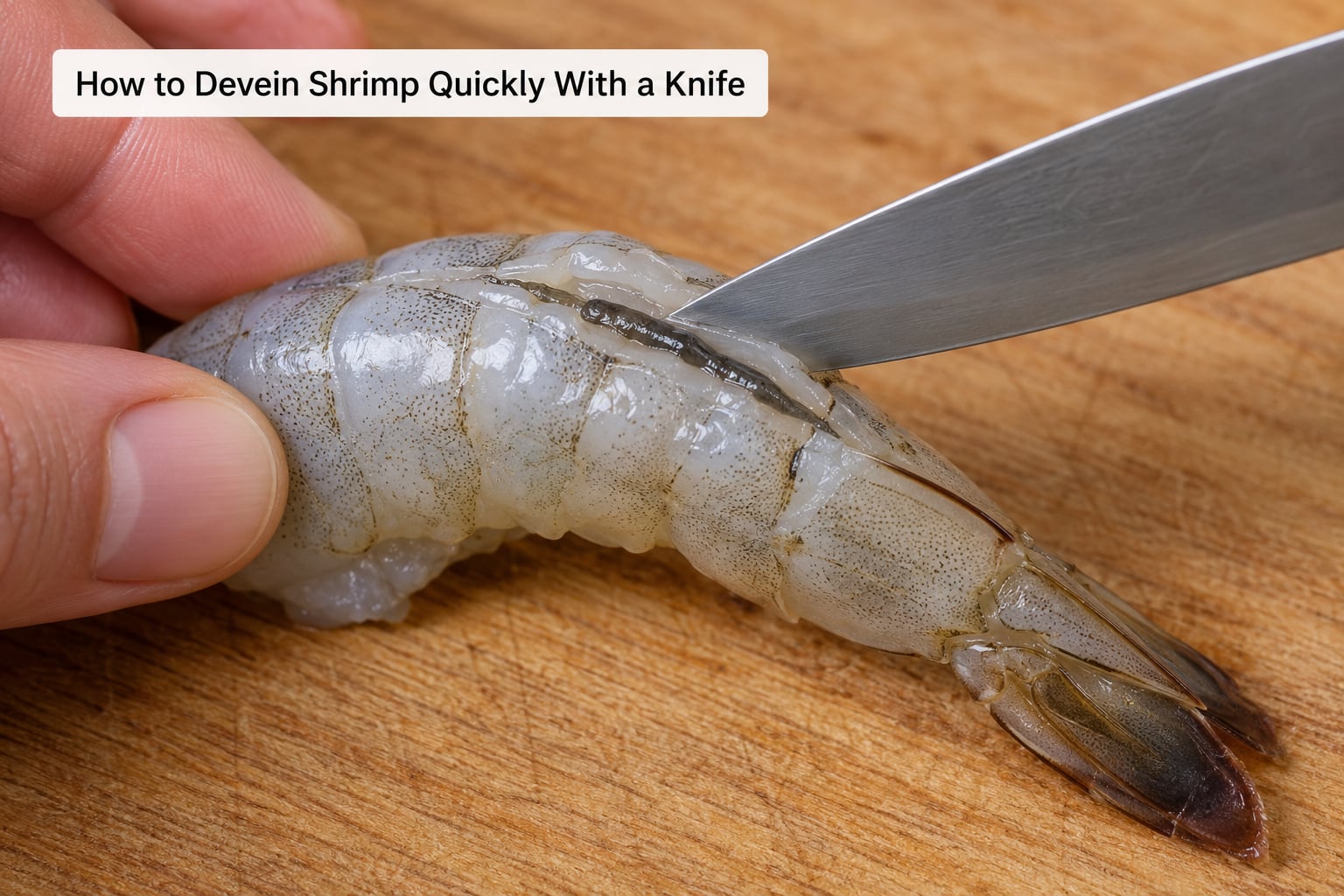
This is the most versatile method and the one worth learning, because it works on shell-on shrimp, already-peeled shrimp, and frozen shrimp that have been thawed. Lay the shrimp on the board with the back facing up, curved side down.
Hold the tail in one hand and the body in the other. With the tip of the paring knife, cut a shallow slit along the center of the back, from just below where the head was down to the last shell segment before the tail. You want the blade barely through the shell — a thin translucent line of fluid on the blade is exactly right, and deeper than that is how you get a torn shrimp.
The cut opens the back into a butterfly. Inside you’ll see the vein sitting in the groove, usually a thin dark thread with a slightly darker lump at the top. Pinch it between your thumb and forefinger and pull. It comes away in one piece more often than not, and it should feel continuous rather than sticky or crumbly. If it resists, wiggle the grip and keep pulling in the same direction you were already going.
For shell-on shrimp, stop there and leave the shell closed. You’ve cleaned the vein without removing the shell, which is what you want for grilling, broiling, or a shrimp cocktail where the shell looks good. For shell-off shrimp, finish the job: pull the shell off from the tail toward the head, then check the groove once more because the vein sometimes stays behind in the segment nearest the head.
On raw shrimp, a pat dry with paper towels before it hits a hot pan is worth more than anything else you do afterward. If you want the rest of the technique, we have a guide on how to cook shrimp without making it rubbery that picks up from a cleaned, dry shrimp.
How to Devein Shrimp Quickly With a Shrimp Peeler
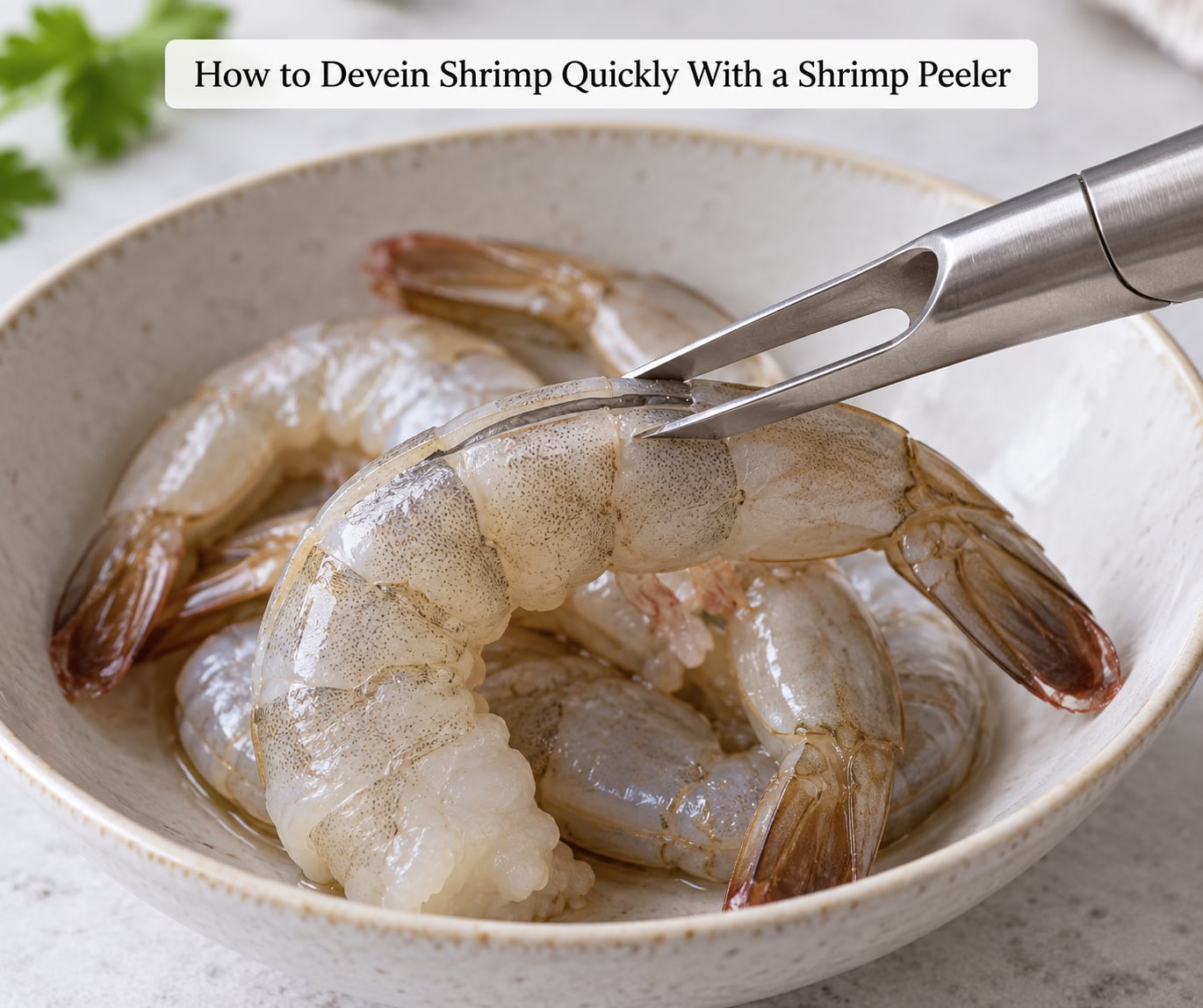
A shrimp peeler is a small handheld tool that does two jobs at once: a blunt notch that catches the shell, and a short blade on the opposite edge. That combination is why it’s the fastest option for a full pound, and why home cooks who buy one rarely go back to the knife.
Rest the shrimp across your non-dominant hand, back up, tail toward your thumb. Hook the blunt notch under the shell at the point where the head was removed, right at the top of the first segment. Press down until you feel the shell pop into the notch.
Now pull the tool away from you, along the length of the shrimp, in one continuous motion. The blade rides under the shell and lifts it, and the vein usually comes with it — often pinched between the blade and the shell segment. Most shrimp finish in a single pass, which is why a pound takes about four minutes once your hand knows the pressure.
Two things cause a messy pass. If you start too low on the body, the blade slides into the flesh. If you pull in short, jerky movements, the vein snaps and stays behind. Drop the shrimp into the blade-once more, or flip it and work the other direction.
Shrimp that came pre-peeled need a gentler setting. There’s no shell for the notch to grab, so skip the notch entirely, set the blade against the back, and draw it along the groove to lift the vein out without cutting deep. If the package says peeled and deveined, the top vein is already gone and you are usually just checking, not cutting.
How to Devein Many Shrimp With a Paper Tube
This is the method for a cookout where nobody brought a knife. Take an empty cardboard tube from a paper towel roll, or a chopstick you hollowed out with a drill. The shrimp slides inside tail-first, and the open end gives you something to pull the vein out through.
Push the body of the shrimp into the tube so only the back and the tail are exposed. Pin the exposed back with a fingertip to keep the shrimp from sliding back out. The tube does the work your knife would have done: it holds the shrimp steady and opens the channel.
Now take a toothpick or the tip of a fork and hook the vein at the end nearest the tube opening. Pull it straight out through the open end while the shrimp stays packed inside. The vein comes out in one piece because the shrimp has nowhere to roll, and a single person can work through a pound in roughly ten minutes this way.
Keep the shrimp cold while you do it. Small batches of ten or fifteen at a time, straight into the bowl, and the bowl into the refrigerator between passes, beats leaving a whole pound sitting on the counter while you hunt for the tube.
How to Tell the Vein Is Fully Removed
A clean groove after the pull looks pale and slightly translucent, the same tone as the surrounding flesh. You’ll usually see a faint line where the vein was, and that’s normal. What you don’t want is a dark strand still sitting in the channel, a broken piece at the head end, or brownish residue smeared along the groove.
If a piece remains, don’t go back in with the knife. Use a toothpick or the tip of a fork to lift it out and pull once more. It’s sitting loose in a channel that’s already open, so it comes out without another cut.
If the vein broke and part is still inside, you have three options. Pull again gently with a toothpick, accept it and cook the shrimp where a brown bit will blend into the sauce, or cut the shrimp in half lengthwise along the back and remove what’s there. Cutting in half turns shrimp into a different dish, so it’s the last resort.
Now the part that confuses most people. There’s a second thin strand running along the underside of the shrimp, and it is not the vein. That’s a nerve cord, it’s completely harmless, and packaged peeled-and-deveined shrimp almost always still have it. Nobody deveins both sides, and you shouldn’t either.
If the shrimp tore while you worked, check the piece before serving. A torn shrimp cooks unevenly and dries out at the broken end faster than the rest, so it’s worth cutting the bad side off and using the shrimp in a dish where the seared, textured side is an advantage.
Common Mistakes
Cutting through the flesh. A paring knife deeper than the shell leaves a gash that opens up in the pan. Use the tip only, and cut where the shell is thinnest — right at the joint between segments.
Pulling against the direction. The vein comes out toward the tail. Pulling toward the head shreds the shrimp instead of lifting the strand.
Going after the underside strand. That is the nerve cord. Work the back only and leave the underside alone.
Pinching too hard. Soft or partly thawed shrimp tears under pressure. Hold the tail loosely, press the shrimp against the board rather than squeezing the vein, and stop as soon as it releases.
Skipping prep on unpeeled jumbo shrimp. Bigger shrimp have a longer channel and more of it, and jumbo shrimp are the ones most often served with the shell on where a dark vein shows through the shell when cooked. Take the extra seconds.
Letting cleaned shrimp sit warm. Prepped shrimp should go straight into a covered container and back into the refrigerator. Raw seafood left at room temperature for more than two hours is a real risk, and the same two-hour window applies during a party if the bowl sits out.
Tips for Fast, Clean Shrimp Prep
Chill the shrimp first. Shrimp straight out of a colder fridge or ice bath holds its shape, and cold shrimp is noticeably firmer to cut than shrimp that’s been on the counter for twenty minutes.
Keep a sharp knife in the rotation. A dull blade has to be pushed, and pushing is what causes tearing. Hone it or swap it rather than pressing harder.
Group shrimp by size and work them in order from largest to smallest. The muscle control you build on a jumbo carries straight over to the small ones, and you stop re-adjusting your grip every other shrimp.
Rinse only when it helps. A quick rinse under cold water clears loose shell fragments, but soaking shrimp rinses off the surface brine and can leave them watery and bland, which is a hard problem to fix later. Our notes on five proven fixes for a bland dish cover what to do when that happens.
Pat dry, then cover and refrigerate. Paper towels on every side of the batch, a tight lid over the bowl, and back on the shelf under 40°F until you cook. For cooking itself, shrimp reaches the USDA recommended minimum internal temperature of 145°F.
Frequently Asked Questions
Do all shrimp have a vein that should be removed?
Most do. The dark digestive tract runs along the back from the head end to the tail in nearly every species you’ll buy, though it is thinner and less noticeable in very small shrimp than in jumbo. Small shrimp under about half an inch are often fine to leave alone. Larger shrimp, and anything served where appearance matters, are worth the minute it takes.
Is it better to devein shrimp before or after cooking?
Before, and it’s not close. A cooked shrimp is firm and slippery, so pulling the vein afterward takes longer and breaks the shrimp more often. Raw shrimp is soft and the vein lifts out in one clean pull. Cooked shrimp also makes the vein harder to see, which is why picking it out afterward is fiddly work for no benefit.
Can I devein frozen shrimp without thawing them first?
You can work on frozen shrimp, but thawed is easier. Frozen flesh is stiff and the vein is frozen into the channel, so it tends to break rather than lift. Thaw IQF shrimp for a few minutes in cold running water and you get a shrimp firm enough to pull cleanly but not so warm that handling becomes a food-safety question. Never thaw in warm water or on the counter.
Should I remove the vein from raw or already-cooked shrimp?
From raw shrimp, and the earlier the better. Cooking kills bacteria in the vein, so leaving it in cooked shrimp is a safety non-issue. People remove it anyway because a bitter or gritty strand is noticeable, and because a dark line across the back ruins the look of a shrimp cocktail or a plate of grilled shell-on shrimp.
Does deveining shrimp change its texture or flavor?
Slightly, and mostly indirectly. The vein itself is small, so the difference is modest. What people actually notice is that a deveined shrimp sears better: the groove holds liquid and surface moisture, and a shrimp that hits a hot pan dry browns instead of steams. That change is worth more to flavor than the removal of the vein itself.
How long can deveined shrimp stay refrigerated before cooking?
Use raw shrimp within one to two days of purchase or thawing, whether or not you have deveined it. Deveining shortens that window slightly, since handling breaks down the surface where bacteria sit, so treat prepped shrimp as the freshest thing in your fridge rather than something that will keep for a week. Cook to an internal temperature of 145°F.
Conclusion
How to devein shrimp quickly is a tool decision, not a technique decision. A few shrimp go through a paring knife with a shallow slit along the back. A pound or more goes to a shrimp peeler in one continuous pull from head to tail. No tool at all means a hollow paper tube and a toothpick, which is slower but works on any counter.
Whichever route you take, do the last check before the shrimp hits heat: look down the back for a dark thread, pick out any residue with a toothpick, and pat the batch dry. That inspection is what separates clean shrimp from shrimp that only looks clean from a distance.