
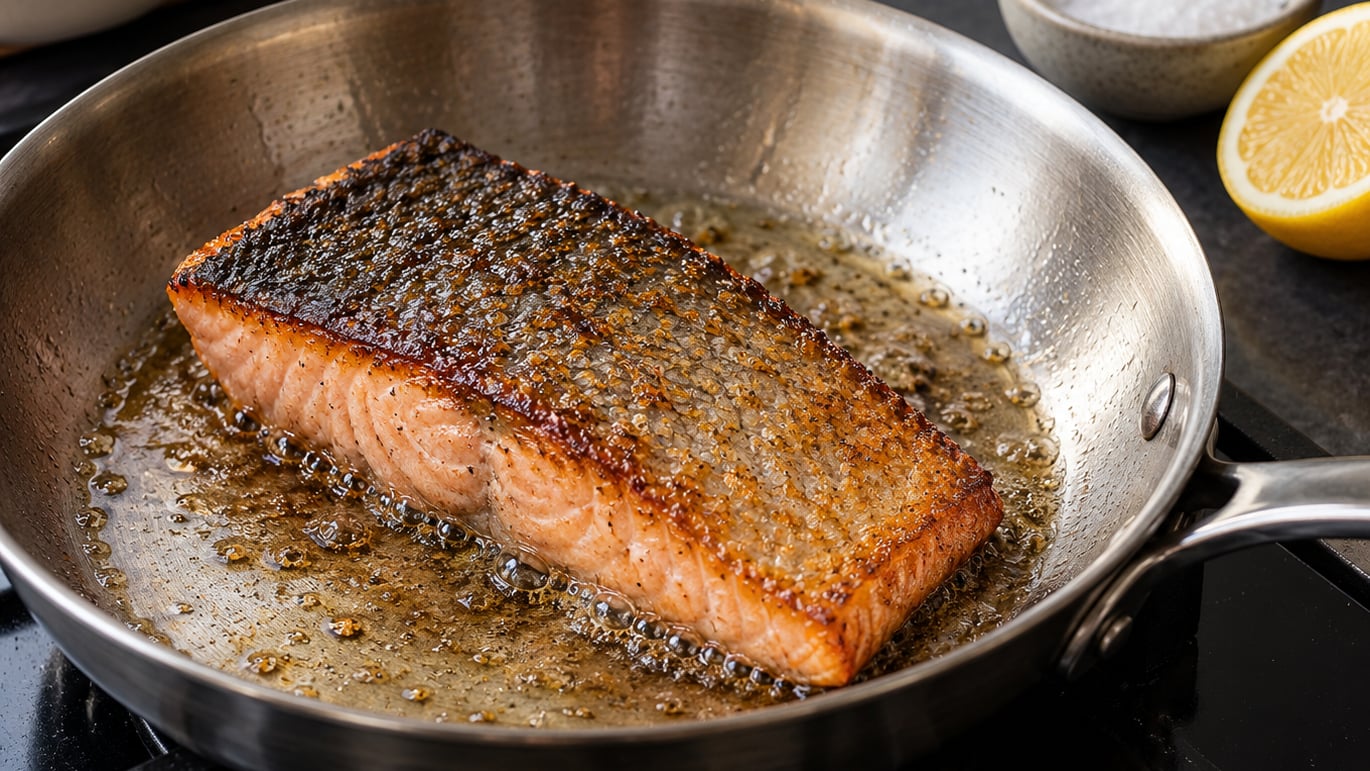
If you have never managed a truly crackling piece of salmon skin, how to get crispy skin on salmon comes down to two things: bone-dry skin and a fully hot pan with enough oil to crisp it. Cook a skin-on fillet face down without moving it until the crust releases on its own, and you get a wafer-thin, crackling layer that shatters under a fork. It takes about 12 minutes start to finish.
The frustrating part is that most soggy salmon skin fails the same way. Moisture on the surface steams instead of sears, and a lukewarm pan makes the flesh cook long before the fat under the skin renders. Fix those two variables and the rest is patience.
What You Need
Start with a skin-on fillet, ideally center-cut and close to even thickness. An uneven fillet gives you a thin end that burns before the thick middle cooks, so pick one that lies flat, or trim the thin belly flap off with a sharp knife.
A heavy skillet gives you the heat a thin nonstick pan can’t hold. Stainless steel and cast iron both work well once they are properly preheated, and cast iron has the most thermal mass of the three. If you want an equally crisp result with less fuss, my oven method for crispy roasted potatoes uses the same dry-surface principle.
- Skin-on salmon fillets, 4 to 6 ounces each, pin bones removed
- A heavy skillet — stainless steel, cast iron, or nonstick
- A high smoke point oil — avocado, grapeseed, or canola
- Paper towels for drying the skin
- Kosher salt, a fish spatula, and a wide plate for serving
Oil matters more than most recipes admit. Olive oil browns and smokes before the skin is done, which is why cooks reach for grapeseed or avocado when the pan is genuinely hot. If you like the flavor of butter, add it after the flip, when the flesh is nearly cooked and the pan has come off the burner heat.
Step-by-Step
Step 1: Choose and Prepare the Salmon
Pat the skin side completely dry with paper towels, then pat it again with a second dry towel. Any surface moisture has to boil off before the skin can brown, and that boiling is the enemy of crispness. Home cooks who like to plan ahead dry the fillets uncovered on a rack in the fridge for an hour or up to a day, and that extra air time makes a visible difference.
Run your fingers along the flesh side and feel for the hard little pin bones near the shoulder, then pull them out with tweezers or the tip of a small knife. Season the flesh side with kosher salt and pepper, and season the skin lightly — heavy salt on the skin pulls out moisture and works against you.
Step 2: Heat the Skillet and Add Oil
Set the skillet over medium-high heat and let it get properly hot before anything goes in. A thick drop of oil should shimmer and run freely across the surface when the pan is tilted, not sit in a thick bead. That shimmer tells you the pan is around 350 F.
Pour in enough oil to thinly coat the base of the pan, roughly a tablespoon for a 10-inch skillet. Too little oil is the most common reason skin sticks, even in nonstick cookware. Slide the fillet into the pan skin side down, laying it away from you so nothing hot splashes back.
Step 3: Sear the Skin Side Down
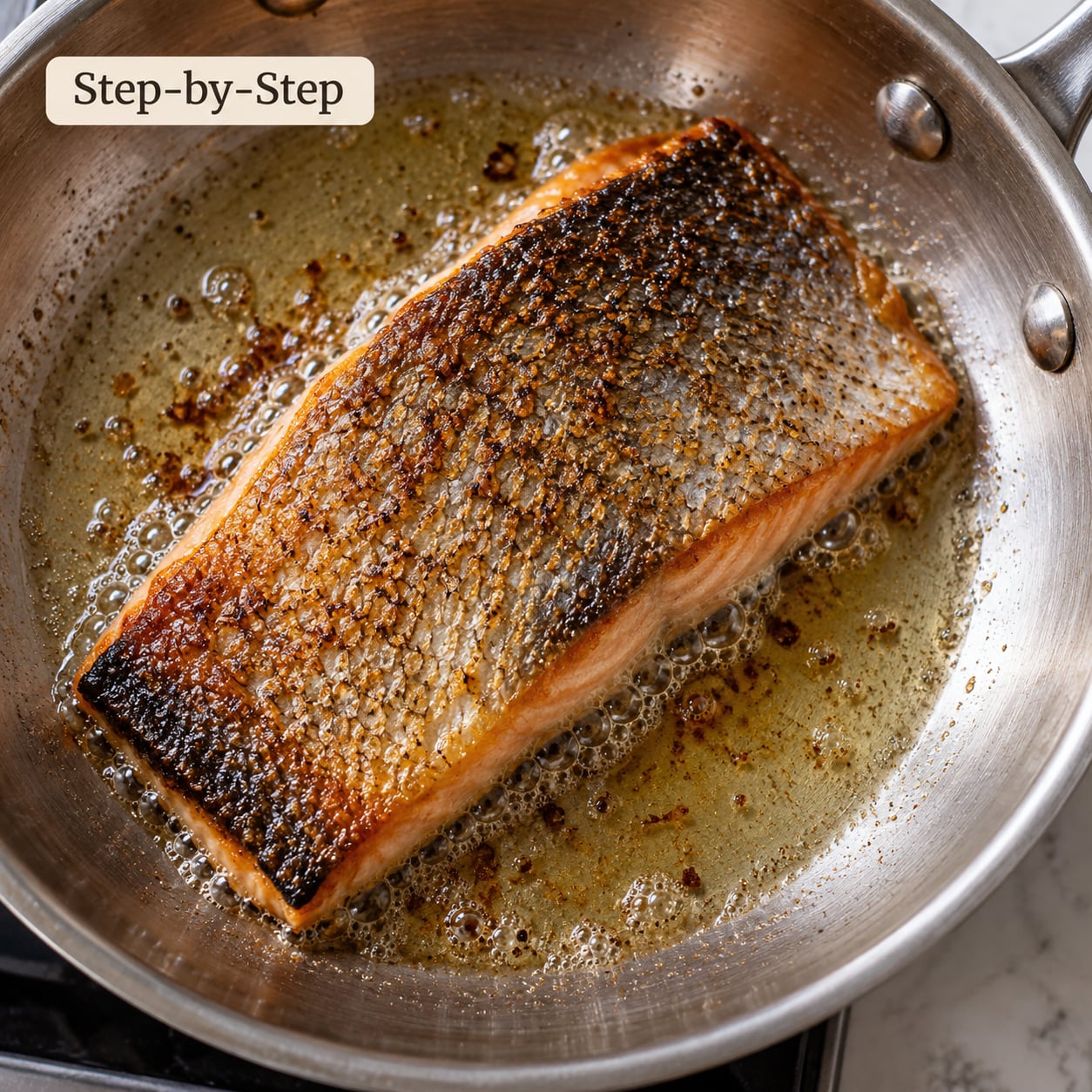
Press the fillet flat with the fish spatula for the first 30 to 60 seconds, which stops the skin from curling and guarantees full contact with the pan. Then leave it completely alone. Every nudge resets the crust you just built, and the fish keeps sticking to wherever you broke the seal.
Cook undisturbed for about 6 to 8 minutes, depending on thickness, until the skin is deep golden and the flesh has turned opaque about three-quarters of the way up the side. Lift the edge to peek — if the skin clings to the metal, give it another minute. When the flesh is still translucent at the center but the skin releases without resistance, it’s time to turn it. That release is the whole trick behind how to get crispy skin on salmon that stays glassy rather than leathery.
A white protein known as albumin often squeezes out at this point. It is harmless, and it turns crisp like a thin lace rather than turning rubbery. Scrape it off the pan before adding more oil.
Step 4: Flip and Finish the Salmon
Slide the spatula as far under the fillet as you can, then lift and roll it onto the flesh side in one confident movement. Tongs work too, but they grip and tear. Cook the flesh side for 60 to 90 seconds only.
For thicker fillets, slide the pan into a 400 F oven for the final few minutes, or stand the fish upright in the pan and spoon hot oil over the top. Test for doneness at the thickest point with an instant-read thermometer: 145 F is the USDA safe minimum internal temperature for fish, and most people stop closer to 125 F to 130 F because salmon stays moist well past that mark.
Plate it skin side up on a warm plate and serve immediately. Crisp salmon skin starts losing its crunch within a few minutes, and any sauce you add will soften it, so put lemon, herbs, or a drizzle of butter on the flesh instead.
Common Mistakes
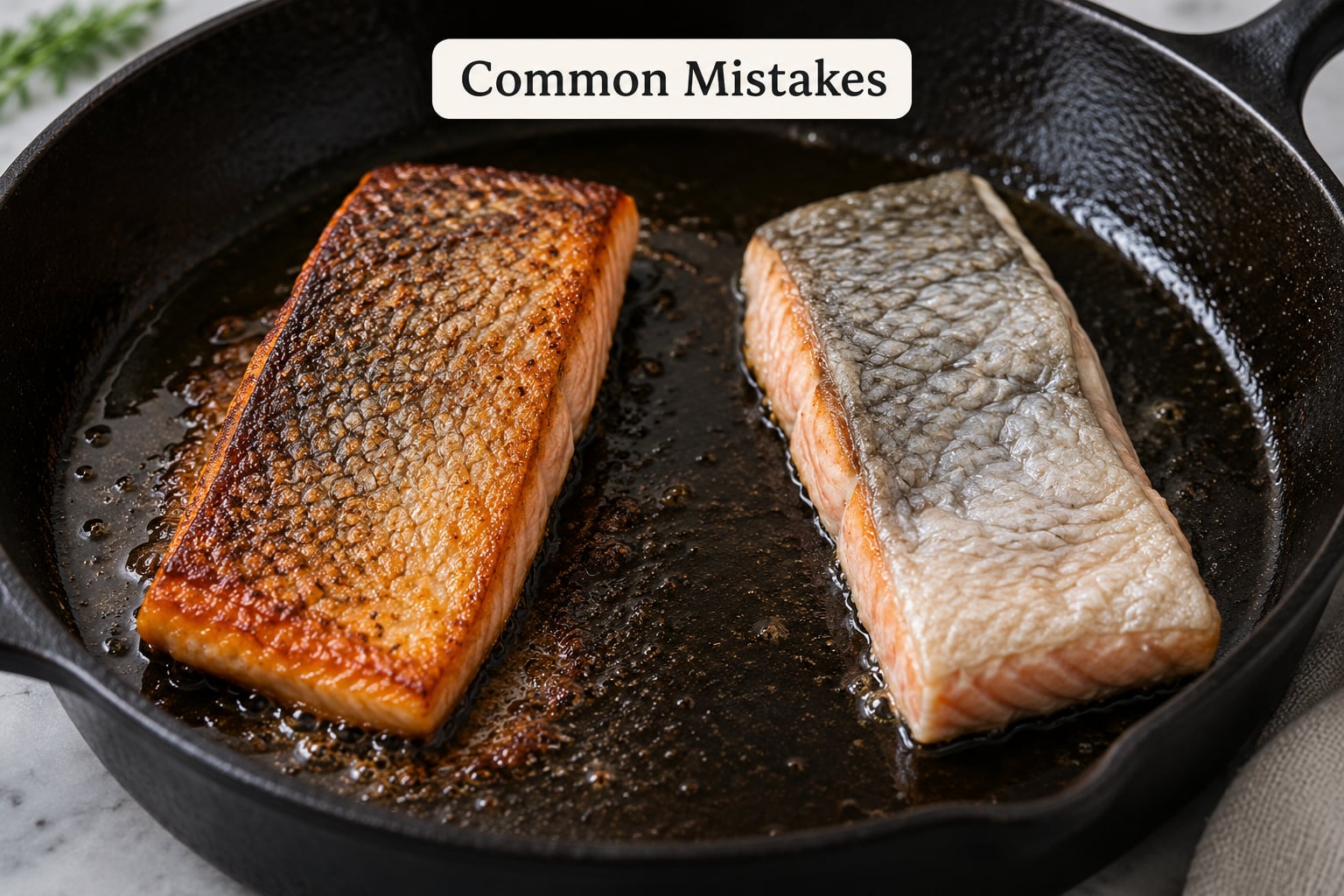
Most disappointing salmon skin traces back to one of four problems. Here is what each failure looks like and what fixes it.
The skin sticks and tears. Almost always moisture or a pan that was not hot enough. Dry the fillet thoroughly, heat the pan until the oil shimmers, and use more oil than feels necessary. If it still sticks in stainless steel, let it cook 30 seconds longer before the first attempt to move it — the proteins need to set before they release.
The skin wrinkles and pulls away from the flesh. That happens when the fat layer under the skin contracts faster than the flesh cooks. Press the fillet flat at the start, keep it flat with the spatula for the first minute, and try an even fillet instead of one with a thin belly flap. Scoring the skin in a shallow diamond pattern helps on thick fillets, but it can dry out thinner ones, so I only do it above half an inch thick.
The skin burns before the flesh is done. Turn the heat down a notch after the crust forms, or finish thick fillets in the oven. A cornstarch dusting on the skin creates an extra barrier that slows browning and buys you a couple of minutes, though it gives a more coated crunch than true crisp skin.
The skin is pale and chewy. Three causes: the pan was not hot enough, the skin was wet, or the oil was shallow. A shimmering oil surface and a genuinely dry fillet solve it. Cook the fillet until the flesh is three-quarters opaque, not sooner.
The white stuff looks like slime. That is albumin, a water-soluble protein that squeezes out as the flesh cooks. A dry brine overnight pulls it out along with excess moisture and seasons the fish all the way through, which is the single biggest upgrade you can make to an otherwise plain fillet.
If you also want a crisp side that behaves the same way, the oil and dry-surface logic in how to make chicken tenders in the oven carries over almost exactly.
Frequently Asked Questions
How long do you cook salmon skin side down for crispy skin?
Most fillets need 6 to 8 minutes skin side down in a hot skillet at medium-high heat. Thick center-cut pieces run closer to 9 minutes, thin tail pieces closer to 5. Wait until the flesh is opaque three-quarters of the way up the side and the spatula slides under the skin with no resistance before flipping.
Why does my salmon skin stick to the pan?
Two causes account for nearly every case: moisture on the skin surface and a pan that was not hot enough. Pat the fillet bone dry with paper towels, heat the pan until the oil shimmers and runs freely, and use more oil than you think you need. In stainless steel, also wait an extra 30 seconds before the first attempt to move the fish.
Do you score salmon skin before cooking?
Shallow scoring helps on thick fillets, roughly half an inch or more, by letting rendered fat escape so the skin lays flatter. On thinner fillets it exposes more surface to the pan, which speeds up browning and can leave you with a burned, dry middle. If you are unsure of your thickness, skip it and press the fillet flat instead.
What is the best oil for crispy salmon skin?
Avocado, grapeseed, and canola oils all handle the heat without smoking and let the skin brown cleanly. Olive oil works below medium heat, but at the temperature needed for fast crisping it can smoke and turn bitter. If you want butter flavor, baste it on after the flip, once the pan comes off the heat.
Should I dry brine salmon before cooking for crispy skin?
Yes, and it is the best upgrade you can make. Salt the flesh side lightly and refrigerate uncovered on a rack for 4 to 12 hours. The salt draws out surface moisture, which is the main reason skin steams instead of crisping, and it seasons the flesh more evenly than salting right before cooking. Rinse and pat dry again before it hits the pan.
When should I flip salmon when cooking it skin side down?
Flip when the skin releases easily from the pan with a spatula and the flesh is mostly opaque, still slightly translucent at the very center. For a standard fillet that is 6 to 8 minutes. If you have to pry or scrape the skin off the metal, it is not ready yet, and forcing it is what tears the fillet.
Conclusion
Start with a skin-on fillet that is truly dry, a heavy skillet heated until the oil shimmers, and more oil than you think the pan needs. Lay the fish skin side down, press it flat, and do not touch it for six to eight minutes. When the skin releases on its own, turn the fish, cook the flesh side briefly to 145 F, and serve it skin side up right away. Everything about how to get crispy skin on salmon comes back to those three decisions made before the fish ever touches the pan.