
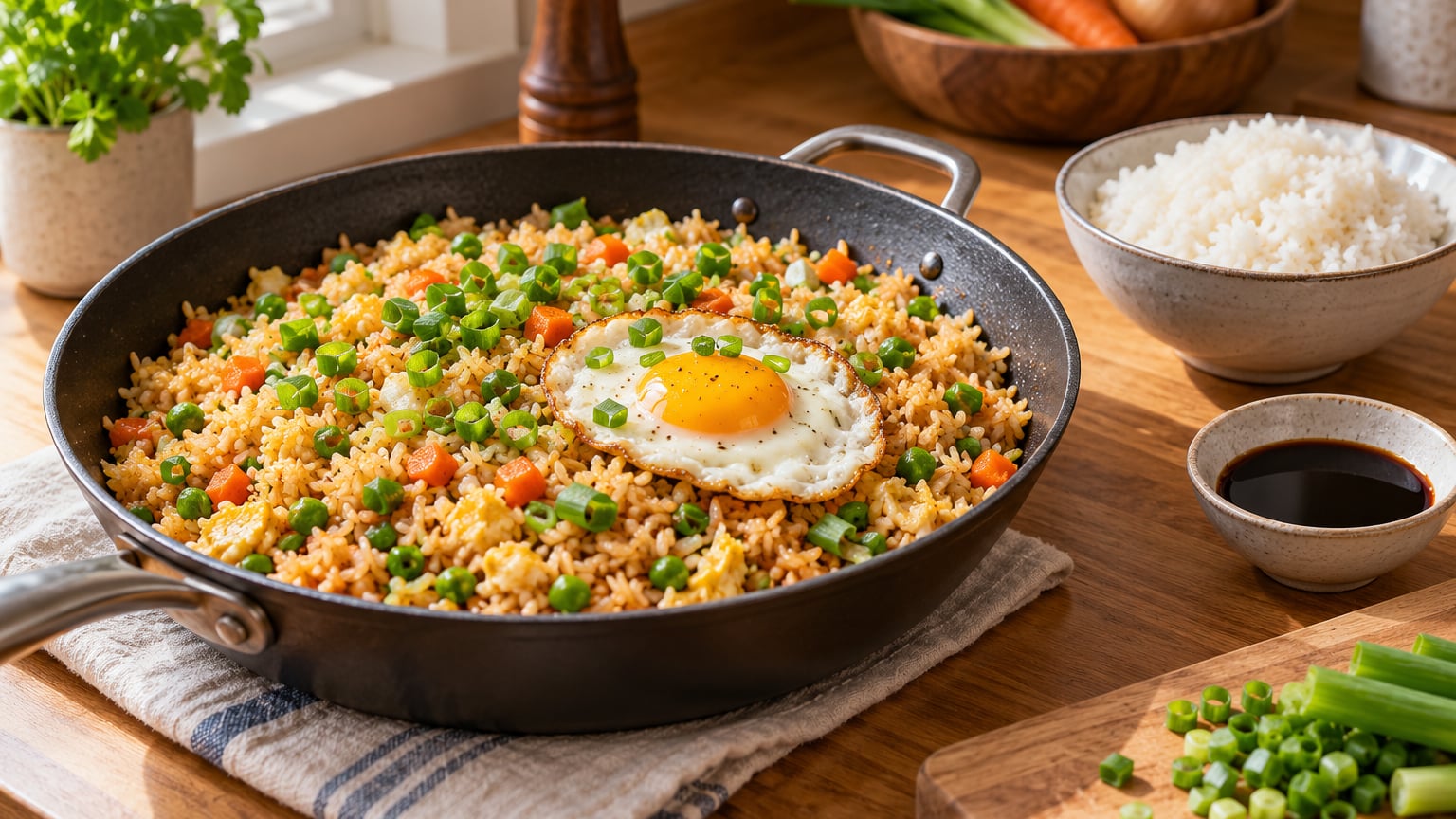
Day-old rice is the best rice for fried rice because it is drier and its starch has firmed up overnight. That is the whole trick. Once the grains are loose and the pan is properly hot, the actual cooking takes about 15 minutes for a family-sized dinner.
Can you use day-old rice for fried rice? Yes. Cold, refrigerated leftover rice fries better than rice cooked tonight because chilling drives off surface moisture and firms the starch, so each grain toasts and seasons on its own instead of melting into a sticky mass. Break up the clumps, get the pan properly hot, then cook everything in stages.
What You Need
The three things that decide whether this dish works are the rice, the width of your pan and how hot that pan gets before anything else goes in it. A 12-inch skillet gives you room; a 10-inch one crowds the grains and drops the temperature fast.
For 3 to 4 servings you will need:
- 3 cups cooked day-old white rice, about three-quarters cup uncooked
- 2 tablespoons neutral oil such as canola, peanut or avocado
- 2 eggs, lightly beaten
- 1 small onion or 3 scallion whites, finely diced
- 2 garlic cloves, minced
- 1 teaspoon grated fresh ginger
- 1 cup vegetables: frozen peas and carrots, diced bell pepper, broccoli florets or shredded cabbage
- 3 tablespoons low-sodium soy sauce
- 1 tablespoon oyster sauce, optional
- 2 teaspoons toasted sesame oil, added off the heat
- 1/2 teaspoon white pepper
- Sliced green onions and a fried egg, to finish
For equipment, a wok or a large high-sided skillet both work. A wok heats faster and gives you more room to toss; a skillet gives you a flat surface where a crispy rice crust forms more easily. If you want to cook rice ahead on the stove, how to cook rice on the stove without a rice cooker covers the base method.
Plain white rice is the standard. Here is how the common varieties behave once they hit the pan.
| Rice variety | Texture in the wok | How to use it |
|---|---|---|
| Jasmine | Fluffy, slightly fragrant, holds grains apart well | The safest all-around choice for a first batch |
| Long-grain white | Driest grains, the most forgiving option | Best when your leftover rice is on the wet side |
| Short-grain | Stickier, more tender, browns quickly | Great for a crispy crust, but easier to overcook |
| Brown | Nuttier and firmer, chewy rather than fluffy | Add it early because it needs longer reheating |
One safety note. Cooked rice keeps in the refrigerator for three to four days, and reheated rice should reach 165°F (74°C) throughout, the same as reheating any cooked food. Get it into the fridge within two hours of cooking.
Step-by-Step
Follow this for how to make fried rice with day-old rice that tastes like it came off a restaurant stove. The order matters more than the ingredients: aromatics first, then protein and vegetables, then the rice, then the sauce.
1. Break Up the Day-Old Rice
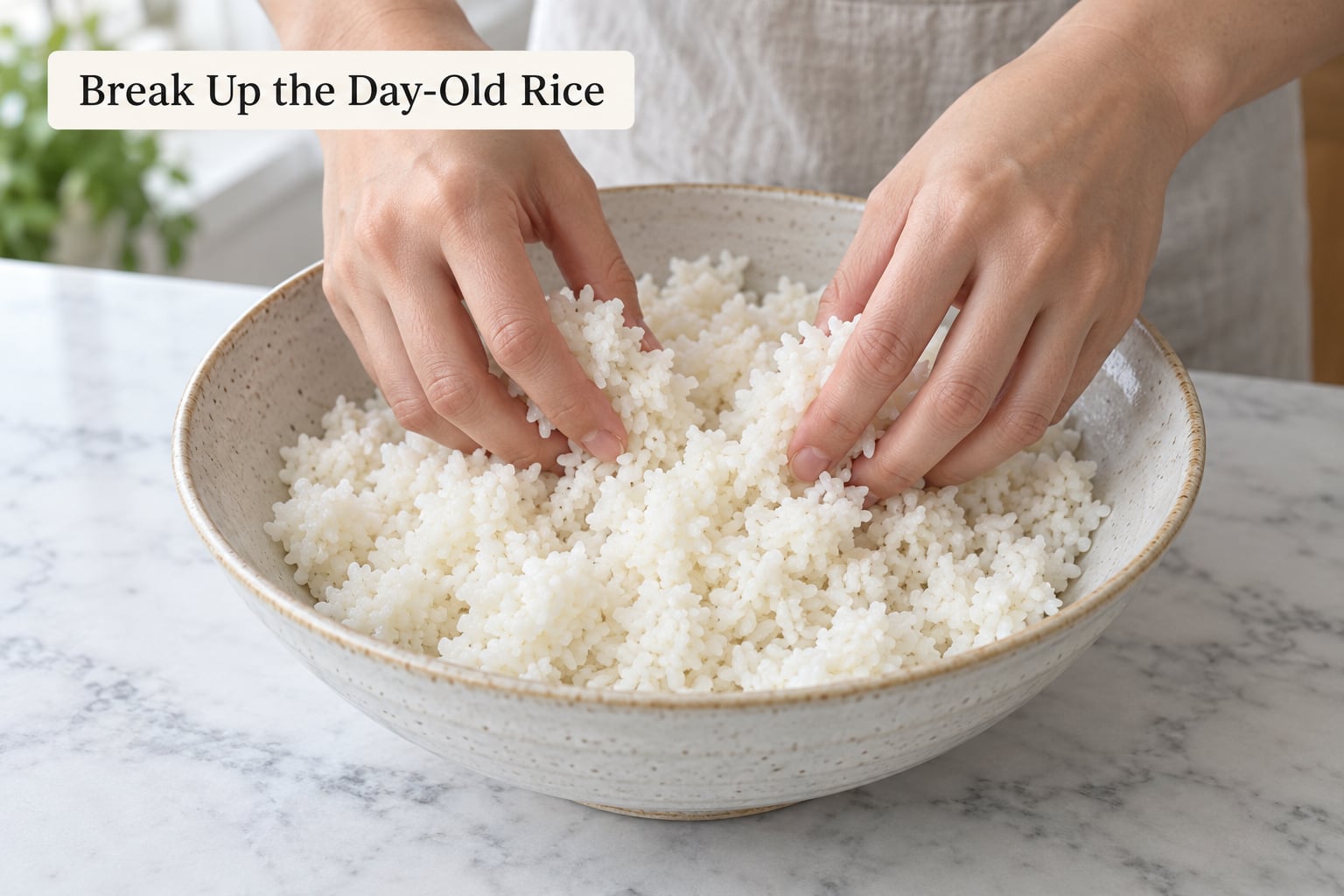
Take the rice out of the fridge and put it in a wide bowl. Cover it with a clean towel, leave it for ten minutes, then rub the grains apart with your fingers until no brick or clump is larger than a single grain.
If the rice is still damp or stuck together after that, add a teaspoon of water and rub again. A light sprinkle of water followed by a quick toss helps loosen the last stubborn pieces, and you want the rice dry and loose before it ever meets oil.
2. Prepare the Sauce and Ingredients
Mix the sauce in a small bowl so you can add it in one go: 3 tablespoons soy sauce, 1 tablespoon oyster sauce if you are using it, 1/2 teaspoon white pepper and, if you like heat, a teaspoon of chili garlic sauce. Hold the sesame oil back for the finish.
Cut every vegetable to roughly the same size so it cooks at the same rate. Denser items such as broccoli stems or carrot go in first; peas, cabbage and bell pepper go in seconds later. If you are adding chicken or shrimp, cook them separately and slice them thin.
3. Heat the Pan and Cook Aromatics
Heat a wok or large skillet over medium-high to high heat for two full minutes. A drop of water should skitter and vanish rather than sit and boil, and the metal should feel hot when you hover your hand a few inches above it.
Add 2 tablespoons of oil and let it shimmer, then add the onion, garlic and ginger for 20 to 30 seconds, stirring constantly, until fragrant. They should color slightly, not brown. Pull the pan off the heat for a second if the garlic starts to darken, because burnt garlic turns bitter fast.
4. Cook the Protein and Vegetables
If you are using raw shrimp or diced chicken, add it now over high heat and cook two to three minutes until the surface turns opaque and the juices run clear. Then add the dense vegetables for two minutes, followed by the quick-cooking ones for one more minute.
Frozen peas and carrots can go straight from the freezer. They are done when bright in color and still have a little bite, which usually means they never sat in the pan longer than three minutes. Push everything to one side or remove it entirely so the pan is free for the rice.
5. Stir-Fry the Rice
Add the separated rice and spread it around the hot pan instead of dumping it in the center. Press it flat with the back of a spoon and leave it alone for 30 to 40 seconds so the bottom toasts and a few grains turn golden and crisp.
Toss, press again, and repeat. You are looking for grains that move freely and pick up a faint sheen from the oil, not a mass that holds its shape. If the pan looks dry, add a tablespoon more oil; if it looks slick, let it cook a few seconds longer before adding sauce.
6. Season and Finish
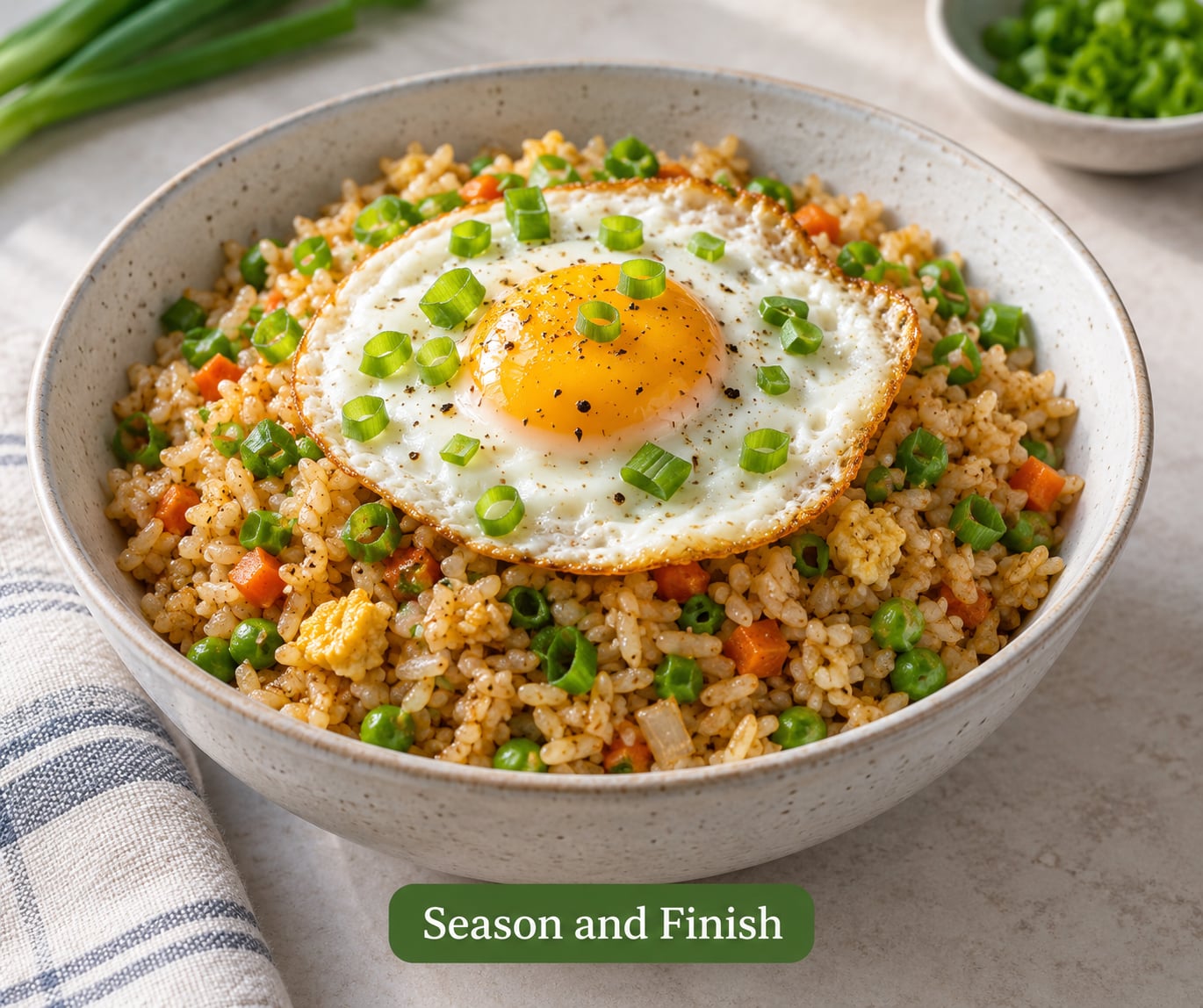
Pour the sauce around the edge of the pan rather than over the middle, where it pools and steams. Toss over high heat for another minute until every grain looks glossy and evenly colored.
Turn off the heat and drizzle the sesame oil over the top, then toss once more. Serve with sliced green onions and a fried egg on top. Some cooks like to let the finished rice sit for a minute before eating so the bottom stays crisp.
Common Mistakes
Most disappointing fried rice fails for one of six reasons, and each has an obvious fix. Work down this table with your last batch and you will usually spot the problem immediately.
| What went wrong | Why it happened | Fix it next time |
|---|---|---|
| Mushy, soft rice | The rice was freshly cooked or too moist | Use rice cooked at least 12 hours earlier, or dry it on a sheet pan in the fridge |
| Rice stuck in solid bricks | It went straight from the container to the pan | Rub it apart in a bowl first, with a teaspoon of water if needed |
| Bland or pale rice | Sauce went on before the rice was hot, so it pooled and evaporated | Heat the rice through first, then add sauce around the edge |
| Too salty to eat | All the soy sauce went in at once | Add it in two or three small pours, tasting between each |
| Gooey, sticky coating | Oyster sauce was used like a soup rather than a seasoning | Cap it at 1 tablespoon per 3 cups of rice |
| Greasy pan, no crispy bits | The pan was crowded or the heat too low | Cook in two batches if needed and keep the heat at medium-high or above |
| No browned flavor at all | Constant stirring | Let the rice sit undisturbed for 30 seconds between tosses |
Two techniques from experienced home cooks help more than anything else. One is drying rice on a sheet pan: spread the cooked rice in a single layer in the fridge for two to three days and the grains turn dry enough to behave like restaurant rice. The other is starting cold: put the refrigerated rice into a cold pan, add the oil and bring the heat up gradually, which lets the grains separate as they warm instead of seizing.
If you have no leftover rice at all, you can fake it in about 30 minutes. Cook the rice with slightly less water than usual, spread it on a sheet pan to cool fast, toast it in a hot pan with a little oil for a minute so the surface dries, then chill it for 15 to 20 minutes. The result is not identical to overnight rice, but it beats wet rice from the pot every time.
Spare vegetables from the same fridge round-out go into the pan the same way. If you would rather not fry them, how to make a frittata with leftover vegetables turns the same odds and ends into a low-waste dinner. For a lighter follow-up meal the next day, how to make a grain bowl for dinner takes cold fried rice and turns it into something that eats like a fresh bowl rather than leftovers.
Frequently Asked Questions
Can you use day-old rice for fried rice?
Yes, and it is the most reliable rice you can use. Refrigerated leftover rice has lost surface moisture and its starch has firmed up, so the grains separate and toast instead of turning sticky. Store it covered in the fridge for up to three to four days, break up any clumps before cooking, and add it to a properly hot pan.
Can I make fried rice using leftover rice?
That is exactly what the dish was built for. Any plain cooked white, jasmine or long-grain rice from the previous meal works, as long as it has been chilled and kept covered. Rub the clumps apart with your fingers, cook the egg first, then stir it through the vegetables and season at the end so the sauce coats every grain instead of soaking into a wet mound.
Can I use newly cooked rice for fried rice?
You can, but expect softer, stickier results. Freshly cooked rice still holds a lot of surface moisture and its starch has not firmed, so grains cling together and the dish turns mushy in the pan. Cook with slightly less water, spread the rice on a sheet pan to cool quickly, chill it 15 to 20 minutes, or toast it in oil first to dry the surface.
How do I store rice so it is ready to fry the next day?
Spread the cooked rice on a sheet pan and let steam escape for about an hour, then move it to a shallow airtight container. A shallow container matters because a deep pile holds heat and moisture and dries unevenly. For extra-dry grains, leave the sheet pan in the fridge uncovered for two to three days. Keep it refrigerated and use it within three to four days.
Do Chinese restaurants use day-old rice to make fried rice?
Mostly they use rice that has been cooked and held, which behaves the same way as day-old rice at home. Restaurants cool it quickly and often spread it thin so it dries, then portion it out to be fried to order at high heat. Home cooks get the same texture by chilling rice overnight and hitting it with a very hot wok or skillet.
Conclusion
Four things do most of the work here: loosen the rice until no clumps remain, heat the pan before the oil goes in, cook the ingredients in stages so nothing sits too long, and season only after the rice is hot. Do those four things with leftover rice from last night and you will get separated, well-seasoned fried rice in about 15 minutes.