
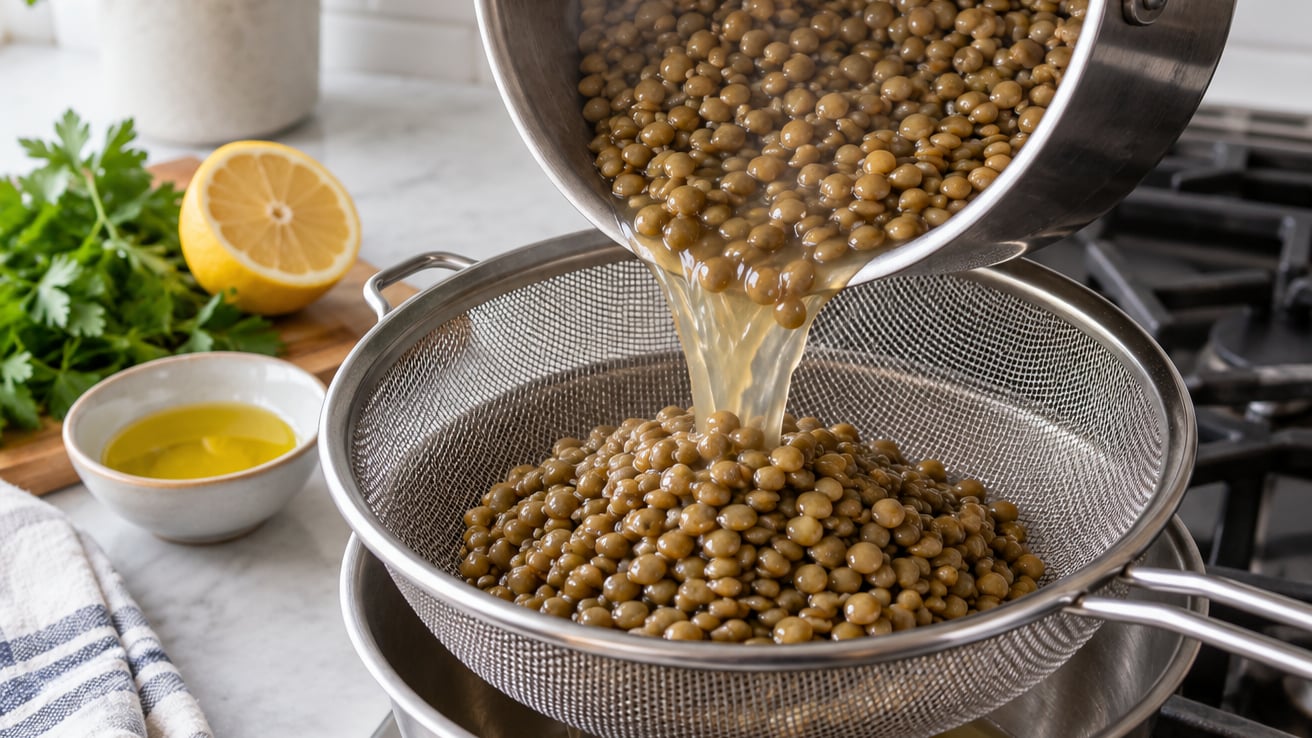
To cook lentils for salads, simmer 1 cup of green, French green (Puy) or black lentils in 2 to 3 cups of well-salted water for 15 to 20 minutes, then drain, rinse and dry them. Ignore the package directions, which cook lentils soft for soups.
The whole difference between a salad that holds together and one that turns to paste is about ten minutes and a firm hand on the heat. Cook them like pasta rather than like a stew, stop while they still have a slight bite, and get them out of the water.
Lentils are also one of the cheapest things in the pantry to turn into a real lunch. A cup of dry lentils cooks in under half an hour and gives you a base that holds for several days, so it fits naturally into a week of cooking seasonally on a tight budget.
What You Need
You need very little, and none of it is special equipment. The list is short because the technique, not the ingredient list, is what makes the salad work.
- Lentils: black Beluga and French green (Puy) hold their shape best. Large green and medium brown are fine. Skip red and yellow for anything served cold.
- Water: about 2 cups per cup of lentils. Three cups if you like a slightly softer bean.
- Kosher salt: roughly 2 tablespoons for the cooking water, plus more for seasoning afterward.
- Aromatics: a bay leaf, a halved onion, a smashed garlic clove, or a spoonful of vegetable broth if you want the pot to taste like something.
- Acid: red wine vinegar, sherry vinegar, or lemon juice. This is what seasons the salad after cooking.
- Olive oil: a good extra-virgin one for finishing.
- Tools: a fine mesh strainer, a colander, and clean kitchen towels or paper towels.
On the variety question, the ranking is short. Black Beluga and French green lentils have thick skins and dense flesh, so they survive cooking and stay intact in a cold salad. Green and brown lentils cook in the same window and hold up if you stop them early. Red and yellow lentils are built for soups and dal, where breaking down is the point, and their starch dissolves faster and turns the pot cloudy.
Do you need to soak them first? No. Lentils do not contain the sulfur compounds that make dried beans hard and slow, so they cook straight from the bag with no soaking at all. A rinse is enough to wash off the dust and any starch left from processing.
Step-by-Step
How to Cook Lentils for Salads Without Them Falling Apart
Treat the pot like a pasta pot. Bring the salted water to a full boil, add the rinsed lentils, and bring it back to a boil before you drop the heat to a steady simmer.
- Rinse and pick over. Put the lentils in a fine mesh strainer, run cold water through until the water runs clear, and pick out any stones or shriveled beans. Most people do this by swishing the strainer with one hand over the sink.
- Salt the water hard. Use about 2 tablespoons of kosher salt per quart. Lentils absorb salt as they cook, and under-seasoned lentils are the single most common reason a lentil salad tastes flat even with a good dressing on it.
- Add the lentils to boiling water. Starting them in cold water means they soak up the salt unevenly and cook more slowly. Once they are in, stir gently so nothing sticks to the bottom.
- Keep it at a bare simmer. Put the lid on slightly ajar and stir every few minutes with a spoon. A rolling boil skims skins and starch off the beans and gives you a cloudy pot, which is exactly the watery salad you are trying to avoid.
- Start tasting at 12 minutes. Scoop out a few lentils, let them cool for a moment on the spoon, and bite one. You want tender with a slight resistance, not soft.
- Drain the moment they pass. Pour them into a fine mesh strainer the second they hit your target. Every extra minute after that costs you shape.
Time depends on variety, age of the beans, and how hard your stove runs, so treat the clock as a starting point rather than the plan. These are the windows that work in most home kitchens, measured from the moment the water returns to a simmer.
| Lentil variety | Water per cup of lentils | Cook time | Holds shape for salad |
|---|---|---|---|
| Black Beluga | 2 to 2.5 cups | 18 to 25 minutes | Best |
| French green (Puy) | 2 to 2.5 cups | 18 to 25 minutes | Best |
| Large green | 2.5 to 3 cups | 20 to 25 minutes | Good |
| Medium brown | 3 cups | 20 to 30 minutes | Fair |
| Red and yellow | 3 cups | 10 to 15 minutes | Avoid for cold salads |
The squeeze test is a good backup when you cannot find a good bite test mid-simmer. Press one lentil against the side of a spoon. If it dents and splits, pull the pot; if it dents and springs back, keep going.
How to Cool and Season Cooked Lentils
Drain the lentils while they are still hot, then rinse them briefly under cold water. That stops the cooking instantly and washes away the loose starch that would otherwise make your dressing turn thin in the bowl.
Next, spread them across a clean towel or a layer of paper towels and let them dry for five or ten minutes. Surface water is the quiet reason salads go watery. Dry lentils drink the dressing; wet ones dilute it. Some cooks pat them dry, others leave them for a few minutes in a single layer, and both beat dumping them straight into the bowl.
Season while the lentils are still just warm. Warm pulses drink dressing, cool ones mostly sit in it, and warm is where the flavor goes. Add a spoon of olive oil, a splash of vinegar or lemon juice, a pinch of salt, and anything you would put on a salad anyway: minced parsley or mint, diced cucumber, a little Dijon mustard, za’atar or cumin.
Then cool them to room temperature before they go into the fridge, and keep the container open or loosely covered for the first twenty minutes. Trapped steam makes the lentils soft and sticky, which is the opposite of what you want by Tuesday lunch.
Warmed gently with a spoonful of broth and topped with toasted seeds, these also work as a warm side. If you are serving dinner ideas for a vegetarian guest, a room-temperature lentil salad is easier to hold than anything that needs reheating at the table.
How to Store Lentils for Meal Prep
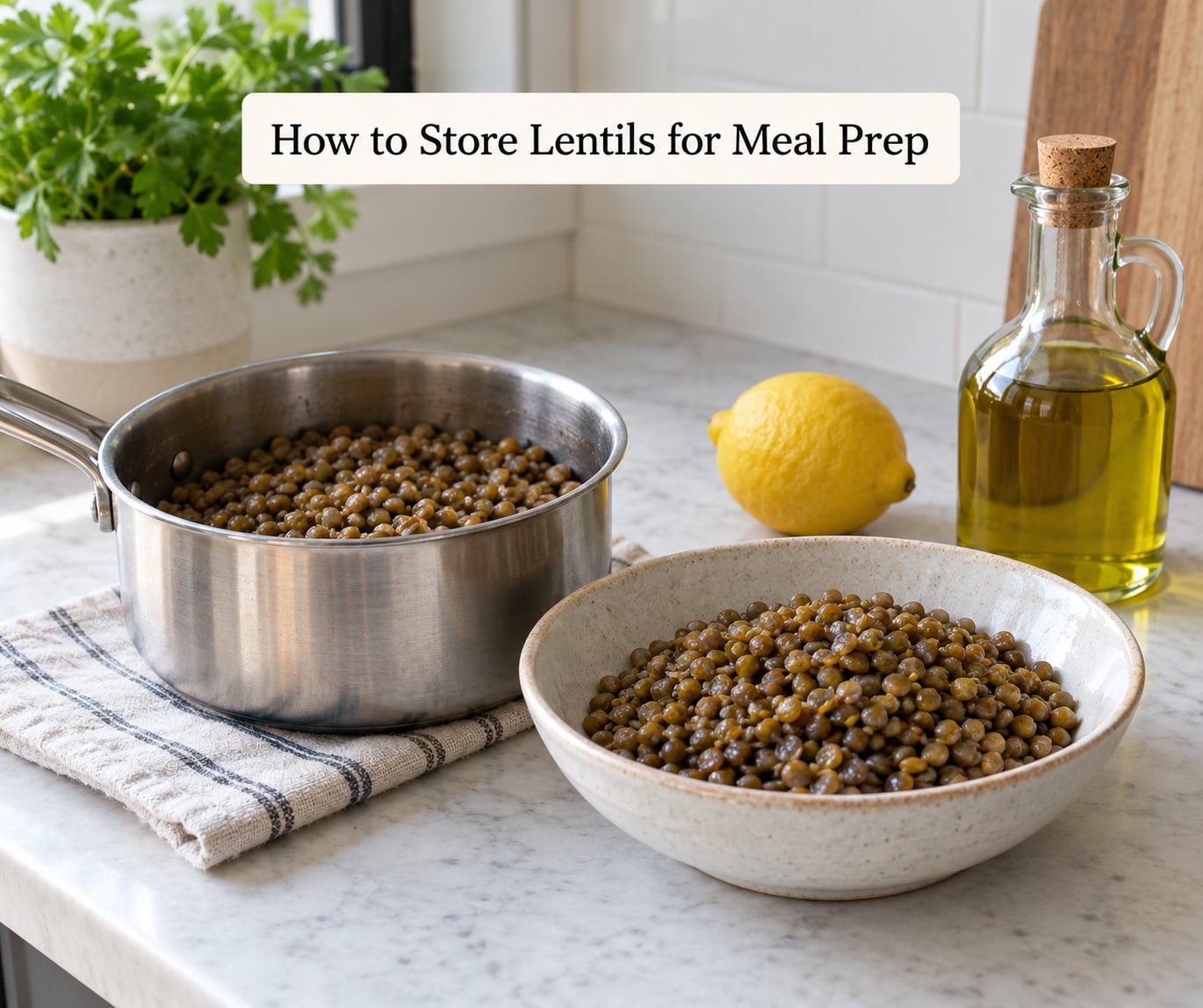
Cooked lentils keep about three to four days in the refrigerator at or below 40°F, which lines up with USDA guidance for cooked beans and lentils. That is enough for a Sunday cook and a Monday through Thursday lunch, not enough for the whole second week.
- Store them undressed when you can. Acid and salt pull water out of the lentils and dull them over a few days. Keep oil, vinegar, and herbs on the side and toss everything the night before you eat it.
- Use airtight containers, but not pressed down. A full container is fine. Crushing the lentils into a solid block is how they turn to mush in the container.
- Add sturdy ingredients first. Chopped celery, bell pepper, cucumber, carrots, and cooked grains hold up for four days. Soft greens, tomatoes, avocado, and fresh herbs belong in at the end.
- Refresh before serving. A squeeze of lemon and a glug of olive oil wakes up day-four lentils that taste dull.
- Freeze plain only. Undressed lentils freeze well for a few months in a flat bag. Dressing does not freeze nicely, so freeze the beans and dress on the day.
If you are batching a whole week of food, lentils are one of the easier things to fold into a batch cooking routine for the week. Cook once, dry well, cool fast, and refrigerate in a single layer before you pack them away.
Common Mistakes
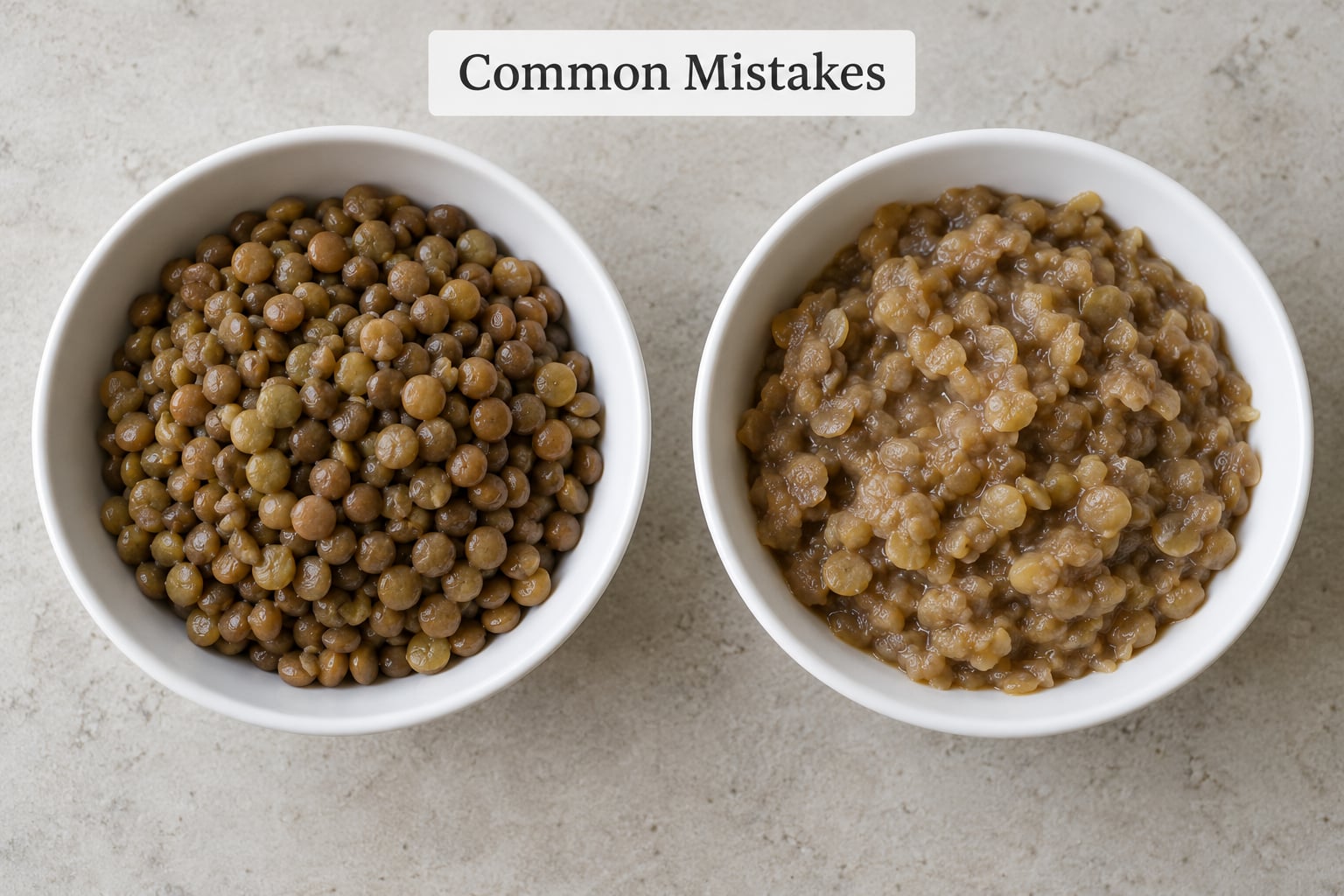
Most salad lentils that disappoint were overcooked, and overcooking has a handful of ordinary causes. Here is what goes wrong and what to change.
- Following package directions. Lentil bags cook for a soup or a dal, which means simmered until soft. The package is not wrong for its purpose, it is wrong for yours. Use the pasta method and stop on your own.
- Cooking red or yellow lentils. Their starch gelatinises fast, so the skins give up in about ten minutes and the pot turns cloudy. That is fine for soup and terrible for a salad.
- A full rolling boil. Vigorous boiling roughs up the skins and pulls starch into the water. A simmer with the lid ajar is gentler.
- Salting too late. Dressing at the end only seasons the outside. Salting the water seasons the lentil all the way through, which is why well-salted cooking water is not optional.
- Skipping the dry step. Wet lentils dilute the dressing and make the salad watery at the bottom of the bowl. Five minutes on a towel fixes it.
- Hot or icy lentils. Straight-from-the-pot lentils soak up dressing and go soft; fridge-cold lentils repel it. Room temperature is the target.
- Packing them dressed. A dressed salad turns watery by day three. Store the lentils plain and dress to order.
What if you have already gone too far and the lentils are collapsing? Serve them warm as a spoonable lentil salad with vinaigrette and herbs, where softness is fine, or fold them into tabbouleh or a grain bowl where they are meant to fall apart. Turning them back into salad-ready lentils is not possible, but the batch is not wasted.
Two habits fix most of this before it starts. Cook a test spoonful first so you know when to pull the pot, and make the dressing while the lentils cook so there is no gap where they sit drying too long.
Frequently Asked Questions
Which lentils are best for salads?
Black Beluga and French green (Puy) lentils hold their shape best, because their skins are thick and the flesh stays dense after cooking. Large green lentils are a good second choice, and medium brown lentils work if you stop them early. Avoid red and yellow lentils for cold salads. They are designed to break down into soups, and their starch clouds the dressing.
How long do lentils take to cook on the stovetop?
Most firm varieties need 18 to 25 minutes of simmering after the water returns to a boil, and medium brown lentils take 20 to 30. Red and yellow lentils cook in 10 to 15 but fall apart. Start tasting at 12 minutes rather than trusting the clock, since bean age and stove strength shift the timing. Drain the moment they bite tender with a slight resistance.
Can I cook lentils without soaking them first?
Yes, and you should. Lentils do not have the sulfur compounds that make dried beans tough, so they cook in a fraction of the time without a soak. A rinse in a fine mesh strainer is all they need, which also washes off dust and surface starch. Soaking only adds an hour and can make the skins slough off during cooking.
Why do my cooked lentils become mushy?
Usually one of three things: you started them in cold water and let them simmer far too long, you used red or yellow lentils, or you cooked them at a rolling boil. Mushy lentils have also released their starch into the pot, which is what makes the salad watery at the bottom of the bowl. Simmer gently, taste from 12 minutes, and drain on a timer.
How long do cooked lentils last in the refrigerator?
Plain cooked lentils keep about three to four days in the refrigerator at 40°F or below, following USDA guidance for cooked beans and lentils. Store them in an airtight container without dressing, since vinegar and salt dull the texture over time. Dress and add delicate ingredients like tomatoes and fresh herbs on the day you plan to eat them.
Cook, Cool, and Dress the Lentils
Start with the pot: 1 cup of firm green, French green (Puy), or black lentils, 2 to 3 cups of well-salted water, and a bare simmer. Taste from the 12-minute mark, drain while the lentils still have a slight bite, and rinse and dry them right away.
Season them warm with olive oil and vinegar, cool them uncovered, and keep them plain in the fridge so you can dress each serving at the last minute. That is the short version of how to cook lentils for salads, and it is the reason the batch lasts until Thursday without turning to paste.