
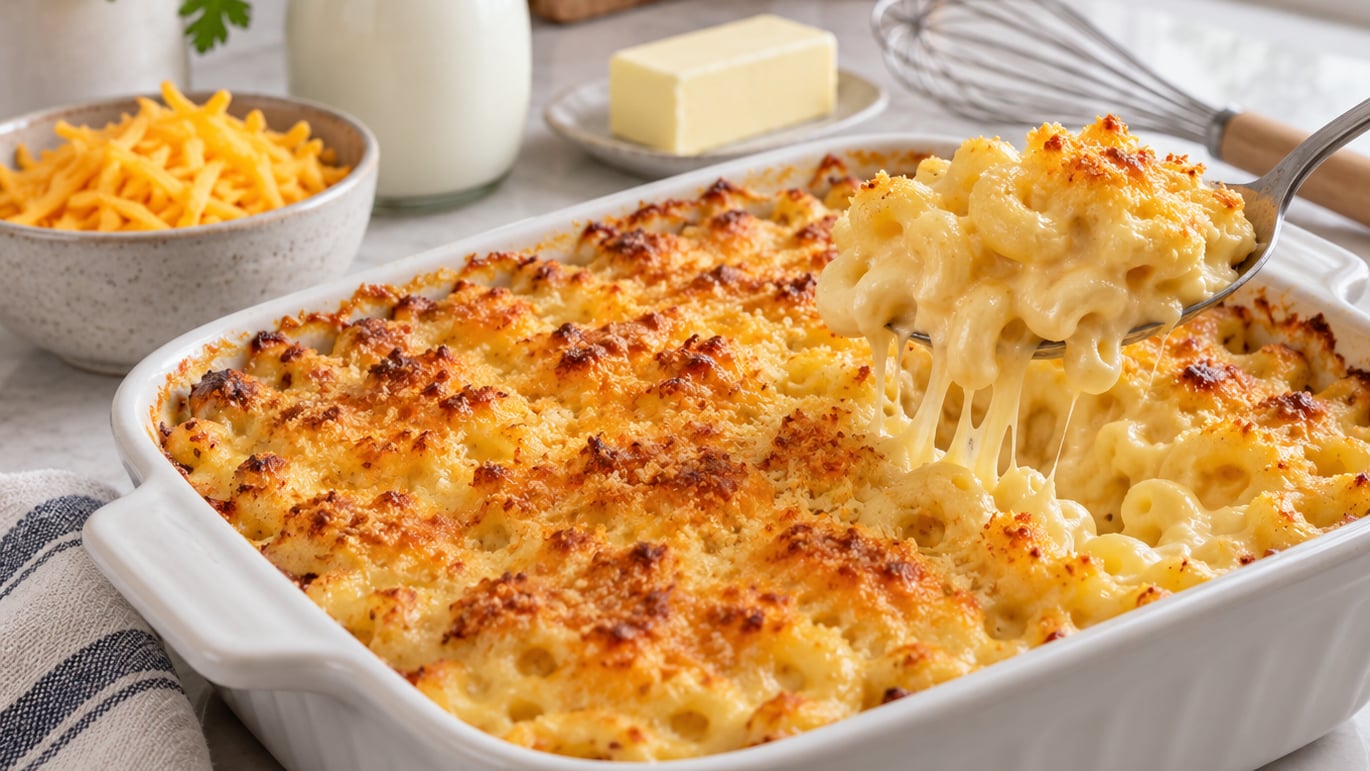
If you want to know how to make baked mac and cheese creamy, the answer comes down to three things: build a proper cheese sauce with a roux, pull the pasta out of the water two minutes before it is done, and stop baking while the middle still looks slightly loose. Get those right and the dish comes out saucy all the way to the center. It takes about 50 minutes start to finish and suits a first-timer fine.
The reason most baked mac and cheese turns dry is that the oven takes something saucy and cooks it for 25 minutes while the pasta quietly drinks up the sauce. Once you know that, the whole recipe reorganizes itself around protecting moisture.
Table of Contents
- What You Need
- Step-by-Step
- Common Mistakes
- Frequently Asked Questions
- How do I keep baked mac and cheese creamy after baking?
- What kind of cheese is best for creamy baked mac and cheese?
- Can I make baked mac and cheese ahead of time?
- How do I fix baked mac and cheese that is dry or grainy?
- Should I cover baked mac and cheese while it bakes?
- Can I use milk alternatives for baked mac and cheese?
- How to Make Baked Mac and Cheese Creamy: Conclusion
What You Need
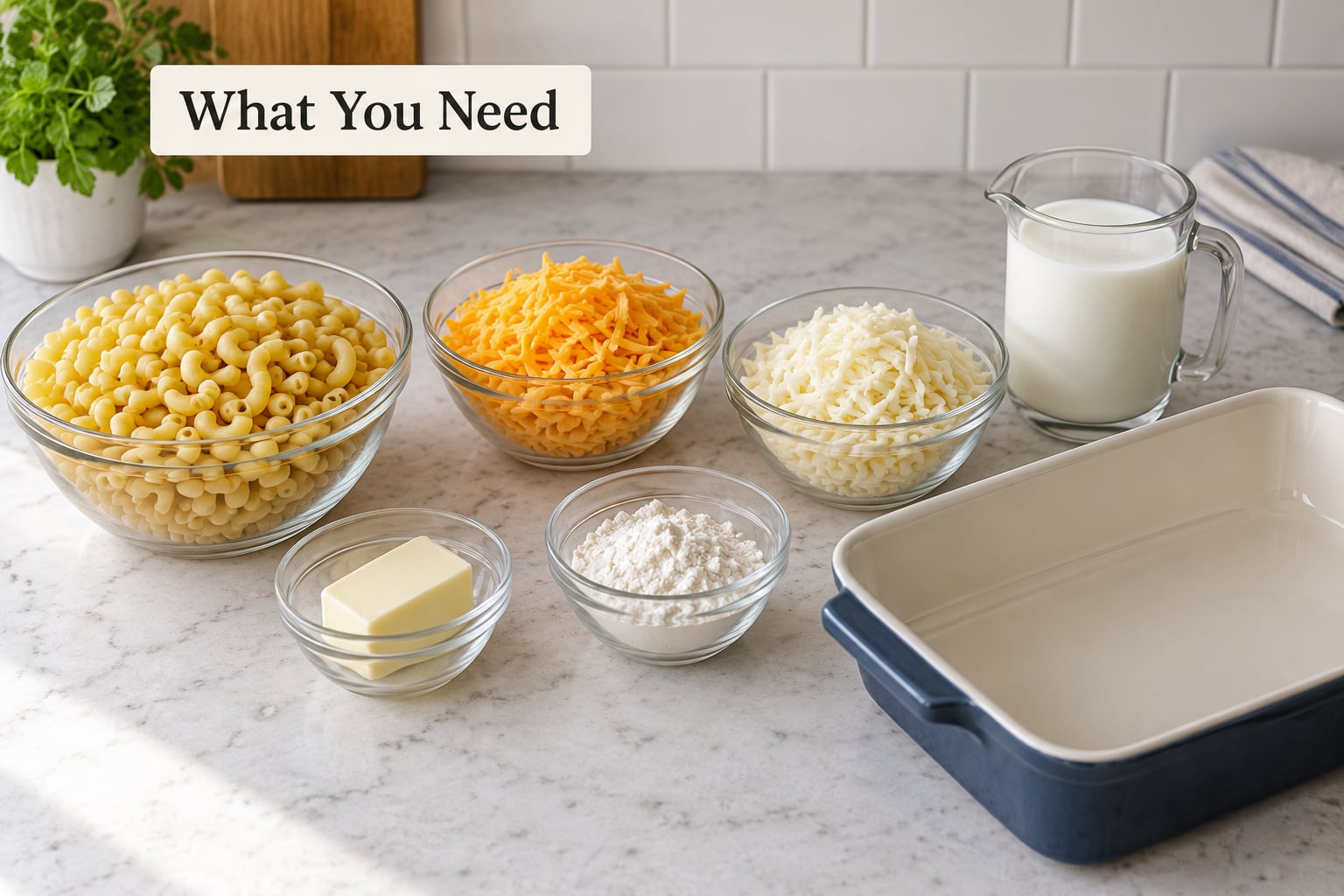
Start with 1 pound of elbow macaroni. The shape matters more than people expect, because the hollow tubes hold sauce instead of wearing it as a thin film. Shells and rotini work too, and they hold even more sauce per bite. What to avoid is a thin pasta like spaghetti or penne, which dries out faster because there is less surface to catch moisture.
For cheese, block cheddar you grate yourself is the single biggest lever. Shred it with the coarse holes on a box grater, and mix in about 3 cups. Two cheeses are better than one: 2 cups sharp cheddar for flavor and 1 cup Monterey Jack for melt. Gruyere brings a nuttier note, and a quarter cup of grated parmesan sharpens the whole thing without making it taste like a cheese board.
Skip the bagged shredded cheese. Those bags contain anti-caking agents, usually cellulose, which keep the shreds separate in the bag and then stop your cheese from melting into a smooth sauce. That is the single most repeated complaint from home cooks on cooking forums, and it is the reason a bagged-cheese casserole turns grainy and greasy in the oven.
For the sauce, you need unsalted butter, all-purpose flour, and whole milk. Some cooks use evaporated milk, which is roughly two-thirds the water of regular milk because about 60 percent of the water has been evaporated off. The concentrated milk proteins make a thicker, glossier sauce that resists breaking, and no roux needs extra fat.
What each ingredient is doing
- Butter and flour form the roux, a starch paste that suspends milk fat and melted cheese in water. That suspension is what reads as creamy.
- Whole milk supplies the liquid and the protein that keeps the emulsion together.
- Grated cheddar supplies flavor and body, and its fat melts into the sauce rather than sitting on the pasta.
- Elbow macaroni, under-cooked brings a starch that thickens the sauce further as it bakes instead of absorbing it.
- Pasta water is the rescue liquid. Save a cup before you drain.
A few optional items change the result. A teaspoon of mustard powder sharpens the cheddar and hides any chalky flavor. Two teaspoons of Worcestershire sauce adds a salty depth. A teaspoon of garlic powder or a quarter teaspoon of cayenne works if you want a little heat.
For equipment, use a large pot for the pasta, a whisk or a wooden spoon for the roux, and a 9-by-13-inch baking dish. A cast iron skillet works too and holds heat, which speeds up the bake slightly. Butter the dish rather than just greasing it; a buttered wall leaves a thin film that helps the edges stay tender.
Step-by-Step
How to Make the Cheese Sauce Smooth
Melt 4 tablespoons of unsalted butter in a large saucepan over medium heat. Once it foams and the milk solids at the bottom turn golden, stir in 4 tablespoons of all-purpose flour and keep stirring for about 2 minutes. You want a pale golden paste, not a dark one, and you want to cook out the raw flour taste. A nuttier, deeper gold roux is what forum cooks aim for, and both work.
Now the part that decides everything: the milk. Pour in 3 cups of whole milk, ideally warmed first in the microwave for 90 seconds, and whisk constantly while the sauce comes to a simmer. Once it thickens enough to coat the back of a spoon, take the pot off the burner and let it sit for a minute. Then add the 3 cups of grated cheese in three batches, stirring each batch until it melts before adding the next.
Off-heat melting is the trick people miss. Residual heat is enough to melt cheese, and direct heat is what turns it grainy and separates the fat. Taste the sauce now, before it meets the pasta, and salt it. Cheese carries salt on its own but a roux drinks it up.
How to Cook the Pasta Without Overcooking It
Bring a big pot of water to a rolling boil and salt it hard, about one tablespoon per quart. Add the macaroni and stir in the first minute so nothing sticks. Cook it two minutes short of the package time. Two minutes of that cooking finishes inside the oven, and pasta that is already tender when it hits the dish turns bloated and bloated pasta leaves no sauce behind.
Before draining, scoop out a cup of the cloudy pasta water. Then drain and return the macaroni to the warm pot. Toss the pasta with two tablespoons of butter right away; the butter coats each piece and stops it from welding into a solid block. You can also rinse the pasta in cold water to halt the cooking, though it costs you a little starch.
Pour the sauce over the hot pasta and fold gently with a spatula. The sauce should look loose, almost too loose, in the bowl. The oven will tighten it up in 25 minutes, and a sauce that already feels perfect at this stage arrives in the dish looking chalky.
How to Keep Baked Mac and Cheese Creamy
Spread the macaroni in the buttered 9-by-13-inch dish in an even layer. Crowding gives you a thick center that never gets hot and a dry top ring, so use two dishes instead of piling one high when you are cooking for more than eight people.
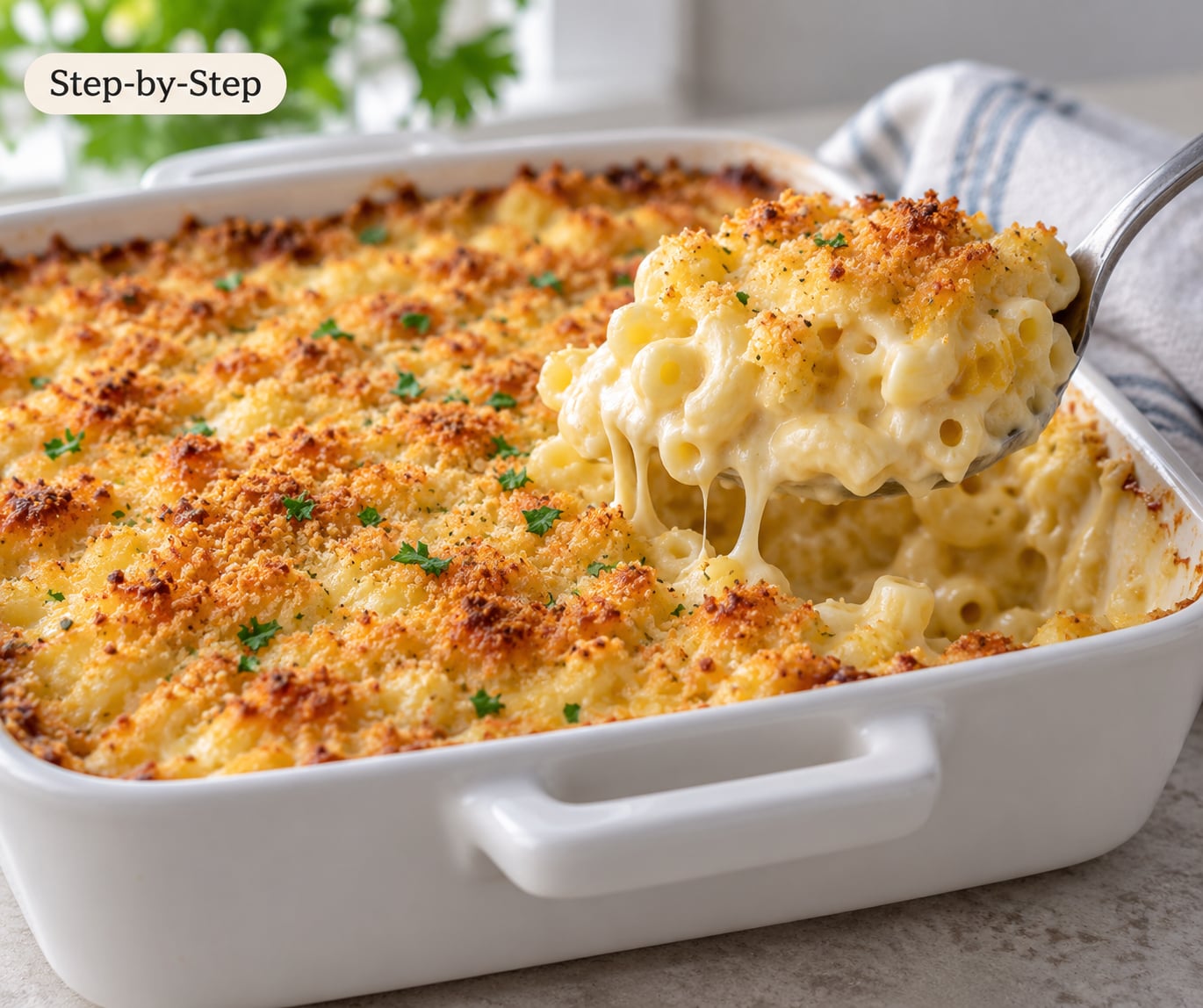
Cover the dish loosely with foil for the first 15 minutes at 350°F. That traps steam so the center heats to temperature without the sauce boiling away. Pull the foil, scatter on a topping if you want one, and bake 10 to 15 minutes more until the top bubbles and the edges just start to brown.
Watch it, do not walk away. The dish is done when it is bubbling across the whole surface and a spoon pushed into the center comes back with loose sauce on it. Deep brown edges mean you have gone too far, and the middle will be dry by the time they color.
Rest the finished dish 10 to 15 minutes before serving. The sauce sets slightly as it cools, and cutting into it straight from the oven lets the liquid run out instead of staying on the pasta. A topping of buttery breadcrumbs or panko gives you crunch without stealing moisture, so toss it with melted butter first and add it in the last ten minutes. If you want that fried cheese-crust look, read our guide to how to make grilled cheese with crisp bread for the browning technique.
Common Mistakes
Almost every disappointing baked mac traces back to one of five things. Here is what to look for and what to change next time.
| Symptom | What caused it | Fix |
|---|---|---|
| Dry and crumbly in the center | Pasta cooked fully before baking, then drank up the sauce in the oven | Pull pasta two minutes early and loosen the sauce before combining |
| Grainy or oily sauce | Cheese added over high heat, or bagged shredded cheese with anti-caking agents | Take the pot off the burner, grate your own cheese, melt in batches |
| Lumpy sauce | Milk poured in too fast or cold, so the roux seized into wet paste | Warm the milk and add it in a slow stream while whisking |
| Bloated, mushy pasta | Pasta boiled to full al dente, then over-baked | Under-cook by two minutes and shorten the bake by five |
| Scorched top, cold middle | No foil for the first stage, or an overloaded dish | Cover 15 minutes, then uncover; split into two dishes for a crowd |
If a batch has already come out dry, you can rescue it. Cover the dish with foil and let it sit, then warm a splash of whole milk or half-and-half and pour it over the dry areas, stirring gently to loosen. Two or three tablespoons is usually enough. Let it stand 15 minutes, then give it 10 minutes back in a 325°F oven. Forum cooks reach for the same fix, and it works on day-old mac too.
Grainy sauce is harder to undo, but not hopeless. Warm the dish with a couple of tablespoons of warm milk and stir. If it is still broken, pull it from the oven, spread it in a fresh buttered dish, and scatter a light layer of fresh grated cheese on top to bake for 10 minutes. The new cheese re-emulsifies what the old batch lost. Our post on why homemade mac and cheese turns grainy goes deeper on the mechanism.
For storage, cool leftovers within two hours and refrigerate them in a covered dish for up to four days. Baked mac keeps poorly because the pasta keeps absorbing, so reheat only the portion you plan to eat. Cover it loosely with foil, add a splash of milk, and warm it in a 325°F oven for 15 to 20 minutes, or microwave in 60-second bursts with a stir between each. A two-minute broil at the end brings the crust back.
You can freeze it unbaked. Assemble it without the topping, wrap the dish tightly, and freeze for up to two months. Thaw in the refrigerator overnight, then bake from cold and add 10 to 15 minutes to the cooking time, since a fridge-cold dish takes longer to reach temperature in the center.
Frequently Asked Questions
How do I keep baked mac and cheese creamy after baking?
Keep it creamy by under-cooking the pasta by two minutes, loosening the sauce so it looks too thin in the bowl, and covering the dish with foil for the first 15 minutes at 350°F. Pull it from the oven while the middle still looks slightly loose and let it rest 10 to 15 minutes before serving.
What kind of cheese is best for creamy baked mac and cheese?
Sharp cheddar is the base, and mixing in a melting cheese like Monterey Jack, mozzarella, or Gruyere gives you a smoother sauce. Always grate it yourself from a block. Bagged shredded cheese contains anti-caking agents that keep the shreds from fusing, which is what turns a baked sauce grainy and greasy.
Can I make baked mac and cheese ahead of time?
Yes. Assemble the dish without the topping up to two days ahead and refrigerate it covered, or freeze it for up to two months. Bake from cold and add 10 to 15 minutes, since the center of a chilled dish takes longer to heat through. Loosen the top with a splash of milk before it goes in.
How do I fix baked mac and cheese that is dry or grainy?
For dry mac, warm a splash of whole milk or half-and-half, pour it over the dry spots, stir gently, and give the dish 15 minutes back in a 325°F oven. For grainy mac, spread it into a fresh buttered dish, top with freshly grated cheese, and bake 10 minutes so the new cheese re-emulsifies the sauce.
Should I cover baked mac and cheese while it bakes?
Cover it for the first 15 minutes, then uncover for the last 10 to 15. Foil traps steam so the center heats through without boiling the moisture out of the sauce. Leaving it uncovered the whole time is the usual reason the top browns before the middle is hot, and the edges turn dry.
Can I use milk alternatives for baked mac and cheese?
Unsweetened almond, oat, and soy milk all work in the roux sauce. Avoid anything flavored or sweetened, and check that plant milks are unsweetened and shake the carton since the calcium settles at the bottom. Evaporated milk is not a dairy-free swap, but it is the creamiest dairy option you can buy.
How to Make Baked Mac and Cheese Creamy: Conclusion
The technique that matters most is the sauce: cook a two-minute roux, add warm milk slowly while whisking, melt freshly grated cheese off the heat, and taste it before it meets the pasta. Everything else protects what that sauce built.
Start there tonight. Pull the macaroni two minutes early, keep the sauce looser than feels right, and cover the dish for the first stretch of the bake. Bake until it bubbles, not until it browns, then give it 10 minutes to settle before you serve it.