
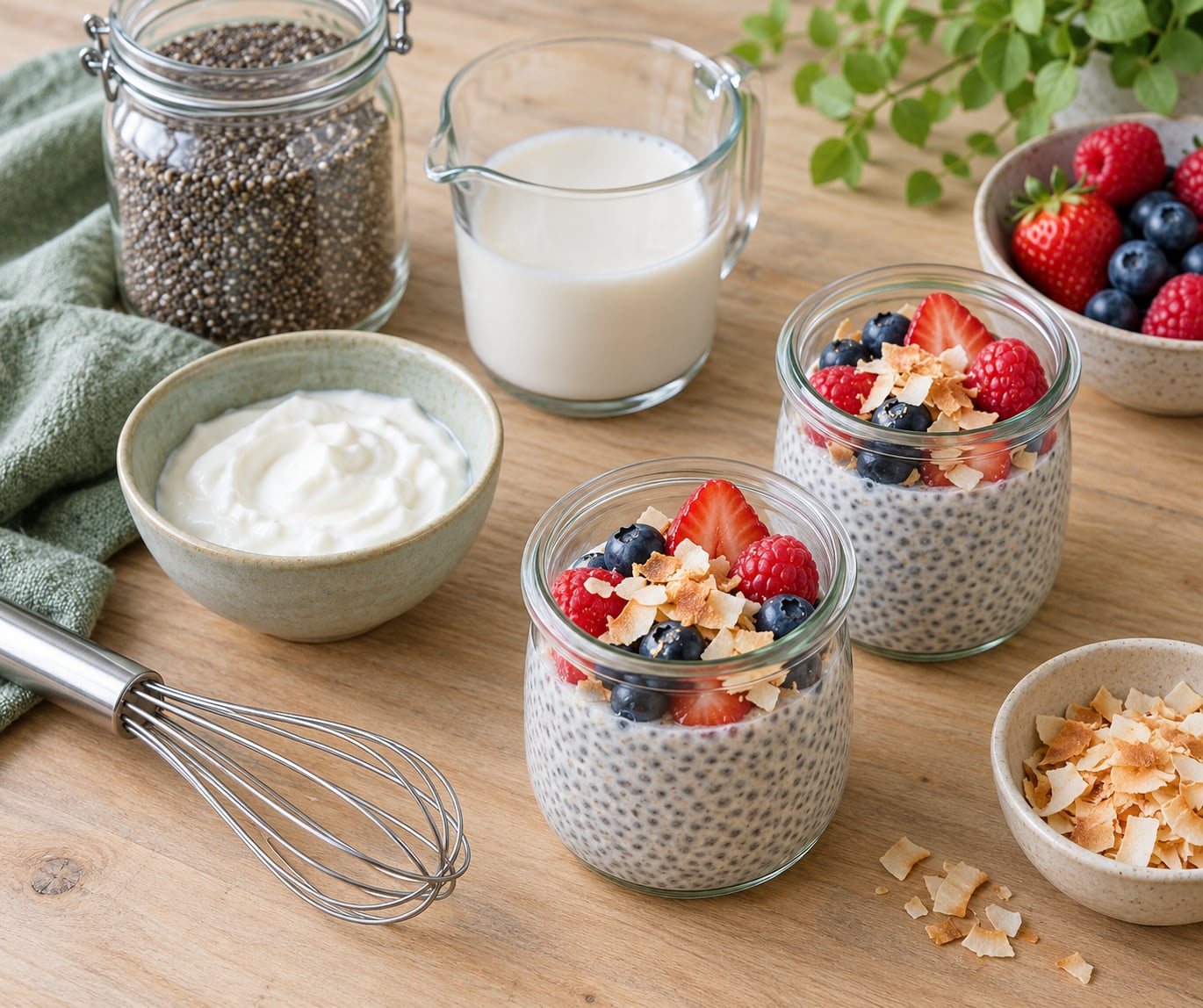
Thick, creamy chia pudding comes down to three things: about 1/4 cup of chia seeds per cup of liquid, whisking the liquid before the seeds go in, and a second stir about 10 minutes later. Get those right and the pudding sets spoonable instead of watery.
It takes about 5 minutes of hands-on work, then the fridge does the rest. Most people who end up with a disappointing bowl get the ratio wrong, and it is the easiest thing to fix. I have made this dozens of times and the same three variables explain nearly every bad batch.
If you are also building out a small breakfast rotation, my guide to how to make hummus smooth and creamy uses the same idea: a base that adds body before the main ingredient goes in.
What You Need
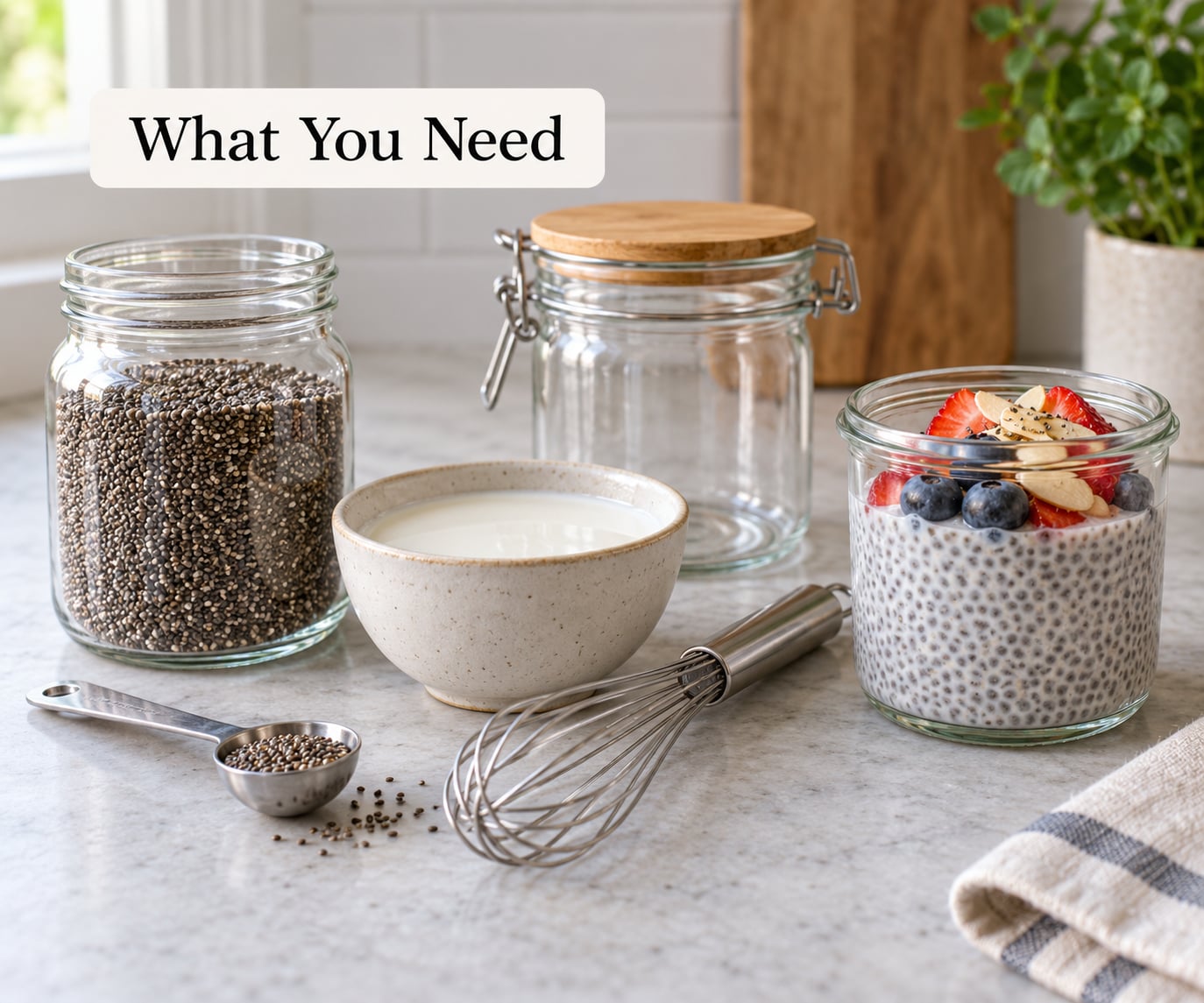
The base ratio is 1/4 cup chia seeds to 1 cup liquid for a classic soft set that holds its shape on a spoon. Add more seeds or less liquid and you move into pudding-cake territory, which is a different dessert.
For the liquid, whole dairy milk and full-fat canned coconut milk are the creamiest options. They carry enough fat to give the finished pudding a rounded mouthfeel instead of a thin, watery one. Oat milk works and tastes nuttier, while almond milk is the lightest of the plant options and needs a thickener to reach the same body.
The thickeners are optional but they are how you jump from soft set to dense. Full-fat Greek yogurt, coconut cream, cottage cheese blended smooth, or a tablespoon of extra ground chia all do it. Vanilla extract, a pinch of salt, and whatever sweetener you like round out the flavor.
Tools are minimal. A jar or covered bowl, a whisk or fork, and a measuring spoon are enough. A small spice grinder or blender is worth having if you care about texture, because finely ground seeds are what remove the grit people complain about most.
Step-by-Step: How to Make Chia Pudding Thick and Creamy
Step 1: Choose a Thickening Base
The liquid-to-chia ratio decides the final thickness, and nothing else has as much influence. Start at 1/4 cup seeds per cup of liquid for the classic soft set.
For a denser result, either drop the liquid to 3/4 cup or stir in 1/2 cup of thick Greek yogurt. Yogort is the easier lever because you can taste as you go. If you want a restaurant-style bowl that scoops rather than pours, go to 1/3 cup seeds per cup.
Step 2: Grind or Rinse the Chia Seeds
Pulse whole chia seeds in a spice grinder for 15 to 20 seconds, or run them through a blender until they look like coarse sand. Ground chia hydrates faster, releases more gel, and gives you the smooth, mousse-like texture that whole seeds never reach.
Whole seeds still work fine, but they stay visibly textured and take about twice as long to soften. You will notice the difference most in the mouth, where the gel forms around each seed rather than through the whole bowl.
Step 3: Whisk the Liquid Ingredients First
Whisk the milk, yogurt, sweetener, vanilla, and salt together in your jar or bowl until everything is fully dissolved and the liquid looks uniform. This matters more than it sounds. Sugar that has settled at the bottom creates pockets of sweetness, and any dry ingredient sitting undissolved will clump the moment the seeds hit it.
You are looking for a single smooth liquid with no streaks and no settled layer at the bottom.
Step 4: Add Chia and Mix Properly
Add the seeds gradually and whisk hard for a full 30 seconds. Scrape the bottom and the sides of the bowl twice while you do it.
Vigorous mixing is what disperses the seeds instead of letting them land in one spot and swell into a lump. If a clump does form, break it up with the whisk immediately rather than waiting for the chill, because a set clump is much harder to break later.
Step 5: Rest, Stir, and Chill
Wait 10 to 15 minutes at room temperature, then stir again to knock down any clumps that formed on the surface. Skipping this second stir is the most common reason homemade chia pudding looks grainy while tasting fine.
Then refrigerate for at least 4 hours, or overnight for the best result. The thick, set look means it is ready: the surface holds a fingertip indent, the mixture slumps slowly off a tilted spoon, and it does not run when you tilt the jar.
Whole seeds take longer to soften, so overnight is the better choice if you skipped grinding. If you are short on time, 30 minutes on the counter followed by 2 hours in the fridge gets you most of the way there.
Step 6: Adjust the Texture Before Serving
Thickening after the fact is simple. Stir in another spoonful of Greek yogurt, coconut cream, or a teaspoon of ground chia for a denser bowl, or blend the set pudding for 30 seconds for a mousse-like consistency that will convert anyone who thinks they do not like chia.
Loosening is just as quick. A splash of milk thins it back down, and that is the right move if you are layering it in a parfait or serving it in a small bowl.
Finish with toppings that add contrast, since the pudding itself is soft. Toasted coconut and nuts for crunch, fresh berries or sliced fruit for juice, and a drizzle of nut butter for richness. For more ideas on balancing textures and flavors in small bites, my notes on how to make coffee taste better at home cover the same logic in a drink form.
Common Mistakes
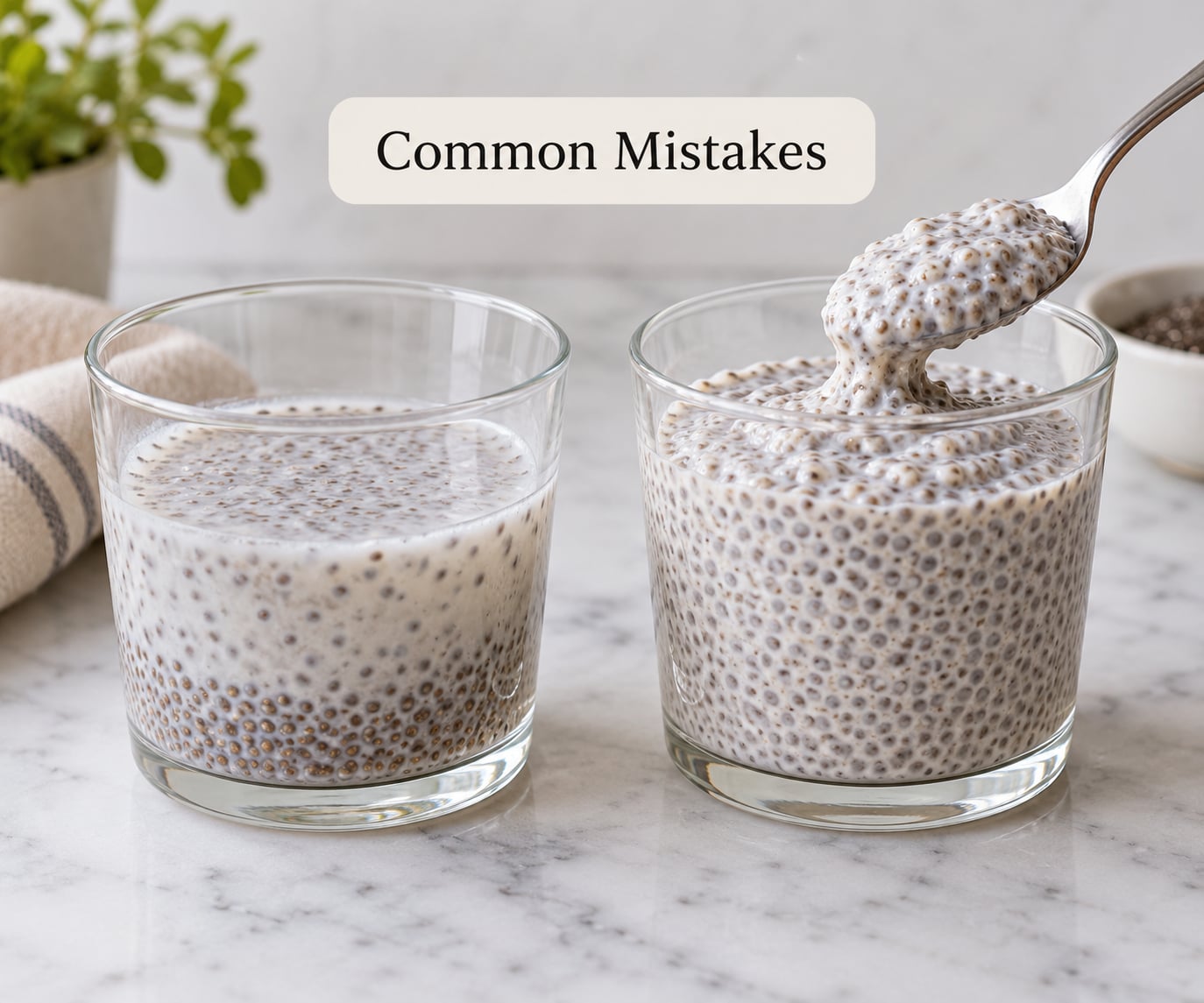
The pudding is watery. You used too much liquid for the seeds. Stir in another tablespoon or two of ground chia, or fold in 1/2 cup of Greek yogurt, and refrigerate for an hour to firm up.
It is gritty or grainy. Whole seeds that were stirred in lazily, or a skipped second stir. Grind the seeds next time, and stir again at the 10 minute mark to break up anything still clumped.
It is lumpy. Dry sweetener or protein powder sitting in the bowl instead of dissolved. Always whisk the liquid ingredients fully before the seeds go in, and add any powder in two stages with stirring between them.
The seeds are still hard and crunchy. Not enough time. Whole seeds need 4 hours minimum and overnight is better. A quick fix is to grind the set pudding and let it sit another hour.
It is rubbery or too firm to eat. You overdid the seeds, or you blended a set pudding and left it to firm again. Loosen it with milk a little at a time and serve right away.
The texture feels slimy. Usually old seeds that have lost their gelling power, or a batch that sat too long. Buy fresh seeds, keep them sealed and cool, and eat the pudding within a few days.
Two habits prevent most of the above. Measure the seeds with a proper quarter-cup measure instead of a rounded spoon, since eyeballing is how ratios drift. And treat the fridge as part of the recipe, not a finishing touch, because pudding that has not had its full chill will always look looser than it is in the bowl.
For storage, keep the pudding in a sealed jar in the refrigerator for up to 3 to 4 days. It keeps thickening as it sits, so stir and loosen with a splash of milk before eating. Adding fruit is fine, but add it in the last day or two so it does not turn the pudding watery or tinted.
Frequently Asked Questions
Is chia pudding meant to be thick?
A good chia pudding should be thick enough to hold its shape on a spoon and slump slowly when you tilt the bowl, not pour like a drink. If it runs flat, the ratio was too loose or the seeds did not get enough chilling time. Add a spoonful of ground chia or Greek yogurt and give it another hour in the fridge.
What is the best chia to liquid ratio for thick pudding?
One quarter cup of chia seeds to one cup of liquid gives the classic soft set. For a denser, spoonable bowl go to one-third cup per cup, or keep the seeds at one quarter cup and add half a cup of Greek yogurt. Going much past one-third cup per cup produces something closer to a firm chia cake.
How long does chia pudding need to chill before it sets?
At least 4 hours in the refrigerator, and overnight is better. Whole seeds take longest, which is why grinding them first can cut the wait in half. If you are in a hurry, 30 minutes on the counter followed by 2 hours in the fridge gets you a usable set, though it firms up further overnight.
How do I fix chia pudding that is too runny?
Stir in ground chia a tablespoon at a time, or fold in half a cup of full-fat Greek yogurt for extra body without changing the flavor much. Give it another hour in the refrigerator to set properly. If the batch is already watery, do not try to boil it down, since the gel will not recover the same way.
Can I make thick chia pudding without yogurt?
Yes. Use less liquid and more seed instead: one-third cup of chia to three-quarters cup of milk or oat milk gives a thick set with no dairy. Coconut cream and blended cottage cheese are other options, though both add dairy. Blending the finished pudding also thickens it without any added ingredient at all.
How long does chia pudding stay creamy in the refrigerator?
Kept in a sealed jar, it stays creamy for about 3 to 4 days. It firms up as it ages, so stir it well and add a splash of milk before serving if it has gone stiff. Use a clean spoon each time you take some out, and add fresh fruit in the last day or two to keep the texture from turning loose.
Conclusion
If your chia pudding came out thin, fix the ratio first: 1/4 cup of seeds per cup of liquid, liquid whisked smooth before the seeds go in, and a second stir at the 10 minute mark. Then give it the full 4 hours in the fridge, or overnight if the seeds are whole.
Before serving, always taste the texture rather than trusting the bowl. Too loose means more ground chia or Greek yogurt, too stiff means a splash of milk, and a blend at the end turns anything set into something smooth and mousse-like.
Once the base method clicks, the flavor side is easy. My guide to how to make tea properly for guests covers the same principle of getting the basics right before you start changing things.