
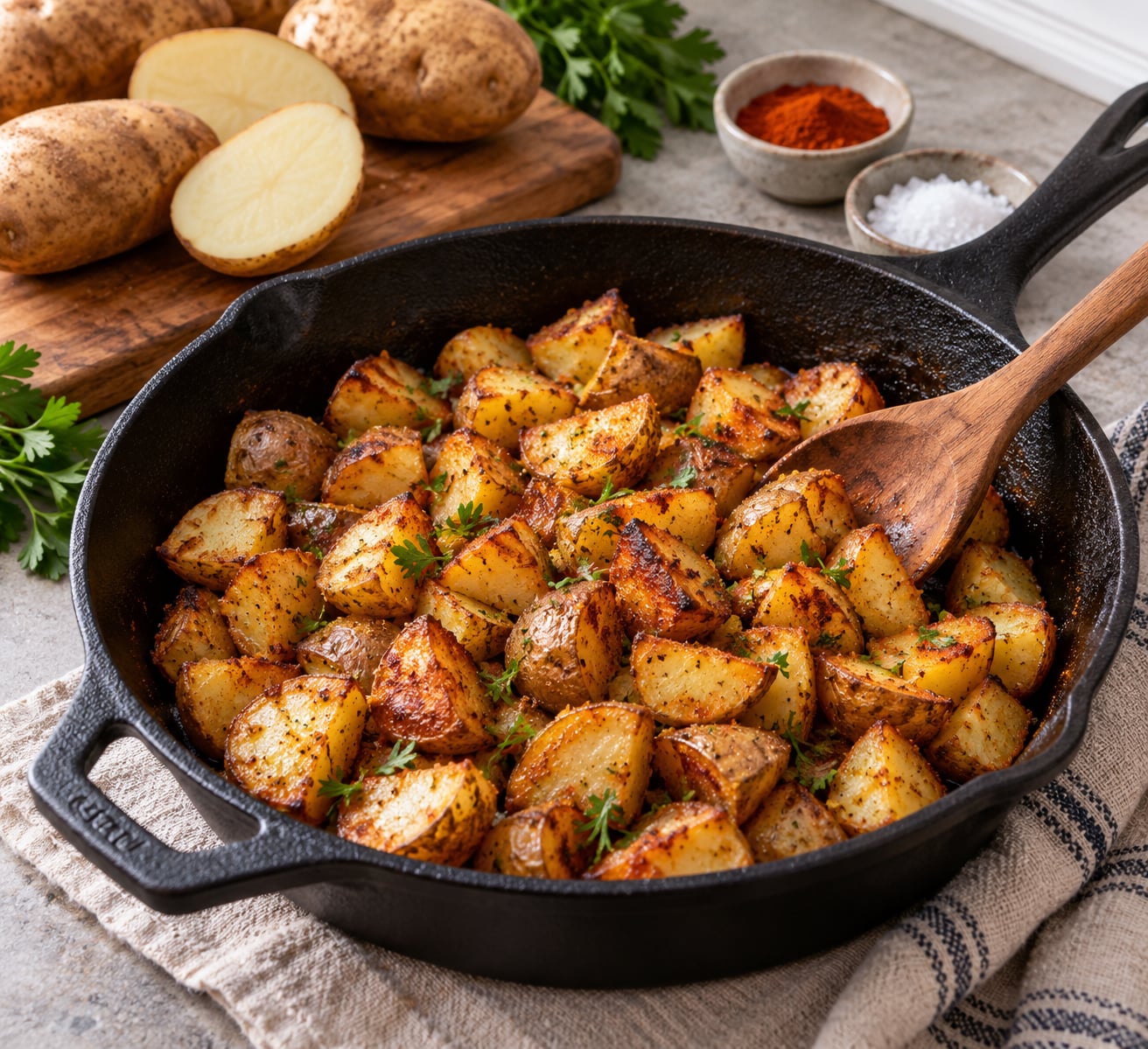
Learning how to make home fries for breakfast comes down to three things: cut the potatoes even, cook them partway in salted water, then fry them in a single layer until the surface dries out and browns. That method takes about 30 minutes and is beginner-friendly. The whole thing happens in one pan plus a pot, and cleanup is a soak and a wash.
Most soggy home fries I’ve made traced back to the same mistake: crowding the skillet. Two extra potatoes in a pan that is already full drop the temperature, trap steam, and turn a sear into a simmer. Everything else in this guide is a detail on top of that.
Table of Contents
- What You Need
- Step-by-Step: How to Make Home Fries for Breakfast
- Common Mistakes
- Frequently Asked Questions
- Should I boil potatoes before making home fries for breakfast?
- What type of potatoes are best for crispy breakfast home fries?
- Can I make home fries without deep-frying them?
- Why are my home fries soggy after frying?
- How do I keep breakfast potatoes crisp until everyone is ready to eat?
- How should I store and reheat leftover home fries?
- Conclusion
What You Need
This covers two to four breakfast servings, roughly one large potato per person.
- Potatoes: 2 pounds russet or Idaho for fluffy centers, or Yukon Gold for a creamier middle. Leave the skins on.
- Fat for the pan: about 2 tablespoons of a neutral high-heat oil such as avocado, canola, or grapeseed. Bacon fat or clarified butter work too.
- Kosher salt: for the cooking water, plus finishing salt and a grinder of black pepper.
- Seasoning options: garlic powder, onion powder, smoked paprika, and fresh parsley or chives.
- Equipment: a large cast iron skillet or heavy stainless skillet, a pot for par-cooking, a colander, and a clean towel or rack for draining.
On fat choice, what matters is the smoke point. Olive oil works, but regular extra virgin starts smoking around 375 F and turns bitter before your potatoes are done. Bacon fat adds salt, so go light on the finishing salt if you use it.
Step-by-Step: How to Make Home Fries for Breakfast
1. Cut the Potatoes Into Even Pieces
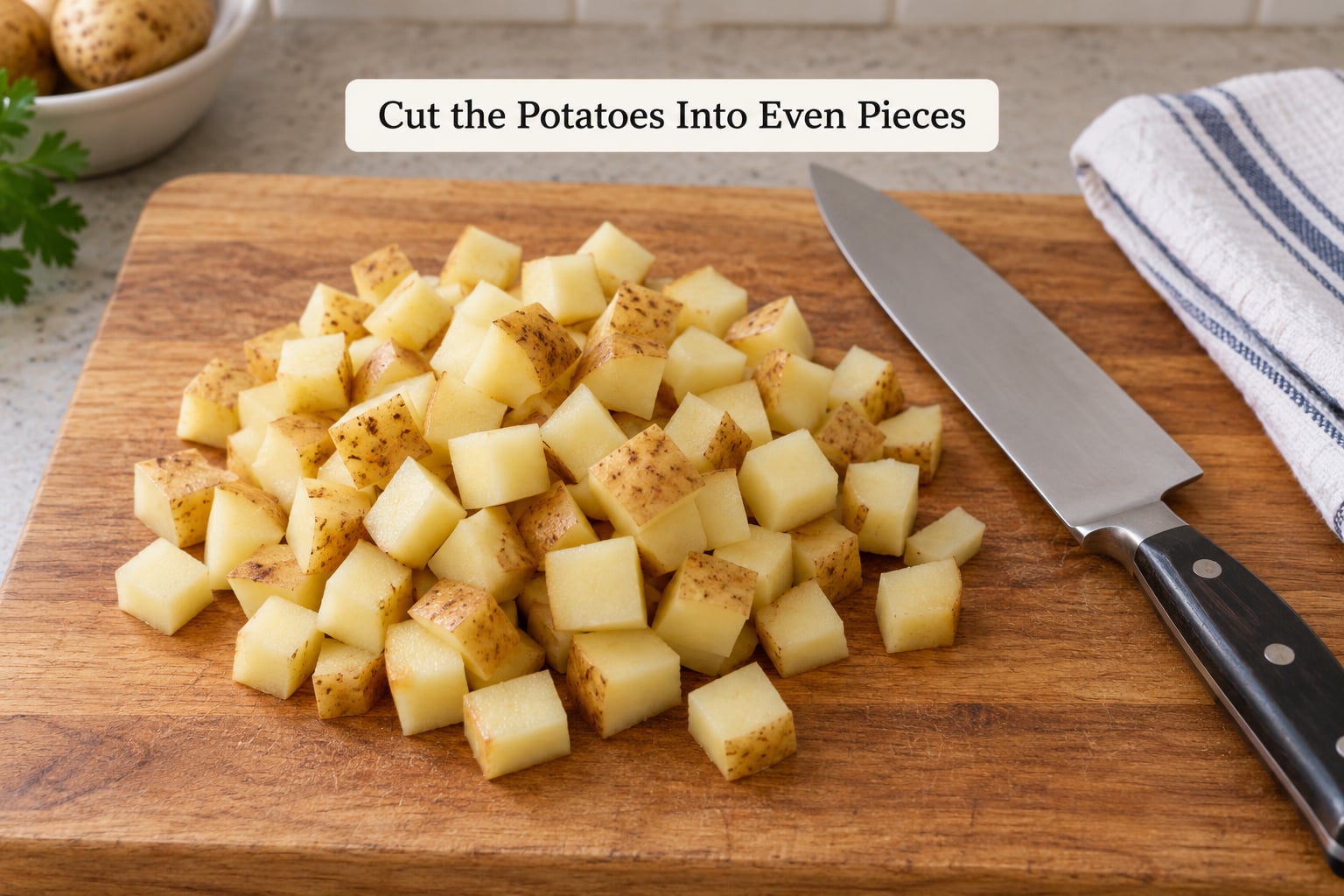
Scrub the potatoes well and cut them into 1/2-inch cubes. Size consistency is the single biggest factor in even browning: a piece twice the size of its neighbor finishes pale while the small ones burn.
Rinse the cubes in cold water until the water runs mostly clear. That pulls off surface starch, which otherwise binds into a gummy film on the outside. Then dry them thoroughly with a towel.
2. Par-Cook the Potatoes for Fluffy Centers
Bring a pot of salted water to a boil, add the potatoes, and simmer 6 to 8 minutes until a knife slides in with almost no resistance. Pull them out while the centers still resist slightly. This is called fork tender, and the residual cooking in the pan finishes the job.
Drain and spread them on a towel, not in a pile. Let them steam-dry for 5 minutes. Any water clinging to the surface has to evaporate before browning can start, and this is where a lot of people lose the crust.
3. Heat Enough Oil in the Skillet
Set your skillet over medium-high heat and add the oil. It is ready when it shimmers and a dropped potato piece bubbles immediately and steadily, usually 2 to 3 minutes from cold.
Do not let it smoke. Smoking oil is the fastest way to make potatoes taste bitter and gives you a smoky, acrid note that no amount of seasoning hides.
4. Add the Potatoes Without Crowding the Pan
Lay the potatoes in one flat layer with a little space between each piece. You should be able to see bare skillet between most of them. Pat them down once with a spatula so each cube touches the oil, then leave them completely alone.
If the layer looks tight, cook in two batches. As a rough guide, a 12-inch skillet holds about 1 to 1.5 pounds of diced potatoes at once. Feeding a crowd of six means three batches, so get the pan hot once and keep moving through them.
5. Cook Until Golden and Crisp
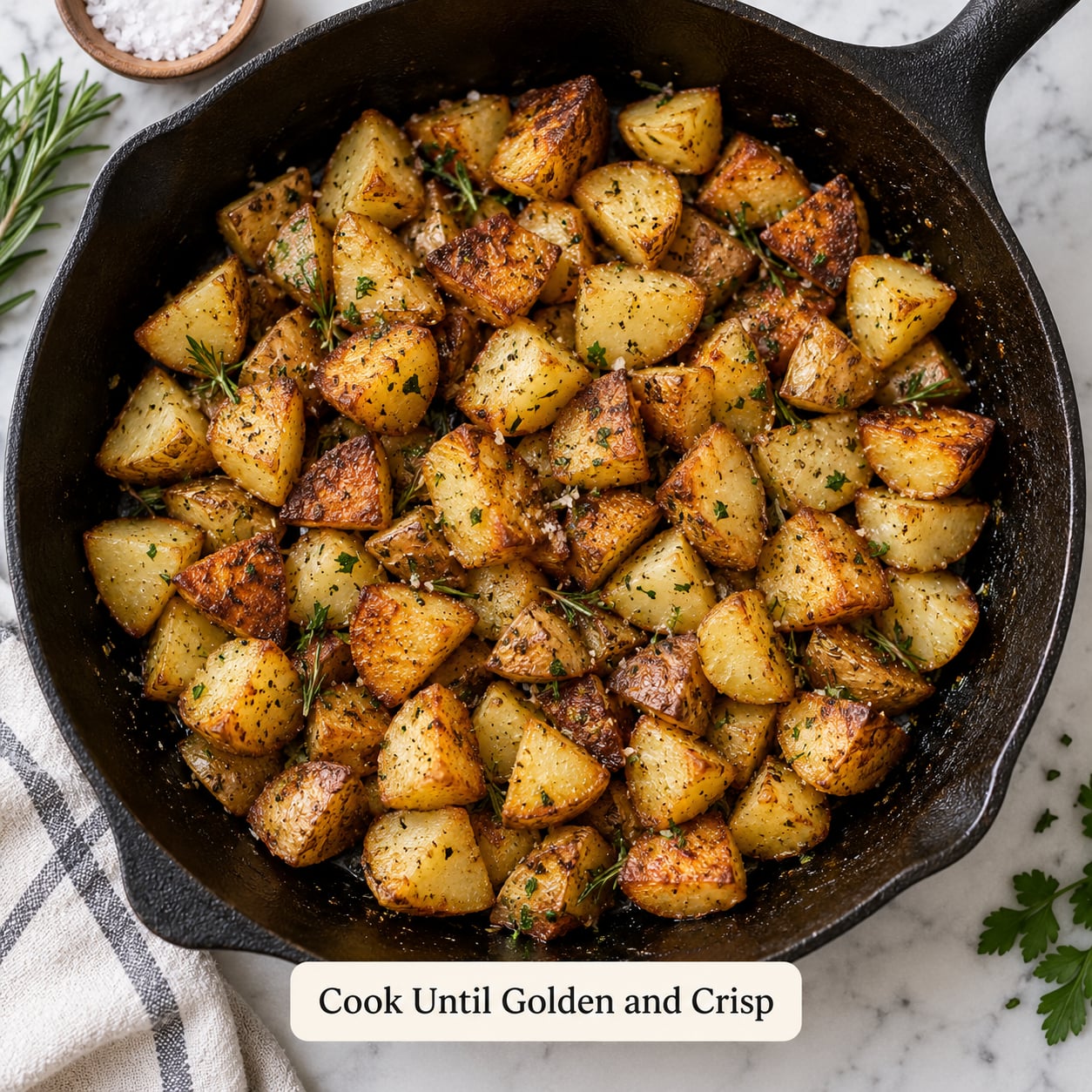
Give the batch 5 to 7 minutes without touching it. Then turn the pieces once, cook another 5 to 7 minutes, and check. You are done when the surfaces are deep golden brown and feel firm to the touch, not pale and slightly waxy.
If the potatoes brown before they soften, lower the heat slightly rather than moving them faster. Browning is a surface reaction, so a little less heat buys you time for the centers to finish.
6. Drain, Season, and Serve
Tip the potatoes onto a rack or a towel-lined plate. Paper towels set directly on the surface trap steam underneath and undo your crust, so a rack or a loose towel works better.
Salt them immediately, while the surface still has a little warmth to carry the flavor in. Add pepper and any of garlic powder, onion powder, or smoked paprika, then toss once and serve right away alongside eggs, toast, fruit, or breakfast meat.
If you are feeding a bigger crowd, holding the first batch while the second cooks is the problem most recipes skip. Spread finished fries in a single layer on a sheet pan and hold them in a 200 F oven. Do not pile them or cover them.
Common Mistakes
My home fries are soggy. Usually three causes, often all at once: wet potatoes, a crowded pan, or moving them too much. A full pan drops the oil temperature, so the potatoes release water faster than it can evaporate, and they cook in their own steam.
The centers crumble into mush. You boiled too long. Six to eight minutes is the window. Whole potatoes can take 10 to 12 minutes for the same result, which is why many cooks parboil them uncut and cube after draining.
My potatoes are greasy. Starch soaks up oil like a sponge, and it does it fastest when the surface is wet. Dry the par-cooked pieces properly, use an oil that tolerates high heat, and skip the deep-frying move of fully submerging them. A shallow layer crisps just as well.
They stick to the pan or tear when I flip. Cast iron needs time to season, and more importantly the potatoes need to sit. A spatula slid too early pulls a piece apart and takes the crust with it. Press gently and lift.
Some pieces burn while others stay pale. Back to even cutting, and check your pan size. Two potatoes too many is the whole problem.
My onions are black before the potatoes are done. Onions and shallots cook much faster than par-cooked potato cubes. Cook them in a separate pan for the last 3 to 4 minutes, then combine.
Quick Tips for the Best Breakfast Potatoes
Season in layers rather than at the end. Salt the water, season the pan, and finish on the plate. The middle layer is what people miss.
Vary the fat between batches. Bacon fat for one, avocado oil for the next, gives a family breakfast some range without extra work.
Keep cooked potatoes on a rack in a warm oven, never covered, and add the final salt after reheating rather than before.
If you want to prep ahead, par-cook the cubes up to 2 days ahead, refrigerate them in an airtight container, and fry straight from cold with 2 to 3 extra minutes. That is the longest window I trust; past it, the edges start to look tired.
What to Serve Alongside
Scrambled or fried eggs are the obvious pairing, and so is bacon. For a brunch spread, I like a breakfast casserole made ahead so the potatoes are the only hot thing you finish at the stove.
Home fries also hold up as the base of a breakfast burrito bowl or a sandwich. If you are batching, freezing breakfast burritos around the same time is an efficient use of the oven and the same seasoning habits.
Frequently Asked Questions
Should I boil potatoes before making home fries for breakfast?
Yes, a short par-cook almost always gives you the best result. Boiling in salted water for 6 to 8 minutes cooks the starch through so the center turns fluffy and creamy, while the surface stays slightly damp so it can dry and brown in the skillet. Pull them while a knife still meets slight resistance. Skipping the boil means longer skillet time and less reliable centers.
What type of potatoes are best for crispy breakfast home fries?
Russet or Idaho potatoes give the fluffiest interior and crispest edges because their high starch content takes to browning well. Yukon Gold is a close second, with a creamier center and slightly less starch, so the pieces hold together better. Skip waxy varieties like red bliss or new potatoes for this method, since they stay firm and never get that fluffy middle.
Can I make home fries without deep-frying them?
Yes, and you should. Home fries are traditionally shallow fried in a thin layer of oil, not submerged. A couple of tablespoons in a heavy skillet is enough to brown the cut faces if the pan is hot and the potatoes are dry and spaced out. Deep frying adds oil and risk without improving the crust.
Why are my home fries soggy after frying?
Moisture is the enemy. Wet potatoes, a crowded pan, and constant stirring all trap steam instead of letting the surface dry. Rinse and dry the cubes before boiling, drain them on a towel, steam-dry them for 5 minutes, and fry in a single layer you can see through. Also resist flipping more than once, since each turn resets the crust you built.
How do I keep breakfast potatoes crisp until everyone is ready to eat?
Hold them in a single layer on a sheet pan inside a 200 F oven. Do not pile them and do not cover them, since trapped steam softens the crust. Salt just before serving so the surface stays crisp. If the hold stretches past about 30 minutes, spread them back out and give them 3 minutes in the hot oven to re-crisp.
How should I store and reheat leftover home fries?
Refrigerate cooked fries in an airtight container for up to 3 or 4 days, or freeze them on a tray before bagging for up to 2 months. Reheat in a hot skillet with a little oil for 5 to 7 minutes, or in a 400 F oven for 10 minutes. Avoid the microwave, which steams the crust soft. Re-crisp before adding salt.
Conclusion
The technique that separates good home fries from great ones is short: cut every cube the same size, par-cook them just to fork tender, dry them until the surface is matte, then fry in a single layer you can see through and leave them alone long enough to brown.
Start with the first batch and get your skillet properly hot before the potatoes touch it. If you are making coffee alongside, how to make coffee taste better at home takes about the same time the potatoes do.