
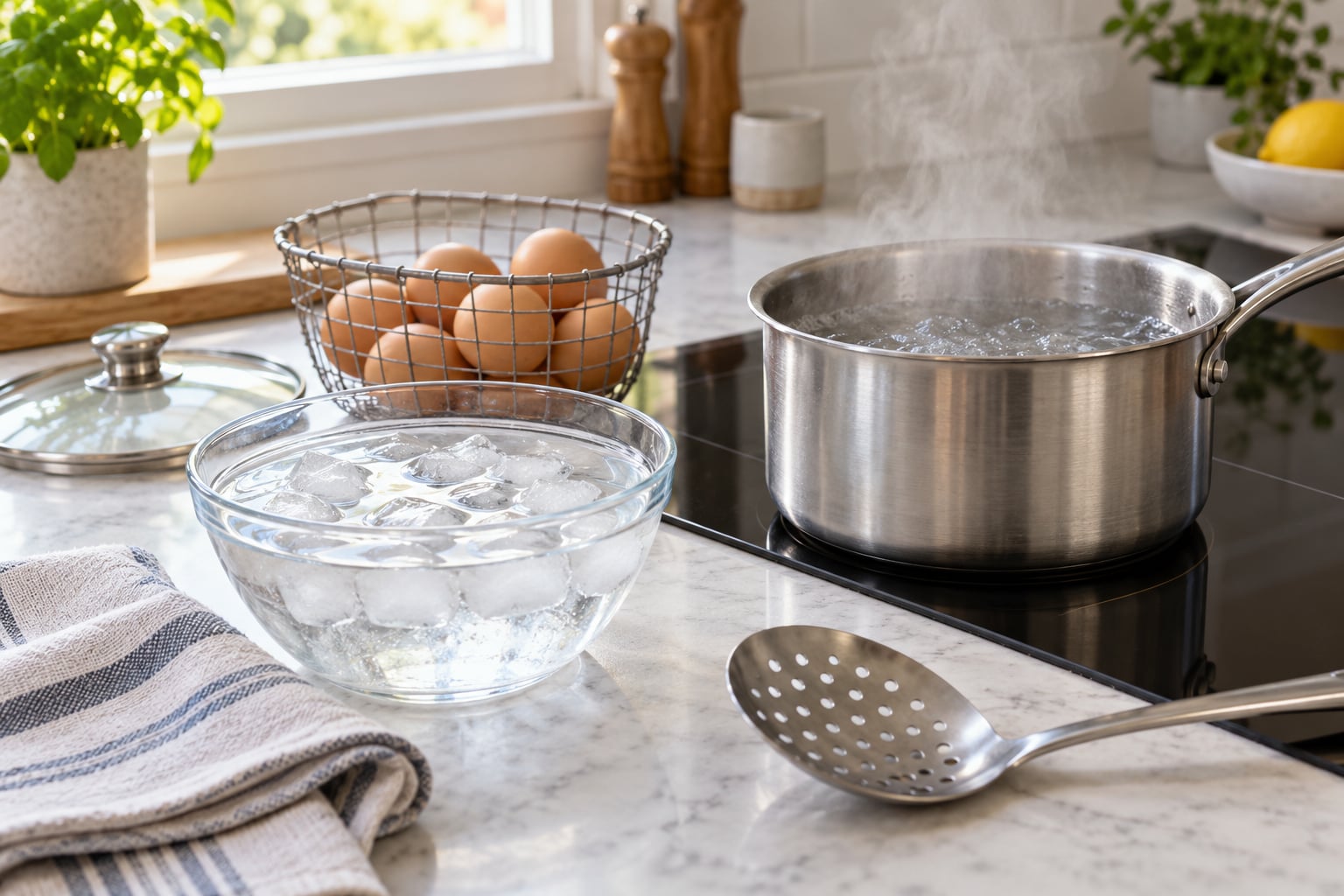
If you have ever searched how to make hard boiled eggs easy to peel and landed on a dozen methods that all contradict each other, the fix is short: a hot start followed by a fast chill. Lower eggs into already-boiling water or steam them, cook 11 to 12 minutes for large eggs, then drop them straight into ice water for 10 to 15 minutes. The cook sets the egg white, and the ice bath contracts it away from the inner shell membrane so the shell comes off in sheets instead of tearing the white.
From there it is mostly mechanical: crack the shell all over, roll the egg, and peel under water. It takes about 25 minutes start to finish for a dozen eggs, most of it unattended, and the only real skill is timing.
Egg age matters as much as technique. Very fresh eggs peel badly no matter what you do, which is why the same carton can feel impossible one week and effortless the next.
Table of Contents
- What You Need
- Cooking Times by Egg Size and Method
- Step-by-Step: How to Make Hard Boiled Eggs Easy to Peel
- Common Mistakes
- Storage and Serving
- Frequently Asked Questions
- Does the steam method work better than starting eggs in cold water?
- Are older eggs easier to peel than fresh eggs?
- How long should I boil eggs so they are hard boiled but not overcooked?
- Should I peel hard boiled eggs before or after refrigerating them?
- How long do hard boiled eggs last in the refrigerator?
- Conclusion
What You Need
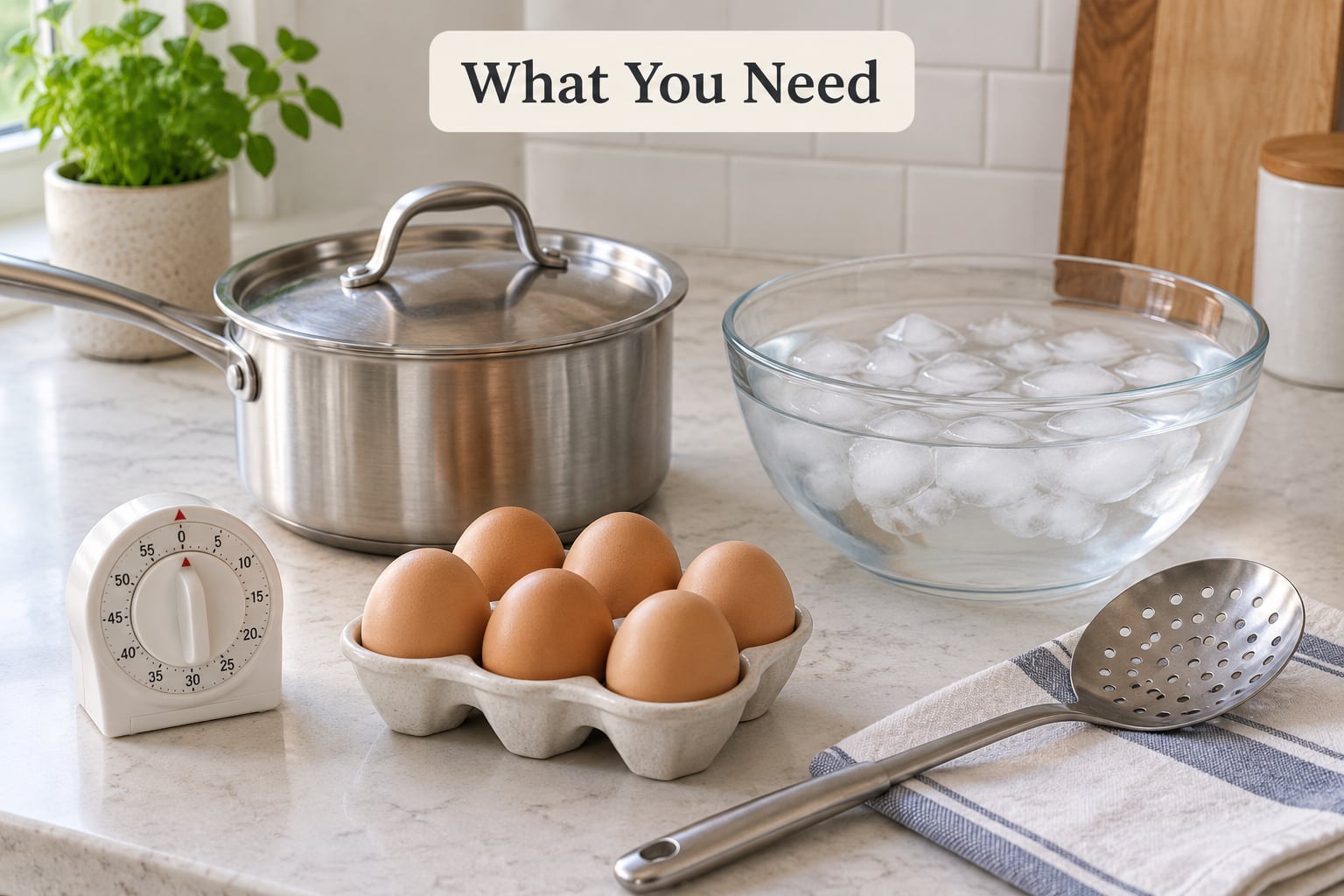
A medium saucepan with a lid, a pot or bowl big enough to hold the eggs in cold water, a slotted spoon or spider, a kitchen towel, and a timer. That is the whole kit.
The ice matters more than it looks. Have a bowl of ice and cold water waiting next to the stove before you start, because the eggs go in within seconds of coming off the heat and you do not want to hunt for a colander while steam keeps cooking the yolks.
A kitchen towel is optional but useful. It is the easiest way to crack an egg all over without dropping it on the counter, and it doubles as the surface you roll the egg on.
If you cook eggs often, a cheap steamer basket and a small pressure cooker are worth adding later. Steam is gentler on the shell, and the pressure cooker is the fastest route for a batch on a weeknight.
Cooking Times by Egg Size and Method
Times below are measured from the moment eggs enter already-boiling water, and they assume eggs come straight from the refrigerator. Steam times start when the pot returns to a full boil after you add the eggs.
| Egg size | Boil, hot start | Steam | Pressure cooker, high pressure |
|---|---|---|---|
| Small | 7 to 8 minutes | 10 minutes | 5 to 6 minutes |
| Medium | 9 to 10 minutes | 11 to 12 minutes | 6 minutes |
| Large | 11 to 12 minutes | 13 to 14 minutes | 7 minutes |
| Extra-large | 12 to 13 minutes | 14 to 15 minutes | 8 minutes |
For a medium-boiled egg with a jammy, barely set center, cut two minutes off the boiling column.
Step-by-Step: How to Make Hard Boiled Eggs Easy to Peel
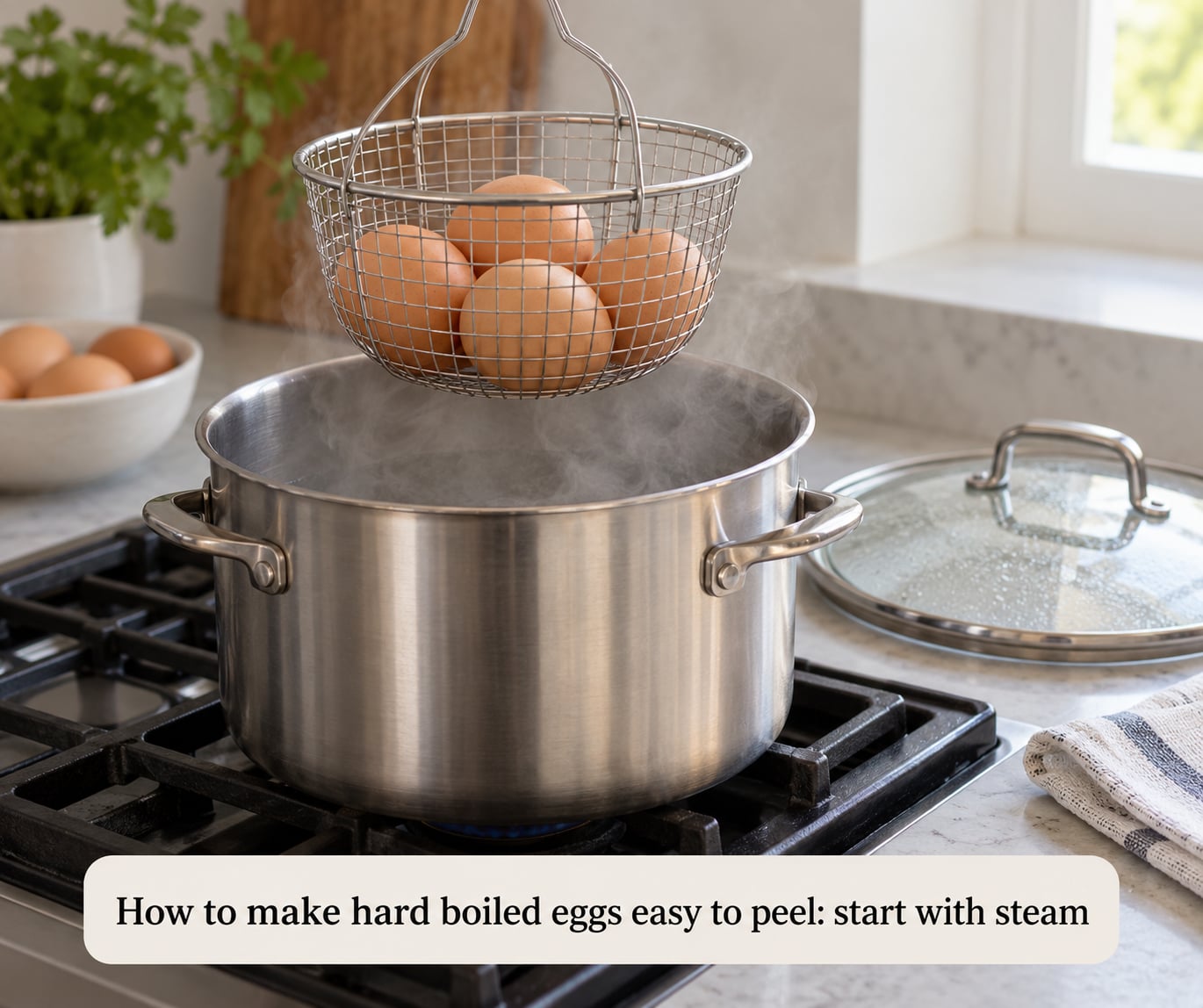
How to make hard boiled eggs easy to peel: start with steam
Stage 1: Choose eggs that have had some age. If you buy farm fresh or backyard eggs, hold them for 7 to 10 days in the refrigerator before cooking. Fresh eggs have a high pH and a thick inner membrane that grips the cooked white; as the egg ages, both loosen, which is exactly what you want for peeling.
Stage 2: Bring the water to a full boil first. Fill the saucepan with water, leave a good inch of headspace, and bring it to a rolling boil on high heat. This hot start is the single biggest difference between eggs that peel and eggs that tear, because the white sets before the shock of cold water can reverse it.
Lower the eggs in with a slotted spoon rather than dropping them. A drop from six inches is enough to crack a shell on the bottom of the pot. If you are cooking a big batch, tip the eggs into the pot one layer at a time from a second pot of boiling water instead of lowering them individually.
Then turn the heat down to a steady simmer. You want bubbles still rising but not a wild rolling boil, which is where shells start cracking and eggs bounce against each other.
Steaming works the same way. Put eggs in a steamer basket above a rolling boil, cover, and start the clock when the pot comes back to a boil. The shells stay dry instead of sitting in swirling water, and nothing knocks them against each other, which is why plenty of cooks settle on steam once they own a basket.
How to make hard boiled eggs easy to peel: cook and cool
Stage 3: Cook without looking. Set a timer for the time in the table and leave the pot alone. Stir the eggs once, gently, after a couple of minutes so they do not sit against the pot, then stop. Timing is the only variable that matters here, and lifting the lid to check can drop the temperature enough to stretch the cook.
For the pressure cooker, add a cup of water, set the eggs on the trivet, seal, and cook on high for 6 to 7 minutes for large eggs. Let the pot release naturally for 10 minutes before you open it. A quick release gives you a batch of rubbery, cracked eggs because the pressure change wrecks the shell.
Altitude matters more than most recipes admit. Water boils at a lower temperature up there, so eggs at 3,000 feet can set a few minutes sooner than the table says. If you live above roughly 5,000 feet, drop a couple of minutes off the times and test one egg early.
Stage 4: Move the eggs straight into ice water. Have your bowl of ice and water sitting beside the stove, lift the eggs out with a slotted spoon, and lower them in. Give them 10 to 15 minutes.
Do not run warm water over them and call it done. The ice bath needs to drop the egg below about 40°F fast enough to stop carryover cooking, and the shock is what makes the white pull inward and separate from the membrane. Skipping it is the most common reason people say they hate peeling eggs.
While the eggs cool, the yolk is finishing. If you cut one open too soon, the center can still be soft even though the white is set, and that unfinished steam keeps working on the yolk. Ten minutes is enough; twenty if you are in no hurry.
How to make hard boiled eggs easy to peel: remove the shell
Stage 5: Crack everywhere, then roll. Take one egg out of the bath and tap it firmly all over on a hard surface, or roll it under the flat of your hand on a cutting board. You are after a spiderweb of cracks, not one big opening, and the wide end is where the air pocket sits, so start there.
Most people reach for a spoon when the shell refuses to budge, and it does lift the shell, but it tears out chunks of white on the way. Peeling under running water is tidier, rolling the cracked egg on a counter or under the flat of your hand works better still, and rolling it inside a kitchen towel before peeling beats every other approach. So the viral spoon trick is a rescue move for one stubborn patch, not a method.
Stage 6: Peel under water. Fill a second bowl with cool water, submerge the cracked egg, and pick the shell away with your thumbs while it is underwater. Water gets between the shell and the membrane and the membrane lifts off instead of dragging chunks of white with it. Rolling first, then peeling in the bowl, is the combination that gives you the cleanest white.
Tear away large pieces of membrane as you go rather than picking at little flakes. Most peeled eggs come out looking better if you leave a few pinprick bits of white behind instead of stripping every last speck.
You can also do the whole job in a mason jar with an inch of water and shake it, a trick that circulates plenty online. It works on eggs that are fully cooked and thoroughly chilled, and it fails badly if you shake harder than the shell can take. Rolling and peeling stays my first choice because it is kinder to the white.
If your hands are the problem rather than the eggs, the jar method removes almost all of the pinching. Rolling first, then shaking gently, then draining and picking the shell off under water handles low hand strength, arthritis, or anything that makes fine motor work painful.
Common Mistakes
Starting eggs in cold water. It works, and it produces a softer, more evenly heated white, but it takes longer and the white sets slowly enough to grab the membrane. This is the change most likely to fix how to make hard boiled eggs easy to peel for someone whose eggs have never peeled well.
Leaving the heat on high. A hard rolling boil keeps the shells knocking against each other and cracks them. Bring the water to a boil to start, then drop to a simmer.
Skipping or shortening the ice bath. Even five minutes of ice water beats running the tap, but ten to fifteen minutes is where the white reliably contracts away from the shell.
Peeling while the egg is hot. The white is still soft and stretches as you pull, so it tears. Warm but not hot is the target, straight out of the ice bath.
Using eggs straight from the farm. This is the mistake that gets blamed on method when method is not at fault. Farm fresh eggs need 7 to 10 days in the refrigerator before they will peel.
Leaving them on the heat too long. Past about 15 minutes the yolk turns gray-green and crumbly, and the white gets chewy. That is overcooking, not a peeling problem, though it looks like one. Cut an egg open after eleven minutes next time and write down your own number for your carton.
Changing five things at once. Vinegar, salt, baking soda, a lid, a cold start and a short ice bath all at the same time tells you nothing. Change one variable, cook four eggs, and note what happened.
On the additives people keep asking about: vinegar does not seal the shell or make it peel more easily, it just keeps any small crack from leaking white into the water. Baking soda in the water raises the pH, which is the same mechanism that makes fresh eggs hard to peel, so it works against you. Salt is a habit rather than a fix. If you want something to add for flavor, a spoon of apple cider vinegar is a reasonable habit, mostly for the taste.
Storage and Serving
Hard cooked eggs kept in their shell refrigerate for up to a week at 40°F or below, per USDA guidance. Store them in the carton or a covered container so nothing presses against the shells.
Peeled eggs keep the same seven-day limit, but the surface is exposed, so they dry out and pick up fridge odors faster. I use them within a day or two. A thin layer of water in the container, or a damp paper towel against the eggs, helps them stay plump.
Save the egg water from the ice bath in the fridge and use it for soup or coffee, which is the one genuinely useful thing to do with a batch.
For reheating, cut the egg in half first and warm it in a pan with a splash of water for a couple of minutes. A whole egg in the microwave heats unevenly and turns the white rubbery, and the same goes for a peeled egg in the microwave.
Hard boiled eggs are the whole point of a picnic plate, a lunchbox, or a deviled egg tray. If you are prepping for a gathering, a potato salad made ahead of time takes a dozen of them, and shakshuka for brunch is a good way to use the last few before they turn.
Scaling to three dozen is fine as long as you keep the eggs in a single layer, lower them slowly, and keep the pot at a simmer. Cooking in batches of a dozen gives you more control than cramming one pot.
Frequently Asked Questions
Does the steam method work better than starting eggs in cold water?
Steaming and boiling both work, and both beat a cold start for peelability. The deciding factor is that steaming leaves the shells dry, so nothing touches the membrane while the white sets. Timing runs about two minutes longer than boiling for the same size. If you own a basket, steam it once and decide for yourself.
Are older eggs easier to peel than fresh eggs?
Yes, and it is not a small difference. Fresh eggs have a higher pH and a thicker inner membrane that bonds to the cooked white, which is why farm fresh eggs are notorious for tearing. Eggs held 7 to 10 days in the refrigerator peel noticeably better. Buy farm eggs, refrigerate them for a week, and the problem usually disappears.
How long should I boil eggs so they are hard boiled but not overcooked?
For large eggs lowered into boiling water, 11 to 12 minutes. Small eggs need 7 to 8, medium 9 to 10, extra-large 12 to 13. Anything past about 15 minutes turns the yolk gray-green and the white chewy. Altitude matters too, so above 3,000 feet cut a couple of minutes off the clock.
Should I peel hard boiled eggs before or after refrigerating them?
Leave them in the shell while they chill. The shell protects the white from drying out and from picking up refrigerator odors. Once peeled, keep the eggs submerged or pressed against a damp paper towel and use them within a day or two, even though the food safety limit is up to a week.
How long do hard boiled eggs last in the refrigerator?
USDA guidance is up to one week at 40°F or below for hard cooked eggs, whether they are peeled or still in the shell. Peeled eggs lose quality faster than shelled ones, so plan on two or three days for peeled eggs and save the rest for snacking straight from the shell.
Conclusion
Start here: put a pot of water on to boil, lower in eggs straight from the refrigerator with a spoon, simmer large eggs for 11 to 12 minutes, and move them into ice water for 10 to 15 minutes. Then crack, roll, and peel under water.
That is the working answer to how to make hard boiled eggs easy to peel for nearly every case. What it cannot cover is a very fresh egg, which needs a week or two in the refrigerator before it will let go of its shell. Once the timing is dialed in for your carton and your stove, peeling stops being the part you dread.