
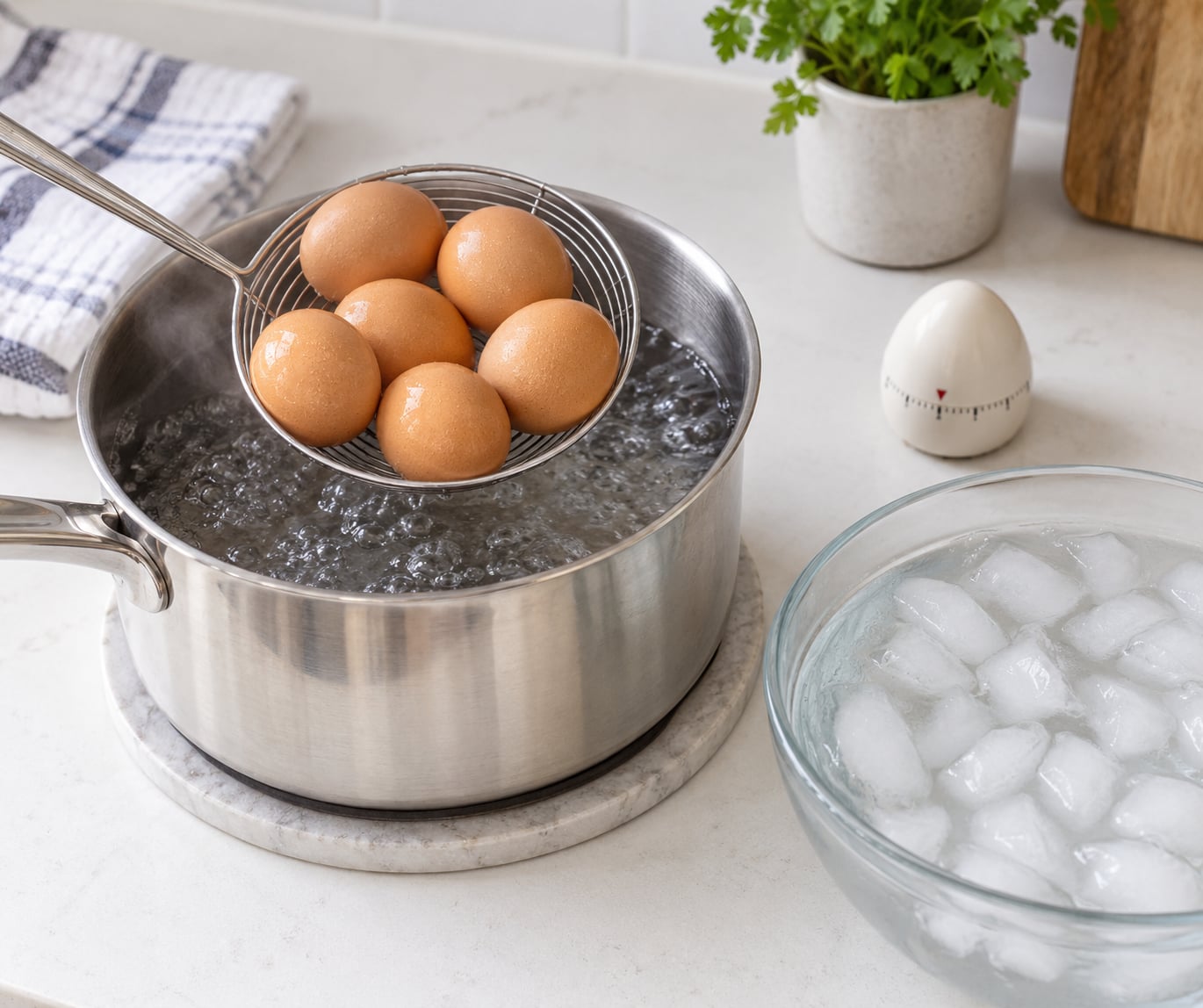
To make soft boiled eggs with runny yolks, lower fridge-cold eggs into already-boiling water and time them at 6 minutes for a jammy center, or 5 minutes for a fully runny one. The whole job takes about 12 minutes, needs one pan and a timer, and is genuinely beginner-friendly.
A soft boiled egg is not a half-cooked accident. The white is fully set and opaque while the yolk stays liquid, jammy or only just thickened. That contrast is what makes the egg worth eating on toast, in a salad or on top of a bowl of noodles.
The reason it trips people up is that timing advice online rarely says which method it assumes. Six minutes from a boiling-water start is a firm, set white. Six minutes from a cold-water start is a different egg entirely. Everything below names the method every time.
Table of Contents
- What You Need
- Step-by-Step: How to Make Soft Boiled Eggs with Runny Yolks
- Common Mistakes
- Frequently Asked Questions
- Do you put eggs in before or after the water boils?
- How long do you boil a soft boiled egg for a runny yolk?
- Is 3 minutes good for a soft boiled egg?
- Are soft boiled eggs with runny yolks safe to eat?
- Why do my soft boiled egg yolks turn chalky and grey?
- How do you keep soft boiled eggs warm until guests are ready?
- Conclusion
What You Need
Keep the tool list short. Everything except the eggs is equipment you already own.
- Large eggs — 4 to 6 per batch, straight from the refrigerator.
- A saucepan — wide enough that the eggs sit in a single layer with room to roll without touching the sides.
- Water — enough to cover the eggs by at least an inch. Deeper water holds its boil longer when you add cold eggs.
- A slotted spoon or spider — far safer than a regular spoon, which lets eggs slip off.
- A timer you can hear across the kitchen — the single most useful tool in this whole method.
- A bowl of ice water — prepared before the eggs go in, not after.
- Optional: an egg cup, a small bowl for shells, and toast for dunking.
If you plan to cook for guests and want everything hot at once, timing the batch matters more than the pot. Our guide to appetizers you can prep ahead covers the same ground for a whole brunch table.
Step-by-Step: How to Make Soft Boiled Eggs with Runny Yolks
1. Bring the eggs to a gentle boil
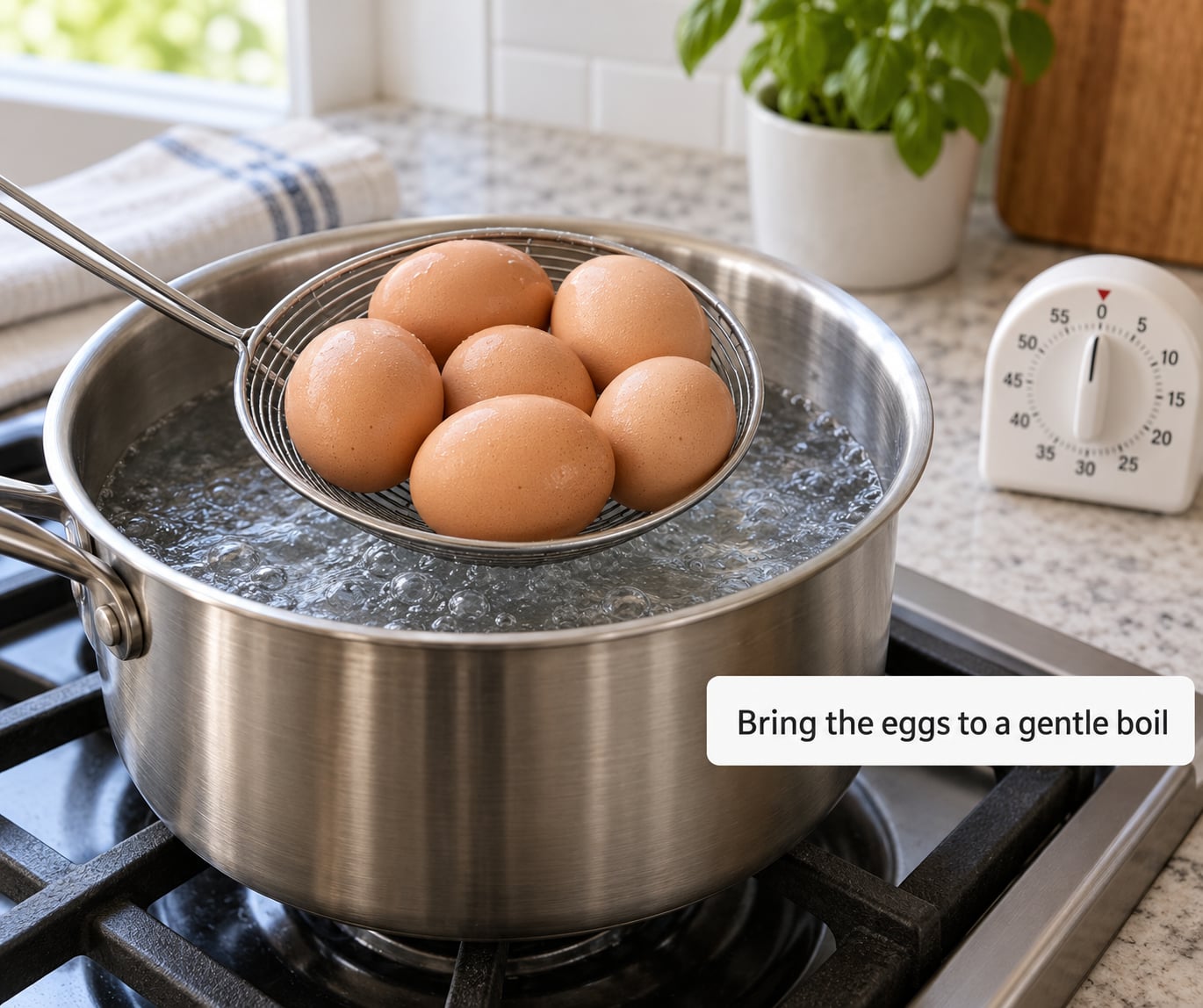
Fill the saucepan with cold water and put it on high heat. Bring it to a full rolling boil, then turn the heat down to medium-low so it settles into a steady simmer with bubbles breaking the surface.
Lower each egg in with the slotted spoon. Never drop one from height — the shell will crack against the bottom of the pot and the white will leak out into the water.
A gentle boil after the initial blast of heat is what keeps the white tender instead of rubbery. A rolling boil for six minutes gives you a firmer, tighter white than most people actually want.
2. Time the eggs for your preferred yolk
For a runny yolk with a fully set white, cook 6 minutes from the moment the eggs go into the water. For a jammy yolk that holds its shape when you cut it, give it 6 minutes 30 seconds to 7 minutes.
The white sets first because its proteins denature at a lower temperature than the yolk. That is why you can have a completely solid white and a liquid center in the same egg — heat is moving inward through the egg in stages, and the outer layers set long before the centre.
| Time from boiling-water start | White | Yolk | Best for |
|---|---|---|---|
| 4 minutes | Set, slightly translucent patches | Mostly raw | Nobody’s breakfast |
| 5 minutes | Set and tender | Fully runny, liquid | Eggs on toast, dipping |
| 6 minutes | Set, tender, not rubbery | Jammy, thick but soft | The reliable default |
| 6:30 minutes | Fully set | Jammy, holds its shape | Salads and grain bowls |
| 7 minutes | Fully set | Barely set, custard-like | Ajitama, ramen eggs |
| 8 minutes and up | Firm, bouncy, browning at edges | Dry, thick, grey-green ring | Hard boiled, not soft |
Two adjustments worth knowing. Jumbo eggs hold more heat and cook about 30 seconds slower, so start them at 6 minutes 30 seconds. And if you are above 5,000 feet, water boils below 212°F, so add a full minute to every row.
3. Cool and drain the eggs
The instant the timer stops, lift the eggs out and drop them into the ice water. That shock does more than cool the egg: it stops the cooking that is still happening inside, which is why carryover cooking would otherwise push a 6-minute egg toward overdone while it sits on the counter.
Leave them in the ice bath for at least 2 minutes. Three is better if you are cooking more than four eggs at once. Then drain them in a colander and pat them dry — wet shells peel worse and the egg gets waterlogged.
Do not soak them in the fridge for an hour before cooking. Home cooks who let eggs come to room temperature report more even yolk setting, but that also means longer in the water, so lower the time by about 30 seconds to compensate.
4. Peel without breaking the yolks
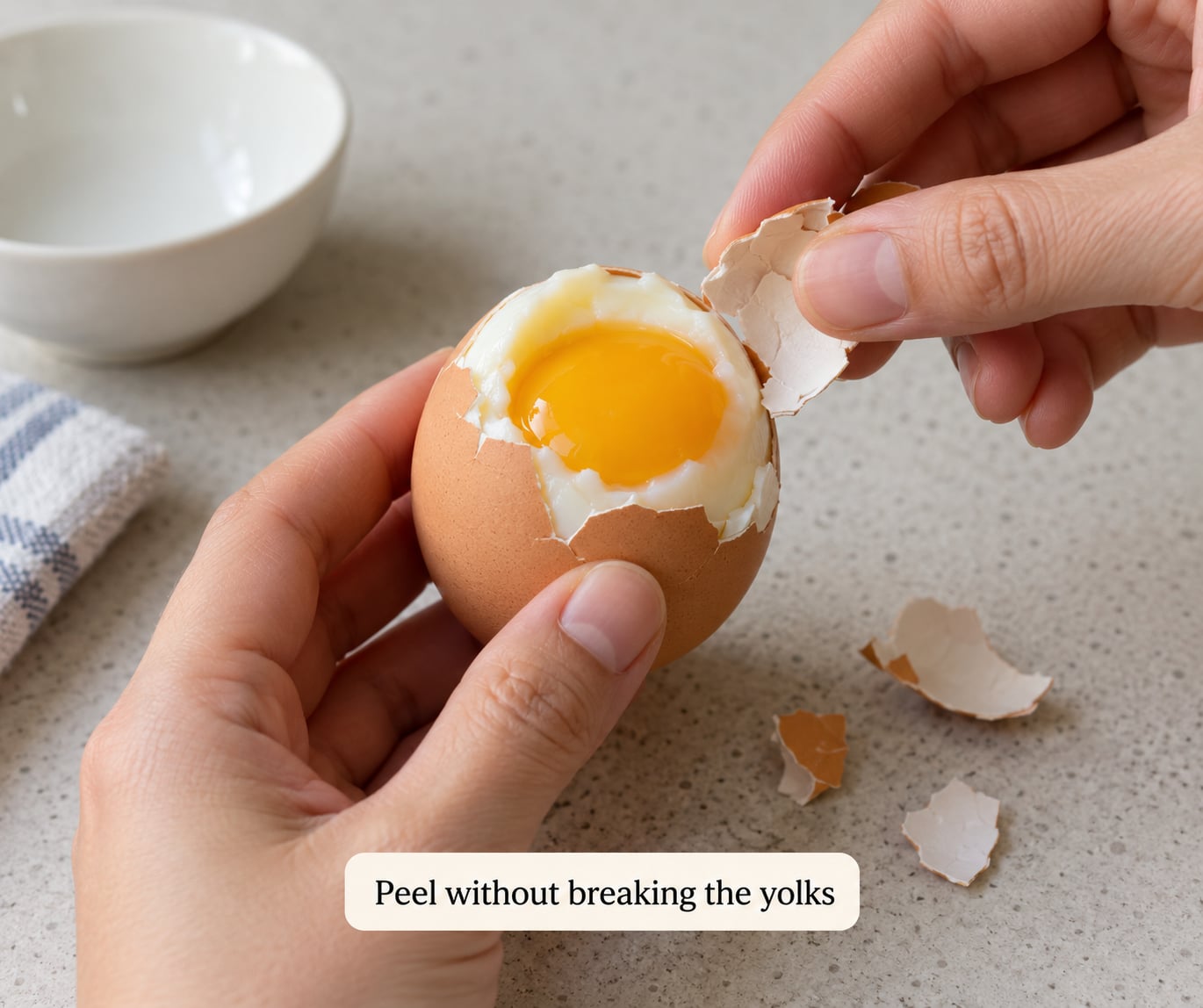
Tap the egg firmly on a counter — you want a crack, not a caving-in shell. Then roll it under your palm so the shell breaks into a fine web all around, and peel from the wide end where the air pocket sits.
Many home cooks find that peeling under cool running water works better than the ice bath alone. If a piece of shell grips the white, slide a spoon under it and lift rather than picking, which is what tears yolks.
Fresh eggs peel worse because their cuticle sticks to the membrane. Eggs that have been refrigerated for a week or two peel noticeably cleaner, which is one reason the cooking method here works best with slightly older eggs from the fridge.
5. Check the yolk and serve
Cut one egg in half before you serve the batch. A 6-minute egg should have a glossy, thick yolk that slumps slowly when you nudge the plate, with no chalky grey ring around the edge. If the centre is still translucent and watery, add 30 seconds to the next batch.
Serve them in egg cups with toast soldiers, or split them over avocado toast, a grain bowl with roast vegetables, a green salad with a sharp vinaigrette, or a bowl of ramen. A spoon of soy sauce and a drizzle of sesame oil turns the same egg into a quick breakfast bowl.
For a weekend brunch where several plates hit the table together, our guide to French toast with brioche pairs well and uses the same timing logic.
Common Mistakes
Almost every disappointing soft boiled egg traces back to one of four things. Here is what goes wrong and what fixes it.
| Symptom | Cause | Fix |
|---|---|---|
| Chalky, grey-green ring around the yolk | Overcooked — you went past the window | Cut 60 to 90 seconds next time and shock harder |
| White still rubbery or bouncy | Rolling boil, or too many eggs crowding the pot | Simmer, and cook no more than 4 to 6 at once |
| Egg cracked in the pot | Dropped from height into hot water | Lower with a slotted spoon, never drop |
| Shell tearing and taking yolk with it | Forcing the shell off, or eggs too fresh | Tap all over, roll, peel under running water |
| Raw or translucent patches in the white | Water dropped too far in temperature with a large batch | Fewer eggs per pot, or start the second pot of water first |
| Yolk firm when you wanted it liquid | Eggs sat in the ice bath too long, then reheated | Ice bath for 2 to 3 minutes, then serve cold |
A few habits make results repeatable. Cook more than six eggs? Do two batches rather than crowding one pot. Weigh the habit of testing one egg from the batch before serving everyone. And keep the heat at a simmer for the whole cook, not just the first thirty seconds.
If your guests are not ready yet, hold the eggs in their shells in a bowl of warm water rather than reheating them. If you need a plan for a whole table of food that has to land together, work backwards from serving time — the same approach we use when brewing tea for guests rather than serving it cold.
One safety note, because runny yolks are the whole point. Cooked eggs kept in their shells last about four days in the refrigerator at 40°F or below. Anyone pregnant, elderly, very young or immunocompromised should eat eggs cooked until the yolk and white are firm, which for USDA purposes means a minimum internal temperature of 160°F. If you are serving soft boiled eggs to a mixed table, set the firmer eggs aside for those guests.
Frequently Asked Questions
Do you put eggs in before or after the water boils?
For the method above, after. Bring the water to a full rolling boil, turn the heat down to a simmer, then lower the eggs in with a slotted spoon and start the timer. This is called the boiling-water start and it is the most consistent way to hit an exact minute. The cold-water start works too, but its cook time includes the heating period, so the numbers are not interchangeable.
How long do you boil a soft boiled egg for a runny yolk?
Five minutes from a boiling-water start gives you a fully runny yolk with a set white. Six minutes is the sweet spot for most people: the yolk is thick and jammy, still soft enough to run over toast. Seven minutes gives a barely-set, custard-like center. Anything past about eight minutes is a hard boiled egg with a dry yolk and a grey-green ring.
Is 3 minutes good for a soft boiled egg?
Not with the boiling-water method. At three minutes the white is still partly translucent and gooey, which is rarely what anyone wants. Three and a half minutes makes sense only for the off-heat steep method, where the pot is covered and left to sit away from the heat. If your white is set and your yolk is firm, you have overshot; if both are soft, you have not.
Are soft boiled eggs with runny yolks safe to eat?
For most healthy adults, yes. The white is fully cooked and the yolk is sealed inside it, so there is no raw egg to worry about. Refrigerated hard cooked eggs in the shell keep about four days at 40°F or below. Pregnant people, children, older adults and anyone immunocompromised should eat eggs cooked until the yolk is firm, or until the whole egg reaches 160°F, and should check with their clinician for individual advice.
Why do my soft boiled egg yolks turn chalky and grey?
That pale ring means the egg cooked past the window you wanted. It forms when the yolk overheats and the iron and sulfur in it react with the surrounding white. You were likely one to two minutes over, your eggs were jumbo sized, or the pot was at a rolling boil. Drop a minute from your time and keep the heat at a gentle simmer.
How do you keep soft boiled eggs warm until guests are ready?
Do not reheat them, which firms the yolk and dulls the texture. Hold them shell-side down in a bowl of water warmed to about 140°F for up to an hour, then drain and serve. If you cannot hold them warm, cook them closer to when you intend to eat and use the wait for toast, coffee and the rest of the meal instead.
Conclusion
Start here: eggs from the fridge, a full rolling boil turned down to a simmer, six minutes on the timer, then straight into ice water for two to three minutes. That sequence gives you a set, tender white and a jammy yolk more often than not.
After your first batch, move in one-minute steps rather than thirty-second guesses. Too firm means drop to 5:30 the next time. Too loose means add 30 seconds. Write the number down next to your egg size, because the number that works for jumbo eggs from the fridge will not be right for smaller eggs left out.
Once the timing is dialed in, the recipe stops being a test and turns into breakfast you can put out for guests without watching the clock.