
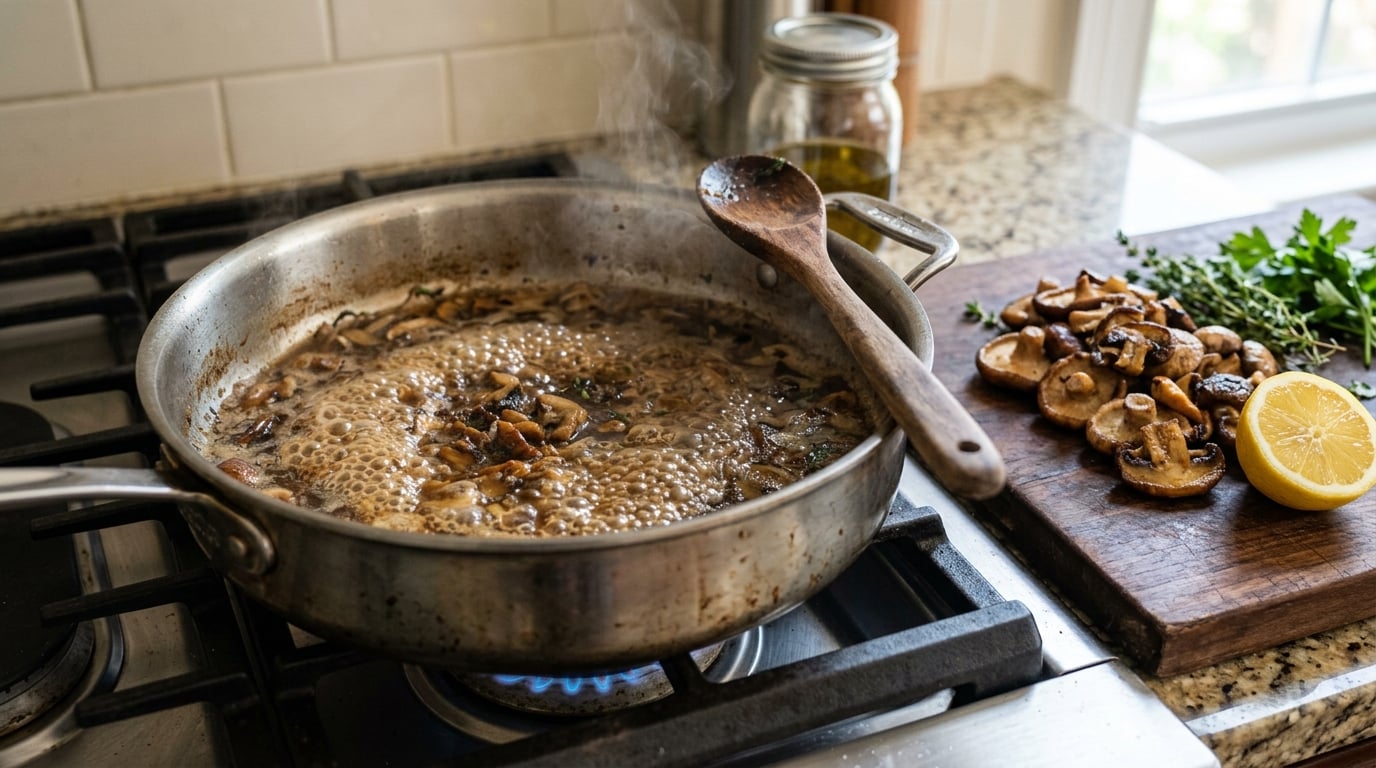
Knowing how to deglaze a pan properly comes down to one move: add a small amount of liquid to a hot pan right after you sear, and the steam and bubbling lift the browned bits (fond) off the metal and turn them into a pan sauce. It is one of the shortest cooking techniques there is, roughly five minutes from pan to plated sauce. The easy part is the scraping; the part that catches people out is choosing the liquid and keeping the pan hot enough to do the work.
Here is the method we use on a busy service, written out step by step so you can follow it at home.
What You Need
You do not need a special pan or a trip to the store for anything unusual. Everything on this list is already in a working kitchen.
- A wide, flat-bottomed pan. A 10 or 12 inch skillet gives the spoon room to work. Deep sauté pans and narrow saucepans trap fond in corners you cannot reach.
- A wooden spoon or a flat silicone spatula. Metal utensils can scratch a seasoned surface. A flat edge gets into the seam where the pan bottom meets the side wall.
- A heatproof measuring cup or small pitcher. You want to add liquid in one controlled pour, not a hesitant trickle.
- One tablespoon of the fat you cooked in. Olive oil, butter or the rendered fat from the meat, left in the pan to coat the fond.
- A quarter to half cup of liquid. Have it measured and within reach before the pan comes off the burner. Chicken or beef broth, dry white wine, the pan drippings, water, or a mix of two.
Step-by-Step: How to Deglaze a Pan Properly
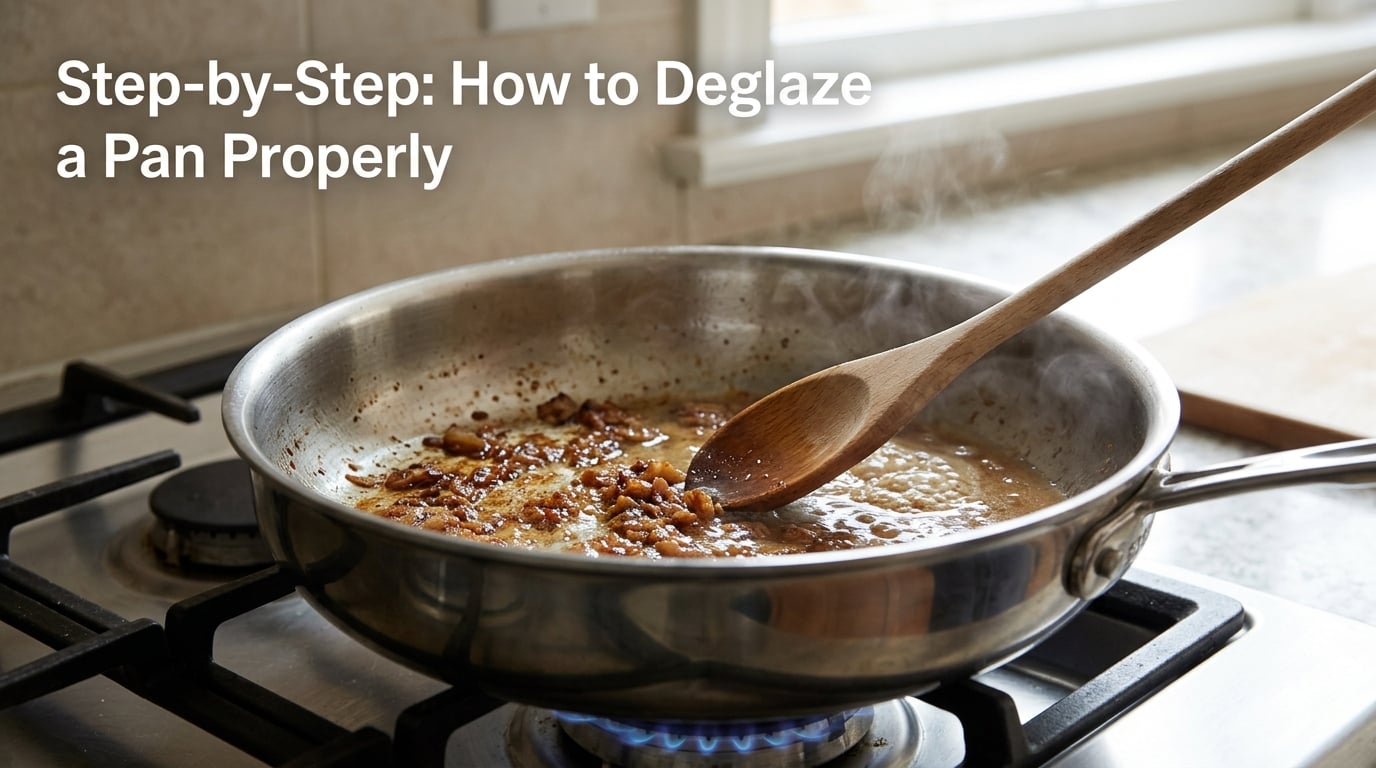
Deglazing is a four-part sequence, and each part has a cue that tells you it worked. Watch the sizzle, the color of the liquid, and the feel of the spoon, and you will not need a timer for the first two stages.
Choose the Right Liquid
Match the liquid to what is in the pan, not to the recipe you are imagining. Broth is the most forgiving choice and the one to reach for when you are unsure: chicken broth lifts fond from pork chops, thighs and shrimp, and beef broth is right for steak and roasts.
Wine adds acidity that balances fat, which is why it shows up in restaurant sauces. Dry white wine suits chicken, fish and pork. Red wine belongs with beef and mushrooms. Beer works on fries and hearty steaks, and citrus juice brightens shellfish.
Stock and wine also combine well, and the combination is usually the best of both: half broth for body, half wine for lift. Whatever you pick, the acidity level changes how the sauce thickens, so a sharper liquid needs a longer reduction.
Water is a legitimate deglazing liquid, not a compromise. It is the gentlest option for cast iron and carbon steel, and it is what you use when you are deglazing a pan to clean it rather than to sauce a dish. Skip milk, which scalds and grabs, and skip plain oil, which will not dissolve anything.
Add Liquid Without Cooling the Pan
Deglazing works because of the temperature difference. Liquid hitting a hot pan flashes to steam, and that agitation is what pries the fond loose. Kill the heat first and you are just making a warm soup in a skillet.
Turn the food out onto a warm plate, keep the burner on medium-high, and pour the liquid down the near side of the pan so it runs along the metal instead of dropping straight onto the center. Half a cup is right for a 12 inch skillet; you want the liquid to come roughly a third of the way up the side.
You are looking for a loud sizzle that settles into a steady simmer within a few seconds. If the sizzle dies completely, the pan was too cool, so give the burner a nudge and wait for it to come back before the next pour.
For safety, stand back and to the side, keep your face out of the steam, and pour with the spoon held between the pan and you. If the pan is screaming hot, let it sit off the burner for fifteen seconds first rather than dropping cold broth into it.
Scrape and Loosen Every Browned Bit
Now work the bottom with the wooden spoon or flat spatula. Push firmly rather than gently, in long strokes from the center out to the edge, and go all the way around the ring where the bottom meets the wall, plus under any rivets or where the food was sitting.
The sign that it is working is color. The liquid will darken as the suspended bits come loose, and the bottom of the pan will look wet and streaky rather than dry and crusted. Give it thirty seconds of steady scraping and most of a healthy fond will be floating in the liquid.
There is one exception: if the fond is black or charred, stop and pour it off. Charred material tastes bitter no matter what you add, and a bitter pan sauce cannot be rescued by reduction. Wipe the pan with a damp towel, and if a stain is left, rub a small amount of tomato paste over it, let it sit for twenty minutes, and then wash.
Leaving some fond behind is fine in one case, and it is deliberate. When you sear a thick piece of beef hard and want a deeper, more caramelized pan sauce, a thin layer of darker fond left in the pan gives more body than a fully stripped one. A thin, even layer, not a crust.
Reduce the Deglazed Liquid Into a Sauce
The last stage of how to deglaze a pan properly is patience, not heat. Bring the liquid to a lazy simmer and let it reduce by half, which takes three to five minutes on a typical burner. Stir or whisk occasionally so the suspended fond stays in motion and does not settle back onto the bottom and re-burn.
Taste at this stage, before you season. The liquid will taste sharper than the finished sauce because it is still watery, and salt added too early can make it read as flat. Season once the reduction is close to done.
You know the sauce is ready when a spoon drawn through it leaves a clean line that stays visible for a second or two before closing. If you want it smooth, pass it through a fine mesh strainer now, pressing the solids, and discard what is caught. If you are happy with a rustic sauce with texture, leave it unstrained.
The step that separates a good sauce from a restaurant one is monter au beurre, the cold butter finish. Take the pan off the heat, whisk in two or three tablespoons of cold butter cut into cubes, and keep the pan moving until the butter melts into the sauce and it turns glossy. It will not break or turn greasy if you added the butter cold and off the heat.
Common Mistakes When Deglazing a Pan
Almost every disappointing pan sauce traces back to one of these.
- Adding cold liquid to a searing-hot pan. The thermal shock can warp a thin pan, and the sudden steam spatters grease across the burner. Fix: pull the pan off the heat for a few seconds, or use broth you have already warmed. Tip: hot liquid deglazes just as well and is far calmer.
- Pouring in too little. If the liquid only dampens the fond, nothing suspends and the sauce stays thin and flat. Fix: use at least half a cup for a 12 inch pan, enough to come a third of the way up the side. Tip: you can always reduce more, but you cannot add flavor back once the fond has burned.
- Not scraping. This is the most common failure, and it is the whole point of the technique. Fix: scrape the entire bottom with a wooden spoon or flat spatula until the liquid turns cloudy and dark. Tip: if the fond lifts in patches, keep going, the rest follows.
- Getting splashed. Pouring from height into a hot pan sends liquid over the rim. Fix: pour down the side of the pan, hold the handle with a dry towel, and keep the spoon between you and the steam. Tip: lower heat to medium for the pour, then bring it back up once the sizzle settles.
- Reducing on a hard boil. A rolling boil drives off liquid too fast, catches the fond, and burns it into the sauce. Fix: hold a lazy simmer with a bubble every second or two, and stir every thirty seconds. Tip: a wider pan reduces faster and with less risk of scorching.
- Deglazing burnt residue. Blackened fond tastes bitter, and the bitterness intensifies as the sauce reduces. Fix: pour it off, wipe the pan, and restart with fresh oil and a gentler sear. Tip: scrape a little tomato paste onto a stubborn stain and leave it twenty minutes before washing.
- Forcing a nonstick pan. Nonstick does not build fond, so there is nothing to deglaze and the surface has no reason to survive a wooden spoon. Fix: deglaze stainless steel, carbon steel, cast iron or enameled cookware instead. Tip: on cast iron and carbon steel, keep acidic liquids brief and dry the pan on the burner right after.
One habit worth building: deglaze at the end of every sear, even when you have no plan for the sauce. It takes two minutes, it keeps burnt-on residue from forming, and the liquid is a bonus you can strain into a stock or a gravy for a pot roast.
Frequently Asked Questions
What liquid should I use to deglaze a pan?
Match the liquid to the protein. Beef or chicken broth for steak, pork chops and roasts; dry white wine for chicken, fish and pork; red wine for beef and mushrooms; beer for fries and hearty steaks; citrus juice for shrimp and scallops. Water works too and is the safest choice for cast iron and carbon steel. Use a quarter to half cup for a 12 inch skillet.
Should I remove the fond before adding liquid?
No. The fond is the point. Those browned bits are Maillard reaction compounds, the most concentrated flavor in the dish, and the liquid is what dissolves them off the metal. The only time you remove it is when it is charred or black, which tastes bitter, or when the pan is being cleaned rather than turned into a sauce.
Why is my deglazed sauce still watery?
Usually the liquid went in too late, in too small an amount, or the heat dropped so far that nothing lifted. Pour in a full half cup of hot broth, keep the burner on medium-high, and scrape the bottom with a wooden spoon until the bits suspend. Then simmer three to five minutes to reduce by half. A finished sauce coats the back of a spoon instead of running off it.
Can I deglaze a pan with wine?
Yes, and it is the classic choice for pork, chicken, fish and mushrooms. Dry white wine keeps a sauce light and bright; red wine gives beef and mushroom dishes a deeper, tannic body. Let the wine reduce almost completely before tasting, because it tastes sharp and unbalanced until the alcohol cooks off. On cast iron or carbon steel, keep the acidic contact brief.
How do I deglaze a pan with stuck-on bits?
Add a splash of hot liquid and let it sit about thirty seconds so it can soak underneath, then scrape firmly with a wooden spoon or flat spatula. A few rounds of soaking and scraping loosen most of it. What stays after that is carbonised rather than browned, and no amount of liquid will make it taste good. Wipe the pan and start again.
When should I strain a sauce after deglazing?
Strain when you want a smooth, restaurant-style sauce and the fond you lifted included seeds or small particles. Pass the reduced liquid through a fine mesh strainer and press on the solids, or leave it unstrained for a rustic sauce where texture is welcome. Strain before mounting with butter, since the emulsion turns glossiest on a clean base.
Conclusion
If you remember one thing about how to deglaze a pan properly, make it this: keep the pan hot, add a liquid that suits the dish, and scrape the bottom until the fond lifts and the liquid darkens. Reduce it for three to five minutes, taste, season, and finish with cold butter off the heat. Do that once and the browned bits stop being a mess to scrub and start being the best sauce in the room.