
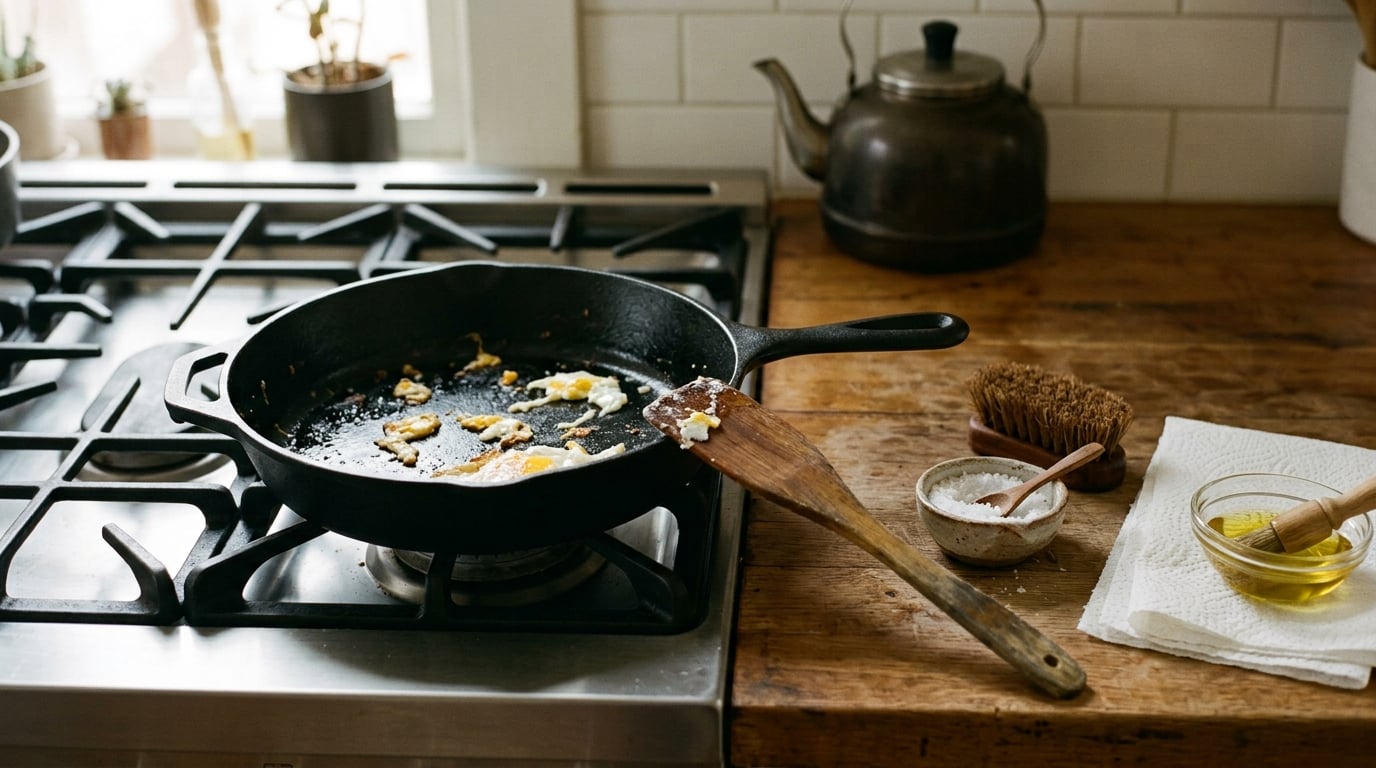
How to clean a cast iron skillet after cooking eggs comes down to heat and water, not scrubbing. Let the skillet cool to warm, scrape away the loose white, add a splash of water and let it simmer for a minute or two, and the cooked protein lifts off with a wooden spatula or a stiff brush. Rinse, dry it completely, and wipe on a thin film of oil.
That is the whole job, and it takes under five minutes. Egg is the one food that makes cast iron owners reach for steel wool, so it is worth knowing why the egg bonds harder than most leftovers and what that actually does to the seasoning underneath.
Egg white is nearly pure protein. Cook it past about 145°F / 63°C and the proteins unfold, link to each other, and cross-link into a polymer that grips the polymerized oil layer of the seasoning. Other foods sit on top of that layer. Egg can end up chemically welded to it, which is why a fried egg sometimes feels like it grew there rather than landed there.
The damage from leaving it is cumulative. A few stray patches turn into carbon, carbon works loose in flakes, and those flakes land on the next egg as black spots. Enough of that and the pan needs a re-season rather than a wash. Five minutes of cleanup after each breakfast is cheaper than an hour in the oven with the pan upside down.
What You Need
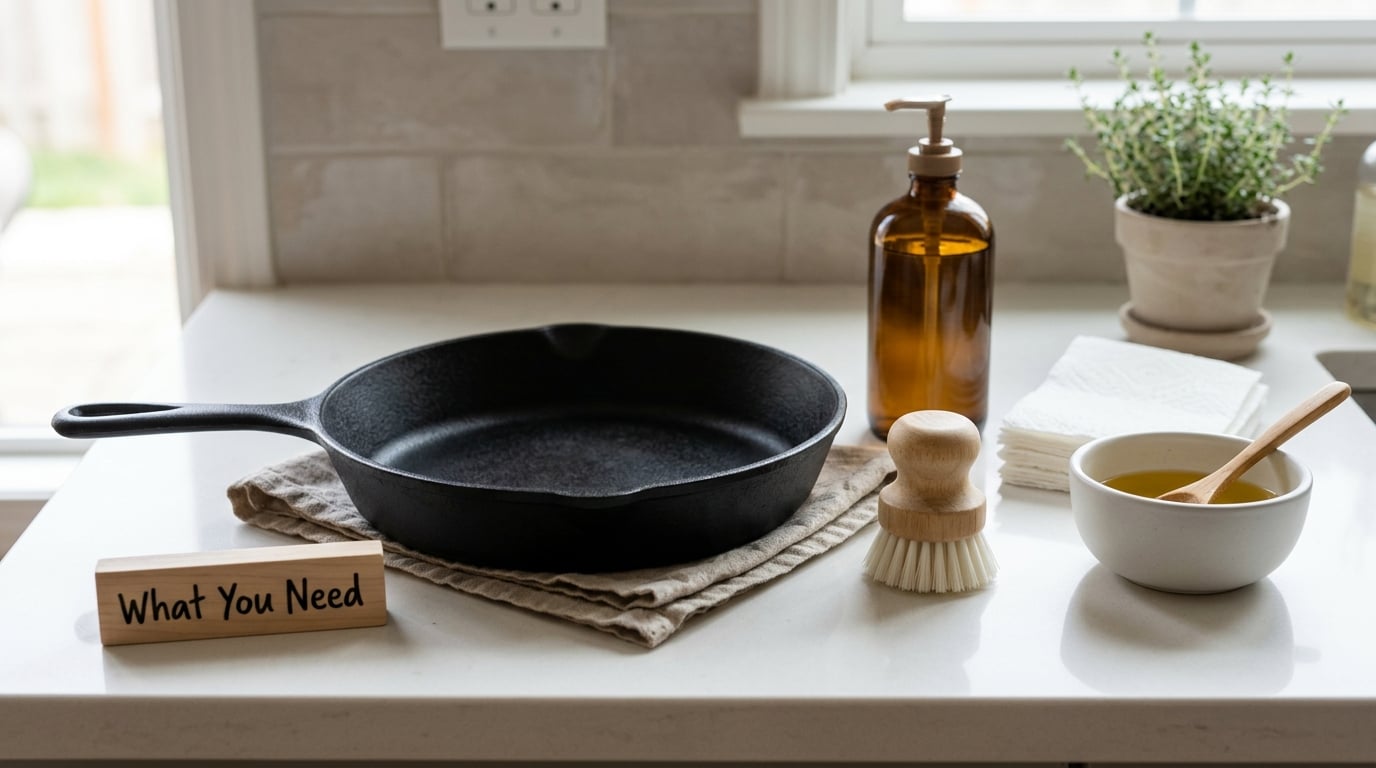
Everything on this list is either already in your kitchen or cheap at the grocery store. The skillet is the only item you cannot substitute, and even that is flexible, since any bare cast iron pan takes the same method.
- The skillet you cooked the eggs in
- Hot water, plus a stove burner or a shallow pan for simmering
- A wooden spatula, plastic scraper, or flat metal scraper
- A stiff nylon brush, a chain-mail scrubber, or a bamboo brush
- Coarse kosher salt for the last-resort scrub
- Paper towels, plus a clean cloth or napkin for wiping
- A neutral cooking oil, such as grapeseed, canola, or Crisco shortening
- White vinegar, for the rare soak that soap and salt will not shift
One thing you do not need is steel wool. It strips seasoning down to bare metal in a single pass, and eggs never demand that kind of force. Chain-mail scrubbers are a different tool entirely, far lighter on the surface, and are the closest thing to a correct aggressive option.
Step-by-Step
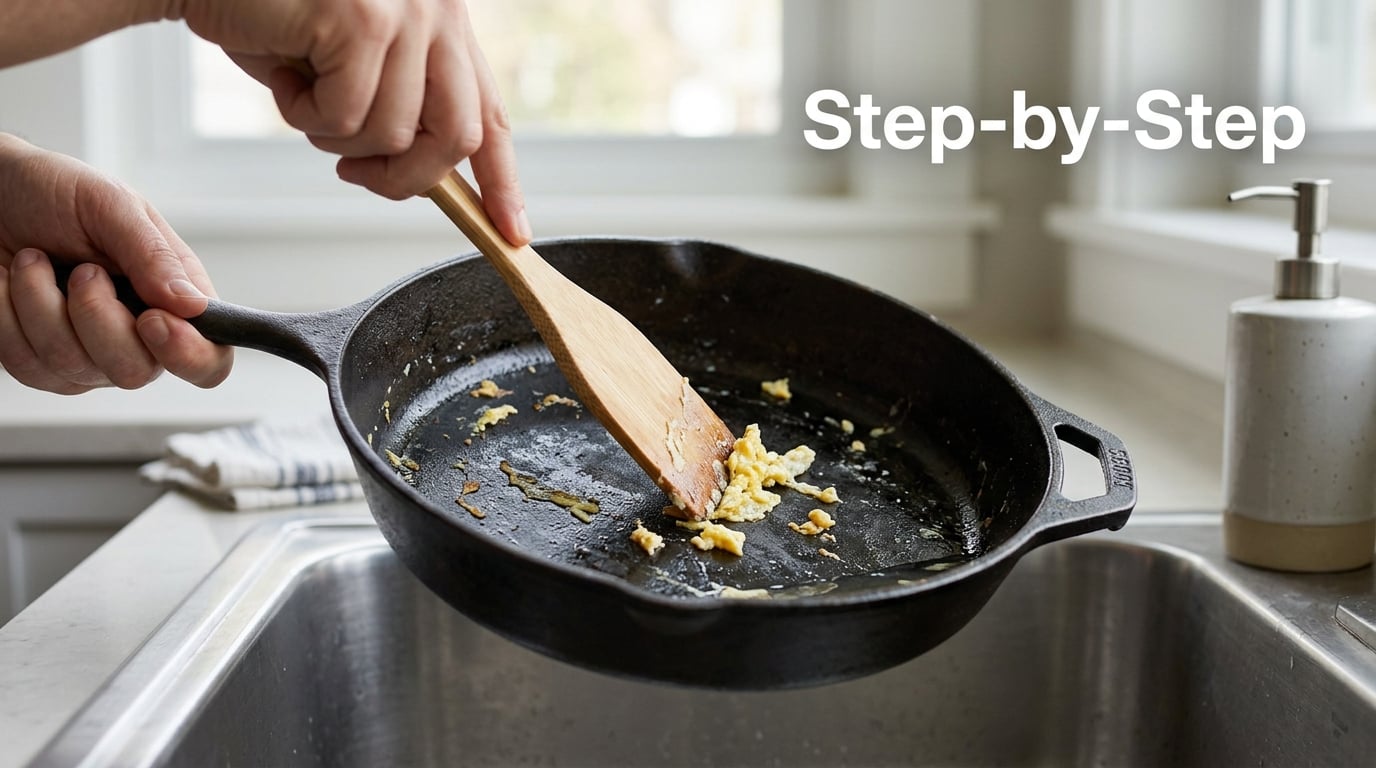
This is the short version that works nine times out of ten. The detail under each step below covers the one case that does not come clean on the first pass.
- Let the skillet cool to warm, not hot.
- Scrape the loose egg into the trash with a wooden spatula or scraper.
- Add a half inch of hot water and bring it to a low simmer for one to two minutes.
- Scrub the softened egg with a stiff brush, chain-mail scrubber, or coarse salt.
- Rinse with warm water. A small drop of dish soap is safe.
- Dry it fully, then rub a nearly invisible film of oil over the surface.
How to Remove Stuck Egg Bits
Start by letting the pan cool down to something you can comfortably hold with a bare hand. It should feel warm, not hot. Repeated advice in cooking forums is to skip the oven mitts entirely at this stage, because a skillet hot enough to need protection is also hot enough to take damage from cold water or a hard scrub.
While it cools, push a wooden spatula or plastic scraper under the edges of the egg. You are not cutting through the seasoning, just getting under the film so it lifts instead of tears. Anything that comes up loose at this stage is 80% of the job, and the same move later after simmering loosens nearly the rest.
Then add about a half inch of water and put the pan back on the burner. Bring it to a low simmer and leave it there for one to two minutes. The heat and water rehydrate the cooked protein and it lets go of the surface. When you drag the spatula across the bottom, the egg should move in soft sheets instead of tear. That is your cue to drain, scrub with a stiff brush or chain-mail scrubber, and rinse.
If the egg is truly welded on, do nothing at all for a few hours. Owners on r/castiron describe pulling the pan off the heat, leaving the egg in place, and coming back later when the cold pan and the cold egg separate on their own. It costs you nothing but time and works more often than it should.
The last two options are escalation, not routine. Coarse kosher salt dragged around the pan with a cloth or your fingertips acts as a gentle abrasive and lifts burnt-on protein without touching the seasoning below; a commenter on r/selfreliance credits salt with keeping their pan clean enough to skip oiling entirely. A 50/50 vinegar and water soak for an hour softens carbon that heat will not move, and the pan gets washed, dried and re-oiled afterward.
A method-versus-effort comparison helps you pick the right one for the mess in front of you.
| Method | Time | Effort | Best for |
|---|---|---|---|
| Hot water wipe while warm | 60 seconds | Very low | Eggs that did not really stick |
| Simmer, then scrub | 3 to 5 minutes | Low | Your default method, almost every time |
| Cool and peel | Several hours, no work | None | A fused egg you are not in a hurry for |
| Kosher salt scrub | 2 minutes | Medium | Burnt-on patches after simmering fails |
| Vinegar soak | 1 hour | Low, mostly waiting | Old carbon on a rarely used pan |
| Oven re-season | 45 to 60 minutes | High | Seasoning gone grey, patchy or sticky |
How to Wash and Dry the Skillet
Here is the part that causes more panic than it should. Dish soap is safe on modern cast iron. The seasoning is a cured oil film, and today’s dish soaps are far too mild to strip it. The old prohibition came from lye-heavy detergents, and a long-running forum discussion that still ranks well in search made the case plainly: wash with soap, dry the pan, heat it back up, and rub on a little oil.
Use warm rather than hot water, and a non-abrasive sponge or brush. Skip the dishwasher entirely, since the long soak and the harsh detergent strip seasoning faster than anything you will do by hand.
Drying is where pans actually get ruined. Water sitting on bare or thinned iron makes rust in a single night, and rust pits the surface permanently. Wipe the pan dry with a paper towel, then set it on the burner over low heat for a minute or two until every drop has evaporated. In a pinch, a few minutes in an oven at around 250°F / 120°C does the same job. A hot pan that feels dry rather than merely warm is done.
How to Re-Oil and Store the Skillet
While the pan is still warm, drop a small amount of oil onto a paper towel and wipe it over the entire cooking surface, inside and out, until nothing looks wet. The goal is a film you cannot see, not a coat you can. Grapeseed and canola oil are easy, Crisco shortening is forgiving for beginners, and bacon grease works if you like the flavor and do not mind the smell in later cooking.
Wipe the surface again with a dry paper towel to remove the excess, then stand the pan on its handle or a wooden trivet while it cools. Many owners skip this step on pans they use daily, and a pan cooked every morning usually does not need it, since the next breakfast re-oils it anyway.
For storage, keep the skillet upright in a cabinet, in a paper bag, or under a breathable cover. Air that circulates is what keeps it dry. Avoid sealing a damp pan in a plastic tote, and avoid stacking a damp pan inside another one, because trapped moisture is the exact condition rust needs.
Common Mistakes
Almost every ruined-looking cast iron pan I have seen traces back to one of five habits, and none of them are the pan’s fault.
Leaving it wet overnight. Water and iron make rust, and rust pits the surface so seasoning can never sit flat again. The fix is simple and non-negotiable: dry on the burner until the pan is hot and dry, every single time, even when you are tired.
Pouring cold water into a hot skillet. The sudden temperature change can warp the cooking surface, and a warped pan sits on the burner unevenly and cooks unevenly for years. The fix is the same rule as the start of the method: cool to warm before anything else.
Reaching for steel wool. It works too well, which is the problem. You end up at bare metal with no seasoning and no non-stick surface at all. Use a chain-mail scrubber when you want pressure, and save chemical strippers for a pan you have genuinely decided to rebuild from scratch.
Stacking oil in the pan. A heavy coat of oil that never gets heat-cured turns gummy and then carbonizes. The fix is a nearly invisible film and a paper-towel wipe-back, every time.
Storing the skillet sealed away while damp. Same root cause as the first mistake. The fix is a dry pan and airflow, which is why so many owners simply stand them in a lower cupboard.
Soap is not on this list, and neither is a mild dish sponge. What genuinely hurts cast iron is steel wool, the dishwasher, bleach and other harsh abrasives, a thermal-shocked pan, and any amount of standing water. New owners in cooking forums are often told their pan is ruined after a single soapy wash, and it almost never is. The consensus across cast iron communities is blunter still: your skillet is not ruined, and one clean does not undo years of seasoning.
What the black residue on your eggs actually is
Black specks on the whites are the most alarming thing that happens to an egg, and there are only three causes worth knowing about.
Shedding seasoning. Thin, matte-black flakes that lift with a fingernail and smear when you wipe them. This means the seasoning layer has dried past a stable state, usually after repeated wet-dry cycles or a pan that was never re-oiled. The fix is a hot pan, a thin oil coat, and an oven re-season if the flakes keep coming back.
Burnt carbon. Grey-black, hard, and fused to the surface. It is burnt egg protein, not seasoning, and it means the pan was left over high heat or sat dirty. The fix is the simmer-and-scrub method or a salt scrub.
Heavy factory coating. An outlet-store pan can arrive with a thick, uneven, slightly shiny seasoning layer that sheds for months of use. A long-running r/castiron thread documents an owner whose eggs picked up black spots through more than 20 cookings, with the eggs themselves never actually sticking. That combination, residue transfer with no adhesion, points at the pan rather than the technique. The fix is a full strip and re-season, and if shedding continues after that, the pan is the problem.
White specks or pits on the surface are a different story again: that is usually minor surface rust, and a thorough dry, a scrub and a fresh coat of oil usually brings it back.
Why eggs stick, and how to stop it
Cleanup is much easier when the egg never sets in the first place. Egg proteins start bonding at about 145°F / 63°C, and a pan that is only warm gives them all the time in the world to grab hold.
- Preheat the skillet on medium-low for several full minutes, until a drop of water skitters rather than sits.
- Add fat before the egg, and use plenty of it. Butter, bacon grease and neutral oil all work, and a sticky pan is worth more oil than a bare one.
- Keep the heat moderate. High heat is what turns a soft egg into welded carbon in seconds.
- Do not move the egg until the white has set and the edges have lifted on their own.
- For fried eggs, let the pan come to temperature again between batches rather than reusing a lukewarm pan.
Follow most of that and the difference at cleanup time is night and day. The skillet still needs a wipe-down and a thin coat of oil, but the simmer step rarely comes into play.
Frequently Asked Questions
Can I use dish soap on a cast iron skillet?
Yes, on a well-seasoned pan. Seasoning is a cured oil film, and modern dish soap is far too mild to strip it. The old ban came from lye-heavy detergents that predate today’s formulas. Scrub, rinse, and dry the skillet immediately afterward. The dishwasher is the real risk, not the sink.
What is the black residue on my eggs after cooking them?
Three causes, and they look different. Shedding seasoning is thin, flaky black bits that lift under a fingernail. Burnt carbon is grey-black, hard, and fused to the surface. A heavy factory coating on some outlet-store pans shows as shiny patches that shed for months. If flakes return after a re-season, suspect the pan rather than your technique.
How do I get egg residue off cast iron?
To clean a cast iron skillet after cooking eggs, cool it to warm, scrape the loose pieces away, add water and simmer one to two minutes, then scrub with a stiff brush or coarse salt. Rinse with a little dish soap, dry completely on the burner, and wipe on a nearly invisible film of oil before storing.
How do I keep eggs from sticking to my cast iron skillet?
Preheat the pan on medium-low for several minutes until a drop of water skitters, then add plenty of fat before the egg. Butter, bacon grease, and neutral oils all work. Keep the heat moderate, and do not touch the egg until the white sets and the edges lift on their own. High heat is what welds egg to seasoning.
What should you not clean cast iron with?
Steel wool, the dishwasher, bleach, and harsh scouring powders all strip seasoning quickly. Never leave a wet pan sitting overnight, either, since standing water rusts bare iron. Mild dish soap, a non-abrasive sponge, hot water, coarse salt, and a chain-mail scrubber are all safe and more than enough for egg residue.
What ruins a cast iron skillet?
Three things, mostly. Standing water causes rust that pits the surface permanently. Thermal shock from cold water on a hot pan can warp the cooking surface. And harsh abrasives strip the seasoning, leaving bare metal with no non-stick layer at all. Regular gentle cleaning, full drying, and a thin coat of oil prevents all three.
Conclusion
Right after the eggs, your first move is patience: let the skillet cool to warm, scrape the loose pieces off, and loosen what remains with a minute or two of simmering water. Scrub it gently, dry it on the burner until it is truly dry, and leave a thin coat of oil before it goes in the cabinet. That sequence, done after every egg, is what keeps the seasoning intact and keeps the black flakes out of your breakfast.