
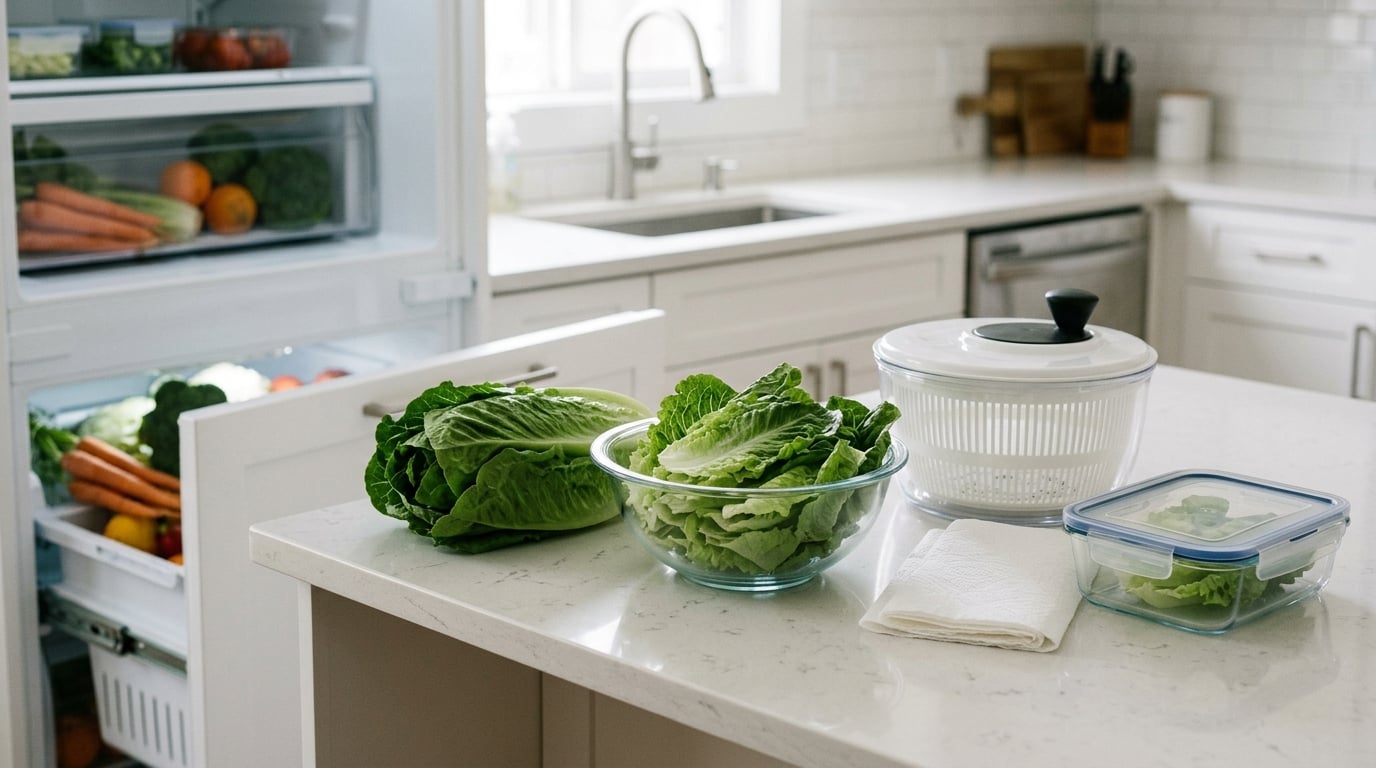
To keep lettuce fresh for two weeks, buy whole heads, keep them unwashed and bone-dry, and store them in a paper-towel-lined airtight container in the crisper drawer at 40F or below. Swap the towel every two to three days. Two weeks is realistic for a whole, dry head; chopped or pre-washed greens will not make it, no matter what you do.
That last part is the one most articles skip, so I will say it plainly up front. If you want a full fortnight of usable salad, the prep on day 0 does nearly all the work. Wet leaves in a sealed box go from crisp to slimy in about three days, and no container fixes that.
Below is the whole method, plus a day-by-day schedule so you know when to open the box, when to change the towel, and when to accept that the outer leaves are done even if the heart is fine.
What You Need
You do not need a single gadget. Everything below is either already in your kitchen or costs a couple of dollars.
- The right lettuce. Iceberg and romaine hearts are the most forgiving and last the longest. Butterhead and spring mix are delicate and treat as a short-life item. Arugula is the fastest mover of the bunch.
- A rigid airtight container or a large zip bag. A rigid tub protects leaves from bruising; a bag is lighter on space. Either works as long as you can reduce the opening to a small gap.
- Clean paper towels. Flat, dry, unscented. You will use more than one sheet over two weeks.
- A salad spinner, or a clean dish towel. The spinner is faster. The towel method works nearly as well: lay the washed greens in a single layer on a dry towel, roll it up, and press gently with your hands.
- A fridge thermometer. Home fridges commonly sit at 45F or higher, and that alone can cut a head’s life short by several days.
- A marker. Label the container with the date. You will not remember when you prepped it.
How to Keep Lettuce Fresh for Two Weeks: Step by Step
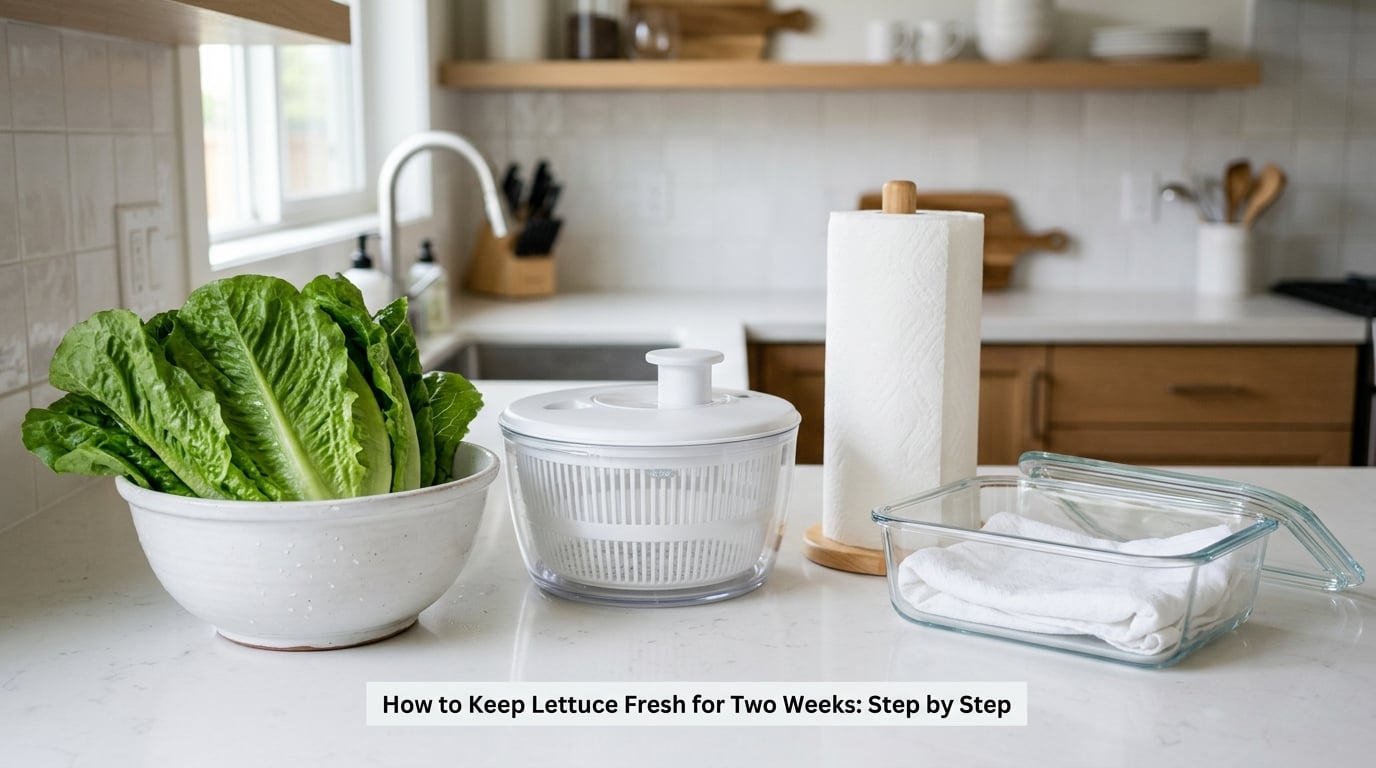
1. Wash and dry. Separate the leaves, discard anything bruised, torn or already slimy, and rinse the rest in cold water. Then dry them completely. Every drop you leave behind is a week of shelf life you just threw away.
2. Line with paper towel. Lay a dry sheet flat in the bottom of the container. It catches condensation before it reaches the leaves. Add a second sheet on top of the greens if you want the extra wicking.
3. Layer the greens. Do not pack them in tight. Leave air between the leaves and a finger of space at the top; compressed leaves bruise and the bruised spots turn brown first.
4. Manage airflow. Close the lid, but leave the seal slightly loose or keep a clip on the bag so only a small opening lets air move. Lettuce needs humidity around it and clean air through it. A hermetic seal traps the moisture it is trying to lose, and a wide-open tub dries the outer leaves to paper.
5. Refrigerate. Put the container in the crisper drawer, not the door. The door is the warmest part of the fridge and the biggest reason lettuce wilts while it sits.
Check the paper towel every few days and replace it the moment it feels damp. That single habit does more for a two-week timeline than any container you can buy.
The day 0 to day 14 schedule
- Day 0: Prep, dry, line, load, label, refrigerate. The leaves should look and feel exactly as they did in the store.
- Day 2: Quick open. Wipe condensation off the lid, pat the towel dry, put it back.
- Day 3 to 4: Replace the paper towel with a fresh sheet. Pull off any leaf that has gone limp or spotted.
- Day 7: Full inspection. Separate the leaves, and remove anything that feels soft at the rib or shows brown edges. Rinse the good ones again and spin them dry before they go back.
- Day 10: Decision point. Use the sound leaves now rather than gambling on day 14. If everything still looks and smells clean and crisp, the head earned the full two weeks.
- Day 14: If the leaves are still firm, bright and free of slime, they are good. Beyond this, most heads are past their best.
How to Keep Romaine and Other Leaf Lettuce Fresh for Two Weeks
Romaine stores best with the leaves kept whole and the heavy outer ones removed. A romaine heart, wrapped loosely in a dry paper towel and set in a bag or tub, is the most reliable two-week lettuce there is.
Loose-leaf lettuce is thinner and loses moisture faster, so double the towel and keep the container in the back of the crisper where the air is coldest. Do not separate butterhead or soft-leaf lettuces from their base. Hold the head upside down over the sink, shake out the trapped water once, and pat the core area dry before storing.
Spring mix and arugula are a different job. Treat them as a five-day ingredient, store them in a bag with a dry towel, and buy smaller amounts more often. Forcing a two-week timeline on baby greens is how you end up eating a slimy salad.
How to Keep Cut Lettuce Fresh
Chopped and shredded lettuce breaks more cells, and those broken edges brown and dry out faster, so cut greens realistically last five to seven days, not fourteen.
Use a clean airtight container, get the water off before the greens go in, and drape a clean towel over the opening. Swap that towel every two days. Store the container upright, high in the fridge rather than buried in the crisper, and keep it away from raw meat in the fridge.
Cutting the head at all shortens its life. If you want the longest possible window, keep the head whole and cut only the leaves you need that night. That habit alone has saved me more lettuce than any storage trick.
How to Tell When Lettuce Has Spoiled
Slimy leaves, a sour or musty smell, translucent wet edges and mushy ribs mean the head is done. Break a rib: if it snaps clean, the leaf is fine. If it bends and feels soft, throw it out. Browning on dry outer edges is cosmetic and can be cut away. Slippery or slimy is not cosmetic, and neither is any odor at all.
Small rusty brown speckles usually mean the leaf sat against a wet surface. Trim a centimeter off the base and the rest is usually fine. Once the whole head smells sour, discard all of it rather than picking through.
| Prep state | Container | Expected freshness |
|---|---|---|
| Whole head, cored, unwashed | Paper-towel-lined tub, crisper drawer | 10 to 21 days |
| Whole head in original wrap | Store packaging, crisper drawer | 10 to 14 days |
| Separated leaves, washed and dry | Bag or tub, dry towel | 7 to 12 days |
| Cut wedges | Airtight container, towel over opening | 5 to 7 days |
| Shredded or pre-washed bagged | Clamshell or bag, used quickly | 3 to 5 days |
Common Mistakes
Washing ahead of time. This is the big one. Water on the leaves accelerates decay, and a head stored dry routinely outlasts a washed one. If you must wash in advance, dry it properly, keep it in a separate tub from any condensation, and use it within a week.
Leaving it in the plastic bag from the store. Those bags are designed for transport, not for two weeks. The film traps condensation, and the atmosphere inside goes humid enough to rot the leaves.
Crowding the crisper. Piled heads bruise each other. A cramped drawer is the most common home fridge problem and it shows up as brown crushed ribs on the outside of the head.
Reusing a damp towel. A wet towel is worse than no towel because it presses moisture directly onto the leaves. Dry sheets only, and swap them every two to three days.
Storing it in the door. The temperature swings every time the door opens, and wilted leaves never recover from that.
A few other things worth knowing. Aluminum foil is a real option for a whole head: wrap it loosely, refrigerate it, and it beats an open tub. The container-upside-down trick that circulates on social works for a day or two of extra wicking, not for a full fortnight, so treat it as a bonus rather than the method. A home fridge thermometer matters more than any of this, because a fridge sitting at 45F will not deliver two weeks at any storage method. And if you run a kitchen with a steady supply of greens, the cold chain is the whole trick: buy direct from a grower if you can, chill the delivery immediately, and keep the trip from box to fridge short.
Frequently Asked Questions
Can lettuce last 2 weeks in the fridge?
Yes, for a whole head stored dry and unwashed in a paper-towel-lined container at 40F or below. Swap the towel every two to three days. Chopped, shredded and pre-washed bagged greens will not reach two weeks; those last three to seven days even when stored well.
How do restaurants keep their lettuce so fresh?
Commercial kitchens control the whole cold chain. Product arrives chilled, gets washed in cold water, and goes through a high-speed spin dryer rather than a hand towel. It is cut and stored in perforated pans kept under refrigeration, and pans are never overfilled. The home equivalents are cold water, a very thorough spin, and loose packing.
Can putting lettuce in a Ziploc bag keep it fresh?
A zip bag works, provided you add a dry paper towel and leave the opening slightly loose. Sealing it airtight traps condensation inside the bag, which is what turns leaves slimy. For two weeks, a rigid container protects the leaves better because a bag shifts around and bruises them.
Should I wash lettuce before storing it?
No. Store it unwashed and dry, then wash only the leaves you are about to use. Surface water left on the leaves speeds up breakdown dramatically. If you prefer to wash ahead, dry the greens thoroughly and store them in a separate container, and plan to use them within a week.
How can I make wilted lettuce usable again?
Fill a bowl with cold water and a handful of ice cubes, submerge the leaves for 10 to 15 minutes, then dry them completely before storing again. Most limp-but-not-brown leaves crisp back up. Skip this if the leaves are slimy, soft at the rib, or smell sour, because those are spoilage rather than wilting.
Is 2 week old lettuce safe to eat?
Age alone does not make lettuce unsafe. What matters is condition. At day 14, lettuce that is firm, brightly colored, dry to the touch and free of odor or slime is fine to eat. Any sliminess, sour smell or mushy rib means you should discard it regardless of how recently you bought it.
Conclusion
Start at the sink, not the fridge. Pull off the damaged leaves, wash the rest in cold water, and get them properly dry with a salad spinner or a pressed towel.
Line the container with a fresh paper towel, layer the leaves loosely, leave the seal slightly open, and refrigerate in the crisper at 40F or below. Then change the towel every two to three days and check again on day 7. Do that on day 0 and two weeks stops being a marketing claim.