
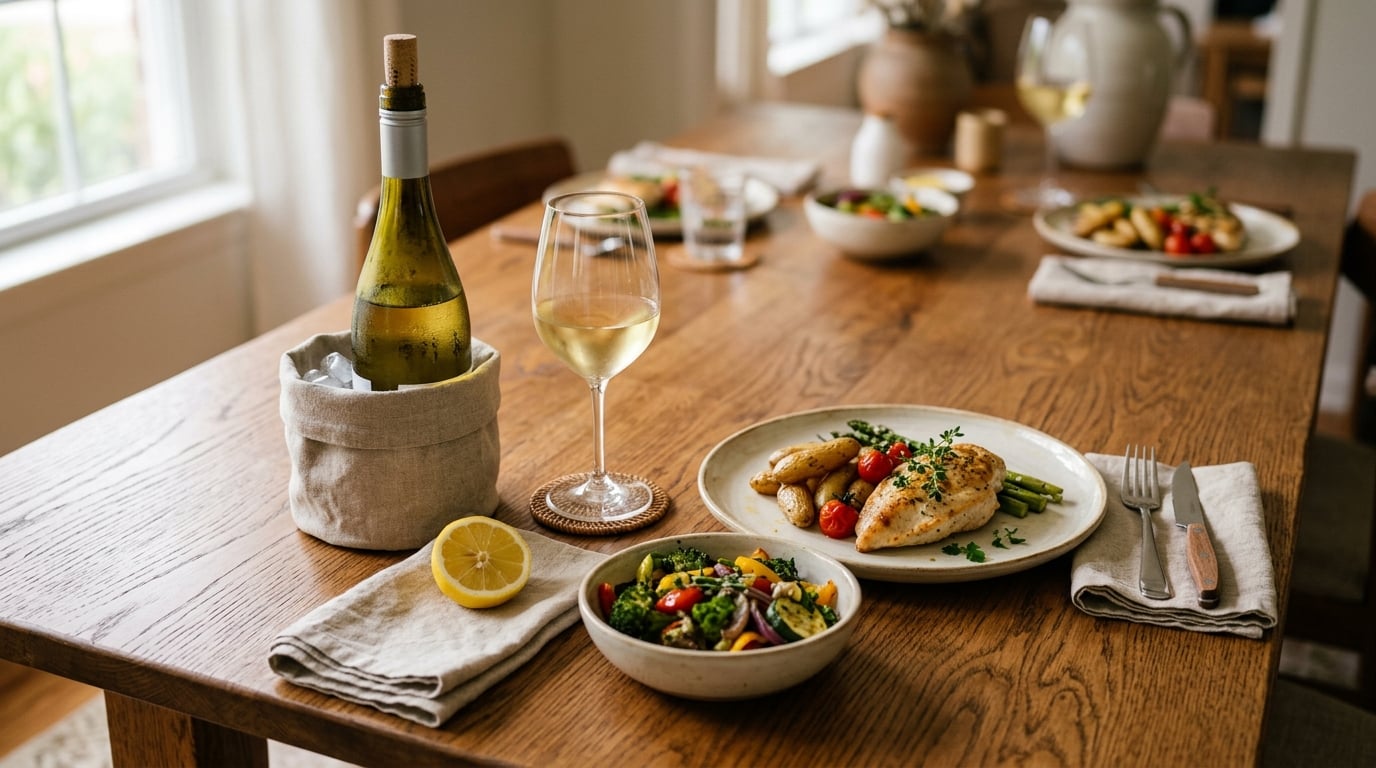
White wine pairing basics for home cooks come down to five things: acidity, body, sweetness, texture and temperature. Forget the protein and look at what the dish is dressed in, then pick a bottle that shares that character. Get those five right and a Tuesday-night pasta gets a good match without any fuss.
The whole thing takes about a minute once you know the system. I checked every pairing below against how home cooks actually serve food, and I last updated this guide in September 2026 when the grocery shelves had turned over to a new vintage.
Table of Contents
- How to choose a white wine for dinner
- What white wine goes with chicken, fish, vegetables, and pasta?
- Dry, off-dry, sweet, light, full-bodied: which style should you buy?
- How do cooking methods and sauces change the pairing?
- White wine pairing basics for home cooks
- What if the wine is too cold, too warm, or not very good?
- Frequently Asked Questions
- What is the most versatile white wine for home-cooked meals?
- Is dry white wine better than sweet white wine for dinner?
- How do I choose a white wine for chicken?
- What white wine pairs well with fish and shellfish?
- Should white wine be served cold or at room temperature?
- Can I use the same white wine with a creamy pasta and a salad?
- Start with the food, not the label
How to choose a white wine for dinner
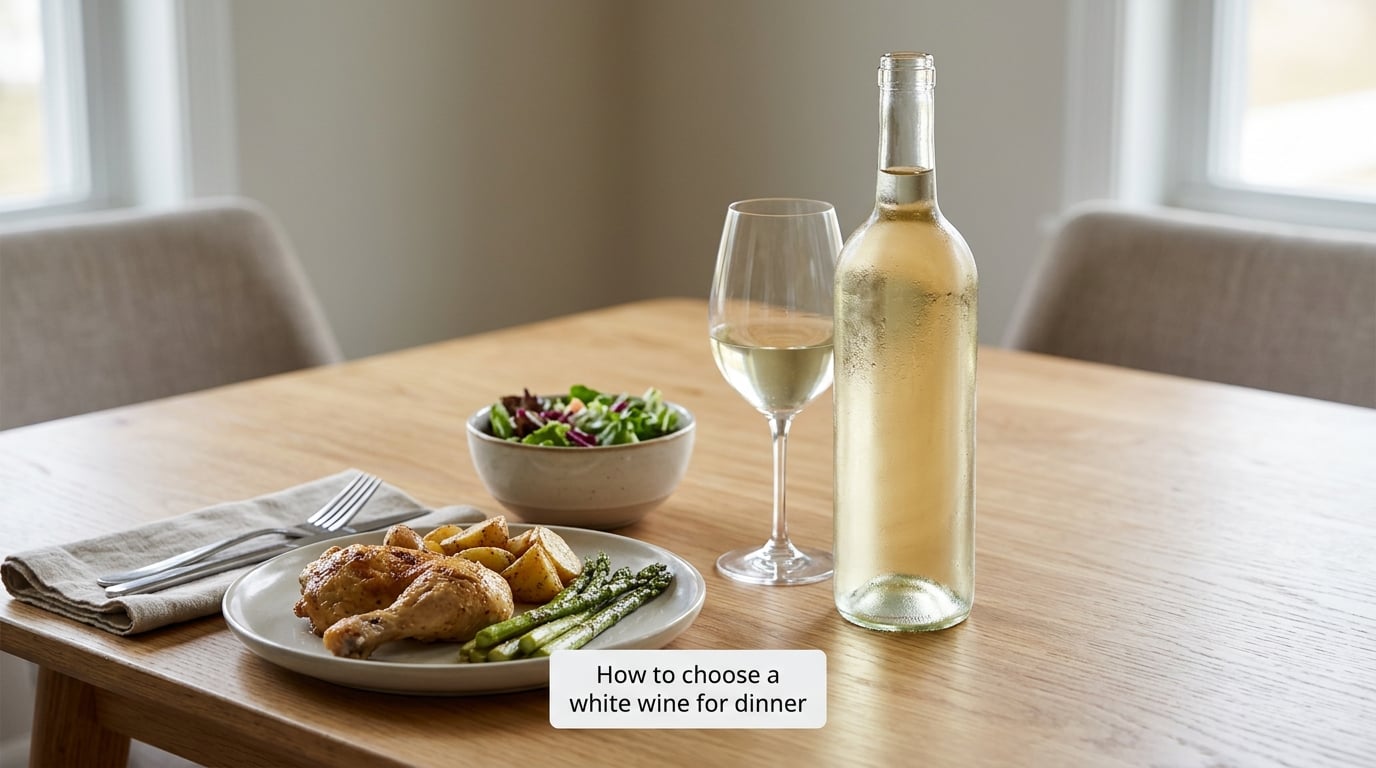
Here is the order to work in. Most people start with the grape name on the label, which is why they end up stuck in the aisle. Start with the food instead and the bottle picks itself.
Start with acidity
Acidity is the sourness that makes a wine taste fresh, and it is the single most useful thing to think about. A sharp, high-acid white cuts through fat and richness, so it works beautifully with butter, cream, fried food and oily fish.
When a dish is already acidic, like a salad with a lemon vinaigrette or a shrimp scampi, you usually want a wine with similar acidity. Matching levels means neither the food nor the wine turns the other into something sour.
Match body to the weight of the dish
Body is how heavy or light a wine feels in your mouth. A delicate Pinot Grigio next to a rich carbonara tastes thin and watery, and a heavy oaked Chardonnay next to raw sushi drowns it.
The simple version of the rule: light dishes, light wines, and full dishes, full wines. If a spoon of the food would fall off the plate, reach for a fuller bottle.
Check the sweetness before anything else
Most people assume white wine means dry, and it does not. A dry wine has under about 1 percent sugar, off-dry has a touch more, and dessert wines run far higher.
Sweetness has to meet the food somewhere. A slightly sweet wine with a hot curry or a salty cheese is lovely, and a bone-dry wine with a fruit dessert tastes sour next to the sugar.
Watch texture and intensity
Texture means how crisp and sharp a wine feels, and intensity means how loud its flavours are. A delicate fish needs a quiet, high-acid wine so nothing on the plate is overpowered.
Charred, spicy or heavily spiced dishes raise the intensity bar, and the same wine that flattered your salad now tastes thin. That is the moment to step up to something with more fruit or more body.
Get the temperature right
Most whites are best somewhere between 45 and 55 degrees Fahrenheit, which is roughly fridge temperature plus a short wait on the counter. Wine straight from a cold fridge tastes closed and dull.
Take the bottle out 15 to 20 minutes before dinner and it will land in the right place without any thermometer.
Put the five together and the decision is quick. Chicken with herbs, light body and no sweetness, so a crisp unoaked Chardonnay works. Creamy risotto, full body and some oak, so reach for an oaked Chardonnay. If you still feel unsure, pick a high-acid dry white and let the food lead.
What white wine goes with chicken, fish, vegetables, and pasta?
These are the dishes that come out of a home kitchen most weeks, so they are where the useful answers are. Each pairing works for a reason, and once you see the reason you can invent the rest yourself.
Chicken and pork
For grilled or roasted chicken with lemon, garlic and herbs, a dry unoaked Chardonnay is the safe default. Pinot Grigio also works well, and it is the bottle I pour most often because it is forgiving and rarely disappointing.
If the chicken is roasted with butter and herbs, move up to an oaked Chardonnay. The buttery oak in the wine mirrors the sauce and the two stop competing.
Is pinot grigio good for chicken? Yes, especially with lemon, garlic and green herbs. Is chicken better with red or white wine? White by default, since the meat is light, but a light red such as Pinot Noir or Gamay works when the dish has roasted, smoky or spicy notes. A heavy red with plain grilled chicken tastes tannic and dusty.
Fish and shellfish
For delicate white fish, halibut, trout or sushi, you want something light, dry and very high in acid. An unoaked Pinot Grigio, a Chablis or a dry Albariño all sit in that lane.
Shrimp, scallops and crab can take a little more texture. Sauvignon Blanc with its grassy, mineral edge handles shellfish beautifully, and it is equally comfortable with Thai and Vietnamese dishes where the dressing carries lime, chilli and fish sauce.
Roasted vegetables and salads
Green beans, asparagus, artichokes and brussels sprouts all have a vegetal, slightly bitter edge that a high-acid wine cuts right through. Dry Riesling is excellent here because the acidity is bright and the touch of fruit rounds out the bitterness.
For a salad dressed with lemon, olive oil and herbs, keep the wine crisp and light. Sauvignon Blanc is the classic answer, and any unoaked Chardonnay works too. Skip anything heavy or oaked with a salad, since the wine will swamp the leaves.
Creamy pasta and risotto
Alfredo, carbonara and a parmesan-heavy risotto want body and texture, not sharpness. An oaked Chardonnay, slightly creamy on the finish, sits right beside the sauce rather than fighting it.
A dry rosé also works on creamy pasta if you like something brighter, and a full-bodied Pinot Grigio from a warmer region is a good substitute when Chardonnay is all you have.
Dry, off-dry, sweet, light, full-bodied: which style should you buy?
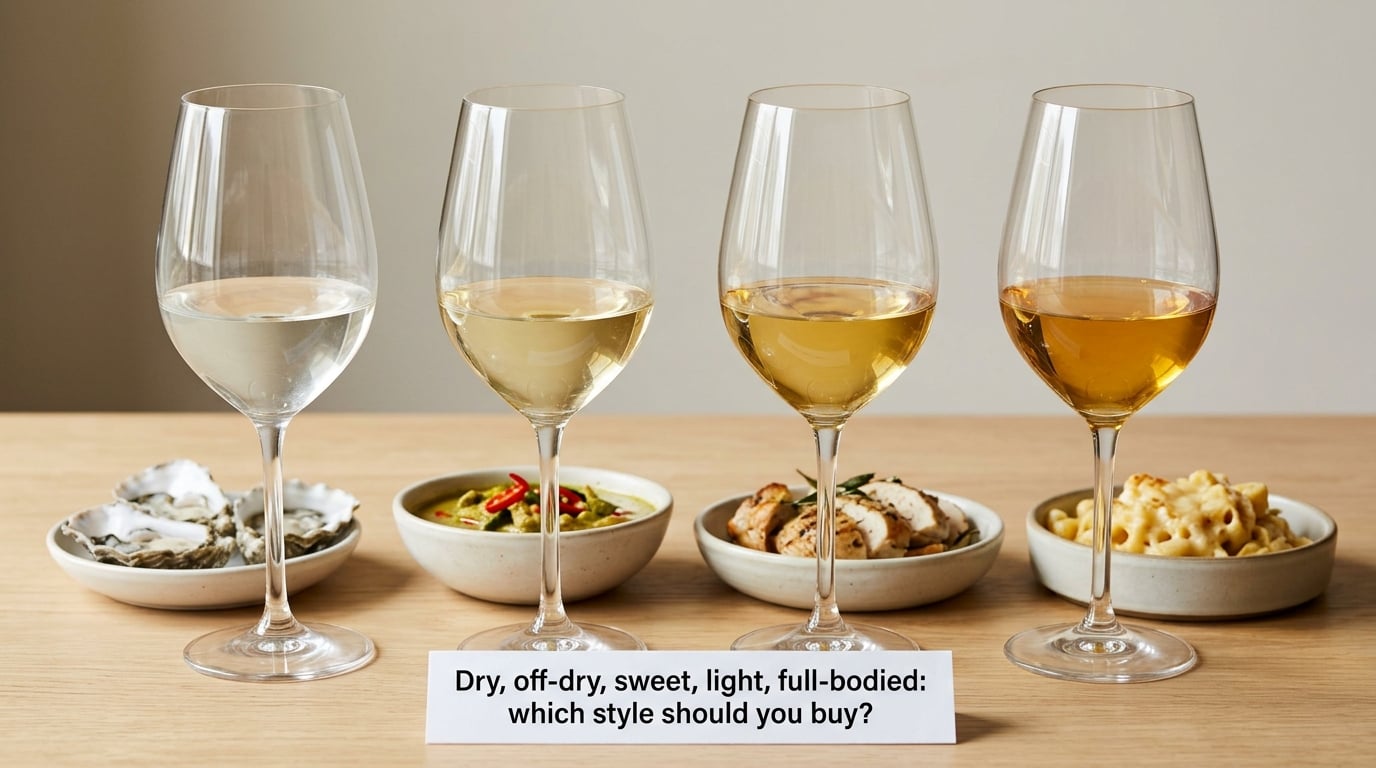
Style labels confuse people because they sound like marketing. In practice there are just two axes, sweetness and weight, and once you place a bottle on both you can pair it with anything.
Dry, off-dry, sweet
Dry means under roughly 1 percent sugar, which covers most Sauvignon Blanc, Pinot Grigio, dry Riesling and Chablis. Off-dry adds a little fruit, and that is what German Riesling and Gewürztraminer often are.
Sweet wines are for dessert, or for salty and spicy food where the sugar plays against the salt and heat. A mildly sweet Riesling with a curry is one of the most reliable pairings there is.
Light-bodied versus full-bodied
Light-bodied wines sit under about 12.5 percent alcohol and feel lean, crisp and quick. Think Pinot Grigio, unoaked Chardonnay, Albariño and most dry Rieslings.
Full-bodied whites run from 13 to 14.5 percent and feel broader and rounder in the mouth. Oaked Chardonnay, Viognier, Sémillon and aged Chenin fall here, and they belong with richer dishes.
Unoaked versus oaked
Unoaked means the wine never touched a barrel, so it tastes pure, bright and fruit-forward. Oaked means it aged in wood, which adds vanilla, butter, toast and a creamy texture and rounds off the sharp edges.
This is the single biggest fork in white wine. Oaked Chardonnay is a match for butter, cream and poultry; unoaked Chardonnay is a match for fish, salads and anything with lemon.
How do cooking methods and sauces change the pairing?
The sauce or seasoning on a dish changes the pairing more often than the main ingredient does. Two chicken dinners cooked differently can need two different bottles.
Char and smoke
Grilling and blackening raise intensity and add bitterness, so a very light wine will disappear. Step up to a dry Riesling or a lightly oaked Chardonnay with enough fruit to stand next to the char.
Pan-frying and butter
A pan sauce made with butter, white wine and lemon is already a little creamy, so a matching oaked Chardonnay works well. A crisp unoaked bottle tastes thin beside all that butter.
Cream and dairy
Cream softens acidity, which means you can use a wine with less sharp acid than you would think. Full-bodied, gently oaked styles with a creamy finish are the safest pick for alfredo, risotto and creamy soups.
Acid, heat and sweetness in the sauce
Lemon, vinegar and tomato raise the acid in the dish, and the wine should rise to meet them rather than sit flat. Chilli and cumin raise heat and intensity, and a slightly sweet, highly acidic wine such as off-dry Riesling or Gewürztraminer cools the whole plate.
BBQ sauce and glazed meats push in the opposite direction, toward sugar. Match the wine’s sweetness to the sauce’s sweetness, or the wine will taste sour against the glaze.
White wine pairing basics for home cooks
Here is the reference table. Screenshot it or print it, and use it as the default answer next time you are standing in the kitchen wondering what to open.
| Dish | White to pour | Why it works |
|---|---|---|
| Grilled chicken, lemon and herbs | Unoaked Chardonnay or Pinot Grigio | High acid cuts the fat, and no oak keeps it clean |
| Roast chicken with butter | Oaked Chardonnay | Buttery oak mirrors the sauce instead of fighting it |
| Pork tenderloin | Pinot Grigio or dry Riesling | Light body and bright acid suit a mild, sweet meat |
| Shrimp, scallops, sushi | Sauvignon Blanc or Albariño | Mineral, grassy edge cleanses after each bite |
| Halibut or other delicate white fish | Chablis or light Pinot Grigio | Quiet intensity leaves the fish tasting like itself |
| Salmon | Unoaked Chardonnay or off-dry Riesling | Body handles the oil, a little sweetness handles the smoke |
| Asparagus, artichokes, green beans | Dry Riesling or Chablis | Sharp acid and minerality cut vegetal bitterness |
| Roasted root vegetables | Sauvignon Blanc or dry Sémillon | Fresh acidity lifts caramelised sweetness |
| Green salad, lemon vinaigrette | Sauvignon Blanc | Matching acidity stops the wine tasting flat |
| Creamy pasta or risotto | Oaked Chardonnay or Viognier | Full body matches the weight of the sauce |
| Thai or Vietnamese curries | Off-dry Riesling or Gewürztraminer | Sweetness and acidity absorb chilli heat |
| Goat cheese or a fresh salad | Sauvignon Blanc | Crisp acidity cuts the fatty cheese cleanly |
| Brie or camembert | Unoaked Chardonnay | Subtle oak echoes the buttery, earthy rind |
| Blue cheese with pears | Off-dry Riesling or sweet dessert wine | Sugar softens salt, acidity refreshes the palate |
| Apple pie or cheesecake | Off-dry Riesling or Moscato | Matching sweetness avoids a sour contrast |
What if the wine is too cold, too warm, or not very good?
Most disappointing pairings are not a bad bottle. They are a bottle at the wrong temperature, poured in the wrong order, or simply not what the dish needed.
If the wine is too cold
Cold suppresses aroma and makes acidity feel sharper and more aggressive. Take it out of the fridge 15 to 20 minutes before serving, or hold the glass in your hands for a minute to warm it slightly.
If the wine is too warm
Warm white wine smells flat and flabby, and it loses the fresh character that made it a good match. Put it back in the fridge for 10 minutes, and an ice cube in the glass buys you a few more minutes while guests are still eating.
If the wine tastes too sharp or too thin for the dish
You cannot fix a mismatched bottle, but you can change what it sits next to. Add a squeeze of lemon or a spoon of cream to the dish and the wine will look better immediately, because you moved the food toward the wine rather than the other way round.
If the wine is just an everyday bottle
Here is the part most wine writing skips. The fancy bottle is not the point. Everyday whites from the grocery shelf, in the middle of the shelf rather than the top, are made for exactly this kind of cooking.
Choose a familiar grape, check the vintage is current, and get a clean, dry, unoaked bottle. That will carry a roast chicken, a salad and a creamy pasta well enough for anyone. What you are learning is a system, and the system works with any decent bottle.
Frequently Asked Questions
What is the most versatile white wine for home-cooked meals?
Sauvignon Blanc is the most versatile for most people. It is high in acidity, completely dry, and not too heavy, so it works with chicken, shellfish, salads, roasted vegetables and lightly spiced food alike. An unoaked Chardonnay is the other safe default, especially for fish and anything with lemon. If you can only remember one bottle for the week, remember one of these two.
Is dry white wine better than sweet white wine for dinner?
For savoury dinner, dry is the better default because a sweet wine with a non-sweet dish tastes cloying. Sweetness pays off when the food is sweet, salty or very spicy, so dessert wines and off-dry Riesling work with fruit desserts, blue cheese and curries. If you are unsure, dry is the safer pick for the main course.
How do I choose a white wine for chicken?
Match the preparation rather than the meat. Grilled chicken with lemon and herbs wants a light, dry, unoaked white such as Pinot Grigio or Sauvignon Blanc. Chicken roasted with butter or in a creamy sauce wants an oaked Chardonnay. Chicken with smoky, spicy or barbecue notes can take a light red such as Pinot Noir instead of a white.
What white wine pairs well with fish and shellfish?
Delicate white fish, sushi and scallops want light, dry, high-acid wine such as Chablis or Albariño. Salmon, which is fattier and smokier, takes a fuller unoaked Chardonnay or an off-dry Riesling. Shellfish dressed with lemon, chilli and herbs suits Sauvignon Blanc, which stays sharp enough to clean the palate between bites.
Should white wine be served cold or at room temperature?
Cool, not cold. Most whites sit best around 45 to 55 degrees Fahrenheit, so take the bottle out of the fridge 15 to 20 minutes before you plan to serve it. Wine straight from a cold fridge tastes closed and dull, while room-temperature wine tastes flat and overripe. Very light sparkling types can be served colder.
Can I use the same white wine with a creamy pasta and a salad?
Yes, as long as the wine is light, dry and unoaked. That bottle has enough acidity to cut a lemon-dressed salad and enough fruit to sit beside a creamy pasta without tasting thin. One bottle across two courses is much more useful than buying two. If the pasta is very rich with a lot of butter, an oaked Chardonnay is a better single choice.
Start with the food, not the label
Before you shop, name five things about the dish: its dominant flavour, its acidity, its sweetness, its richness and its texture. Then buy the wine that shares those qualities.
That is the whole method. Chicken with lemon, creamy risotto, hot curry, delicate fish and a green salad all become straightforward once you stop reading the label first. Pick a dry, light, unoaked bottle as your default, and save the oaked and sweeter styles for the dishes that genuinely want them.