
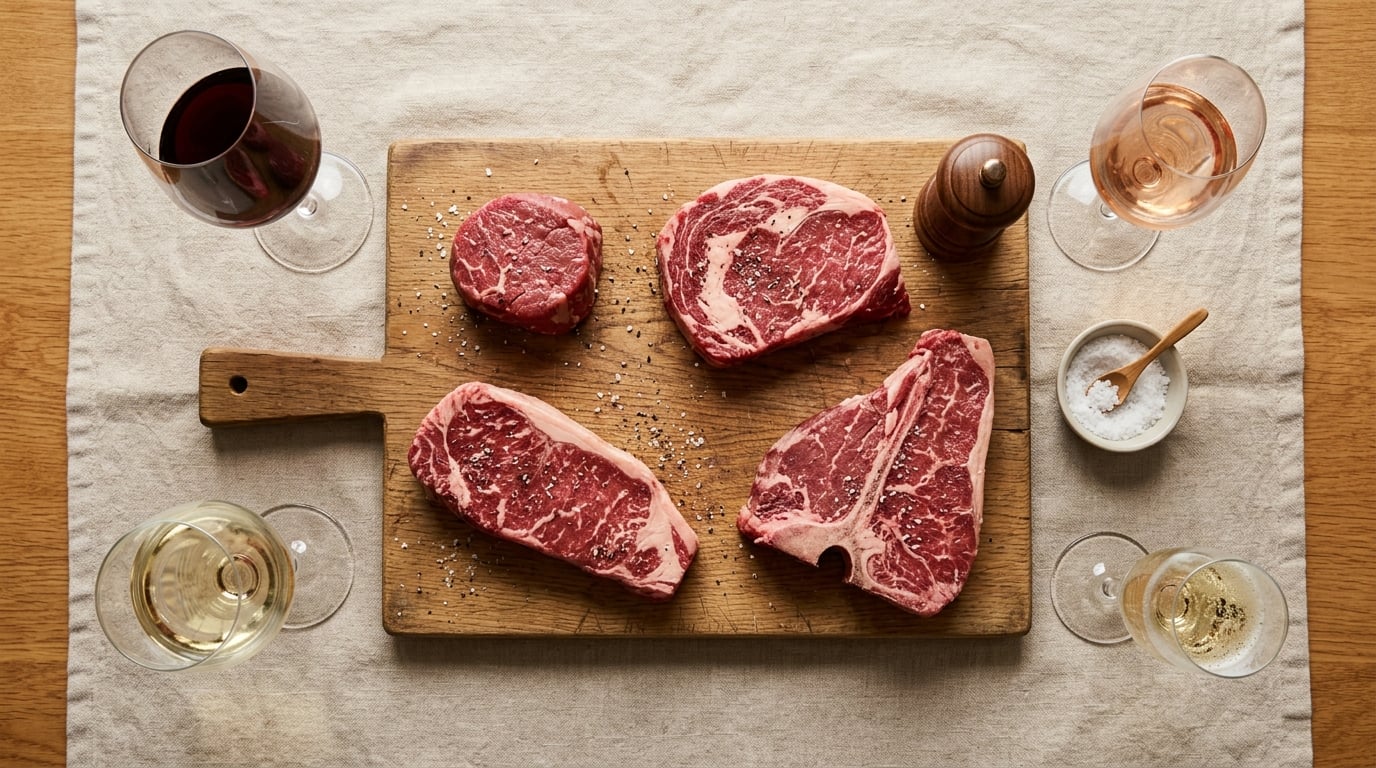
Pairing wine with steak is mostly about matching weight. A red with firm but not punishing tannin suits fatty, beefy cuts like ribeye, while something lighter with brighter acidity suits lean, tender ones like filet. That is the whole game, and this guide shows you how to play it step by step.
If you are new to this, how to pair wine with steak for beginners comes down to four things you already control: the cut you cook, how you cook it, what you put on top, and how warm the bottle is when it hits the table. No equipment, no vocabulary and no sommelier required.
Table of Contents
- What You Need
- Step-by-Step: How to Pair Wine with Steak for Beginners
- Frequently Asked Questions
- What wine goes best with steak if I am a beginner?
- Can I pair white wine with steak?
- Does an expensive bottle of red wine always taste better with steak?
- What wine should I serve with a charred or heavily seasoned steak?
- Should red wine be served cold or warm?
- How much wine should I allow per person when serving steak?
- Conclusion
What You Need
Nothing specialist. A standard kitchen, a bottle of wine and a bottle opener will get you through dinner. Everything else is a variable you decide on before the steak hits the pan.
The variables worth thinking about:
- The cut. Ribeye, strip, sirloin, tenderloin, flank and hanger all taste different, and the difference matters more than any wine label.
- The cooking method. Grilled, pan-seared, smoked and charcoal-charred steaks each ask for something slightly different.
- The sauce or seasoning. Salt and pepper, peppercorn, chimichurri, blue cheese, barbecue glaze and garlic butter all push a pairing in different directions.
- The wine style. Body, tannin and acidity. You do not need a vintage or an appellation to judge these.
- Serving temperature. The single most common beginner failure, and the easiest to fix.
- Tasting notes. Optional, but a few words on paper turn a guess into a decision you can repeat.
For glassware, one large bowl-shaped glass per person is genuinely all you need. A standard water goblet, a pint glass or whatever you drink water from works fine. Add a decanter or a plain pitcher if you have one, a sharp knife and a small plate for tasting, and you are set.
Two practical notes before you start cooking. The USDA safe minimum internal temperature for whole cuts of beef is 145°F, and how you like it past that point is a matter of taste, not safety. And plan pours rather than bottles: a standard pour is about 5 ounces, so a 750ml bottle gives five generous glasses. That keeps the evening pleasant for everyone at the table.
Step-by-Step: How to Pair Wine with Steak for Beginners
Step 1: Identify the Steak and Its Flavors
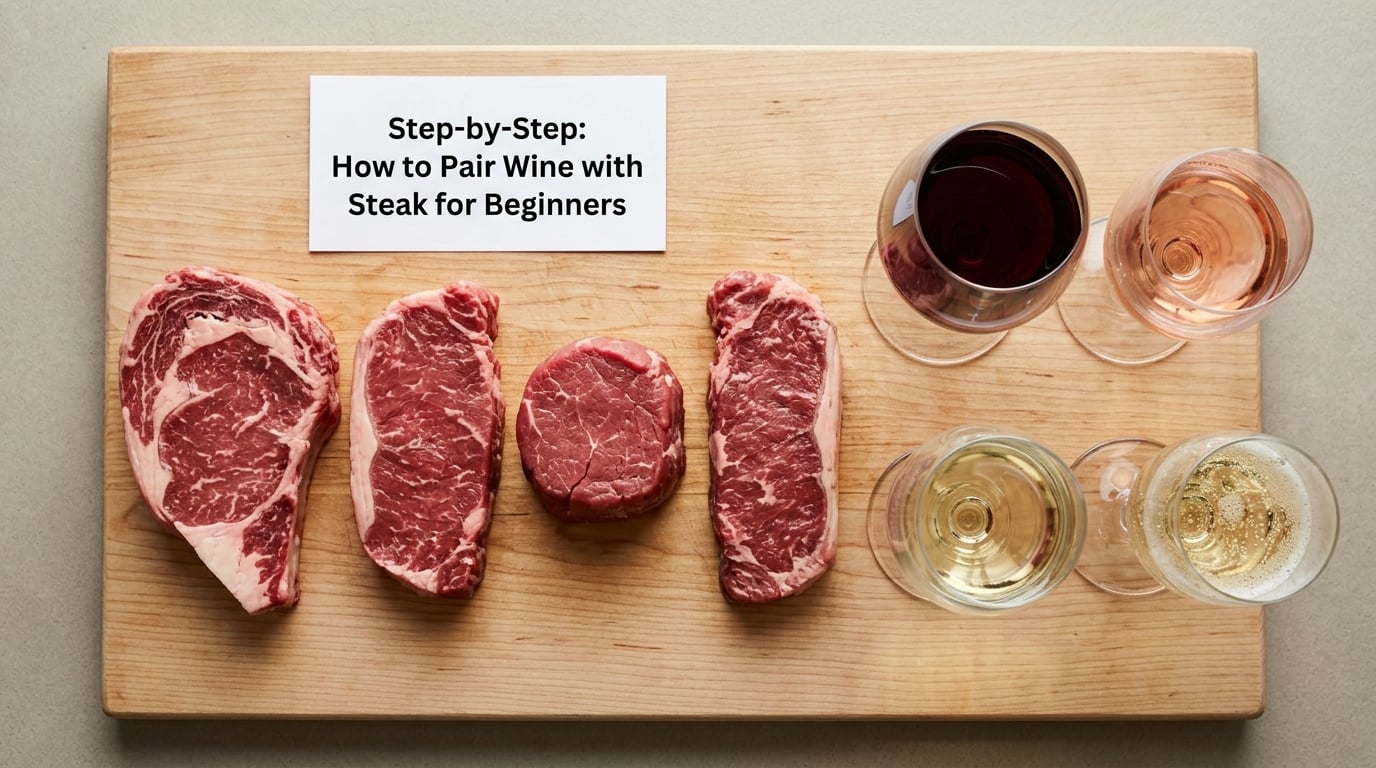
Before you look at any wine list, sort the steak into one of three piles: fatty, lean and chewy. That sorting does most of the work for you.
Fatty cuts include ribeye, porterhouse and short rib. Marbling melts during cooking and gives the meat a rich, buttery, almost creamy weight. These are the cuts that want a full-bodied red with enough tannin to stand up to the fat.
Lean cuts include tenderloin (filet mignon), sirloin and the eye of the rib. They taste cleaner and milder, with far less fat to cut through. A heavy, tannic red will overpower them and leave the wine feeling sour and grippy next to the meat.
Chewy cuts such as flank, hanger and skirt steak are fibrous and strongly beefy. They tolerate more tannin than almost anything else on the menu, because the protein in the meat softens the drying edge of the wine.
Two more details change the answer. Marbling adds richness, so a heavily marbled piece can handle a bigger wine than its name suggests. Char and smoke add a bitter, roasted layer, which is the one thing that genuinely argues against a delicate wine.
Doneness matters too. A medium-rare steak is tender enough that a soft, medium-bodied red suits it well. Steak cooked further needs more acid to stay lively, because the extra cooking dries the meat and flattens the juices.
Step 2: Match the Wine to the Cut
Match the wine’s body to the steak’s fat, and its acidity to the steak’s richness. Here is the short version you can keep in your head:
| Steak cut | Fat and texture | Best wine | Backup pick |
|---|---|---|---|
| Ribeye | Very fatty, buttery, marbled | Cabernet Sauvignon | Malbec or Syrah |
| New York strip or porterhouse | Moderate fat, beefy, a little chew | Syrah or Merlot | Cabernet Franc |
| Filet mignon (tenderloin) | Very lean, mild, soft texture | Pinot Noir | Dry rosé or Chianti |
| Sirloin | Lean to moderate, mild | Merlot or Pinot Noir | Dry Chenin Blanc |
| Flank or hanger steak | Very lean, fibrous, strongly beefy | Cabernet Franc or Petite Sirah | Malbec |
| Bone-in ribeye or tomahawk | Rich, fatty, smoky from the bone | Cabernet Sauvignon or Bordeaux blend | Syrah |
Why full-bodied reds suit fatty steaks: tannin binds with protein and fat, which softens the drying feeling in the wine and brings out the savory, roasted notes in the beef. The wine tastes less harsh and the steak tastes more complete.
Why medium reds work with leaner cuts: a medium-bodied wine with good acidity will not crush a delicate filet, and its brightness cleans the palate between bites instead of sitting on top of the meat.
And why the alternatives are worth keeping in mind. A dry rosé has enough acidity and freshness to handle a charred, peppery steak, and sparkling wine works beautifully with anything salty, rich or sauced. Those two are the answer when the steak is doing something unusual and the red bottle in the cupboard looks like a gamble.
Step 3: Adjust for the Sauce and Cooking Method
The sauce is the biggest variable in the whole exercise, and it is where most pairings are actually won or lost. A great red with a sweet, salty, creamy or sharply acidic sauce will taste flat no matter how good the bottle is.
- Pepper and peppercorn. Pepper is a flavor, not just heat. A peppery Syrah or Shiraz echoes it; a light, delicate red will be buried.
- Chimichurri. Sharp, herbal and acidic. Choose a medium red with firm acidity, or a dry white if the steak is on the lean side.
- Garlic butter and béarnaise. Rich and creamy, so the wine needs real acidity. A crisp dry white or a lighter red works better than a heavy Cabernet.
- Blue cheese. Salty, creamy and funky. A fruity, medium-to-full red with good acidity balances it; an over-oaked, clumsy red does not.
- Barbecue sauce or a sweet glaze. Sweet on the plate means dry in the glass. Skip anything sweet or low-alcohol, and look for high-acid reds or sparkling wine.
- Teriyaki-style or soy glaze. Salty, sweet and umami-heavy. A dry red with bright acidity, or a chilled dry white, keeps the wine from tasting flat.
- Plain salted steak, heavily charred. The simplest case. Char calls for a wine with body and a little fruit, not something delicate and floral.
Cooking method follows the same logic. A slow, gently seared steak in butter leans toward medium reds. A steak over a screaming hot fire, blackened at the edges, is happiest with a full red or with sparkling wine, whose bubbles and acidity cut straight through the char.
Step 4: Serve and Taste the Pairing
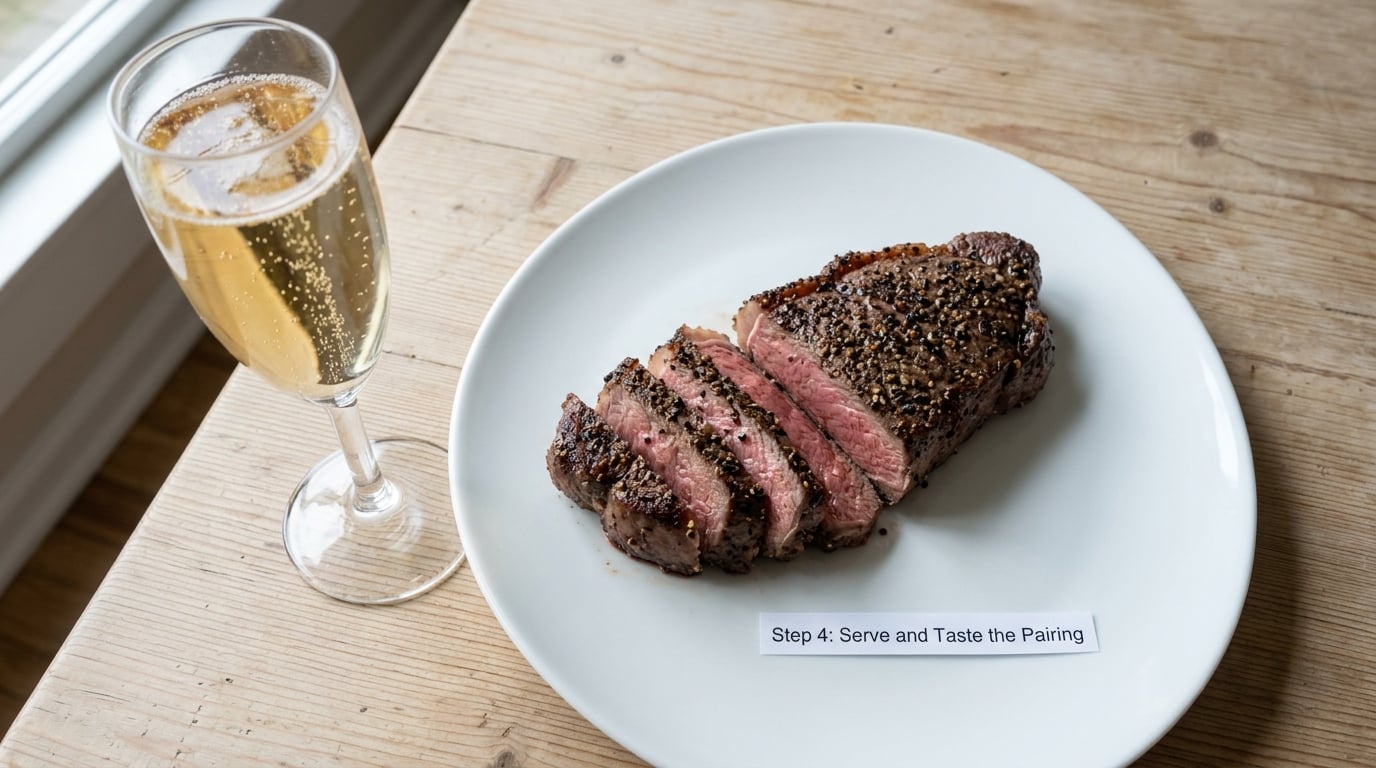
Serving matters more than most people expect. Most reds taste best around 60 to 65°F, roughly cellar temperature or slightly cool from the fridge. Wine poured straight from a cold bottle is muted and tight; wine left in a warm room goes flat and flabby. The old 20-minute rule is a decent shortcut: reds out of the fridge about 20 minutes before dinner, whites and sparkling served cold, around 45 to 50°F.
Decanting helps young, tannic reds open up, usually for 20 to 30 minutes. Older reds are usually better left in the bottle so the sediment stays out of the glass. A sparkling wine loses its bubbles fast, so pour it at the table and finish it before it goes flat.
Now taste it. If you want to know how to pair wine with steak for beginners in a way that sticks, this is the method, and it takes about two minutes:
- Aroma. Swirl the glass, sniff, then smell again with the glass lower. Does it smell of blackberry, plum, black cherry, dried herbs or pepper?
- Acidity. Take a sip on its own. A bright, mouthwatering zing cuts through the fat of the steak and resets your palate.
- Body. Does the wine feel light, medium or heavy in your mouth? That should roughly match how rich the steak is.
- Tannin. The drying, gripping feeling, mostly in red wine. A little is fine next to protein; a lot without protein makes the wine feel harsh.
- Sweetness. Any sweetness at all with a savory steak usually reads as out of balance. Dry is almost always right.
- Finish. After a bite of steak, sip again. The pairing is working if the wine tastes more like itself, not less.
Four combinations that are hard to get wrong:
- Ribeye with Cabernet Sauvignon. The textbook match: fat, char and firm tannin all point the same direction.
- New York strip with Merlot. Softer tannin and ripe plum for a beefy but not fatty cut.
- Tenderloin with Pinot Noir. Lighter body, red fruit and fine tannin for a lean, mild steak.
- Peppered steak with Champagne or another sparkling wine. Bubbles, high acidity and a touch of citrus handle pepper, salt and buttery fat better than most reds.
One last thing. Experienced drinkers tend to say the same thing when this comes up: if you like a wine, drink it with your steak and stop worrying about the rulebook. Merlot and Cabernet Franc come up most often when someone wants a medium red instead of a heavy one, and a well-made, well-stored bottle you already enjoy is usually a better bet than a fancier one you have never tasted. There is no wrong answer here, only a pairing you will enjoy more or less than the last one.
Common Mistakes
- Pairing by price instead of flavor. An expensive bottle with heavy tannin can fail on a lean filet, and a modest one can shine with a fatty ribeye. Fix: decide fat versus lean first, then spend.
- Serving red wine too warm. A room-temperature Cabernet tastes heavy and alcoholic. Fix: move the bottle to the fridge for 20 minutes before you serve it.
- Serving red wine too cold. Straight from the fridge, a young red tastes muted and hard. Fix: take it out 20 minutes ahead, or hold the glass in your palm for a minute.
- Choosing a tannic wine for a delicate cut. Filet and lean sirloin get overwhelmed. Fix: pick a medium-bodied red, Pinot Noir, or a dry white.
- Ignoring the sauce. A sweet glaze, a creamy blue cheese sauce or a heavy chimichurri will flatten any red. Fix: match the wine’s sweetness and acidity to what is on the plate.
- Waiting too long to taste. A bottle opened an hour early will have oxidized and will never come back. Fix: open it when you sit down, not before.
- Opening too much for too few people. Leftover wine is a waste and pushes everyone to drink more than they meant to. Fix: five standard pours per bottle, and plan one bottle per two diners plus a little.
Frequently Asked Questions
What wine goes best with steak if I am a beginner?
A medium-to-full-bodied red with firm but not aggressive tannin is the safest default. Cabernet Sauvignon for fatty cuts like ribeye, Merlot or Syrah for beefier strips, and Pinot Noir for tender, lean cuts like filet. If you drink white wine, a dry, high-acid white works too, and sparkling wine is a reliable choice for anything heavily charred or sauced.
Can I pair white wine with steak?
Yes, and the rule is acidity. A dry, crisp white has the brightness to cut through fat, which makes it excellent with a fatty ribeye, a peppercorn sauce, or a steak with a creamy mustard or béarnaise sauce. Skip sweet whites, which taste flat against savory beef, and avoid very oaky or buttery Chardonnays on a lean, delicate cut.
Does an expensive bottle of red wine always taste better with steak?
No. Price buys age, concentration and length, not a better match. On a lean, mild steak a heavy expensive red can taste more tannic and less pleasant than a simple medium-bodied one. On a dry-aged or bone-in cut, an older structured bottle genuinely shines. The cut and the sauce decide more than the label on the bottle.
What wine should I serve with a charred or heavily seasoned steak?
Pick something with body and fruit rather than delicacy. A peppery Syrah or Shiraz echoes black pepper and char, a full-bodied Cabernet Sauvignon handles a thick sear, and sparkling wine or a dry rosé works well when the crust is heavily blackened. The one thing to avoid is a light, floral red, which disappears next to smoke and salt.
Should red wine be served cold or warm?
Cool, but not cold. Around 60 to 65°F is the sweet spot, which is cellar temperature or roughly 20 minutes out of the fridge before dinner. Wine straight from a cold bottle tastes muted and tight, and wine left in a warm room goes flat and alcoholic. If in doubt, hold the glass in your hand for a minute before your first sip.
How much wine should I allow per person when serving steak?
Plan on two to three standard 5-ounce glasses for an adult who drinks, and one or two for everyone else. A 750ml bottle yields about five pours, so a table of four having steak dinner is best served with two or three bottles rather than one. Opening fewer, better bottles and finishing them beats putting half-empty bottles on the table.
Conclusion
Here is the formula. Work out whether the steak is fatty, lean or chewy, choose a wine whose body matches that richness and whose acidity is bright enough to cut the fat, then adjust for whatever sauce is on the plate and serve the bottle cool rather than cold.
If you do nothing else, start with a medium-bodied red that you enjoy drinking on its own. Identify the steak’s richness first, pick a complementary medium-to-full-bodied wine, adjust for the sauce, and taste a sip, a bite, then another sip. That is how to pair wine with steak for beginners, and it takes about as long as it takes the steak to rest.