
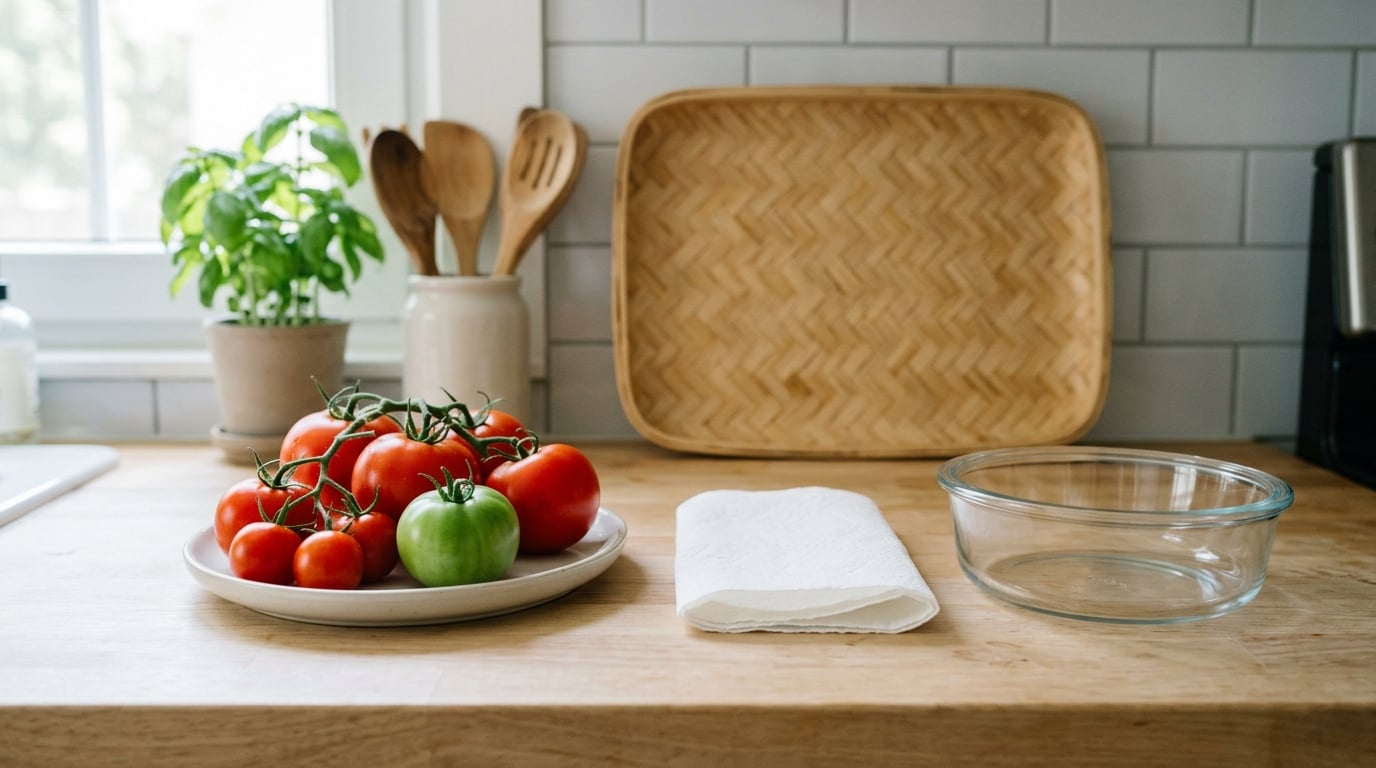
Store tomatoes at room temperature, stem-side down, out of direct sunlight, and move them into the refrigerator only once they are fully ripe. How to store tomatoes so they stay flavorful comes down to three habits: keep the fruit dry, keep it unstacked, and treat cold storage as a trade you make on purpose rather than a default.
The comfortable range is 55 to 70 F, and test kitchens keep landing on 60 to 65 F as the sweet spot. Below about 50 F the cold itself starts doing damage, which is why fruit pulled straight from a grocery cooler so often tastes like nothing on the way home.
What You Need
The best method depends entirely on where your tomatoes are in their life. Unripe fruit needs airflow and a warm room. Fully ripe fruit gets a short counter window, then the fridge. Cut fruit needs sealing and cold immediately. And tomatoes that already spent time in a cooler need a different plan than tomatoes picked yesterday.
None of this needs specialty equipment. Everything below is already in a normal kitchen:
- A paper towel or clean cloth to line the bottom of a container and wick up moisture.
- A shallow, open container — a plate with a rim, a low-sided tub, a shallow cardboard box, or a bamboo tray. Open, not sealed.
- A paper bag for ripening green tomatoes faster.
- An airtight container or plastic wrap for cut and sliced tomatoes only.
- A perforated produce bag for cherry or grape tomatoes that need fridge time.
- A kitchen thermometer, if you have one, to check that your coolest counter spot is not sitting in the 70s.
Step-by-Step: How to Store Tomatoes So They Stay Flavorful
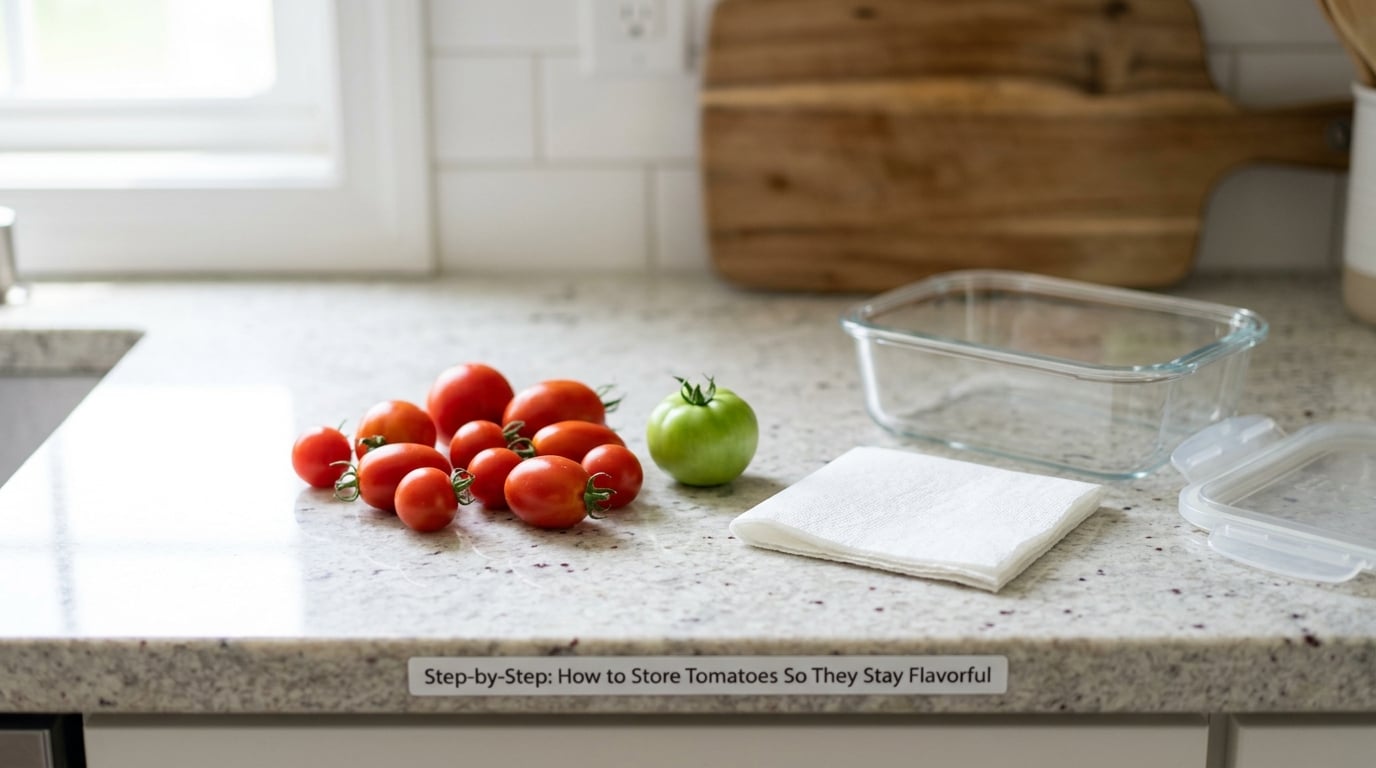
Start by sorting, because one bad fruit ruins the whole group. Set aside anything already splitting, leaking, or soft at the stem, and keep those on a separate plate so they do not touch the rest. Then sort by ripeness: green, breaker, ripe, and overripe each get their own container.
Next, dry everything. If you washed the tomatoes, lay them on a towel until there is no surface moisture left. Sealing wet fruit into an airtight container is the fastest route to mold, and the stem is where it starts.
Finally, arrange in a single layer with the stem end down, not touching each other. Then store according to the stage below.
How to Store Whole Tomatoes Until They Ripen
Unripe tomatoes belong at room temperature, in a single layer on a paper towel, stem-side down, in an open container out of direct sunlight. A windowsill is the worst spot on the counter because sun drives heat and moisture loss into the skin.
Keep them away from ethylene-producing fruit. Apples, bananas, avocados, and pears all release ethylene gas, the plant hormone that speeds ripening and will push your tomatoes from ripe to splitting in a hurry. Basil is the other thing to keep away; its leaves blacken fast next to tomatoes.
To speed things up, put the tomatoes in a paper bag, add a banana or a ripe apple, and fold the top over loosely. The trapped ethylene from the fruit ripens your tomatoes faster. Check the bag daily, because a warm closed bag moves fast.
Firm whole tomatoes usually give you three to seven days this way, and fruit picked at the breaker stage — the first flush of color at the top — needs closer to two to four. In a warm kitchen the low end of those ranges is closer to the truth.
How to Store Ripe Tomatoes So They Stay Flavorful
Do fresh tomatoes last longer in the refrigerator or on the counter? Refrigerated, they last longer; at room temperature they taste better. A ripe tomato in a bowl on your counter is at its best for roughly one to three days, and the fridge buys you about four to seven more. Cold storage trades flavor and texture for extra days, so it is a deliberate choice rather than an automatic one.
For the counter, the recipe is simple: stem-side down, one layer, paper towel underneath, no plastic wrap, no lid. Turn the fruits over every other day so the same side is not sitting in its own moisture.
For the fridge, refrigerate whole ripe tomatoes dry, loosely covered or in an open bowl, and skip the sealed bag. Plan on taking them out 30 minutes before you eat so the cold drops out of the flesh.
Variety matters more than most guides admit. Roma and other paste tomatoes hold up surprisingly well from the fridge — one test-kitchen run found them undamaged after cold storage. Cherry and grape tomatoes go in a perforated bag so they keep breathing. Beefsteak and heirloom tomatoes bruise easily, so they stay on a single layer and never get stacked.
| Ripeness stage | At room temperature | Refrigerated |
|---|---|---|
| Green and firm | 3 to 7 days to ripen | Not recommended; ripening stalls |
| Breaker, first flush of color | 2 to 4 days | 2 to 3 days, flavor flattens |
| Fully ripe | 1 to 3 days | 4 to 7 days |
| Overripe or splitting | 1 to 2 days, or freeze now | 3 to 5 days |
Those are working ranges rather than guarantees. A hot, humid kitchen shortens every row on the counter side.
How to Store Cut or Sliced Tomatoes
Cut fruit is a different problem entirely, because the exposed flesh dries out, picks up bacteria, and browns fast. Pat the cut surfaces dry, then place the pieces cut-side down in an airtight container or press plastic wrap directly onto the cut face. A tight wrap matters more than a container; the wrap is what keeps the air away.
Refrigerate at or below 40 F and eat within two to three days, four at the outside. The USDA rule for cut fruit is two hours at room temperature, and one hour if you are above 90 F, so do not let a bowl of cut tomatoes sit through dinner service.
Browning is oxidation, not spoilage, and you can slow it with a light brush of lemon juice. Salt and sugar pull water out and make it happen faster, so add those right before serving rather than before storing.
How to Freeze or Pickle Tomatoes for Longer Storage
When a tomato will not be eaten inside its fresh window, freezing is the easiest route. It suits cooked dishes only: sauce, soup, pizza, chili. Freeze whole or in halves, freeze on a tray first so the pieces do not fuse, then move them to a freezer bag and press out the air. About six months is a realistic window, and the texture turns soft on thawing, so never plan to refreeze.
Pickling keeps more of the tomato’s shape and acidity. A refrigerator pickle in a salted vinegar brine, with garlic, pepper, or dill, holds for several weeks in the fridge. Water-bath canning takes the same fruit to a shelf-stable jar that keeps roughly a year, but only follow a tested recipe; a shortened or improvised processing time is how botulism gets in.
Drying is the third option and the most concentrated. Roma and cocktail tomatoes dry better than large slicing types, either in a dehydrator or a low oven, and the flavor intensifies as the water goes out. Dried tomatoes are a pantry item, not a fresh one.
Common Mistakes
Refrigerating too early. A hard, under-ripe tomato taken from a cold room often never ripens. The flavor-producing enzymes slow down at about 50 F, and the fruit can sit bland and mealy for days. Wait until it is fully ripe and soft at the shoulder.
Sealing wet tomatoes. An airtight container holds the moisture in with the fruit, and the stem is where mold takes hold first. Dry the surface first, and use airtight containers for cut tomatoes only.
Stacking them deep. A single flat layer, the way a flat of eggplants is laid down, is what air circulation means. Weight bruises the lower fruit, and bruised spots go soft and cloudy fast.
Parking tomatoes next to everything. Bananas, apples, and avocados push ripening hard, and tomatoes right next to basil wilt and blacken within a day. A paper bag works because it concentrates ethylene on purpose, which is not the same thing as storing fruit next to a bunch of apples.
Reading softness wrong. A slight give at the shoulder is ripe, not spoiled. Mold at the stem, leaking liquid, a sour smell, or a split skin with fuzzy white or black growth means it is finished. Use split fruit for sauce tonight; do not try to store it.
Leaving cut tomatoes on the counter. Whole fruit keeps, cut fruit does not. Once you cut into a tomato, the clock changes and the fridge is where it belongs.
Trusting the myth in either direction. The never-refrigerate rule is a good default and a bad plan for a ripe tomato on a hot counter. And the fridge is not a magic preservative for green fruit that was picked early. Let ripeness decide.
Frequently Asked Questions
Should tomatoes be washed before storing?
You do not have to wash them, and most cooks do not. If the fruit came from a garden or a farmers market, rinse it just before you use it and store it dry. Washing adds moisture, and moisture sealed against the skin is what invites mold at the stem. If you want to wash ahead, do it early, lay the fruit on a towel, and give it time to dry completely.
How long do tomatoes last at room temperature?
It depends on ripeness. Green and firm fruit gives you three to seven days to ripen, fruit at the breaker stage needs two to four, and a fully ripe tomato is at its best for one to three. Overripe or splitting fruit has about a day. Warm, humid kitchens shorten all of these; a cool shelf nearer 60 F stretches them out.
Can you store tomatoes in a plastic bag?
Only in a perforated produce bag, and only for short fridge storage. A sealed plastic bag traps moisture and the fruit spoils faster than it would on a plate. For ripening green tomatoes, a paper bag works instead: the paper breathes while holding enough ethylene in with the fruit. For cut tomatoes, plastic wrap or an airtight container is exactly right.
Should tomato stems be removed before storing?
Leave them on. The stem scar is the fruit’s own seal, and it is where water loss and mold both start. Storing stem-side down protects that seal. The exception is prep for freezing, where coring and halving first is easier and makes no difference to quality. Peel and core for other reasons whenever you like, just not as a storage step.
How should cherry tomatoes be stored?
Treat them like any ripe tomato for the first day or two: one layer, stem-side down, on a paper towel in an open container. Cherry and grape tomatoes have a higher skin-to-flesh ratio, so they wrinkle rather than turn mealy when chilled, which is why they tolerate the fridge better than large slicing tomatoes. In a perforated bag they keep about five to seven days.
Why do refrigerated tomatoes taste less flavorful?
Cold slows the ripening process, and below about 50 F it damages the cell membranes that hold in juice and shuts down the enzymes that make sugar and aroma compounds. The fruit survives, but the texture turns mealy and the sweetness flattens. Take refrigerated tomatoes out about 30 minutes before eating, and salt them only at the table, since salt early draws out more water than the fruit can replace.
Conclusion
Start by keeping unripe and freshly ripe tomatoes dry, at room temperature, stem-side down and unstacked, away from sunlight and away from bananas and apples. When the fruit is fully ripe and texture matters more than brightness, move it to the fridge and take it out half an hour before eating. When it is cut, seal it and refrigerate it the same day, and when neither window will fit the harvest, freeze it for cooking or can and pickle it for keeping.