
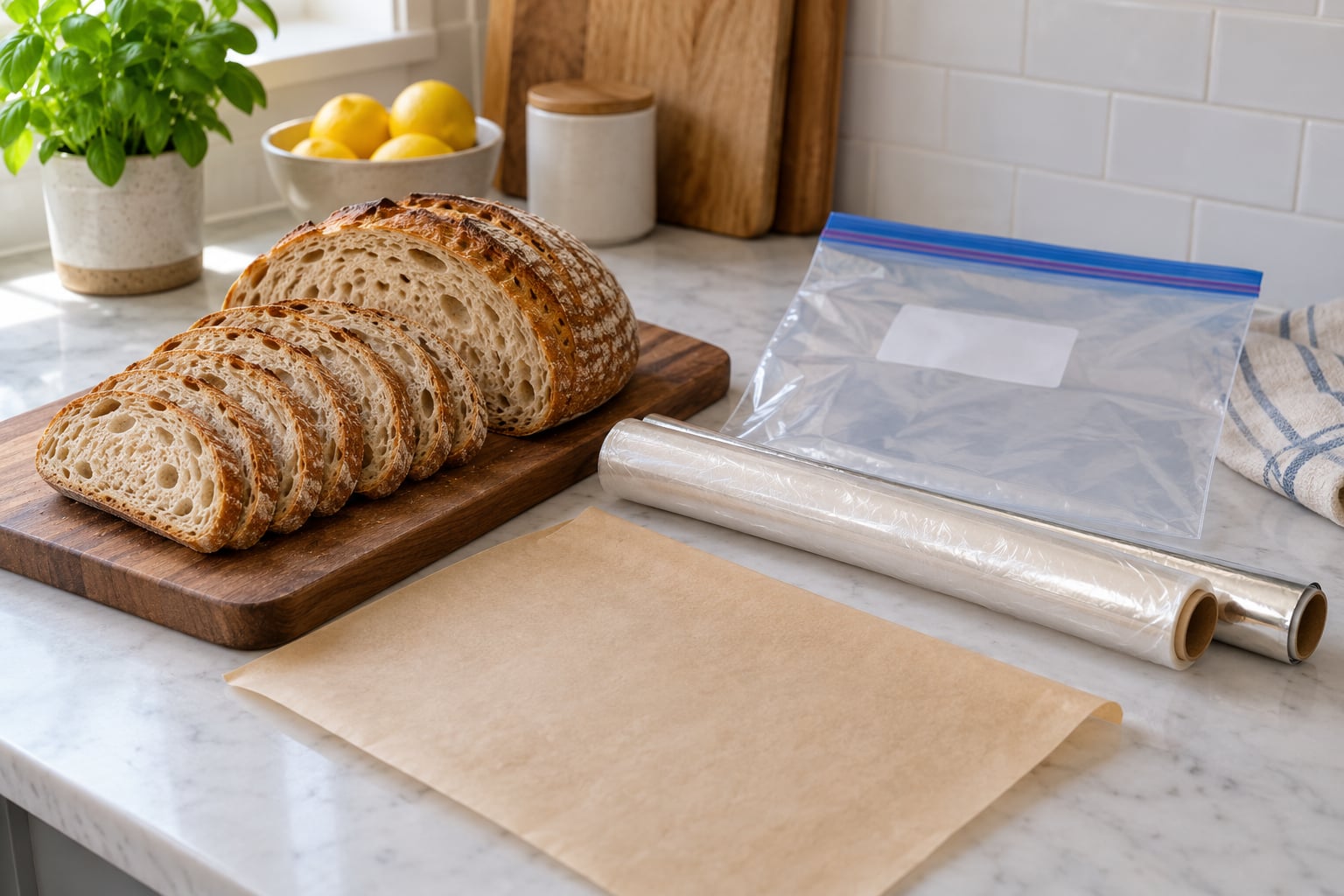
To freeze bread without freezer burn, cool the loaf completely, wrap it tightly in two layers, and push out the air before it goes in the freezer. The whole job takes about 15 minutes and the bread holds its texture for three months or more.
Freezer burn is what happens when bread sits exposed to freezer air. Moisture inside the loaf migrates outward, turns to ice crystals, and leaves behind dry, pale, papery patches. That is why a plain zipper bag rarely holds up past a few weeks: the bag is full of air, and air is the enemy.
Good news is that a loaf that never freezes in the first place keeps only two or three days at room temperature. Freezing buys you months, as long as you do the wrapping part right. Here is the method I use, tested on sandwich loaves, sourdough and crusty baguettes alike.
Table of Contents
- What You Need
- Step-by-Step: How to Freeze Bread Without Freezer Burn
- Common Mistakes That Cause Freezer Burn
- Frequently Asked Questions
- How long can bread stay frozen without freezer burn?
- Should I use a freezer bag, plastic wrap, or foil for bread?
- Can I freeze bread in its original bakery bag?
- Is it better to freeze a whole loaf or individual slices?
- Can frozen bread be refrozen after it has thawed?
- How should I thaw bread so it does not get soggy?
- Conclusion
What You Need
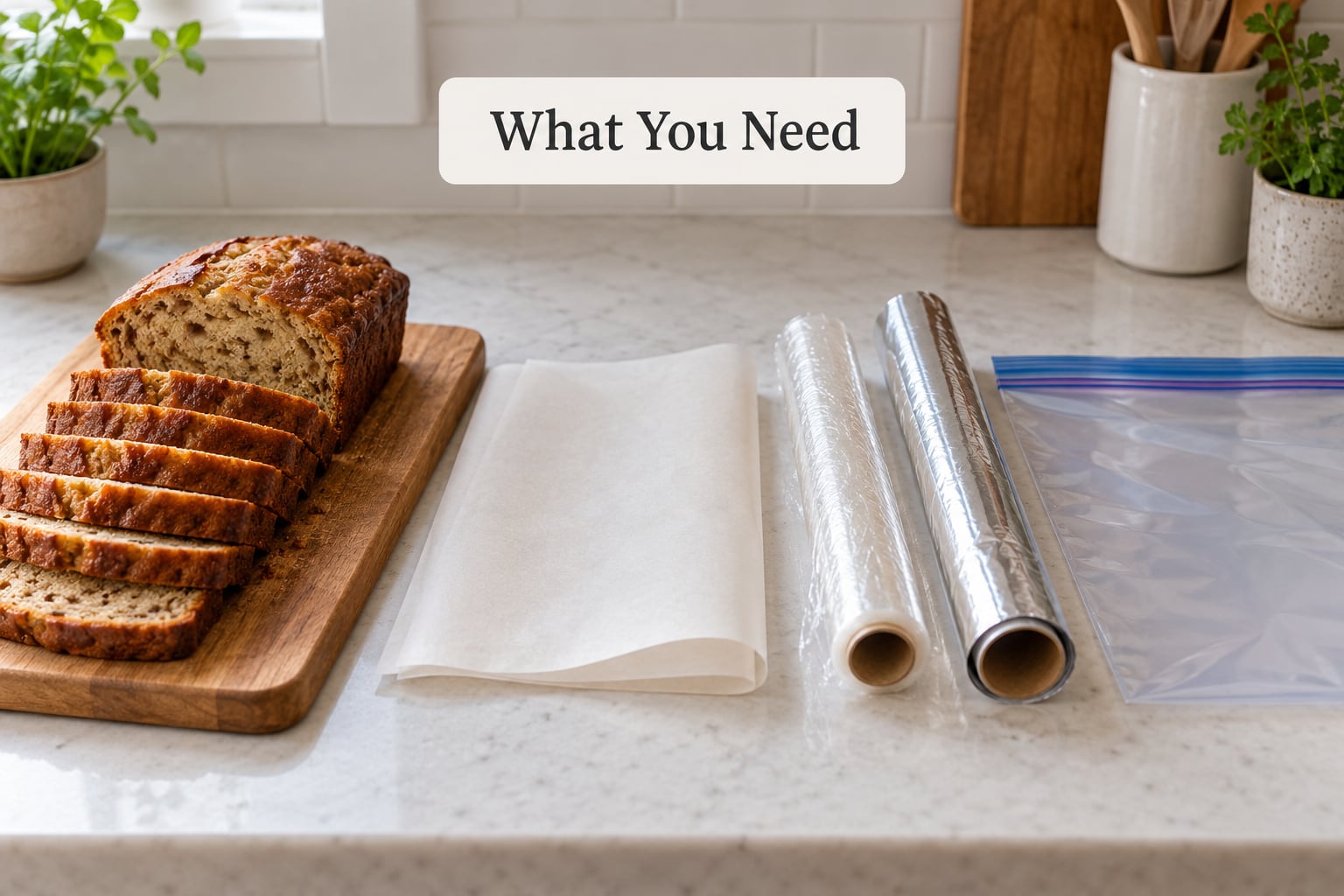
You need very little, and most kitchens already have all of it.
- A fully cooled loaf. Cool on a wire rack until the bottom of the loaf feels room temperature, usually 2 to 3 hours.
- Plastic wrap or a bread bag for the first airtight layer.
- A freezer-safe bag or airtight container for the second layer, or heavy-duty aluminum foil.
- Parchment paper if you are freezing individual slices.
- A marker pen for the date, so you can rotate oldest to newest.
Optional extras: a bread box if you want to keep a couple of days of slices on the counter, a vacuum sealer if you bake in bulk, and beeswax wraps or clean cotton tea towels if you would rather avoid plastic. One caution on the plastic-free route: cloth alone is not enough for long-term freezing, so always add a second barrier over it.
Step-by-Step: How to Freeze Bread Without Freezer Burn
Six steps, in this order. The order matters more than the materials.
- Cool completely. Warm bread releases steam. Steam trapped in the wrapping freezes into ice crystals that dull the crumb and make the crust leathery. This is the single step people skip, and it is the one that ruins the most loaves.
- Portion what you will actually eat. Slice before freezing if you are not sure how fast you will use the loaf. Half a sourdough loaf going into the freezer as one lump means you thaw the whole thing next week and watch half of it go stale. If you want more on short-term storage while the bread is still at its best, read how to store homemade bread so it stays fresh.
- Wrap the first layer tight. Plastic wrap directly against the bread, or the loaf in a bread bag with the opening twisted closed. Press the plastic onto the crust so there are no loose pockets.
- Add the second layer. Put the wrapped loaf inside a freezer-safe bag and seal it, or wrap it again in foil and crimp the seams. Two barriers is what bakery and restaurant kitchens do, and it is the reason their bread holds for six months.
- Remove the air. Squeeze the bag until the bread is snug against the wrap with no loose air, then seal. If you have a vacuum sealer, use it. If not, the straw trick works: leave a small gap at the seal, slide a drinking straw in, suck out the air with your mouth, and pinch the gap shut as you pull the straw out.
- Label, date and freeze. Write the bread type and the date on the bag or a strip of tape. Freeze flat so nothing shifts, and push the bag to the back rather than the door shelf, which is the warmest part of any freezer. Keeping a freezer about three-quarters full also helps it hold a steady temperature.
How to Freeze a Whole Loaf
Whole loaves are for bread you will use over several weeks, not over several days. Cool it fully, wrap the whole loaf in plastic, then take it to a second layer of foil or a sealed freezer bag.
Thaw it in its wrapping at room temperature. Bread thawing inside plastic keeps the moisture where it belongs; bread thawing open loses water to the air and comes out drier than when it went in.
How to Freeze Bread Slices Without Freezer Burn
Stand the slices up in a row, leave a small gap between each one so air cannot sit against the cut face, and lay a sheet of parchment over them. Stack a second group on top, add another sheet of parchment, and keep going.
Squeeze the stacked slices flat inside a freezer-safe bag, press out the air and seal it. You end up with one flat brick instead of a loose pile that turns to crumbs and ice crystals on the way to the freezer. Toasting straight from frozen works fine, which makes this the best format for a weekday morning.
How to Freeze Baguettes, Rolls, and Other Shapes
Irregular shapes have more exposed surface area, so they burn faster than a tidy sandwich loaf. Wrap each baguette, roll, bagel or pretzel on its own. For dinner rolls and small breads, place them on a tray, freeze them uncovered for an hour until solid, then bag them together in one package.
That flash-freeze step stops the rolls from crushing each other and fusing together while the middle of the pile is still warm. Focaccia freezes well the same way, ideally without the olive oil brushed on, and you can add it after reheating. For enriched breads like brioche buns, cool them fully and expect slightly more moisture loss than a plain loaf.
Gluten-free bread is the exception. It loses structure in the freezer faster, so use it within about a month and slice it only once it has thawed. Bakers on baking forums generally freeze same-day rather than waiting, and the sourdough crowd slices first and toasts straight from frozen, which sidesteps the thaw step entirely.
How to Thaw Frozen Bread Without Getting Soggy
Take it out of the freezer and leave it in its wrapping at room temperature. Two hours for a small loaf, closer to four for something large. Condensation forms on the inside of the plastic, and that trapped moisture is exactly why you should not unwrap a half-thawed loaf.
If you need bread faster, skip the thaw. Put the slices straight into a toaster, or the whole loaf into a hot oven. For a crusty loaf, run it briefly under cold water so the crust is damp but not dripping, then bake it at 350 degrees Fahrenheit for 5 to 10 minutes. The moisture on the surface steams inside the oven and gives you back a crackling crust. If a slice comes out flat and limp, you have gone too far; our three proven ways to revive stale bread cover that case.
The microwave is the emergency option, and it is the worst of the three. Thirty seconds warms a slice, but it toughens the crumb into something that feels like a rock once it cools. Use a damp paper towel alongside the slice if you have no other option.
Common Mistakes That Cause Freezer Burn
Almost every freezer-burned loaf has one of these problems.
Wrapping bread that is still warm
The steam has nowhere to go, freezes inside the wrap, and the crumb goes gummy. Cool on a wire rack until the base of the loaf is room temperature to the touch. If the bottom is even slightly warm, keep waiting.
Leaving air inside the bag
A loose, puffy bag is full of the stuff that causes freezer burn. Squeeze until the bread is snug, or use the straw method. This is the difference between bread that stays soft for three months and bread that turns papery by week four.
Relying on a single layer
One layer of plastic eventually loses integrity, especially once it warms in the freezer door. Two layers cost you about a minute and extend storage from roughly one month to six months on a well-sealed loaf.
Here is how the common methods compare, if you are still deciding what to use.
| Wrapping method | Freezer burn protection | Best for |
|---|---|---|
| Plastic wrap plus freezer bag | Best, two full barriers | Everyday home freezing |
| Plastic wrap plus foil | Best, blocks light and air | Long storage, up to six months |
| Vacuum sealer bag | Best, air removed entirely | Bakers freezing in batches |
| Straw trick on a zipper bag | Very good, cheap air removal | No sealer, no special equipment |
| Bakery bag or paper bag alone | Poor, lets air through | Counter storage for a day or two |
| Cloth bag or beeswax wrap | Fair as a first layer, never alone | Reducing plastic waste |
Using a half-full freezer and a warm door
An overstuffed freezer works fine, but an almost-empty one cycles harder, and that cycling moves moisture around inside packages. Keep it around three-quarters full. Store bread toward the back, since the door shelf warms every time someone grabs a jug of milk.
Thawing in an open bag, or thawing and refreezing
Unwrapping while bread is still cold and frosty exposes damp crumb to dry air, which is freezer burn on a short delay. And bread that has thawed fully and then sat out for hours goes stale fast, so refreeze only bread that thawed while still cold, and expect the texture to be slightly softer after a second freeze.
Telling Freezer Burn Apart from Mold
Freezer burn is not mold. The difference shows up in smell and look: freezer burn gives you pale, dry, stiff patches and a papery texture, while mold shows up as fuzzy growth in green, black or white, usually with a musty smell. If you see fuzz, discard the loaf. Freezer-burned bread is perfectly safe to eat, and it is past its prime for sandwiches but still fine for French toast or bread pudding. For a crunchy second life, try easy homemade croutons from stale bread.
Frequently Asked Questions
How long can bread stay frozen without freezer burn?
Bread frozen with a single airtight layer stays good for about one month with minimal quality loss. Double-wrapped in plastic plus foil or a sealed freezer bag, most loaves hold their texture for three months, and a well-sealed loaf can last six months before the crumb noticeably softens. Sliced sandwich bread dries faster than a whole loaf, so plan on using those within a couple of months. Label every package with the date and pull the oldest one first.
Should I use a freezer bag, plastic wrap, or foil for bread?
Use two layers, not one. Plastic wrap goes directly against the bread to seal the surface, then a freezer bag or heavy-duty foil wraps the outside and blocks air and light. Foil alone works well if you crimp every seam tightly, and a vacuum sealer gives the tightest result. For bakers freezing dozens of loaves, the same double-barrier standard applies as in a professional bakery kitchen.
Can I freeze bread in its original bakery bag?
Only for short storage, and the bag needs help. A bakery paper bag or thin plastic wrapper lets air through, so bread keeps only about a month and is a poor defense against freezer burn. Put the loaf in its original bag for transport, then slide the whole bag into a freezer bag or overwrap it in foil before it goes in the freezer.
Is it better to freeze a whole loaf or individual slices?
Slice first if you eat bread irregularly, since you thaw only what you need and the rest stays frozen. Freeze a whole loaf if you plan to serve it to everyone within a few days of thawing, or if you are baking a sourdough that needs a full overnight rest. Sliced bread rewarms well in a toaster straight from frozen, which makes it the easiest option for weekday mornings.
Can frozen bread be refrozen after it has thawed?
Yes, as long as it has not been at room temperature for long. Bread that thawed fully and sat out for hours has dried out, and refreezing it will not bring the moisture back. If it is still cold or only slightly thawed, put it back in its wrapping and refreeze right away. Expect a slightly softer crumb the second time around, which matters little for bread headed into a stuffing, French toast or bread pudding.
How should I thaw bread so it does not get soggy?
Thaw it in its wrapping at room temperature, which takes roughly two hours for a small loaf and up to four for a large one. Keeping the plastic on traps condensation against the bread instead of letting it evaporate away, which is what makes it soggy. Skip the thaw entirely when you can: toast straight from frozen, or refresh a crusty loaf in a 350 degree oven for 5 to 10 minutes.
Conclusion
Start with the cooling rack. Once the loaf is truly at room temperature, wrap it in plastic, add a sealed freezer bag or foil over the top, squeeze out the air, label the date and lay it flat at the back of the freezer. Thaw it in its wrapping rather than uncovered, and how to freeze bread without freezer burn stops being a problem you have to think about again.