
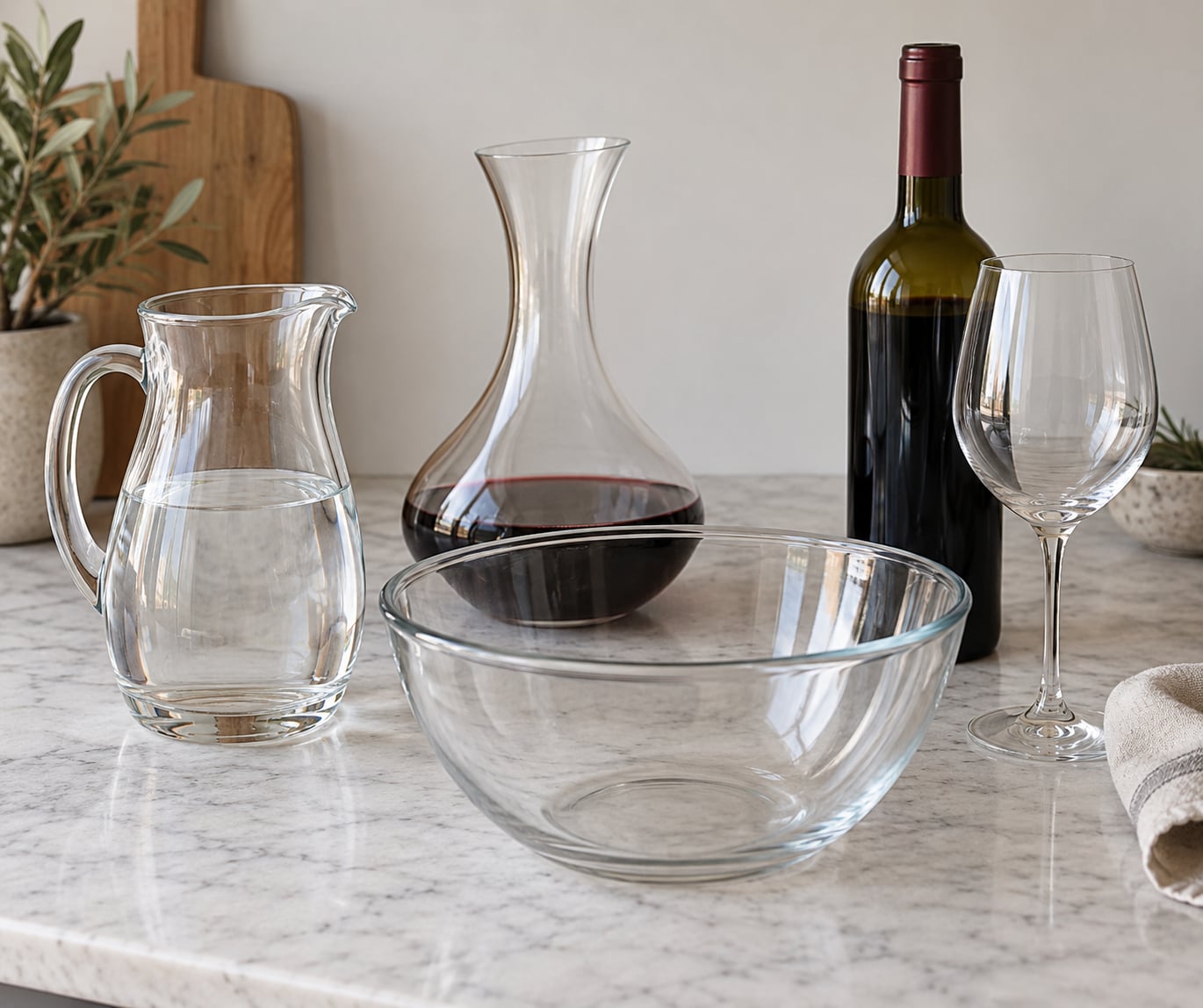
Yes, you can absolutely learn how to decant wine without a decanter. Pour the bottle into any clean, wide-mouthed glass vessel — a water pitcher, a carafe, a flower vase or a large mixing bowl — and stop before the sediment reaches the neck. That wider surface gives the wine air it could never get inside the narrow bottle, takes about two minutes of actual pouring, and costs nothing if you already own a jug.
The honest reason most people never decant is not snobbery. It is that washing a decanter afterwards is a chore, with its awkward neck and unreachable corners. A rinsed pitcher removes that blocker completely.
This guide covers the vessels that work, the pouring technique that keeps grit out of the glass, how long to let the wine sit, and the wines you should leave alone. If you want to know what’s in the bottle before you pour, start with how to read a wine label.
Table of Contents
- What You Need
- Step-by-Step
- Common Mistakes
- Tips for Better Results
- Frequently Asked Questions
- Can I use a glass pitcher to decant wine?
- How long should wine sit before I decant it without a decanter?
- Should I pour the sediment out when using a pitcher?
- Does decanting wine without a decanter change the flavor?
- Which wines need the most careful decanting?
- Is a bowl better than a pitcher for decanting wine?
- Conclusion: How to Decant Wine Without a Decanter
What You Need
You need three things, and two of them you almost certainly own already:
- A clear glass vessel with a wide base. Pitcher, jug, carafe, vase or mixing bowl. Wide matters far more than expensive.
- A way to see the wine as it pours. Clear glass, so you can spot sediment before it reaches your glass.
- A cork, screw cap or reusable wine stopper for when you are not serving immediately.
Rinse the vessel with hot water and scrub it properly. Any trace of detergent or dust will end up in the wine, and you will taste it long after the glass is empty.
| Vessel | Best for | Aeration | Main downside |
|---|---|---|---|
| Glass water pitcher | Young reds, dinner service | Very good | Holds a lot of air once full; pour into smaller glasses from it |
| Wine carafe or jug | Almost anything, table service | Very good | Usually narrower than a pitcher, so smaller surface area |
| Clean flower vase | Sediment removal, no-cost solution | Good | Tall and narrow; check it has never held flowers |
| Large mixing bowl | Maximum aeration, blind tastings | Best of the lot | Huge exposed surface; over-aerates delicate wine fast |
| Two or three pint glasses | Tasting flights, small pours | Good per glass | Tedious to pour into one by one |
| Funnel into a clean bottle | Double-decanting, storing overnight | Low but real | Slow, and you need a second bottle of the same shape |
The mixing bowl wins on aeration and loses on control. Nothing else gives you as much surface area, which also means a delicate old wine will flatten in it faster than anywhere else.
Step-by-Step
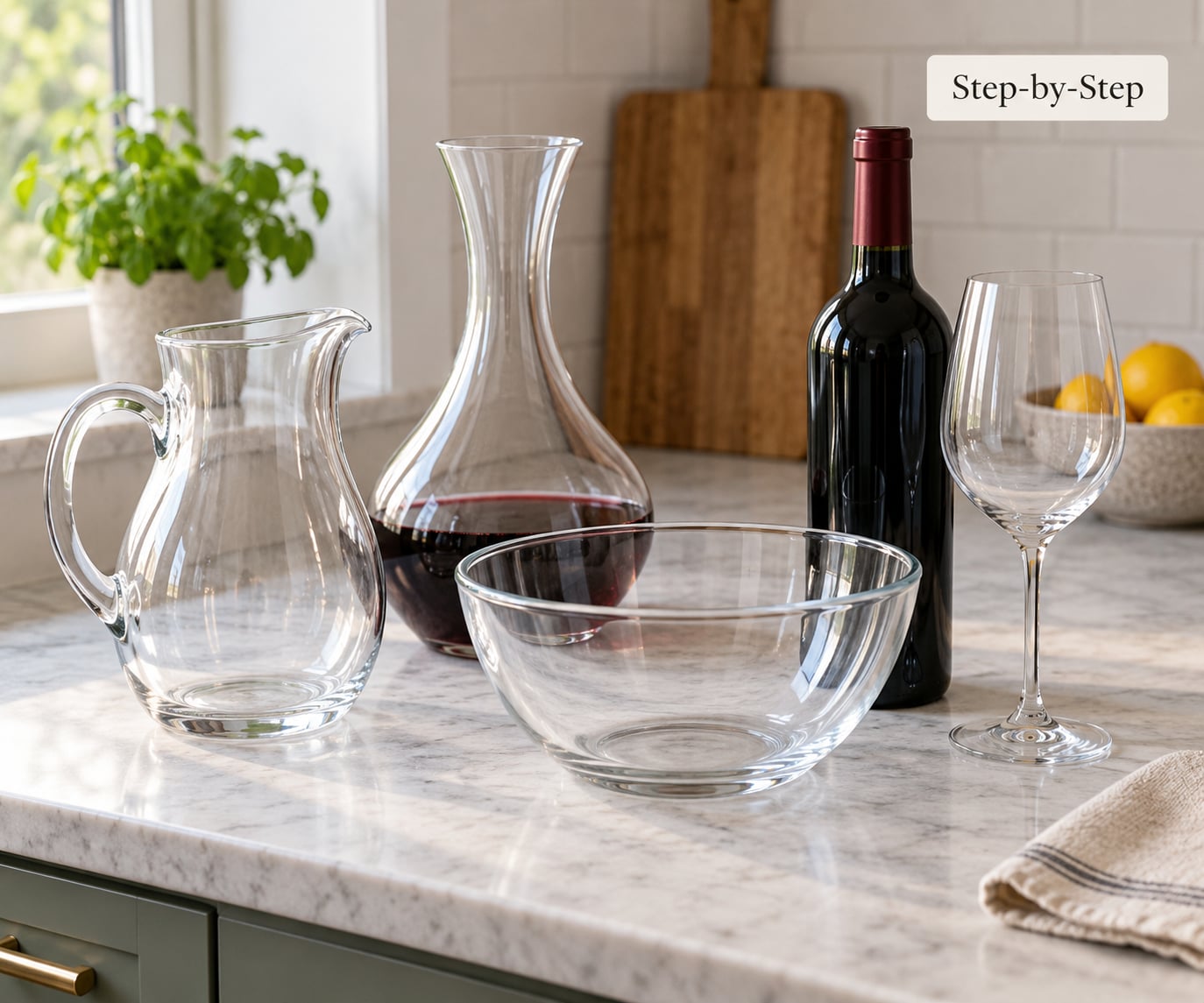
1. Choose a Simple Vessel — How to Decant Wine Without a Decanter
Pick a clear glass vessel with a wide base and a rim or spout that lets you pour slowly. A pitcher beats a carafe purely on surface area; a vase beats both if your only job is holding a bottle with sediment in it.
Skip anything narrow-necked and opaque. You need to watch the last glass of wine coming out of the bottle, and that means you need to see it.
A quick pour is enough for a young, light red with no sediment and no complaints from the bottle. Decanting is not a ritual that every bottle requires.
2. Stand the Bottle Upright
Set the bottle on a counter and leave it alone. If it has been lying on its side in a rack, moved from the shop, or jostled in the car, give it at least a few hours — overnight is better for a real old vintage.
Standing is not superstition. Sediment settles to the bottom, and time is what moves it there. Open a bottle that was tipped ten minutes ago and you will stir the lees back up with the cork.
Wines with no sediment at all — most young reds, most whites — do not need this step. Skip it and move straight to opening.
3. Open the Bottle Gently
Take the cork out slowly and without any sideways twist that rocks the bottle. If it resists, work the corkscrew on the far side from the neck so the force goes into the cork rather than through the wine.
Hold the bottle upright, look at the opening and check for loose cork fragments before you tip it. Lift out anything floating there with the tip of the corkscrew.
One more check worth doing: hold a light underneath the base of the bottle. Dark sediment clinging there is the signal to pour slowly, not fast.
4. Pour Slowly Into the Vessel
Hold the bottle low, just above the rim of the vessel, and pour in one steady stream. Aim for the side rather than the bottom so the wine runs down rather than splashing and grabbing extra air.
Watch the colour and clarity as the level rises. The moment the wine goes from bright to dull, or you see a dark cloud forming near the neck, stop. That is the sediment arriving.
If you miss it, do not tip the bottle upside down to rescue the last inch. Set it down, stand it for another few minutes, and pour the remainder from the top down instead.
Small pale crystals stuck to the bottom of the bottle are usually tartrate, the harmless potassium bitartrate sometimes called wine diamonds. They do not need pouring off, they are not spoilage, and they dissolve again if the wine is warmed.
5. Let the Wine Breathe and Serve
Leave the wine in the vessel rather than putting it straight into glasses. Fifteen to sixty minutes covers almost everything: 20 to 30 minutes for a young red that needs opening up, and closer to an hour for a big young Cabernet or Syrah.
Cover the vessel if you are not serving straight away — a glass lid, a clean plate or a fitted stopper. A wide bowl of open wine will pick up kitchen smells within an hour.
Do not leave a bottle uncorked on the counter to breathe. It gives you the opposite of a wide surface: a small one, sitting in moving air, quietly oxidising.
For wines you plan to save, pour the whole bottle through a funnel into a clean bottle of the same shape, rinse the original with cool water, pour the wine back and fit a rubber or cork stopper. That double-decant separates the sediment and lets you store it sealed in the fridge until dinner.
Common Mistakes
Pouring the bottle empty. The last centimetre is where all the sediment sits. Stop when you see the first sign of it and accept a little wine left behind.
Tipping or shaking the bottle to get the last drop. This stirs the lees up through the whole bottle. Stand it upright for ten minutes and pour from the top instead.
Using a narrow, opaque vessel. You lose the ability to see what you are pouring and you lose the surface area that made the substitute worth doing in the first place.
Decanting a fragile old wine. Mature reds, old whites and anything already tired lose their aromatics fast once exposed. Pour those straight from the bottle and drink them young.
Confusing aeration with sediment removal. A clean young red needs air and no filtering. An old tannic wine needs the solids left behind and gets no benefit from extra air. Doing both at once, in a wide bowl, is how you end up with a flat, tired glass.
Leaving it out for hours and wondering why it tastes dull. Once the sediment job is done, seal it. Open air is a treatment, not a storage condition.
Tips for Better Results
Chill the vessel before you pour. A glass pitcher sitting at room temperature will warm a bottle served at cellar temperature during a long decant, and wine served warm tastes flat and alcoholic. Ten minutes in the fridge before you pour fixes it.
Keep the pour low and steady. If the pour is interrupted — someone pulls you into a conversation — stand the bottle back up rather than setting it down at an angle.
Run the test yourself before you trust any of this. Buy an ordinary bottle, pour half into a glass jug, leave it 30 minutes, and taste both halves side by side. Knowing how to taste the difference makes every other decision easier; how to taste wine properly covers the side-by-side method.
Take care with heavy glass. A full carafe is awkward and slippery, so pour over a dry section of counter, keep the vessel away from the edge, and dry your hands first. A wide bowl breaks more easily than a narrow carafe if you catch the rim with a sleeve.
If the wine has to survive more than a couple of hours, stop and seal it rather than leaving it open. how long opened wine lasts covers the storage rules for the sealed bottle.
And if you only have a wine glass, use it. Swirl, hold the bowl of the glass in your palm to warm the wine a few degrees, and sniff before the first sip. It is a fraction of what a pitcher does, but it costs nothing and it beats pouring straight from the bottle.
Frequently Asked Questions
Can I use a glass pitcher to decant wine?
Yes. A clear glass pitcher is probably the best substitute available, because the wide base gives you more surface area than a carafe and the clear sides let you watch for sediment. Pour slowly from just above the rim, stop when the wine looks dull, and leave it 20 to 30 minutes before serving. Give the pitcher a proper rinse first so no detergent carries into the wine.
How long should wine sit before I decant it without a decanter?
If the bottle has been moved or lying down, stand it upright for at least a few hours, and overnight for a mature vintage. After opening, most reds want 20 to 30 minutes in the vessel, with 45 to 60 minutes for a young, tannic Cabernet or Syrah. A light, sediment-free red needs nothing more than a quick pour.
Should I pour the sediment out when using a pitcher?
Leave it behind. Sediment is bitter and gritty, so pour steadily and stop the moment the wine turns dull or a dark cloud forms at the neck. Never tip the bottle to get the final mouthful, because that rolls the lees back up through the wine. Stand the bottle up for ten minutes and pour what is left from the top down instead.
Does decanting wine without a decanter change the flavor?
That is the whole point. A young, closed red will open up within 20 to 30 minutes in a wide vessel, showing fruit and aromatics that were muted a moment earlier. The change runs the other way for fragile mature wines, which can lose their perfume within the same half hour. Learn how to decant wine without a decanter by tasting before and after, so you know which side of that line a bottle sits on.
Which wines need the most careful decanting?
Mature, tannic reds with real sediment are the ones that need care: older vintages, Barolo, Nebbiolo and long-aged Cabernet. Pour those slowly, stop before the neck dulls, and keep the exposure short. At the other end, fine old whites, delicate mature reds and most sparkling wines should be left alone entirely, since aerating them quickly strips out the aromas you paid for.
Is a bowl better than a pitcher for decanting wine?
For aeration alone, yes. A wide mixing bowl offers the largest surface area of any household vessel, which is why it is useful for tasting flights. For serving, a pitcher wins because it has a spout and holds the volume you need. Use the bowl when the job is separating sediment and opening a young red; use the pitcher when guests are pouring their own glasses.
Conclusion: How to Decant Wine Without a Decanter
Stand the bottle upright, pour it slowly into any clear glass vessel with a wide base, and stop the pour before the sediment reaches the neck. Leave it 20 to 30 minutes for a young red, longer for something big and tannic, and skip the whole exercise for a fragile old wine.
Start with a pitcher, since it handles both jobs. Reach for a bowl when you want maximum aeration, and a vase when the sediment is the problem.