
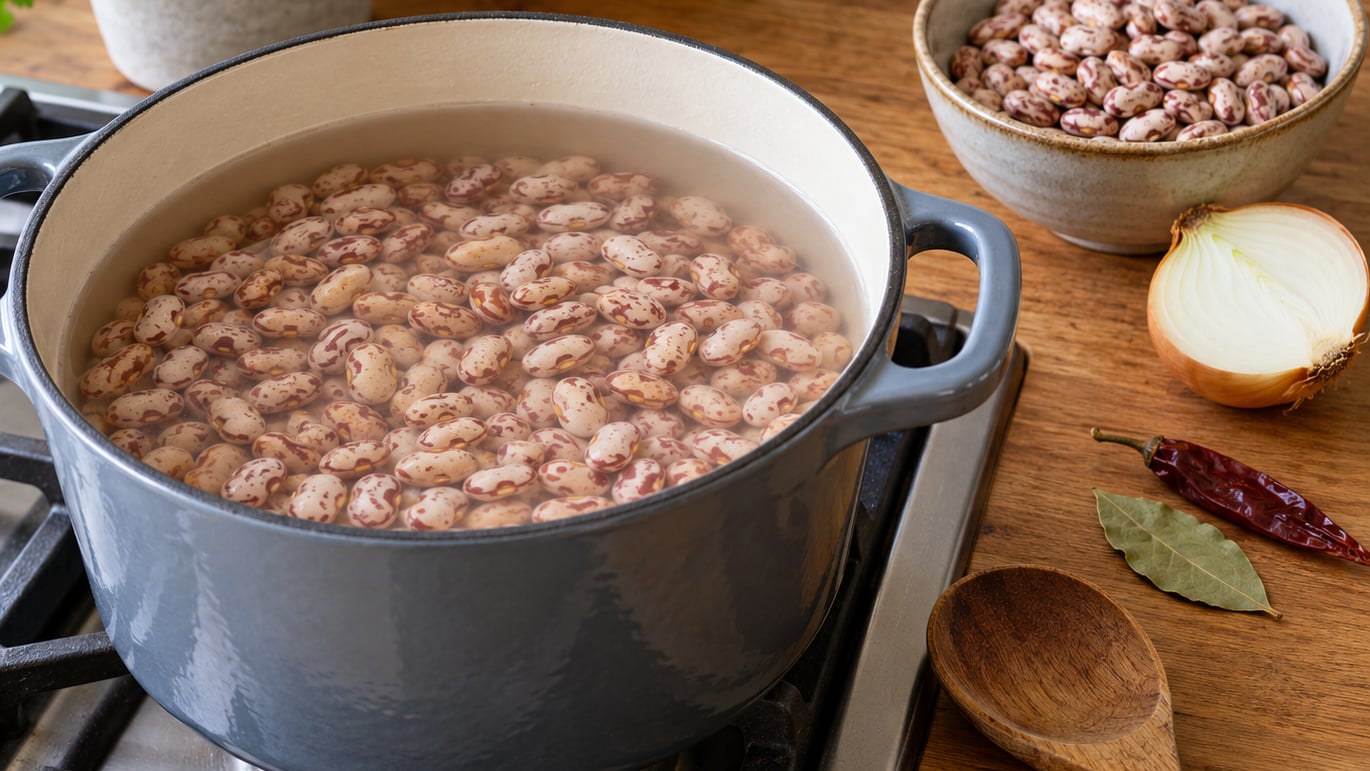
Yes, you can cook dried beans without soaking them first. Simmering them straight from dry on the stovetop, pressure cooking them, or baking them low and slow all work, and the only real thing you give up is time. Unsoaked beans usually need 30 to 90 extra minutes to soften, but they come out with skins that hold their shape instead of splitting, and nothing is thrown away.
That last point matters more than most guides admit. An overnight soak means 8 to 12 hours of holding your beans in plain water, then pouring that water down the sink along with a surprising share of the flavor and minerals. Skip it and the liquid you cook in becomes the liquid you season.
One safety note before anything else. Red kidney beans contain a lectin called phytohaemagglutinin that is destroyed only by a hard boil of at least 10 minutes. That rules out slow-cooking kidney beans straight from dry and pressure-cooking them from dry, both of which heat water too gently to destroy it. Kidney beans need the stovetop method in full, including that ten-minute hard boil.
Table of Contents
- What You Need
- Step-by-Step: How to Cook Dried Beans Without Soaking
- Common Mistakes
- Frequently Asked Questions
- What happens if you cook dry beans without soaking them?
- What should I do if I forgot to soak my dried beans overnight?
- How long do you cook beans on the stove without soaking?
- Why are my beans still crunchy after cooking?
- Why do you have to be careful with kidney beans?
- Can I use this method for lentils and split peas?
- Conclusion
What You Need
You need far less than a soaking setup does. No buckets on the counter, no bowl in the fridge, no timer running overnight.
- Dried beans in whatever variety you like. No pre-soaking, no sorting beyond picking out anything that looks shriveled or broken.
- A heavy pot with a tight lid and enough room for the beans to triple in volume as they cook.
- Liquid. Water is fine. Broth, stock, or the water the beans were canned in all work, and cooking in broth is my preference for anything that gets served as a side.
- A ratio. Three to four parts liquid per one part dried beans by volume, which works out to roughly 6 to 8 cups of liquid per pound of beans. Unsoaked beans drink more than soaked ones, so err generous.
- Optional aromatics. A halved onion, a few smashed garlic cloves, two bay leaves, a dried chili, and a spoonful of olive oil. Nothing exotic.
There are two routes from here. You can cook on the stovetop, which takes the longest but gives you the most control and the best texture. Or you can hand the job to a pressure cooker, slow cooker, or oven and walk away. Here is how the four compare.
| Method | Total time from dry | Hands-on attention | Equipment | Best for |
|---|---|---|---|---|
| Stovetop simmer | 90 min to 2.5 hours | Stir every 20 to 30 minutes | Heavy pot with lid | Best texture and flavor control |
| Pressure cooker | 25 to 40 minutes plus release | One check at the end | Pressure cooker or multicooker | Dinner tonight, no planning |
| Slow cooker | 7 to 10 hours on high, 10 to 14 on low | None | Crockpot with 4-quart or larger bowl | Overnight batches while you sleep |
| Oven | 3 to 5 hours at 200 to 255F | None after assembly | Oven-safe covered pot | Very even texture, barely any babysitting |
If you want the seasoned beans in under half an hour, cooking dinner in under thirty minutes starts with the pressure cooker rather than the stove. If flavor is the priority, layer your seasoning as the beans cook instead of salting at the end, which is what seasoning food as you cook is really about.
Step-by-Step: How to Cook Dried Beans Without Soaking
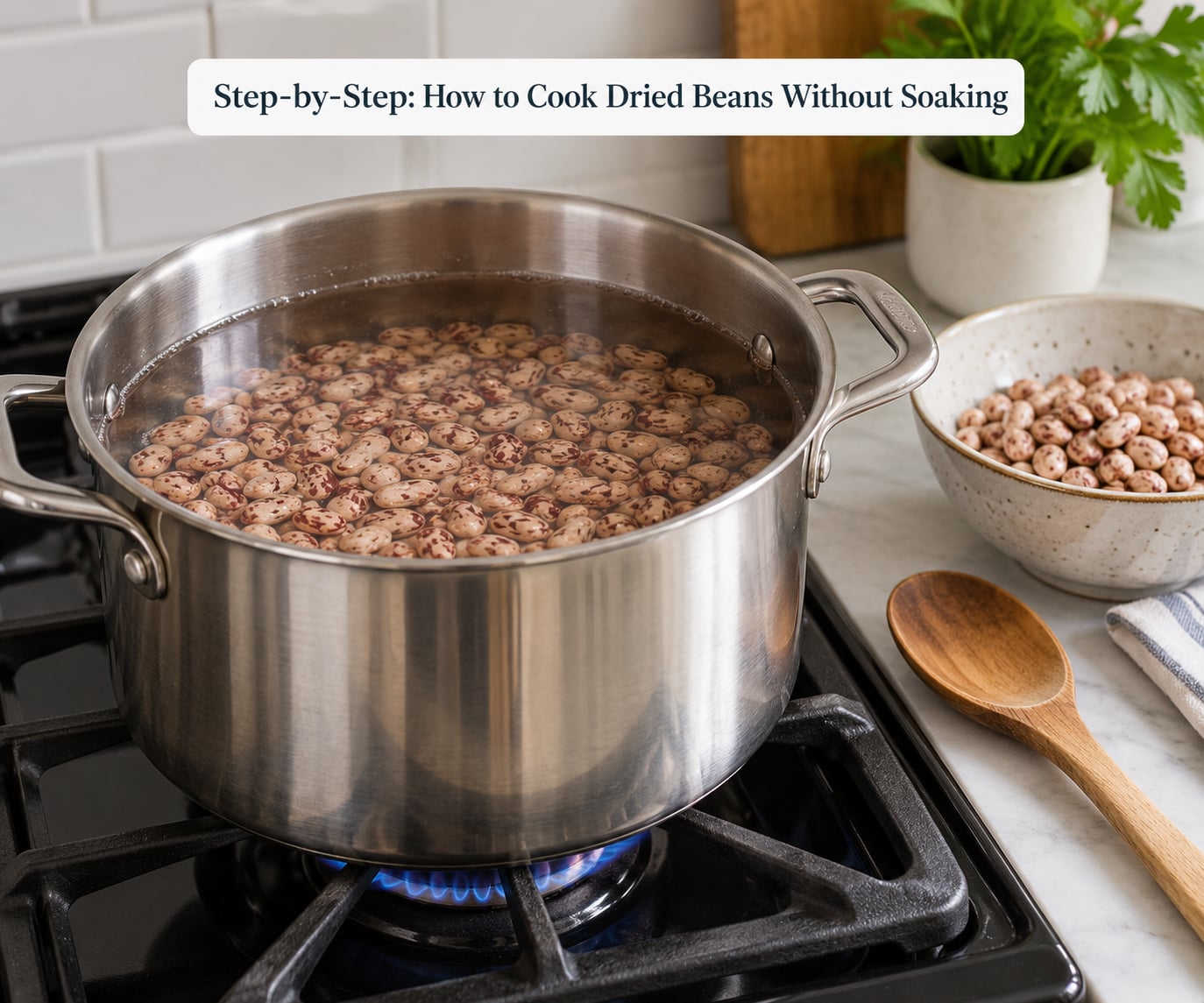
Here is the full method, start to finish. Read it once before you start, because the first ten minutes set the texture of the whole pot.
- Rinse and pick over. Put the beans in a colander and run cold water over them, swishing with your hand until the water runs clear. Pick out stones and any beans that look damaged. This step takes two minutes and it is the one most people skip.
- Into the pot with cold liquid. Add the beans to your pot, then pour in cold water or broth until the beans sit about an inch below the surface. Starting cold gives the beans time to absorb evenly instead of the outside skins toughening in hot water while the centers stay dry.
- Bring to a boil on high. Once the liquid reaches a rolling boil, stir once so nothing is stuck to the bottom.
- Drop to a gentle simmer and cover. For kidney beans, hold the hard boil for 10 full minutes before dropping the heat. Otherwise turn the heat down until you see small bubbles rather than a rolling boil, and put the lid on, slightly ajar.
- Add water as it drops. Check the pot every 20 to 30 minutes and top up with hot water whenever the liquid has fallen below the beans. They should stay covered by an inch or two the whole time. This is the step that keeps beans from scorching and turning muddy.
- Season late but not last. Wait at least 30 minutes into cooking before adding salt, and hold off on tomatoes, vinegar, lemon, or other acidic ingredients until the beans are nearly tender. Acid slows the softening of the cell walls, so beans simmered in tomato sauce from the start can take hours longer.
- Test and drain. Start tasting at the 75-minute mark. When a bean bends without resistance and crushes easily between your fingers, they are done. Drain, or use them right in the liquid.
That is the entire no-soak method. Everything below is a variation on it.
How to Cook Dried Beans Without Soaking on the Stove
This is the version to learn first because it works with any pot and gives you total control. The most common failure is heat, not time. Beans brought to a boil and held there cook unevenly: the skins break down while the centers stay crunchy.
Keep the liquid at a steady lazy simmer the entire time. Give the pot a stir every 20 minutes or so, scraping the bottom, since starch settles and burns long before the beans finish. If you are short on time, more heat will not rescue a pot of beans; it just raises the risk of scorched liquid and skins that turn to paste.
Once the beans are tender, decide whether to keep the liquid. For soups and chili, the starchy cooking liquid thickens the pot and is worth keeping. For a bean salad, drain and rinse under cool water to wash away the surface starch, then dress them while they are still warm.
How to Cook Dried Beans Without Soaking in a Pressure Cooker
This is the fastest route from dry to dinner, and it produces beans that are creamy without being mushy. There is no soaking and no pre-boil, but there is one strict rule: never fill the cooker more than two-thirds full, and never more than half full with beans, because they expand as they cook and a full pot will block the vent.
- Rinse and pick over the beans as above.
- Add beans and 3 cups of water or broth per cup of dry beans to the pot. Leave the fill line alone.
- Seal the lid and set to high pressure.
- Cook on high for the time in the table below, with the vent closed.
- Let the pressure release naturally for at least 15 minutes before you open it. A fast release can send liquid up into the vent and leave you with a half-cooked pot.
Natural release matters more with beans than with most other foods. The residual heat and steam finish softening the centers, so beans that looked slightly firm at the end of the pressure phase are usually perfect five minutes after you crack the lid.
How to Cook Dried Beans Without Soaking in a Slow Cooker
The slow cooker is the method for people who want beans with almost no involvement. Because the heat never gets hot enough to hold a boil, use a 4-to-1 ratio of water to beans rather than 3-to-1, since the liquid needs to absorb over a long stretch.
Rinse the beans, add them with liquid and a tablespoon of salt, and cook uncovered on high for 7 to 10 hours or on low for 10 to 14 hours. Uncovered matters: a lid traps condensation and keeps the beans sitting in liquid that never reduces, which leads to a thick, pasty result. The exception is red kidney beans, which must not go in a slow cooker from dry because they never reach the temperature that neutralizes phytohaemagglutinin. Cook those on the stovetop first, then move them over if you want.
The same caution applies to any bean you cook in a warm appliance overnight. Canned beans are fine this way, since they have already been cooked at full temperature. It is the dry-to-cooked jump that creates the risk.
How to Cook Dried Beans Without Soaking in the Oven
Oven cooking is the most even method and the one with the least babysitting. Set the oven to 200 to 255F, which is low enough to cook gently for hours without boiling the liquid to noise.
Rinse the beans, put them in a Dutch oven or heavy oven-safe pot with 4 cups of liquid per cup of beans, and cover the pot. Three to five hours gets most beans tender, and beans left overnight in a covered pot in a barely warm oven often come out better than anything you would achieve on the stove. This method is also a good match for beans you want to cook from frozen.
If your beans are destined for a big family meal, this is also the easiest route to a large batch. One covered pot in the oven leaves the stovetop free, which matters when you are making one meal the whole family eats rather than separate dishes.
How to Tell When Dried Beans Are Cooked
Taste is the only test that does not lie. Spoon one bean out, blow on it, and eat it. It should taste sweet and slightly nutty with no chalky or raw bean flavor at all, and it should crush easily against your tongue.
A fork tells you more than a spoon. A cooked bean slides onto the fork and bends before snapping; an undercooked one resists and pokes back. Pinching a bean between thumb and finger is the fastest test: fully cooked beans compress with almost no resistance, while beans that still need time spring back.
Smaller beans and lentils cook faster than large ones, which is why a pot of lentils can be done in 20 to 30 minutes while chickpeas in the same pot are still firm. Age also changes the timeline, and older beans take longer to soften because their cell walls have stiffened in storage. If you are cooking a bag that has been in the pantry for a year or more, build in an extra 45 minutes and do not assume the beans are ruined.
| Bean | Stovetop | Pressure cooker, high pressure | Slow cooker, high |
|---|---|---|---|
| Black beans | 100 to 130 min | 25 to 30 min | 8 to 10 hr |
| Pinto beans | 90 to 120 min | 25 to 30 min | 8 to 10 hr |
| Kidney beans (red) | 110 to 140 min after a 10 min hard boil | Not advised from dry | Not advised from dry |
| Chickpeas | 90 to 140 min | 30 to 40 min | 8 to 10 hr |
| Cannellini and other white beans | 90 to 120 min | 35 to 40 min | 8 to 10 hr |
| Navy beans | 90 to 120 min | 25 to 35 min | 8 to 10 hr |
| Lentils | 20 to 30 min | 6 to 10 min | Not needed |
| Split peas | 30 to 45 min | 10 to 12 min | Not needed |
Treat these as landmarks, not stopwatches. An older bean, a hard water supply, and a heavy pot that holds heat longer than average will all push the real finish time past the low end of the range.
Common Mistakes
Most crunchy bean pots come down to one of six things. If your beans stayed hard after two hours, check them in this order.
- You added acid early. Tomato, vinegar, citrus, and wine all slow softening. Add them in the last 20 minutes. This is the single most common reason an otherwise correct method failed.
- The heat was too high or too low. A rolling boil damages bean skins; a barely warm pot never softens the centers. Look for steady small bubbles and stir regularly.
- The beans are old. Beans past their best age rehydrate slowly no matter how long you cook them. If more than 45 extra minutes changes nothing, age is the likely cause.
- Your water is hard. Calcium and magnesium in hard water interfere with softening. Add a pinch of baking soda, about 1/8 teaspoon per pot, or cook in filtered water.
- You let the liquid fall too low. Beans that simmer half-dry at the bottom toughen before they finish. Top up with hot water every 20 to 30 minutes.
- You forgot to stir. Starch settles to the bottom, sticks, and scorches. A scrape with a spoon every 20 minutes is cheap insurance.
Two myths are worth clearing up. Salting beans at the start does not toughen them, despite what you will read repeatedly. A teaspoon of salt in the pot from the beginning is standard practice in professional kitchens and helps the skins soften. The second myth is that soaking is mandatory. Skipping it costs you 30 to 90 minutes and nothing else.
Soaking’s real appeal is convenience and digestion. The complex sugars called oligosaccharides that cause gas are water-soluble, so an overnight soak does reduce them somewhat. If gas is a genuine problem for you, cooking the beans thoroughly and eating a small portion for several days while your gut adjusts is the part that actually matters, and a strip of kombu in the pot during cooking is a reasonable addition. Home cooks on cooking forums report that skipping the soak made no noticeable difference one way or the other for them, and the evidence for soaking as a gas fix is mostly anecdotal. Pick whichever method you will actually stick with.
Beans do not have to be eaten fresh, which makes no-soak cooking practical for batch prep. Cool cooked beans with their liquid, then freeze them flat in bags in portions matching a 15-ounce can, about 1.5 cups. They keep three months in the freezer and thaw in a few minutes. Do not leave cooked beans sitting on the counter or in a warm car, and refrigerate them within two hours of cooking.
If the beans are not even done yet, save the cooking liquid separately once they cool. It thickens soups and makes a serviceable substitute for stock, and the liquid from a pot of chickpeas and white beans whips into an egg-white substitute for baking.
Frequently Asked Questions
What happens if you cook dry beans without soaking them?
You get fully cooked beans; nothing unsafe or inedible happens. The only real difference is time, because unsoaked beans must rehydrate and tenderize at the same moment rather than in a separate soak. Expect them to take 30 to 90 more minutes than soaked beans, and plan to keep more liquid in the pot since more of it evaporates over a longer cook.
What should I do if I forgot to soak my dried beans overnight?
Cook them from dry with more liquid than usual, using three to four parts liquid per part beans. Bring to a boil, then drop to a gentle simmer with the lid slightly ajar and top up with hot water every 20 minutes. If you have a pressure cooker, use it instead and the beans will be done in under an hour.
How long do you cook beans on the stove without soaking?
Most beans take 90 to 140 minutes of gentle simmering from dry, with lentils needing only 20 to 30 and chickpeas running toward the long end. Check at 75 minutes and then every 15 minutes after. Old beans and hard water push the finish time past the usual range, so taste rather than trust a timer.
Why are my beans still crunchy after cooking?
Usually it is acid added too early, since tomato, vinegar, and citrus all slow the softening of bean cell walls. It can also mean heat that was too high, liquid that fell below the beans and scorched, beans old enough to resist rehydration, or hard water. Add acid in the last 20 minutes, simmer gently, and try a 1/8 teaspoon pinch of baking soda.
Why do you have to be careful with kidney beans?
Red kidney beans contain a lectin called phytohaemagglutinin that irritates the digestive tract, and it is destroyed only by a hard boil of at least 10 minutes. Gentle heat is not enough, which is why kidney beans must not be slow-cooked or pressure-cooked straight from dry. Boil them hard for 10 minutes on the stovetop first, then simmer as normal.
Can I use this method for lentils and split peas?
Yes, and these legumes barely need any method at all. They have thin skins and no starch to rinse away, so they go straight into unsalted water, simmer for 20 to 45 minutes depending on the variety, and get seasoned near the end. Red lentils cook fastest of all, in about 20 minutes, and break down on their own if you let them sit after the heat is off.
Conclusion
Rinse the beans, put them in a pot with three to four parts cold liquid, bring it to a boil, and drop to the gentlest simmer with the lid slightly ajar. Stir every twenty minutes, add hot water when the level drops, and taste at the seventy-five minute mark instead of trusting the clock. Season once the beans are softening, hold the acid back until the end, and drain them when a fork slides through without resistance. That is the whole method, and it works on any weeknight you forget to plan ahead.