
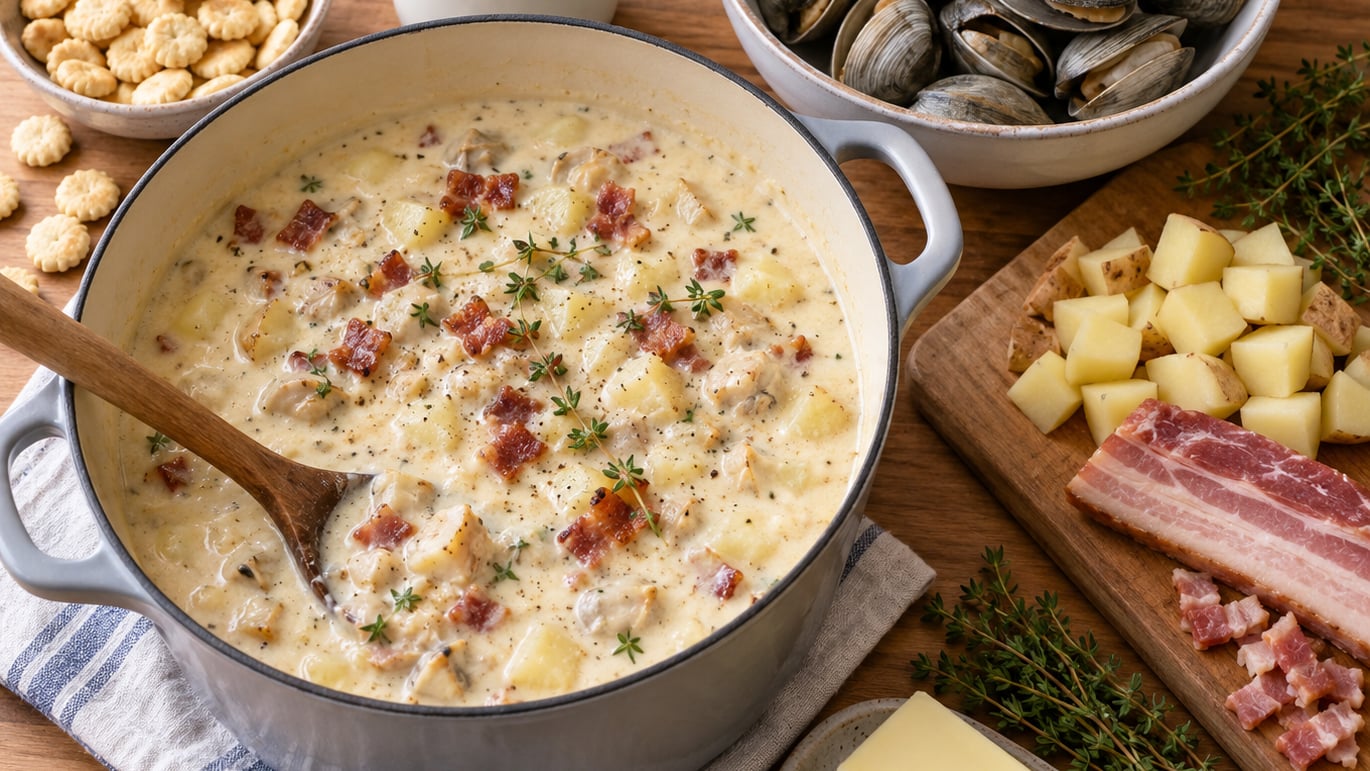
New England clam chowder takes about 45 minutes from a cold pot to a bowl, and learning how to make clam chowder from scratch is mostly about two things: a proper butter-flour roux for body, and adding the clams near the end so they stay tender instead of turning rubbery. No shucking required if you use canned clams, and nothing fancy beyond a heavy pot, a whisk, and a good knife.
The version below is the one I cook most weeks. It makes about six bowls, thick enough to stand a spoon in, and it leans on clam juice, diced potatoes, and cream rather than cream cheese or a canned soup base.
What You Need
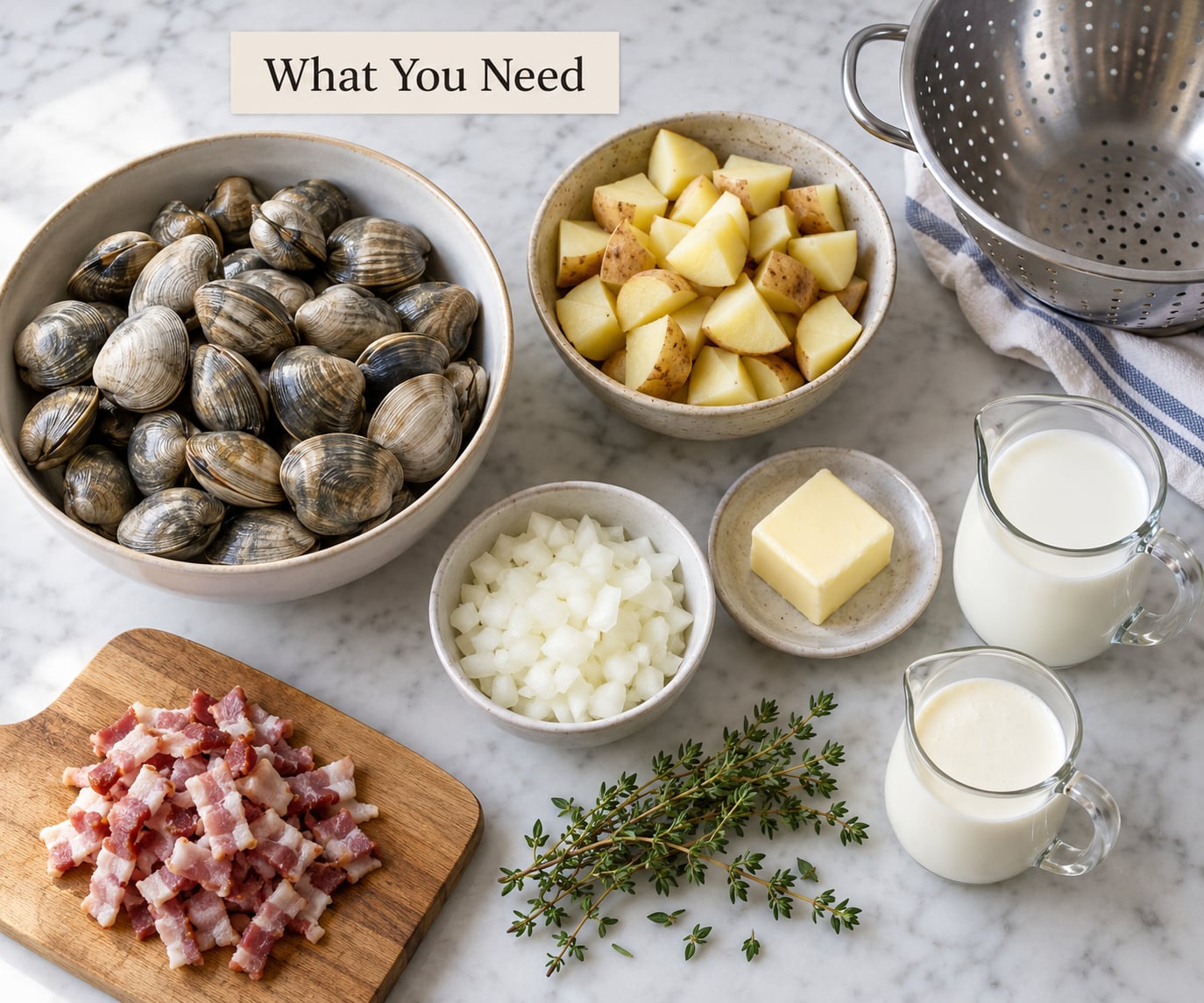
Here is the ingredient list for roughly six servings, with the bacon and the wine both optional.
- 4 slices thick-cut bacon, diced (optional but traditional)
- 1 medium onion, diced small
- 2 celery stalks, diced small
- 1 garlic clove, minced (optional)
- 3 tablespoons unsalted butter
- 1/3 cup all-purpose flour
- 2 cups clam juice or clam liquor (the liquid from the cans, or bottled)
- 1 pound Yukon Gold or other waxy potatoes, cut into 1/2-inch dice
- 2 cups half-and-half, or 1 cup whole milk plus 1 cup half-and-half
- 1 cup heavy cream
- Two 6.5-ounce cans chopped clams, drained, liquid reserved, meat kept out
- 1 bay leaf
- 1 teaspoon dried thyme
- 1/2 teaspoon white pepper, plus salt to taste and a pinch of cayenne
- 2 tablespoons chopped parsley and oyster crackers, for serving
Do you need clam liquor? Yes, and it is the same thing as clam juice. It is the liquid that comes out of the fresh clams, and canned clams come packed in it. Two drained cans give you roughly 1 to 1.5 cups of liquor, so most recipes call for one extra cup from the shelf. If you cannot find bottled clam juice, use the liquid from an extra can plus a cup of water.
Equipment: a heavy 4-quart pot with a lid, a whisk, a wooden spoon, a colander, a knife, and a fine-mesh strainer if you are using fresh clams.
On handling: keep raw clams in the coldest part of your refrigerator at 40°F or below and cook them within a day or two of buying. Cook the chowder to 145°F / 63°C, which is the safe internal temperature for shellfish, and eat clams that opened during cooking. Throw out anything that stayed shut.
How to Make Clam Chowder From Scratch: Step-by-Step
The method is short. Render bacon, sweat the aromatics, cook a roux, whisk in clam juice, simmer the potatoes until just tender, then stir in the dairy and clams off a hard boil. Total time is about 15 minutes of prep and 30 minutes of cooking, and the yield is six generous bowls.
The single most important rule: keep everything at a gentle simmer. A hard boil is what turns cream grainy and clams tough, and it is also how a roux on the bottom of the pot scorches.
1. Clean and inspect the clams
With fresh clams, scrub the shells under cold water and throw out any that are cracked or smell off. Tap a closed clam on the counter; if it does not open, it is dead and goes in the trash.
Canned clams need no cleaning. Just drain them, reserve the liquid, and keep the meat out of the pot until the very end. Only clams that open during cooking should be eaten, and do not pry shells open with your fingers.
2. Cook the bacon and vegetables
Render the diced bacon in the pot over medium heat, stirring, until lightly browned and the fat runs clear, about 6 to 8 minutes. Scoop out the crisp bits into a bowl and keep them for the top of the bowl later.
Lower the heat and add the onion and celery to the rendered fat. Cook them 5 to 7 minutes until soft and translucent with no color on them. If you skipped the bacon, use 2 tablespoons of butter instead and skip this step’s extra fat.
3. Make the roux and cook the potatoes
Add the butter and let it melt, then sprinkle the flour over the vegetables and stir constantly for 1 to 2 minutes. You want a smooth paste that smells slightly nutty, not a blond or brown crust. A little color is fine, but if it goes dark the chowder turns bitter.
Whisk in the clam juice a cup at a time until the mixture is smooth and pourable, then stir in the potatoes, half-and-half, bay leaf, thyme, and a good pinch of salt. Bring it just up to a simmer, then dial the heat down so you see a bubble every second or two.
Simmer 12 to 15 minutes until a potato slice slides off the spoon easily but still holds its shape when you press it. Pull one out and check; there is no rush, and overcooked potatoes break into paste and thicken the soup on their own.
4. Add the clams at the end
Turn the heat down a notch, stir in the heavy cream, then the clam meat. Warm the chowder for 3 to 5 minutes, no longer, until the clam meat is hot through and any fresh shells have popped open.
With fresh clams, lift out the opened ones with a slotted spoon, remove the meat, and discard any that never opened. Fold the meat back in and keep the liquid. That last part matters, because a cup of the clam cooking liquid adds more briny flavor than any amount of salt.
5. Finish and season the chowder
Take the pot off the heat once the clams are hot. Stir in the reserved bacon, season with white pepper, and taste. Clam juice and canned clams bring a lot of salt with them, so add salt in small pinches at the end rather than up front.
Ladle into warm bowls and let it stand 2 minutes to thicken. If it is too loose, simmer it uncovered for 3 to 5 more minutes before serving. If it is too thick, stir in a splash of warm milk.
6. Serve the finished clam chowder
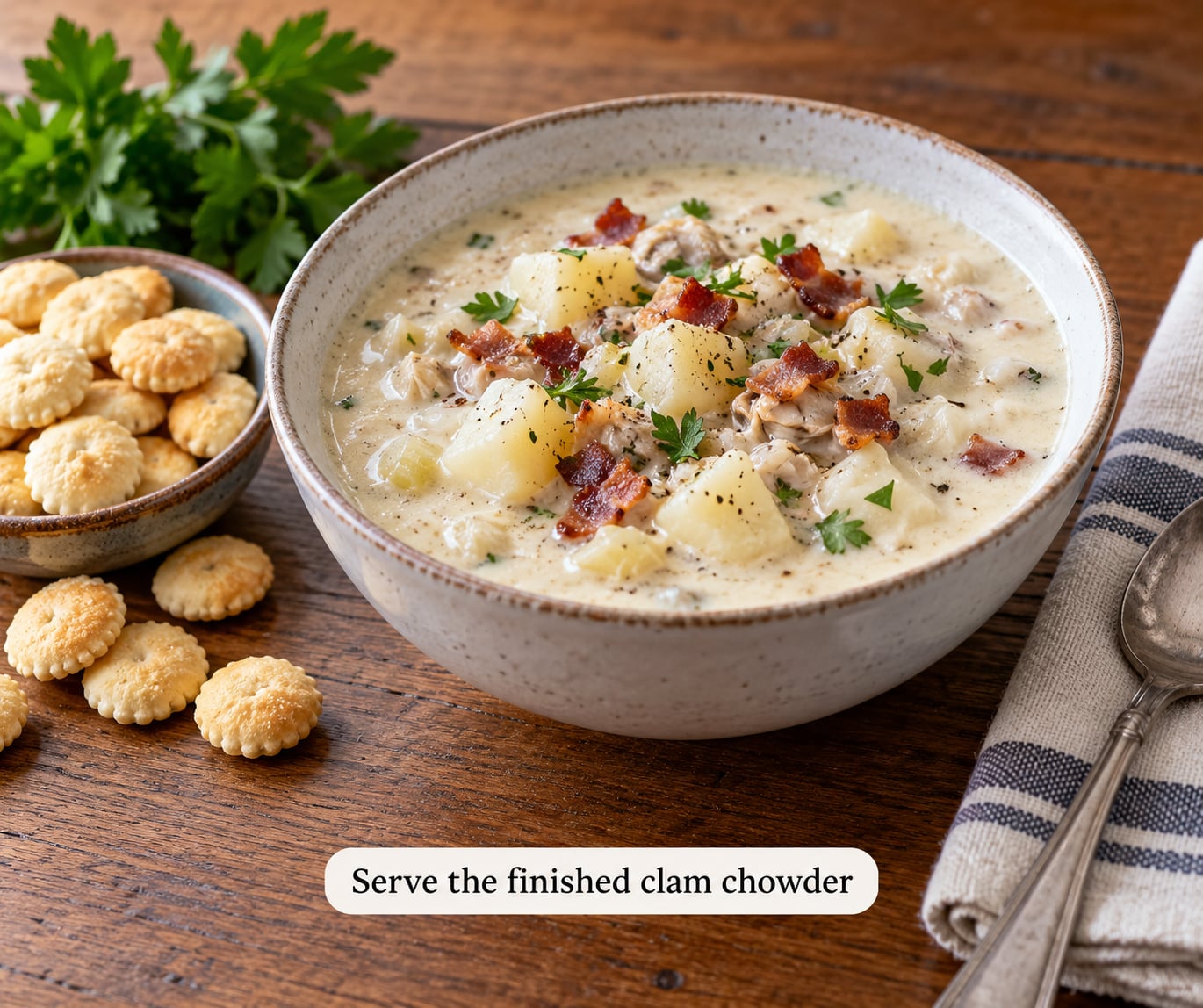
Pour it into warmed bowls, not cold ones, and scatter chopped parsley over the top. Oyster crackers are traditional and they are the right crunch for the thick sauce. A sourdough roll alongside works too, and if you like to make your own, our guide to how to make croutons from stale bread gives you the crunchier version.
Leftovers go into the refrigerator within two hours of cooking and get used within three to four days. Reheat on the stove over low heat, stirring often, and add a splash of milk as it thickens on the way up to a boil. For longer storage, freeze it in a freezer bag for up to three months, leaving a finger of space at the top for expansion.
Making it in a pressure cooker
The Instant Pot handles this well and saves about 20 minutes. Cook the bacon and aromatics with oil instead, add the roux, clam juice, potatoes, dairy, and herbs, then pressure cook on high for 8 minutes with a natural release. Stir in the clams on regular heat for the last 3 minutes so nothing overcooks.
Swaps worth knowing
- Gluten-free: skip the flour and thicken with a slurry of 2 tablespoons cornstarch whisked into a cup of cold clam juice. Add it after the potatoes are tender and give it a minute of bubbling.
- Dairy-free: use an unsweetened plant milk and 1 tablespoon of olive oil for the butter, then thicken with cornstarch. Skip the cream, and add it back as a swirl at the end if you like.
- Wine option: a half cup of dry white wine deglazes the roux before the clam juice goes in. It adds acidity that cuts the richness of the cream.
- Manhattan style: leave out the dairy and flour entirely, add crushed tomatoes and tomato paste, and simmer 40 minutes.
- No clam juice on hand: a cup of light chicken stock from bones works in a pinch, though the flavor will be milder than the real thing.
- Serving it with a holiday meal: our tips for stuffing that is not soggy cover the same cream-and-butter thickening problem from the other direction.
Common Mistakes
Most unhappy bowls of chowder trace back to one of five problems, and all of them are fixable.
The soup will not thicken. Sprinkling flour straight into a liquid pot is the classic error, and it makes a gluey, cheese-sauce texture instead of a smooth one. Make the roux with fat first, cook it a minute, then whisk in liquid gradually. If you already added flour directly, stir in a cornstarch slurry and stop.
The clams are tough. Add them last, keep the heat at a simmer, and give them 3 to 5 minutes. Clams left in a hard boil, or simmered for half an hour, go chewy and shrink.
The chowder is grainy. Once dairy goes in, a hard boil can break the proteins. Stir the cream in off the heat and warm it gently, which is also the single biggest difference between homemade and diner chowder.
It tastes weakly of clams. Usually too much liquid or not enough clam meat. Use the full 2 cups of juice, avoid thinning it down, and make sure you fold the clam cooking liquid back in rather than pouring it off.
It tastes overseasoned. Clam juice and canned clams are salty before you add anything. Skip the salt in the pot, season only at the table, and reach for white pepper and a pinch of cayenne instead.
It is thick as glue or the potatoes are mush. Simmer 3 to 5 minutes uncovered to reduce, or whisk in warm milk to loosen. Cut potatoes evenly and check at 12 minutes rather than cooking to a timer, because small dice goes from tender to paste fast and scorches on the bottom of a thick pot.
Frequently Asked Questions
Can I use canned clams to make clam chowder from scratch?
Yes, and most home cooks do. Canned chopped clams come packed in the clam liquid that gives chowder its briny flavor, so they are not a shortcut in any meaningful sense. Drain two 6.5-ounce cans, reserve the liquid in place of bottled clam juice, and add the meat in the last few minutes so it stays tender. Fresh clams taste brighter, but the canned route gets you a genuine homemade chowder with none of the shucking.
Can I use frozen clams in clam chowder?
You can, and frozen chopped clams work well because they are already cooked. Thaw one bag in the refrigerator overnight, or run it under cold water for 10 minutes, and drain it well. Add the thawed meat in the last 3 to 5 minutes of cooking. Frozen whole raw clams are a different story: they cook from thawed much like fresh ones and open on their own in a gentle simmer.
How do I make clam chowder thicker?
For a thicker soup, simmer it uncovered for 3 to 5 minutes so some water cooks off. If that is not enough, whisk 1 to 2 tablespoons of cornstarch into a cup of cold clam juice and pour the slurry in, stirring, while the chowder simmers. Adding flour straight to the pot is the wrong move and gives a gluey texture. Mashing a few potato pieces against the side of the pot thickens it naturally too.
Why is my clam chowder watery?
Usually one of three reasons. You did not cook the roux long enough, so the flour had nothing to thicken with. You loosened the pot with extra milk. Or you simmered too gently and not long enough for the potatoes to release starch. Fix it by cooking the flour and fat together for a full two minutes, holding back some of the cream, and reducing the chowder uncovered just before serving.
Can clam chowder be made ahead?
Yes, and it is actually better the next day. Make it up to two days in advance, cool it quickly, and refrigerate within two hours. Reheat on the stove over low heat with frequent stirring, adding a splash of milk as it thickens, and stir in the clam meat during the last few minutes so it does not get rubbery. It also freezes well for about three months.
Conclusion
Start by putting the ingredients out and checking your clams before any heat goes on. Then cook the clams gently in the last few minutes, build the body with a properly cooked roux, and stir the clam meat in right before you ladle it up. That ordering is the whole recipe.