
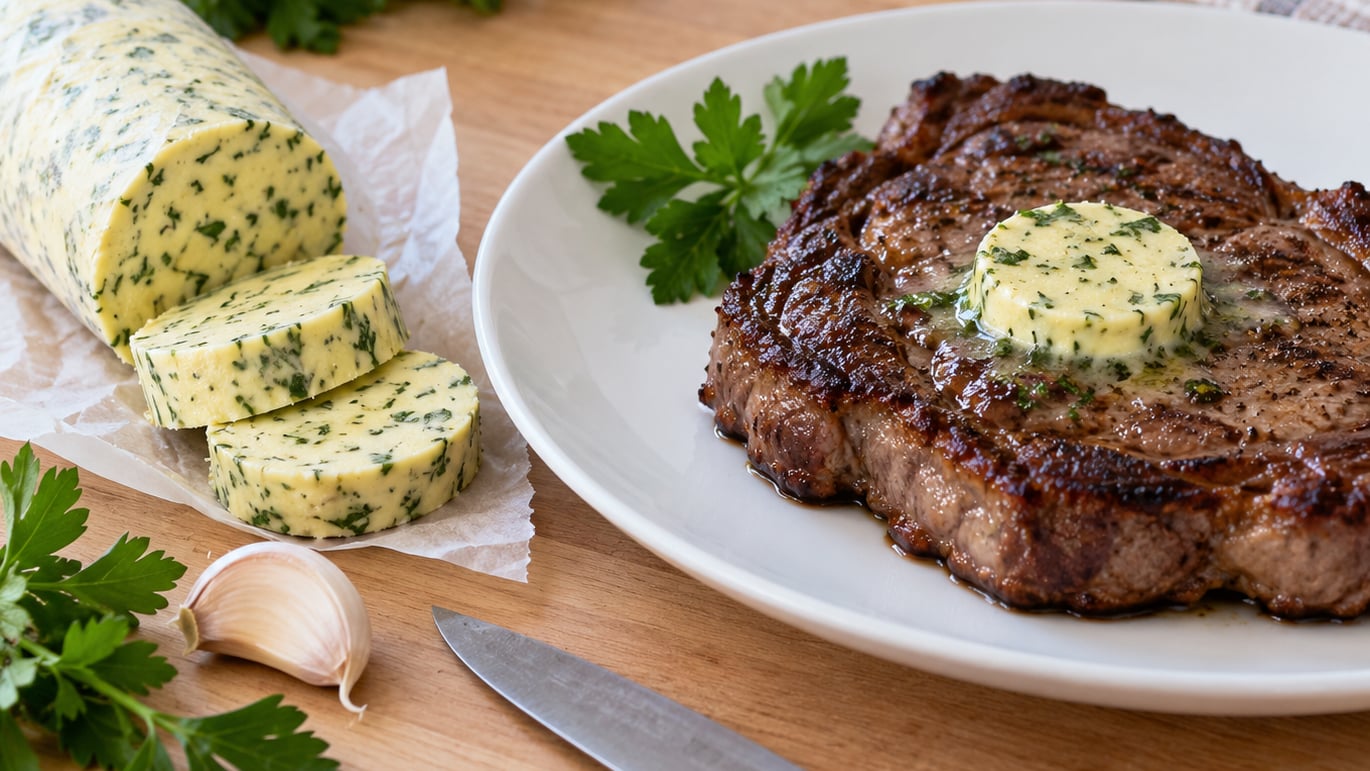
Compound butter is softened butter mixed with garlic, herbs, spices or cheese, rolled into a log, chilled until firm and sliced into rounds. To make compound butter for steak, you need nothing more than good butter, a fork and ten quiet minutes of work, and the log keeps for weeks in the fridge.
That makes it one of the highest-return things a home cook can keep in the door of the refrigerator. A cold round melts into a hot steak in seconds and gives you the glossy, seasoned finish most people are trying to recreate with a pan sauce.
Timing is the whole trick. The compound butter goes on after the steak leaves the heat, not during the cook.
What You Need
The base recipe below makes roughly half a cup of butter, about eight rounds, which covers four to six steak servings depending on how generously you like to finish a piece of meat.
- 8 tablespoons unsalted butter (1/2 cup, about 113 g), softened to room temperature
- 2 garlic cloves, minced fine
- 2 tablespoons fresh flat-leaf parsley, finely chopped
- 1 tablespoon fresh rosemary, minced
- 1 tablespoon fresh chives or fresh thyme, chopped
- 1 teaspoon lemon zest
- 1/2 teaspoon kosher salt
- 1/4 teaspoon freshly ground black pepper
Unsalted is the right starting point because you are seasoning the butter yourself, and the steak usually carries its own salt. If you only have salted butter, cut the added salt down to a pinch and taste a small dab before rolling the log.
Soft butter is the one non-negotiable part. Butter taken straight from the fridge will tear and smear instead of absorbing the herbs, and melted butter will turn into a loose, oily paste with herbs floating in it. Press a finger into the stick and it should dent slightly, feel cool, and still hold its shape.
Equipment is basic: a small bowl, a fork for creaming, a knife, a sheet of parchment paper or plastic wrap, and a board or plate for chilling. A food processor works when the butter is too cold to handle by hand, though the texture comes out slightly airier and melts a little faster on the steak.
Step-by-Step: How to Make Compound Butter
Five steps, and each one has a visual cue that tells you it worked. Follow them in order and the log will come out round, evenly speckled and firm enough to slice.
1. Soft the Butter
Cut the cold stick into one-inch chunks and leave them on the counter for 30 to 60 minutes, or grate a cold stick through a box grater and let the curls sit out for 10 minutes. Grating is the fast route when you forgot to take the butter out in the morning.
You can also warm it in short microwave bursts at low power, turning the bowl between bursts. Do it in ten-second intervals and stop the moment the butter slumps; it hardens again in the fridge faster than most people expect.
Check it the way you would check dough. A dent that springs back slowly means the butter is ready. Any shine, gloss or pooling means it has gone too far.
2. Choose and Prepare the Seasonings
Every mix-in needs to be small enough to disappear into the fat. Mince the garlic rather than slicing it, chop the herbs until you can barely see individual pieces, and crush dried spices between your fingers or in a mortar so they break up rather than sit in one pocket.
Fresh herbs carry more flavour than dried, so use roughly three times the volume. A tablespoon of dried rosemary becomes about a scant tablespoon of fresh once it has been minced, which is why the garlic-herb version below leans entirely on fresh.
Strong ingredients need a little extra work. Deseed a jalapeño, mince it finely, and let it sit for a few minutes before it goes into the butter. Scallions get sliced thin on the bias and patted dry. Cheese such as blue or gorgonzola gets crumbled small so it distributes instead of clumping in one end of the log.
3. Mix the Compound Butter
Put the softened butter in a bowl and cream it with a fork first, on its own, until it is smooth and glossy. Working the fat alone before adding anything is what stops herbs and spices from tearing the butter into uneven lumps.
Add the garlic and herbs next, pressing them into the butter with the back of the fork, then the lemon zest, salt and pepper. Fold rather than stir, cutting the mixture against the side of the bowl and turning it back on itself.
Stop when there are no large pockets of butter left. Some flecks of garlic and herb should still be visible, which is what you want in the finished rounds. Over-mixing is not the danger here, though pulping the herbs into grey mush is.
4. Shape and Chill It
Tip the mixture onto a sheet of parchment paper, fold the paper up over the butter and roll it into a cylinder about one and a half inches thick. Twist both ends closed like a sweet. Plastic wrap works the same way and is slightly tighter, which some people prefer because the log keeps its round shape better.
Chill it until firm, about one hour in the fridge, then slice into rounds roughly a quarter-inch thick. If the log flattens slightly on the bottom while chilling, press the soft sides back into a round before slicing. That thirty-second fix is what separates neat slices from half-moons.
For longer storage, roll the finished log in parchment and freeze it solid. Slice off what you need with a sharp knife and keep the rest in the freezer. If you would rather skip the log entirely, spoon the mix into a butter dish or a small silicone mold and chill it, then scoop rounds with a spoon at the table.
The butter keeps about a month refrigerated and up to three months frozen. Most home cooks freeze the whole log and pull out a slice or two per cook rather than making a new batch each time.
5. Cook and Serve It with Steak
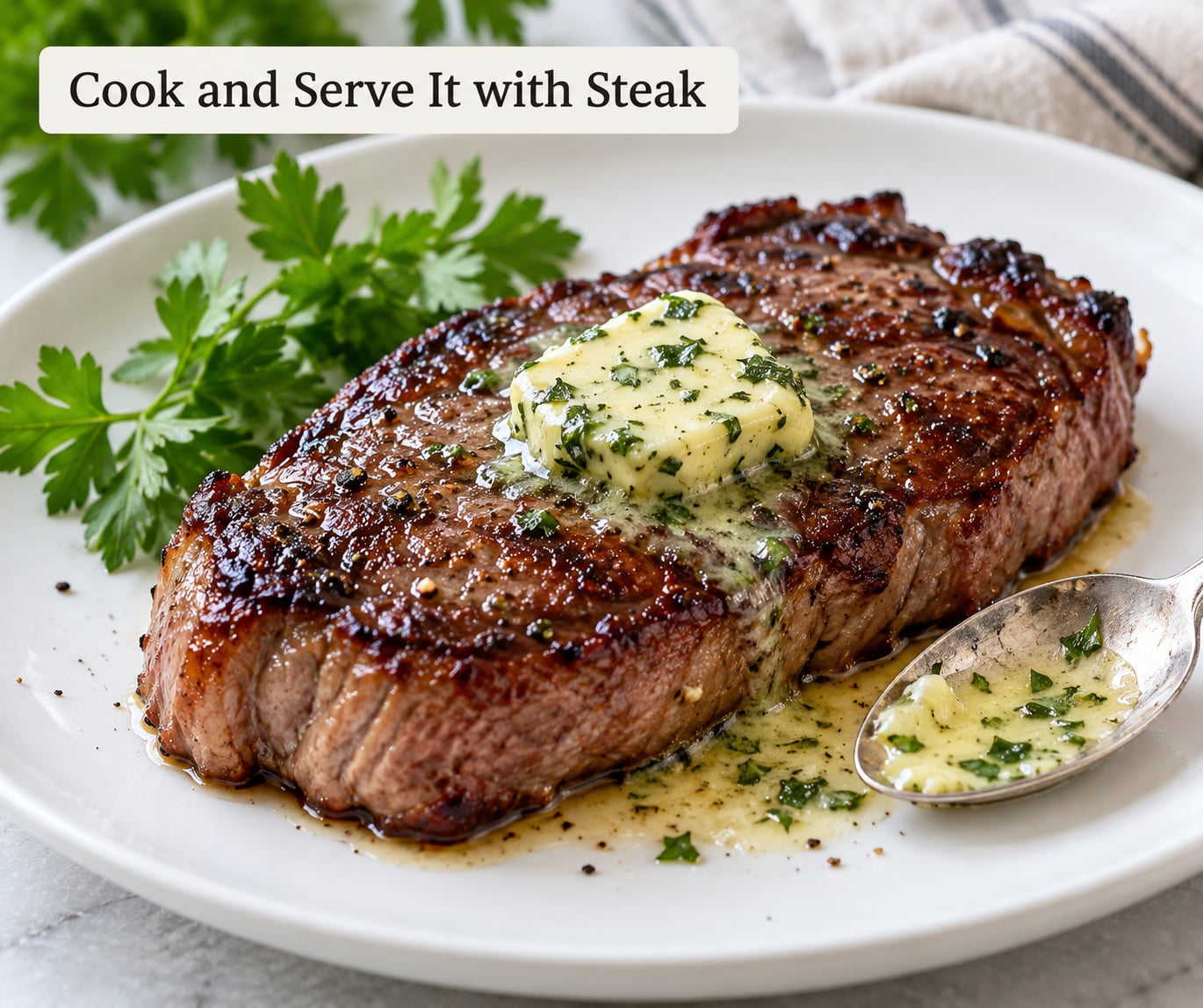
Pull the steak off the heat and let it rest for the usual five to ten minutes. Then set one cold round on top and let the heat of the meat melt it, rather than dropping the butter in earlier. Add a second round at the table if the piece is large, and one round per serving is a good rule.
Baste if you like, but do it with a spoon and only after the burner is off, using more butter than feels wasteful. Ten to fifteen seconds a side after turning off the heat softens the butter without scorching it.
Do not add compound butter during the cook on a very hot grill. Garlic, herbs and any honey or sugar in the mix will scorch long before the steak is done, and the fat drips and burns where it lands. If you want butter flavour during cooking, use a plain butter basted at the end instead.
It works just as well on roasted vegetables, corn on the cob and baked potatoes, and a spoonful folded into mashed potatoes after dinner is a quiet bonus. For the plate itself, I like how a thin smear underneath the steak looks, so if you want that, check how to make a sauce swoosh on a plate.
4 Flavor Variations to Try
Once the base method is in your hands, the only thing that changes is what goes in the bowl. These four cover a wide range of steaks and use the same eight tablespoons of butter.
- Garlic herb. Add 2 minced garlic cloves, 2 tbsp parsley, 1 tbsp thyme and 1 tsp lemon zest to the softened butter. Best on ribeye, sirloin or skirt steak.
- Peppery blue cheese. Add 3 tbsp crumbled blue cheese, 1 tbsp chives and 1/2 tsp cracked black pepper. Rich enough for filet and ribeye, and it works on grilled portobellos too.
- Smoky chipotle and lime. Add 1 tbsp minced chipotle in adobo, 1 tsp lime zest, 1 tbsp cilantro and 1 tsp honey. Suits grilled skirt steak, chicken and corn.
- Tangy mustard herb. Add 1 tbsp Dijon mustard, 1 tbsp tarragon, 1 tbsp parsley and 1 tsp honey. Works well on strip steak, lamb and pork chops.
The pairing logic is simple. Cut steak takes something sharp or lemony, tender cuts like filet take a rich salty cheese, and charred or smoky cuts take a heat element like chipotle. Roast or pan-seared cuts work with anything; the harder part is hot and fast cooking, where you only get one chance to land the butter.
Beyond steak, the same log earns its keep all week. A round on a baked potato behaves like a seasoned butter, and a slice tucked inside a sandwich loaf does the job of a spread. If you are grilling instead, the technique transfers well to burgers, and how to make burgers that stay juicy covers the rest of the method.
A note on cowboy butter, since it gets confused with compound butter all the time. A rolled compound butter is cold, sliced, and added to a cooked steak. Cowboy butter is melted on the grill or in a pan with garlic and mustard, then used to baste the meat while it cooks. Keep them apart and both are worth having.
To turn a slice into a finishing sauce for other plated dishes, loosen a round in a spoon of hot water and drizzle it over the plate, the same move as how to make stuffing that is not soggy uses for keeping a crumbly bake moist, though the water goes in the stuffing rather than on top of it.
Common Mistakes
Most bad compound butter comes down to temperature and timing.
- Melting the butter completely. Liquid butter will not hold a log shape and the mix-ins settle at the bottom. Chill the bowl for 10 minutes and press it back together.
- Salting twice. Salt in the butter plus salt on the steak before cooking makes the whole plate aggressive. Season the steak just before it hits the pan and keep the butter moderate.
- Cold, uneven slices. Butter taken straight from the fridge shatters under the knife. Let the log sit ten minutes, then cut with a sharp knife warmed under hot water.
- Adding delicate herbs too early. Parsley and chives go in at the end of the mixing and chill only an hour or two. Basil and other soft herbs hold their flavour best if folded in close to serving time.
- Butter on a screaming-hot steak. A cold round on a hot steak melts on contact and runs off the sides before you can spread it. Rest the steak first, then add the round and let it soften on the surface.
Frequently Asked Questions
How long does compound butter last in the fridge?
A homemade compound butter keeps about one month in the refrigerator, which is plenty for most home cooks. Keep it wrapped in parchment or plastic and in the coldest part of the fridge rather than the door, where the temperature swings with every opening. If you mixed in fresh garlic or soft herbs, move it to the back and use it inside two weeks for the freshest flavour.
Can you freeze compound butter?
Yes, and most people freeze it. Wrap the log tightly in parchment or plastic, then a layer of foil, and freeze it solid. It holds three months and slices cleanly straight from the freezer if you give the knife ten seconds of warm water first. Freezing dulls fresh herb flavour slightly, so dried herbs hold up better in a batch made ahead for the freezer.
Should compound butter be salted or unsalted?
Unsalted is the better starting point because the butter is where the seasoning lives, and steak usually carries its own salt. If you only have salted butter, leave out the added salt entirely and taste a dab before rolling the log. The exception is a steak you are not seasoning at all, where a little salt in the compound butter does the seasoning work for you.
What is cowboy butter vs compound butter?
A compound butter is made by creaming flavourings into softened butter, rolling it into a cold log, chilling it and slicing rounds. Cowboy butter is melted in a pan with garlic, mustard or herbs and used as a hot basting sauce during or right after the cook. One is sliced onto a rested steak, the other is spooned over it while it is hot.
When should I add compound butter to steak?
After the steak leaves the heat, during the rest. Set one cold round on the warm surface and let the meat melt it, then add more at the table if the cut is large. Adding it on a very hot grill scorches garlic, herbs and any sugar in the mix, and the fat burns where it drips, so leave the pan alone until the cook is finished.
What to put in compound butter for steak?
Garlic, parsley, chives, rosemary or thyme, a little lemon zest, salt and black pepper is the combination most people land on first. From there, crumbled blue cheese suits filet and ribeye, Dijon and tarragon suits strip steak, and chipotle with lime suits anything grilled hard. One round per serving is a sensible amount for a four ounce steak.
Conclusion
Start tonight: cut a stick of unsalted butter into cubes, leave it out until it dents under a finger, and mix in minced garlic, parsley, thyme and lemon zest. Roll it in parchment, chill it an hour and slice it thin.
Make the garlic-herb version first and use it on a rested steak after the heat is off. Once that one is in your hands, change a single ingredient at a time and the rest of the flavour profiles fall out of the same method. Our other guides on keeping burgers juicy and crisp stuffing cover the sides of the plate.